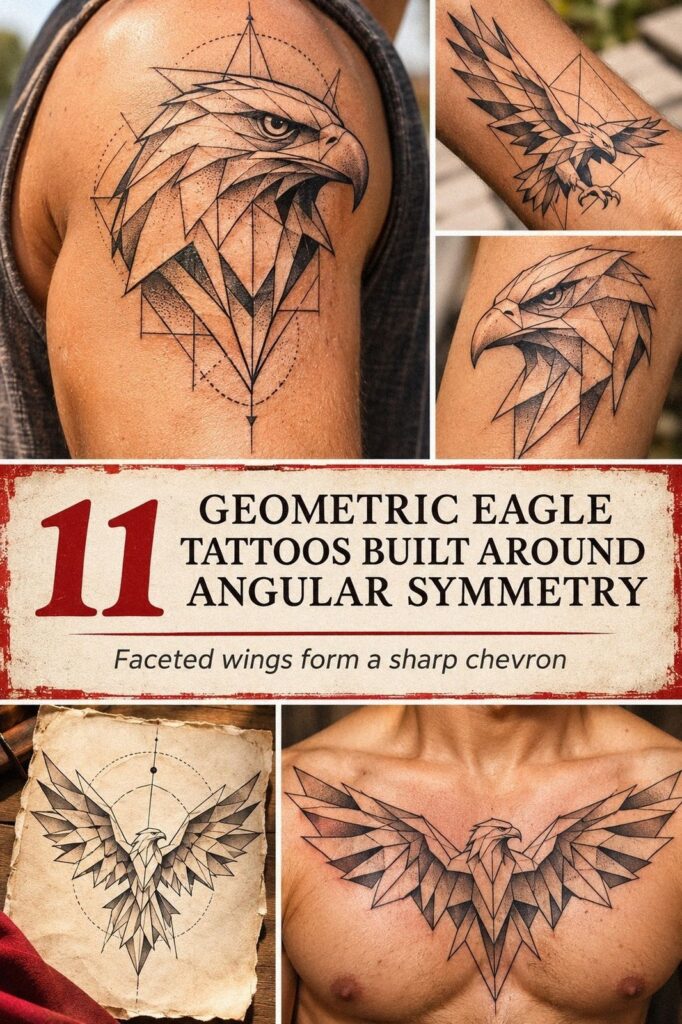
Geometric eagle tattoos stay easiest to keep private when you solve scale, placement, and line weight before choosing details. I learned that after a small shoulder design looked crisp under clothing but lost its silhouette when the angles crowded together. Your first decision matters more than the symbol. Start there!
Start With Small Geometric Eagle Tattoos
Small geometric eagle tattoos work best when you protect the main silhouette first. Choose one readable head angle, one wing direction, and a limited cluster of facets. If you’re planning a private piece, your shoulder, upper arm, or upper back gives you coverage without forcing the design into a cramped shape.
A paper stencil lets you judge the outline before any needle touches skin.
The Private Scale Rule
Your design doesn’t need every feather to feel meaningful. I’d rather see three crisp planes than twelve tiny marks that blur together after healing. A 2RL liner can create delicate detail, but extremely fine lines may spread with time, especially if your placement sees regular sun.
Use a simple test. Ask your artist to print the eagle at the size you’re considering, then cover it with a shirt sleeve or collar. If you can still read the beak and wing direction from several feet away, the proportions are doing their job.
If you’re drawn to miniature work, compare your idea with these tiny eagle tattoos before committing.
A small design can still feel fierce, symbolic, and personal. But your private tattoo shouldn’t become so minimal that it reads like a random triangle or star cluster. Keep one bold anchor, such as the brow, talons, or central wing fold, and let the quieter lines support it.
Pick Sharp Linework For A Fierce Silhouette
Sharp linework gives a geometric eagle its expressive character. On the upper back, your artist can build the bird from ruled diagonals, narrow triangles, and clean intersections that follow the shoulder line. The outer contour should stay precise and deliberate.
Your artist may use carbon stencil paper to test the placement before transferring the outline. Watch how the beak points, how the neck turns, and whether the wing ends feel balanced.
I’d skip a crowded feather texture here. It may look intricate on paper, but your skin needs enough breathing room for the major angles to remain sharp.
A fierce silhouette doesn’t require heavy saturation everywhere. A few selective dark planes beside open skin can create a striking result without packing the entire bird. If you’re comparing styles, this guide to fine line eagle tattoos can help you decide how much delicacy your design can handle.
And your artist should show healed work, not only fresh examples. Fresh ink often looks darker and crisper than it will once the surface settles. A polished healed portfolio tells you more than a dramatic social-media post!
Place Wing Angles Across Your Shoulder Blade
The shoulder blade gives geometric eagle tattoos a natural path. Let the wing angle follow the bone instead of cutting directly across it. Controlled lines and open intervals keep the eagle visible while allowing your body’s movement to remain part of the composition.
The Wing Arc Method
Ask your artist to place the eagle while your shoulder is relaxed, then check it again with your arm raised. Your wing may shift more than you’d expect when the scapula moves. A transfer stencil should be tested in both positions so the longest line doesn’t suddenly point toward your neck or collapse into the upper arm.
I prefer a slightly upward wing angle for a powerful, empowering look. A downward angle can feel haunting, but it may read heavier when your arm rests at your side. Neither choice is wrong, though your body position should decide the direction rather than a random reference.
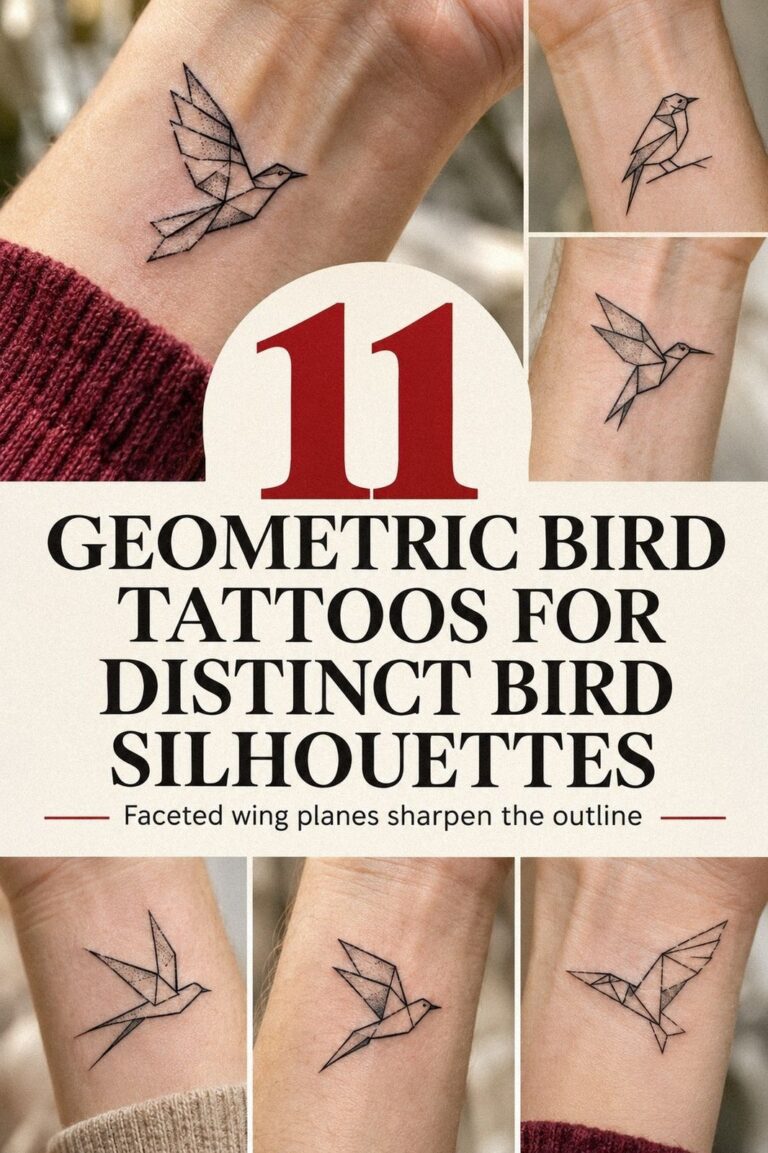
If you want a related bird structure, study these geometric bird tattoos for examples of wings built from repeated planes. Your eagle can borrow the rhythm without copying the subject. Keep the central body narrow, and don’t let every feather use the same width.
The shoulder blade is also a practical private placement. A shirt covers it easily, while a tank top can reveal the upper edge.
If you’re unsure about visibility, wear the clothing you normally choose and check the stencil from behind. That quick check can prevent an awkward reveal later.
Keep Negative Space Crisp Around Feathers
A single feather can carry the same geometric language as a full eagle, especially when the barbs are separated by clean channels of skin. That restraint makes the design feel elegant, understated, and readable.
The Feather Channel Test
Your artist should leave visible gaps between feather sections instead of filling every opening with ink. Those gaps are part of the design, not unfinished areas. A sterile stencil marker can outline each channel so you can see whether the spacing remains consistent before the session begins.
Fine lines often look graceful at first, but your future skin needs room for natural spreading. I’d avoid placing many hairline marks directly beside one another. They may merge into gray pockets later, especially if you don’t protect the tattoo from strong ultraviolet exposure.
Ask yourself one useful question: can you identify the feather’s direction without enlarging the reference? If the answer is no, your design needs a stronger outer edge or fewer interior divisions. This is where delicate eagle tattoos can offer reference without pushing you toward a fragile copy.
And don’t treat negative space as emptiness. It creates a pause between the bold lines, which lets your eye understand the feather quickly. A crisp gap can be more expressive than another decorative mark.
That matters!
Plan Meaningful Symbols Into The Eagle Design
A geometric eagle becomes more personal when each added symbol has a reason. Your goal isn’t to collect symbols. Your goal is to choose one or two that strengthen the eagle’s meaning.
A printed flash sheet helps you compare variations before the final drawing. Try a small star, compass point, sun disk, or angular mountain only if it connects to your story. I’d skip adding a crown, clock, arrow, and phrase all at once.
The result can feel ornate but lose the eagle’s identity.
Think about where your eye lands first. If the beak is the personal focal point, keep the surrounding marks quieter.
If the wings represent freedom or recovery, let the open space around them stay visible. Your tattoo can be romantic or sacred without spelling out the entire story.
You can also use a familiar symbol in an unusual proportion. One large star may feel more iconic than five tiny ones.
A narrow circle behind the head can create a bold halo, while a small coordinate-style mark can stay discreet. If you’re collecting reference, browse unique geometric eagle tattoos for arrangements that feel personal without looking overloaded.
Your artist should redraw borrowed inspiration for your body rather than trace it blindly. Skin curves, muscle movement, and placement all change the final balance. A meaningful idea still needs a clean structure.
Define Your Eagle’s Meaning Before Detailing
Before you approve the final drawing, write down what you want the eagle to communicate. Freedom, recovery, family, independence, faith, and protection can all lead to different choices. A meaning map keeps the design from collecting random details simply because they look interesting.
If your idea is about independence, a lifted head and open wing may carry more value than extra symbols. If it’s about memory, a small date or restrained compass point might be enough. You don’t need to explain every choice to make it meaningful.
A dainty eagle can still carry serious intention. Compare proportions in these small eagle tattoos before deciding whether your concept needs a wider body or a stronger wing span.
I’d also write one sentence describing what you want the finished tattoo to feel like. Keep that design brief beside the stencil. If an added mark doesn’t support the sentence, it probably isn’t worth the space or cost.
Choose Bold Geometry For A Powerful Chest Tattoo
A chest tattoo needs bold geometry because the body moves, stretches, and folds across the design. Your artist should think about the sternum, pectoral movement, and how the wings will sit when your shoulders relax.
The Two-Read Silhouette
Build the design so it reads in two ways. From a distance, your viewer should see an eagle.
Up close, they should notice the intricate facets, measured lines, and intentional gaps. A deeply saturated plane can anchor the head and talons while leaving selected wing sections open.
Chest placement can feel more intense than an outer-arm tattoo because the skin is closer to bone in some areas. If you’re nervous, discuss the order with your artist. Starting with the easier outer sections may help you settle before the sternum or collarbone area.
Here is a realistic planning table based on common US tattoo guidance:
Prices are only planning ranges, not promises. Your artist may quote by piece, by hour, or by complexity. A bold, clean chest design can be worth the investment, but your budget shouldn’t push you toward an artist whose healed work you haven’t reviewed.
If you want a quieter interpretation, compare the structure with minimalist eagle tattoos. Your chest piece can remain sleek without becoming weak. Keep the main planes broad enough to age with authority.
Shape Flowing Wings Along Your Forearm
A forearm placement lets the eagle travel with the length of your arm. Your artist should measure the outer and inner forearm separately because their curves don’t match.
Start by deciding whether the eagle faces your wrist or your elbow. Facing upward can feel aspirational and iconic, while facing downward can look raw and aggressive. I’d choose the direction that matches how you want to see the bird when your arm rests naturally, not only how it appears in a posed position.
A paper placement strip can show you how the wings will wrap slightly around the forearm. Ask for a view with your palm turned up, palm turned down, and arm relaxed. If the wing disappears in two of those positions, your artist may need to reduce the wrap or widen the central shape.
The forearm is often more tolerable than ribs, feet, hands, or sternum, but everyone’s experience differs. Your session length will depend on size, detail, and the artist’s pace. If you’re drawn to a softer version, review these watercolor eagle tattoos for ideas about motion, then keep your own geometry crisp.
Don’t place every line parallel to the arm. A slight change in angle gives the wing rhythm and keeps it from looking like a flat emblem. That balance feels stylish and deliberate.
Test the Stencil in Motion
A design that looks perfect while your arm is still may change when you walk, reach, or turn your shoulder. Ask your artist to check the placement stencil from the positions you actually use. You’ll learn more from three ordinary movements than from one posed view.
Raise your arm, bend your elbow, turn your palm, and let your shoulder drop. If the eye disappears under a crease or the wing folds into the body, adjust the design before the session starts. This isn’t overthinking.
It’s practical planning.
A simple, minimal stencil can reveal problems quickly. Compare the process with geometric bird tattoos that use long angles and open spacing. You may notice that the strongest designs leave room for motion.
Your artist should also check the stencil while you’re wearing the clothing you normally choose. That visibility check helps you control when the eagle appears and when it stays yours. A few extra minutes now can protect the privacy you’re paying for.
Add Intricate Facets To The Eagle Head
The eagle head rewards restraint. Your artist should make the eye and beak readable first, then use angular planes to suggest feathers around them.
The Three-Plane Head
Divide the head into three major visual zones: brow, cheek, and beak. That structure keeps the design recognizable even if some small lines soften with age. A fine-point cartridge can handle delicate work, but your artist should avoid filling every triangular gap.
A crisp eye can make the entire eagle feel expressive. A tiny eye placed inside a crowded patch may disappear, while a slightly larger mark can give the face a sharper identity. Your artist might recommend a small circle, a short slash, or a reserved skin break depending on your design.
Sternum placement can be intimate and dramatic, though it may be more sensitive than an outer forearm or shoulder. If you’re choosing this location for privacy, check how the design sits beneath your usual neckline. You don’t want the top of the head appearing unexpectedly when you bend forward.
I’d avoid copying exact facial proportions from a flash design. Your anatomy deserves a custom adjustment, especially around the sternum’s center line. If you want a softer reference point, the small eagle tattoos collection can help you compare head scale.
Your eagle head should look sharp without becoming hostile. A polished brow, restrained beak, and open cheek plane can create an elegant result with a little edge. Good geometry gives the emotion somewhere to land!
Balance Delicate Lines With Striking Talons
Rib placement gives the eagle a long, expressive canvas, but the body’s movement makes balance essential. Your artist should keep the talons darker and clearer than the surrounding feather marks so the lower silhouette doesn’t vanish.
Talons are a useful visual anchor because they give the eagle weight. A saturated talon shape can connect the body to the wing without turning the whole design into a solid block.
I’d keep the claws slightly simplified. Overdrawing every joint can make the lower section look gritty instead of controlled.
Ribs can feel more painful than the forearm, thigh, shoulder, or upper arm because the skin is close to bone. Your comfort matters, so ask your artist whether the design can be completed in more than one session. A shorter appointment may help you keep your posture steady.
Use your body’s natural vertical direction. A wing that follows the ribs can feel graceful and flowing, while a horizontal eagle may look compressed when you move. If you’re comparing placements, fine line eagle tattoos can show how artists preserve delicacy without losing the animal’s shape.
The best balance isn’t equal darkness everywhere. It’s a clear hierarchy: bold talons, medium body planes, and quieter feather marks. Your eye should know where to land.
Explore Unique Geometric Eagle Tattoos Ideas
This step is about comparing a stencil with healed skin before you decide. Fresh lines can look darker, tighter, and more dramatic than settled ink, so your expectations need to include that change.
The Two-Read Comparison
Ask your artist to show you healed examples in a similar placement and skin tone. Your design may appear sharper on paper than it will after the surface settles. A healed tattoo reference gives you a more honest guide for line spacing, saturation, and negative space.
Look for what remains readable after time has passed. Can you still identify the beak?
Do the wing angles separate? Are the small facets still distinct, or have they merged into a soft patch? These questions help you choose a timeless structure rather than chasing a fresh-ink effect.
I’d rather see an understated eagle with durable spacing than an ornate eagle packed with marks. If you’re deciding between two references, choose the one with fewer interior lines and a stronger outer contour. That choice may feel less dramatic on the day, but it often looks more polished later.
You can compare related ideas through geometric unique butterfly tattoos because that style also relies on symmetry, open skin, and clear angular rhythm. Don’t copy the motif. Study how the lines are distributed.
Your final stencil should be adjusted to your anatomy, skin tone, and desired privacy. A unique design isn’t unique because it has more detail. It’s unique because the choices belong to you.
Compare Tattoo Costs Before Booking
The lowest price isn’t always the best value. A careful artist may charge more because they spend time adapting the eagle, checking placement, and showing healed work. Your artist quote should explain what the price includes before you book.
Ask whether the quoted amount covers the consultation, stencil revisions, session time, and any follow-up check. If the artist charges hourly, request a realistic estimate rather than a guaranteed total. You’ll make a better buying decision when you know what can change the cost.
A lower hourly rate may look attractive, but a slower session can erase the savings. A higher rate may be worth it if the artist has a polished portfolio and strong geometric experience. Think about long-term value, not only the number due today.
If you’re comparing options, review delicate bird tattoos for examples of how reduced detail can still look refined. A smaller design may be more affordable and easier to keep private, but it shouldn’t be so reduced that the eagle loses its identity.
My rule is simple: choose the artist whose work you’d still want if the quote were no longer the first thing you noticed. That’s when the investment starts to feel worth it.
Protect Crisp Details Through Careful Healing
Aftercare protects the finish you paid for. Your artist’s instructions should come first, especially if they use a specific covering such as medical-grade adhesive film.
Wash the area gently with clean hands when instructed, then pat it dry instead of rubbing. Use a thin layer of the recommended fragrance-free moisturizer if your artist approves it. Your tattoo may peel, feel tight, or look temporarily dull during surface healing, and that doesn’t mean the design has failed.
Avoid swimming, soaking, and strong sun while the surface is healing. The typical surface period is about 2 to 3 weeks, while complete healing can take about 2 to 3 months. If you’re unsure whether the skin is ready for water or sun exposure, ask your artist rather than guessing.
After healing, protect crisp lines with broad-spectrum sunscreen whenever the tattoo is exposed. Ultraviolet light can fade ink and soften contrast over time. A bold design with sensible spacing generally ages better than packed, ultra-fine detail, but placement and your individual skin still matter.
Don’t pick flakes or scratch the area. Your patience is part of the design process. If you want an additional placement comparison, these delicate eagle tattoos show how open spacing can remain graceful and readable.
Choose a Private Placement That Still Reads
Privacy doesn’t require hiding the eagle inside an unreadable design. The privacy plan should balance coverage, movement, and enough width for the outer shape to stay clear.
The upper arm, shoulder blade, ribs, and upper back can all stay covered under ordinary clothing. A chest design may remain private beneath a higher neckline, while an outer forearm is easier to see and harder to conceal. Think about your work, family, exercise, and daily habits before deciding.
If you’re unsure, compare tiny eagle tattoos with larger silhouettes. The smallest option may cost less, but the best value comes from a design you can still recognize after healing.
Ask your artist to mark the upper-back placement or shoulder while you stand naturally. Then check the edges under the clothes you wear most. A design can be discreet without feeling timid, and it can be bold without becoming public all the time.
The Private Scale Rule: What Should Your Eagle Say Without Explaining It?
I’ve always thought an eagle tattoo works best when it carries strength without shouting. The bird already has a powerful visual language.
You don’t need a giant wingspan, a paragraph of symbolism, or an oversized design across your body to make the idea land. A controlled piece can feel more personal because it asks the viewer to look twice.
The privacy question matters, too. Some people want a tattoo that belongs to them before it belongs to anyone else.
That doesn’t make the choice timid. It can be bold to reserve a symbol for the shoulder blade, upper arm, ribs, or chest and reveal it only when you choose.
Your placement becomes part of the meaning.
I’ve made the mistake of choosing detail before silhouette. On paper, the extra facets looked intricate and expressive. Once the design was reduced, they crowded the eye and weakened the beak.
Now I judge every idea from a distance first, then up close. The outer shape has to win both tests.
Your eagle can be fierce, sacred, haunting, or empowering, but it should still feel like your decision. I’d skip any symbol you have to explain defensively.
Choose the mark that still feels meaningful when nobody asks about it. That is where an iconic tattoo begins.
The Questions I Get Asked Most
How much does a geometric eagle tattoos usually cost?
A geometric eagle tattoo usually costs about $50 to $100 at a boutique minimum or roughly $100 to $250 per hour in the US. Your final price depends on size, placement, artist, region, and detail. I’d ask for a quote after the artist reviews your reference and body placement.
A smaller geometric design may take less time, but don’t choose an artist only because the minimum is low. Your tattoo deserves clean healed work, careful hygiene, and a design that won’t need immediate correction.
Are geometric eagle tattoos a good idea for a first tattoo?
Yes, geometric eagle tattoos can suit a first tattoo when you choose a tolerable placement and a readable scale. Clear linework gives you an easy design to understand, while the symbol can remain personal. I’d consider your shoulder, outer forearm, or upper arm before ribs or sternum.
A minimal geometric outline can also be easier to plan than a highly packed piece. If you’re new to tattoos, ask your artist to explain line weight, healing, and how the design may settle over time.
How do I choose a tattoo artist for geometric eagle tattoos?
Choose an artist whose portfolio shows precise geometric linework, healed examples, and consistent hygiene practices. A healed portfolio matters because fresh ink can look sharper than settled work. I’d also ask how the artist adapts designs to your skin.
Look for clean studio equipment and clear answers. If the artist dismisses your questions or shows only copied flash, keep searching. You shouldn’t feel rushed into a permanent design.
How much do geometric eagle tattoos hurt?
Pain varies, but ribs, feet, hands, and sternum are often more painful than the forearm, thigh, or shoulder. Your placement usually affects the experience more than the eagle symbol itself. Session length, sleep, hydration, and personal sensitivity matter too.
A rib tattoo may feel sharper because the skin sits close to bone. Tell your artist if you need a pause. Staying still supports cleaner geometry, and there’s no prize for pretending you’re comfortable.
How long do geometric eagle tattoos take to heal?
The surface usually heals in about 2 to 3 weeks, while complete healing can take about 2 to 3 months. Gentle aftercare includes washing as directed, moisturizing lightly if approved, and avoiding swimming or strong sun during surface healing.
Your healed lines may look softer than they did on appointment day. Don’t pick peeling skin, scratch the area, or judge the final result too early. Ask your artist when they want to see the tattoo again.
What’s the best placement for geometric eagle tattoos?
The shoulder blade, upper arm, outer forearm, and upper back offer strong options for privacy and readable geometry. A covered placement lets you control visibility, while a flatter area can help long wing angles stay clear.
Your shoulder blade design can follow the body’s movement, while an outer forearm piece gives you an easier view. Consider sun exposure, clothing, pain, and how the lines may age before choosing.
Where I’d Start First
If I had to pick one step, I’d start with the silhouette on the shoulder blade. It gives your eagle privacy, movement, and enough room for bold angles without crowding the feathers. Print the stencil, test your clothing, and let the outer shape earn every interior line.
If you want the safest balance of cost, value, and privacy, compare that plan with minimalist eagle tattoos before booking. The strongest choice isn’t always the largest or most detailed one. It’s the design you’ll still recognize, respect, and want to wear years from now.