
Delicate bird tattoos can stay readable for years when the design, placement, and line weight agree. I learned that after choosing a tiny winged shape that was too busy for its size. You’ll find 11 thoughtful ideas here, from fierce blackwork to soft watercolor, and each one can hold a private story. The best choice isn’t always the most noticeable one!
Editor’s note: I’d choose the bird first, then test its scale, visibility, and long-term clarity. A striking tattoo can stay personal when the design gives the meaning room to breathe.
- Hide a Tiny Hummingbird Behind the Ear
- Fine Line Swallow Along the Collarbone
- Can a Single Needle Bird Stay Readable?
- The Botanical Bird on the Forearm
- Match Birds Across Both Wrists
- Watercolor Finch: Soft Color, Clear Structure
- Frame an Ornate Bird With Wildflowers
- Is a Minimal Sparrow Right for the Ribcage?
- The Coordinate Bird
- Blackwork Raven, Open Skin
- Let a Dainty Flock Cross the Shoulder
1Hide a Tiny Hummingbird Behind the Ear

A tiny hummingbird behind the ear feels intimate because you control who sees it. I’d choose a delicate body, two or three clear feather marks, and a graceful wing curve instead of dense shading. That balance gives you a tattoo without making the placement look crowded.
The design works best when the fine-line hummingbird has enough negative space around the wings. A long tail with many separate strands may blur visually as the tattoo ages, and you won’t gain much meaning from the extra detail.
Think of this as private tattoo placement. A small tattoo doesn’t need to announce itself to be meaningful.
You’ll want to show your artist a reference with the wings open, then ask which details will survive at the smallest readable scale. Clean single-needle lines. A compact wing shape.
One personal mark.
If you’re collecting tiny bird tattoo ideas, compare the negative space before you compare the species. I’d pick a hummingbird over a sparrow here because its hovering motion feels more expressive behind the ear. The design is dainty, but it isn’t passive.
Ask about healed hummingbird tattoos before booking. Fresh lines can look sharper than settled ones, especially around the ear, where sun exposure and movement may soften fine detail.
2Fine Line Swallow Along the Collarbone

A swallow along the collarbone gives you a more visible placement while keeping the image sleek and personal.
3Can a Single Needle Bird Stay Readable?

A single needle bird in flight works when you want your tattoo to feel almost sketched, as if one clean gesture captured the whole animal. Open wings, hair-thin feather marks, and a small body create a minimal silhouette without decorative clutter.
I’d ask your artist to prioritize the bird silhouette: head, wing angle, and tail direction. Those three features tell the viewer what they’re seeing.
Extra feather lines can make a tiny bird look muddy, especially where clothing rubs. I made that mistake once, and the result looked less refined than the simpler design I should’ve picked.
This is the Wing-Span Test. Shrink the reference on your phone until it’s close to the size you’re considering, then look at it from arm’s length. If the bird still reads clearly, you’re on the right track.
If the wings turn into a dark knot, you’ll need fewer marks or a slightly larger scale.
You can compare this style with minimalist bird tattoos before you book. A single-needle approach is edgy at once, but it isn’t automatically fragile. Your artist’s spacing, healed work, and placement judgment matter more than the label.
Look closely at single-needle tattoo healing. Lines may appear uneven while the skin settles, so judge the artist by healed examples rather than freshly completed work.
4The Botanical Bird on the Forearm

A botanical bird tattoo on the forearm gives you room to connect a bird with one intricate botanical detail.

5Match Birds Across Both Wrists

Matching birds across both wrists can represent two people, two places, or two versions of yourself. You’ll want to choose a pair that belongs together without making the wrists look identical.
I’d keep one bird slightly different from the other. Maybe one has a longer tail, while the second carries a tiny botanical mark.
That difference makes the pair feel personal instead of mass-produced. Matching tattoos can become more meaningful when each person or wrist has its own visual voice.
This is the Mirror With a Crack. Start with the same basic silhouette, then alter one feature on each bird.
You’ll get harmony without losing individuality. I’d avoid placing both birds at an angle that points toward the hands because the design may look disconnected when your arms rest naturally.
Your wrists are visible and practical, but they’re also exposed to sun and frequent movement. Emerald, gold, and cream accents can stay vibrant when your artist uses clear separation and you protect the healed tattoo from UV. For more matching bird tattoos, look for pairs with different wing positions.
Compare wrist tattoo placement while your hands are relaxed, open, and turned palm-down. A design that looks balanced in one position may tilt when your wrists move.
6Watercolor Finch: Soft Color, Clear Structure

A watercolor finch on the sternum gives you an ethereal option with soft color washes around a fine bird outline. I’d choose a clear black contour first, then add controlled color rather than relying on pale washes alone.
The best watercolor finch tattoo palette can use forest green, rust, and one muted cream accent. You’ll want your artist to explain which pigments will retain their character on your skin tone. A watercolor effect can be whimsical and vibrant, but it still needs structure.
Use the Color Anchor Method. Pick one black feature, such as the beak, eye, or lower wing, and let the color move around it.
I’d skip a rainbow palette because it can make the sternum piece look scattered. One or two expressive colors will feel more polished and personal.
The sternum is a bony area, so many people find it more painful than the forearm, thigh, or shoulder. You’ll also need to follow aftercare carefully, especially around clothing friction. A watercolor finch is daring and elegant, but your artist’s healed portfolio matters more than freshly completed work!
Read more watercolor bird tattoo ideas before choosing pigments. The most reliable designs use color as an accent, not as a substitute for a readable outline.
7Frame an Ornate Bird With Wildflowers

An ornate bird framed by wildflowers suits you if you want an ornate composition without losing a graceful center.
8Is a Minimal Sparrow Right for the Ribcage?

A minimal sparrow on the ribcage is for you if privacy matters more than visibility. You’ll see it often, while other people may not. The placement feels intimate, but the design still needs enough scale for the wings to remain clear.
I’d keep the minimal sparrow outline compact and let the wings do most of the storytelling. A few sharp feather marks can make the bird feel fierce without adding heavy shading. If your artist tries to add every feather from a realistic reference, I’d ask them to simplify before the stencil goes on.
Try the Quiet Symbol Test. Ask whether the bird still means something to you if nobody else recognizes the species.
That question helps you choose a design that’s meaningful rather than merely recognizable. You’ll want to decide whether the sparrow represents resilience, home, movement, or someone you carry with you.
Ribcage tattoos can feel more painful because the skin is close to bone, while forearm and shoulder placements are often more tolerable. You’ll also need to avoid tight friction during healing. The surface usually settles in about 2 to 3 weeks, but complete healing can take 2 to 3 months.
Explore sparrow tattoo ideas and ribcage bird tattoos before choosing the final scale. A minimal sparrow can be understated and empowering when the silhouette has enough room.
9The Coordinate Bird
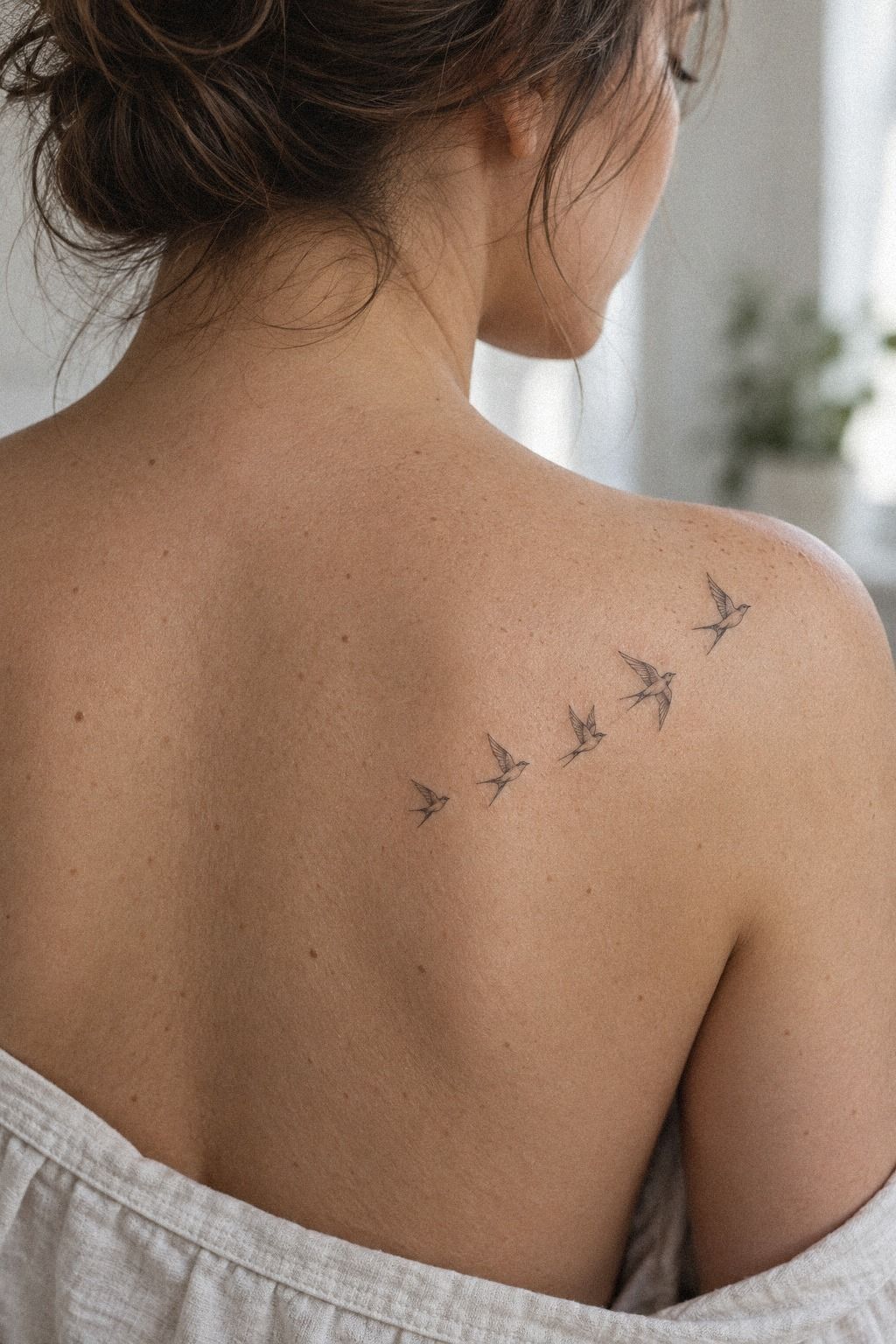
A symbolic bird with meaningful coordinates gives you a way to keep the story private while preserving a sacred reference.
10Blackwork Raven, Open Skin

A blackwork raven gives you the strongest contrast in this group. You’ll want to study how the bold black areas, gray shading, and feather separations behave after healing.
I’d choose a raven when you want something haunting and symbolic. The blackwork raven feathers need enough space to remain distinct, so a very small version may lose its authority.
Your artist should show healed blackwork rather than only freshly completed work. Fresh ink can look dramatically darker than the settled result.
Use the Solid-to-Skin Rule. The blackest areas should anchor the bird, while gray shading creates softer transitions.
I’d skip uniform solid fill across every feather because it can flatten the raven into one heavy shape. A controlled mix of blackwork and open skin will give you more depth.
Black ink usually offers the strongest long-term contrast, but every tattoo can soften or spread as it ages. You’ll want to protect healed work from UV and follow the studio’s aftercare instructions.
A raven isn’t a minimal choice, yet it can still feel powerful and expressive when the structure is clear. The healed comparison makes this option especially trustworthy!
Compare raven tattoo designs with blackwork bird tattoos before committing. The best reference shows how the artist handles both solid fill and untouched skin.
11Let a Dainty Flock Cross the Shoulder
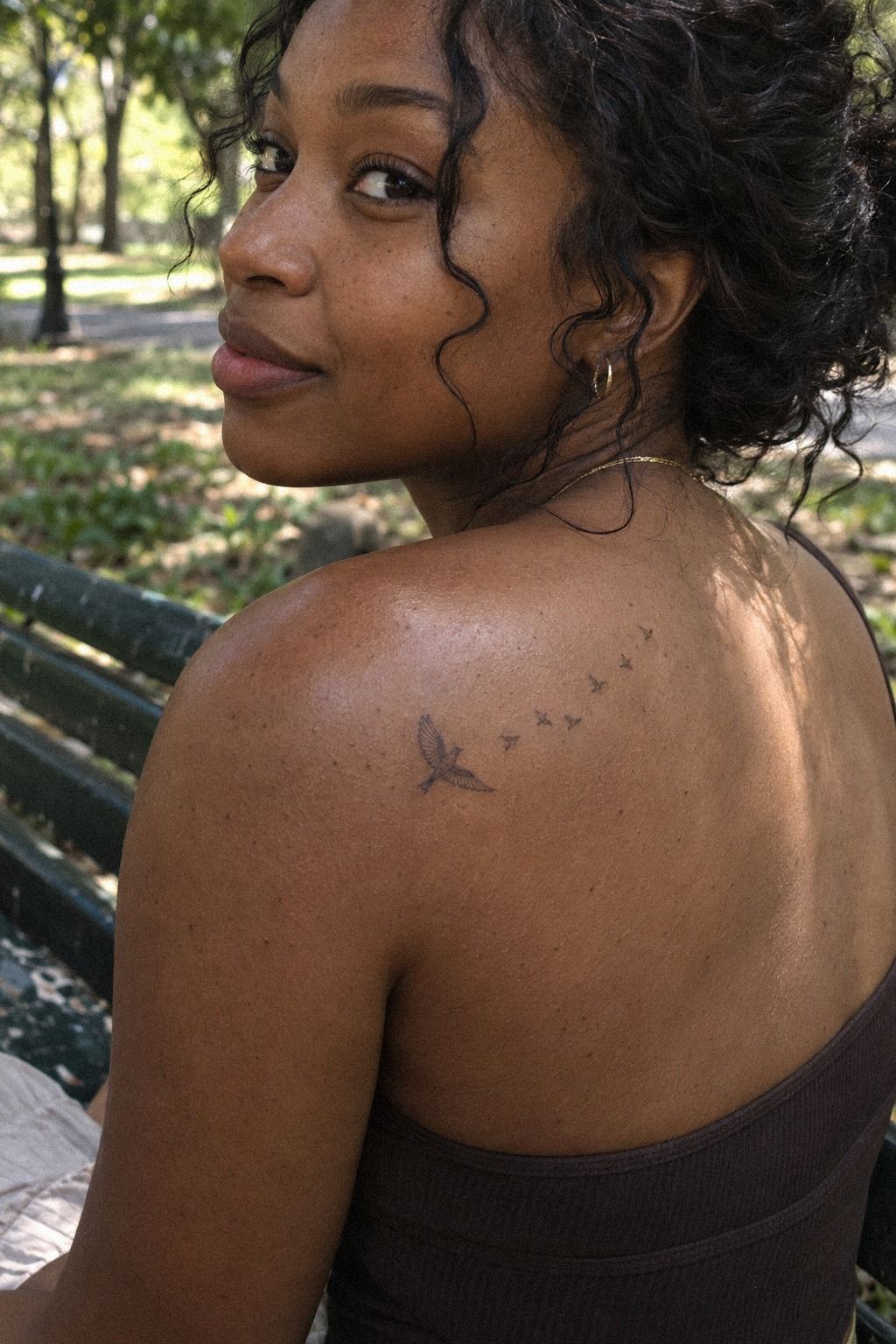
A dainty bird flock across the shoulder lets you create movement with several small silhouettes instead of one detailed subject. I’d vary the height and spacing so your flock feels flowing and organic.
You’ll want three to five birds with slightly different wing positions. Too many identical shapes can look stamped, while too much variation can make the group feel disconnected.
I’d keep each bird simple, with a small body and clear open wings. The shoulder flock spacing matters more than adding extra detail.
This is the Three-Bird Rhythm. One bird begins the movement, one carries the eye across the shoulder, and one gives the composition a stopping point. You can add a fourth only if your artist says the spacing still works.
I’d skip a full flock of ten because the smallest birds may turn into dots over time.
Your skin tone should guide the contrast and line weight, not limit the design. Ask to see healed work on a similar undertone whenever possible.
If you want another compact concept, browse tiny phoenix tattoos and shoulder bird tattoos for examples of symbolic flight. This flock is stylish and personal without being overly literal.
The Meaning I’d Keep Private
Bird tattoos are often described as symbols of freedom, but that explanation is too narrow for the designs shown here. Your bird might represent a person, a departure, a return, faith, grief, or a decision nobody else needs to understand.
I prefer tattoos that leave some room around the meaning. A private symbol can be more meaningful because it isn’t performing for strangers.
I’ve also learned that the smallest design decisions carry the most weight. A hummingbird behind the ear feels different from a raven on the upper arm.
A swallow moving across the collarbone creates a different emotional rhythm from matching birds on both wrists. You’ll want to choose placement and linework together because meaning changes when visibility, pain, and aging enter the picture.
For me, the best choice is the one that still feels personal after the trend passes. Fine line is delicate, but it can be crisp when the artist respects spacing.
Blackwork is bold, but it can remain elegant when the solid areas are planned. Watercolor is vibrant, but it needs a clear anchor.
I’d rather see one meaningful mark than five decorative details that don’t belong to you.
Before booking, look for healed photographs, ask about the artist’s specialty, and discuss how the design will age. Your surface healing may take about 2 to 3 weeks, while complete healing can take 2 to 3 months.
Protect the tattoo from strong sun, wash gently, moisturize as directed, and avoid pools while it settles. That care is simple, but it matters!
For more context, compare bird tattoo meanings with small bird tattoo ideas. The right symbol should feel timeless and specific to you, even when the species is familiar.
Before You Choose a Bird
Start with the emotion you want the tattoo to carry. A hummingbird can feel playful and energetic, a raven can feel haunting and powerful, and a swallow can feel romantic or symbolic of return. The bird tattoo meaning should guide the silhouette, not get added after the drawing is finished.
Then decide how private you want the result to be. Behind the ear, ribs, and sternum feel more concealed, while the forearm, collarbone, and shoulder are easier to share.
If you’re unsure, print the design at its intended size and live with that placement for a few days. A tattoo placement guide can help you compare visibility and movement.
The value of a small tattoo comes from clarity, not the number of marks. If a simpler design costs less and remains readable longer, I’d consider that a better budget choice than paying for intricate detail that may blur. Your tattoo budget should serve the design, not pressure you into the smallest possible version.
Line Weight, Scale, and Aging
Fine line tattoos need enough separation between marks to remain crisp. Ask your artist how the tattoo line weight will respond to your chosen placement, skin movement, sun exposure, and everyday friction.
A design can be delicate without being microscopic. I’d rather enlarge a meaningful bird slightly than force ten feather lines into a space that can only support four.
That decision may affect the cost, but it often improves long-term value. The tattoo scale should support the story and the body area together.
Healed work matters more than fresh work. Look for examples seen months or years later, especially when you’re considering fine lines, watercolor, or dense blackwork.
You’ll get a more honest sense of what the tattoo is worth before you commit. Read fine-line tattoo advice before your consultation.
How Placement Changes Cost and Comfort
The final cost depends on the artist’s hourly rate, studio minimum, design complexity, placement, and appointment length. A tiny tattoo may still meet a studio minimum, while a detailed raven or botanical frame may require more time. Ask how the tattoo pricing is calculated.
Your budget should include a consultation and possible touch-up. I’d ask whether the quoted price includes design preparation, aftercare guidance, and a follow-up visit.
That makes it easier to compare value instead of choosing only by the lowest number. A tattoo touch-up may be useful after the skin has fully settled.
Placement also changes comfort. Ribs and sternum can feel intense, while the forearm and upper arm are often easier for a first session. If the tattoo is worth it to you, choose an artist whose healed work fits the design rather than chasing the cheapest quote.
Your tattoo placement should match your comfort and daily routine.
For practical care, review this tattoo aftercare guide before your appointment. Knowing the routine ahead of time can make the first few days feel much easier.
Questions to Ask at the Consultation
Bring the tattoo consultation questions with you:
– How will you simplify this bird at the size I want? – Can I see healed examples with similar line weight? – How will the design read on my skin tone? – What details are most likely to soften over time? – Does the placement work when my body is relaxed? – What will the estimated cost include? – Is a touch-up included, and when would it be appropriate?
A confident artist won’t promise that every line will look unchanged forever. They’ll explain tradeoffs clearly, show you comparable work, and tell you when the concept needs more scale. That honesty has real value.
Look for an artist portfolio that includes healed organic subjects, different skin tones, and placements similar to yours. A polished fresh tattoo isn’t enough evidence by itself. You need to see how the work settles.
The Questions I Get Asked Most
How much does a delicate bird tattoo usually cost?
I’d expect about $50 to $100 for a studio minimum or roughly $100 to $250 per hour in the US. The final cost depends on the artist, region, size, placement, and detail.
Ask for a quote after the consultation, because a generic online price rarely reflects your actual design. The tattoo cost should include enough time for careful placement.
Are delicate bird tattoos a good idea for a first tattoo?
Yes, I think delicate bird tattoos can be a strong first choice when the design is readable and the placement is tolerable. The forearm, thigh, or shoulder may feel easier than ribs, feet, hands, or sternum. Start with a first tattoo that has a meaningful silhouette and an artist whose healed linework you trust.
How do I choose a tattoo artist for delicate bird tattoos?
I’d choose an artist with clean fine-line work, healed photographs, and experience with organic subjects. Ask about hygiene, stencil placement, line weight, and aging.
Look for crisp outlines, controlled spacing, and examples on different skin tones. A polished fresh tattoo isn’t enough evidence by itself.
Your tattoo artist should explain tradeoffs without rushing you.
How much do delicate bird tattoos hurt?
Pain varies by person and placement. I’d expect ribs, feet, hands, and sternum to feel more sensitive because they have less padding or sit close to bone.
Forearms, thighs, and shoulders are often more tolerable. Appointment length, stress, and technique can change the experience too. Your tattoo pain may not match anyone else’s estimate.
How long do delicate bird tattoos take to heal?
I’d plan for about 2 to 3 weeks of surface healing and 2 to 3 months for complete healing. Wash gently, moisturize as directed, avoid strong sun, and stay out of pools while the skin settles.
Don’t pick at flakes or judge the final color during the first few days. The healing timeline depends on placement, skin response, and care.
What’s the best placement for delicate bird tattoos?
I’d choose based on privacy, visibility, comfort, and aging. The forearm and shoulder are practical choices, while behind the ear and ribcage feel more intimate.
You’ll want enough space for the wings to remain distinct, especially when the design uses very fine lines. The tattoo placement should protect the meaning while keeping the bird readable.
Where I’d Start First
If I had to pick one, I’d start with the fine-line swallow along the collarbone. Its open wings and horizontal movement stay readable without heavy shading, and the placement lets you keep it visible or private. Pin that swallow for later and compare it with more small bird tattoo ideas before booking.
I’d also review fine-line swallow tattoos beside your chosen reference. If the design still feels iconic and personal after a week, it may be worth it!


One response to “11 Delicate Bird Tattoos That Keep Your Meaning Private”
[…] might borrow the quiet movement from these delicate bird tattoos while keeping your eagle’s shape distinct. And you don’t need a full spread-wing pose to make […]