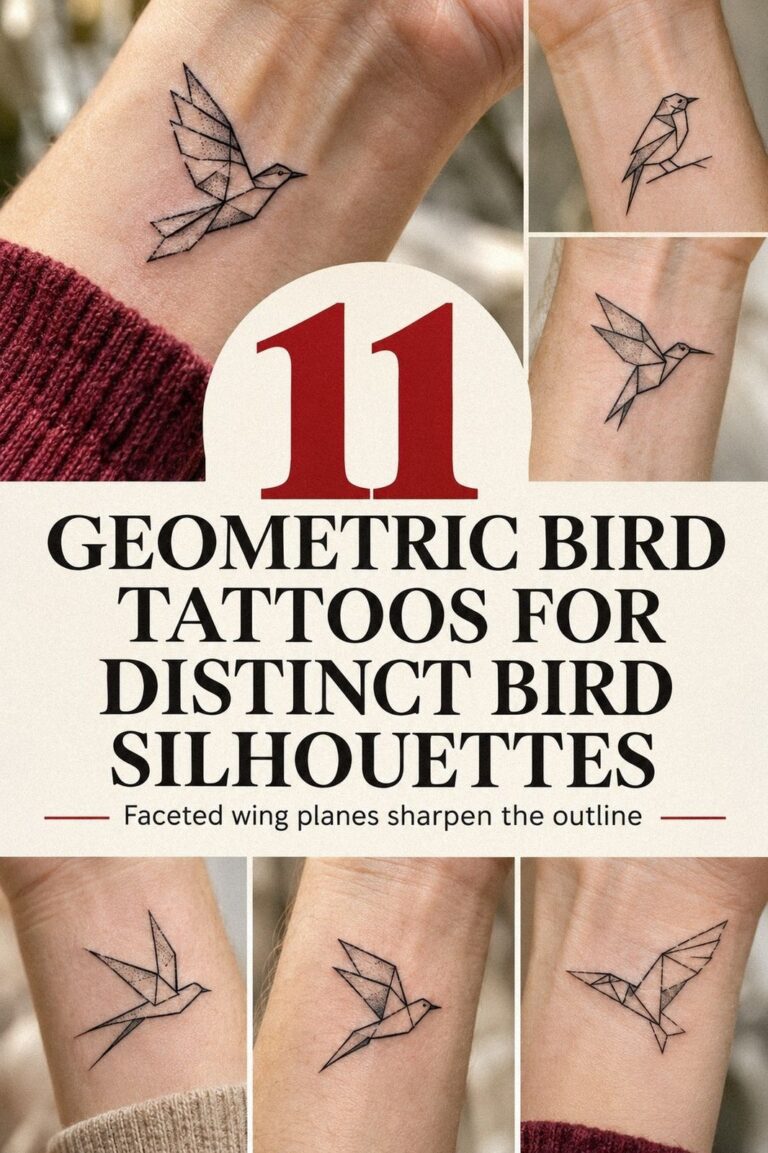
Geometric owl tattoos can look crisp for years when the lines, scale, and placement work together. I learned that after choosing a design that was too small for its location. You’ll want a clear silhouette, enough negative space, and an artist whose healed work looks as sharp as the fresh result. Start here!
Editor’s note: The strongest owl designs don’t chase every possible detail. They protect the eyes, beak, wing shape, and symbolism first, then build outward with restraint. An intricate owl can still feel minimal when every line has a reason.
- Start Small with a Geometric Owl Tattoo on the Wrist
- Why Does Moonlit Linework Make an Owl Feel Symbolic?
- Build a Unique Geometric Owl Tattoo on the Forearm
- The Sacred Axis: Geometric Owl Symmetry on the Ribs
- Minimal or Meaningful? Behind-the-Ear Owl Tattoos
- Use Sharp Dotwork to Deepen a Geometric Owl Tattoo
- Let Botanical Geometry Frame the Owl
- Shoulder-Cap Geometry for a Bold Owl
- What Makes Night Vision Work on the Thigh?
- Keep an Ankle Owl Delicate and Readable
- Abstract Facial Shapes: Where Geometry Gets Expressive
1Start Small with a Geometric Owl Tattoo on the Wrist
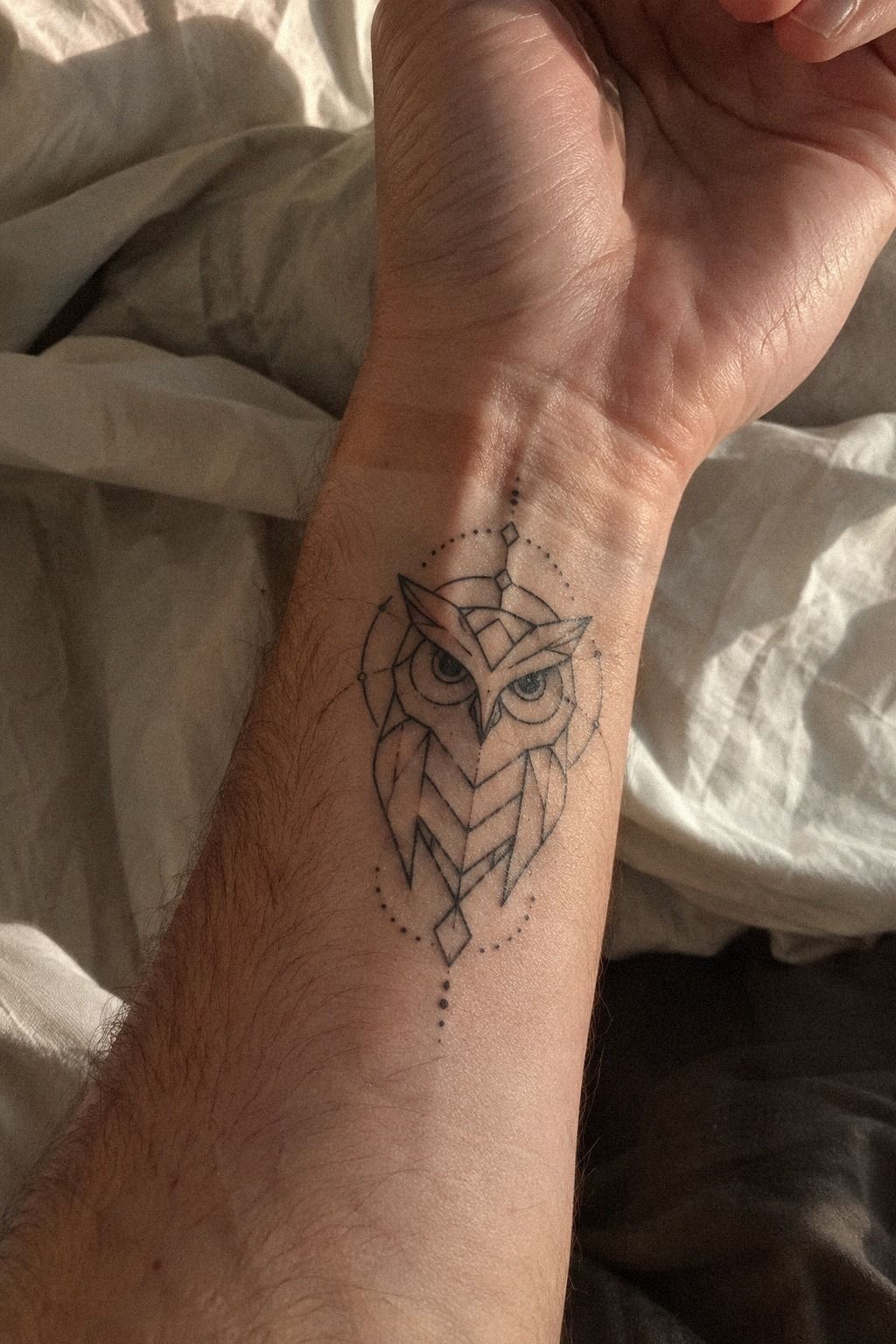
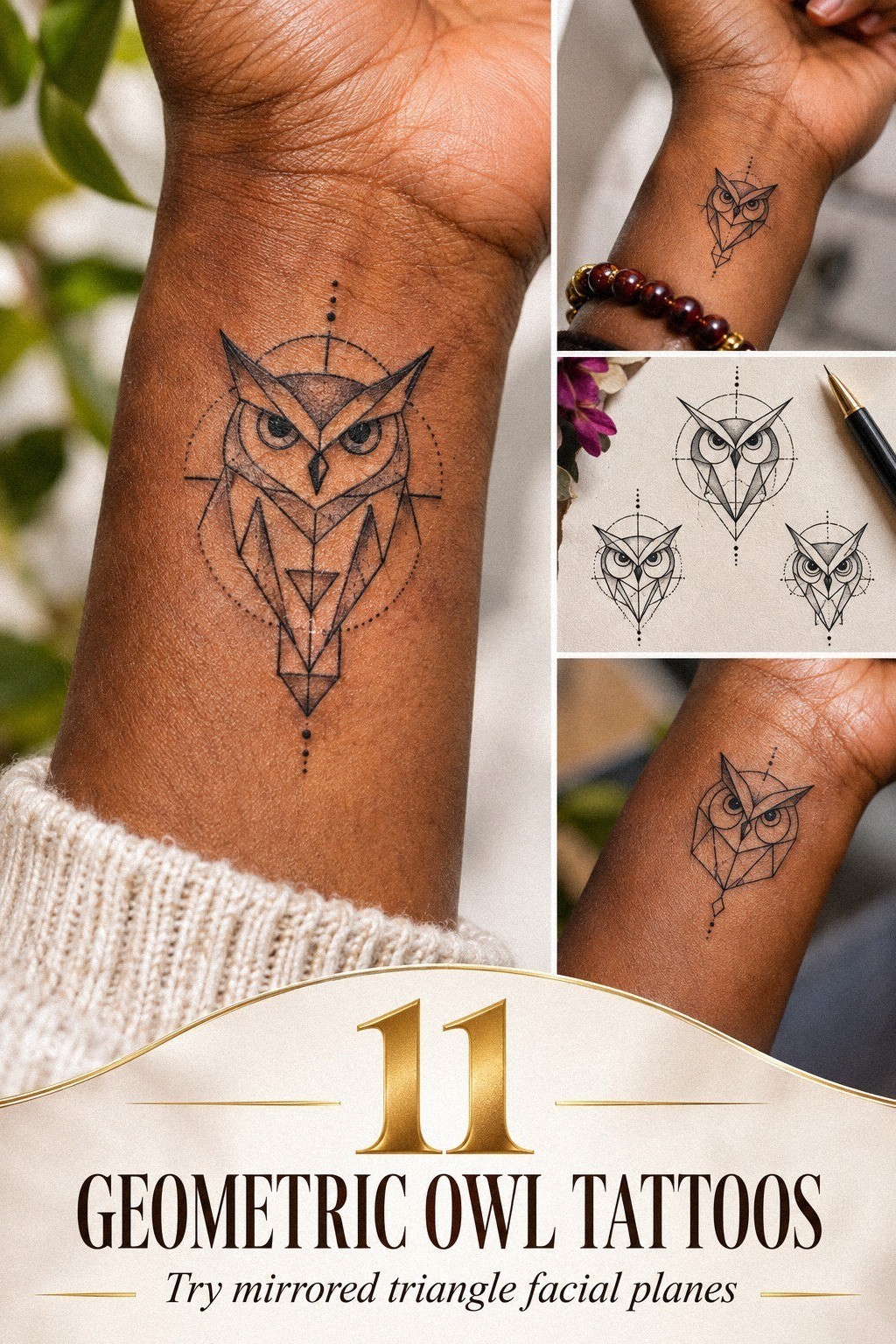
The wrist suits a minimal geometric owl tattoo because you’ll see it constantly without needing a large statement piece. I’d choose a forward-facing head with two strong eye shapes rather than a crowded full body.
Your artist needs space between each triangle, or the details may blur together as the tattoo settles. The wrist placement should support the design, not force it to shrink beyond readability.
This is the Small-Scale Clarity Rule: reduce the number of lines before reducing their spacing. A tiny owl with four readable planes will age better than a delicate owl packed with twelve.
You’re choosing a personal mark here, not copying every feather from a reference image. A 1.5- to 2-inch design gives your wrist enough breathing room while keeping the silhouette recognizable and iconic.
For your reference sheet, include clean single-needle linework, a small terracotta eye, and one solid olive shadow beneath the wings. Terracotta tattoo ink gives the design a strong anchor, while open skin keeps it light. I’ve seen wrist pieces fail when every triangle receives shading.
That approach looks striking on day one, but it can become muddy.
Before booking, compare the artist’s healed work, minimum charge, and touch-up policy. A slightly higher budget can be worthwhile when the healed portfolio proves that small lines stay readable. If you want more tiny options, compare this placement with these tiny owl tattoos and small owl tattoos.
2Why Does Moonlit Linework Make an Owl Feel Symbolic?
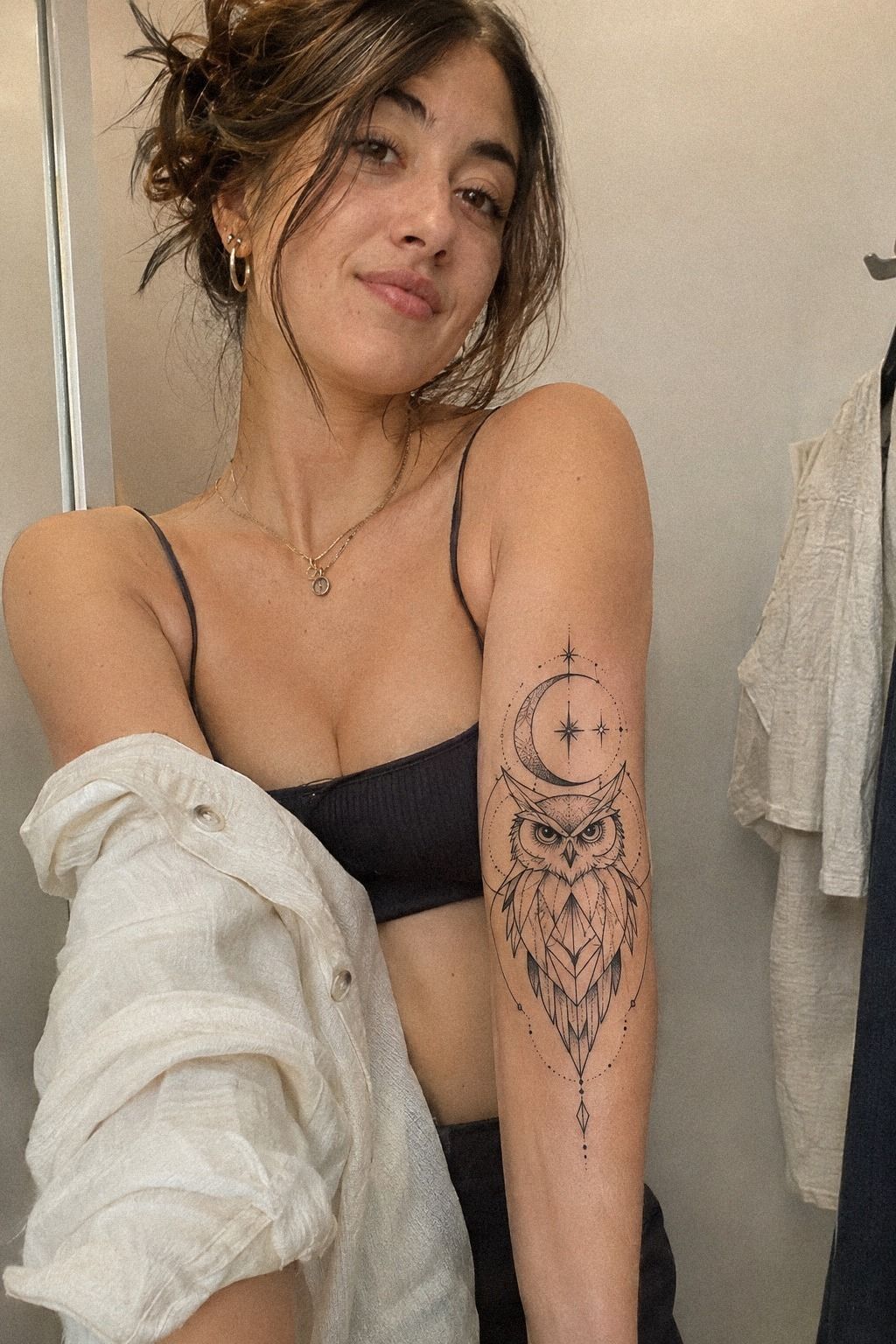
A crescent moon beside an owl gives your inner forearm a symbolic clay-and-muted-gold night-sky story without turning the tattoo into a literal scene.
3Build a Unique Geometric Owl Tattoo on the Forearm
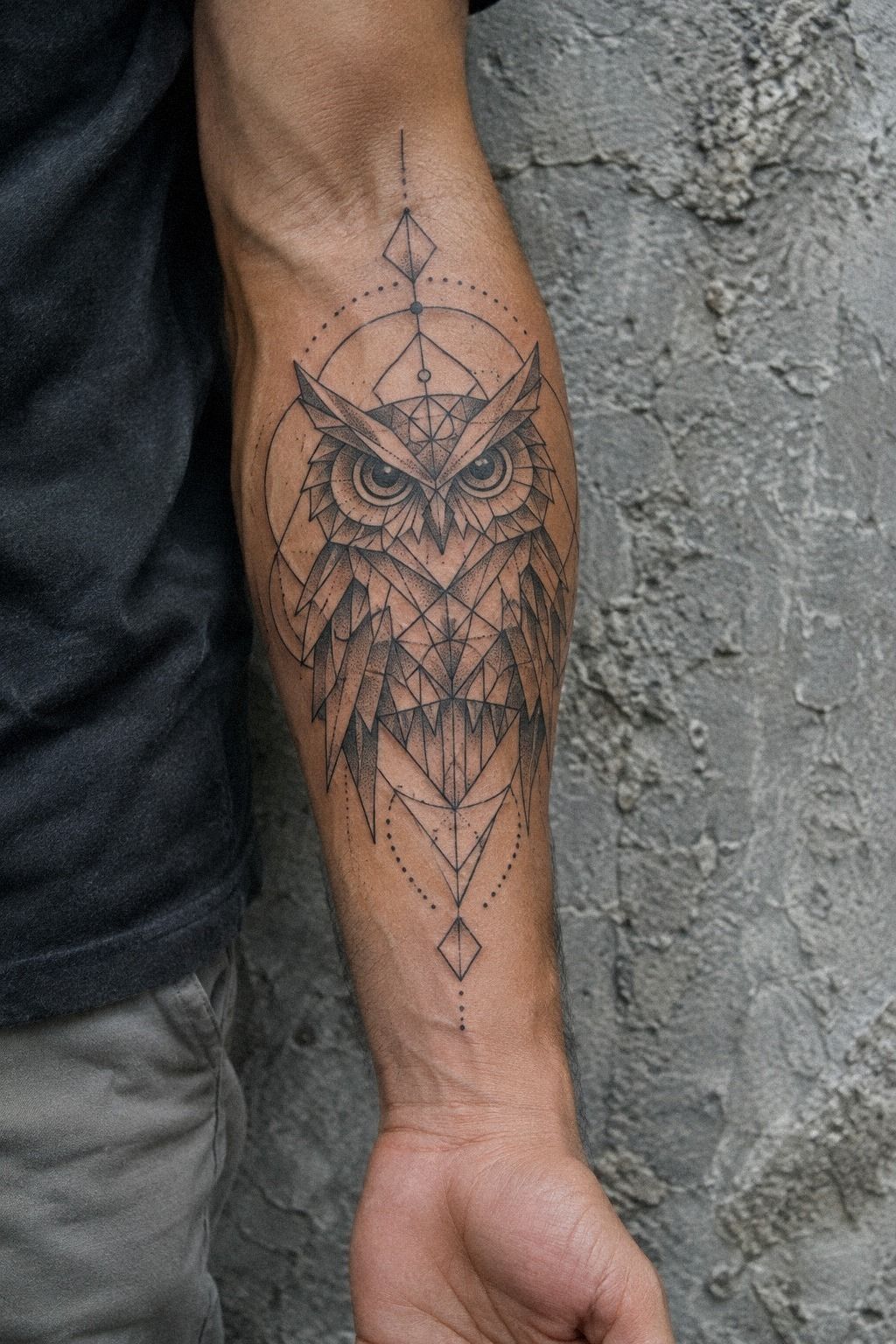
The forearm gives a geometric owl space to breathe, which makes it a strong choice for bold shapes and a longer vertical composition. I’d place the head toward the elbow and let the body taper toward the wrist. The forearm silhouette should remain recognizable from several steps away, even when your arm is relaxed.
This is the Three-Plane Owl Method: one plane for the face, one for the wings, and one for the body. You’ll get a more powerful image when those planes remain readable.
Don’t ask your artist to fill every gap with decoration. The design should still read as an owl when your arm is turned.
For your reference, consider deep plum ink around the eyes, narrow greywash beneath the wings, and a small area of untouched skin through the chest. I once preferred a fully shaded version, but I changed my mind after seeing how quickly dense shading swallowed the facial geometry.
You’re better off keeping the face sharp and the lower body quieter. That restraint improves the long-term value of the tattoo and gives it a polished finish.
If you want related animal structure, look at geometric bird tattoos and realistic owl tattoos. Those references can help you decide whether your owl should feel more expressive or more diagrammatic.
Your final sketch should show both the front view and the way it wraps slightly around your arm. That planning is worth it!
4The Sacred Axis: Geometric Owl Symmetry on the Ribs
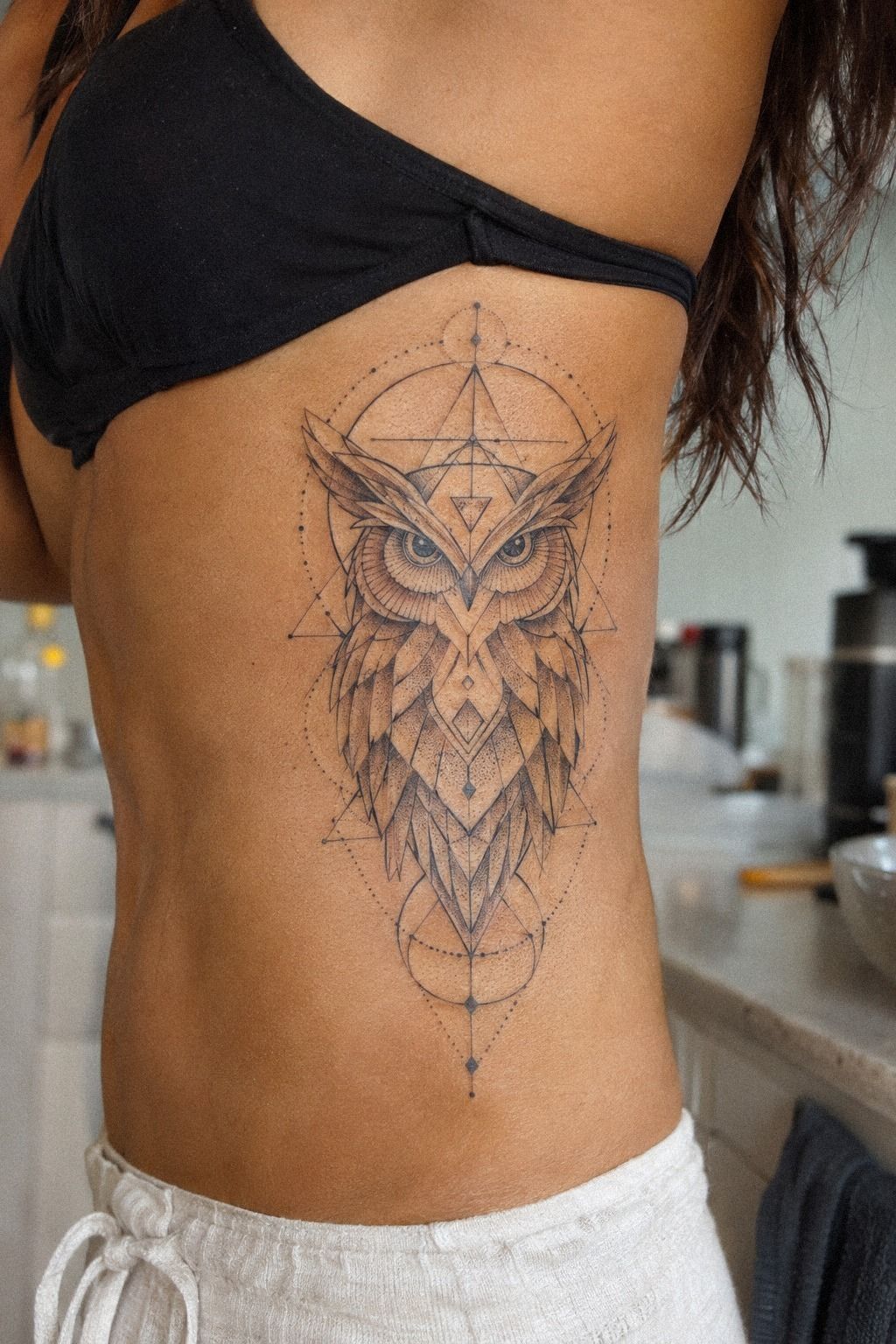
Rib placement makes symmetry especially important because your body’s natural curve can change the design from one angle to another. I’d choose this style if you want a private, sacred tattoo with a strong visual presence. The Sacred Axis Layout runs one invisible line from the owl’s crown through its beak and breastbone.
You’ll want your artist to mark that axis while your body is relaxed, not twisted. A design that looks centered on a flat stencil can lean once it reaches the ribs.
Ask your artist to show you the transfer from the front and side before you approve it. That extra check can protect the cost of a custom piece and keep the final shape balanced.
Use dense navy linework for the central face, then leave the wing edges lighter. That makes the image feel ornate without making it too heavy.
Rib tattoos can be more painful than forearm, thigh, or shoulder placements because the skin sits close to bone. You’ll need honest expectations, and you shouldn’t schedule intense training immediately afterward.
For another symmetrical direction, compare geometric eagle tattoos with these tiny owl tattoos. I’d skip a wide horizontal owl on the ribs because it can lose its center when you move. Your strongest option is a narrow vertical piece with clear breathing room around the wings and an ornate rib composition.
5Minimal or Meaningful? Behind-the-Ear Owl Tattoos
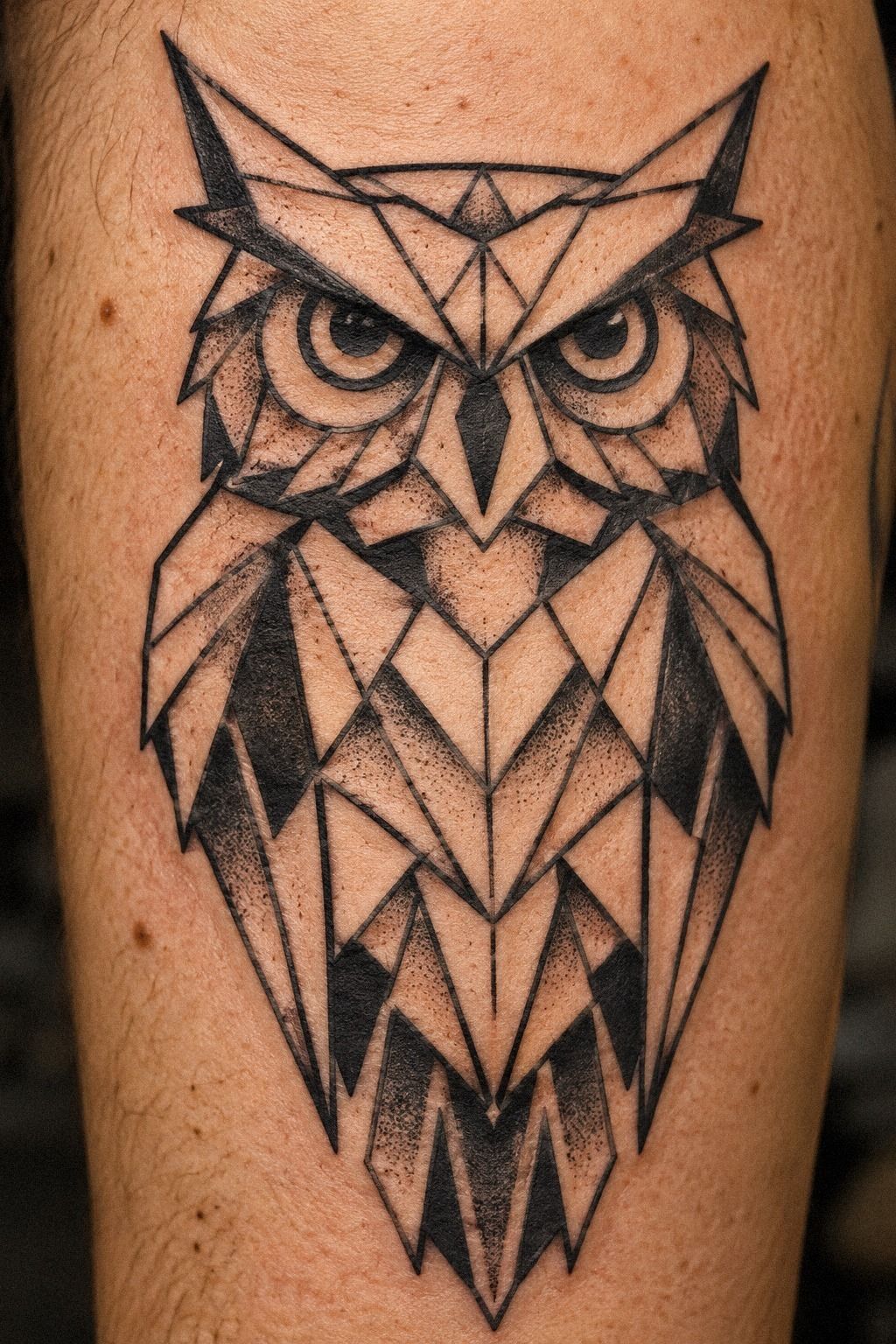
Behind the ear is a delicate placement that suits a dainty owl, a single emerald eye, or a compact geometric face with a restrained gold accent.
6Use Sharp Dotwork to Deepen a Geometric Owl Tattoo
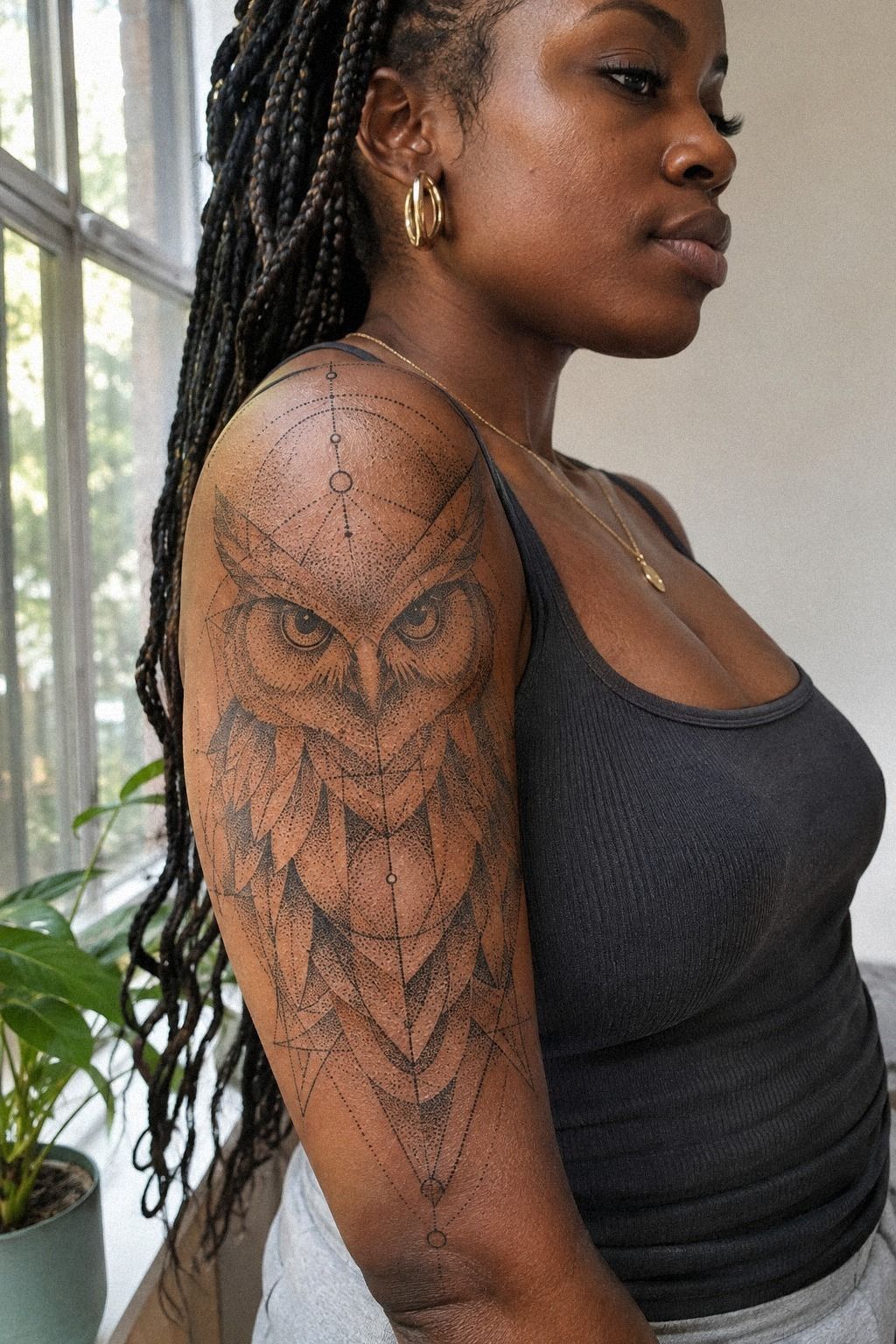
Dotwork can give your upper-arm owl a gritty texture without losing the strict geometry. I’d use dotwork as a shadow language, not as the entire outline. Your artist should keep the primary contours solid and easy to follow.
Healed dotwork is more useful than a fresh result when you’re judging consistency.
The Dot-to-Line Ratio is the key decision. You’ll want crisp edges around the brow and beak, then gradual dots beneath those areas.
Too many equal-sized dots can make the owl look flat. A patient artist can vary the density, leaving the outer wings more open while concentrating the darkest pattern near the face.
Ask about forest-green pigment and healed dotwork photos on skin close to your tone. Fresh contrast can look strong, but you need to see how the dots settle after the surface layer heals.
I’d avoid trying to copy a grey reference exactly if your artist uses a different ink saturation. Your skin and the artist’s technique both shape the final result, so forest-green pigment shouldn’t be judged from a screen alone.
If your budget is limited, prioritize the face and wing structure before adding decorative stippling. That gives you better visual value than paying for dense dots that later compete with the silhouette.
For comparison, study geometric bird tattoos and this realistic owl tattoos guide. The face and wing structure should still lead the design.
7Let Botanical Geometry Frame the Owl
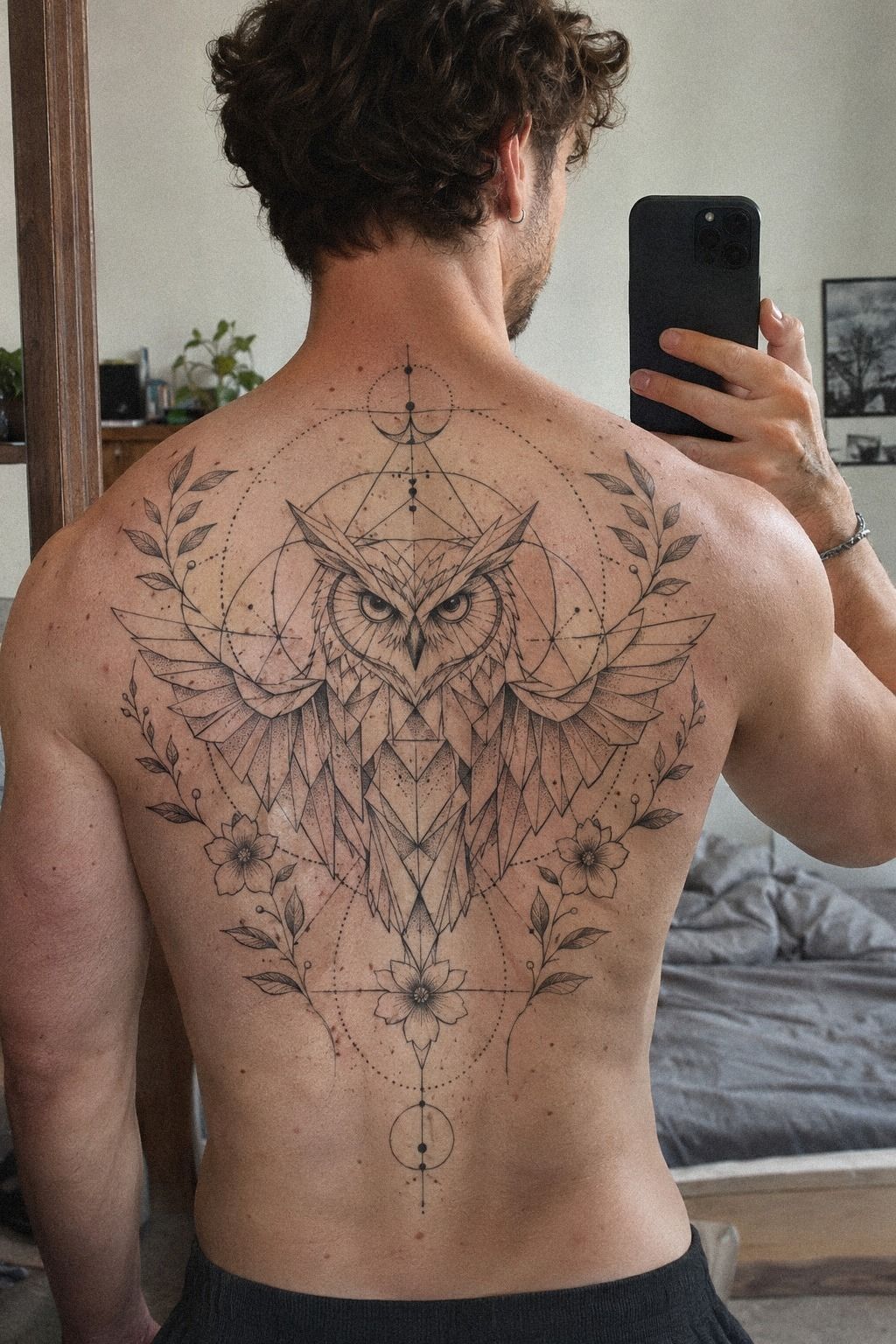
Botanical geometry gives an upper-back owl a flowing frame while keeping the central animal angular. I’d choose two or three leaves, not an entire collection of stems and petals.
Your design needs a focal point, and the owl should remain the first thing people recognize. Angular leaf shapes can echo the animal’s planes without hiding them.
This is the Leaf-and-Facet System: pointed leaves echo the owl’s geometry, while curved stems keep the composition from feeling rigid. You’ll want the botanical elements to support the owl’s outline rather than cover it.
A branch can also help the tattoo follow the upper back’s movement. The result can feel elegant, but it shouldn’t become so elaborate that the face loses authority.
Use charcoal linework for the leaves and a dusty-rose accent around the darker central owl. The contrast can feel whimsical and expressive without becoming soft.
I’d skip colored flowers in this version because they could pull attention away from the animal. One small unfilled leaf may be enough to create a visual pause beside the charcoal linework.
If you like nature-based animal references, save watercolor owl tattoos for color ideas and compare them with geometric unique butterfly tattoos. You’ll find useful shapes in both. Your artist should stencil the full composition while you stand naturally, since your shoulder blades will change the spacing when you move.
An upper-back stencil can reveal problems before they become permanent.
8Shoulder-Cap Geometry for a Bold Owl
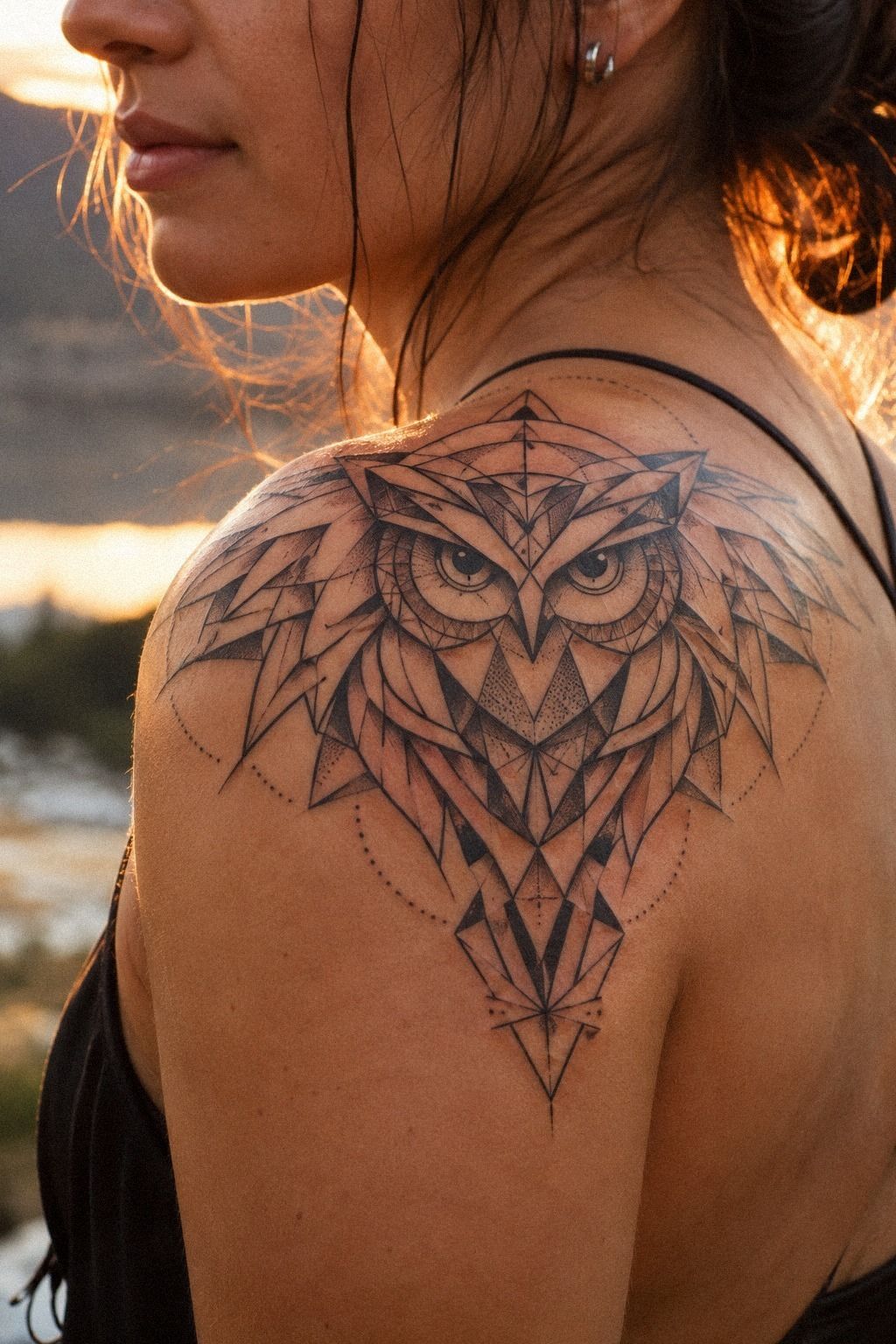
A shoulder placement lets you build a fierce owl with broad wings, strong black shapes, and enough space for the design to follow the deltoid. I’d let one wing cross the shoulder cap while the other stops before the chest. Shoulder-cap placement gives the design movement when you lift your arm.
The Shoulder-Cap Arc keeps the owl from looking like a flat sticker. You’ll want the central face placed slightly forward, with the wings following the curve instead of sitting parallel to the floor.
I’d avoid a perfectly symmetrical spread if you want a more daring fit. A slightly uneven composition can feel intentional and powerful.
Choose bold black ink for the eyes, brow, and deepest wing sections, then leave skin breaks around the shoulders. This approach can feel fierce without turning the whole image solid.
I’ve seen shoulder tattoos look heavier than expected when every triangle is filled. Your best version needs contrast between ink and untouched skin, especially across the deltoid curve.
For placement comparisons, look through geometric eagle tattoos and small owl tattoos. The eagle references show how wings can carry visual weight, while smaller owls help you judge scale. If you’re worried about visibility, a shoulder piece can be worth it because you can show it or cover it.
9What Makes Night Vision Work on the Thigh?

The thigh gives you space for a dramatic geometric owl with a midnight-blue body, copper accents, wider wings, and more controlled shading.
10Keep an Ankle Owl Delicate and Readable
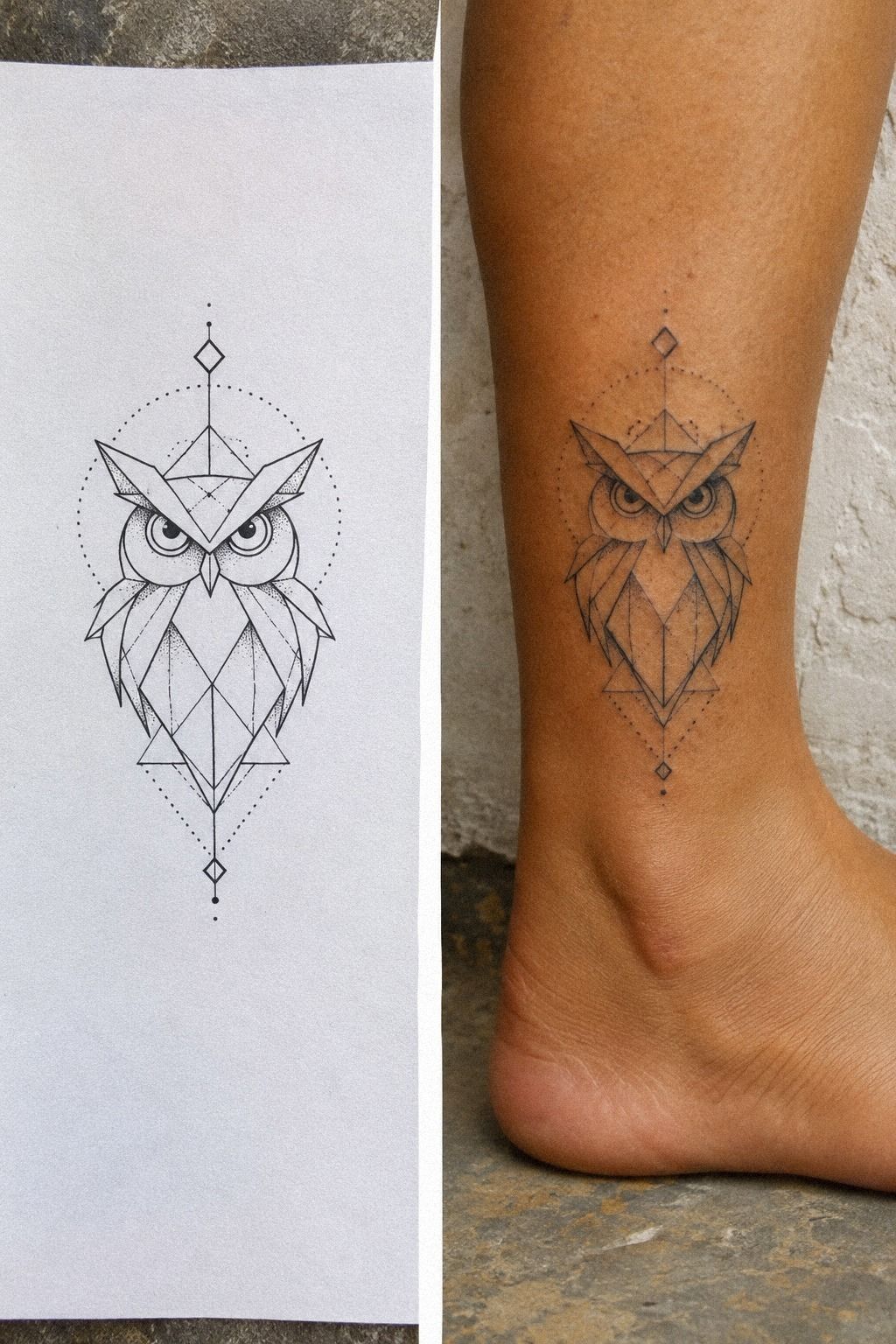
The ankle suits a dainty owl, but its silhouette must stay readable because the placement bends, rubs, and receives regular friction. I’d keep the design above the ankle bone or slightly to the outer side, depending on how visible you want it to be. Ankle placement rewards editing.
The Stencil-to-Healed Check asks three questions: Can you recognize the owl without zooming in? Do the smallest gaps remain open?
Will your footwear rub the placement during healing? You’ll want direct answers before your session.
Fine lines can spread slightly over time, so your artist should leave enough space between details.
Use a sage-green outline and avoid too many pale accents. The result can feel graceful and understated when the wings are open and the eyes remain simple. I’d skip a heavily shaded ankle piece because socks and shoes can make the area feel visually crowded.
Your best choice is a clean design built around sage-green outline.
For scale ideas, compare tiny owl tattoos with minimalist owl tattoos. A typical surface healing period is about 2 to 3 weeks, while complete healing can take roughly 2 to 3 months.
You’ll need gentle washing, light moisturizing, and a break from swimming and direct sun. Protect the surface healing period instead of judging the tattoo too soon.
11Abstract Facial Shapes: Where Geometry Gets Expressive

An abstract face gives a sternum placement a haunting quality because the owl becomes a pattern of eyes, angles, and negative space rather than a literal portrait. I’d center the beak over the sternum and let the facial shapes follow your natural vertical line. Sternum alignment should be checked while you’re standing and breathing normally.
This is the Abstract Eye Gate, where the eyes establish recognition before the rest of the owl appears. You’ll want the shapes to remain balanced without making both sides identical.
A slightly uneven line can feel more expressive, but the central axis should still hold. The Abstract Eye Gate gives the face its identity.
Choose deep terracotta ink for the strongest facial planes and add restrained olive accents around the eyes. That keeps the piece iconic and readable from a distance.
Sternum tattoos can be more painful than upper-arm, thigh, shoulder, or forearm placements, so plan your session with enough time and water. I’d avoid rushing this design just to finish in one sitting.
If you want a different animal comparison, browse geometric bird tattoos and geometric unique butterfly tattoos. Those references can help you decide whether your owl should feel more edgy or more sacred. Your final sketch should still look intentional when the body moves, with the central axis staying visually clear.
Choose Geometry Before You Add Detail
Start with the owl’s silhouette, eye placement, beak, and wing direction. Once those decisions work, add dots, leaves, moons, or shadow planes. Primary owl structure should always receive the most attention during a consultation.
I’d rather see a crisp, simple owl than an intricate design that loses its face. That choice protects readability, keeps the session focused, and gives your tattoo more lasting value. A custom design can become classic when its main shapes are strong enough to stand without extra symbols.
Which Tattoo Details Are Worth the Cost?
A custom design can be worth the cost when the artist has relevant healed work and understands how geometry behaves on moving skin. Pay for clean planning, thoughtful placement, and reliable technique before paying for extra symbols. Custom tattoo value comes from decisions that improve the final result.
If the quote exceeds your budget, remove secondary details before shrinking the main composition. A smaller number of stronger shapes usually looks more polished than a crowded design trying to include everything. Your main composition matters more than an impressive list of add-ons.
Check Healed Work Before You Commit
Fresh tattoos often look sharper and darker than settled tattoos. Ask to see healed geometric work, especially on placements similar to yours. Healed portfolio examples can show whether thin lines, dotwork, and negative space remain distinct after recovery.
You should also ask about deposits, touch-ups, aftercare, and expected session length. Clear answers make the booking feel more comfortable, and they help you compare artists by more than the lowest price. Good aftercare instructions should be specific enough for you to follow without guessing.
Meaningful or Minimal? Match the Owl to Your Life
A personal tattoo doesn’t need a long explanation. It can represent protection, intuition, independence, memory, or simply your connection to the animal. Personal symbolism should guide the design without forcing every meaning into one small space.
Think about visibility, clothing, sun exposure, movement, and how often you’ll want to see the piece. A romantic moonlit owl, a fierce shoulder design, and a minimal wrist face can all be meaningful, but they create different everyday experiences. Your everyday visibility should match the kind of relationship you want with the tattoo.
What I’ve Learned About Geometric Owl Tattoos
I used to think the most impressive geometric owl was the one with the most lines. I was wrong.
After comparing fresh tattoos with healed work, I’ve learned that the strongest designs protect their main shapes first. Readable facial geometry needs space.
Your first decision should be scale, not symbolism. A small owl can feel personal and timeless, but it can’t carry every feather, moon, leaf, and dot.
A larger thigh or upper-back piece gives you more options, while a wrist or ankle design asks you to edit hard. I’d rather see a clean 2-inch owl than a cramped miniature imitating a 6-inch piece.
Placement also changes the experience. Forearm, thigh, shoulder, and upper-arm tattoos are often more tolerable than ribs, feet, hands, and sternum areas. That doesn’t mean your pain will match someone else’s.
Your sleep, stress, skin sensitivity, and session length matter too. Still, you can use these zones as a practical starting point when choosing a placement sensitivity plan.
Healing deserves equal attention. You’ll wash the area gently, moisturize as directed, avoid soaking it, and protect it from the sun once healed. I’ve seen people judge a tattoo too early, while the surface was still dull and flaky.
Give your skin time. A geometric owl isn’t finished when the artist wipes away the stencil, so follow your aftercare routine carefully.
What People Always Want to Know
How much does a geometric owl tattoo usually cost?
A geometric owl tattoo typically costs about $100 to $300 in the United States, depending on size, placement, artist, and region. Some shops set a minimum of roughly $50 to $100, while hourly rates often fall near $100 to $250.
Your final quote may change if the design needs several hours. United States pricing is only a starting point.
Ask your artist for a quote after sharing the placement and approximate size. Transparent pricing is more useful than choosing from a random number online. You’ll want to know whether a consultation, touch-up policy, or deposit is included before booking.
Are geometric owl tattoos a good idea for a first tattoo?
Yes, geometric owl tattoos can work well for a first tattoo if you choose a manageable placement and a clear design. Forearm, upper arm, shoulder, and thigh areas are often more tolerable than ribs, feet, hands, or sternum. Your artist should show healed linework before you commit to a first-tattoo placement.
A readable silhouette gives you confidence while you’re learning how your skin responds. I’d avoid starting with a dense rib piece or an extremely delicate ankle design if you’re nervous.
Choose something personal enough to matter, but simple enough that you won’t spend the session worrying about every detail. A manageable design can still feel bold.
Yes, really!
How do I choose a tattoo artist for geometric owl tattoos?
Choose an artist whose portfolio shows clean geometric linework, consistent symmetry, and healed tattoos on varied skin tones. You’ll also want to confirm studio hygiene, licensing requirements in your area, and clear aftercare instructions.
Your artist should answer questions without rushing you. The right artist portfolio should make their strengths easy to recognize.
Look for healed portfolio photos, not only fresh tattoos shown right after the session. Ask how the artist handles small lines, dotwork, and stencil placement. I’d skip anyone who promises that every fine line will look unchanged forever.
Honest guidance is a better sign than confident exaggeration, especially in healed photos.
How much do geometric owl tattoos hurt?
Pain depends on your body and the placement, but ribs, feet, hands, and sternum are commonly more uncomfortable than forearm, thigh, shoulder, or upper-arm areas. Your session length and the amount of shading matter too. A small outline may feel very different from a dense blackwork piece because of placement sensitivity.
A realistic pain plan means eating beforehand, sleeping well, bringing water, and wearing clothing that leaves your placement accessible. You’ll still feel the needle, of course, but you can make the appointment easier on yourself. If you’re worried, ask whether the artist can split a large design into separate sessions.
That kind of pain plan can make a long appointment feel more manageable.
How long does a geometric owl tattoo take to heal?
The surface usually heals in about 2 to 3 weeks, while complete healing can take roughly 2 to 3 months. Your skin may peel, feel tight, or look slightly dull during the early stage.
Don’t pick at it, soak it, or expose it to intense sun while it’s recovering. The surface healing stage needs patience.
Follow your artist’s aftercare instructions for gentle washing and moisturizing. You’ll want to avoid swimming and friction from tight clothing during the early period. I’d wait before judging the final contrast, especially with fine lines or dotwork.
Your tattoo needs time to settle beneath the surface, and clear aftercare instructions help protect that result.
What’s the best placement for geometric owl tattoos?
Forearm, thigh, shoulder, and upper arm are strong choices if you want tolerable placement, clear visibility, and enough space for geometric lines. The wrist and ankle suit smaller designs, while ribs and sternum create a more private but often more painful experience. Your best placement depends on the design you’re actually planning.
Your placement decision should match your lifestyle as well as your style. If you work around clients or uniforms, shoulder or thigh placement may give you more control. If you want to see your owl daily, the forearm or wrist may feel more meaningful.
Think about movement, sun exposure, and your lifestyle fit before choosing.
Where I’d Start First
If I had to pick one, I’d start with the upper-arm dotwork owl. It gives you enough space for sharp geometry, controlled shading, and a readable silhouette without the harsher pain of ribs or sternum.
Upper-arm placement offers a strong balance of visibility, scale, and design flexibility. Pin this one for later and compare it with the geometric bird references before booking.