
Delicate eagle tattoos can stay readable for years when you plan the size, placement, and negative space first. I learned that after watching a tiny wing lose its shape because the lines were packed too tightly. This guide gives you an actionable order, from the first sketch to healed skin. Start small, but make the meaning bold!
- Start With Small Delicate Eagle Tattoos: The Scale First Rule
- Pick Fine Line Eagle Wing Details: The Single-Stroke Method
- Place Your Delicate Eagle Tattoo Thoughtfully: Which Placement Keeps It Readable?
- Keep Feather Lines Crisp And Light: Fine Line Over Dense Shading
- Plan A Symbolic Eagle Silhouette: The Meaning Map
- Choose Unique Delicate Eagle Tattoos Ideas: The Skin Contrast Rule
- Add Minimal Stars Around The Eagle: The Three-Point Balance
- Match Eagle Scale To Your Anatomy: The Collarbone Curve
- Balance Intricate Feathers With Open Skin: Negative Space Over Density
- Prepare For Delicate Tattoo Healing: What Changes During Healing?
- Personalize Your Eagle With Meaning: The Private Symbol Test
1Start With Small Delicate Eagle Tattoos: The Scale First Rule
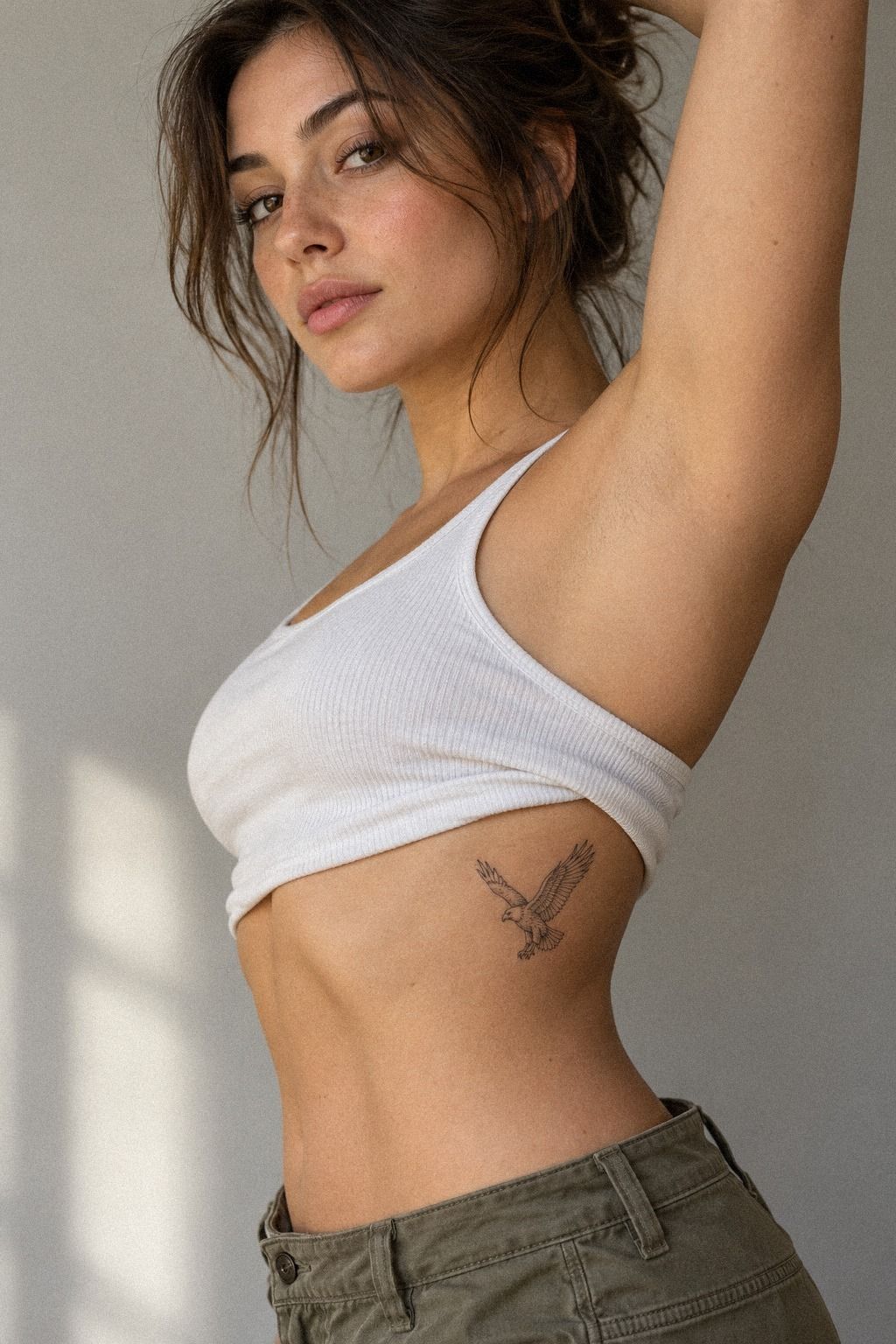
Begin with a small eagle that has one clear gesture, not every feather from a reference drawing. For a spine placement, keep the tiny stars spaced around the eagle so the design can breathe. A small eagle silhouette should still feel expressive at a reduced scale.
For most small delicate eagle tattoos, ask your artist to test a design around 1 to 2 inches. That size can feel dainty, symbolic, and personal without becoming vague.
You’ll want the head, wing curve, and tail to survive reduction. If they disappear in the stencil, they won’t magically return in ink.
I’d skip a crowded miniature eagle. It may look ornate on a phone screen, but your skin needs open gaps between feather groups.
A 3RL cartridge can create hair-thin marks, yet even crisp work needs space as the ink settles. Your artist should show you the stencil from arm’s length before starting.
And if you’re drawn to a very tiny silhouette, compare it with these tiny eagle tattoos first. You’ll notice which shapes remain recognizable without heavy shading. I prefer a slightly larger wing with fewer marks because it feels iconic and timeless on the body.
Give your meaning one visual anchor. Maybe it’s the lifted wing, a star near the shoulder, or a downward angle that represents protection.
The smaller design should still feel powerful when you glance at it alone. That restraint is what makes the final piece polished instead of merely small.
2Pick Fine Line Eagle Wing Details: The Single-Stroke Method

Choose the wing detail before you choose decorative extras. Build the eagle from a single-needle line structure, then add only the feather breaks that help the shape read. Your artist should map the primary wing arc first and keep the gesture flowing.
Ask to see two versions of the same sketch: one with separated barbs and one with a soft greywash shadow. The first feels minimal and sharp; the second can look more dramatic. I’d choose the separated lines for a collarbone tattoo because the skin movement already gives the design a graceful quality.
A single-needle setup can produce elegant detail, but it won’t fix a weak drawing. Your artist needs a clean outer contour and a deliberate stopping point at the wing tip.
If every feather reaches the edge, the eagle can look fuzzy rather than delicate. You want rhythm, not a net of ink.
You might borrow the quiet movement from these delicate bird tattoos while keeping your eagle’s shape distinct. And you don’t need a full spread-wing pose to make the bird feel fierce. A folded wing can be more meaningful if your private symbol is restraint, recovery, or watchfulness.
Look closely at the collarbone placement before you approve it. Skin tension changes as you lift your arm, so your artist should check the stencil while you’re relaxed and in an upright position.
That small pause protects the graceful curve. Good linework is quiet!
3Place Your Delicate Eagle Tattoo Thoughtfully: Which Placement Keeps It Readable?
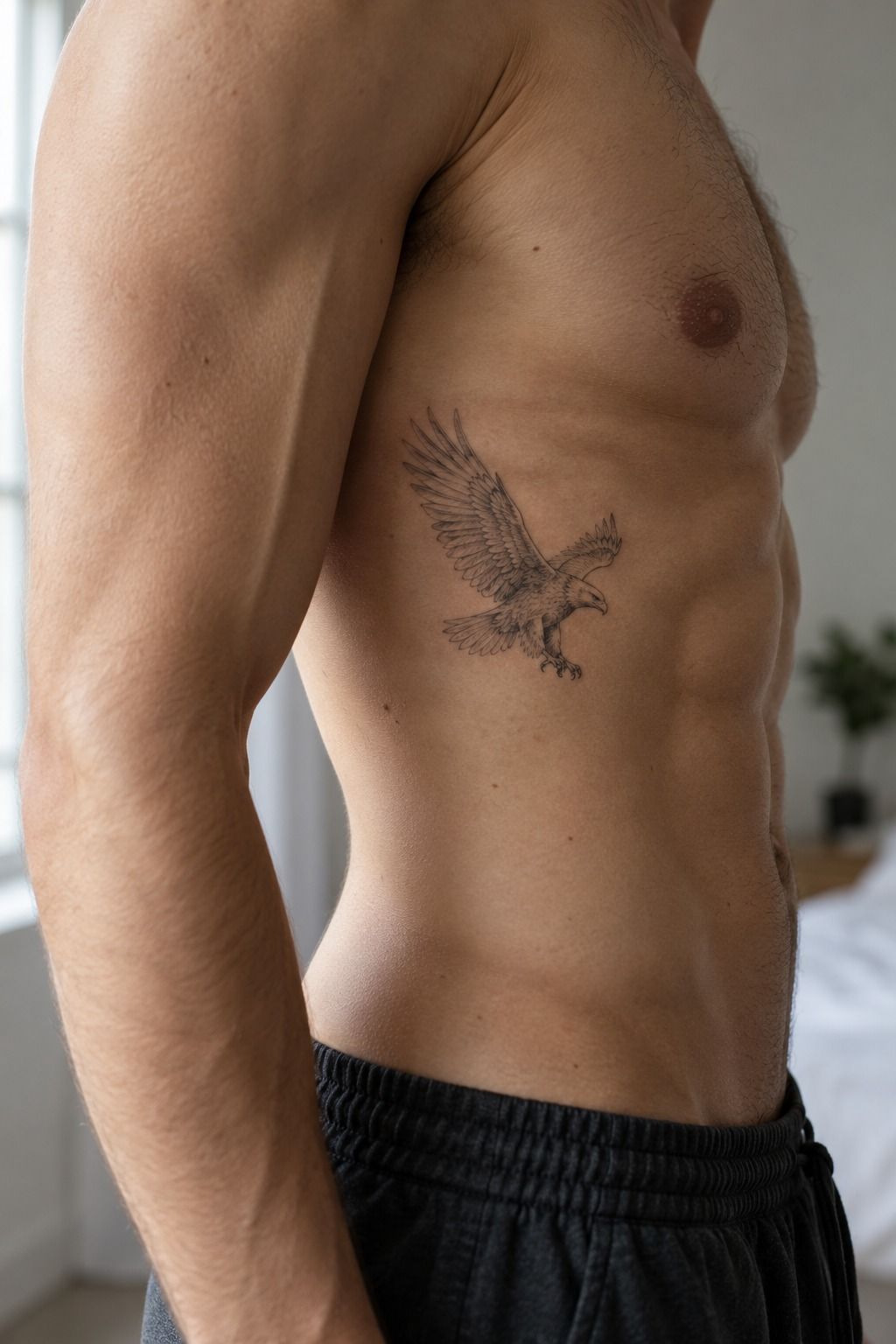
Choose placement by visibility, movement, and how much space your eagle needs to remain clear. An upper-arm placement can follow the natural length of the arm, allowing the curve to feel understated while staying easy for you to see.
The upper arm is often more forgiving than a bony spot, but your artist still needs to study the direction of the design. A black ink outline will look crisp against the skin when the wing follows the arm instead of cutting across it awkwardly. I’d avoid rotating the eagle sideways just to fill an empty patch.
What do you want the tattoo to say when nobody else can see it? If the answer is independence, place the eagle where your own glance catches it.
If it marks a person or turning point, a more visible position may feel right. Your private meaning should guide the placement, not a trend board.
Compare the upper-arm idea with small eagle tattoos before you commit. You’ll see how scale changes the balance between a hidden symbol and a statement tattoo. And if you’re unsure, ask for a temporary stencil and wear it through one normal day, including your usual clothing.
Your artist should also consider friction from sleeves, straps, and exercise. A striking design can lose its clean edge if it’s constantly rubbed during healing. Keep the eagle aligned with your body’s movement, and the placement will feel intentional rather than decorative.
4Keep Feather Lines Crisp And Light: Fine Line Over Dense Shading
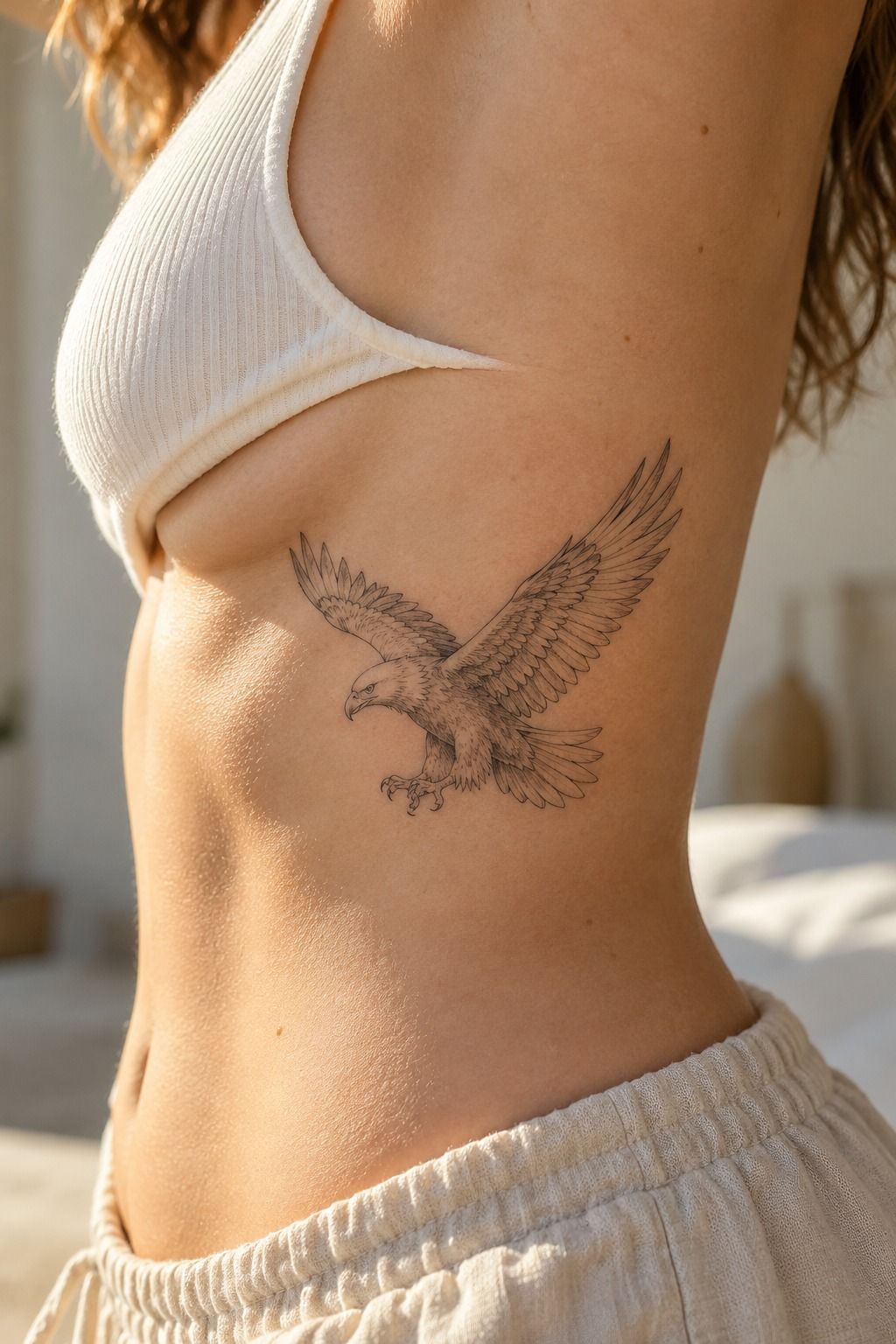
Treat the feather as a study in feather separation.
5Plan A Symbolic Eagle Silhouette: The Meaning Map

Start with the silhouette on paper before you discuss shading. Use a silhouette sketch to test whether the eagle feels fierce, sacred, romantic, or quietly personal.
Write one sentence about what the eagle represents to you. Then circle the one visual feature that carries that sentence.
A black flash drawing with a lifted head may express freedom, while a tucked wing may suggest survival or protection. You don’t need a literal date or quotation to make the piece meaningful.
Keep the sketch simple enough that your artist can explain every line. You’ll know the design is ready when removing a detail makes it weaker, not cleaner. And if you’re collecting reference drawings, save the what an eagle represents in tattoo meaning guide for ideas without copying someone else’s story.
Your budget will usually depend on the studio minimum, artist, region, size, and placement. Use these typical US references as planning markers, not promises:
Don’t choose an artist only because the estimate is low. Your design may be inexpensive compared with a large tattoo, but tattoo ink still needs a skilled hand. I’d invest in clean linework and a healed-portfolio review before adding decorative details that raise the price.

6Choose Unique Delicate Eagle Tattoos Ideas: The Skin Contrast Rule

Use skin contrast thoughtfully when your skin is deep ebony, especially for a wrist placement. Ask your artist how black, grey, and open skin will work together before approving the stencil.
7Add Minimal Stars Around The Eagle: The Three-Point Balance

Place stars only after the eagle works by itself. A three-point constellation can create a light pattern around the main form without turning the design into a crowded scene. Your stars should support the eagle’s direction, not distract from it.
Try three points with different visual weights: one small star near the wing, one slightly larger star farther away, and a third barely there at the edge. A black star mark gives the arrangement structure. I’d skip identical stars because repetition can make the composition feel stamped rather than personal.
Leave enough open skin between the eagle and each star. You’ll want the eye to travel through the design naturally, with no cluster pressed against the shoulder curve. And if your artist suggests moving a star by a few millimeters, that tiny adjustment can protect the balance.
Use these tiny unique butterfly tattoos as a reference for spacing, not subject matter. Their small accents show how a minimal design can feel playful, symbolic, and polished without filling every available patch. The same rule works for your eagle.
Your private meaning might be hidden in the number, shape, or placement of the stars. Keep that detail yours. A personal tattoo doesn’t need an explanation for everyone who sees it, and the quiet mystery can make the piece more empowering.
8Match Eagle Scale To Your Anatomy: The Collarbone Curve

Match the eagle’s width to the collarbone curve, not to the size of the reference drawing.
9Balance Intricate Feathers With Open Skin: Negative Space Over Density

Choose negative space over dense feather detail when the collarbone already has a strong curve. Keep separated barbs and a light structure so your design can feel intricate without becoming heavy.
Let the shaft carry the movement and let the barbs fade before they reach the edge. A fine-line black cartridge can create crisp detail, but your artist should avoid forcing every feather into the same narrow gap. I’d rather see five clear barbs than fifteen blurred marks.
What happens when you look at the tattoo from a distance? If the answer is only “a dark patch,” the design needs more breathing space. Your eye should recognize the feather’s direction first, then notice the smaller details.
That visual hierarchy makes the piece feel refined and expressive.
Use delicate bird tattoos for examples of open compositions. You’ll see how negative space can make a small subject feel graceful and meaningful. And if your reference has shading that won’t suit your skin or placement, ask your artist to translate the mood rather than copy the technique.
The best delicate work isn’t fragile because it’s simple. It’s deliberate.
Keep the silhouette, protect the gaps, and let the skin become part of the drawing. That choice will make your eagle feel more elegant than a packed design ever could.
10Prepare For Delicate Tattoo Healing: What Changes During Healing?

Plan for the tattoo to look darker, shinier, and slightly irritated at first. Your fresh tattoo isn’t the finished tattoo yet, so judge the final result only after the surface has settled.
Follow your artist’s instructions for gentle washing, light moisturizing, and avoiding sun and swimming while the surface heals. A fragrance-free aftercare balm can support comfort when used as directed, but more product won’t make the tattoo heal faster. You’ll want clean hands and a light touch.
Surface healing usually takes about 2 to 3 weeks, while complete healing can take about 2 to 3 months. Your skin may look dull or uneven during that time. Don’t judge the linework during peeling, and don’t scratch because a crisp design deserves patient care.
And if you’re tempted to compare your healing tattoo with a fresh social-media post, pause. Lighting hides texture and redness.
A broad-spectrum SPF 30 product matters after the skin has fully closed, because UV exposure can soften fine lines over time. Ask your artist when sunscreen is safe for your piece.
Watch for unusual symptoms and contact a medical professional if something seems wrong. Your artist can explain normal healing, but they aren’t a substitute for medical care.
The calm, boring routine is what protects the delicate result. That’s the part that lasts!
11Personalize Your Eagle With Meaning: The Private Symbol Test

Finish by choosing one detail that belongs specifically to you. For an ankle tattoo on deep brown skin with a warm undertone, your artist should adapt the contrast and placement rather than trace a generic design. A black ink eagle can stay understated while carrying a deeply personal story.
Your private mark could be a tiny star, a changed wing angle, or a feather that points toward someone important. Keep it readable at the size you’ve chosen. I’d avoid adding initials, dates, and multiple symbols unless each one earns its place.
Meaning becomes stronger when the composition can breathe.
The ankle is visible and mobile, so think about socks, shoes, and sun exposure during healing. You’ll want the ankle stencil positioned where the eagle doesn’t disappear under a shoe edge. And if you like the idea of a small symbolic animal, compare it with tiny snake tattoos to study how compact designs carry attitude.
Your tattoo can be feminine, masculine, edgy, sacred, or none of those things. The important part is that the eagle feels like your decision. A personal design doesn’t need to explain itself loudly, and that quiet confidence can be more empowering than a crowded statement.
Before you book, read the meaning sentence one more time. If the drawing still matches it, you’re ready to discuss the stencil, line weight, healing, and cost with your artist. If it doesn’t, keep refining.
The right tattoo will feel clear, not rushed.
What This Tattoo Means To Me
I’ve always thought an eagle tattoo works best when it carries a private tension. Eagles can suggest freedom, power, protection, distance, or survival, but those words are broad. Your design becomes meaningful when one of them is connected to a specific memory, person, decision, or promise you’ve made to yourself.
I’d rather see a single honest detail than a dramatic composition assembled from every symbol available. A star can represent direction.
A turned head can suggest looking back without returning. A single feather can mark loss, recovery, or the part of yourself you refused to abandon.
None of that needs to be obvious to strangers.
The linework matters because the visual language should match the emotional one. If your meaning is quiet, a crisp and understated outline may fit better than heavy blackwork.
If the eagle represents survival, a stronger wing or sharper beak may feel more truthful. Your artist can help with form, but you have to choose the emotional temperature.
I also wouldn’t promise that fine lines will look unchanged forever. Skin moves, sun affects ink, and delicate marks can soften. That doesn’t make the choice foolish.
It means you’re choosing a living image instead of a frozen one. Protect it, accept its evolution, and make the first version strong enough to age with you.
The most striking designs I’ve seen weren’t always the largest or most intricate. They had a clear point of view.
You could sense why the person chose that eagle, even if you couldn’t know the whole story. That balance between visible shape and hidden meaning is what makes the tattoo feel iconic.
A Few Things Worth Answering
How much does a delicate eagle tattoo usually cost?
A delicate eagle tattoo typically costs about $100 to $300 in the US, depending on size, placement, artist, and region. Many studios have a minimum of about $50 to $100, while hourly rates often fall around $100 to $250. Ask for a quote after the stencil is discussed.
Are delicate eagle tattoos a good idea for a first tattoo?
Yes, delicate eagle tattoos can suit a first tattoo because you can choose a manageable placement and a clear design. An upper-arm placement is often more tolerable than ribs, feet, hands, or sternum. Start with a subject that feels meaningful, not merely fashionable.
How do I choose a tattoo artist for delicate eagle tattoos?
Choose an artist with clean linework, healed portfolio photos, and strong studio hygiene. Look for healed tattoo photographs, not only fresh work, because healed images show how lines settle. Your artist should also explain stencil placement, needle choice, aftercare, and what they’d simplify.
How much do delicate eagle tattoos hurt?
Pain varies by person and placement, but ribs, feet, hands, and sternum are often more painful than the forearm, thigh, or shoulder. A shoulder tattoo may feel more tolerable for many people, though your experience can differ. Tell your artist if you need a pause.
How long does a delicate eagle tattoo take to heal?
The surface usually heals in about 2 to 3 weeks, while complete healing can take about 2 to 3 months. Keep the healed tattoo clean, moisturize lightly as directed, and avoid sun and swimming until your artist says the surface is ready.
What’s the best placement for delicate eagle tattoos?
The best placement depends on visibility, pain tolerance, and how the lines will move with your body. The upper arm, shoulder, and forearm can offer readable space, while the collarbone feels more visible and intimate. Compare the stencil on your relaxed body before deciding.
Where I’d Start First
If I had to pick one step, I’d start with the stencil and the meaning sentence. A clear silhouette protects every later choice, from line weight to placement. Pin your favorite eagle reference for later, then ask an artist to make the design unmistakably yours.


One response to “How to Create Delicate Eagle Tattoos With Meaning Only You Know”
[…] inspiration, compare these delicate eagle tattoos for wing anatomy and delicate dragon tattoos for angular mythical forms. I’d choose a shoulder […]