
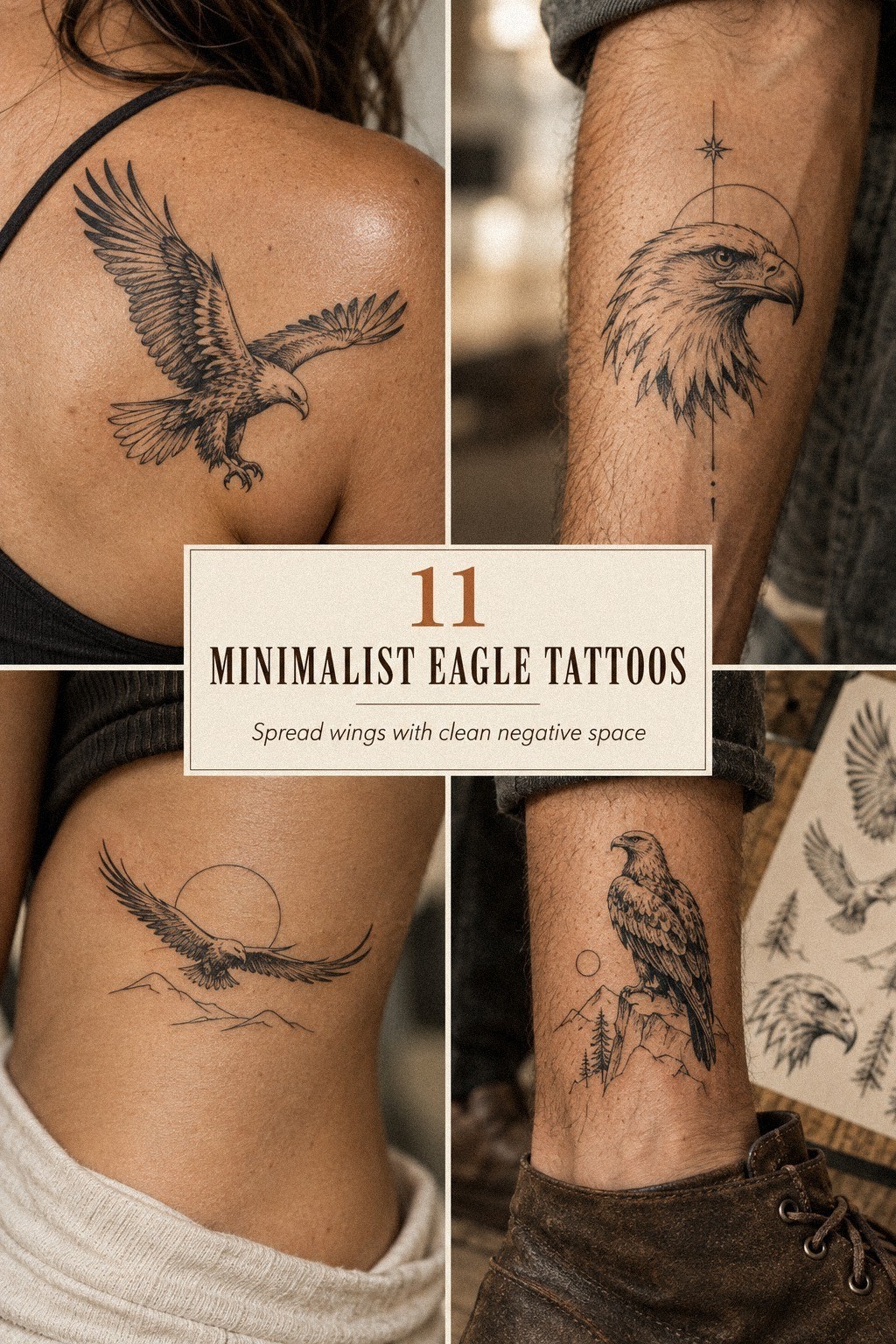
Minimalist eagle tattoos can stay readable for years when placement, line weight, and negative space work together. I once chose a delicate design that was too small for its detail, and it blurred into a little mark. You’ll find 11 striking directions here, from wrist silhouettes to bold black heads, with practical notes on meaning, healing, cost, and whether each idea is worth it.
Editor’s note: The strongest eagle tattoos don’t explain everything at a glance. Start with meaning!
- Where a Small Eagle Holds Its Meaning
- Trace the Forearm with Fine-Line Flight
- Open Wings, Private Strength
- Can a Tiny Eagle Stay Readable Behind the Ear?
- The Three-Line Rule for a Geometric Shoulder Eagle
- Choose Flight Over Fussy Detail
- Anchor the Dainty Ankle Eagle
- Bold Blackwork, Softer Expression
- Mountains Beneath the Eagle: A Personal Mark
- Study the Feather Before You Commit
- Across the Collarbone, Let Meaning Lead
1Where a Small Eagle Holds Its Meaning
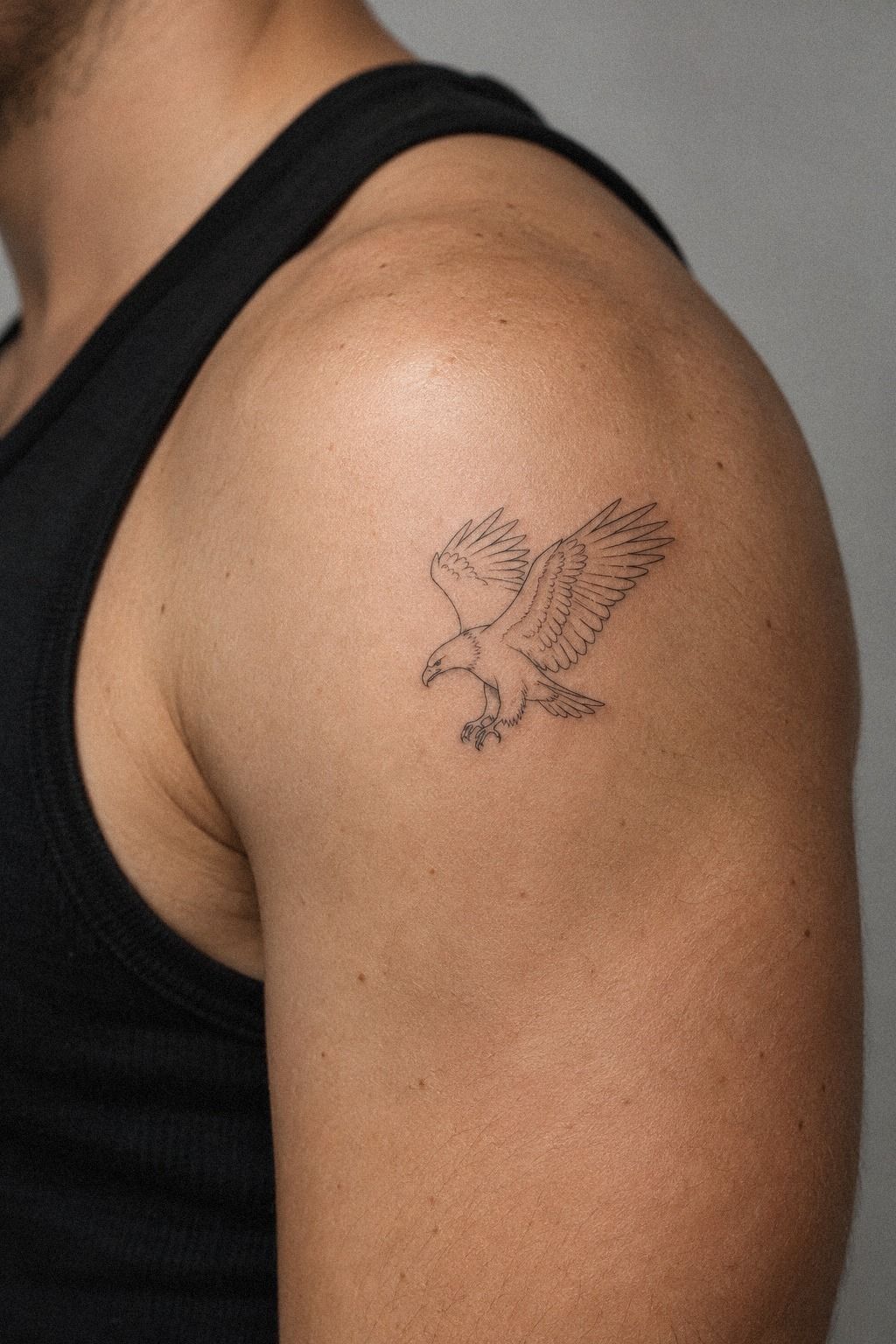
A wrist eagle works best when you keep the silhouette crisp and the wings slightly open. On fair cool-pink skin, black ink can look sharp without heavy shading, especially when the head, beak, and tail are reduced to a few intentional strokes. I’d choose a fierce profile over a crowded front view because the profile reads faster when your wrist turns.
This small eagle feels personal rather than loud. Its delicate scale makes it easy for you to glance down and remember why you chose it, while the clean outline keeps the mark stylish. If you’re collecting compact pieces, our guide to small eagle tattoos gives you more placement references.
I’d ask your artist to preserve a small pocket of skin between the wing lines. That negative space is what keeps an intricate bird from becoming a dark knot later. You’ll want the stencil checked from several angles before the needle starts, especially if your wrist bends sharply.
A wrist can be more sensitive than an outer forearm, and your daily movement matters during healing. Wash it gently, moisturize as directed, and keep it away from direct sun while the surface settles over roughly 2 to 3 weeks. The design is understated, but its meaning doesn’t have to be.
Give the bird one personal detail, such as a lifted feather or a slightly curved beak. That tiny change can make the tattoo feel symbolic instead of generic. It’s a crisp approach, and it won’t require an ornate border to feel complete.
2Trace the Forearm with Fine-Line Flight
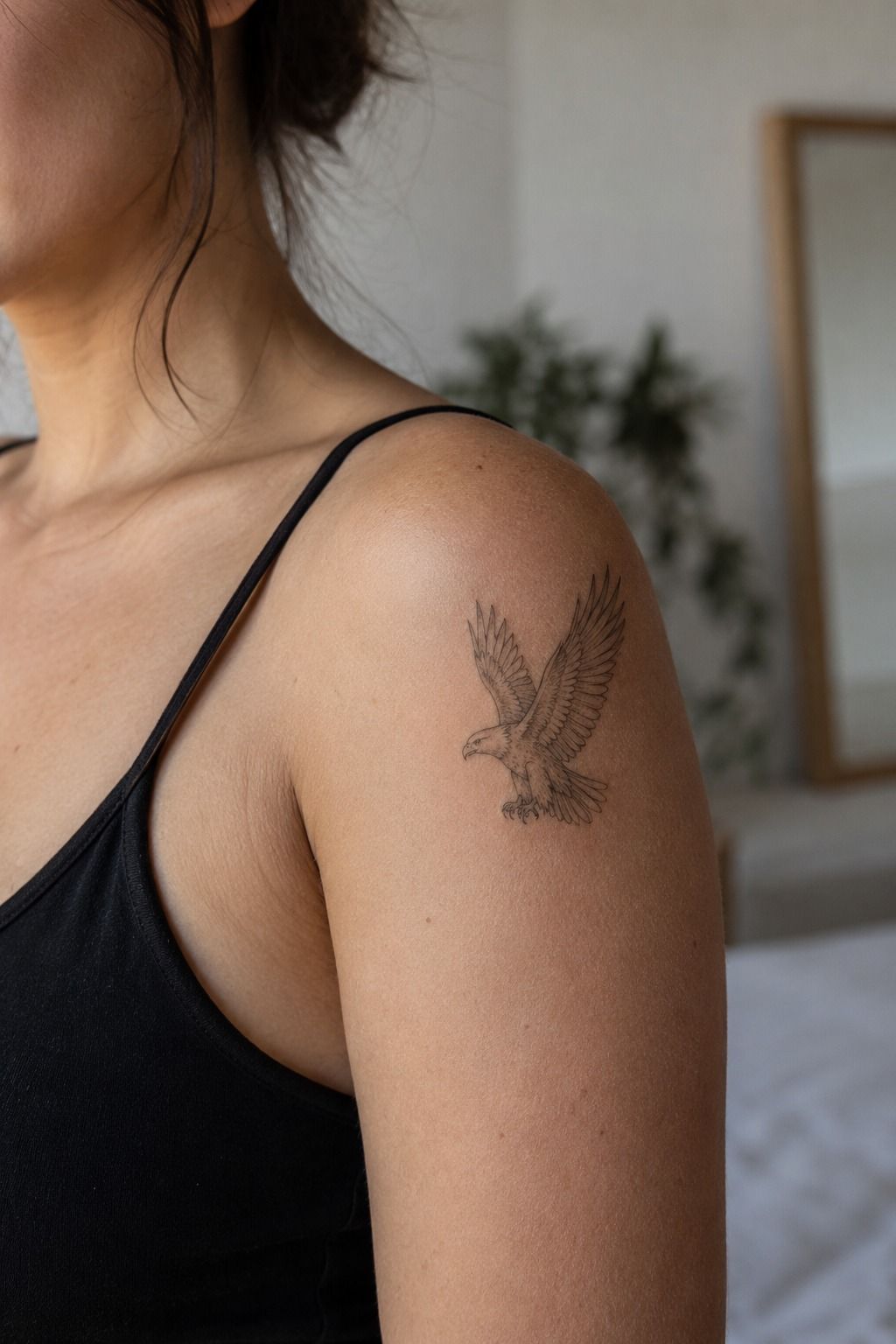
A flowing eagle silhouette along the forearm gives you more room for graceful movement than a wrist piece. The fine-line work creates a sleek outline, with hair-like strokes suggesting feathers without filling every section. I’d place the beak toward the elbow so the bird appears to travel with your arm.
This is where the single-needle line needs discipline. A line that’s too faint can soften as the tattoo settles, while one that’s too heavy loses the elegant quality people want from this style. If you’re comparing bird symbols, our collection of minimalist bird tattoos can help you decide whether an eagle feels more personal than a swallow or raven.
I’d skip excessive feather texture. It looks expressive on a stencil, but every extra mark competes with the silhouette once your skin moves and changes. Ask for a reference drawing that shows the healed intention, not only the fresh outline.
Your artist should show healed work in natural light, because fresh redness can make any line look stronger than it will later. You’ll want the result to remain crisp, elegant, and meaningful without depending on dense black fill. That restraint is the whole point, and it gives the tattoo better long-term value.
An eagle moving along the forearm can feel empowering without becoming loud. Keep the wing gesture flowing, leave breathing space around the tail, and let the shape follow your anatomy. It’s a polished option for someone who wants a tattoo they can see often.
3Open Wings, Private Strength
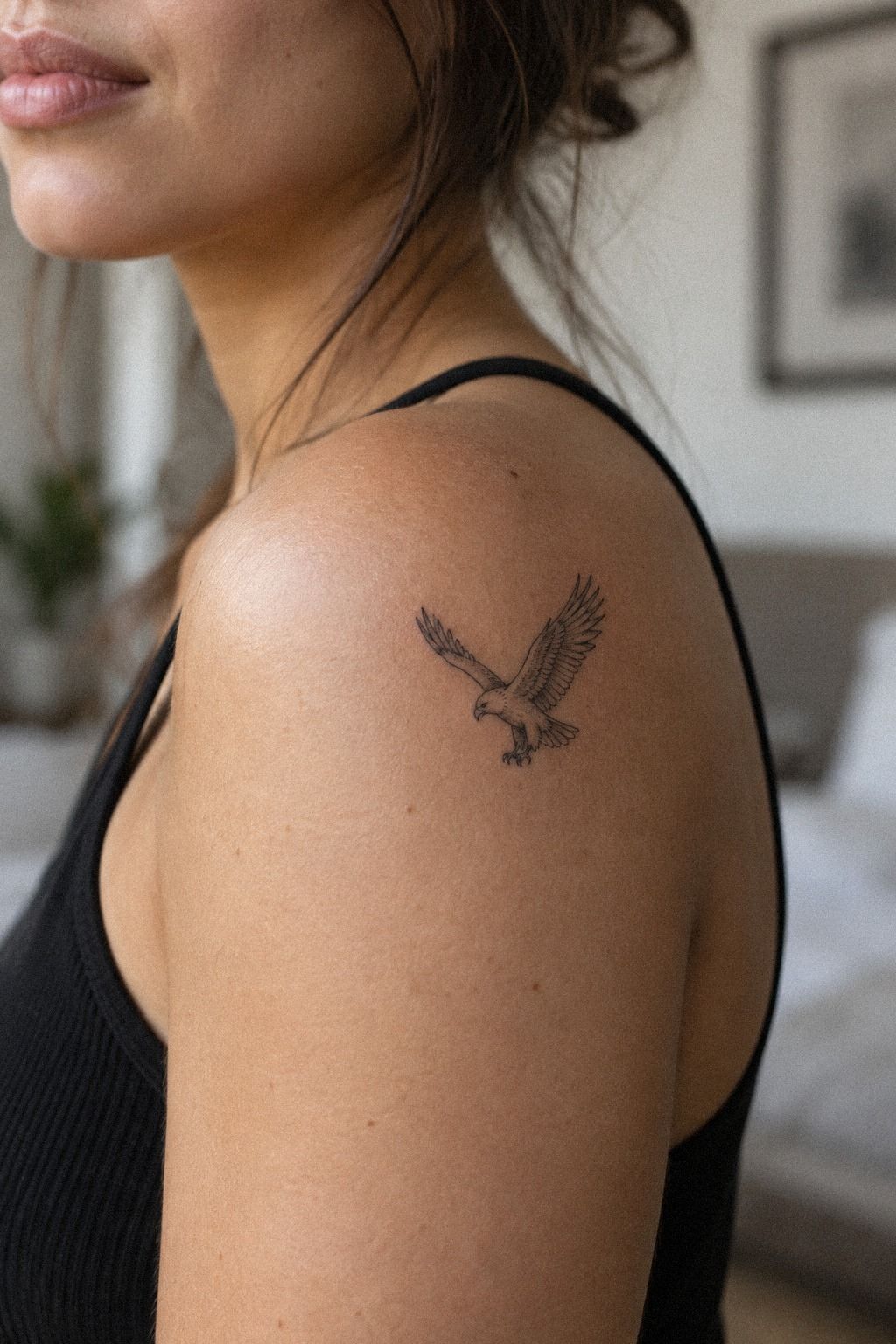
Open wings shift the eagle from a profile symbol into a bold statement about release, strength, or a new direction. On medium olive skin, plum-toned accents and untouched skin can create a powerful contrast against the thigh without ornate shading. I’d keep the body narrow and let the wing shape carry the drama.
The thigh gives you a forgiving area and usually feels more tolerable than the ribs, feet, hands, or sternum. That doesn’t mean you won’t feel the needle, but you’ll have more room to breathe and hold still. This design is striking because its proportions are clear, not because it uses every available detail.
Ask your artist to draw the wings in a way that follows your leg rather than fighting it. A rigid horizontal shape may look flat when you stand, while a slight upward angle can feel vibrant and graceful. It’s worth checking the stencil while you’re upright and seated, especially if your budget depends on getting the placement right the first time.
That contrast works! If you want a more personal symbol, choose one feather that’s longer or slightly separated from the rest.
You’ll create a small visual signature without turning the eagle into a crowded emblem. I’d avoid tiny words beneath it, because the open wings already give the tattoo enough emotional weight.
For an eagle connected to resilience, a slightly rising posture can feel meaningful. For freedom, open the wing tips and keep the chest lifted. The same species can tell a completely different story through one graceful change in posture.
4Can a Tiny Eagle Stay Readable Behind the Ear?
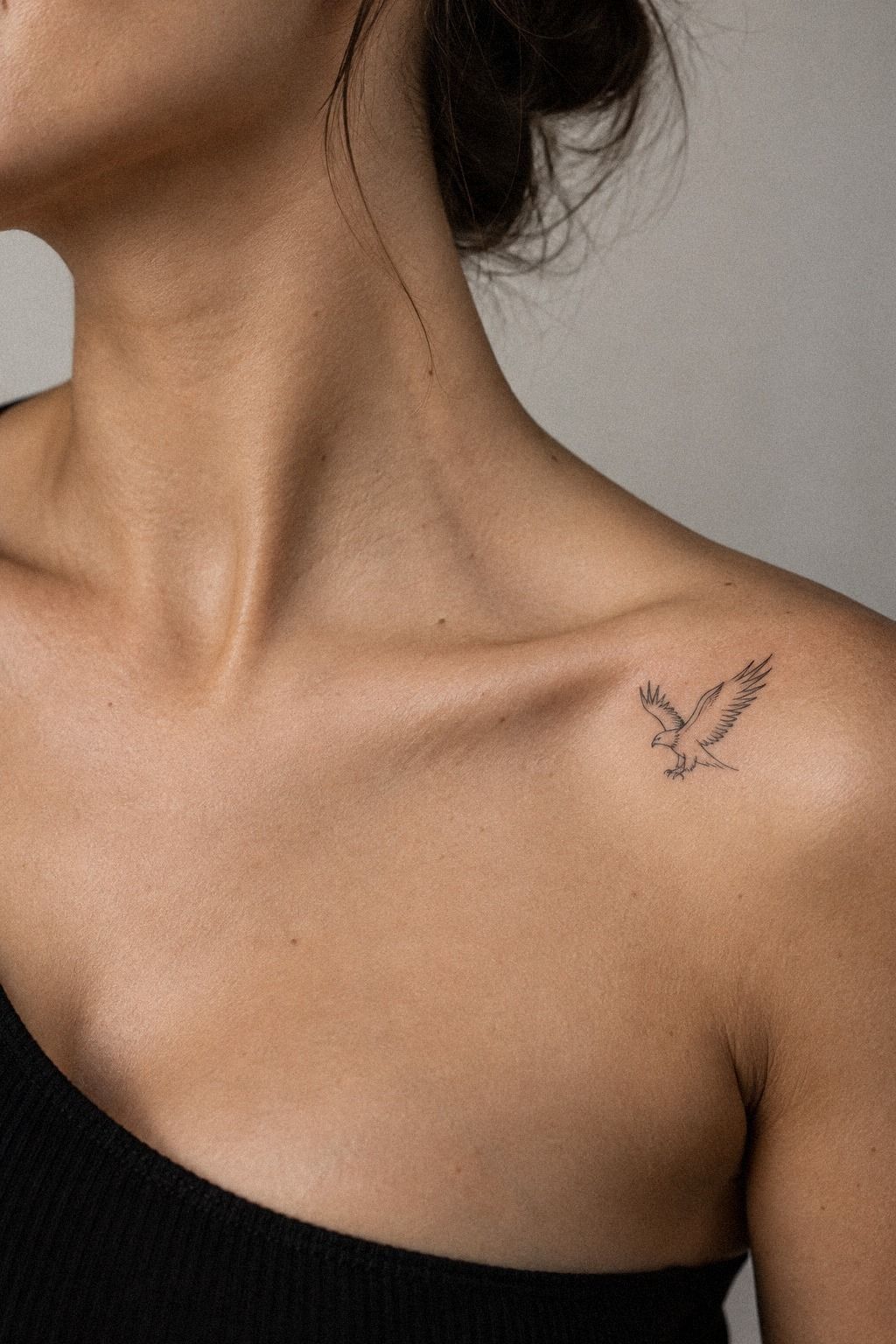
A tiny eagle behind the ear is dainty, discreet, and surprisingly expressive. I’d use a navy-black outline with a simple wing gesture rather than several miniature feathers. The area is small, so the head, beak, and tail need to remain recognizable without relying on delicate micro-detail.
This placement feels personal because you control when it appears. A tucked wing can make the bird feel understated, while a lifted wing adds a sharper, more daring note. Keep the design iconic and leave enough skin between each mark for long-term readability.
Behind-ear skin may be sensitive, and hair products can irritate fresh work. Follow your artist’s aftercare instructions, avoid unnecessary rubbing, and give the tattoo time to settle before judging its final clarity.
5The Three-Line Rule for a Geometric Shoulder Eagle
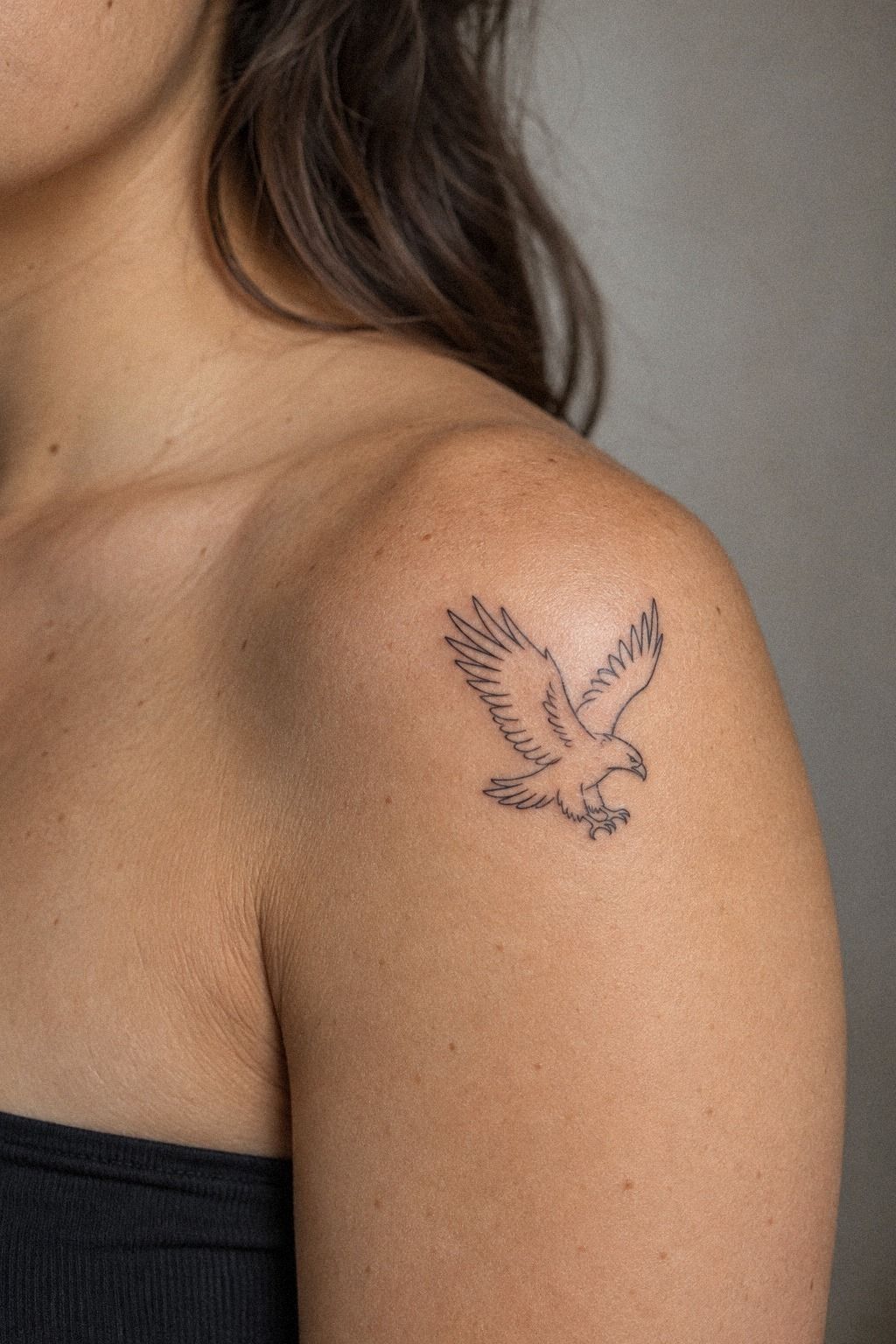
Geometric eagle linework gives the classic bird a structured, modern edge. I’d favor one strong triangle or arc over a pile of symbols, beginning with a geometric stencil that can survive at the intended size.
Your shoulder offers enough movement for a medium design, but the shape still needs to follow the curve of your body. A sharp beak, symmetrical wings, and a measured tail can make the eagle feel iconic without becoming ornate. If you’re drawn to symbolism first, read our guide to what an eagle represents in a tattoo before choosing the final pose.
I call this the Three-Line Rule: one line for the head, one for the wing direction, and one for the body’s central flow. It’s not a law, but it keeps your reference from becoming cluttered. You’ll see the design more clearly when the main gesture survives without shading.
I’d skip perfectly mirrored wings if your goal is a personal tattoo. Slight asymmetry can make the bird feel raw and alive, while perfect symmetry can resemble a logo. Bring your favorite flash reference, then ask the artist where the design should bend for your shoulder before treating it as an investment.
A geometric eagle can still feel romantic when the angles are softened. Use one playful interruption, such as a feather crossing the main shape, if you want the tattoo to feel less rigid. The strongest version will look intentional from a distance and intriguing up close.
6Choose Flight Over Fussy Detail
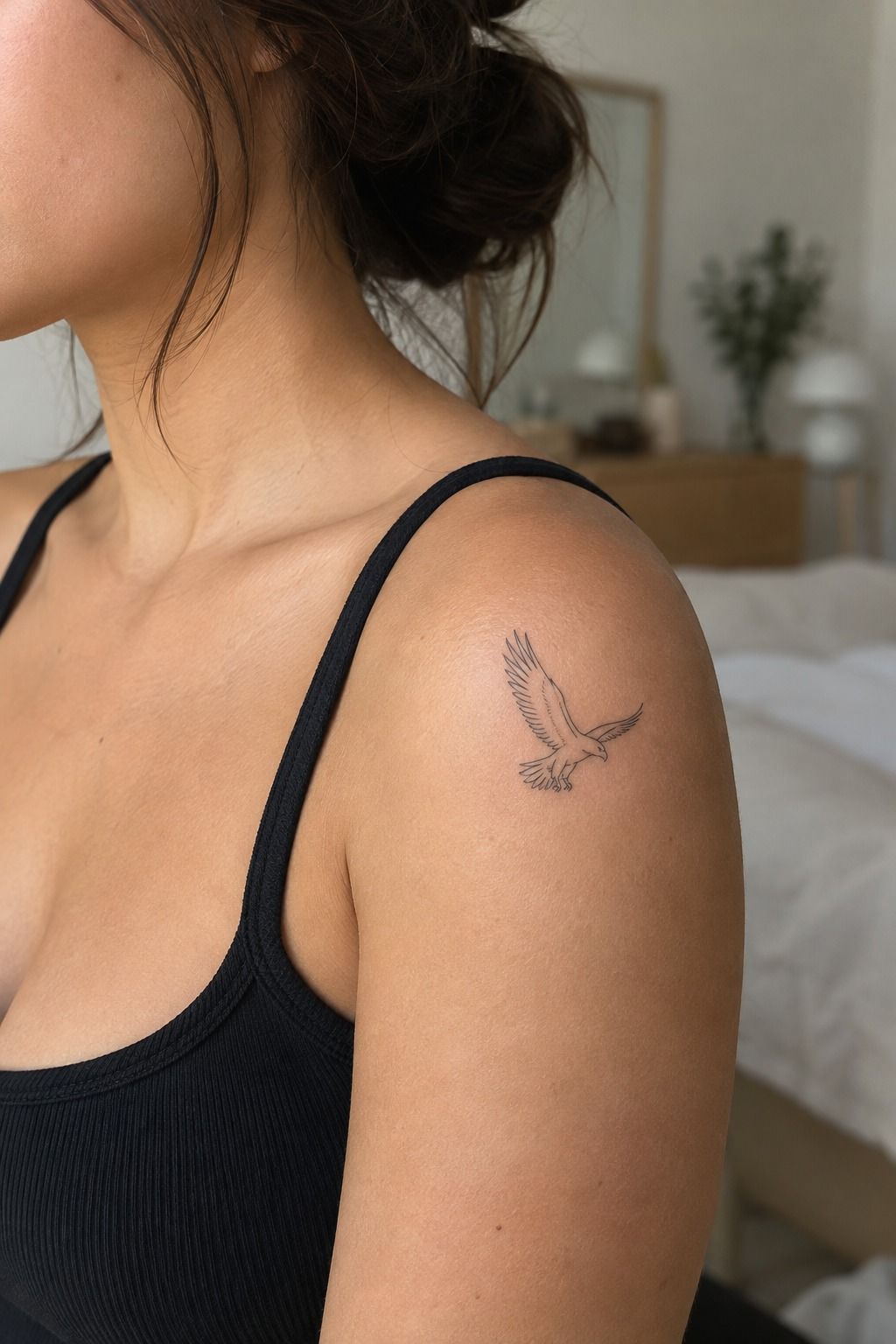
A flight-inspired eagle can be more symbolic than literal. A deep ebony skin tone can support a bold silhouette with deliberate highlights, and the inner forearm placement lets the bird follow the length of the arm. I’d choose a rising angle for a daring, expressive feeling rather than a bird that looks frozen midair.
The strongest detail here is the relationship between solid blackwork and untouched skin. Your artist doesn’t need to draw every feather if the wing edge, tail, and chest are clear. It reads beautifully!
You’ll get a more sophisticated result when the skin breaks are planned instead of added randomly.
Because inner-forearm tattoos are visible to you every day, choose a meaning you won’t outgrow quickly. Is the eagle about independence, grief, family, faith, or simply the stubborn part of you that kept moving? That question matters more than copying a trending outline, even if the reference looks worth the price.
If you want a different bird with the same sense of motion, compare it with tiny phoenix tattoos. I’d still keep the eagle’s head recognizable, because a generic wing shape won’t carry the same personal charge. The restraint makes this idea timeless.
The inner forearm also gives you room to place a small date, initial, or symbol near the tail, but I wouldn’t add one automatically. The eagle should remain the first thing you notice. A powerful silhouette doesn’t need a crowded explanation.
7Anchor the Dainty Ankle Eagle
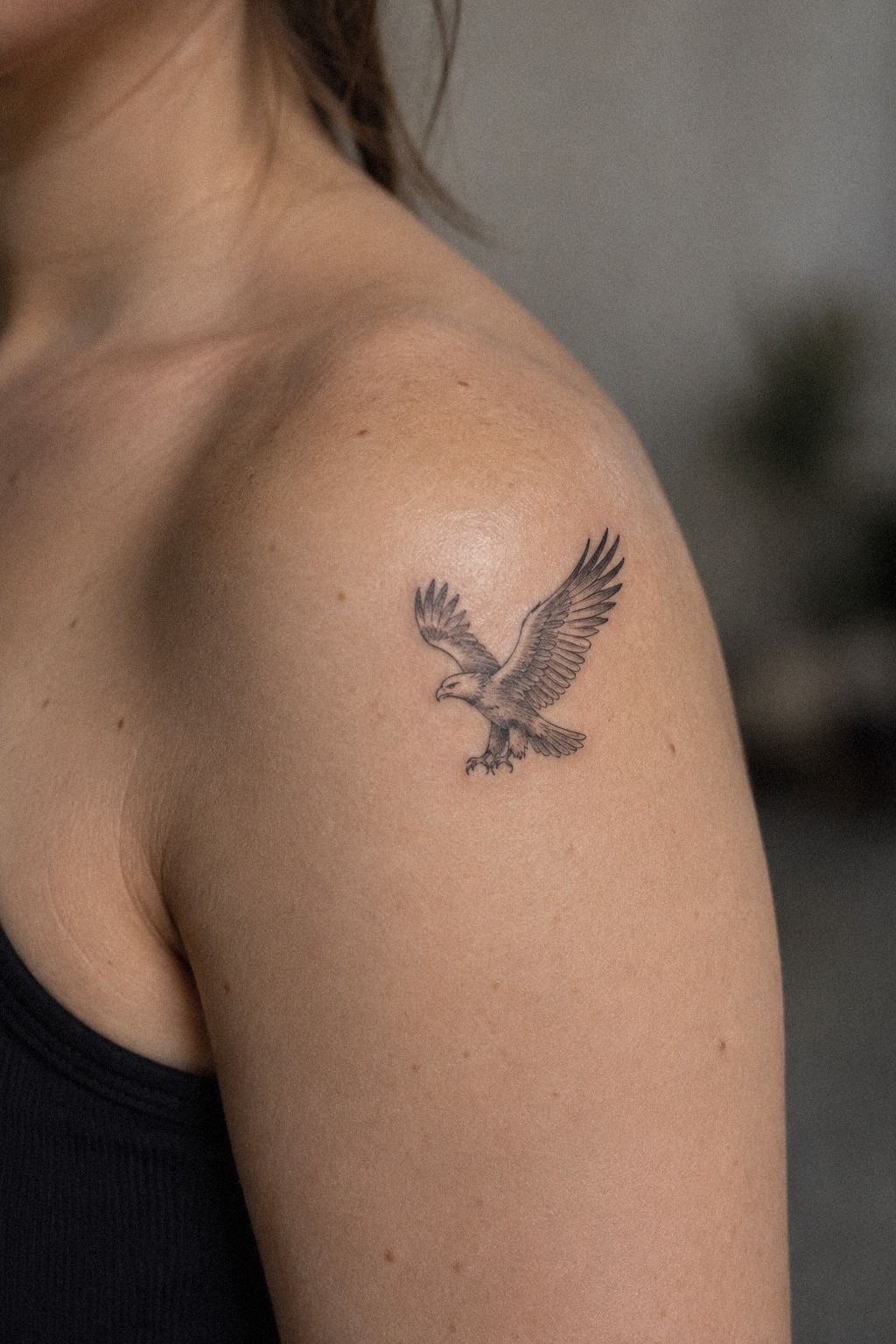
An ankle eagle can feel romantic, personal, and quietly fierce. A charcoal outline with a restrained dusty-rose accent keeps the design delicate without making it fragile.
I’d angle the wings slightly around the ankle rather than forcing a perfectly flat shape. That small adjustment makes the tattoo feel graceful when your foot moves, while a compact tail keeps the mark readable.
Ankle tattoos meet friction from socks and shoes, so placement and aftercare matter. Choose a spot that avoids constant rubbing, follow the healing instructions carefully, and let the skin recover before exposing it to long days in tight footwear.
8Bold Blackwork, Softer Expression
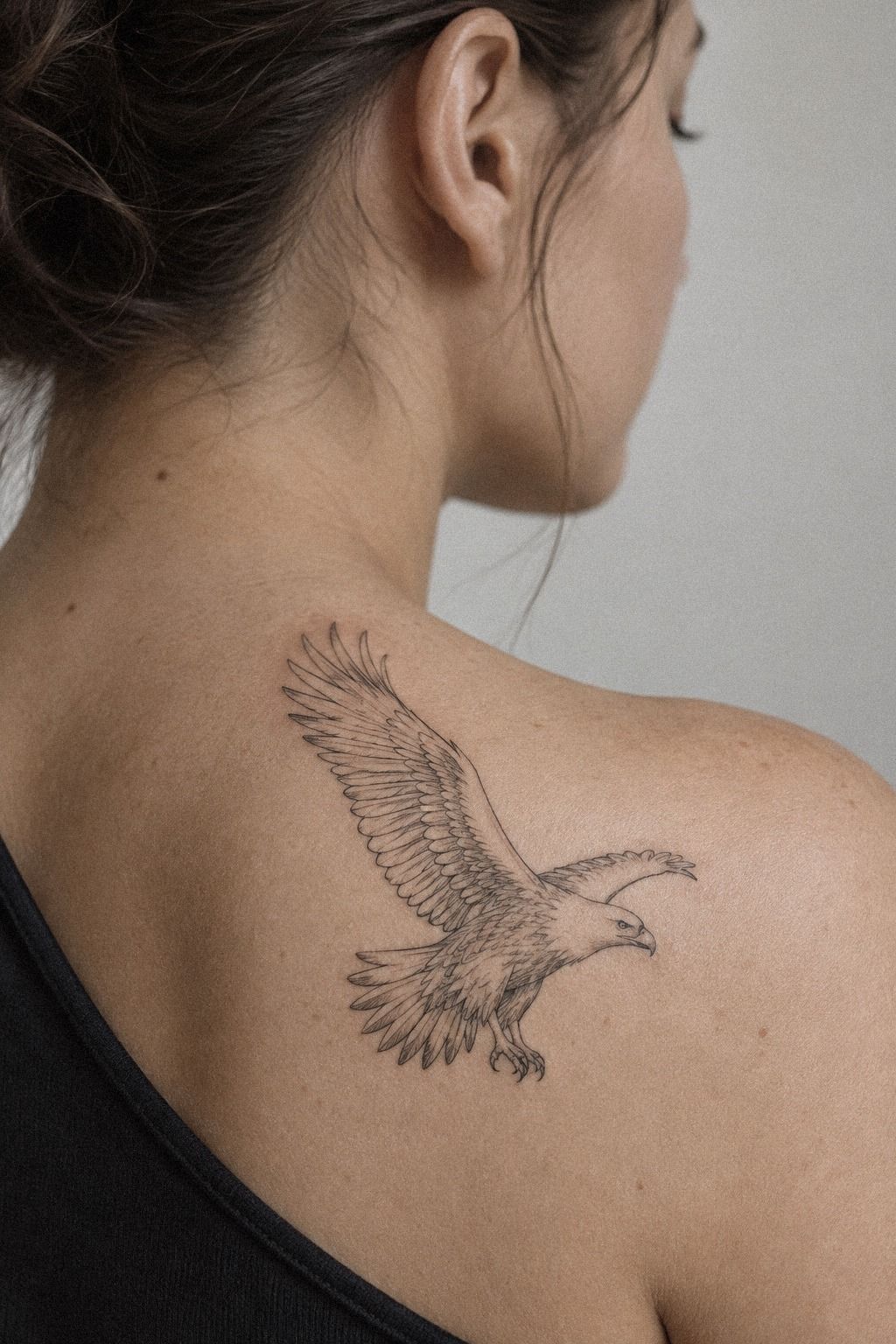
A bold eagle head behind the ear makes a stronger statement than the tiny silhouettes in this list. The compact shape keeps the design sharp instead of sprawling, while matte black ink gives the brow and beak a decisive edge. I’d choose a clean expression over excessive feather texture.
This placement asks for confidence. The tattoo is visible when your hair moves, yet it disappears when you want a quieter look. If you’re worried that bold means aggressive, soften the expression with a curved brow and a slightly lowered wing edge.
I’d skip gray wash here. A solid black anchor ages more predictably than delicate shading in a high-friction location, and your artist can use untouched skin highlights to shape the eye and crown. That gives you better visual value than paying for detail that may blur.
Behind-ear work may be uncomfortable, so talk through pauses before the appointment. You don’t have to prove anything by sitting through unnecessary discomfort. A polished, sharp design that you can care for properly will serve you better than an elaborate idea you rushed through.
If you want the same attitude with less intensity, reduce the brow angle and open the beak slightly. That small edit can make the eagle feel expressive rather than severe. It’s still daring, but the emotion changes.
9Mountains Beneath the Eagle: A Personal Mark
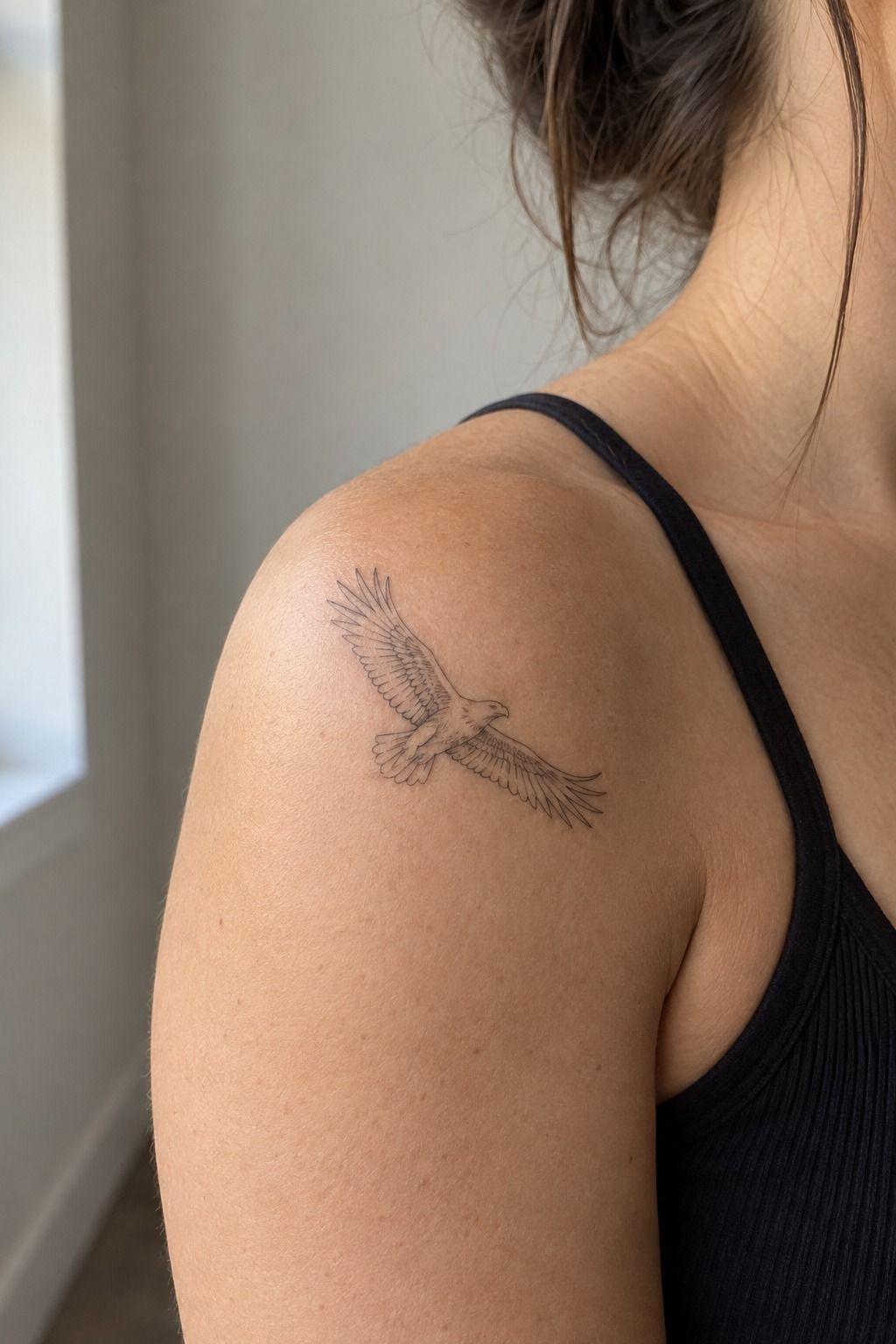
The mountain outline changes the eagle’s meaning from pure flight to endurance, memory, or a place you carry with you. I’d use a midnight-blue accent only where it strengthens the silhouette, keeping the mountain line lighter than the bird.
A collarbone, upper arm, or forearm placement can hold the combination without forcing the mountains into tiny detail. Let the eagle remain the dominant symbol, and treat the landscape as a personal clue rather than a second illustration.
This idea can feel haunting when the mountains represent someone, somewhere, or a difficult season you survived. Keep the peaks crisp, the spacing generous, and the symbolism yours.
10Study the Feather Before You Commit
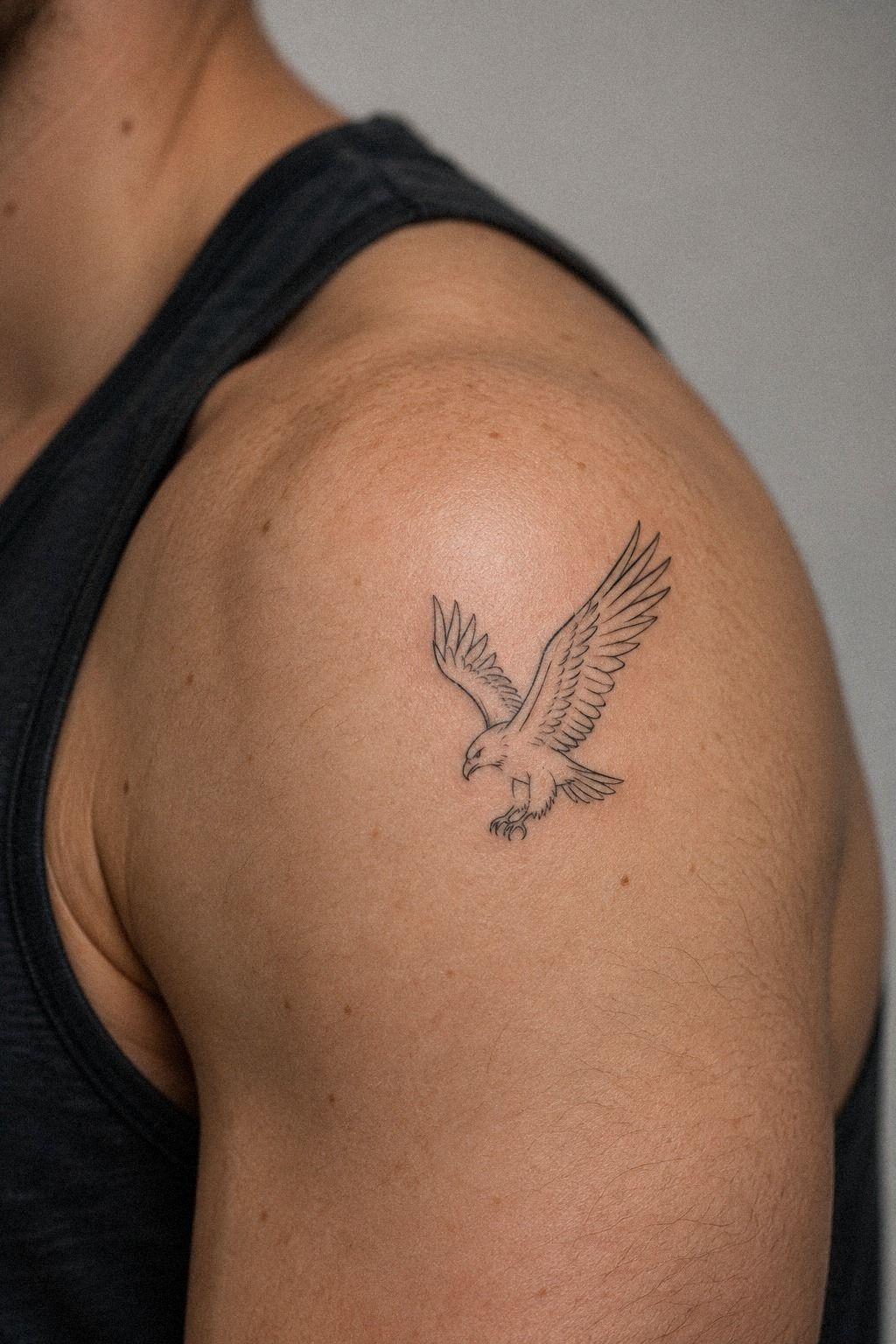
A split stencil and healed design can teach you more than a polished fresh reference. Pay attention to line width, spacing, and whether the silhouette still reads after the initial redness fades. The skin-safe stencil should show the structure clearly before any permanent work begins.
The feather gives you a softer, more symbolic route than a full bird. It can suggest heritage, freedom, protection, or someone you miss without spelling out the message. A graceful feather beside a minimal silhouette feels elegant, but I’d avoid stuffing both designs with identical detail.
The healed result is the part you should study most closely. Fine lines can widen over time, especially when they’re packed too tightly, while strong placement and controlled black areas tend to remain more stable. You’ll want to ask your artist how the reference looked after healing, not only how it looked on appointment day.
Worth the extra thought! If the feather has many hair-thin strokes, ask whether a few can be removed for a sharper result. Our minimalist unique butterfly tattoos page may also help you compare delicate symbolic motifs before deciding whether the idea is worth it.
A feather can be feminine, masculine, or completely outside those categories. The important question is whether its direction feels right to you. Pointed upward, it may suggest hope; angled downward, it may feel reflective or grounded.
11Across the Collarbone, Let Meaning Lead
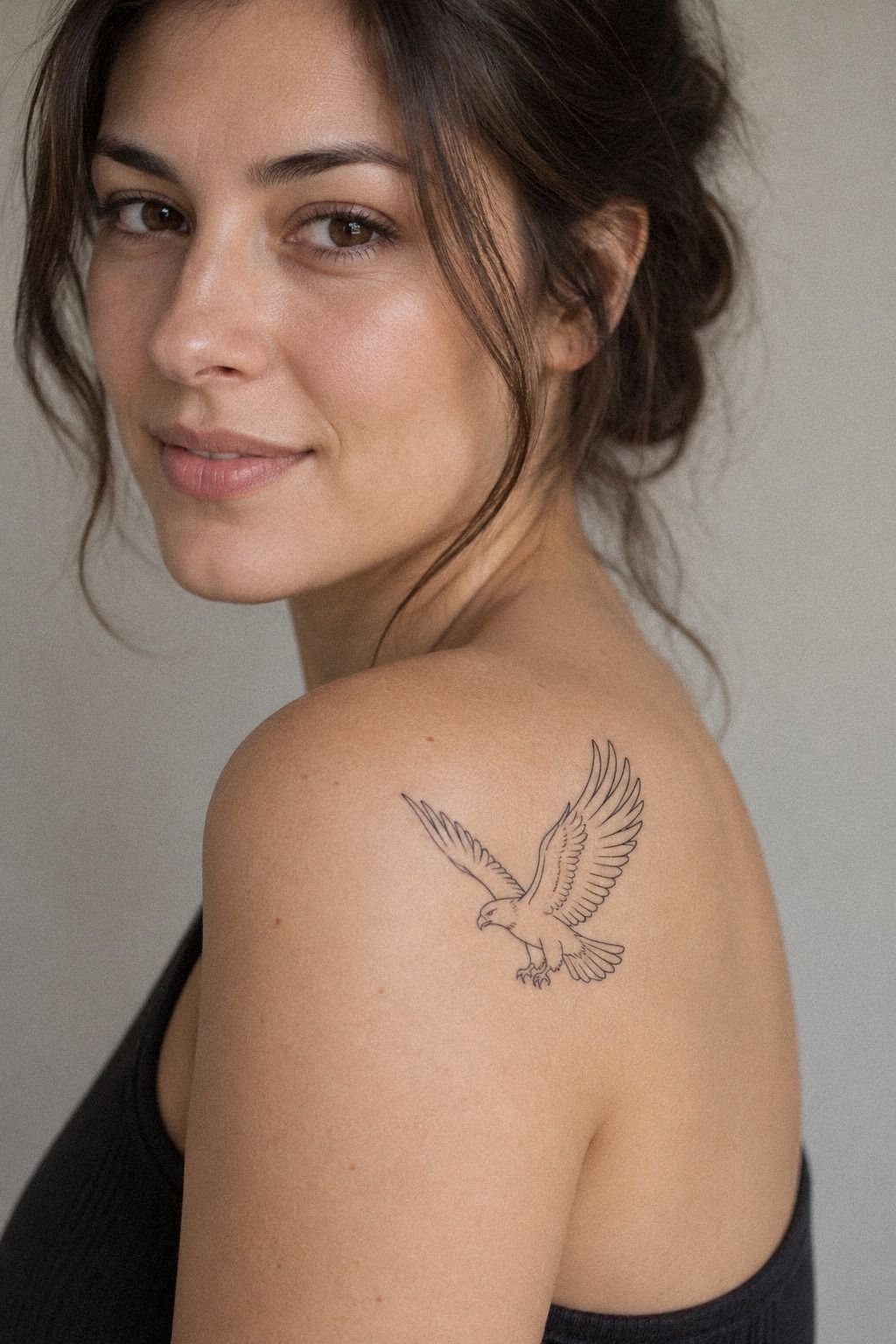
A collarbone eagle can feel intimate, elegant, and powerful because the placement follows a natural horizontal line. I’d keep the terracotta-black palette restrained, using color only if it supports the bird’s expression.
The collarbone gives a long, graceful route for a narrow silhouette, but it also moves with your shoulders. Ask your artist to check the stencil while you stand naturally, then decide whether the wings should stay level or rise slightly toward the center.
This placement can feel sacred or empowering without becoming dramatic. A crisp head, open wing, or single feather may say enough. You don’t need several symbols competing for attention.
Why Does the Meaning-First Rule Still Matter?
I’ve changed my mind about minimalist tattoos more than once. At first, I thought the smallest design would be the safest choice, but small isn’t automatically simple.
A tiny eagle can demand more judgment than a large one because every curve has to earn its place. I once admired a reference with intricate feather texture, then realized it depended on perfect digital enlargement.
On skin, it would have become cluttered.
My strongest opinion is that you should choose the emotional direction before the visual style. If your eagle means independence, a rising silhouette may say more than a realistic head.
If it represents family, a feather or mountain can carry the memory without turning the tattoo into an illustration. That’s why I’d skip copying a viral pose.
Your skin deserves a design that still feels meaningful when the trend has moved on.
Placement changes the message, too. A wrist can feel personal and visible, while a thigh gives you more room for open wings.
Behind the ear feels discreet but can be more sensitive. Collarbone work reads as intentional and elegant, yet it asks you to think carefully about discomfort and clothing during healing. You’re not choosing only an image.
You’re choosing how often you’ll meet it.
Fine lines may soften, and no artist can promise that your tattoo will look untouched forever. The useful question is whether the design has enough structure to age with grace.
Strong negative space, sensible spacing, and black ink in the right places will help. Follow aftercare, avoid unnecessary sun exposure, and give the tattoo time to settle before judging it.
I’d rather have a bold, slightly imperfect eagle with a real story than a flawless copy that means nothing to me.
For more symbolism prompts, our guide to what an eagle represents in a tattoo can help you name the feeling before you choose the pose. That step sounds simple, but it can prevent you from selecting a stylish idea that doesn’t belong to you.
A Private Symbol Can Stay Simple
You don’t need several symbols to make an eagle personal. One lifted wing, a separated feather, or a restrained mountain line may carry more emotional weight than a crowded emblem. I’d start with one defining mark and remove anything that doesn’t deepen the story.
A meaningful tattoo can stay private even when the placement is visible. Your wrist, forearm, or collarbone may invite questions, but you’re never required to explain the symbolism. That boundary is part of the design’s value.
If you’re torn between an eagle and another flight symbol, compare the emotional direction rather than the outline. A phoenix may feel more transformative, while an eagle can feel more watchful, independent, or protective. Our tiny phoenix tattoos collection may help you clarify that distinction.
A private idea can still be stylish and polished. You don’t have to make it cryptic, but you also don’t need to make every meaning visible to strangers.
How Much Detail Is Actually Worth Paying For?
I’d spend money on proportion, placement, and healed references before paying for extra feather lines. Design consultation is worth the price when it helps the eagle fit your anatomy, but decorative detail isn’t automatically a better investment.
Ask what the quoted price includes, whether the studio has a minimum, and whether a touch-up is handled separately. A clear budget helps you choose a stronger idea instead of squeezing too much into a small tattoo.
Here’s a practical cost range for a minimalist eagle tattoo in the United States:
A studio minimum can make a tiny design cost more than you expect, even when the tattoo itself takes only 20 minutes. You should ask about the minimum before sending a deposit.
Some artists charge hourly, with rates around $100 to $250, while others quote the complete piece. A touch-up policy may cover minor fading after 6 to 12 weeks, but you’ll want that confirmed in writing.
Our tiny snake tattoos guide offers another compact-animal comparison if you’re weighing size and detail. The subject changes, but the same pricing questions still apply.
Ask These Questions Before You Book
Before booking, ask to see healed linework in a similar size and placement. You’ll learn more from settled ink than from a fresh piece with redness and surface shine. I’d also ask how the artist adapts designs for your skin tone and movement.
Discuss the expected session length, the deposit, aftercare, and any revision limits. You don’t need to sound difficult. You’re protecting the final result and making sure the value matches the price.
Ask whether the artist has worked with the specific contrast you want. A crisp black silhouette may need a different approach from delicate gray shading, especially when the eagle is small.
You can also bring two references, then explain what you like about each. One may have the right wing shape, while the other has the expression you want. That gives the artist useful direction without asking for an exact copy.
A strong consultation should leave you feeling informed, not pressured. If the artist dismisses questions about healing, placement, or future readability, I’d keep looking.
Meaning, Placement, and Long-Term Value
The best minimalist eagle combines readable structure with a feeling you’ll still recognize years from now. A fierce head may suit independence, while open wings may express release. A feather can feel symbolic, and a mountain can make the meaning more personal.
I’d rather see a simple, timeless design made decisively than an ornate concept weakened by scale. Your tattoo can be delicate without being fragile, and understated without becoming forgettable.
Think about how often you’ll see the mark, how your clothing touches it, and whether your work affects visibility. Rising silhouette designs can feel empowering on an arm, while a tucked-away ankle or behind-ear tattoo may feel more intimate.
Long-term value comes from decisions that don’t look dramatic at first. Good spacing, a clear focal point, suitable line weight, and realistic healing expectations matter more than squeezing in one extra feather.
If you want to compare other compact animal ideas, our minimalist bird tattoo guide can help you decide whether the eagle’s sharper symbolism is right for you.
What People Always Want to Know
How much does a minimalist eagle tattoo usually cost?
I’d expect a minimalist eagle tattoo to cost about $100 to $300 in the US, though a studio’s minimum may be about $50 to $100 and hourly rates may run about $100 to $250. Your artist, region, size, and detail all affect the quote.
Ask for a written estimate after showing the exact reference and placement. A clear quote should explain whether the minimum, design time, and touch-up policy are included.
Are minimalist eagle tattoos a good idea for a first tattoo?
I think minimalist eagle tattoos can suit a first tattoo because many placements offer manageable sessions and clean designs don’t require dense shading. Your forearm, thigh, or shoulder may feel more tolerable than ribs, feet, hands, or sternum.
Choose a design with enough structure to age well. A readable silhouette is more forgiving than a packed cluster of hair-thin lines.
How do I choose a tattoo artist for minimalist eagle tattoos?
I’d choose an artist who shows healed linework, consistent silhouettes, and clean hygiene practices. You’ll want to see work on skin tones similar to yours, not only edited studio references.
Look for healed portfolio work, clear consent practices, and a style that matches your reference. If you’re considering other compact animals, tiny snake tattoos can help you compare line quality across subjects.
How much do minimalist eagle tattoos hurt?
I’d treat pain as personal rather than predictable. Ribs, feet, hands, and sternum are often more uncomfortable, while the forearm, thigh, and shoulder are commonly more tolerable.
Tell your artist if you need a pause. Good communication makes the appointment easier, and you won’t earn extra meaning by pretending you’re fine.
How long does a minimalist eagle tattoo take to heal?
I’d allow about 2 to 3 weeks for the surface to heal, while the tattoo can take about 2 to 3 months to fully settle. Your skin may look different during each stage.
Wash gently, moisturize as directed, and avoid strong sun and swimming while it heals. Patient aftercare gives fine lines their best chance to settle cleanly.
What’s the best placement for minimalist eagle tattoos?
I’d consider the forearm, thigh, and shoulder first when you want readable lines and a more tolerable experience. The wrist, ankle, collarbone, and behind-ear areas feel more discreet but may involve more friction or sensitivity.
Think about visibility, movement, and aging before you book. Our small eagle tattoo ideas can help you compare placements without copying one design exactly.
Where I’d Start First
If I had to pick one, I’d start with the fine-line eagle silhouette along the forearm. The placement gives you readable flow without forcing heavy fill, and it leaves room for the wings to age gracefully.
The fine-line silhouette feels sleek, personal, and practical. It has enough movement to look expressive, but it doesn’t need a dramatic composition to stay memorable.
Pin it for later, and save our minimalist bird tattoo guide for the consultation. You’ll have a clearer conversation when you know which details matter most to you.


One response to “11 Minimalist Eagle Tattoos That Mean Something Only You Understand”
[…] you want another black-line reference, explore minimalist eagle tattoos. The shoulder is forgiving enough for a first tattoo and visible enough to feel […]