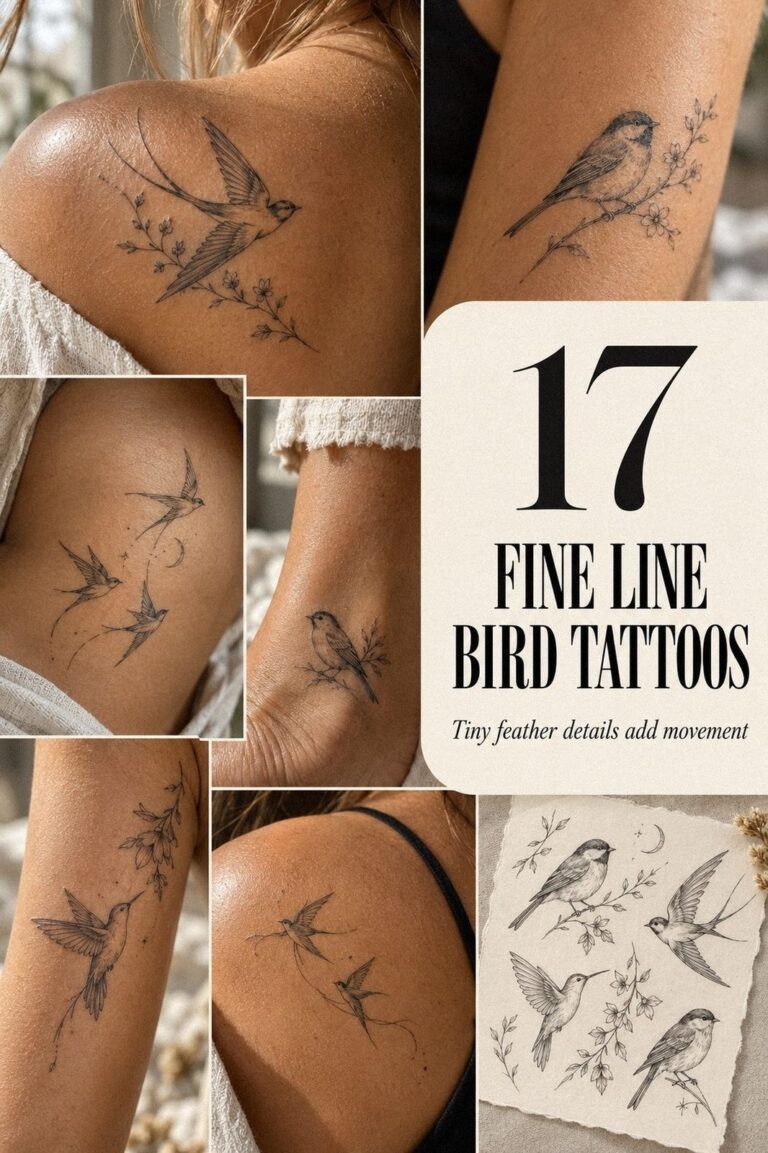
Fine line eagle tattoos usually feel like a sharp, hot scratch, with pain changing more by placement than by the bird itself. I got mine after turning 30, and the forearm eagle tattoo surprised me: intense at first, then manageable. Here’s my honest story about choosing the design, sitting through it, and protecting the healed linework.
- Choose the Scale Before the Detail
- Sketch the Eagle in Flight
- Place the Eagle Where You Can Read It
- Anchor the Flight With Mountain Lines
- Compare Three Delicate Silhouettes
- Fierce Wings or Graceful Ones?
- Isolate One Ornate Feather
- Read the Unique Eagle Profile
Study the Blank Skin First
Before I chose anything, I had a clean patch of skin saved for the right idea. It wasn’t blank emotionally. I’d already imagined a small eagle there, but I hadn’t decided whether the bird design should look fierce, delicate, or quietly symbolic.
I kept opening reference folders, then closing them again. Your first sketch can feel more personal than expected because you’re not only choosing an image. You’re choosing how you’ll see that part of your body every day.
The early drawings were too heavy. The wings were broad, the beak was sharp, and the body looked more like a badge than a living bird. I wanted open skin around the design so it would stay crisp without taking over my arm.
My artist asked me to bring three examples and one thing I didn’t want. I brought small silhouettes, flying birds, and one overly detailed design I’d already rejected. That last choice helped me explain why I wanted something understated.
If you’re planning your own version, save references that show healed work, not only fresh black lines. The healed comparison in our fine line bird tattoos guide helped me notice how much the design depends on spacing.
- Choose the Scale Before the Detail
- Sketch the Eagle in Flight
- Place the Eagle Where You Can Read It
- Anchor the Flight With Mountain Lines
- Compare Three Delicate Silhouettes
- Fierce Wings or Graceful Ones?
- Isolate One Ornate Feather
- Read the Unique Eagle Profile
- Prepare for Fine Line Tattoo Pain
- Protect the Tattoo During Healing
- Preserve Its Crisp Fine Linework
1Choose the Scale Before the Detail
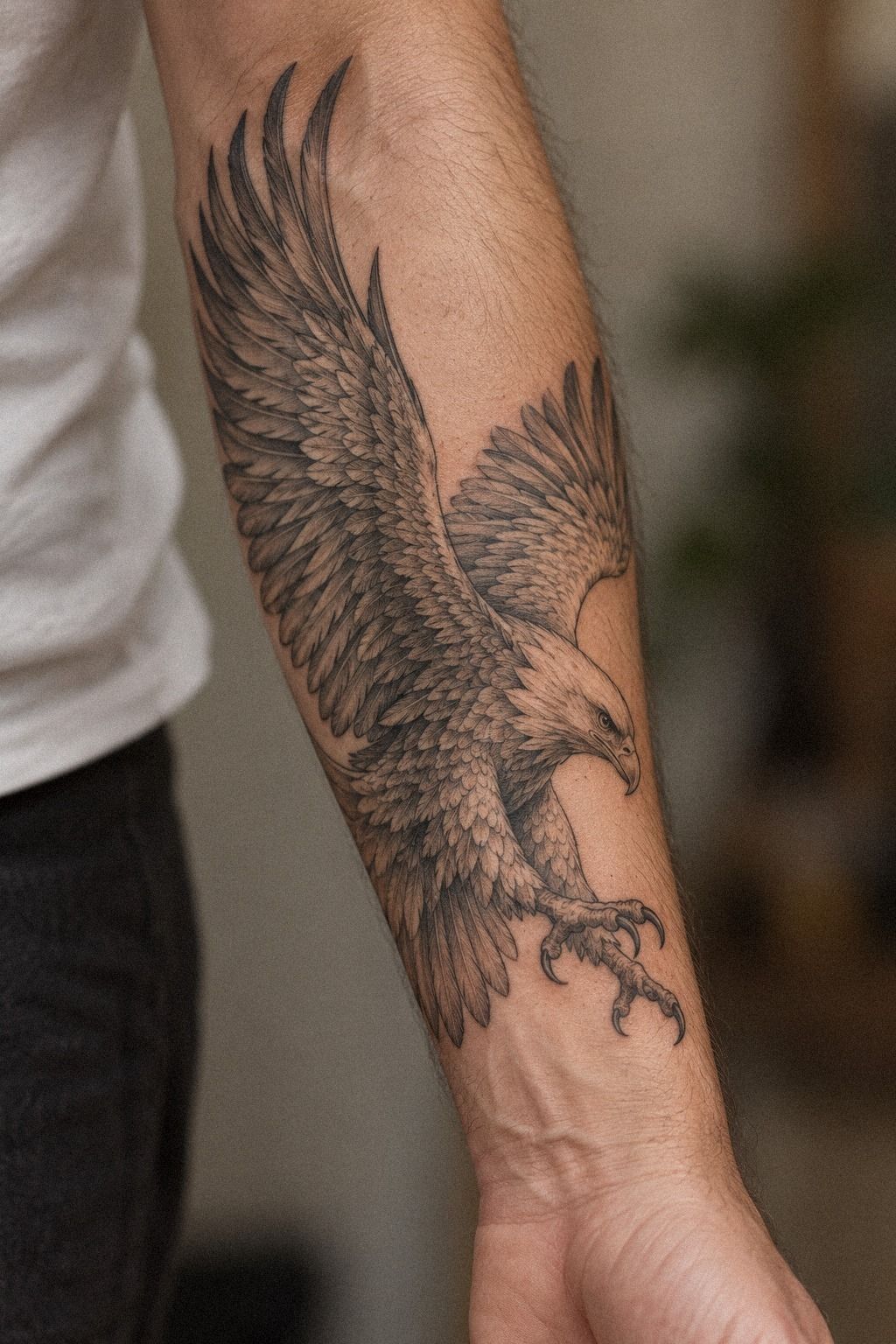
I started with a small fine line eagle because I wanted the shape to read quickly. A tiny tattoo can still feel striking, but every curve has to earn its place. My artist suggested a design under two inches, with enough negative space between the wing and body to keep the outline legible.
The stencil looked almost too simple at first. That was the point. Your eye should catch the beak, wing angle, and tail before it notices the single-needle cartridge work.
I chose a shoulder placement because I wanted a tolerable first session and a clear surface for the bird. The shoulder placement gave the artist room to keep the lines delicate without forcing detail into a cramped shape.
I nearly picked a bigger version. I’m glad I didn’t. A large eagle would’ve looked powerful, but it would’ve changed the appointment from a focused session into a longer commitment.
If you’re comparing small fine line eagle tattoos, look at the silhouette from several feet away. Your design should still read as an eagle when the feather marks soften.
The tiny eagle tattoos collection gave me useful ideas for that balance. I also compared a few small eagle tattoos before settling on the narrower profile.
2Sketch the Eagle in Flight

The first sketch showed the eagle with lifted wings, not spread flat. That small change made the design feel flowing instead of stiff.
I liked the graceful version because it suggested movement without needing a dramatic pose. Your eagle can feel bold while remaining compact, especially when the wing lines follow the natural direction of the body.
I asked my artist to keep the feather marks sparse. A few expressive lines created more energy than a crowded cluster would have.
The final sketch felt symbolic without becoming obvious. I wanted the eagle to suggest independence, not announce one fixed meaning to everyone who saw it.
3Place the Eagle Where You Can Read It
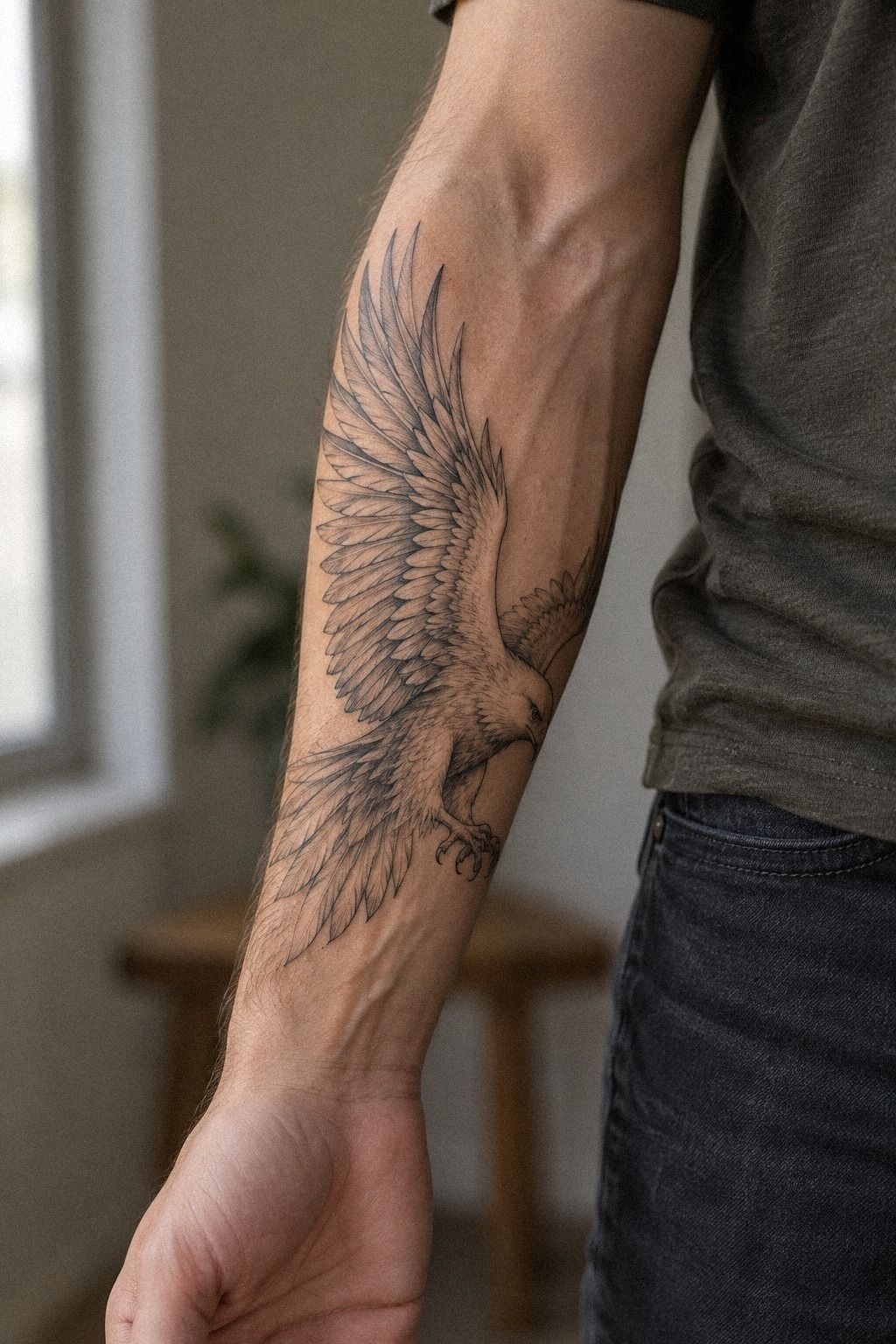
The forearm was the easiest placement for me to understand visually. I could turn my arm and see the eagle from the side, straight on, or slightly upside down. That made the design feel personal without making it constantly visible.
I chose a compact profile with one open wing and a narrow tail. It looked sleek against my skin, and the crisp contour held my attention more than a dense fill would have.
Your forearm usually gives an artist a steadier, more forgiving surface than the ribs, feet, or hands. I still felt a sharp vibration near the wrist, but the central section was much more manageable.
I brought a reference from the minimalist eagle tattoos page and asked my artist to make the head less aggressive. I also checked tiny bird tattoos for profile proportions. The result felt personal rather than copied, which mattered to me.
I’d choose the forearm over the inner wrist if you want a first tattoo you can monitor easily. You’ll see redness, peeling, and healing changes without twisting around to inspect them. That tattoo visibility made the appointment feel less intimidating.
4Anchor the Flight With Mountain Lines
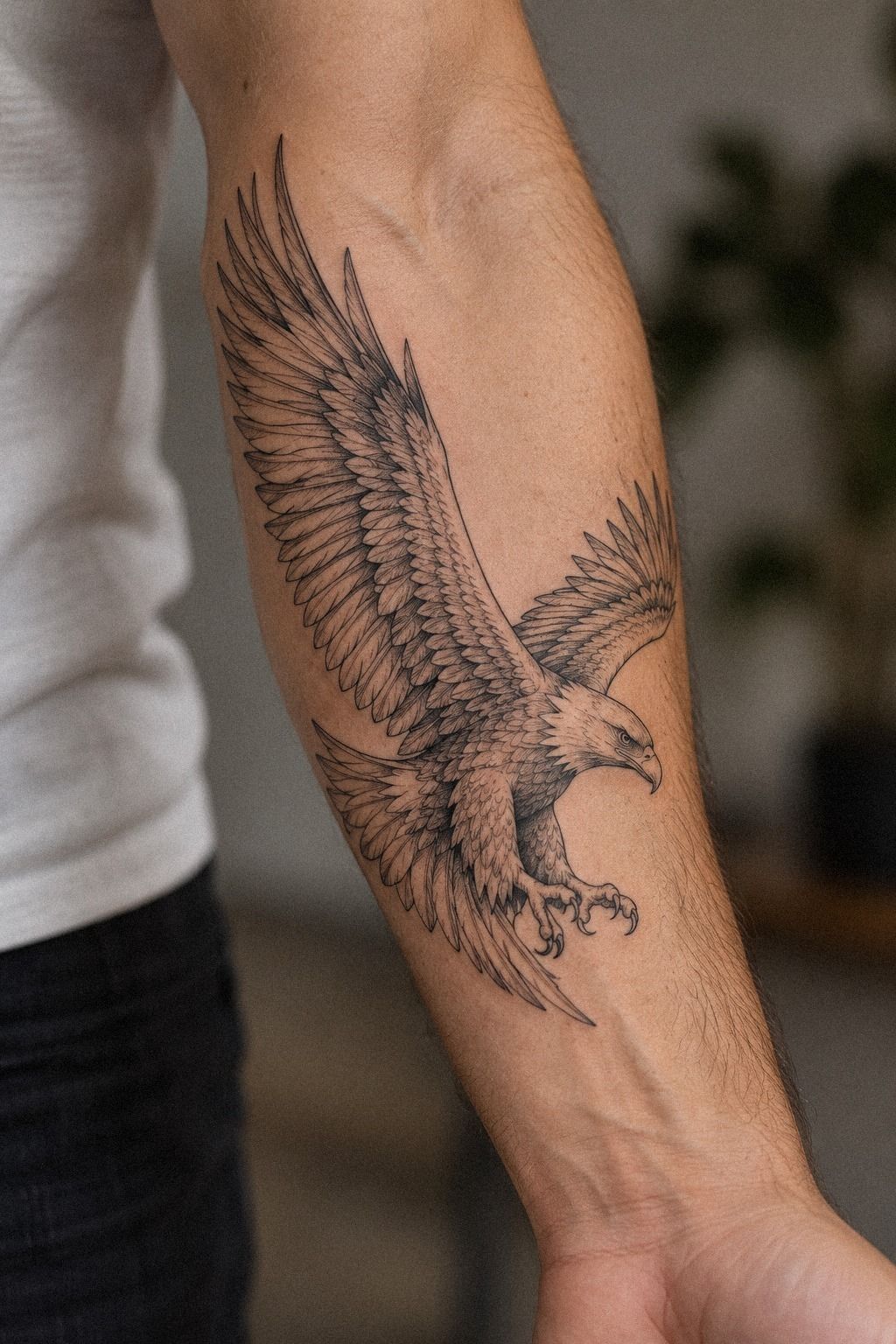
I wanted the eagle to have a second meaning, so I tested a thin mountain horizon beneath it. The line was minimal, but it gave the bird a sense of direction.
The mountain mark also made the composition feel more meaningful. Your secondary element should support the eagle rather than compete with it.
I tried an ornate range first, then removed most of the peaks. The simpler version looked more timeless and left enough skin visible around the bird.
That restraint mattered. A delicate eagle can lose its identity when every symbol receives equal attention.

5Compare Three Delicate Silhouettes

Before committing, I tested three silhouettes on a traditional flash sheet. One was ornate, one was almost abstract, and one used a minimal side profile. The smallest drawing looked plain on paper, but it became the most convincing stencil.
The paper had several hand-drawn black designs arranged close together. That comparison helped me see why some shapes felt expressive and others felt like logos.
I chose the silhouette with a slightly lowered head. It made the eagle look observant rather than angry. Your artist can change the entire mood by adjusting the eye, beak, or shoulder angle by a few millimeters.
The stencil transfer was sharper than the paper sketch. I could see how the transfer stencil would guide the needle without locking the artist into every tiny mark.
I’d avoid choosing from a flash sheet only because a design looks intricate. A tattoo that appears impressive at two inches can turn muddy when lines sit too close together. Your best option may be the quieter drawing.
6Fierce Wings or Graceful Ones?
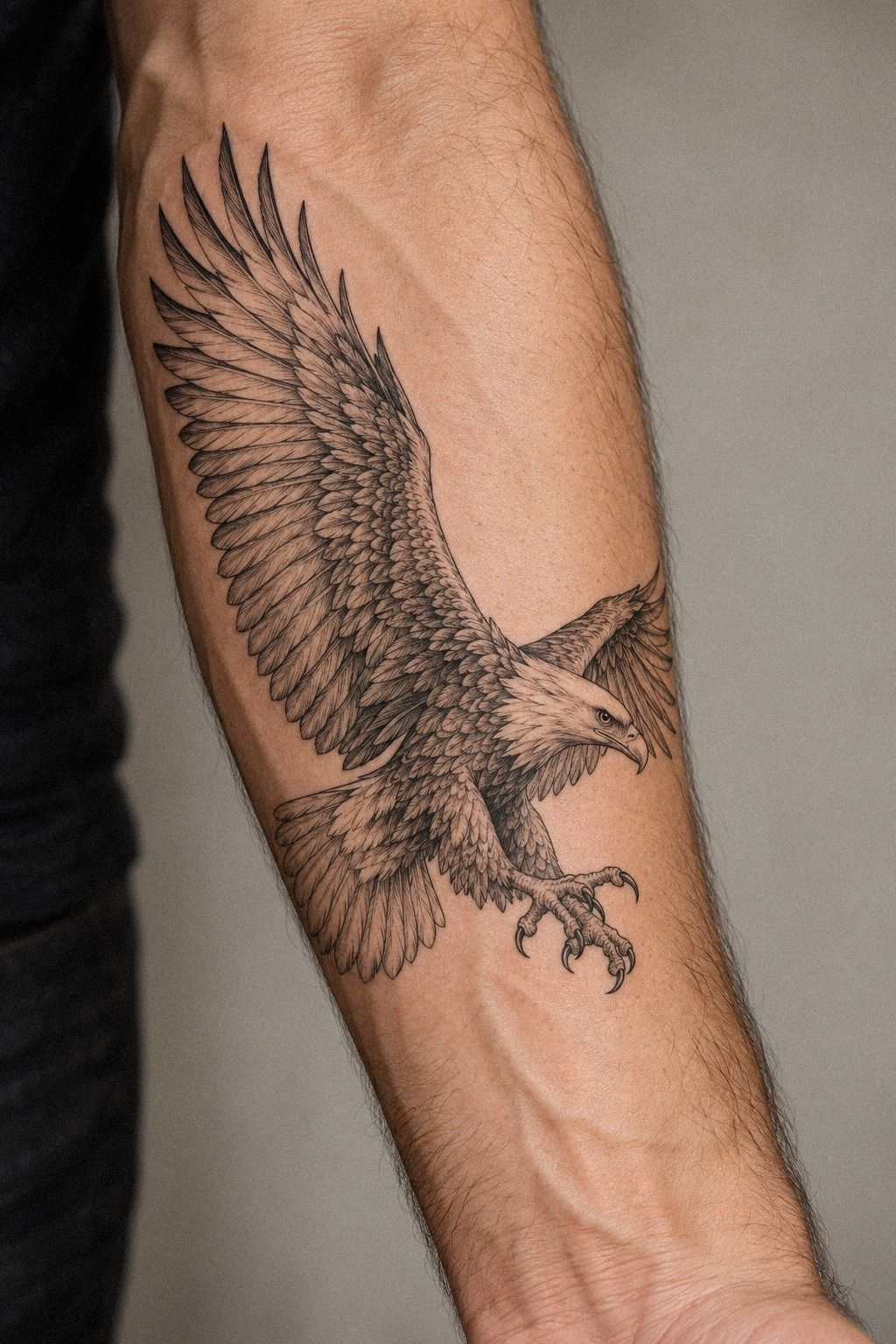
I compared two wing shapes on the wrist: one fierce wing with sharp angles, the other graceful with longer separated lines. The fierce version had more visual force, but it also needed more space to avoid looking cramped.
I wanted the color to stay understated, so my artist tested a deep forest-green ink rather than a flat black. Against my skin, the muted tone looked edgy without overwhelming the fine lines.
The wrist hurt more than I expected. It wasn’t a long session, but the vibration felt close to the surface, especially where the skin thinned near the hand. I kept talking, though I wasn’t pretending it felt pleasant!
If you’re choosing between fierce and graceful, ask what you want people to notice first. A fierce wing leads with attitude.
A graceful wing leads with movement. I chose the second because it felt expressive without looking aggressive.
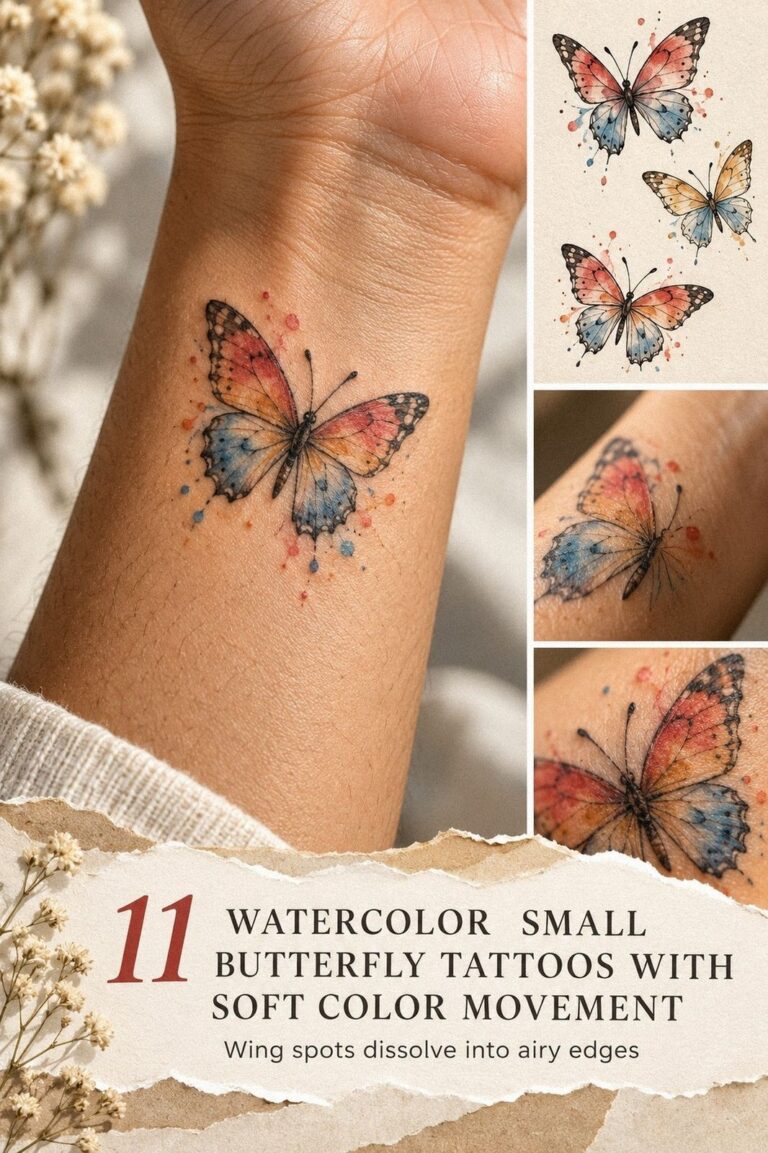
You can compare related linework through this small fine line butterfly tattoo reference. The subject changes, but the spacing lesson carries over. I also reviewed minimalist butterfly tattoo examples before removing two crowded feather marks.
My final wing had a strong wing balance between force and restraint. That contrast was exactly what I wanted, and it made the tattoo feel more personal than a standard flash choice.
7Isolate One Ornate Feather
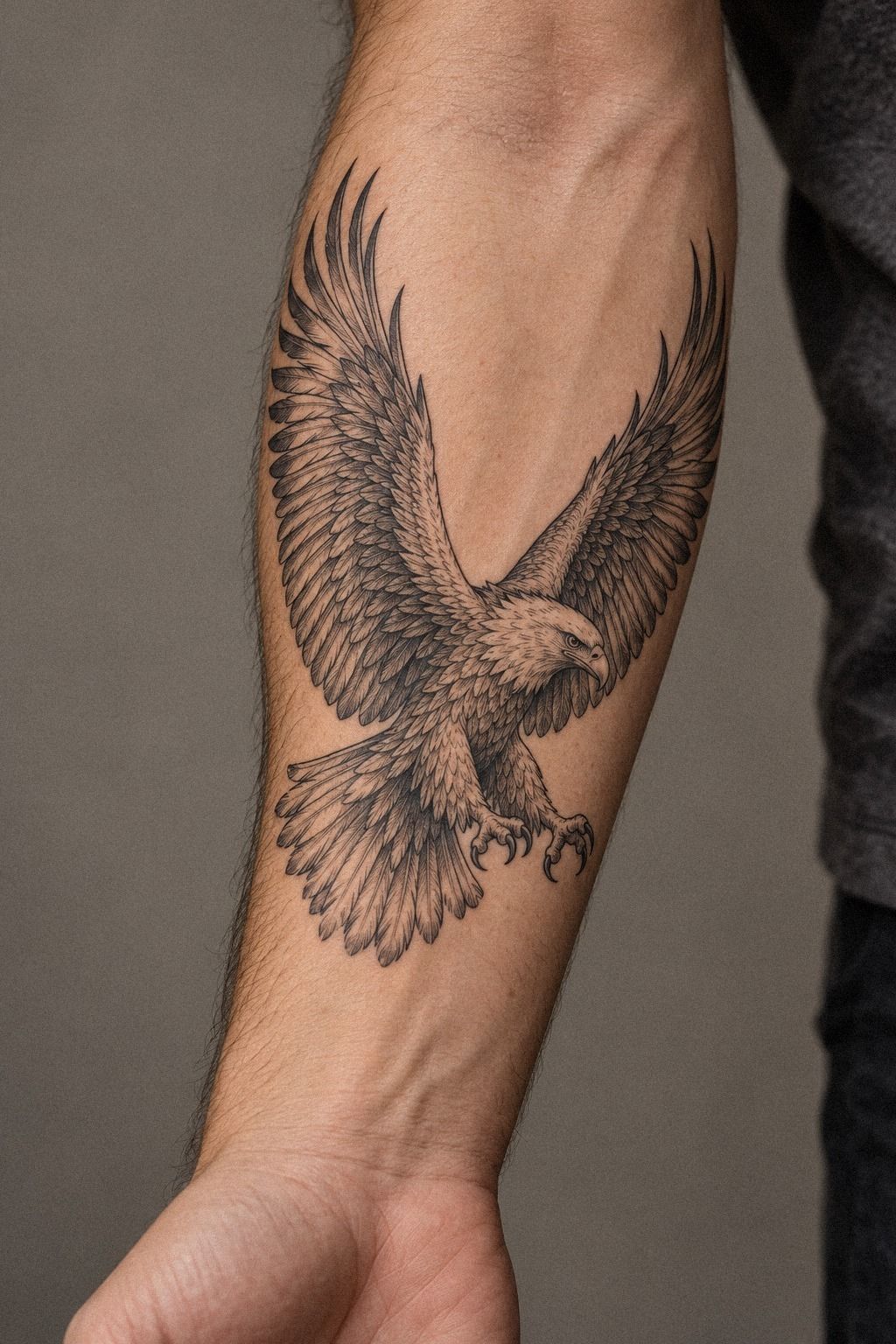
For the calf version, I isolated one ornate feather instead of drawing the entire eagle. It became a separate idea rather than a crowded extension of the main tattoo.
That feather felt vibrant in the first sketch, but I reduced the smallest marks before the stencil was made. Your artist should be able to explain which details will remain readable.
I kept the curve flowing and the shaft crisp. The result was dainty without feeling fragile.
If you want a feather-only design, ask whether the outline still works without surrounding wings. A strong isolated shape should feel complete on its own.
8Read the Unique Eagle Profile
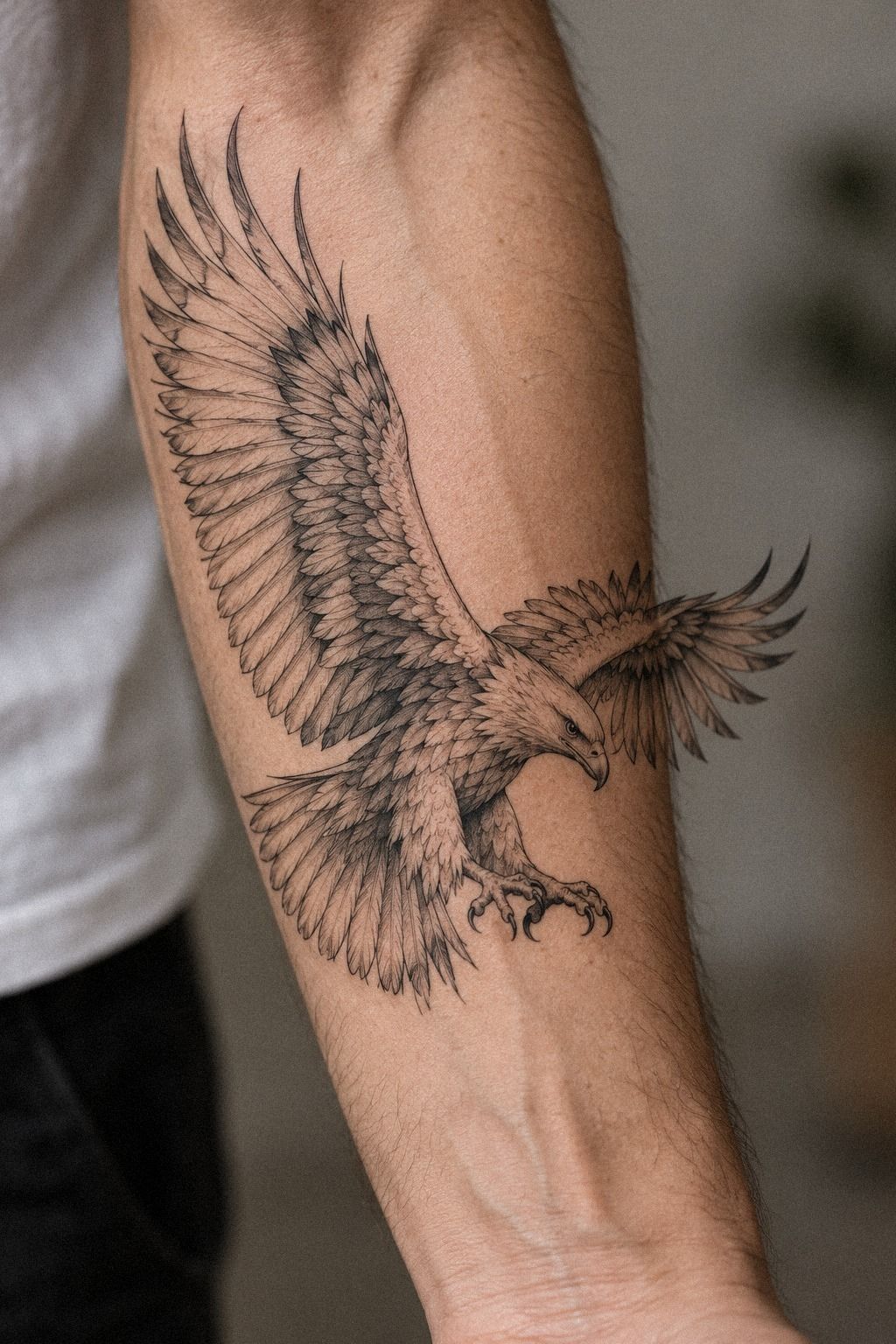
The profile design was the most unique option I considered because it showed only one eye, one beak line, and the curve of the neck. It didn’t need a full front-facing head to feel recognizable.
On the ankle, the profile looked striking when placed vertically. The bird followed the length of the leg, which made the tattoo feel intentional rather than squeezed into a narrow spot.
I asked my artist to make the eye mark tiny but readable. That sounds minor, but your eagle’s expression often comes from one short line. Too low, and it looks sleepy.
Too high, and it becomes cartoonish.
The unique fine line eagle tattoos references helped me compare profiles with different beak angles. I chose the one with a calm, focused expression.
I’d avoid adding lettering beside this design. The profile already has a clear direction, and extra text can pull your eye away from the bird. A polished outline gives the tattoo enough identity on its own.
The strongest version felt profile identity without being loud. That balance made it easier to imagine living with the design for years.
9Prepare for Fine Line Tattoo Pain
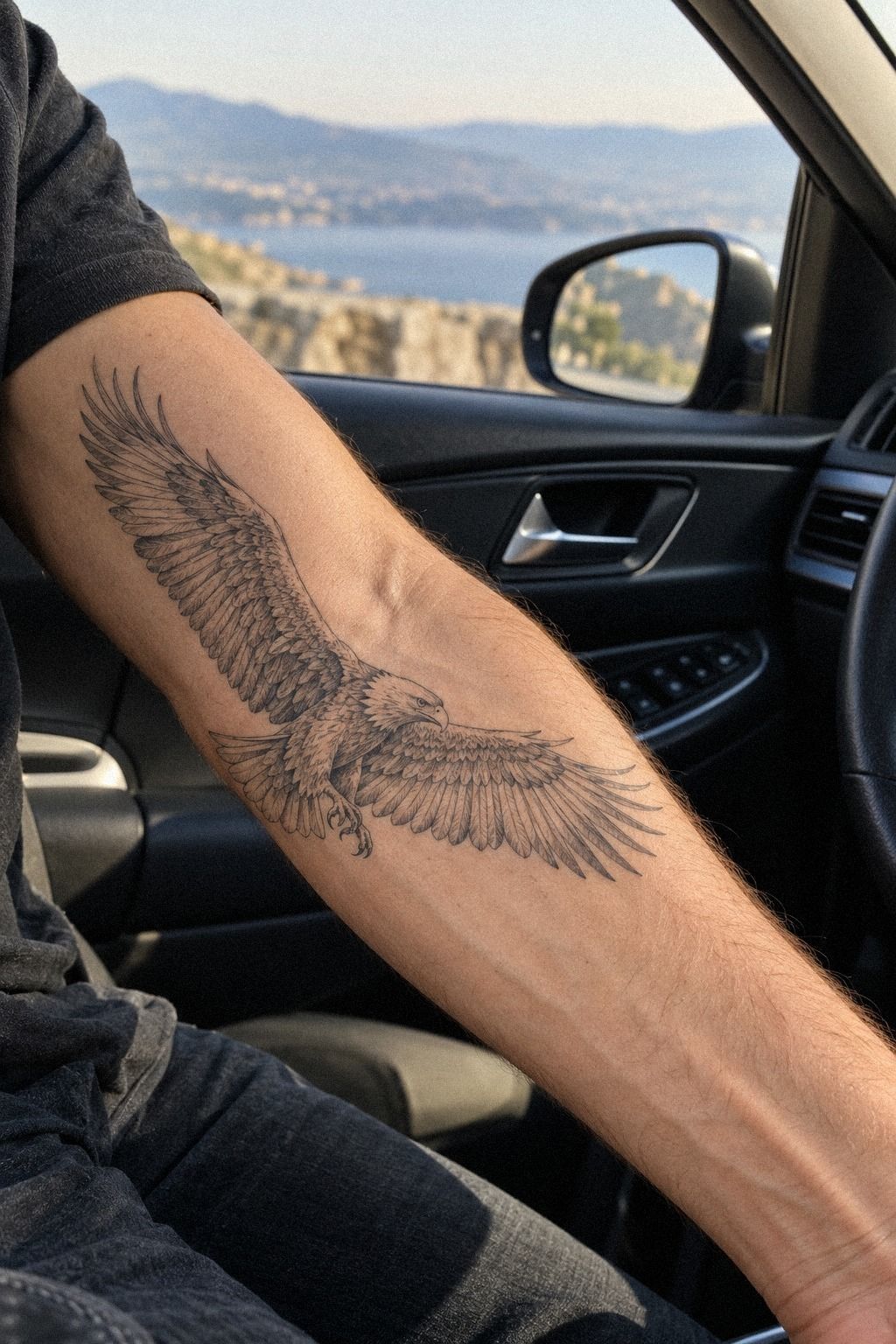
I prepared for pain by treating the appointment like a real physical event, not a casual errand. I ate beforehand, drank water, wore loose clothing, and gave myself time to arrive without rushing.
The forearm eagle felt raw and sharp during the first outline. Your pain may be lower or higher, but placement matters. Ribs, feet, hands, and sternum are commonly more painful, while the forearm, thigh, and shoulder are often more tolerable.
I asked for short pauses before the artist reached the wrist area. That helped me stay relaxed instead of bracing my whole arm. A tense body makes the sensation feel more dramatic than it needs to.
The tattoo needle grouping was fine enough that every pass felt precise. I’d expected one continuous sting, but it came in small bursts, followed by a warm, irritated feeling.
If you’re nervous, ask your artist how long the actual needle time should take. A small design may fit within a short appointment, but your quote and timing depend on the studio, placement, and artist.
I brought water, a snack, and headphones. That preparation was simple, but it gave me a sense of control. I was relieved when the hardest part passed!
The fine line bird tattoos guide also helped me understand how much of the experience comes from line density. A sparse, delicate design may still sting, but it usually doesn’t require the same repeated passes as a packed image.
10Protect the Tattoo During Healing
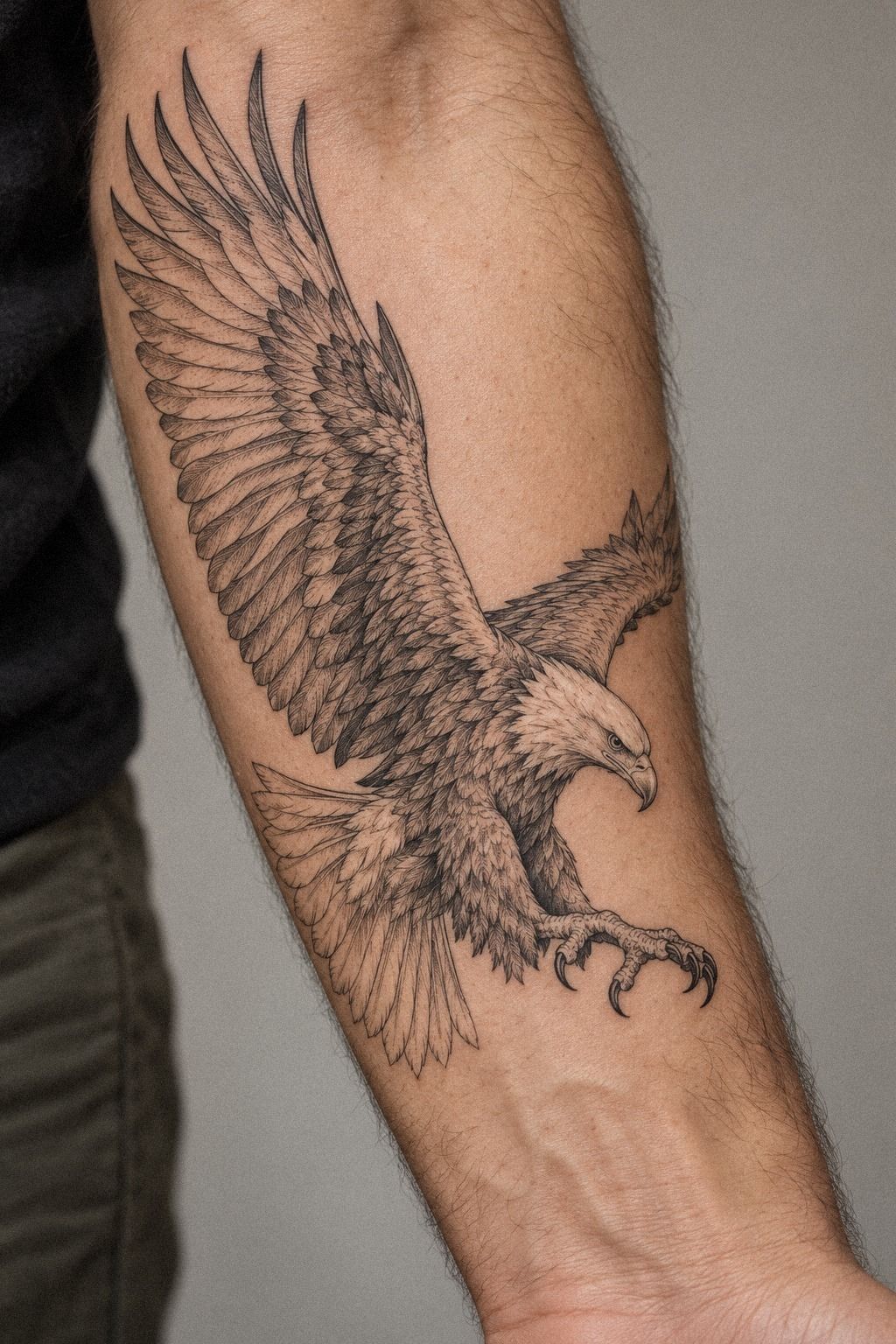
The healing process had two distinct stages. First came the tender, shiny period, followed by the dry and slightly dull stage when the skin started settling.
During the first few days, I followed the artist’s instructions for gentle washing and light moisturizing. I didn’t pick at peeling skin, even when the surface looked uneven.
I kept clothing from rubbing against the tattoo and avoided soaking it. Swimming, long baths, and unnecessary friction can complicate the early healing period.
Once the skin had closed, I focused on protecting the tattoo from repeated ultraviolet exposure. Fine lines can lose their crispness when the skin receives too much sun over time.
The tattoo looked softer before it looked finished. That temporary change didn’t mean the design had failed. The healing skin needed time before I could judge the final result.
Aftercare felt boring, but it was important. I didn’t experiment with random products, and I followed the artist’s written instructions instead of copying someone else’s routine.
11Preserve Its Crisp Fine Linework
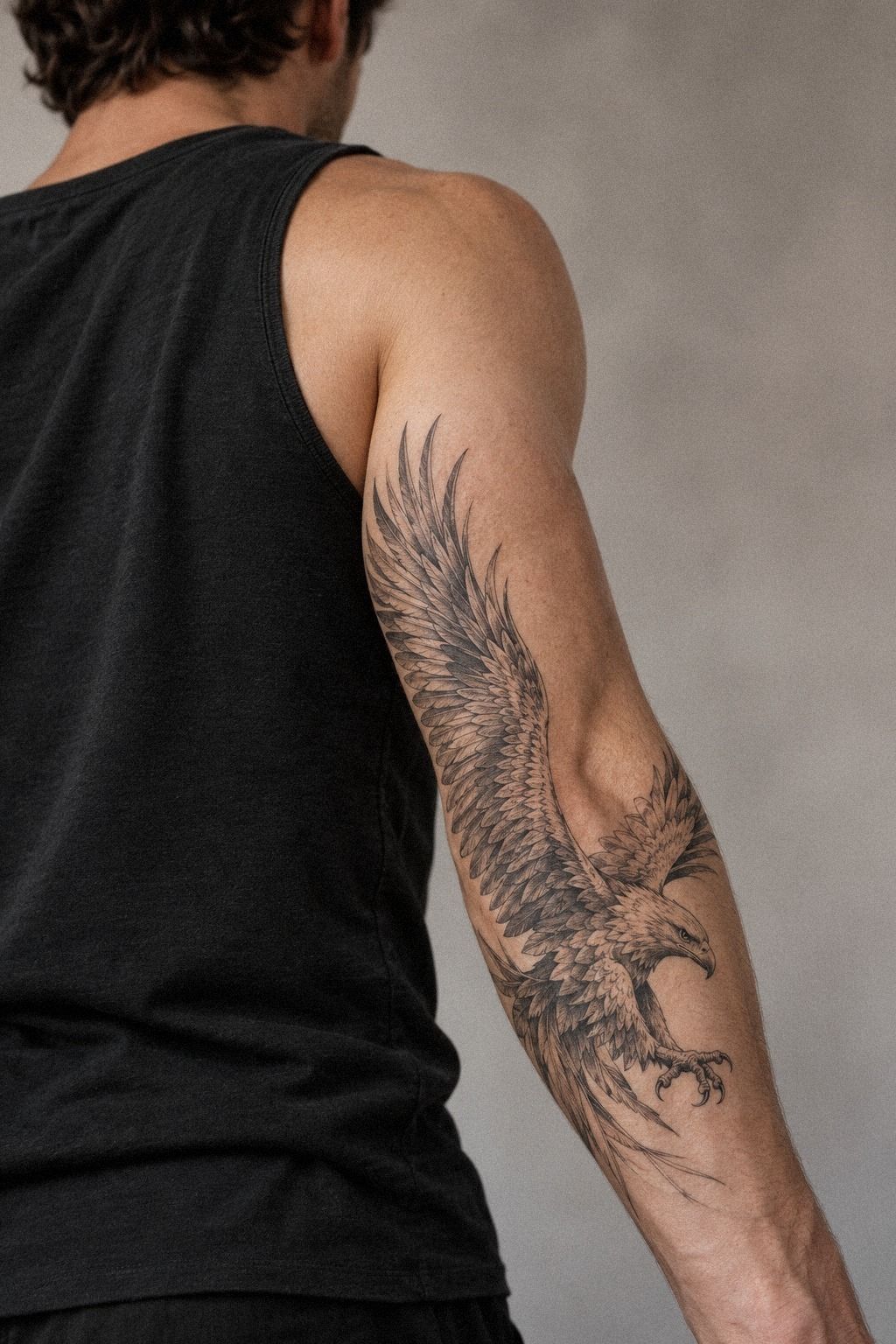
The calf eagle looked bold against my natural skin tone, but the crispness came from spacing rather than heavy saturation. The artist left clean gaps between the feathers and body.
I wanted the tattoo to stay expressive without becoming dense. Your linework may soften with age, and very fine lines can spread slightly, especially when exposed to repeated ultraviolet light.
I use sunscreen once the skin is fully healed and avoid judging the tattoo while the skin is irritated. The broad-spectrum sunscreen protects the surface from fading that can make delicate marks look dull sooner.
My artist also recommended keeping expectations realistic. No tattoo stays frozen forever. A well-placed design with clear spacing and some solid structure generally ages better than a fragile web of tiny marks.
If you’re deciding between delicate and bold lines, I’d choose a balanced outline. The minimalist fine line butterfly tattoo examples show how restraint can still look polished, but your artist should explain where a little extra weight will help.
Good spacing wins! The tattoo still looks sharp and expressive because the body, wing, and tail have room to remain distinct.
What I’d Ask Before Booking
I’d ask whether the artist has healed examples of fine line work, not only fresh appointments. Fresh ink can look flawless, while healed work reveals how the artist handles spacing, saturation, and line weight.
I’d also ask what size the artist considers safe for the level of detail I want. A design can be meaningful and dainty, but shrinking it too far may reduce its long-term clarity.
Before booking, I’d confirm the touch-up policy, appointment length, deposit rules, and aftercare instructions. Those details affect the overall value more than a quick quote.
I’d ask whether the artist has worked on skin tones similar to mine. The best portfolio for your decision should show confident, consistent results across different complexions.
I’d also ask how the artist handles design changes on appointment day. A small adjustment to the wing angle or tail length can make the final tattoo feel more personal.
Use the Healed-Portfolio Test
A healed portfolio tells you more than a collection of fresh tattoos. Look for work taken weeks or months later, especially when the design depends on thin lines and small feather marks.
The tiny fine line butterfly tattoo references helped me compare how open designs retain their shape. The subject is different, but the same principle applies to an eagle.
When I reviewed the fine line bird tattoos guide again, I paid attention to the distance between marks. That spacing often mattered more than whether the original line looked perfectly dark.
I also looked for healed work that still felt timeless and intentional. If the design only works under perfect conditions, I’d keep searching.
Ask to see several healed examples, not one selected result. You want consistency. One striking tattoo can be luck, careful placement, or an unusually easy healing period.
How Much Did It Cost?
My tattoo budget was based on the shop minimum and the artist’s hourly rate, not on a made-up universal price. In the United States, small fine line work varies by artist, location, complexity, and whether the shop charges a minimum.
The shop minimum can apply even when the actual needle time is short. You’re paying for the consultation, stencil adjustment, hygiene setup, tattooing, and the artist’s judgment about what will age well.
An hourly artist rate may make more sense for a larger eagle or a design with several revisions. Ask how the artist calculates time before you assume a small image will have a fixed price.
I’d ask for a written estimate before booking. The tiny fine line butterfly tattoo references helped me compare scale, but your final tattoo cost will come from your selected artist.
If you’re comparing artists, don’t choose the lowest number automatically. A crisp healed portfolio is more useful than a bargain quote, especially when your design depends on tiny spacing and clean curves.
For me, the quality of the healed result made the appointment worth the cost. I wanted a polished, personal mark, not simply the cheapest available session.
Fine Line vs. Heavy Saturation
Fine line eagle tattoos can carry strength without requiring a large, heavy image. I understand the appeal. A small bird can feel powerful, personal, and quietly meaningful at the same time.
Still, I wouldn’t promise that every fine line tattoo will look unchanged for decades. The tradeoff is part of the style. You get a delicate, expressive mark, but you also need thoughtful placement, good aftercare, and realistic expectations about softening.
I’ve learned to trust designs that leave skin visible. When I compare a dense eagle with a more open one, the open design usually feels more timeless because the eye can still separate the body, wings, and tail after the initial sharpness fades.
The most important decision isn’t whether your tattoo should be feminine, masculine, edgy, or classic. It’s whether the drawing has enough structure to survive daily life. Ask your artist what will happen if one line spreads slightly.
For you, that conversation may feel less exciting than choosing the bird’s pose. It’s still where the quality shows. I’d rather have a smaller, polished eagle that ages with dignity than an ornate design that loses its identity within a few years.
The real design structure comes from choosing limits early. Less detail can create a stronger, more recognizable result.
Decide Whether the Design Is Worth It
I ask myself three questions before committing. Does the silhouette read clearly?
Does the placement suit my daily life? And would I still like the design if the lines softened slightly?
If the answer is yes, the tattoo may be worth it even when the session costs more than a rushed alternative. A meaningful design deserves enough time for consultation, stencil changes, and careful execution.
I also compare the artist’s healed work with the promised result. That comparison gives me more confidence than a dramatic fresh tattoo or an unusually low price.
I’d rather reduce the size, remove unnecessary detail, or wait another month than force an intricate idea into a space that can’t support it.
A daring design doesn’t need to be huge. Sometimes the most elegant choice is the one that gives the bird enough room to remain readable.
The Questions Worth Answering First
How much does a fine line eagle tattoo usually cost?
A small fine line eagle tattoo usually costs about $50 to $100 at a shop minimum, while hourly artists may charge roughly $100 to $250. Your quote depends on the artist, region, size, placement, and detail. Ask about touch-ups before booking.
Are fine line eagle tattoos a good idea for a first tattoo?
Yes, if you choose a tolerable placement and a design with clear silhouette. A forearm, shoulder, or thigh can feel more manageable than ribs, feet, hands, or sternum. Your first tattoo should feel meaningful, and strong spacing helps you understand the result.
How do I choose a tattoo artist for fine line eagle tattoos?
Choose an artist with clean linework, a healed portfolio, and strong studio hygiene. You’ll want to see how their tattoos age, not only how fresh work looks. Compare their bird drawings with the tiny bird tattoos references before you commit.
How much do fine line eagle tattoos hurt?
Pain varies, but ribs, feet, hands, and sternum are commonly more painful than the forearm, thigh, or shoulder. My forearm felt sharp and hot, then manageable. Your appointment may feel different, so ask for breaks if your body starts tensing.
How long does a fine line eagle tattoo take to heal?
The surface usually heals in about 2 to 3 weeks, while complete healing can take around 2 to 3 months. Wash gently, moisturize lightly, avoid swimming, and protect the tattoo from sun once it’s healed.
What’s the best placement for fine line eagle tattoos?
The forearm, shoulder, and thigh are practical choices because they’re often more tolerable and easier to monitor. Your best placement depends on visibility, lifestyle, and aging. For a smaller design, compare the small eagle tattoos before choosing.
Where I’d Start First
If I had to pick one, I’d start with the small forearm eagle. It’s visible, easier to monitor while healing, and forgiving enough for a first session.
Your artist can keep the lines delicate without sacrificing the bird’s identity. Save the idea, compare healed portfolios, and decide whether the final design still feels personal before booking.
For me, it became a personal mark with enough strength to stay recognizable and enough restraint to age gracefully. Start there!