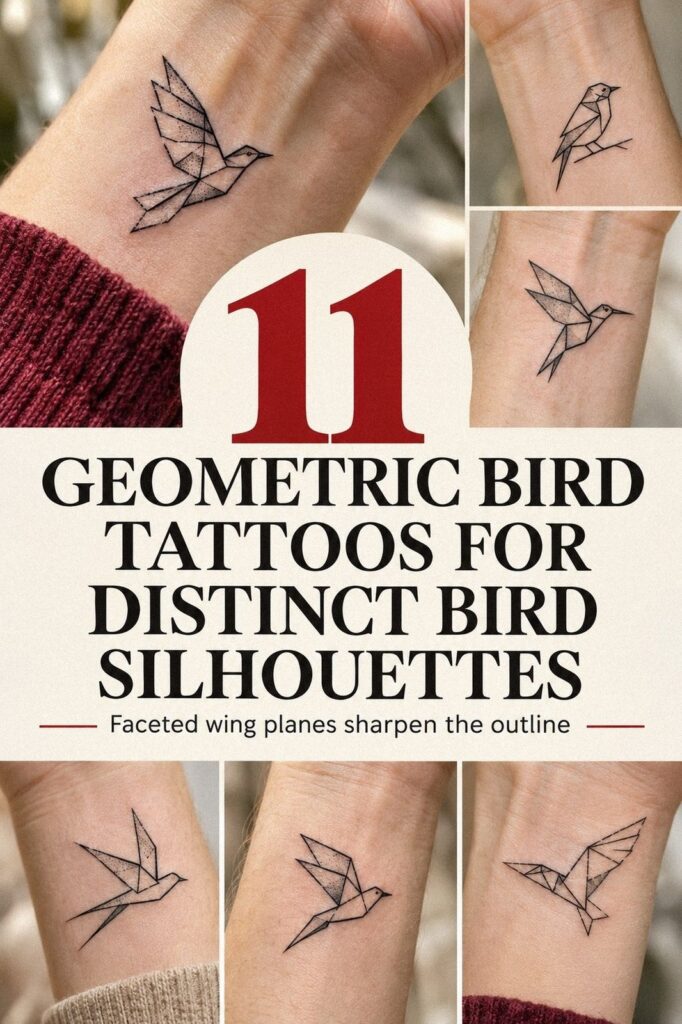
Geometric bird tattoos can be faster and more tolerable when the design stays crisp, open, and correctly placed. I learned that after choosing too much detail for a small area. You want the bird to read clearly, not turn into a dense knot of ink. These 11 ideas keep the shape expressive, personal, and sharp.
Editor’s note: The best geometric bird tattoo balances meaning, spacing, placement, and budget. I’ve kept the ideas varied so you can compare a minimal wrist bird with a fierce forearm design, an intricate sternum piece, or a symbolic botanical composition.
- Small Geometric Bird Tattoos on the Wrist
- Why Sacred Symmetry Works on the Calf
- Behind the Ear, Keep the Bird Minimal
- When Fine Linework Turns Intricate
- Fierce Forearm Geometry Needs Direction
- Celestial Constellations Around a Unique Bird
- Origami Wings, Folded Toward the Sternum
- Could the Collarbone Carry a Delicate Bird?
- Bold Dotwork on the Calf
- Freedom in Motion: Choose the Flight Path
- Botanical Framing Around a Geometric Bird
1Small Geometric Bird Tattoos on the Wrist
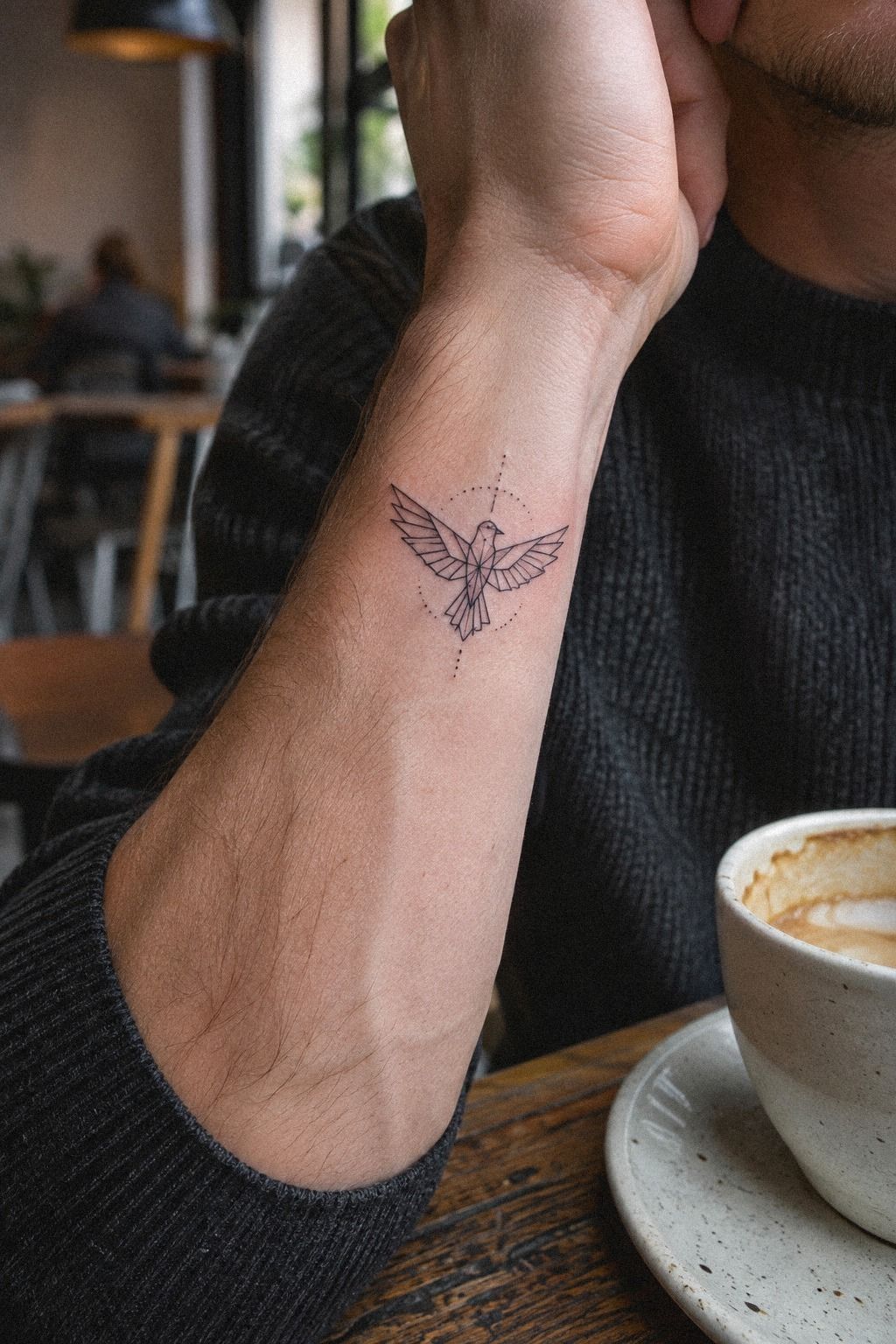
Small geometric bird tattoos work beautifully with wrist placement because the bird stays visible without demanding a massive design. The open wings look striking against fair cool-pink skin, especially when the artist leaves clean skin between the angular shapes. If you’re choosing a first piece, this is a minimal direction with a personal feeling.
Ask your artist to keep the wings symmetrical but not stiff. Black ink with a few crisp interior lines will make the bird look like it’s moving, rather than sitting flat on your skin.
I’d skip heavy fill here. Your wrist flexes, catches sunlight, and sees daily friction, so open negative space gives the design space to breathe.
The best version isn’t the tiniest possible bird. It’s the smallest size that still lets you see the beak, wing joints, and tail from a normal distance. If you’re comparing options, look through these tiny bird tattoos for scale ideas before you commit to the cost.
Keep the session simple: one bird, open wings, and perhaps three geometric accents. A tiny triangle or diamond near the body can make the design feel symbolic without crowding it. If you want a more delicate result, ask for soft dot placement instead of a solid shadow.
Your wrist may feel more comfortable than ribs, feet, hands, or sternum for many people, but it can still feel sharp near the bone. Clean it gently afterward, moisturize as directed, and don’t expose fresh ink to swimming or strong sun. Good aftercare instructions matter more than chasing a quick finish.
2Why Sacred Symmetry Works on the Calf
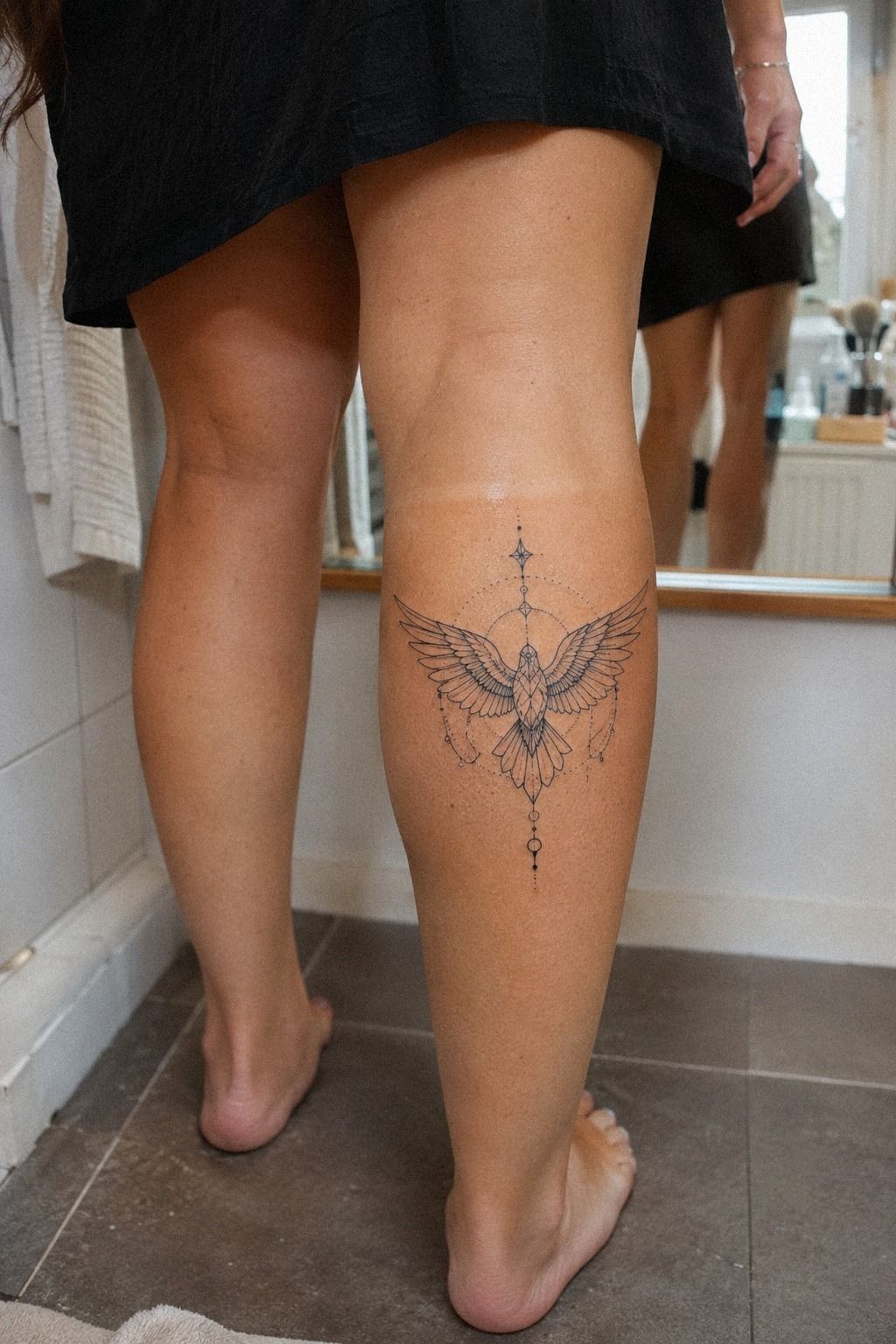
Geometric bird tattoo ideas often begin with symmetry, and this calf design shows why the approach feels so powerful. The bird’s open wings create a sacred, almost emblematic shape, while warm ivory skin keeps the contrast soft. You’ll get a meaningful symbol without asking the artist to draw every feather.
I’d use a central axis from the beak through the body and let the wings mirror each other loosely. Negative-space geometry will keep the design crisp, especially if the bird is small. Perfect mirror symmetry can look mechanical, so I’d allow one or two natural variations in the tail and wing tips.
The calf gives you more breathing space than the wrist, and you won’t be staring at the piece every time you type or wash your hands. That makes it a good choice if you want an expressive tattoo that can stay private under clothing. Compare it with these small bird tattoos before deciding which option offers the best value.
A sacred design doesn’t need religious imagery. A circle, four-point star, or restrained halo can suggest protection, memory, or freedom.
Keep those marks fine and separated from the bird’s body. Otherwise, the central figure can lose its graceful movement. That clarity matters!
Don’t treat symmetry as a reason to make the design enormous. A restrained calf tattoo can look more elegant than a crowded one, and your artist can show you a stencil before the needle starts.
If the stencil looks muddy from a few feet away, simplify it. That decision will save you later.
3Behind the Ear, Keep the Bird Minimal

Minimal geometric bird tattoos behind the ear have an understated edge. The small bird sits close to the hairline, so the design feels personal rather than performative. On medium olive skin, a crisp black outline can look bold enough to read while staying delicate enough for the placement.
This area rewards restraint. Single-needle linework can describe the wings, beak, and tail with only a few marks, but it needs a steady hand and a clean portfolio. Ask to see healed photographs, not only fresh work.
Fresh ink looks sharp; healed linework tells you whether the artist knows how to protect the design’s identity.
Behind the ear can be more sensitive than the outer forearm or thigh, and the machine sound is close to your head. You won’t need a long session, though, which helps many people stay relaxed. I’d choose a minimal bird here instead of dense dotwork because the skin area is small and curved.
Minimal doesn’t mean unfinished. Your artist can add one angular wing fold or a tiny open circle so the bird feels expressive.
If you want a similar visual language with a softer subject, browse these minimalist bird tattoos before your appointment. The lower session cost may also suit a tighter budget.
Keep aftercare practical. Hair products can touch the area, so you’ll want to follow the studio’s cleaning instructions and avoid picking at flakes.
The surface usually settles in about 2 to 3 weeks, while complete healing can take about 2 to 3 months. That patience matters more than adding another line.
4When Fine Linework Turns Intricate

Intricate geometric bird tattoos can still feel open when the artist builds detail through spacing instead of heavy shading. The wrist placement gives this fine-line bird a refined look, while golden tan skin brings warmth to the black marks. You’ll see the wings first, then the smaller angles as you look closer.
For this style, fine-line needlework should be crisp, consistent, and supported by enough open skin. I made the mistake of assuming more detail would make a bird more meaningful.
It didn’t. The strongest design used fewer marks, but each one described a real turn in the wing or tail.
Ask your artist how the lines may change over time. Very fine lines can widen, particularly when they’re packed too closely or placed where friction and sunlight are constant.
A timeless piece isn’t one that freezes in place. It’s one designed with enough line spacing to remain readable as it ages.
You can bring a reference from these fine line bird tattoos, but don’t copy a design without adapting it to your wrist. Your anatomy, skin tone, and movement all matter. A skilled artist will redraw the bird so the wings sit naturally when your hand bends.
I’d skip dense micro-detail around the head. The face is where a small bird can lose clarity first.
Give the head and beak a little breathing space, then let the geometry become more intricate toward the wings. That contrast makes the piece feel polished rather than fragile, and it helps the price feel worth it.
5Fierce Forearm Geometry Needs Direction

Fierce geometric bird tattoos across the forearm can look like a traditional flash concept translated into modern linework.

6Celestial Constellations Around a Unique Bird

Unique geometric bird tattoos become more personal when the extra marks have a reason. On deep ebony skin, the bird’s open silhouette can look striking, while small constellation points add a quiet celestial reference. You’ll get an expressive design without covering the entire thigh.
The key is contrast. Solid black ink should define the bird’s strongest angles, while tiny dot clusters can suggest stars around it.
I’d avoid pale or overly delicate marks that may disappear against your skin tone. Ask your artist how they’ll create contrast and look for healed work on similar complexions.
A thigh placement gives you flexibility with scale and privacy. It’s also generally more tolerable than the sternum, hands, or feet, which can help if you’re nervous about your first longer appointment. If your budget allows more surface area, this option can offer strong visual value without filling every inch.
You might use three stars for a family connection, a specific birth month, or simply a visual rhythm. If you’re drawn to soft birds but want stronger structure, pair this idea with references from black bird tattoos. The result can feel edgy while remaining meaningful.
Keep the constellation irregular. Perfectly spaced dots can make the design look like a diagram, while varied spacing gives it a more organic and haunting quality. Your bird should remain the first thing people notice, with the stars rewarding anyone who looks again.
7Origami Wings, Folded Toward the Sternum

Geometric bird tattoos inspired by origami wings suit the sternum because the sternum line gives the design a natural anchor.
8Could the Collarbone Carry a Delicate Bird?
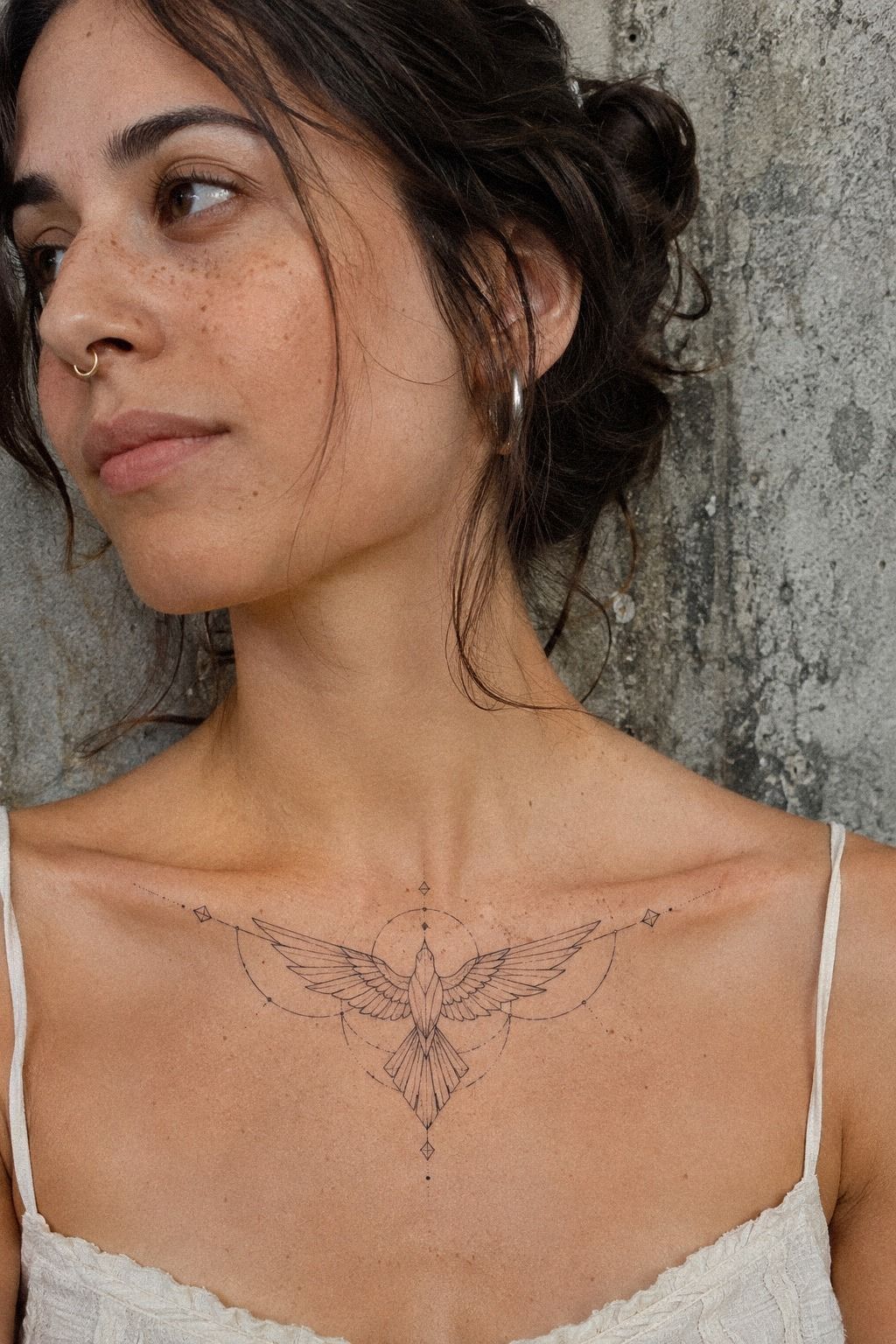
Delicate geometric bird tattoos on the collarbone can follow the natural slope of the bone, making the design feel flowing rather than stamped on. Warm ivory skin gives the small bird a soft contrast, while the open wings keep the shape graceful and visible.
Ask your artist to angle the bird slightly instead of forcing it into a straight horizontal line. Fine black linework can trace the wings and body, but the collarbone needs enough spacing for the design to remain readable as your shoulder moves. Your tattoo should look intentional from both the front and the side.
The collarbone is often more sensitive than the upper arm or thigh, though many people find it manageable for a small design. I’d choose this placement if you want a feminine, refined piece that can show with a tank top and disappear beneath a shirt. It has presence without demanding attention.
A tiny circle near the bird can suggest orbit, motion, or a private symbol. Don’t add a whole trail of stars unless they serve the composition. You can compare the softness of this idea with these delicate bird tattoos before you ask for your stencil and quote.
Aftercare around the collarbone can be mildly annoying because straps and clothing may rub the area. Wear loose clothing, follow your artist’s cleaning directions, and don’t rush back into swimming. The design will look more timeless if you protect the healing skin instead of chasing a quick finish.
9Bold Dotwork on the Calf

Bold geometric bird tattoos with dotwork shading give the calf design a crisp silhouette and a measured shadow.
10Freedom in Motion: Choose the Flight Path
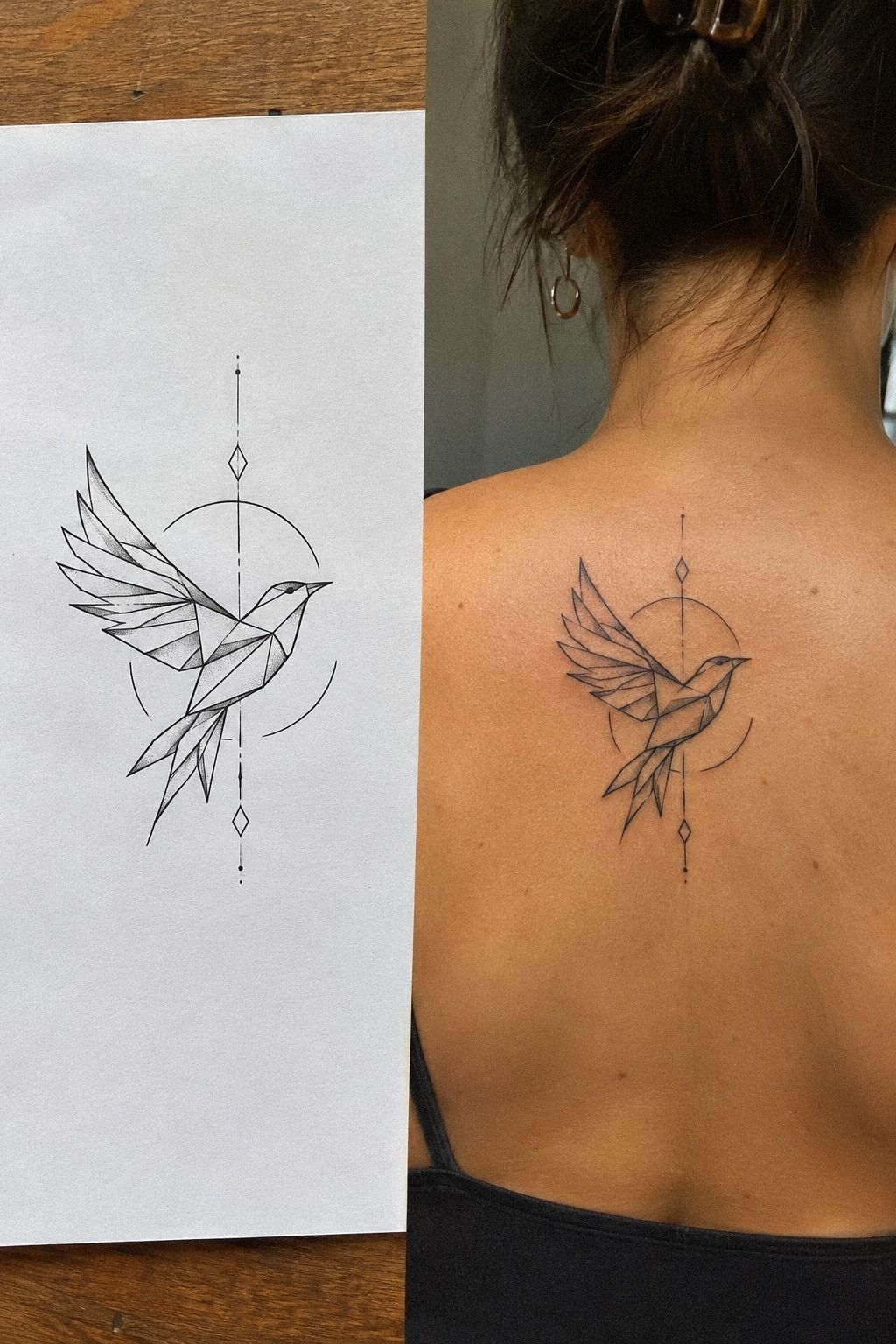
Geometric bird tattoos symbolizing freedom and flight work well when the flight path is decided before the details. A bird rising upward may suggest recovery or ambition, while one moving forward can suggest independence. The meaning doesn’t need a caption.
Start with white stencil paper and inspect the design from several angles. Your artist should check the beak, wing openings, and tail before the transfer. If the silhouette looks flat on paper, it won’t gain emotional force simply because it’s tattooed.
You can make the idea personal through movement. I’d choose one clear gesture rather than combining flight, falling feathers, stars, flowers, and text. If you’re weighing a simpler concept against a larger symbolic piece, the simpler version may be worth it because your reason remains easy to see.
If you’re drawn to color, look at these watercolor bird tattoos for inspiration, but be careful about mixing styles. I’d keep this concept black and open because the stencil-to-ink contrast is part of its appeal. A watercolor wash could soften the sharp geometry too much.
The cleanest version is the one you can explain in one sentence. Your artist can then refine the line weight, placement, and spacing around that idea.
Don’t chase every symbol you’ve seen online. One bird, one direction, and one personal reason will feel more empowering than a crowded story.
11Botanical Framing Around a Geometric Bird

Geometric bird tattoos framed by botanical linework combine crisp structure with a more flowing surround. Deep brown skin and a warm undertone can give the bird a powerful presence, while plant-inspired lines create movement around the thigh. You’re getting contrast without losing the subject.
Keep the surrounding leaves, stems, and branches lighter than the bird itself. A few curved marks can frame the wings, but the central silhouette should remain the darkest and clearest element. I’d avoid thick foliage behind the body because it can flatten the design and make the bird harder to see.
The thigh gives you space to build a graceful composition and is generally more tolerable than bony placements. It’s also a useful choice if you want a larger design that can remain private. Ask your artist to show the thigh stencil while you’re standing and sitting, since the lines will shift with movement.
You can make the frame symbolic through the plant choice, but don’t force a meaning that doesn’t belong to you. Your bird can represent freedom, a person, a place, or simply a moment when you needed forward motion. If you want a softer reference set, browse these delicate unique butterfly tattoos.
I’d choose one botanical rhythm and repeat it three or four times instead of mixing every leaf shape. That restraint keeps the tattoo refined, expressive, and timeless. The bird should look as though it’s moving through the frame, not trapped inside it.
A Quick Meaning Check Before You Commit
A geometric bird can represent freedom, memory, recovery, movement, or a person you carry with you. The personal meaning doesn’t need to be obvious to anyone else. It only needs to remain true when you look at the tattoo years from now.
Write one sentence about what you want the bird to express. If you can’t decide between flight, protection, independence, or remembrance, start with the feeling rather than the symbol. That usually leads to a more meaningful and less literal design.
You can also choose a reference sketch for its gesture instead of copying its exact lines. Your artist should adapt the shape to your anatomy, skin, placement, and preferred level of detail.
The most powerful tattoos often have one dominant idea and one quiet secondary detail. A star, plant, circle, or angular fold can carry symbolic detail without turning the bird into a visual summary of your entire life.
Before You Book: A Better Consultation
Bring two or three reference images, not twenty. These tiny bird tattoos can help you compare scale, while your own sketch should explain what makes the bird personal. You don’t need to arrive with a finished design.
Tell your artist where you want the piece to sit, how visible it should be, and which details matter most. Your design brief should mention the bird’s direction, preferred line weight, meaningful symbols, and any details you already know you don’t want.
Ask to see healed work, especially if you’re considering fine lines, dotwork, or a darker complexion. You’ll learn more from a healed portfolio than from one striking fresh tattoo. That conversation can also clarify the expected price before you book.
You should also ask about the shop minimum, hourly rate, touch-up policy, and session length. I’d rather spend ten minutes making the plan clear than discover later that the stencil, deposit, or second session changes your budget.
A good consultation should leave you feeling informed, not pressured. If the artist dismisses your questions about placement, healing, or readability, that’s useful information. You’re allowed to pause.
Which Placement Gives You the Best Value?
The best placement depends on what you value most. Forearm visibility may matter if you want to see the bird every day, while thigh privacy may matter more if your work or family setting calls for discretion.
For a shorter session, you might compare the wrist, behind-ear, and collarbone options. For more elaborate geometry, the calf, forearm, and thigh give your artist more usable space. Your choice can change the cost even when the bird itself stays the same size.
If comfort is your priority, many people find the forearm, thigh, calf, and shoulder more tolerable than the ribs, feet, hands, or sternum. That isn’t a promise about your experience. It’s simply a useful starting point for your conversation.
You can also ask your artist to adapt one concept across two placements. These fine line bird tattoos may inspire a wrist design, while a forearm version could use stronger angles and more open space. Compare placement comfort with visibility before you decide.
The best value isn’t always the lowest quote. It’s the design that fits your skin, schedule, budget, and willingness to care for it. A small, well-planned tattoo can feel more satisfying than a larger idea you rushed.
Build a Design That Still Reads Later
A tattoo should make sense from normal viewing distance, not only in a zoomed-in phone image. Readable spacing protects the beak, wing joints, tail, and central body from becoming one dark shape as the tattoo settles.
Your artist may recommend a slightly larger size than you first imagined. I know that can feel frustrating when you want a dainty piece, but a little extra scale can preserve the intricate details that made you love the reference.
Look at small bird tattoos for compact ideas, then ask what would need to change for your skin and placement. A design should be adapted to you, not copied line for line. Your design scale should serve the bird’s identity.
I’d remove one detail before I’d reduce every gap. The most polished geometric birds usually have a clear visual hierarchy: body first, wings second, accents last. That order keeps the result sharp, meaningful, and personal.
Ask yourself whether you can identify the bird when your arm is relaxed, your leg is turned, or your shoulder is moving. If you can, the layout is doing its job.
Aftercare Is Part of the Design
Your aftercare choices affect how the tattoo settles. Gentle cleaning means following your artist’s instructions, washing as directed, moisturizing appropriately, and avoiding picking at flakes or exposing fresh skin to swimming and strong sun.
The surface often heals in about 2 to 3 weeks, while complete healing can take about 2 to 3 months. You’ll need patience, especially if the design includes fine lines or dense dotwork. Rushing the process won’t improve the final result.
Wear clothing that won’t constantly rub the area, particularly with collarbone, wrist, or sternum placements. If you’re unsure about a product or activity, contact your artist instead of improvising around fresh skin.
Good aftercare protects the money, time, and meaning you’ve already invested. It’s not a glamorous part of the process, but it’s one of the most practical ways to preserve crisp geometry. That’s worth protecting!
Why These Designs Age Better Than Overworked Birds
I’ve become more selective about geometric bird tattoos because the first sketch can hide future problems. A design may look intricate on a screen, but skin isn’t a flat page. Lines can spread, tiny gaps can close, and sun exposure can soften contrast.
Sensible line spacing gives your tattoo a better chance of staying readable. Solid black areas can remain strong when they’re balanced with open skin, and placement matters just as much as style. I’d choose a clean forearm, calf, or thigh design over a dense piece squeezed into a tiny space.
Very fine lines can widen over time, especially when they’re crowded together or placed where friction is constant. A timeless piece isn’t necessarily the smallest or most detailed one. It’s the one designed with enough room to remain expressive through skin maturity.
You can compare healed examples in these black bird tattoos before making a decision. Your goal isn’t to predict every change. It’s to choose an artist and layout that respect how tattoos mature.
A tattoo doesn’t need to remain perfectly identical to its first day to stay beautiful. Thoughtful spacing, a clear silhouette, and patient aftercare give the design a stronger chance of aging with character.
A practical US tattoo reference
Those figures vary by artist and region, so you’ll want a direct quote after the artist sees your design and placement. Ask about the shop minimum, hourly rate, touch-up policy, and whether the stencil appointment is included. A clear conversation now is worth more than guessing later.
The Questions I Get Asked Most
How much does a geometric bird tattoo usually cost?
A geometric bird tattoo usually costs about $100 to $300 in the United States, though a shop minimum may be roughly $50 to $100 and hourly rates often fall around $100 to $250. The final price depends on the artist, region, placement, size, and detail.
Are geometric bird tattoos a good idea for a first tattoo?
Yes, especially when you choose a manageable placement and a design with clear spacing. A clean silhouette is easier to understand during the appointment, and forearm, thigh, or shoulder placements are often more tolerable than ribs, feet, hands, or sternum. Your comfort still matters most.
How do I choose a tattoo artist for geometric bird tattoos?
Choose an artist whose portfolio shows consistent linework, healed photographs, and geometric designs on skin tones similar to yours. Portfolio evidence matters more than a polished social feed. You’ll also want to confirm studio hygiene, consultation details, and the artist’s specialty.
How much do geometric bird tattoos hurt?
Pain varies by person and placement. Ribs, feet, hands, and sternum are often more sensitive, while forearm, thigh, and shoulder placements are usually more tolerable. Placement comfort can make a bigger difference than the design itself, so discuss the location honestly with your artist.
How long does a geometric bird tattoo take to heal?
The surface usually heals in about 2 to 3 weeks, while complete healing can take about 2 to 3 months. Gentle aftercare means washing as directed, moisturizing appropriately, and avoiding sun and swimming while the skin repairs itself.
What’s the best placement for geometric bird tattoos?
The forearm, thigh, calf, and shoulder are strong choices because they give the bird readable space and are often more tolerable than bony areas. Placement visibility depends on your work, clothing, and meaning, so choose the location you’ll still feel comfortable showing or covering.
Where I’d Start First
If I had to pick one, I’d start with the small geometric bird on the wrist. Its open wings stay readable, the session can stay focused, and the shape won’t depend on heavy shading. Save these minimalist bird tattoos if you want a restrained starting point.
For a more elaborate option, I’d choose the botanical thigh bird or the constellation design. They give your artist room to create an intricate, symbolic composition without forcing every detail into a small placement. You can also review these fine line eagle tattoos before your consultation.
The right choice is the one you can explain clearly, afford comfortably, and still recognize from a normal distance. Start with the bird’s gesture, choose your placement honestly, and let the geometry support the meaning instead of overwhelming it.