Black bird tattoos can feel sharp, personal, and memorable without turning one appointment into an endurance test. Start with a small, crisp silhouette, choose fleshier placement, and keep the design readable at about 1 to 3 inches. You’ll get a meaningful result with fewer passes over sensitive skin.
- Start With a Meaningful Black Bird Silhouette
- Pick Small Black Bird Tattoo Linework
- Choose an Intricate Flying Bird Composition
- Place Your Tattoo Along Natural Body Curves
- Keep Fine Details Crisp During Healing
- Plan a Striking Flock of Black Birds
- Select Distinct Feathers and Wing Shapes
- Balance Bold Ink With Delicate Linework
- Match Bird Symbolism to Your Personal Story
- How Can You Prepare for Pain in Sensitive Areas?
- Protect Your Finished Tattoo With Care
1Start With a Meaningful Black Bird Silhouette
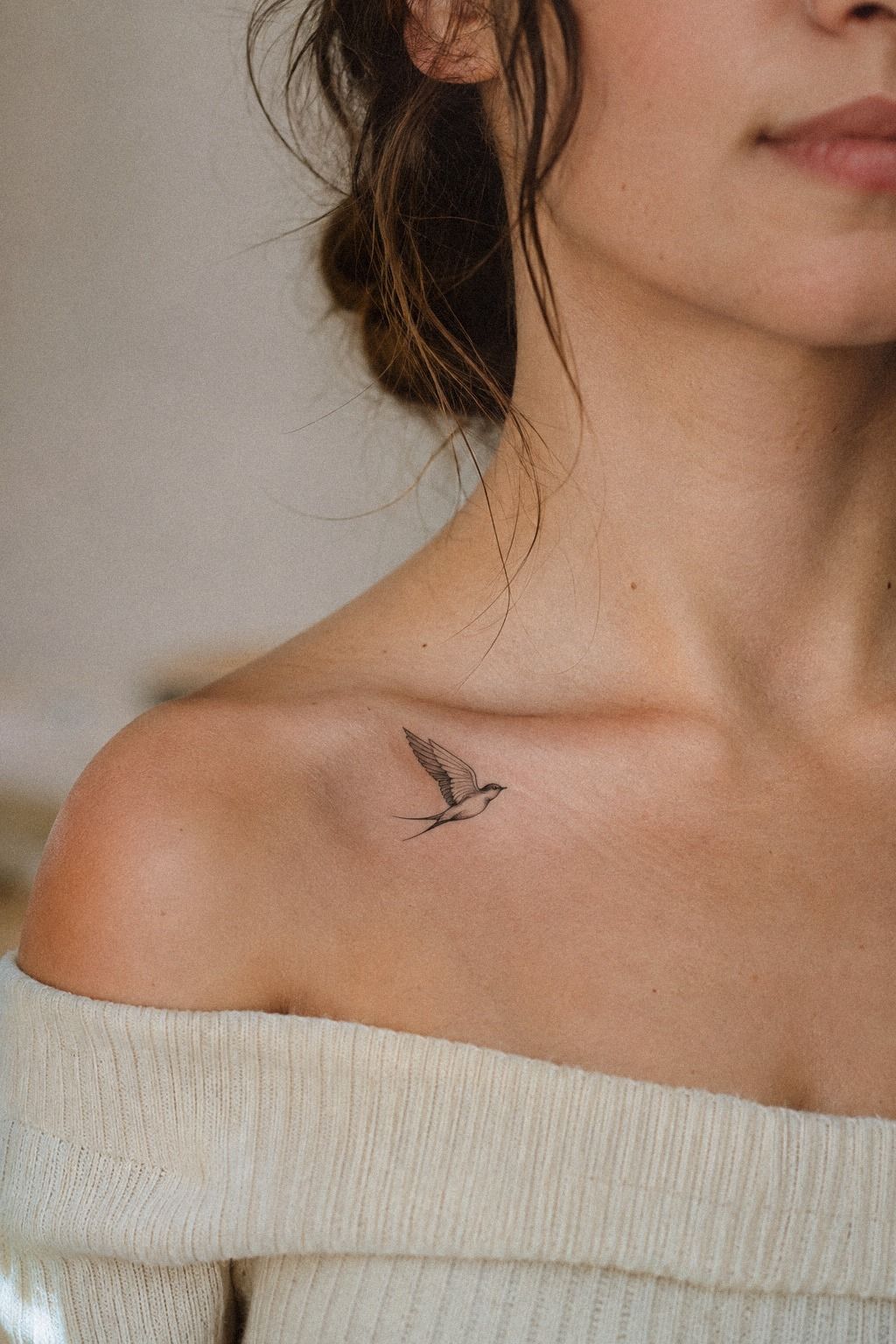
Begin with the bird’s emotional purpose before choosing feathers, shading, or placement. A mid-flight silhouette can represent freedom, departure, survival, or a private turning point.
If you’re drawn to small black bird tattoos, write one sentence about what the bird means to you. That sentence will keep your design intention personal instead of merely stylish.
A fine line bird on the forearm can stay crisp while the wings remain open and readable. I’d skip a crowded background at this stage.
Clouds, stars, and heavy branches may look expressive on paper, but they can force your artist to work longer over the same area. Your best first draft is often a single bird with a clear head, body, tail, and wing angle.
Think about the body posture before you book. A bird flying upward can feel daring and hopeful, while a bird turning downward may carry a more haunting message.
You don’t need a huge black mass to make the silhouette bold. A strong outline and one controlled dark area can carry the meaning.
Save a few references from our guide to minimalist bird tattoos and compare the silhouettes side by side. You’ll notice that the most timeless designs don’t depend on tiny decoration. They depend on a gesture you can recognize from across the room.
That first gesture matters more than species labels. A raven, crow, swallow, or sparrow can all work if the posture feels personal.
Keep the concept minimal, symbolic, and easy to describe in one sentence. If you can’t explain what the bird is doing, the artist may struggle to make the body position read clearly.
2Pick Small Black Bird Tattoo Linework

For an ankle version, ask your artist to keep the linework delicate but not weak. A compact ankle placement can feel dainty and understated when the bird has enough open skin around it.
3Choose an Intricate Flying Bird Composition

The sternum needs a careful composition because the bird sits near the center of the body, where symmetry and spacing become obvious. Ask your artist to place the stencil first, then look at it while standing naturally. Your chest shifts when you breathe, and a design that looks graceful while lying down may feel tilted when you sit or move.
Keep the central bird small enough that the wings don’t approach the nipples or collarbone unless that placement is intentional. A compact composition can feel sacred and private without requiring a large session. If you want extra movement, use one curved flight path or a few spaced dots rather than a full background scene.
I’d avoid packing the sternum with three birds during your first appointment. The result can become ornate, but the work will take longer and the sensitive placement may make the sitting harder. One central bird with two or three controlled accents gives you stronger visual rhythm and lets your skin recover more easily.
Your concept should show how the bird reads from a normal distance, not only at tiny size. Check fine line bird tattoos for compositions that use open skin well. You’ll want a design that remains expressive when the body is relaxed, breathing, and moving.
If the sternum is meaningful but pain is a concern, reduce the scale and simplify the interior marks. A delicate outline with one dark wing can feel more polished than a dense composition. A shorter appointment length may also offer better value than adding details you won’t see once the tattoo settles.
4Place Your Tattoo Along Natural Body Curves

On the upper back, use the shoulder blade and spine as guides rather than treating the skin like a flat sheet. A flying bird can follow the shoulder’s slope, with the head angled toward the neck or outer shoulder. Your stencil should move with your body, creating a flowing shape instead of sitting stiffly across the back.
Ask for the stencil in your preferred position before you lie down. Bend one arm, roll your shoulders, and turn slightly so you can see whether the wings still feel balanced. This placement can look powerful when the bird follows the curve, but it can look accidental if the body points directly into the spine.
The upper back is often more tolerable than ribs, feet, hands, or sternum, though every person reacts differently. If you’re planning one sitting, tell your artist that pain management matters to you. They may simplify the smallest details, work in short pauses, or choose a placement with more padding.
I’d choose the upper back over the ribs for a first black bird tattoo when visibility isn’t your main goal. It gives your artist enough skin for sharp lines and gives you a calmer surface to protect afterward. Your clothing choices matter too, so bring a loose, clean shirt for the trip home.
Compare the upper back with the shoulder, thigh, and forearm before booking. The cheapest placement isn’t automatically the best value if it makes you tense, move, or request a redesign. The right placement choice can shorten the session and make the result easier to live with.
A Quick Cost Reality Check
Tattoo pricing varies by region, artist experience, minimum charge, and design complexity. A small black bird may take less time than a detailed piece, but a reputable artist may still charge a shop minimum. Ask for a clear estimate before you commit, especially if your budget is fixed.
Those figures are planning ranges, not promises. The artist’s portfolio, hygiene standards, and healed results matter more than chasing the lowest quote.
In my view, a strong healed portfolio is worth paying for because correction or cover-up work can cost far more later. Your tattoo budget should include the quality of the work, not only the first appointment.
5Keep Fine Details Crisp During Healing

Fresh ink always looks more saturated than healed ink. Your artist should explain how the line may soften after the surface settles, especially if you’re choosing fine details. Ask which marks are essential and which ones can be removed if the design becomes too dense at your chosen size.
The first surface-healing stage usually takes about 2 to 3 weeks, while complete healing can take roughly 2 to 3 months. During that period, wash the tattoo gently, keep it lightly moisturized as advised, and avoid swimming and direct sun. You’ll protect the clarity by treating aftercare as part of the design process.
I learned to stop judging a tattoo too early. A peeling edge can look alarming, but picking at it can disturb the surface and make the result less even.
Your job is simple and sometimes boring: clean hands, gentle washing, no scratching. That patient approach keeps the finished piece more polished.
Use your consultation to mark which fine details matter most. If your favorite bird has three feather lines per wing, ask whether all three will survive at the chosen size. You can compare healed examples in delicate bird tattoos and ask your artist for examples seen after the initial healing period.
The right aftercare can protect your budget as well as your tattoo. A small touch-up may be normal, but preventable damage can mean another appointment and extra cost.
Follow the studio’s instructions instead of copying a random routine from social media. The healed result deserves more attention than the first-day shine.

6Plan a Striking Flock of Black Birds

A flock can look striking when every bird has a different height, wing angle, or direction. Ask your artist to show black ink on skin tones similar to yours, not only on pale paper. Contrast and spacing need to be judged on the actual skin where the tattoo will live.
Start with one anchor bird, then place the others around it. Your flock might move upward toward the elbow, drift toward the wrist, or spread across the forearm in a loose diagonal. I’d avoid identical copies because repetition can make the group feel mechanical instead of personal.
The spacing should be generous enough that each silhouette can age on its own. Fine lines can widen over time, and tightly packed birds may eventually read as one uneven patch. Your artist can use open skin between bodies and wings to keep the flock legible for years.
Before you commit, look at small bird tattoos and count how many birds still read clearly at thumbnail size. You’ll probably find that three well-spaced silhouettes feel more iconic than seven crowded ones. That’s the direction I’d take for a single-session plan.
A flock also changes the cost and appointment length. Three simple silhouettes may be worthwhile, while seven intricate birds could push you beyond the one-sitting goal. If time, pain, or budget matters, ask for a version with fewer bird shapes before approving the final stencil.
What a Short Sitting Should Include
A realistic one-sitting plan should cover the consultation, stencil placement, tattooing, cleanup, and aftercare instructions. Don’t measure success only by the number of birds completed. A clear, balanced result is better value than rushing through an ambitious layout.
Tell your artist exactly what “less pain” means for you. You might want fewer passes, a shorter continuous period, scheduled pauses, or a fleshier placement. They can’t plan around a limit they don’t know.
Eat beforehand, drink water, and wear clothing that gives easy access to the chosen area. Bring your identification, payment method, and any questions about the studio’s appointment policy. Being prepared won’t remove pain, but it can make the sitting feel more manageable!
7Select Distinct Feathers and Wing Shapes

Feathers are where a simple bird becomes distinctive, but tiny feather marks need discipline. Choose one feather language for the whole design: short curved strokes, clean tapered lines, or a small amount of solid black. Your artist can then repeat the visual idea without tracing every feather individually.
If you’re drawn to a fierce bird, sharpen the wing tips and angle the body upward. If you want something more gentle, soften the curve and leave the tail slightly open. A single wing decision can change the entire emotional tone.
I’d skip hyper-realistic feather texture in a small tattoo. It can look impressive in a large drawing, but it becomes muddy when reduced to an inch or two. Your artist should preserve the primary contour first, then add only the details that remain visible when you step away from the mirror.
Bring two or three examples of wings you like, but don’t combine every feature into one draft. A clean silhouette with one memorable feather shape will feel more personal than a crowded collage. You can study unique black bird tattoos for ways to make a familiar subject feel individual.
Ask whether your preferred feather detail is worth the added time and cost. Sometimes the most stylish choice is also the most restrained. You’ll want the feather pattern to remain clear after healing, not merely impressive during the first week.
Questions Worth Asking Before Booking
Ask how long the proposed design should take, what the shop minimum is, and whether the estimate includes a touch-up. You can also ask what the artist would remove if the design needed to become smaller. Those answers reveal whether they understand your one-sitting goal.
Ask to see healed black bird tattoos in a similar scale. Fresh work can look vibrant but won’t tell you how the lines settle. A healed example gives you stronger information before you spend your money.
Finally, ask how the artist handles breaks. If you’re worried about pain, knowing when you can pause may make the appointment feel less intimidating.
You’re allowed to discuss comfort, timing, and budget before the needle starts. That’s a smart consultation, not a difficult one!
8Balance Bold Ink With Delicate Linework

The thigh gives you more skin to balance solid black areas with lighter lines. A dark wing can create contrast without swallowing the whole design. Your artist can keep the body raw and graphic while using finer lines around the tail.
Choose one area for visual weight. A black wing, dark head, or filled tail is enough for a compact bird.
If you fill every section, the tattoo may lose the flowing movement that made you choose a flying design. I’d keep one wing lighter so the bird still feels ethereal rather than static.
Pain is personal, but the outer thigh is often easier for many people than the ribs, sternum, hands, or feet. If you’re sensitive, ask whether you can use the thigh placement for the first appointment. You’ll still get a visible piece in shorts, and you won’t have to force a small design into a bony location.
A mix of solid black and fine line can also age more predictably than a field of hairline marks alone. Your artist should show healed work, not only fresh examples. The best balance is crisp, readable, and slightly imperfect in a human way.
If you’re comparing artists, look for consistency in both dark fills and thin contours. A polished portfolio should show how the artist handles different skin tones, placements, and healed stages. The fine line bird tattoos guide can help you identify whether an artist’s approach fits your linework preference.
9Match Bird Symbolism to Your Personal Story

A bird can symbolize freedom, grief, migration, protection, memory, or a new beginning. None of those meanings is mandatory.
Your design becomes meaningful when the symbol connects to your life, not when it matches a popular caption. Write down the reason you want it before choosing the final pose.
You might use one bird for a person you miss, a pair for a relationship, or an upward flight path for leaving a difficult chapter. If the story is private, keep the design understated and let the meaning belong to you. A tattoo doesn’t need to explain itself to every person who sees it.
I’d avoid forcing a crow, swallow, raven, or sparrow into the design only because the bird species has a familiar meaning. Look at the beak, tail, and wing shape, then choose the bird whose movement feels right. Your artist can make the silhouette recognizable without turning it into a literal illustration.
For a more layered idea, read about tree and bird tattoo meaning, then decide whether your story needs a second symbol. You may find that one small bird says more than a full scene. That kind of restraint can feel empowering.
A personal tattoo doesn’t have to be feminine, masculine, romantic, or dramatic. It can be quiet and still carry weight.
The best choice is the one you’ll still recognize as yours after the trend has passed. That is what makes the personal symbolism last.
A Better Way to Compare References
Sort your saved references into three groups: silhouettes, placements, and details. Don’t copy one tattoo wholesale. Instead, identify the exact feature you like in each example and explain it to your artist.
A reference can be beautiful but wrong for your size or skin. A dainty design with hairline details may not offer enough contrast at 1 inch. A bolder version could give you better long-term value while keeping the same symbolic idea.
Choose one primary reference and one backup. Too many examples can produce a design with conflicting proportions. A focused consultation gives your artist a better chance to create something visually coherent.
If you need more comparison points, revisit minimalist bird tattoos and note the exact choices that make each bird readable. Look for posture, negative space, wing direction, and the relationship between dark ink and untouched skin.
10How Can You Prepare for Pain in Sensitive Areas?

Pain depends on placement, duration, skin sensitivity, and your own experience. Your pain level can change even between two tattoos in similar locations.
If Your Skin Feels Sensitive
Sensitive skin doesn’t automatically rule out a tattoo, but it does make communication more important. Tell your artist about previous reactions, allergies, medications, or skin conditions before booking. They can explain whether a consultation or medical opinion makes sense.
Don’t apply numbing products unless the artist has approved the exact product and instructions. Some formulas can change how the skin behaves or affect the artist’s process. Clear communication is safer than experimenting on the day.
Choose an artist who answers questions without dismissing you. A professional should be able to explain the process, expected discomfort, aftercare, and skin-sensitivity plan in plain language. If the consultation feels rushed, keep looking.
11Protect Your Finished Tattoo With Care

Once your tattoo is finished, follow the studio’s specific aftercare instructions. Your artist knows the products and covering method they used, so their guidance comes first. Don’t replace that advice with a generic aftercare routine just because it worked for someone else.
Wash gently, pat dry, and use only the amount of moisturizer recommended for your skin. Avoid soaking the tattoo in a pool or bath during the early healing stage, and keep direct sunlight away from it. UV exposure can fade black ink and make fine lines lose their vibrant edge sooner.
Don’t pick flakes or scratch an itch, even when the skin feels tight. Wear clean, loose clothing that won’t rub the tattoo repeatedly. If you notice unusual heat, spreading redness, or worsening pain, contact your tattoo artist or seek medical care rather than guessing.
Check the healed tattoo beside your original reference. You’ll be able to see whether the wings, tail, and negative space still read as planned. A protected tattoo can stay sleek, clear, and connected to the reason you chose it in the first place.
Good aftercare protects the money and time you already spent. If a touch-up is needed, ask whether it’s included and when the artist recommends scheduling it.
Don’t judge the final result until the skin has fully settled. A little patience protects the finished tattoo!
Aftercare Signals to Take Seriously
Mild peeling, dryness, tenderness, and temporary tightness can be normal during early healing. The exact experience varies with placement, skin, ink saturation, and your artist’s process. Keep following the written aftercare instructions you received.
Worsening pain, spreading redness, unusual heat, pus, or fever deserves prompt medical attention. Your tattoo artist can offer practical guidance, but they aren’t a substitute for a healthcare professional. Treat these as warning signs.
Avoid sharing creams, bandages, or advice without checking the source. A product that feels fine on one person’s skin may irritate another person. Keep the simple routine clean and consistent!
The Meaning Comes Before the Needle
I’ve seen people spend more time choosing a bird species than deciding what they want the tattoo to hold. That order can create a technically polished piece that feels oddly empty.
I’d reverse it. Start with the memory, promise, person, or change you’re marking, then let the silhouette follow.
Pain matters, especially when you’re trying to finish in one sitting, but pain shouldn’t be the only design filter. A forearm may be more tolerable than a sternum, yet the sternum might be right if the tattoo is meant to stay private. Your choice should balance meaning, visibility, healing, and pain planning.
I once preferred an extremely fine reference because it looked delicate on a screen. Then I noticed that half the wing depended on lines so thin they disappeared when the reference was viewed small. That changed my opinion.
A slightly heavier contour can look less fragile and more timeless after the skin settles.
The strongest black bird tattoos usually have a simple center and one unusual detail. Maybe the bird faces inward, the wings are uneven, or one feather breaks the outline. Your artist can build that detail into a design that remains readable rather than decorating every open area.
If you’re still unsure, compare healed portfolios and ask direct questions. How does this line age?
Which placement will be easier? What detail would you remove?
Those questions are powerful because they turn a pretty reference into a practical plan. A small bird tattoo can be just as expressive as a large one when the core idea is clear.
A Few Things Worth Answering
How much does a black bird tattoo usually cost?
A black bird tattoo typically costs about $100 to $300 in the US, though a shop minimum may be around $50 to $100 and hourly rates may run about $100 to $250. Your final price depends on the artist, region, size, placement, and detail level. Ask for an estimate before confirming the tattoo budget.
Are black bird tattoos a good idea for a first tattoo?
Yes, black bird tattoos can be a good first choice because a small silhouette is easy to understand and can fit a more tolerable placement. Clear linework also gives you a straightforward design to watch during healing, especially on the forearm, thigh, or shoulder. Keep the first tattoo plan simple.
How do I choose a tattoo artist for black bird tattoos?
Choose an artist with clean linework, healed portfolio examples, and strong studio hygiene. Ask to see birds on skin tones similar to yours.
A healed portfolio tells you more than fresh work because you can judge softened lines, spacing, and black saturation. That evidence is usually worth the artist’s rate.
How much do black bird tattoos hurt?
Ribs, feet, hands, and sternum often hurt more than the forearm, thigh, or shoulder, but pain varies from person to person. Placement matters most for planning, so tell your artist that you want a shorter, more tolerable appointment if that’s your priority. A smaller design may offer better pain-to-value balance.
How long do black bird tattoos take to heal?
The surface usually heals in about 2 to 3 weeks, while complete healing can take roughly 2 to 3 months. Wash gently, moisturize as directed, and avoid sun and swimming early on. Consistent aftercare helps your lines settle cleanly and protects the healing result.
What’s the best placement for black bird tattoos?
The forearm, thigh, and shoulder are strong choices when you want more tolerable placement and readable lines. The sternum, ribs, feet, and hands can feel more intense.
Your best placement balances visibility, pain, body curves, and enough skin for the bird to remain clear. The placement decision should serve both your comfort and the design.
Where I’d Start First
If I had to pick one step, I’d start with the clean silhouette. A clean flying bird gives your artist a readable foundation, and it keeps the appointment shorter than a crowded design. Pin this guide for later, then bring one meaningful reference and one healed portfolio example to your consultation.
Start with the meaning, choose the placement honestly, and spend your budget on clarity rather than unnecessary detail. That’s how you get a black bird tattoo that feels bold, personal, and easy to live with. If you’re still comparing options, revisit delicate bird tattoos and choose the reference whose design language feels most like you.