
Tiny phoenix tattoos can stay readable for years when you choose clear shapes, sensible placement, and enough breathing room. I once squeezed too much detail into a small design, and the result looked muddy instead of crisp. You don’t need a giant bird to make the symbol feel powerful. You need an idea your artist can draw cleanly!
Editor’s note: My one rule is simple: make the phoenix recognizable before making it decorative. That keeps a first tattoo personal, meaningful, and easier to live with.
- Small Tiny Phoenix Tattoos With Fine Linework
- Can a Tiny Phoenix Follow Your Wrist?
- Red Ink or Black? Choosing a Colorful Phoenix
- Minimalist Silhouettes That Still Read as Phoenixes
- Delicate Tiny Phoenix Tattoos Behind the Ear
- How Do Rising Flames Change the Phoenix Shape?
- Ornate Feather Details With Enough Breathing Room
- When Does Ankle Placement Make Sense?
- Unique Tiny Phoenix Tattoos With Dotwork
- What Does a Phoenix Mean to You?
- Tiny Phoenix Tattoos With Watercolor Accents
1Small Tiny Phoenix Tattoos With Fine Linework
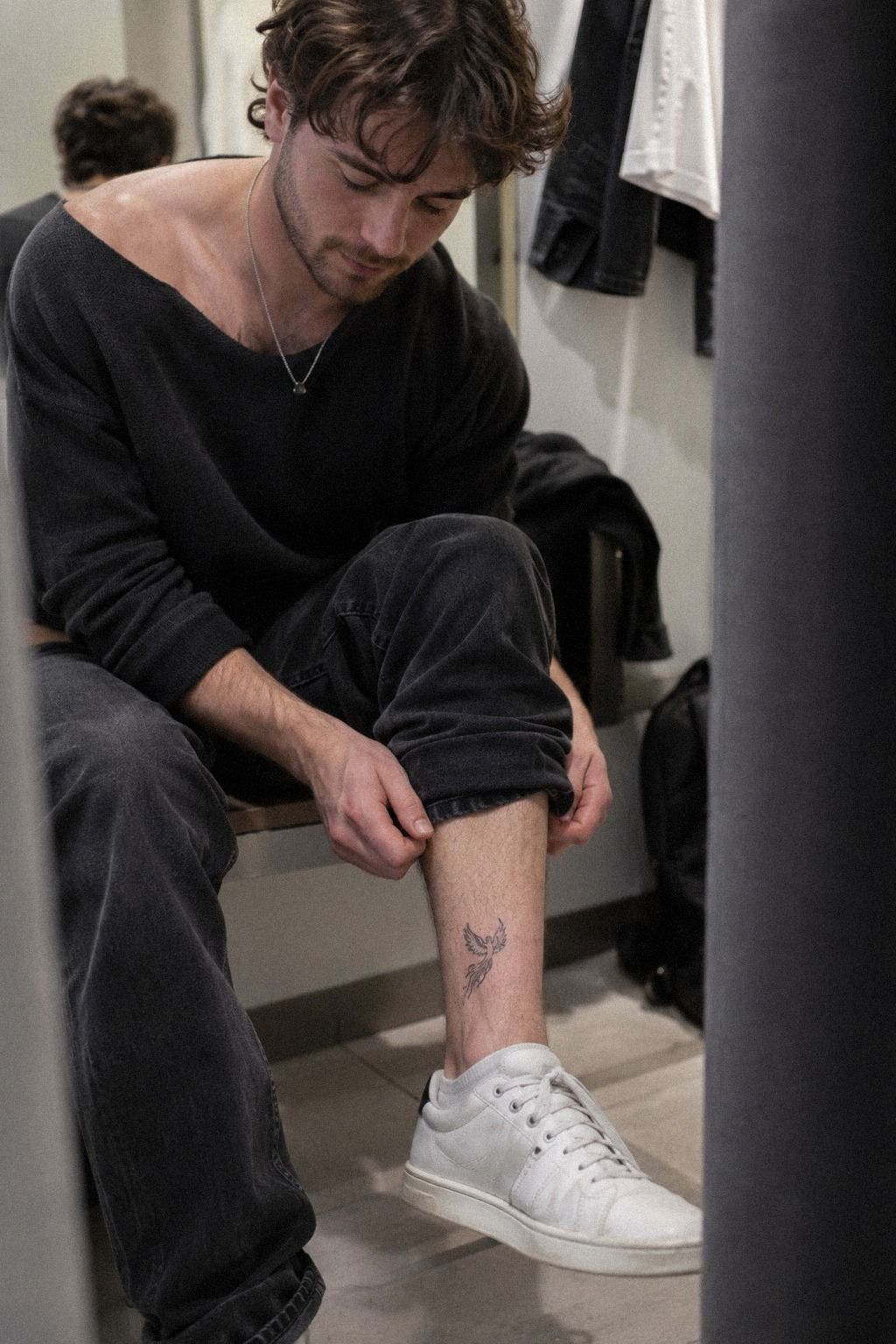
A fine-line phoenix on the ankle can look delicate, personal, and quietly striking. Keep the body open, with a lifted head, one curved wing, and a tail that doesn’t collapse into a dark knot.
Ask your artist for single-needle linework with restrained feather marks. Your ankle moves, rubs against socks, and sees sunlight, so tiny parallel lines can soften over time.
I’d skip five separate feather textures at this scale. One graceful contour will read better than intricate detail that turns gray.
Black ink gives you the strongest long-term contrast, especially when your artist leaves clean skin between the wing and tail. If you’re comparing animal motifs, our guide to tiny bird tattoos can help you decide whether a phoenix or a simpler bird fits your personality.
Keep the reference minimal and understated. Your artist can make the phoenix feel expressive through posture rather than decoration, and that’s the smarter choice for a first tattoo you’ll see every day.
I’d also ask what size the artist considers genuinely readable. A design can be small without being microscopic. Paying for a slightly larger outline may be worth it if it protects the shape for years.
2Can a Tiny Phoenix Follow Your Wrist?

A wrist phoenix works best when its shape follows the natural length of your arm. A vertical bird usually reads more clearly than a round emblem squeezed across the wrist.
Ask your artist to mark the wrist placement while you’re standing, sitting, and bending your hand. Skin shifts, jewelry rubs, and the design may look different when your wrist is relaxed.
For a first tattoo, I’d keep the head and tail separated by visible skin. That small decision can make the phoenix feel sleek instead of cramped.
You can compare your idea with small bird tattoos before booking. Your goal isn’t to copy another bird. It’s to understand which proportions still look readable at your preferred size.
3Red Ink or Black? Choosing a Colorful Phoenix

A red phoenix can feel bold, vibrant, and a little edgy, but color changes how much contrast you’ll see against your skin. It also changes the long-term planning. Color changes the calculation!
Ask your artist to show healed red work, not only fresh photographs. A saturated red design can look bright on day one and softer after healing. I’d avoid mixing three colors into such a small bird.
One red tone with open skin around it will look more polished than a miniature rainbow.
Your budget should include the studio minimum, the artist’s rate, and any extra time needed for a custom drawing. Use this table as a planning range, then request a local quote.
The final price isn’t the only measure of value. A cheaper appointment may not be a bargain if the design needs correction later. I’d rather spend a little more on a careful consultation than save money on a rushed outline.
Ribs can be more sensitive than the forearm, and the skin moves when you breathe. If red feels like your story, choose it with intention. A fierce accent can say more than a large design you never connected with.
If you want more symbolism before choosing color, read what a phoenix symbolizes in a tattoo. You can also compare the phoenix with tiny dragon tattoos if you want a different kind of transformation story. The meaning should guide the color, not pressure you into one.

4Minimalist Silhouettes That Still Read as Phoenixes
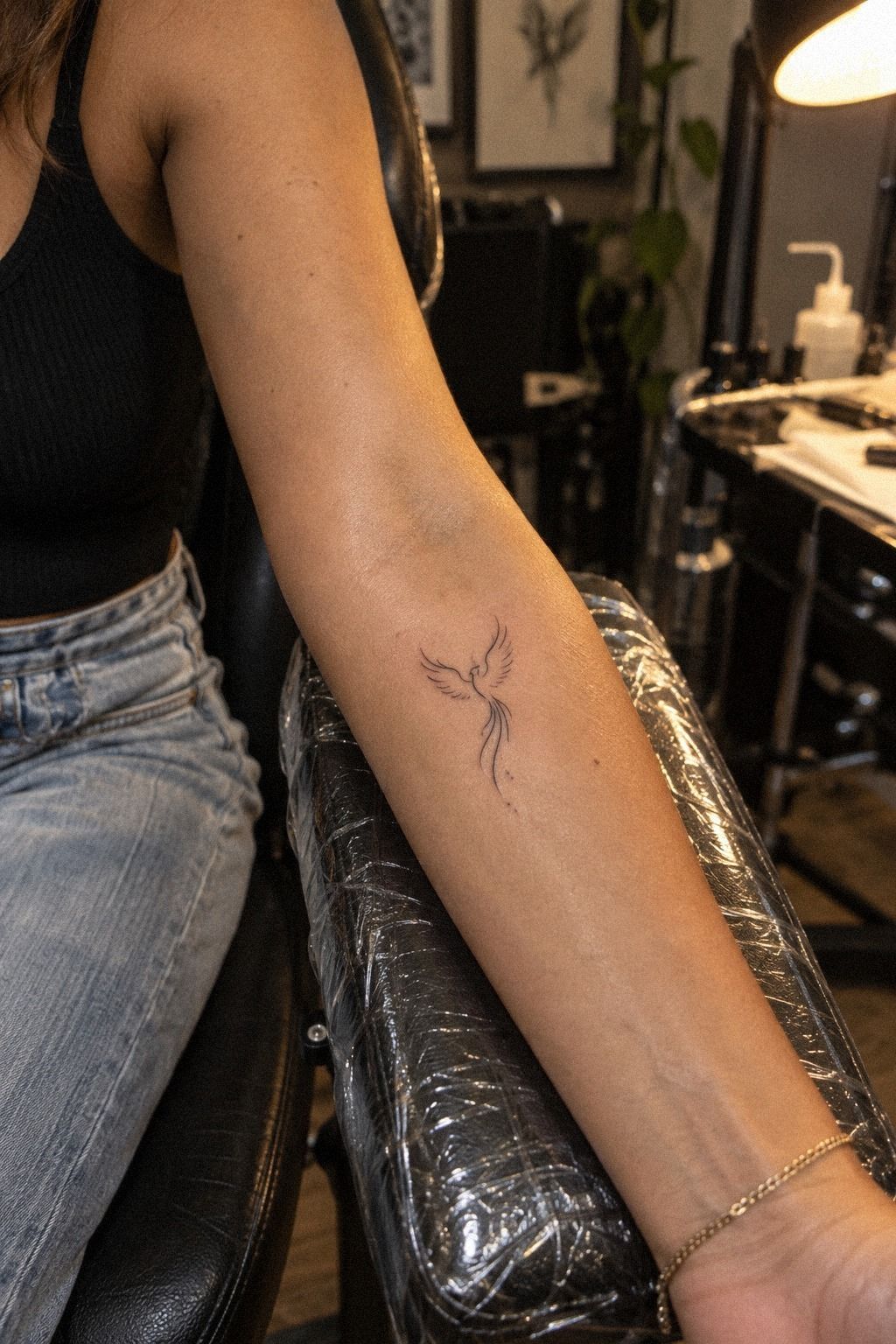
A minimalist silhouette can suggest a phoenix without drawing every feather.
5Delicate Tiny Phoenix Tattoos Behind the Ear

Behind-the-ear phoenix tattoos work best with a compact outline and very few internal marks. The placement is discreet, but hair products, sweat, and friction can make aftercare more demanding.
Choose a black flash design with a simple silhouette rather than a hair-thin cluster of feathers. Your artist may suggest a slightly stronger line than the original sketch shows, and that adjustment can help the tattoo remain readable.
I’d circle the cleanest option, not the busiest one. A tiny rising bird with one open wing will stay more dainty and graceful than a phoenix packed with flames.
If you want to compare other compact symbolic animals, browse tiny dragon tattoos for ideas that use recognizable outlines. You may also study tiny bird tattoos to see how posture can carry the entire concept.
Aftercare matters here. You’ll need gentle aftercare, light moisturizing, and patience around hair brushing. The result can feel intimate without requiring a hidden message.
6How Do Rising Flames Change the Phoenix Shape?

A rising-flame phoenix depends on a strong vertical flow.
7Ornate Feather Details With Enough Breathing Room

A single feather can carry phoenix symbolism without forcing an entire bird into a tiny area. It gives you an ornate idea while keeping the central shape readable.
Ask your artist for separated feather barbs with enough skin between each mark. I’d skip dense crosshatching because the collarbone moves, catches sunlight, and has less padding than the forearm.
A feather can feel expressive when its angle suggests lift. It might point toward the shoulder, follow the collarbone, or curve slightly inward depending on how visible you want it to be.
This is a strong option if you want symbolism but don’t need a literal bird. It can represent survival, a fresh chapter, or strength you don’t need to explain.
Compare the feather idea with tiny eagle tattoos if you’re deciding between a phoenix’s rebirth meaning and an eagle’s freedom imagery. The right choice is the one that still feels personal after the trend fades.
8When Does Ankle Placement Make Sense?
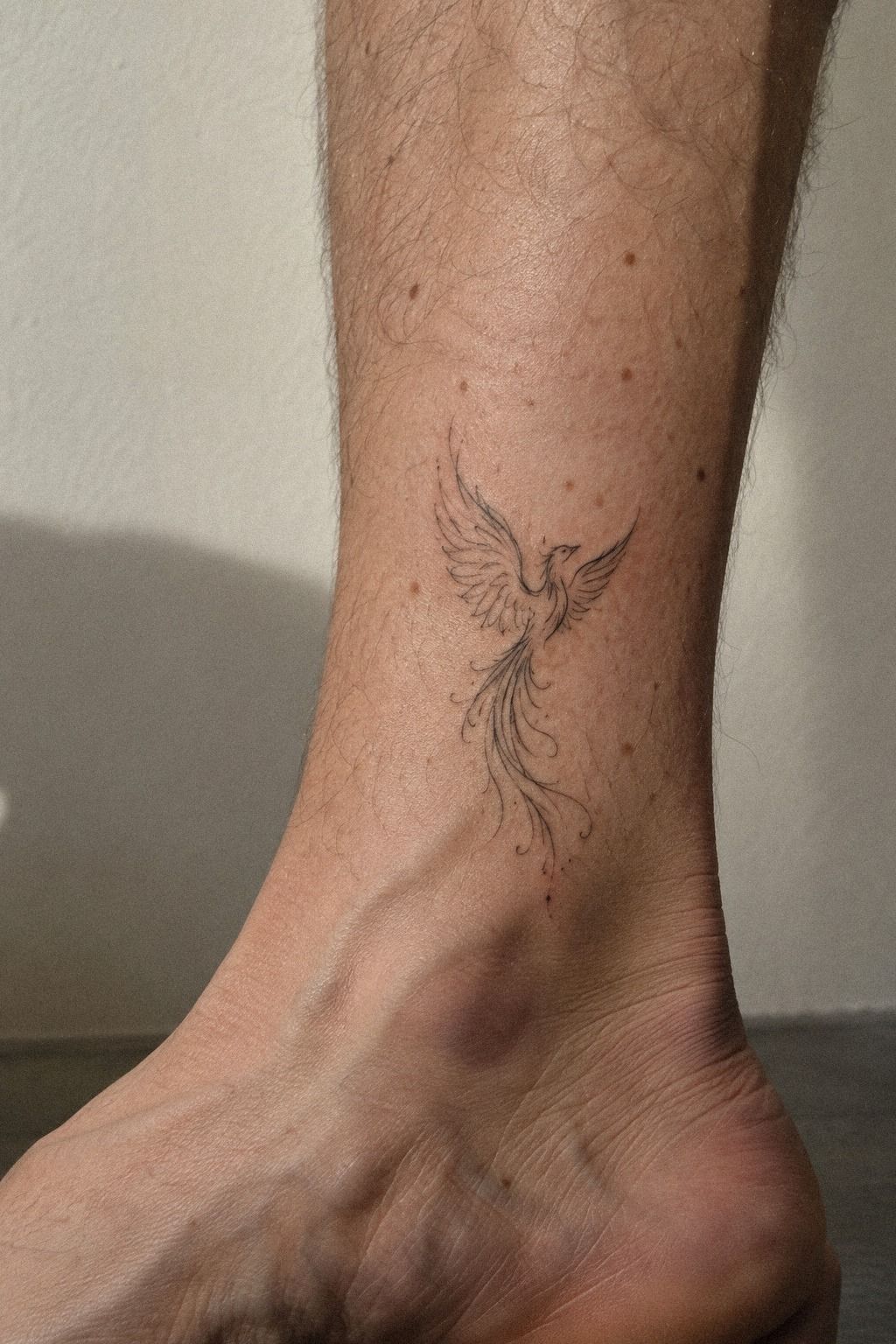
An ankle phoenix can look classic, but it has practical demands. Socks, shoes, walking, and summer sun all affect how the area behaves while it heals.
Choose clean black linework and avoid placing the bird directly where a shoe edge will rub. Ask your artist to check the exact ankle curve while you’re standing, because skin shifts between sitting and walking.
I’d rather see a smaller readable phoenix than a larger design squeezed beneath footwear. The best placement may sit slightly above the ankle bone, where the outline has less direct friction.
Ankle tattoos can be more uncomfortable than forearm tattoos because the skin is close to bone. Wear loose clothing that won’t press on fresh work, and plan your appointment around a few quieter days.
If you’re comparing placement ideas, our tiny unique butterfly tattoos guide shows how small shapes can follow the ankle without looking crowded. Choose the ankle because you want a visible, timeless reminder that moves with you.
9Unique Tiny Phoenix Tattoos With Dotwork

Dotwork can create a soft shadow beneath the wing or along the tail without adding thick blocks of ink.
10What Does a Phoenix Mean to You?

A phoenix can symbolize rebirth, strength, survival, or a personal turning point. Your meaning might come from recovery, grief, a new beginning, or simply the decision to keep moving.
Write down the rebirth story you want the tattoo to hold before you choose the pose. A bird rising sharply feels different from one resting on a feather or curling into a small circle.
Some people prefer an abstract flame because it keeps the symbolism private. Others want a recognizable bird that makes the message more symbolic and direct.
If you’re still deciding, read what a phoenix symbolizes in a tattoo and compare it with small phoenix tattoos. Those references can help you separate a personal idea from a design you only like because it is currently popular.
11Tiny Phoenix Tattoos With Watercolor Accents

Watercolor-style accents can make a tiny phoenix feel lively, but they require careful editing.
The Three-Line Phoenix Test
I’ve learned that tiny tattoos reward editing more than ambition. My first instinct used to be adding another feather, another flame, and another symbolic mark. That usually made the design less expressive, not more.
When I look at a phoenix now, I ask whether three lines could explain the whole idea: one for the body, one for the wing, and one for the rising tail. If the answer is yes, the design probably has a strong foundation.
That doesn’t mean every tattoo should be bare. An ornate feather can be right for you, and a red accent can carry a meaningful memory. Each design detail needs a job.
If a mark only fills empty skin, I’d remove it. Your future healed tattoo won’t care how impressive the stencil looked under bright studio lighting.
Start With the Silhouette
Before choosing color, decide whether you want a full bird, a feather, a profile, or an abstract flame shape. The clear silhouette controls how quickly people understand the tattoo.
A clear silhouette also makes it easier to compare artists. You can ask whether their healed work still shows the wing, head, and tail instead of judging only the freshness of the ink.
This is where browsing related ideas can help. Explore small bird tattoos if you want to see how little information a recognizable bird can need.
A simplified outline can still look daring when the head angle or tail direction feels unexpected. Let the gesture do the talking.
Let Placement Do Some Work
Placement changes the tattoo’s mood. An inner forearm phoenix feels visible and direct, while a rib or behind-the-ear design feels more private.
Your body also changes the design requirements. The wrist bends, the ankle faces friction, and the collarbone follows a natural curve. A good artist adjusts the drawing to those movements.
If you’re deciding between visibility and discretion, think about your daily habits. You’ll see a forearm tattoo often, but you may prefer the quieter surprise of a design that appears only when you choose to show it.
The right placement choice can make a simple phoenix feel more intentional, elegant, and personal.
Color Is a Commitment
Black ink usually gives a small phoenix the strongest contrast, but color can make the symbolism more specific. Neither choice is automatically better.
Ask about healed examples in the same color family and on similar skin tones. Fresh saturation can make a tattoo look dramatically different from its settled version.
Color may increase the cost, especially when the design needs separate passes or several shades. That doesn’t mean it isn’t worth it, but your budget should account for the complete appointment rather than the smallest advertised price.
A restrained color choice can feel sleek, while a carefully selected red, violet, or gold accent may feel more romantic. Choose the emotion you want to revisit, not just the shade that photographs well.
What I’d Ask Before Booking
I’d ask to see at least three healed examples, including one small bird or fine-line piece. A fresh portfolio can show style, but healed work shows judgment.
Ask how the artist would simplify your idea, what size they recommend, and whether the placement will affect the design. You’re looking for clear answers, not a promise that every line will stay identical forever.
You can compare the artist’s approach with tiny bird tattoos and small phoenix tattoos before your consultation. Those references can help you explain what you like without asking for an exact copy.
I’d also ask whether the artist has worked with your preferred color, skin tone, and placement. A healed portfolio tells you more than a flawless fresh stencil.
Aftercare That Protects the Idea
Follow the artist’s instructions for washing, moisturizing, and keeping the tattoo away from unnecessary friction. Don’t soak fresh work, scratch peeling skin, or expose it to strong sunlight while it settles.
The surface usually calms within a few weeks, but deeper healing takes longer. Be patient before judging whether a fine line looks too light or a color looks too soft.
Good aftercare protects the money you spent and the long-term value of the design. It can’t correct poor drawing, but it gives careful work the best chance to settle well.
Protect the tattoo from unnecessary rubbing, and give the skin time to recover. That patience is part of getting a lasting result.
A Few Things Worth Answering
How much does a tiny phoenix tattoo usually cost?
A tiny phoenix tattoo may cost about $50 to $100 at a boutique minimum, or around $100 to $250 per hour when an artist charges hourly. Your region, artist, placement, color, and detail level matter. Ask for a quote after showing the exact idea.
Are tiny phoenix tattoos a good idea for a first tattoo?
Yes, they can be a good first tattoo because the session may be shorter and the design can stay focused. Choose a clear silhouette, a tolerable placement such as the forearm, and an artist with healed fine-line examples. The value of the tattoo comes from choosing carefully, not simply choosing small.
How do I choose a tattoo artist for tiny phoenix tattoos?
Look for a portfolio with clean linework, healed photographs, and work in your chosen style. Check hygiene practices, ask about placement, and discuss how the design may age. You can compare the artist’s bird work with tiny bird tattoos before booking.
How much do tiny phoenix tattoos hurt?
Pain varies by person and placement. Ribs, feet, hands, and sternum are often more sensitive, while the forearm, thigh, and shoulder are commonly more tolerable.
Don’t choose a painful area only for visual drama. The lowest price won’t matter if you feel pressured into a placement you dislike.
How long does a tiny phoenix tattoo take to heal?
The surface usually heals in about two to three weeks, while complete healing can take two to three months. Wash gently, moisturize as directed, avoid swimming during early healing, and protect the tattoo from strong sun once the skin has settled.
What’s the best placement for tiny phoenix tattoos?
The forearm is a practical choice because it’s relatively easy to protect and gives fine lines space to breathe. The ankle feels more discreet but sees more friction. Your best placement depends on visibility, pain tolerance, work, and how often you want to see the symbol.
Where can I get a tiny phoenix tattoo design?
Book with a reputable local artist whose portfolio includes fine-line phoenix tattoos or closely related bird designs. Don’t buy a copied design from a random listing. Bring references such as small phoenix tattoos and ask the artist to redraw the idea for your body.
Where I’d Start First
If I had to pick one, I’d start with the fine-line inner forearm phoenix. It’s visible, easier to protect than an ankle, and gives the wing enough space to stay readable as it heals.
Pin the idea for later, gather healed examples, and show your artist the references before booking. That’s the version I’d choose!
I’d choose a personal phoenix design with a clean silhouette, one meaningful detail, and enough breathing room to age well. That combination can feel empowering, feminine, masculine, or entirely your own.


2 responses to “Easy Tiny Phoenix Tattoos for a First Tattoo You Won’t Regret Later”
[…] remove details that won’t survive at the final size. For an early scale reference, compare these tiny phoenix tattoos and this minimalist phoenix tattoo […]
[…] you’re comparing proportions, look at these tiny phoenix tattoos before your appointment. You’ll notice how the strongest examples use one clear gesture instead […]