
Tiny dragon tattoos can stay readable for years, but placement and line spacing matter more than the dragon itself. I learned that after watching my fine-line piece change through sun, healing, and ordinary life. The lines softened, but the silhouette stayed crisp.
Editor’s note: If you’re comparing small dragon tattoos, study healed work before choosing a fresh reference. The newest photo is usually the most striking, but the older one tells you whether the design was worth the cost.
My one rule is simple: choose fewer marks, then give them room. A tiny dragon doesn’t need every scale, claw, and horn to feel personal.
My one rule: A minimal dragon with meaningful spacing will age better than an ornate sketch that asks every tiny mark to survive.
- Choosing My Tiny Dragon Tattoo Style
- How I Sketched a Tiny Dragon in Fine Linework
- Adding Wings, Scales, and a Curled Tail
- Which Wrist Placement Survived Daily Movement?
- Ankle or Finger: The Tiny-Design Trade-Off
- The Lifted-Head Dragon
- Personalizing the Dragon with Botanical Details
- What Actually Makes Tiny Lines Readable?
- Preparing for My First Dragon Tattoo Session
- Healing Days: What I Watched For
- Photographing My Finished Tiny Dragon Tattoo
1Choosing My Tiny Dragon Tattoo Style

I started with a fine-line dragon curling along my upper arm because the limb gave the body a natural path. I wanted an upper-arm tattoo that felt intricate without becoming crowded.
The first sketch was too ornate. It had horns, smoke, claws, and several layers of scales, and I couldn’t read the dragon silhouette from a short distance.
I removed the smoke and kept one wing shape. That made the dragon more understated.
I asked for a fine-line needle configuration with enough negative space between the scales. My artist didn’t promise that every tiny mark would stay identical, and I appreciated the honesty. If you’re browsing small dragon tattoos, notice how the strongest designs often use fewer marks than expected.
The style became symbolic rather than literal. I kept the lifted head because it suggested alertness, while the curled body felt protective.
You don’t need every traditional feature. Your best design may be the one that leaves out the detail everyone assumes belongs there.
For a more edgy version, I tested a sharper horn and a fiercer eye. The idea was bold on paper, but it pushed the design toward a gritty mood I didn’t want. I chose the more polished outline because it felt personal rather than performative.
2How I Sketched a Tiny Dragon in Fine Linework

For the shoulder version, I followed the curve of the body instead of forcing the scales into a rigid grid. That gave the dragon contour a graceful quality without making it soft.
I watched my artist redraw the head three times. The first was too wide, the second looked playful in a way I didn’t want, and the third had a sharper jaw with one visible horn. That tiny adjustment changed the expression completely.
You can learn a lot by asking what your artist removes.
The linework needed restraint. A single-line contour around the belly gave the dragon weight, while short marks along the spine suggested scales without outlining every one.
If you’re exploring tiny unique butterfly tattoos, you’ll notice the same principle in strong small designs: the silhouette does most of the work. The comparison helped me understand where detail adds value and where it only raises the cost.
I rejected a heavy black eye because it pulled attention away from the body. One small dot was enough. The final sketch looked delicate, but it wasn’t weak.
It was a meaningful balance.
The final drawing also had a slightly feminine softness around the wings, while the jaw stayed masculine and sharp. That contrast made the creature feel more expressive. It wasn’t trying to fit one fixed style.
3Adding Wings, Scales, and a Curled Tail

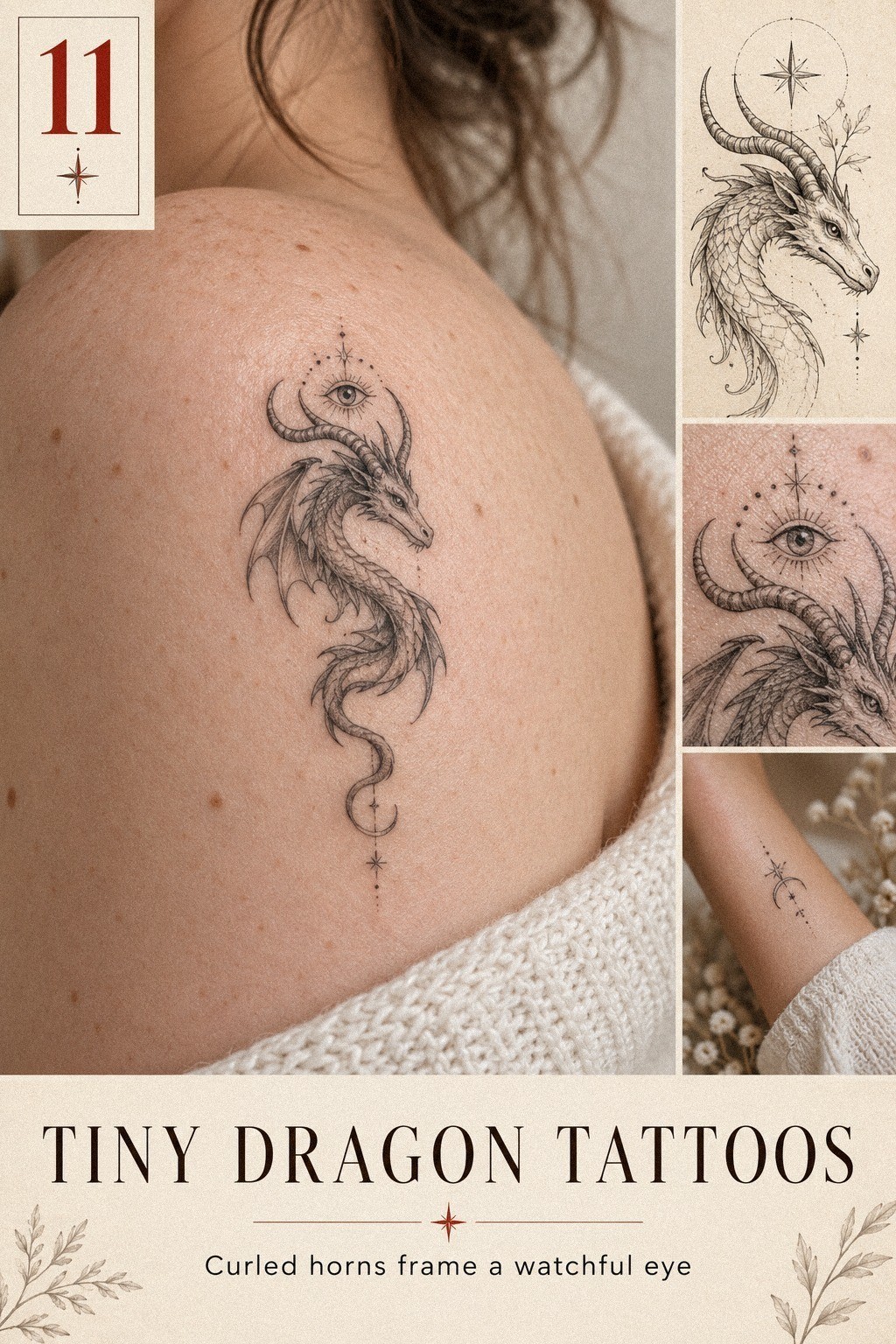
I focused on three details: a compact wing, staggered scales, and a tail that curled inward instead of ending in a blunt point. Those choices made the pose feel flowing and intentional.
I almost added two wings. That would’ve made the design more impressive on paper, but the back needed a clear center of movement.
One wing was enough. The asymmetry gave the wing shape a bold silhouette, and you can still identify it when the body bends.
For the scales, I asked for alternating short curves rather than a dense fish-scale grid. A black fill at the wing joint gave the eye somewhere to rest, while the rest stayed open. When comparing tiny snake tattoos, study how curved bodies need breathing space at every turn.
The tail was the hardest part. Too tight, and it looked like a knot; too open, and it lost the curled posture.
My artist left a small gap between the tail and torso, which helped the lines age separately. That was the first surprise!
I also considered a tiny flame near the tail. It looked fierce in the sketch, but it competed with the head. Removing it made the dragon more polished and easier to read.
A daring version would have added a second wing, flames, and a jewel-like eye. I liked that idea for a larger piece, but a tiny dragon needed a crisp gesture instead of a dramatic pileup.
4Which Wrist Placement Survived Daily Movement?

The wrist seemed practical because I could see it without a mirror.
5Ankle or Finger: The Tiny-Design Trade-Off
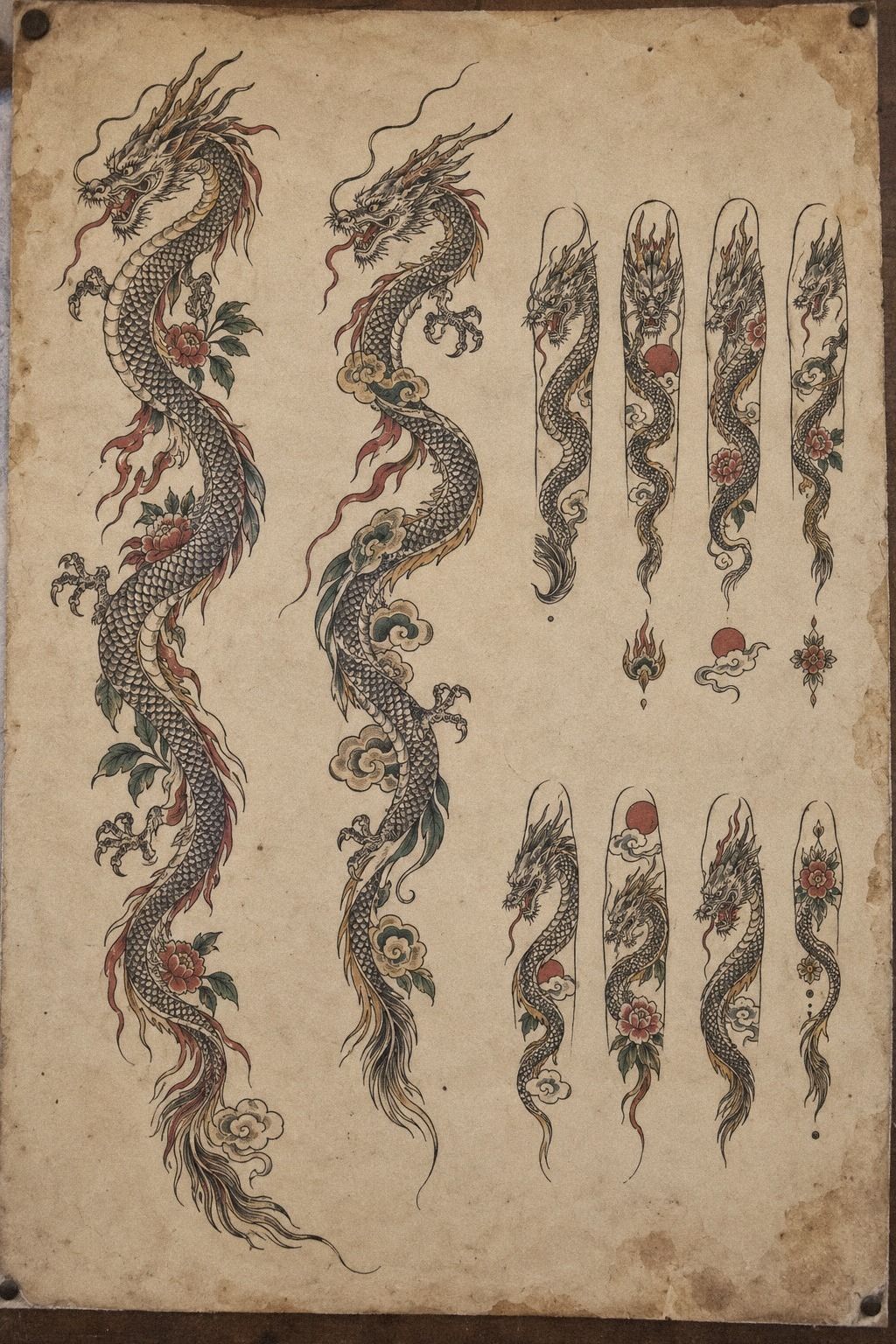
The finger version was dainty and charming on paper, but the narrow skin left little room for scale separation. Fingers also see frequent washing, friction, and sunlight.
The ankle offered more length. A curved ankle stencil could hold a visible head, one small wing, and an open tail without making the tattoo large. I liked the proportions, but I didn’t want to need a mirror every time I wanted to see it.
If you’re deciding between these placements, compare the long body movement in small snake tattoos. The same logic applies: a curved subject needs enough uninterrupted length to remain readable.
Finger work can still be worth it when the design is truly minimal. An ankle can offer better long-term value when the dragon depends on a few separate marks.
I went back to the forearm. Sometimes the practical choice is also the most meaningful because you’ll notice it often.
The finger option felt whimsical and playful, but it would’ve required an almost symbol-like dragon. The ankle felt more classic, while the forearm gave the creature enough space to remain recognizable.
6The Lifted-Head Dragon

I chose a lifted-head pose because it felt powerful without looking aggressive. The body curled inward, the wing sat close to the shoulder, and the tail pointed down.
I tested three meanings against the same body shape: protection, recovery, and independence. The low crouch looked haunting, but it suggested fear rather than strength. The open-wing pose was too theatrical.
The lifted head gave me the balance I wanted.
A black contour with selective shading kept the symbolism readable. I didn’t need a phrase or date hidden inside the design. The what does a dragon tattoo represent guide helped me compare those meanings before I paid a deposit.
The pose also had practical value. A dense silhouette usually survives softening better than a collection of isolated marks. You want the dragon to remain recognizable after years, not only look impressive on appointment day.
For me, the strongest version felt sacred without being overly serious. It was expressive, but it still looked like a creature rather than a symbol pasted onto the skin.
I briefly considered an ethereal pose with the head tilted upward. It looked elegant and romantic, but the lifted-forward version felt more empowering. I wanted alertness, not escape.
7Personalizing the Dragon with Botanical Details

I liked the idea of leaves, but I didn’t want the dragon swallowed by extra marks. One narrow stem behind the body gave the botanical accent an organic direction.
I tested a rose, fern, and thorn branch. The rose felt too romantic, while the fern added texture without competing with the head. I kept three pointed leaves and removed the rest.
You can personalize a small dragon with one plant reference instead of building the entire design around secondary details. The same approach appears in tiny owl tattoos, where one small accent can make the subject feel individual.
The botanical line was lighter than the dragon’s main contour. Skin remained visible between them, which stopped the design from becoming muddy.
I nearly asked for tiny flowers along the tail. My artist stopped me, and she was right.
Those extra dots would’ve blurred first. The final version felt expressive because it had one clear accent.
The fern sprig gave the design a vintage feeling without making it look nostalgic. I also considered an ornate vine, but that would’ve turned the dragon into a secondary detail inside its own tattoo.
8What Actually Makes Tiny Lines Readable?

The smallest printed version looked sharp at first glance, but the scale marks disappeared when I held it at arm’s length. That test changed the plan.
I enlarged the dragon to about 2.5 inches, widened the spaces between the ribs, and kept the head slightly larger than proportion would suggest. It still looked tiny, but it no longer depended on microscopic detail.
A printed tattoo stencil showed where the design would fail. I removed two interior lines that looked clever on a screen but muddy on paper. Your artist should be willing to edit the drawing at its actual size.
If you’re considering small bird tattoos, print your favorite design before you book. Comparing subjects at the same scale made the readability problem obvious to me.
The best value wasn’t the most detailed sketch. It was the design that stayed recognizable after I removed half the marks. That choice saved money and improved the result.
A sharp outline isn’t automatically better. Sometimes a slightly softer curve keeps the body readable because it gives the eye one continuous path to follow.
9Preparing for My First Dragon Tattoo Session

I prepared by bringing the final stencil placement reference, wearing clothing that wouldn’t rub the area, and eating beforehand.
10Healing Days: What I Watched For

The fresh tattoo looked darker and more precise than the healed version. I expected that shift, but seeing it happen still felt strange. The surface settled in about two to three weeks, while the design continued settling for several months.
I washed gently, followed the artist’s product instructions, and avoided swimming and direct sun. Those steps protected the aftercare routine even when the tattoo looked dull.
I didn’t pick at flakes or judge the result during the first week. A healed surface can look muted before it clears. The process was boring, but boring was exactly what I wanted.
If you’re comparing tiny eagle tattoos, look for healed photographs rather than relying on fresh work. A dramatic first-day photo may not show the final texture or line spread.
Sun protection became the long-term habit. Very fine lines can soften, and repeated UV exposure won’t help. You don’t need to panic over normal aging, but you do need to protect the skin.
The aftercare cost was small compared with the tattoo itself. That made the decision feel worthwhile, especially after I understood how much the final appearance depended on ordinary habits.
I used a fragrance-free lotion only when the skin felt tight, not because more product would make the tattoo age better. The goal was simple: protect the healing surface and leave it alone.
11Photographing My Finished Tiny Dragon Tattoo

I photographed the finished tattoo in indirect daylight, then beside a ruler for scale. The second photo was less dramatic, but it showed the proportions honestly.
A healed tattoo photograph needs simple conditions. No harsh flash, heavy filter, or angle that stretches the skin. If you’re saving references beside tiny unique butterfly tattoos, compare healed photos under similar light.
I waited until the skin looked settled before judging the result. The dragon was timeless in a way the original sketch wasn’t because the softened lines made it look less mechanical.
I still saw the lifted head, open wing, and curled tail. Those were the details I cared about. The smallest scale marks had faded into the surrounding linework, but the silhouette held.
I tracked it again after several years. The result felt iconic to me because the tattoo didn’t need perfect detail to keep its identity. That made the original cost feel justified.
My best photo wasn’t the most stylish one. It was the plain image where the skin looked normal and the proportions were easy to judge. That record helped me see the difference between fresh drama and lasting clarity.
The Size-to-Line Rule
I used to think fine-line work stayed crisp because the ink itself was somehow more precise. The clearer factor is the relationship between line weight, skin movement, sun exposure, and empty space.
A well-spaced design has somewhere to soften without losing its identity. This is why a simpler dragon can offer more long-term value than a crowded one.
The strongest small tattoos aren’t always the most ornate. They often have one bold outline, one meaningful pose, and a few carefully chosen interior marks.
When I compare the dragon with tiny snake tattoos, the same rule keeps appearing. Curved subjects need clear turns, visible gaps, and enough contrast between major shapes.
The line-to-space relationship made the tattoo feel crisp without making it harsh. It was a small technical choice with a surprisingly powerful effect.
How Much Is a Tiny Dragon Tattoo Worth?
Tiny dragon tattoos don’t have one universal cost because the artist, region, shop minimum, placement, and detail level all change the quote. Typical US guidance puts a shop minimum around $50 to $100, while many artists charge roughly $100 to $250 per hour.
My tattoo consultation rule is straightforward: pay for clean drawing and a hygienic studio before paying for extra decoration. A consultation can reveal that your “tiny” idea needs more space, especially if you want readable scales.
Don’t chase the lowest quote when the design depends on precise line spacing. Ask whether the price includes the consultation, stencil changes, and the full session.
If you’re considering tiny bird tattoos, the same size and placement questions apply. A low cost isn’t good value if the design needs an early correction.
Worth it? For me, yes! I paid for restraint, not just ink.
A striking sketch can still be a poor bargain if the artist has to compress every detail into one dark patch. I would’ve rather paid for a polished drawing than for extra symbols that disappeared during healing.
The Three-Year Clarity Rule
After three years, the smallest marks had softened, but the main silhouette remained crisp. That was more useful than any promise about perfect aging.
My first mistake was trying to keep every scale. I thought more detail would make the dragon feel refined, but the opposite happened. Removing several marks made the dragon silhouette more polished.
Placement also mattered. A wrist, finger, ankle, spine, and forearm each move differently.
You can love the same dragon on paper and dislike it on a crease. That isn’t indecision. It’s useful information.
The older photographs gave me the clearest answer about value. Fresh work looked sharper, but the healed version showed whether the original choices had been daring enough to stay visible.
If you’re researching small dragon tattoos, ask to see work at several ages. One healed photo is helpful. A three-year record is much more revealing.
The clarity rule isn’t that every line must stay perfect. It’s that the important marks should remain connected enough for the subject to keep its identity.
Forearm or Wrist?
The forearm gave the design a longer path and fewer deep creases. The wrist offered visibility, but constant movement made the smallest details more vulnerable.
I still like wrist dragons when the design is minimal. A forearm placement makes more sense when the body needs a long curve, a visible head, or a separated tail.
The choice can also change the session cost. A slightly larger forearm design may be better value than forcing a complicated dragon into a smaller moving area.
For my tattoo, the forearm won because I wanted to see the whole creature without twisting my hand. That made the placement feel empowering rather than merely convenient.
The comparison with small snake tattoos helped me decide. Both subjects rely on movement, so both benefit from a longer uninterrupted path.
A wrist dragon can look elegant when it uses one clear gesture. A forearm dragon can be more forgiving when the design has a wing, a tail gap, and a few interior marks.
When a Tiny Dragon Stops Looking Tiny
A tiny dragon stops reading as tiny when every part is compressed into the same dark patch. It can be small in measurement while still feeling visually heavy.
I kept one open-skin border around the body so the wing, tail, and head could separate. That gave the design a sharp edge without requiring thicker lines.
The most successful adjustment was enlarging the head slightly. It wasn’t anatomically exact, but it made the expression legible. A little exaggeration can protect the personality of a small subject.
That decision also made the tattoo more stylish. The dragon looked intentional rather than reduced.
The darker version reminded me of some small bird tattoos that lose their wings when every feather is outlined. I wanted the dragon to feel vibrant through its gesture, not through visual weight.
A tiny tattoo can still feel powerful when the main shape has room to breathe. Size is measured in inches, but readability is measured in separation.
My Honest Rule for Fine-Line Detail
My honest rule is to keep only the marks that still matter when the skin is no longer fresh. If a scale exists only to impress someone on appointment day, it probably isn’t earning its place.
I prefer a single wing detail over three crowded ones. The result feels sleek, minimal, and easier to maintain.
The design should still have character. Fewer marks don’t mean a blank or boring dragon. They mean every remaining mark has a job.
I would spend more on a clear drawing than on extra detail. That is the clearest budget lesson I learned.
The same rule applies when you compare small dragon tattoos: keep the mark that carries emotion, movement, or recognition. Remove the one that only fills space.
My final design felt raw and honest because it wasn’t pretending to contain an entire mythology. It had one creature, one gesture, and one personal meaning.
A Few Things Worth Answering
How much do tiny dragon tattoos usually cost?
A tiny dragon tattoo usually costs about $50 to $100 at a shop minimum or roughly $100 to $250 per hour in the US. The final quote changes with the artist, region, placement, and detail level. Ask what the price includes before booking.
Are tiny dragon tattoos a good idea for a first tattoo?
Yes, they can suit a first session when an experienced artist keeps the design compact and readable. Choose a tolerable placement, avoid crowded details, and select a subject that feels meaningful. A consultation can prevent an expensive redesign.
How do I choose an artist for tiny dragon tattoos?
Choose an artist with clean linework, healed photographs, and clear hygiene practices. A healed portfolio matters more than a heavily edited fresh photo, especially when your dragon depends on small scales and narrow curves. Look for healed work before judging the cost.
How much do tiny dragon tattoos hurt?
Pain depends on placement. Ribs, feet, hands, and sternum often feel more intense, while the forearm, thigh, and shoulder can be more tolerable. A short session may still feel sharp over bone, so tell your artist when you need a pause.
How long do tiny dragon tattoos take to heal?
The surface usually heals in about two to three weeks, while the tattoo can take roughly two to three months to settle fully. Gentle washing, light hydration, and avoiding sun and pools support a smoother healing period.
What’s the best placement for tiny dragon tattoos?
The forearm and shoulder are strong choices because they offer visibility, workable skin, and a more tolerable session. A forearm also gives a curled dragon enough length to stay readable as fine lines soften. You can compare more small dragon tattoos before deciding.
Where I’d Start First
If I had to pick one, I’d start with the forearm dragon. It gives the scales enough breathing space to stay readable while keeping the subject visible.
I’d ask to see healed examples, request a full quote, and remove any detail that doesn’t survive the actual size. That approach gave me better value than chasing the most intricate sketch.
I still love that answer! The tattoo feels personal because of what I chose to leave out, not because I managed to fit everything into a tiny space.


One response to “I Tracked How My Tiny Dragon Tattoos Aged, Still Crisp Years Later”
[…] you want another tiny reference, look through tiny dragon tattoos and notice which designs keep their silhouette. This placement has a discreet, slightly sharp […]