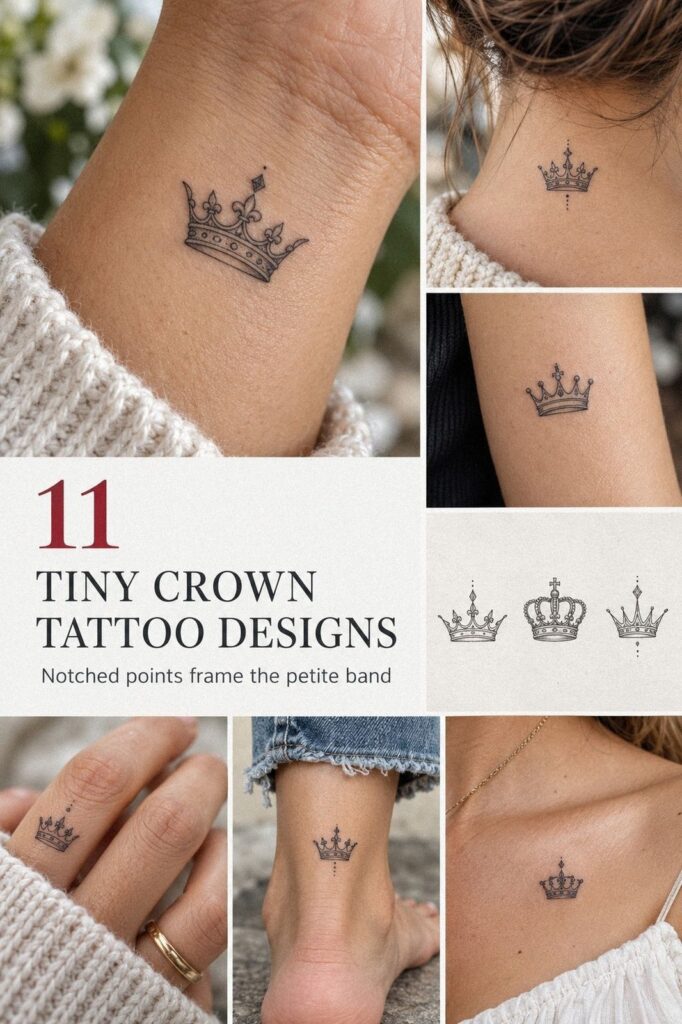
Tiny crown tattoo ideas can stay affordable at about $50 to $300 in the US, depending on the artist, region, and studio minimum. I once chose detail over legibility and regretted it when the little points blurred together. A smaller crown can still look striking, delicate, and personal when the design respects your skin. Short and sweet!
My honest rule is simple: protect the silhouette first. US studio minimums often matter more than size, so reducing tiny details may save more than shrinking the design another quarter inch.
You’ll also want to think about placement, contrast, and long-term readability before booking. Negative space gives a tiny crown an understated, crisp quality without making it feel unfinished.
And don’t judge fresh work too quickly. Tattoo aftercare affects how the final lines settle, soften, and hold their shape over time.
- How Fine Lines Keep a Tiny Crown Legible
- Where Does a Minimalist Wrist Crown Belong?
- Behind the Ear: The Discreet Crown
- Add Jewels, Then Remove One
- The Finger Crown Test: Simple Beats Busy
- Why Blackwork Makes the Smallest Crown Fierce
- One Initial, One Meaning
- Place a Delicate Crown Above the Ankle Bone
- Floral Details or Royal Silhouette?
- The Clavicle Rule: Stencil First, Detail Later
- Can Watercolor Stay Readable Under One Inch?
1How Fine Lines Keep a Tiny Crown Legible
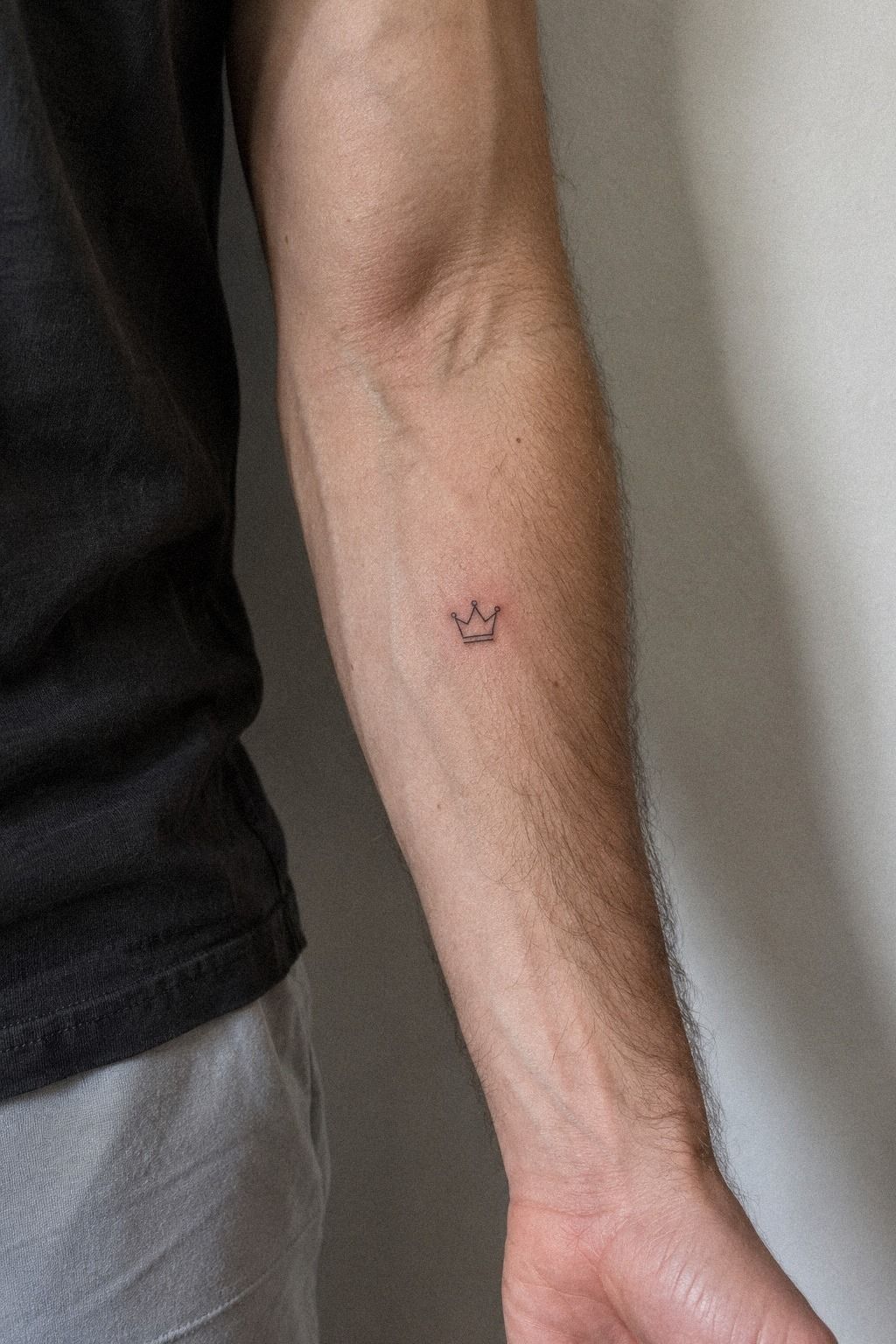
A fine-line crown works best when you want an sleek, dainty mark on the forearm. The design can look elegant when each point has enough separation. Ask your artist for three or four clean peaks instead of seven crowded ones.
The strongest version uses single-needle linework in hair-thin strokes, with tiny gaps between the base and the points. You’ll want enough skin showing through for the outline to stay expressive.
I wouldn’t add miniature jewels here. They’d disappear first.
Keep the stencil near 0.5 inch if you truly want a tiny crown, but let your artist adjust it for your anatomy. A 0.5-inch crown stencil may look readable on paper and cramped once it follows the curve of your forearm.
If you’re unsure, compare the proportions with these tiny fine line butterfly tattoo designs. Don’t judge the finished tattoo while the skin is irritated. Fine lines may look sharper after the surface settles, although they can soften gradually over time.
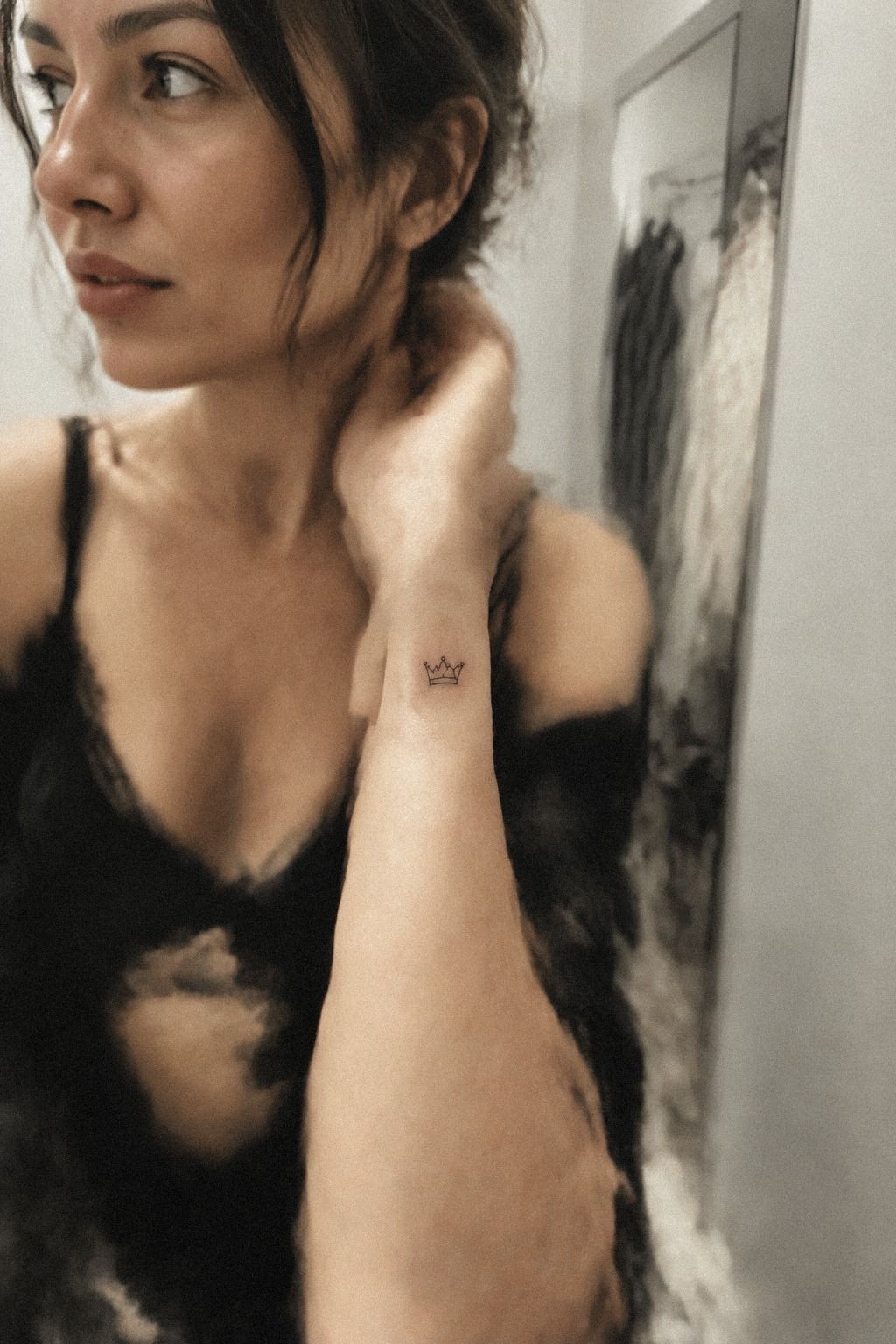
2Where Does a Minimalist Wrist Crown Belong?

A minimalist crown on the wrist gives you a sleek, dainty placement that stays visible without taking over your arm.
3Behind the Ear: The Discreet Crown
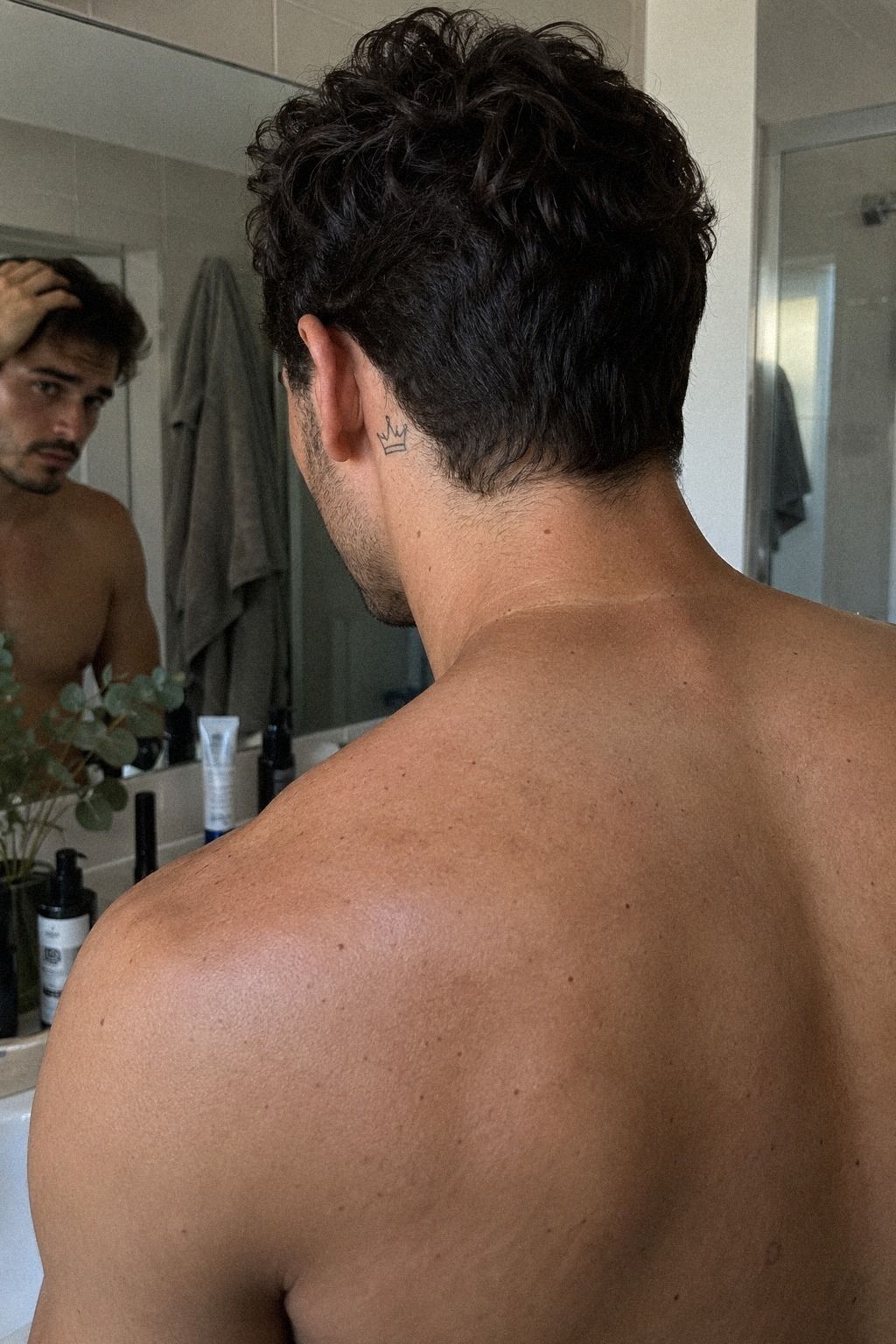
Behind the ear gives your tiny crown a discreet, slightly edgy placement. It’s useful if you want something meaningful that stays mostly private but still feels visible when you choose.
Use black stencil transfer to check the crown’s direction before any needle touches your skin. A point aimed toward the hairline can look sharp and intentional, while a point tilted into the fold may lose its silhouette.
Behind the ear can feel more intense than the forearm because the skin is thin and the area sits close to bone. The session may be quick, but quick doesn’t mean painless. A fine-line crown outline keeps the appointment compact.
If you’re collecting small celestial or animal symbols, pair the idea mentally with this tiny moth tattoo reference. Don’t crowd the area with a second design. One crisp crown will look more timeless than two tiny marks competing for attention.
4Add Jewels, Then Remove One
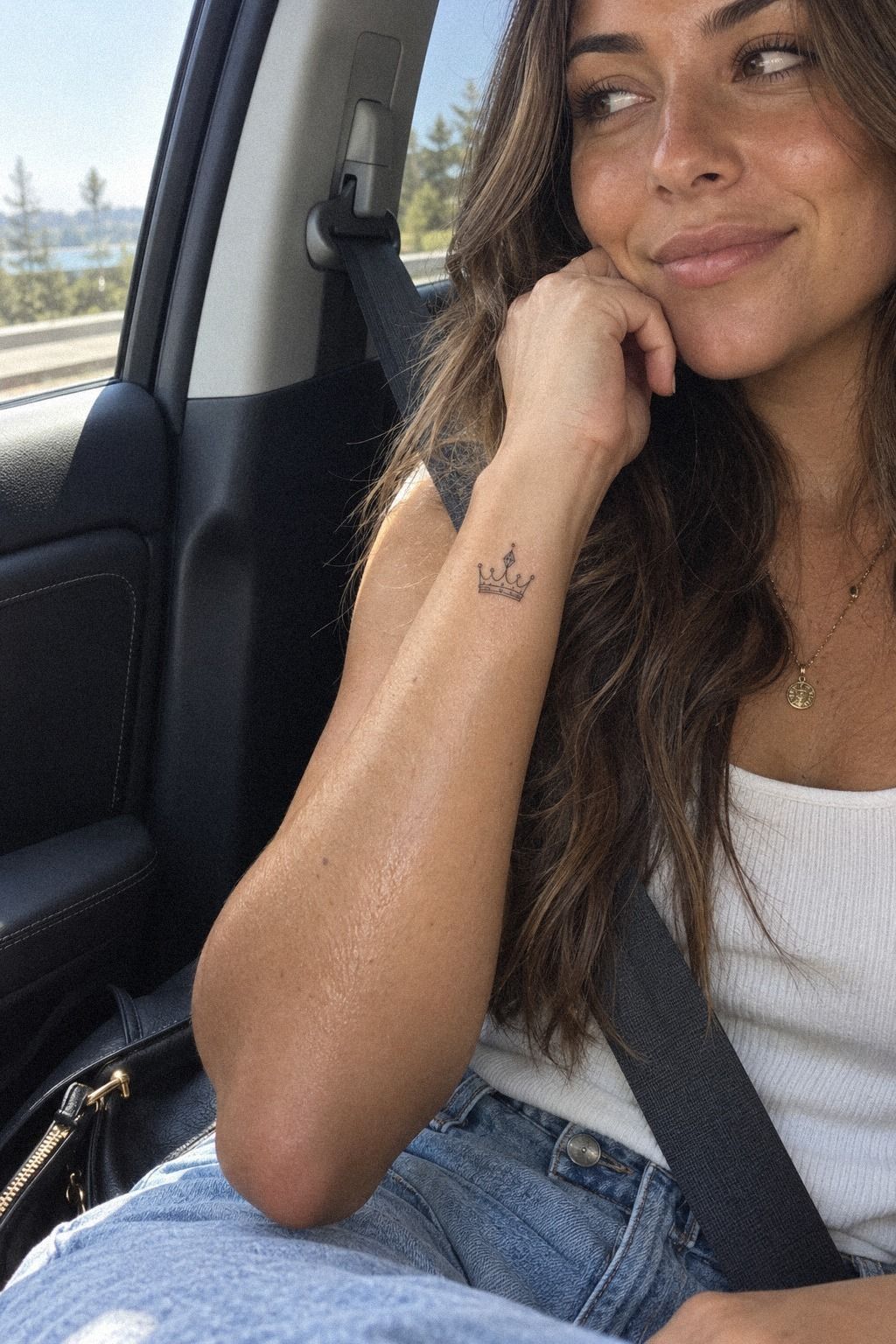
Tiny jewel details can make a crown feel ornate, vibrant, and expressive without requiring a large tattoo. Keep the stones open rather than filling them with dense color.
The best version may use open diamond outlines with one sharp center jewel and two smaller side marks. If you’re drawn to an intricate crown, ask your artist which details will remain legible at the chosen size.
A slightly larger stencil, perhaps close to 0.75 inch, can give your greywash shading enough clearance to settle without becoming a dark blur. That isn’t a failure of the tiny concept. It’s a readability decision!
You can compare the rhythm with a tiny flower crown tattoo, especially if you like symbolic details around a central shape. Flowers and jewels age differently, so ask how the open spaces may soften.
5The Finger Crown Test: Simple Beats Busy
A finger crown looks bold because the placement is so small and visible. Compare several silhouettes before choosing one. Your finger doesn’t give you much clearance for correction.
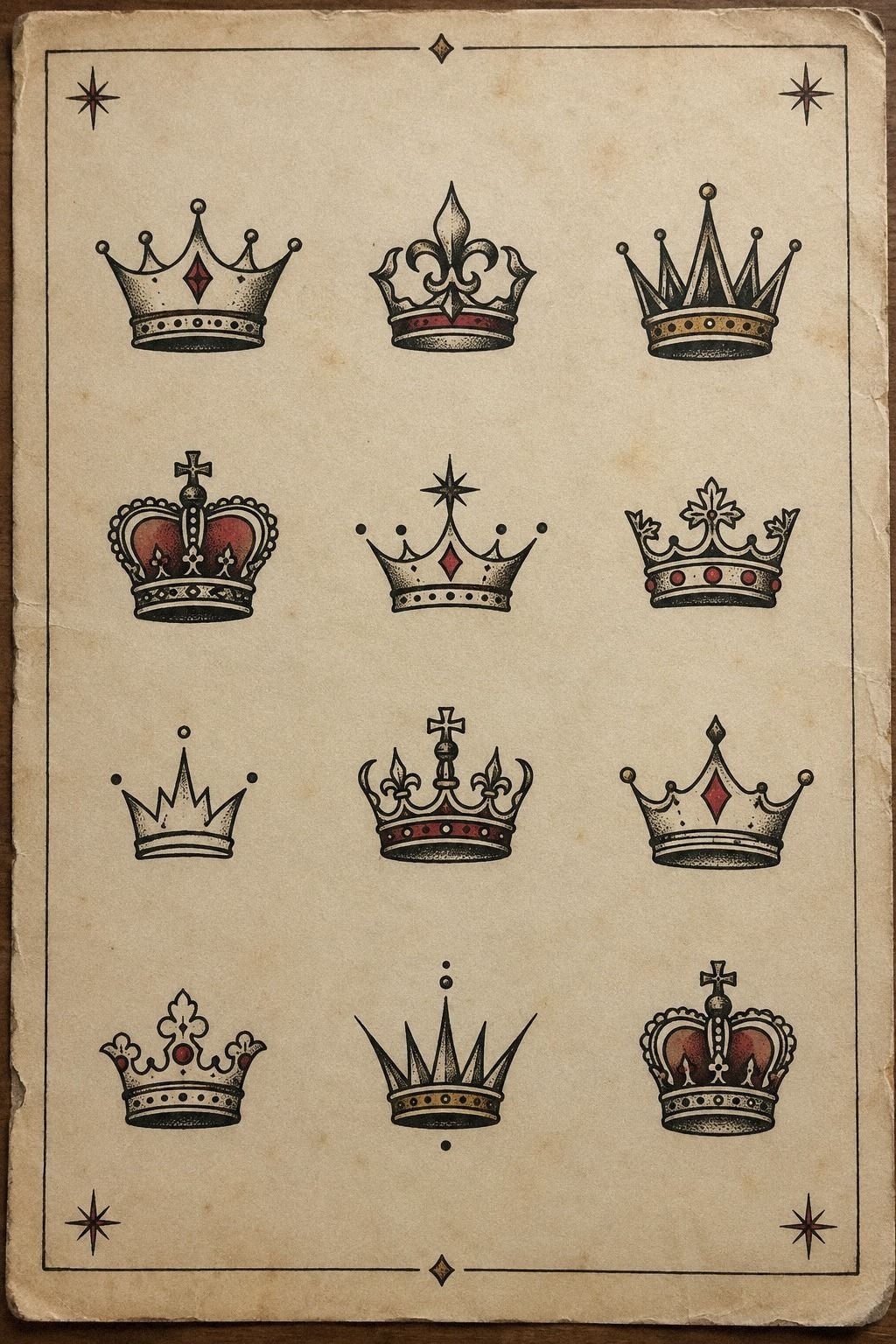
Pick a simple crown with a solid base and no micro-lettering. Flash-sheet stencil paper lets you compare a high point, rounded point, and flatter royal shape directly on your finger.
I’ve gone back and forth between ornate and minimal versions, and the flatter crown usually reads longer because it follows the finger’s narrow width. It feels classic without becoming generic.
Finger tattoos can fade or soften faster because your hands meet soap, friction, sunlight, and constant movement. A saturated black fill may hold better than pale grey details, but it still isn’t immune to fading.
Your artist may recommend a small touch-up later. That doesn’t mean the original work was poor. Choose a studio that explains the risk before you book, then compare your stencil with this tiny butterfly tattoo stencil.
6Why Blackwork Makes the Smallest Crown Fierce
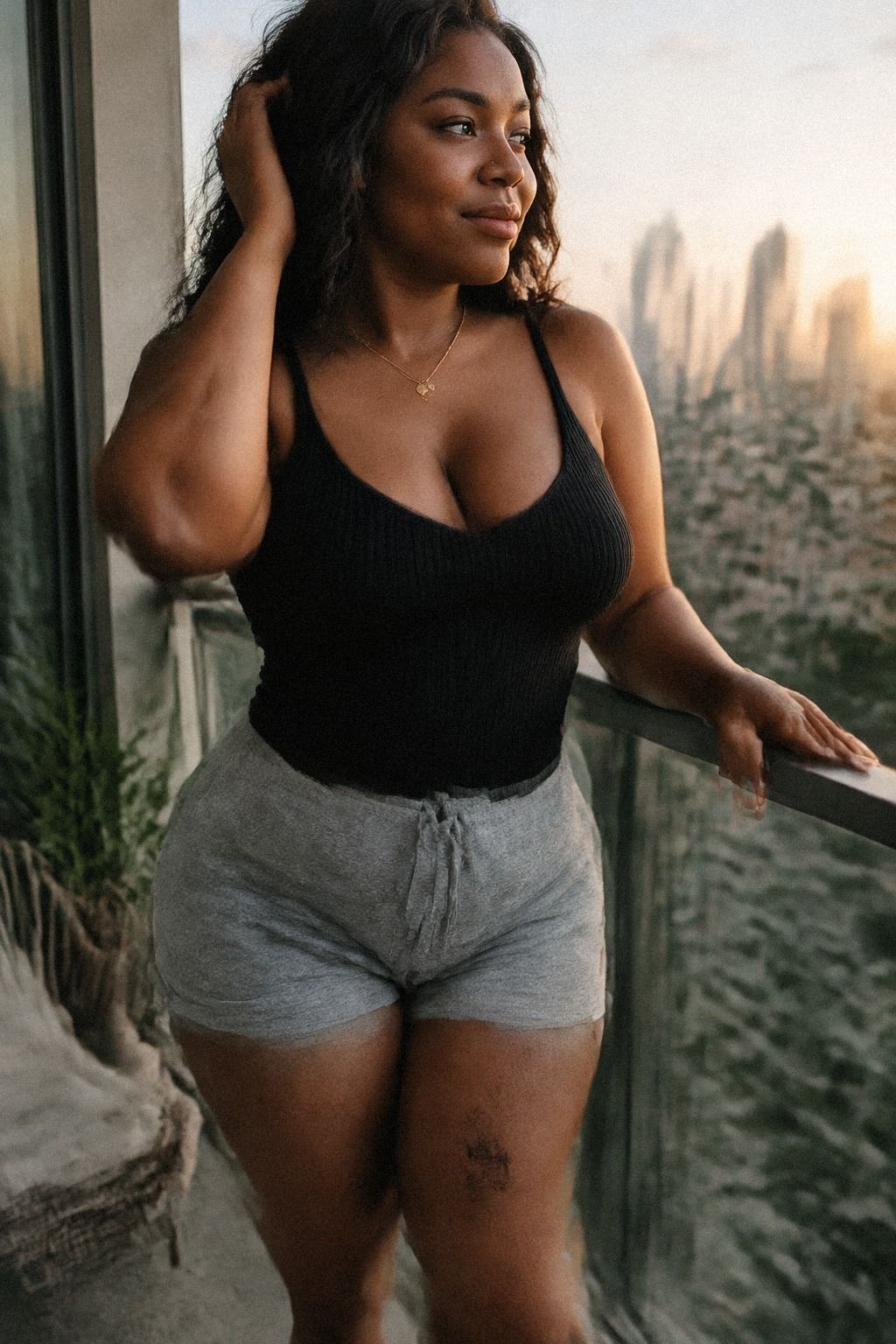
A blackwork crown gives you the fierce option in this collection. Saturated black shapes can create a powerful, graphic silhouette, especially on the thigh where the artist has a steadier surface.
Ask for bold blackwork shading with clean edges and deliberate open gaps. Your artist should understand how the pigment will contrast with your skin tone and how much separation the crown needs.
I wouldn’t copy a delicate outline and simply fill every section. That usually makes the crown look heavy instead of iconic. Blackwork needs a clear hierarchy.
The thigh is often more tolerable than the hands, feet, ribs, or sternum, although every body responds differently. A solid black pigment fill can take longer than a simple outline, so ask about the likely session length.
For a softer comparison, look at these tiny butterfly tattoo designs. A strong silhouette can carry a small image without relying on delicate decoration. That’s the point!
7One Initial, One Meaning
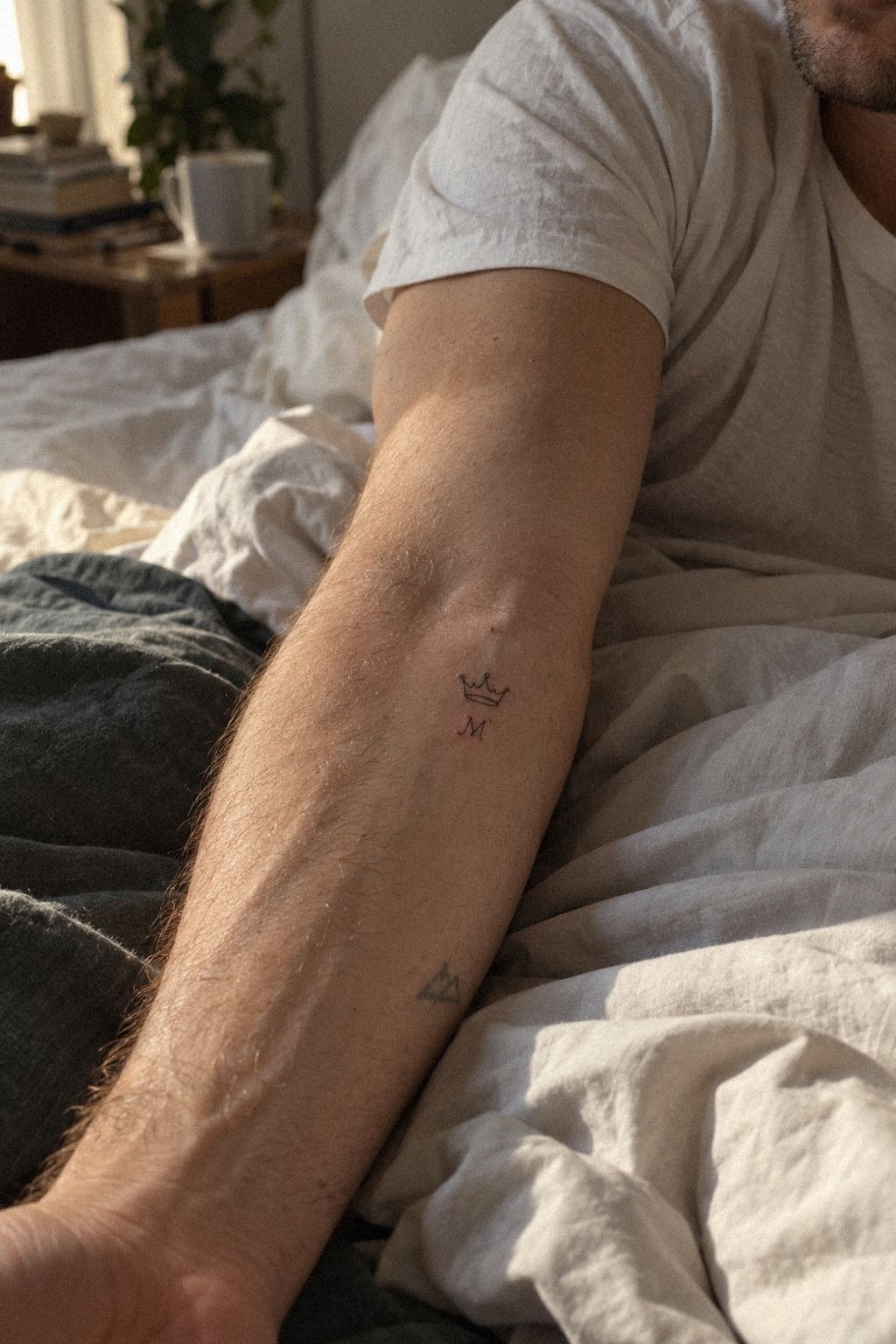
Adding one initial turns a generic crown into a sacred, personal emblem. On the forearm, a fine-line crown can stay open while a single letter sits beneath it.
Choose fine-line lettering only if your artist has healed examples to show you. A capital A, M, or T may remain clear, while a tightly looped S or R can merge after the skin settles.
You don’t need a full name to make the tattoo meaningful. One initial can represent you, someone you love, or a private promise. That restraint can feel more empowering than a crowded inscription.
I prefer placing the initial below the crown rather than inside it. The black ink monogram then has room to breathe, and the crown keeps its recognizable outline.
If you’re tempted to add a date, birthstone, or second letter, pause. A tiny tattoo can’t carry every story without becoming visually noisy.
For a softer symbolic comparison, see this tiny butterfly tattoo. Ask your artist to print the stencil in two sizes so you can see which version feels graceful on your arm.
8Place a Delicate Crown Above the Ankle Bone
The ankle gives a delicate crown a discreet, feminine placement, although anyone can wear this style. It feels personal without demanding attention.
Choose single-pass linework and avoid details that need dense shading. Your ankle bends and receives friction from socks and shoes, so placement matters as much as the drawing.
I’ve seen small designs look more elegant when they sit slightly above the ankle bone rather than directly on its sharpest edge. That position can make the crown look flowing instead of tilted.
Pain varies, but bony areas such as feet, hands, ribs, and the sternum are often more intense than the forearm, thigh, or shoulder. A compact healed black outline can still make the session manageable.
If you’re comparing discreet placements, this tiny dragonfly tattoo shows how a light silhouette can follow a narrow body area. Test the crown at two angles before committing.
9Floral Details or Royal Silhouette?
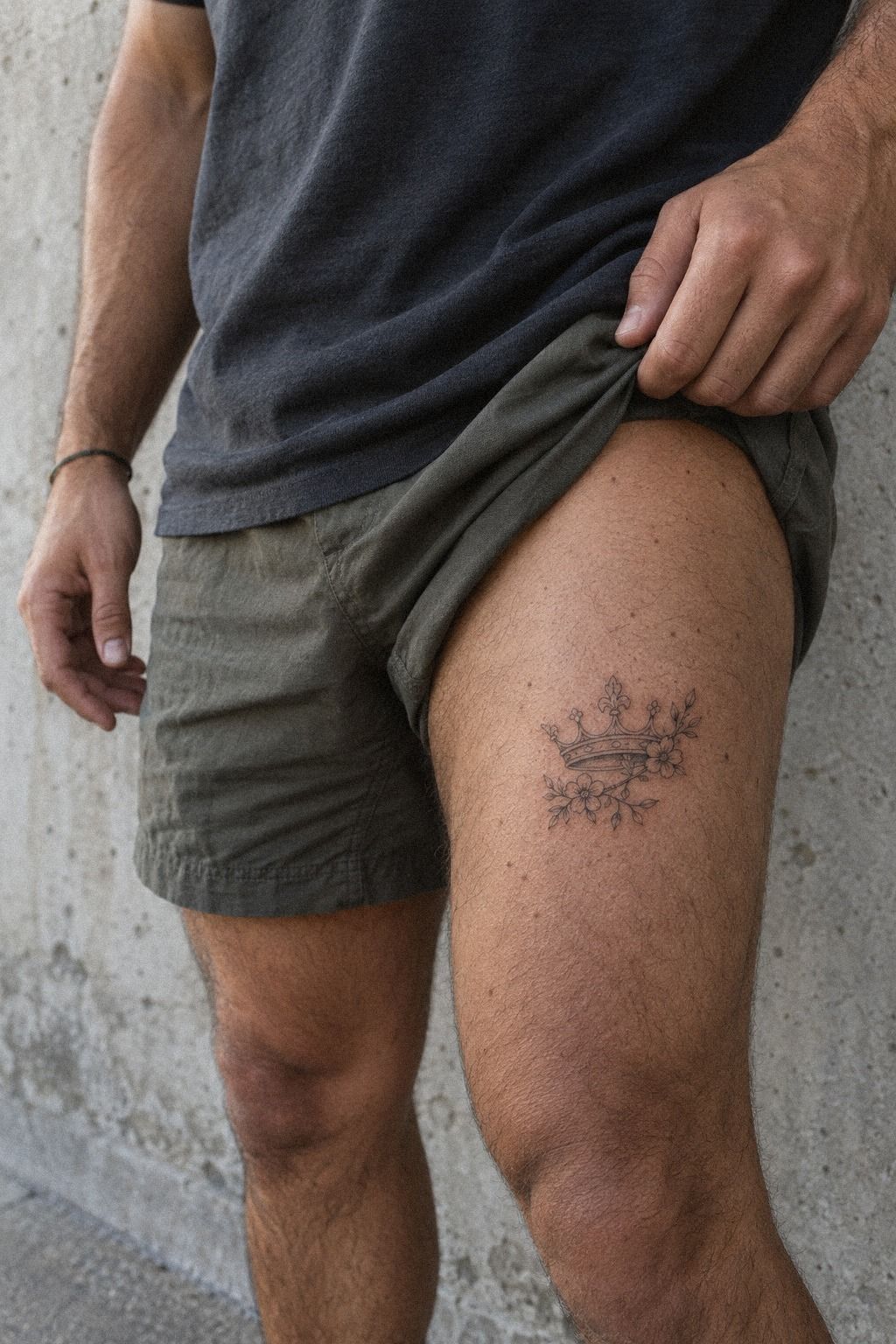
A floral crown can feel romantic, whimsical, and more organic than a royal emblem alone. Keep the flowers open and graphic so your crown remains visible.
Use botanical linework for two leaves or one small bloom, not a full wreath. Your artist can place a curved stem through the crown’s base, but the central silhouette should stay sharp.
I wouldn’t use dense petal shading at this size. It may look intricate on the stencil and turn muddy as the ink settles. Half the petals may create a more polished result.
The thigh gives you a larger, more forgiving surface than a finger or ankle. A fine black floral outline can remain delicate while offering enough spacing for healing.
If you’re choosing between a flower and a gemstone, I’d pick one visual language and stay consistent. Mixed detail styles can make a tiny crown look undecided.
For another nature-led idea, browse the tiny flower crown tattoo reference, then tell your artist what you want removed.
10The Clavicle Rule: Stencil First, Detail Later
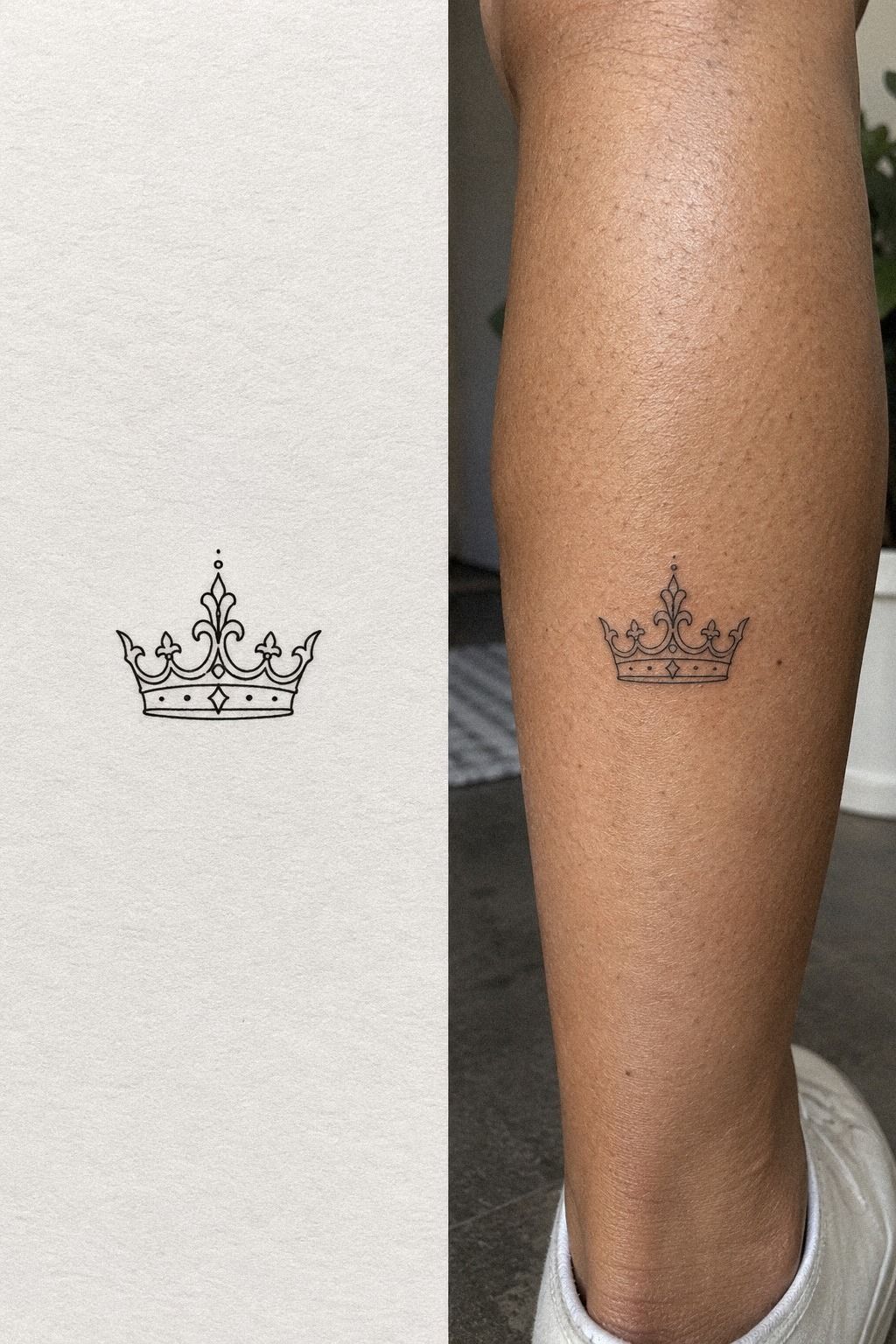
A clavicle crown can look symbolic and elegant because the collarbone gives the design a natural horizontal guide.
11Can Watercolor Stay Readable Under One Inch?
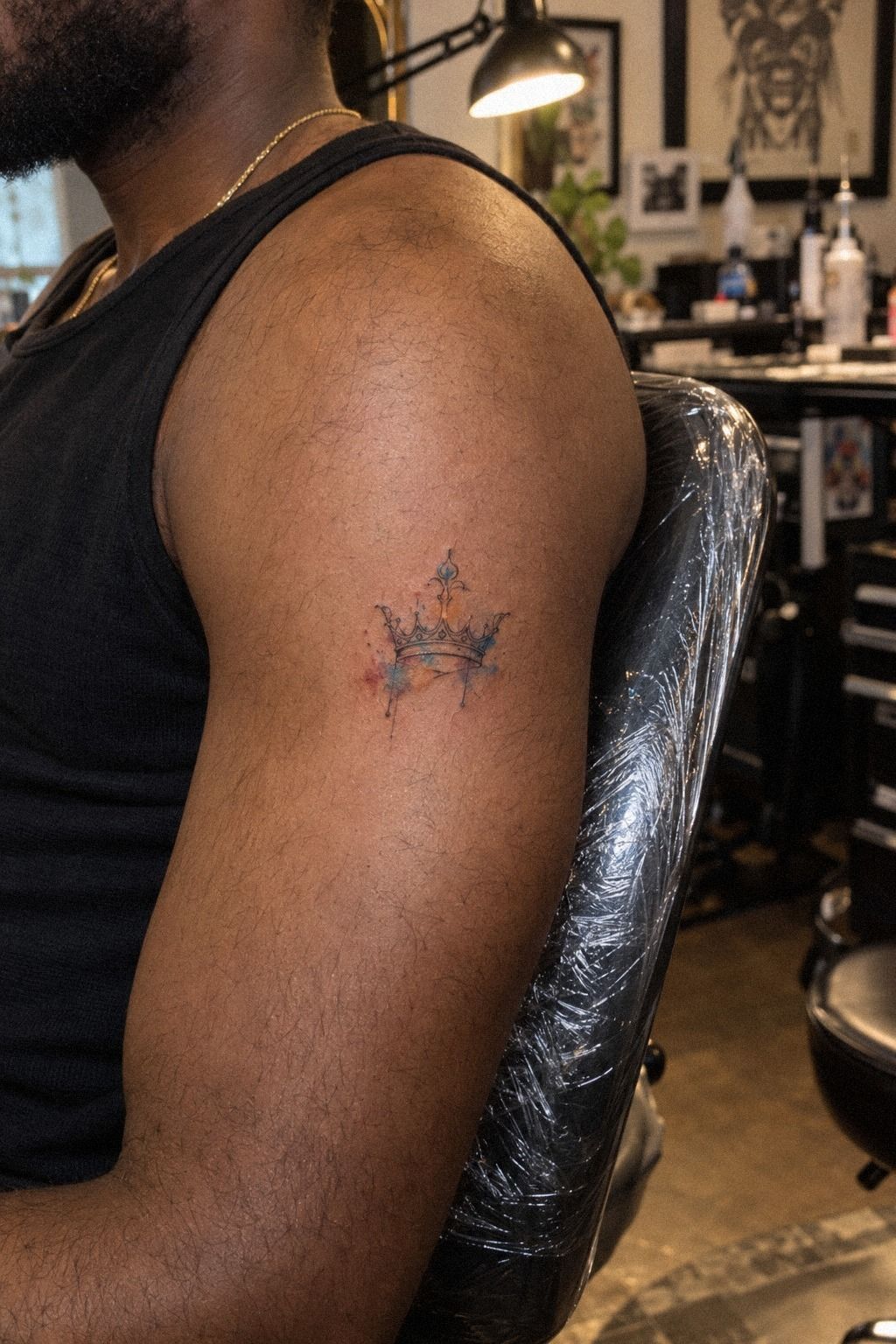
A watercolor crown can be unique, but it needs restraint if you want it to remain affordable and readable. Keep the outline sharp and let color act as an accent.
Ask for muted watercolor pigment behind the crown, perhaps one small wash of blue, violet, or red. Your artist should have healed color work on a similar skin tone.
I wouldn’t choose five shades for a design under one inch. The result may look vibrant at first and indistinct later. One color can feel more stylish and timeless.
A clean black outline gives the watercolor idea structure. Black outline ink also helps your eye find the crown after the colored pigment softens.
UV exposure can fade tattoo color, so your long-term care matters. You’ll want sunscreen after the skin has fully healed and should follow your artist’s instructions first.
If you want another colorful but compact reference, compare this tiny butterfly tattoo before booking.
Before You Book: Three Decisions That Protect the Budget
First, choose the placement before you polish the drawing. Stencil testing can reveal that a beautiful sketch needs fewer points, a wider base, or a different angle.
Second, decide whether the crown’s strongest feature is its silhouette, jewel detail, lettering, floral element, or color. A single visual priority usually looks more refined than six competing ideas.
Third, ask to see healed work. Healed tattoo photographs tell you more than a fresh design because they show how lines, gaps, and pigment actually settle.
How Tiny Crown Details Change the Price
A simple outline may fit the studio minimum, while blackwork, color, or difficult placement can take more time. Studio minimum pricing often determines the final cost for a very small tattoo.
Reducing two jewels or removing a second pigment can lower the session time without weakening the concept. One-color pigment is usually easier to budget than layered color or dense shading.
Don’t choose an artist solely because the quote is low. A slightly higher price for strong healed work can protect the result. Artist experience matters when the design has very little room for error.
Match the Crown to Your Skin’s Movement
A tattoo can look perfect in a still reference and shift when your wrist, ankle, or shoulder moves. That’s why body movement should influence the crown’s width, direction, and point height.
Flexible areas usually benefit from fewer details and a stronger base. On a finger or ankle, a compact high-contrast silhouette may stay clearer than a delicate arrangement of jewels.
I’d take photos of the stencil while standing, sitting, and moving naturally. If one point disappears in every position, remove it before the appointment.
Use a Stencil Before You Commit
A stencil gives you time to notice details that a screen can hide. Temporary stencil testing lets you assess scale, angle, visibility, and how the crown interacts with your natural anatomy.
Wear the placement for a little while if your artist allows it. You may discover that a hidden crown feels more meaningful, while a visible one feels more confident and practical.
Don’t let the smallest possible stencil become the automatic choice. A slightly larger outline can preserve the concept better and may cost the same because of the studio minimum.
Pick One Symbolic Detail
A crown can represent confidence, self-respect, royalty, family, faith, or a private milestone. The meaning becomes clearer when you choose one symbolic focus instead of stacking every possibility into one mark.
An initial feels intimate. A jewel can suggest value. A tiny star can add an ethereal note without competing with the crown’s shape.
If the idea is connected to a person or event, write down the meaning before finalizing the drawing. That quick exercise can tell you whether you need an extra detail or simply a stronger silhouette.
What Tiny Crown Tattoos Cost and How They Heal
The honest budget depends on your artist’s minimum, hourly rate, placement, and the amount of detail you request. A tiny outline may fit the studio minimum, while blackwork, color, or a difficult placement can take more time.
Your crown shouldn’t be priced from size alone. A sterile tattoo setup represents training, hygiene, supplies, and time, even when the design is tiny.
If a quote seems unusually low, ask what’s included and whether the artist has healed work you can inspect. You can save by reducing details, choosing one pigment, and selecting a straightforward placement.
You can’t easily save a crown that was placed poorly. Protect the silhouette first, especially if you’re choosing an daring design.
The Questions I Get Asked Most
How much does a tiny crown tattoo usually cost?
A tiny crown tattoo usually costs about $50 to $300 in the US, depending on the studio minimum, artist, region, size, and detail. A simple outline may stay near the minimum, while color or blackwork can take longer. You shouldn’t book from price alone.
Are tiny crown tattoos a good idea for a first tattoo?
Yes, a tiny crown can be a manageable first tattoo when you choose a clear design and tolerable placement. Your forearm, thigh, or shoulder may feel easier than ribs, feet, hands, or sternum. Ask to see healed fine-line work before deciding.
How do I choose a tattoo artist for tiny crown tattoos?
Choose an artist with clean healed photographs, strong linework, and a studio that follows clear hygiene practices. You can review tiny fine line butterfly tattoo references for style language, but the artist’s own portfolio matters most.
How much do tiny crown tattoos hurt?
Pain depends on your body and the placement. Forearm, thigh, and shoulder areas are often more tolerable, while ribs, feet, hands, and sternum can feel sharper. Your session may be short, but you should still eat beforehand.
How long does a tiny crown tattoo take to heal?
The surface usually heals in about 2 to 3 weeks, while the tattoo can take roughly 2 to 3 months to fully settle. You’ll want gentle washing, light moisturizer, and no swimming or strong sun during early healing.
What’s the best placement for tiny crown tattoos?
The best placement depends on your priorities. Forearm and thigh placements are often easier to read and may be more tolerable, while a finger or ankle feels more discreet but can face extra friction. Compare this tiny moth tattoo for placement ideas.
Which Crown Would I Choose? The Placement-First Rule
After looking at all eleven ideas, I’d choose placement before decoration. Many people fall for a striking drawing and only later ask whether it belongs on a finger, clavicle, or ankle.
I made that mistake with a small symbol once. The design was elegant on paper and awkward on the body because the curve wasn’t considered.
My rule is simple: choose the area, test the stencil, then remove details until the crown still feels meaningful. A placement-first decision usually produces a more polished tattoo.
A forearm gives you room for delicate lines and an easy viewing angle during healing. A finger gives you visibility but more friction. A thigh offers a steadier surface and often a more forgiving session.
I also prefer one strong visual decision. Pick fine line, blackwork, floral detail, jewel detail, or restrained watercolor. You can combine two, but you shouldn’t force every idea into a half-inch crown.
If you’re still between a crown and another symbolic mark, compare tiny small butterfly tattoo and tiny dragonfly tattoo references beside your chosen stencil. Which silhouette would you recognize at a glance? That’s your answer!
Where I’d Start First
If I had to pick one, I’d start with the fine-line forearm crown. You can see the stencil clearly, the placement is often more tolerable, and the open silhouette has room to age without turning muddy.
Pin that idea for later and compare it with this tiny butterfly tattoo design before booking. A tiny crown can still feel empowering, meaningful, and stylish when every mark has a reason.


2 responses to “Budget-Friendly Tiny Crown Tattoo Ideas That Stay Small Enough to Afford”
[…] compact references, compare this with tiny flower crown tattoo ideas and small flower crown tattoo designs. You’ll notice that the strongest examples let one […]
[…] you’re comparing references, save a tiny crown tattoo collection and a small crown tattoo guide before […]