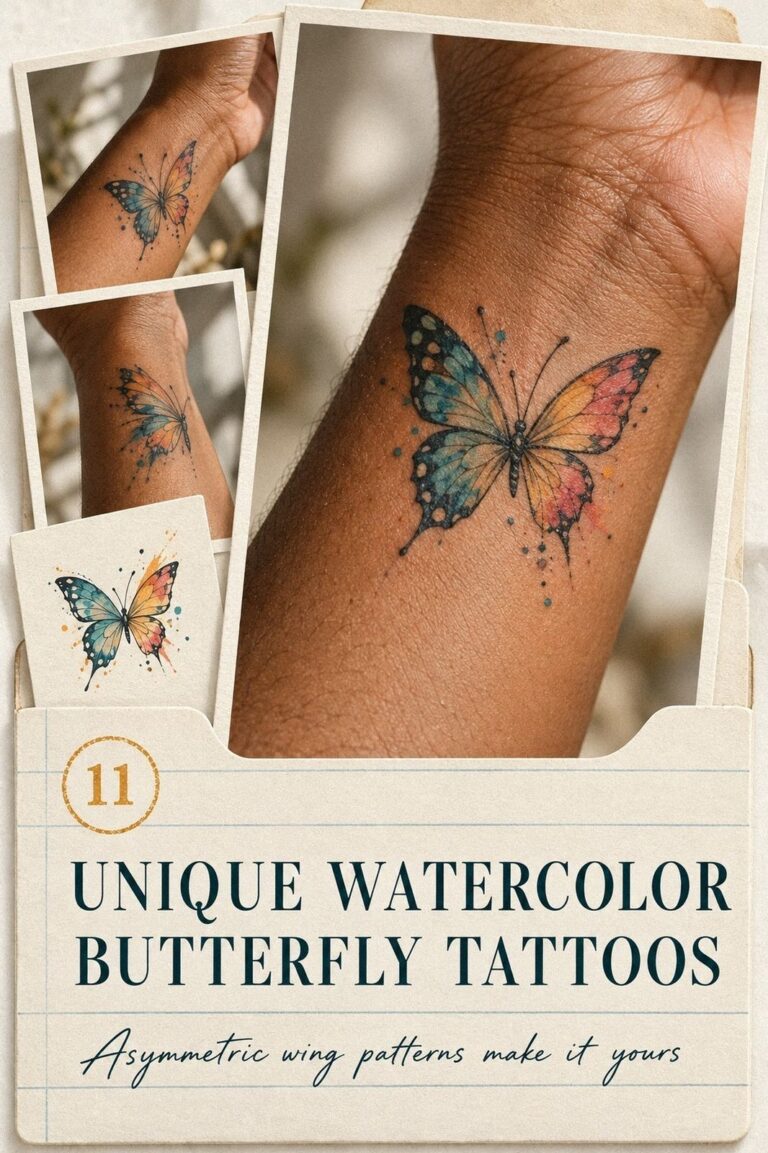
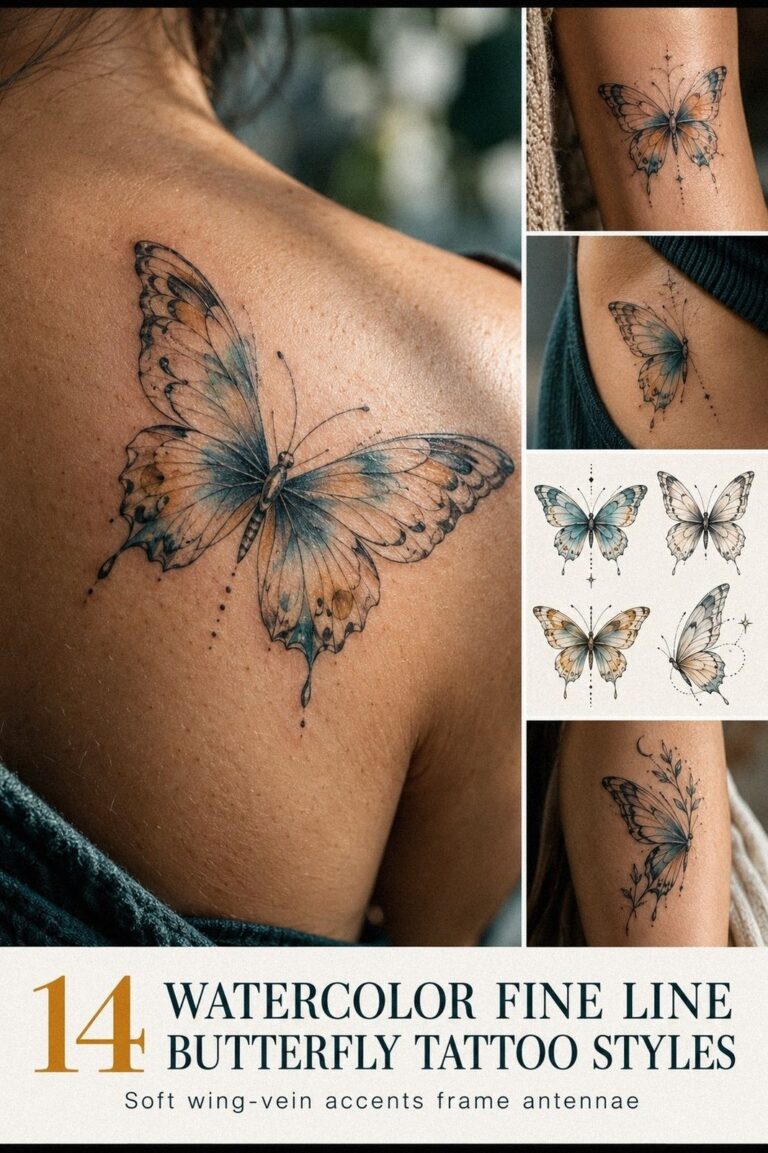
Fine line black butterfly tattoo sessions can feel surprisingly manageable when placement, scale, and line weight work together. I learned that after choosing a bony spot too quickly and regretting every minute. Your best plan is a fine line black butterfly tattoo, an experienced artist, and realistic aftercare. The result can feel personal, striking, and iconic!
- Start Small: A Fine Line Black Butterfly Tattoo on the Wrist
- Could Behind the Ear Work for You?
- Keep Botanical Details Secondary
- Collarbone Versus Comfort
- Choose a Crescent Moon With Intention
- Why Ribcage Placement Needs a Plan
- Let Geometry Sharpen the Wings
- Ankle Placement, Visible and Classic
- Give the Butterfly One Meaningful Symbol
- The Forearm: A Practical Favorite
- Let Motion Lead the Design
1Start Small: A Fine Line Black Butterfly Tattoo on the Wrist

A small wrist butterfly can look crisp and minimal when the wings stay open and balanced. The wrist placement is visible, personal, and easy to check during healing. It can feel delicate without looking plain.
I’d keep the body narrow and the wing veins restrained. Too many tiny marks can blur as your skin changes. Ask your artist to show healed work before you approve the design.
Your wrist moves constantly. A single-use needle cartridge and confident spacing matter more than decorative extras. I’d choose a slightly heavier central body over dozens of hairline details.
It keeps the silhouette readable from across your hand.
The wrist is more tolerable for many people than ribs, feet, or hands. Sensitivity still varies.
You’ll want loose sleeves during the first few days. Direct sun and swimming should wait.
A small black butterfly tattoo can look understated now and still retain its personality later. If a larger version gives each line more breathing space, that may be worth the extra cost.
For more scale comparisons, browse these small fine line butterfly tattoo ideas. Tiny isn’t automatically easier to age.
2Could Behind the Ear Work for You?

Behind the ear, an open-wing butterfly becomes a quiet reveal. The placement feels dainty and personal when your hair covers it most of the day. It appears only when you tuck your hair back.
I’d avoid an intricate wing pattern in such a tight area. The skin curves, and the design needs space for smooth lines. A fine black linework outline with two or three interior veins will read better than a dense pattern.
Ask for a healed portfolio before booking. Fresh tattoos can look darker and sharper than settled work. That comparison helps you judge whether the artist’s spacing will hold.
Behind the ear can feel more sensitive than the forearm. You’re close to bone, and the vibration may feel intense. I’d discuss short pauses before the session begins.
You don’t have to prove anything.
Keep your aftercare instructions simple. Wash gently, use the product your artist recommends, and don’t scratch when the surface peels. A calm plan can make the price feel more worthwhile.
If you like this hidden placement, compare it with these tiny fine line butterfly tattoo references. The strongest version is understated, not overloaded.
3Keep Botanical Details Secondary
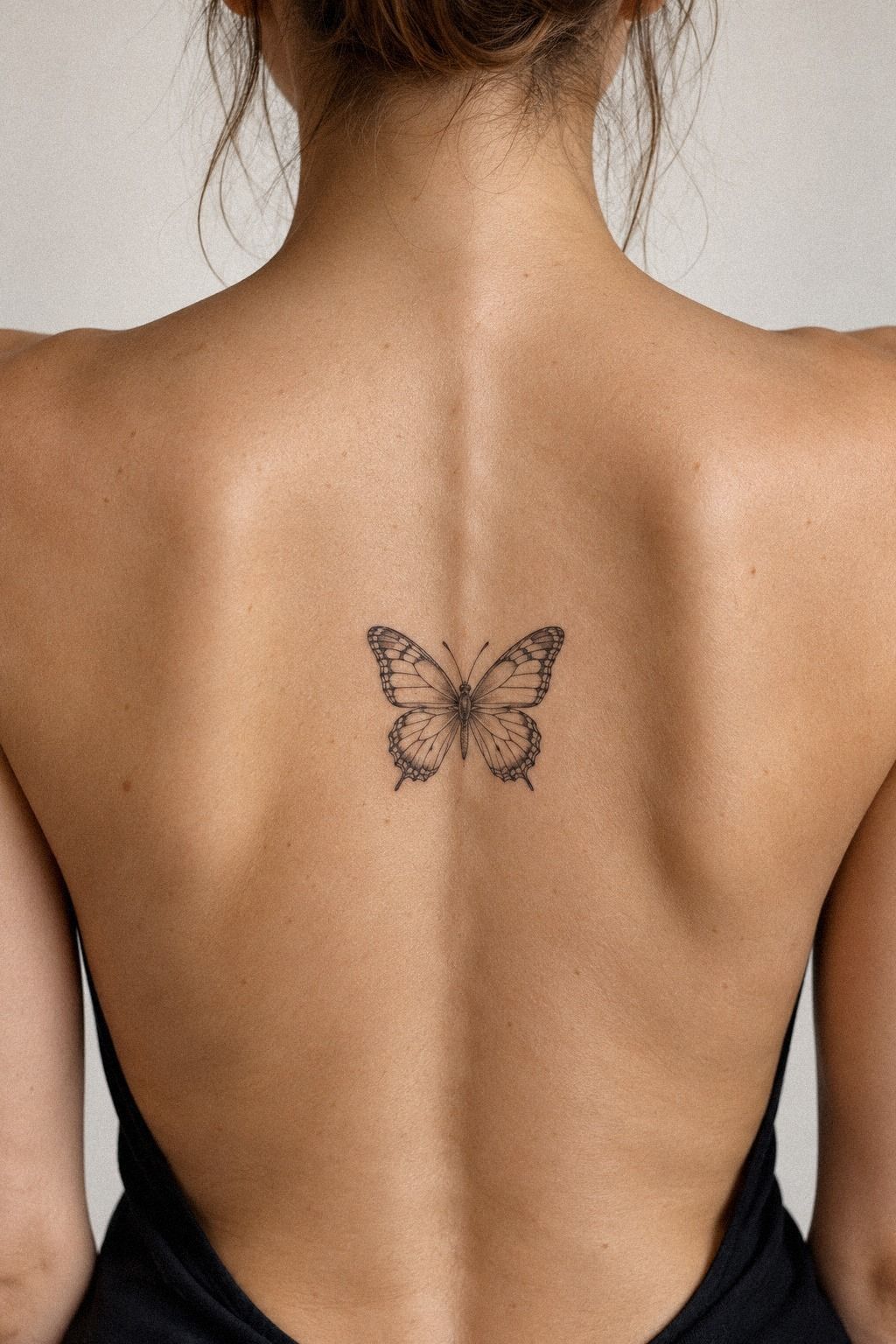
A butterfly with leaves and stems can feel graceful and expressive without becoming busy. One botanical accent is usually enough. Let the wings remain the first thing you notice.
A few narrow stems, tiny leaves, or one curved sprig can create flowing movement. Five competing stems can bury the subject. I’d keep the plant work lighter than the butterfly outline.
Ask your artist to test the design with a transfer stencil. You should see where the butterfly ends and the plant work begins. That small check can protect the final balance.
The shoulder gives you space to adjust the scale. It’s often more tolerable than ribs, feet, or sternum. Tight straps can still rub the skin during healing, so plan your clothing carefully.
I’d skip heavy black leaves. They can overpower delicate wings and make the tattoo less graceful. A restrained botanical idea often offers better value than a crowded one.
If your concept is growing beyond one butterfly, look through these delicate fine line butterfly tattoo examples. Your artist can always extend the composition later.
4Collarbone Versus Comfort

A collarbone butterfly follows a long horizontal line. That makes the placement elegant and symbolic. It can feel polished without becoming formal.
Ask for a collarbone stencil that you can test while standing and sitting. Your body doesn’t stay flat during daily life. A design that looks centered while reclining may shift when you stand.
Check the angle as you move your shoulders. The wing spacing should remain even from more than one position. This step costs nothing, yet it can prevent an expensive correction later.
The collarbone may feel more sensitive than the outer shoulder. You’ll want a top that doesn’t press into the area during the first few days. A little planning makes the session smoother.
The fine line tattoo should stay light in structure. The butterfly still needs bold contrast, though. Without enough separation, the design may lose clarity as it settles.
For a restrained direction, compare these minimalist fine line butterfly tattoos. I wouldn’t add a quote beneath this placement. The curve already gives the piece direction.
5Choose a Crescent Moon With Intention

A butterfly and crescent moon can create an ethereal emblem. The crescent moon adds meaning without needing a large symbol. It can suggest change, memory, protection, or a private season of life.
Before choosing the design, ask whether the artist can preserve its spacing at your preferred size. A moon that looks charming on paper may need fewer interior marks on skin.
The artist should explain what will stay and what needs adjustment. That conversation protects the value of your appointment. It also keeps the design readable after healing.
This concept can become expressive without becoming overly ornate. I’d keep the open crescent near one wing. That gives your eye a clear path and keeps the mood whimsical.
You can compare simpler black designs in this collection of tiny black butterfly tattoo ideas. If you’re choosing between a moon and stars, I’d keep the moon. It has a stronger shape at a small scale!

6Why Ribcage Placement Needs a Plan

A ribcage butterfly can look powerful even when the linework stays delicate. The vertical direction of the ribs can guide the body. Don’t force the butterfly into a flat horizontal arrangement.
Ribs are commonly described as a more painful placement. The skin is thin, and the area sits close to bone. You’ll want to eat beforehand and bring water.
Discuss short breaks before the session starts. My own mistake was treating a sensitive placement like a quick appointment. Your comfort plan matters, even when the finished tattoo is small.
Ask to see healed work on comparable skin when possible. A black pigment choice should suit your skin tone and the artist’s line style. That conversation is practical, not awkward.
I’d avoid grey shading in the smallest version. It can soften as the tattoo ages. If a slightly larger design improves clarity, the added cost may be worth it.
For a less intense placement with a similar silhouette, compare these small black butterfly tattoo designs. Your ribcage piece should feel personal, not like a challenge you have to endure.
7Let Geometry Sharpen the Wings

Geometric wings give the butterfly an edgy structure. Clean divisions can make the design feel sharp while preserving the lightness of fine line work.
I’d use a few intentional planes rather than filling every section. Too many intersections can make the wings look crowded. Restrained geometric linework usually keeps the butterfly more readable.
Ask your artist to test the idea with a stencil test before committing. Check whether the wing shapes remain even when your skin moves. Small adjustments can make the result more sleek and balanced.
The antennae and central body should stay simple. They give the tattoo an iconic focal point while the wings carry the daring detail.
8Ankle Placement, Visible and Classic

An ankle butterfly can feel classic and quietly visible. It works well when the open wings sit just above the foot. The ankle already supplies a strong natural boundary.
Keep the ankle placement compact. The wings shouldn’t wrap too far around the sides. Show your artist how you stand and walk, then check the design with your foot relaxed.
A transfer stencil makes those adjustments easier. You can test the distance from the ankle bone and the direction of the antennae. That small step may save you from a costly cover-up.
Ankles can feel more sensitive than the outer forearm. Feet can be particularly intense. Footwear also creates a real aftercare issue.
You’ll need soft footwear that doesn’t rub the area. Loose sandals may be useful when practical. If that means changing your routine for a week, the comfort is worth it.
For a smaller visual direction, compare these tiny black butterfly tattoo references. Extra stars and lettering aren’t required.
9Give the Butterfly One Meaningful Symbol

A butterfly can become meaningful when one symbol connects it to your life. An initial, date, star, or small plant mark may be enough. The best addition has a clear reason.
Choose one personal symbol before adding more. Stacking every idea can weaken the main shape. A simple detail often feels more powerful than a crowded design.
Ask your artist to test the symbol beside the butterfly with white transfer paper. A detail that looks readable on a phone may be too small for skin. Your design should still make sense if that mark softens.
The shoulder is often a forgiving placement. It also gives your artist space to protect the central butterfly. That visual anchor should remain clear.
I’d skip a long quote. Text needs enough room to stay readable. A private mark can feel romantic without explaining itself to everyone.
If you’re still narrowing the concept, these fine line butterfly tattoo ideas offer useful comparisons. Your tattoo doesn’t need to tell the whole story.
10The Forearm: A Practical Favorite

The forearm is a practical choice for fine line work. It’s visible, easy to monitor, and often more tolerable than ribs or feet. A controlled forearm placement also gives the butterfly space to breathe.
Ask to see healed examples from the artist’s own portfolio before booking. Look for smooth wing contours, even spacing, and lines that haven’t blurred into heavy bands.
Fresh work can look darker than the settled result. That’s normal. The healed version tells you more about the artist’s judgment and long-term value.
You’ll need to protect the area from direct sun after healing. Ultraviolet exposure can fade black ink and soften delicate lines. A simple sunscreen habit can help preserve the design.
My favorite version here is an understated version. One confident outline and limited interior detail can feel timeless. If the artist recommends a slightly larger butterfly, listen before insisting on the smallest option.
For another scale comparison, look at these small fine line butterfly tattoo options. Clear spacing often matters more than keeping the design tiny.
11Let Motion Lead the Design

Flowing motion changes the butterfly from a static emblem into an expressive sense of movement. Curved wing tips and a gently angled body can make the design feel lighter.
I’d let one wing lead the direction while the other balances it. A motion line should support the butterfly, not compete with its outline.
Ask your artist to keep the flowing composition open. Too many trailing marks can turn a graceful idea into visual noise. One curved accent may be enough.
The antennae can echo the wing direction without becoming overly ornate. A slightly daring tilt often feels more alive than perfect symmetry.
Before You Book, Check the Artist
The artist matters as much as the butterfly idea. Look for an artist portfolio with healed fine line work. Fresh tattoos alone don’t show how the design settles.
Study symmetry, spacing, and line confidence. Check whether the artist works on different skin tones. You’re paying for judgment, not just a familiar symbol.
Ask about hygiene and single-use supplies. Clear sanitation practices should be easy to discuss. If the artist avoids basic questions, I’d keep looking.
Ask what’s included in the quote. Some studios have a minimum, even for tiny tattoos. A low hourly rate may not mean a low final cost.
Clarify the booking deposit before you confirm. Also ask how changes work if the stencil needs adjustment. Good communication is part of the value.
How Fine Lines Change as They Heal
A tattoo changes during healing. The surface may look darker at first. It can then soften as the skin settles.
The surface healing stage often takes about two to three weeks. That doesn’t mean the deeper skin is fully recovered. Complete healing may take two to three months.
Don’t judge the final result too quickly. Peeling, dryness, and temporary dullness are common. Your artist can tell you when a touch-up conversation makes sense.
Sun exposure can fade black lines. Sun protection matters after the skin has healed. Swimming should wait until the surface is closed and your artist approves it.
Fine line tattoos can broaden slightly over time. That’s why spacing matters from the start. A slightly larger design may offer better long-term value.
For more planning ideas, save these delicate butterfly tattoo examples. They can help you compare scale before your appointment.
What Makes the Price Worth It?
Tattoo cost depends on the artist, region, placement, size, and detail. A small butterfly may cost about $100 to $300 in the United States. Studio minimums can change the final number.
A tattoo cost that looks high may reflect experience, hygiene, and careful design work. Cheap work can become expensive if you need correction or removal.
Ask for a written quote after sharing the placement and size. Your artist should explain what may change the price. That makes budgeting easier.
A studio minimum may sit near $50 to $100. Hourly rates can range from about $100 to $250. These figures are only general references.
The best budget is the one that protects quality. Don’t cut healed-work checks or sanitation questions to save a little money. The tattoo stays with you longer than the appointment lasts.
Compare your budget range with the artist’s portfolio. If the style, experience, and communication all feel right, the added price may be worth it.
A Simple Aftercare Plan
Aftercare doesn’t need to be complicated. Follow the artist instructions you receive. Their advice should fit the products and method used during your session.
Wash with gentle soap when instructed. Use clean hands. Pat the area dry instead of rubbing it.
Apply the approved moisturizer in a thin layer. More product isn’t better. Heavy coverage can leave the skin damp and uncomfortable.
Don’t scratch peeling skin. Don’t pick at flakes. Let the surface shed on its own.
Avoid a swimming pool, hot tub, and open water while the tattoo heals. Direct sun should also wait. These limits protect the fresh skin.
Wear loose clothing when the placement rubs against fabric. If something feels hot, swollen, or unusually painful, contact your artist or a medical professional.
For a quick planning reference, review these minimalist fine line butterfly tattoos. A simple aftercare routine protects the value of your design.
What I’ve Learned From Choosing Fine Line Butterfly Tattoos
I used to think the smallest possible tattoo was automatically the safest choice. It isn’t. A tiny butterfly can be striking, but only when the artist has enough room to separate the body, wing outline, antennae, and interior veins.
When every mark is squeezed together, the design may look crisp on appointment day. It can look less distinct after the skin settles. The smallest size isn’t always the smartest size.
The decision I trust most is placement before decoration. Ribs, feet, hands, and sternum can feel more painful. The forearm, thigh, and shoulder are often more tolerable.
That doesn’t mean one zone is right for everyone. It means you should match your pain tolerance, clothing, visibility, and aftercare plan before approving a stencil.
I also wouldn’t choose an artist from fresh examples alone. Ask for healed examples, sanitation information, and a portfolio that proves they understand fine line work.
Single-use supplies and clean studio practices are basic requirements. The artist’s judgment is what keeps a butterfly from becoming crowded or uneven.
Finally, give yourself permission to change the design. Your first idea may need a different scale, fewer details, or a stronger central body. That isn’t failure.
It’s how a delicate, polished tattoo becomes one you’ll still recognize years from now. What matters most is whether the final design feels like your choice, not a copy made under pressure.
For additional ideas, save this minimalist black butterfly tattoo guide before your consultation.
The Questions Worth Answering First
How much does a fine line black butterfly tattoo usually cost?
A fine line black butterfly tattoo usually costs about $100 to $300 in the United States. The tattoo cost depends on the artist, region, size, and placement.
Boutique minimums may run $50 to $100. Ask for a quote after sharing your reference and placement.
Are fine line black butterfly tattoos a good idea for a first tattoo?
Yes, they can be a gentle first tattoo when you choose a tolerable placement and an experienced artist. The forearm, shoulder, and thigh are often easier than ribs, feet, hands, or sternum. You’ll still need realistic aftercare and patience during healing.
How do I choose a tattoo artist for a fine line black butterfly tattoo?
Choose an artist with a portfolio showing clean healed linework. Look for symmetrical butterflies, controlled spacing, and work on varied skin tones. Confirm hygiene, single-use supplies, and experience with fine line designs before paying a booking deposit.
How much do fine line black butterfly tattoos hurt?
Pain depends on your body and placement. Ribs, feet, hands, and sternum are commonly more painful than the forearm, thigh, or shoulder. A shorter session can feel easier to manage.
Tell your artist if you need pauses, water, or a position change.
How long does a fine line black butterfly tattoo take to heal?
The surface healing stage usually takes about two to three weeks. Complete healing can take two to three months. Wash gently, moisturize as directed, avoid scratching, and keep fresh skin away from strong sun and swimming pools.
What’s the best placement for fine line black butterfly tattoos?
The best placement depends on your visibility, pain tolerance, and design size. The forearm and shoulder are often practical.
The wrist, ankle, collarbone, and behind-ear placements can feel more visible or intimate. Your artist can help protect clear line spacing.
Where I’d Start First
If I had to pick one, I’d start with the forearm butterfly. It’s visible, usually more tolerable, and gives fine lines enough room to stay readable as they age.
Pin the minimalist black butterfly tattoo guide for later. Take your healed-reference questions to the artist. If the design feels personal, the placement feels manageable, and the quote fits your budget, that’s a strong place to start!