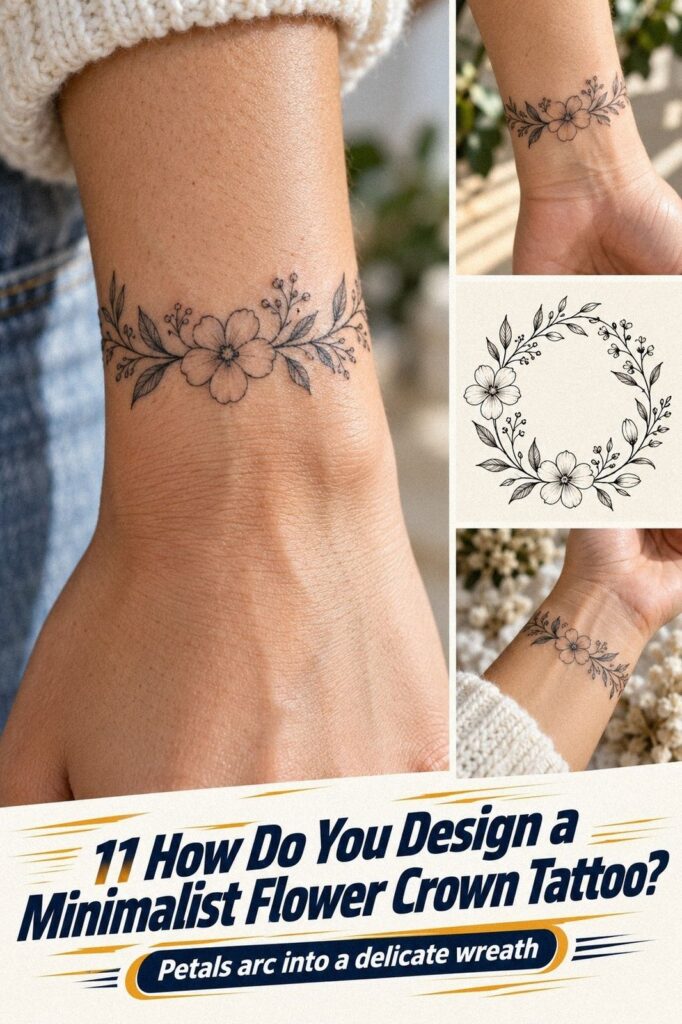
Minimalist flower crown tattoos can cost about $100 to $300 in the US, depending on size, placement, and the artist’s rate. I once chose a design that was too fine for its location, and it softened fast. These ideas keep the crown readable, personal, and graceful for years. Start here!
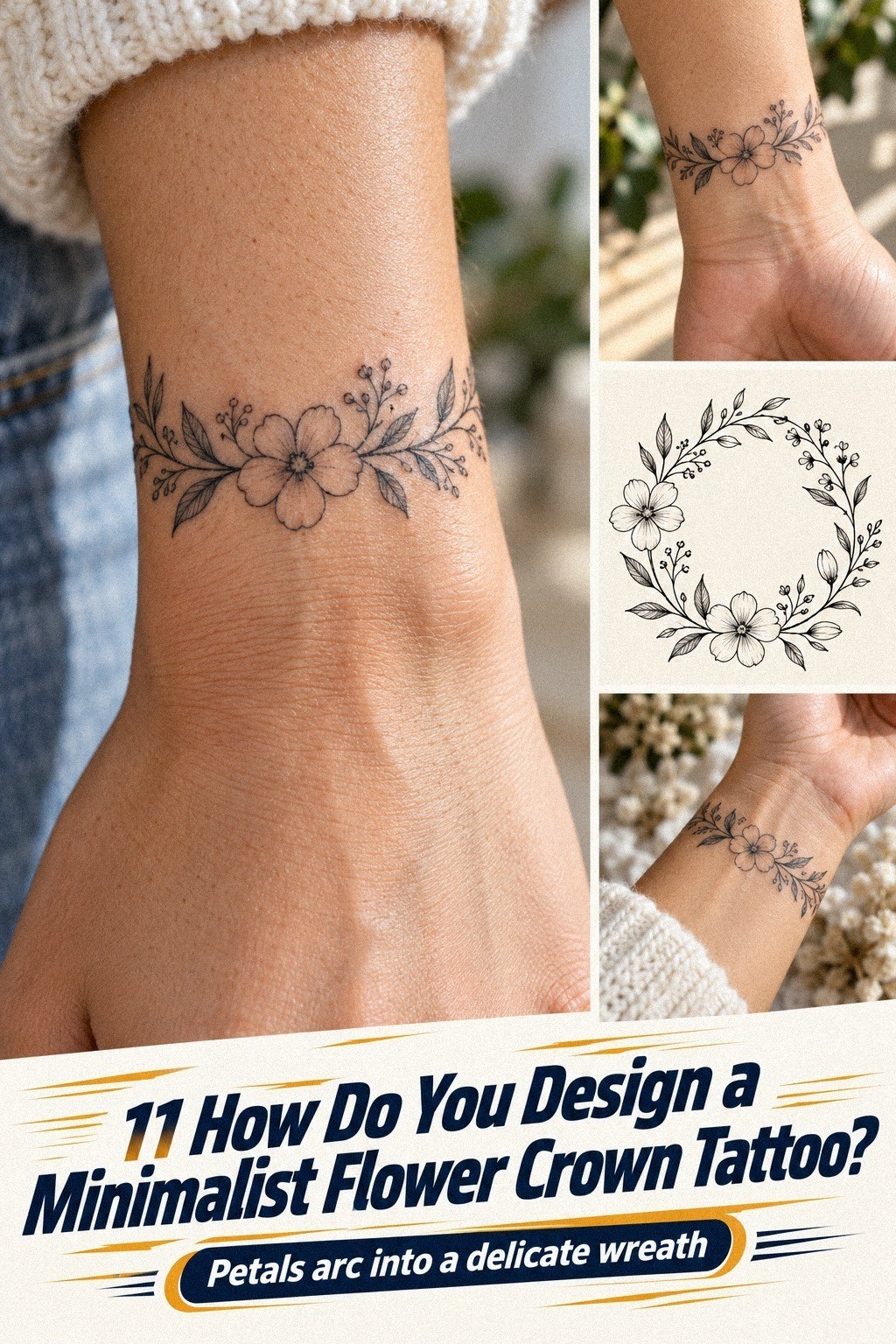
- Map a Minimalist Flower Crown Tattoo on the Wrist
- Why Choose a Small Minimalist Flower Crown Tattoo on the Ankle?
- Single-Needle Linework: Keep the Crown Legible
- Add Birth Flowers Without Losing the Minimalist Shape
- Let the Crown Follow the Upper Arm
- Rib Placement or More Control? Choose Botanical Black Ink
- Sweep a Delicate Crown Along the Collarbone
- Wildflowers Make the Crown Meaningful
- Reveal a Minimalist Flower Crown Behind the Neck
- Tiny Color Accents: Less Color, More Impact
- Frame a Crescent Moon with a Flower Crown
1Map a Minimalist Flower Crown Tattoo on the Wrist
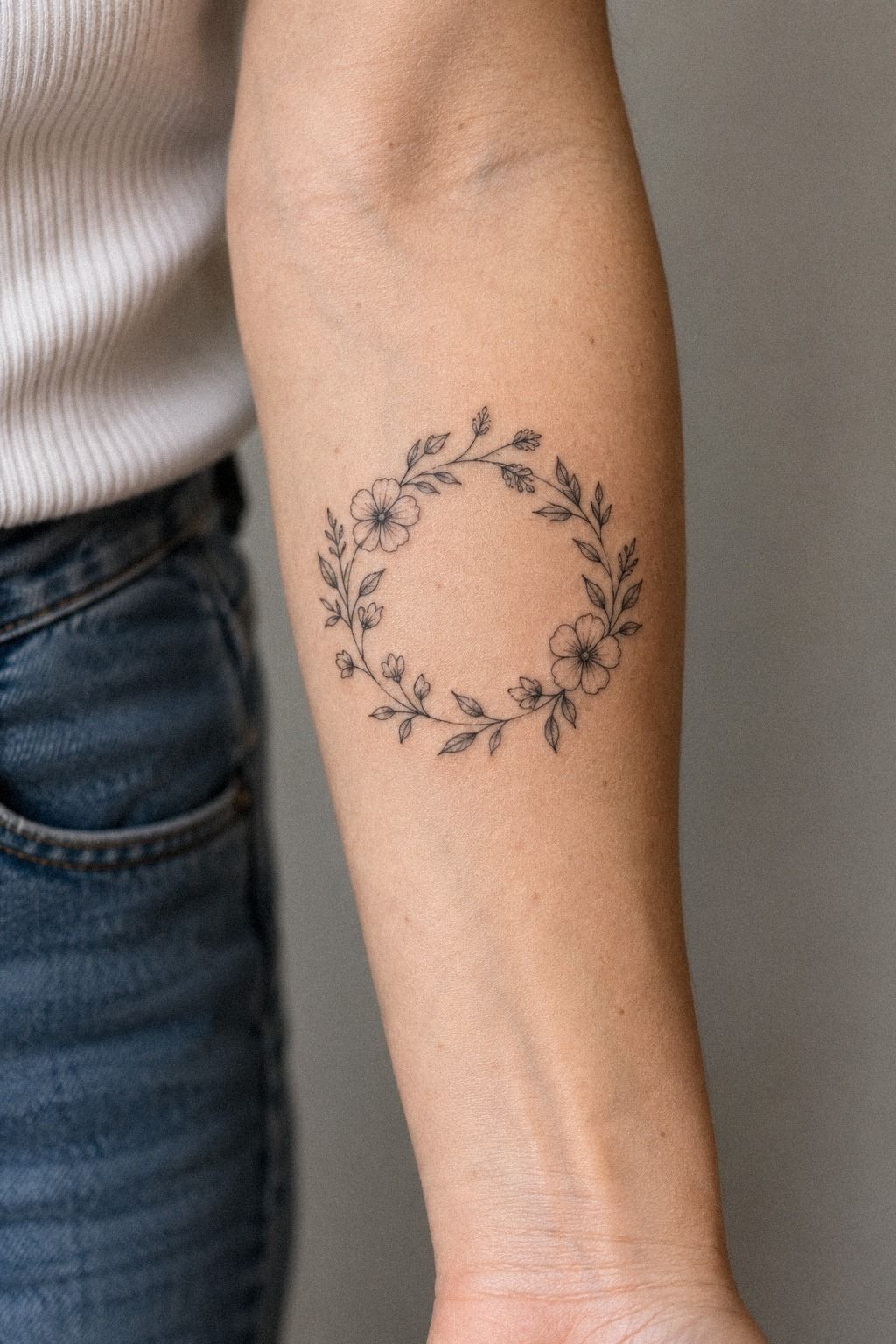
A wrist design works best when the flower crown stays narrow and vertical. I’d choose fine-line terracotta ink with one slightly heavier contour around the central bloom. That small contrast creates a striking anchor.
The Wrist Halo Rule is simple. Leave visible skin around the flower. If you’re planning a first tattoo, your artist can keep the crown around 2 to 3 inches tall.
The stem should follow your wrist’s natural curve.
A dense cluster may look ornate at first. It can blur sooner, though. Your wrist moves constantly, so you’ll want clean spacing between the petals and leaves.
That spacing is worth protecting!
I’d skip pale gray as the main line. It may look understated now, but it can become hard to read later. A crisp outline in warm terracotta, open areas, and one expressive bud will age with confidence.
Think about which side of your wrist you want to see most. The inner wrist feels intimate and personal, while the outer wrist gives the crown a sharper, more visible presence. You’ll notice the difference every time you reach for something.
For compact references, compare this with tiny flower crown tattoo ideas and small flower crown tattoo designs. You’ll notice that the strongest examples let one meaningful flower carry the whole image.
2Why Choose a Small Minimalist Flower Crown Tattoo on the Ankle?
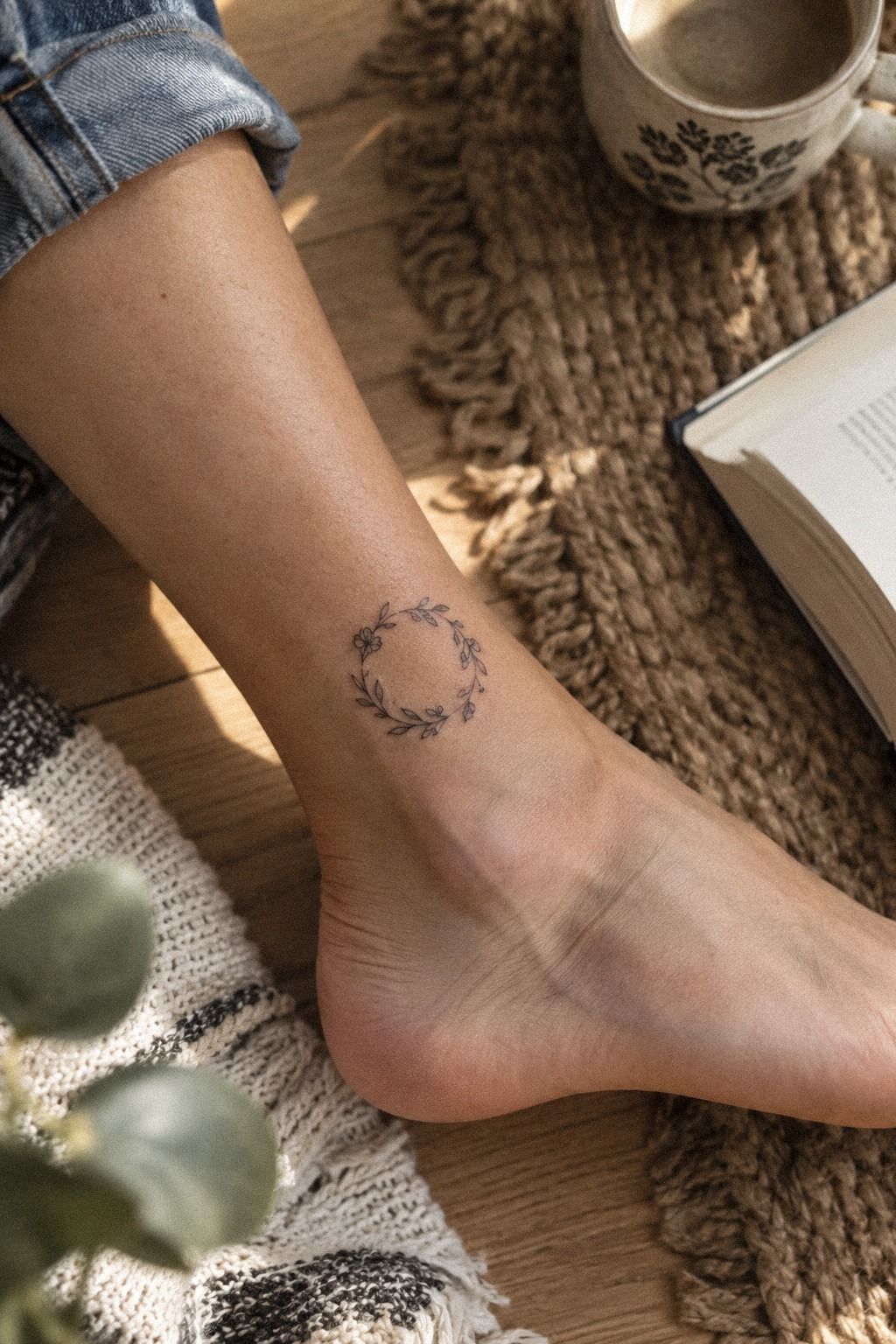
An ankle flower crown feels personal because you can show it or cover it easily. The small ankle placement also gives the design a delicate, understated quality.
3Single-Needle Linework: Keep the Crown Legible
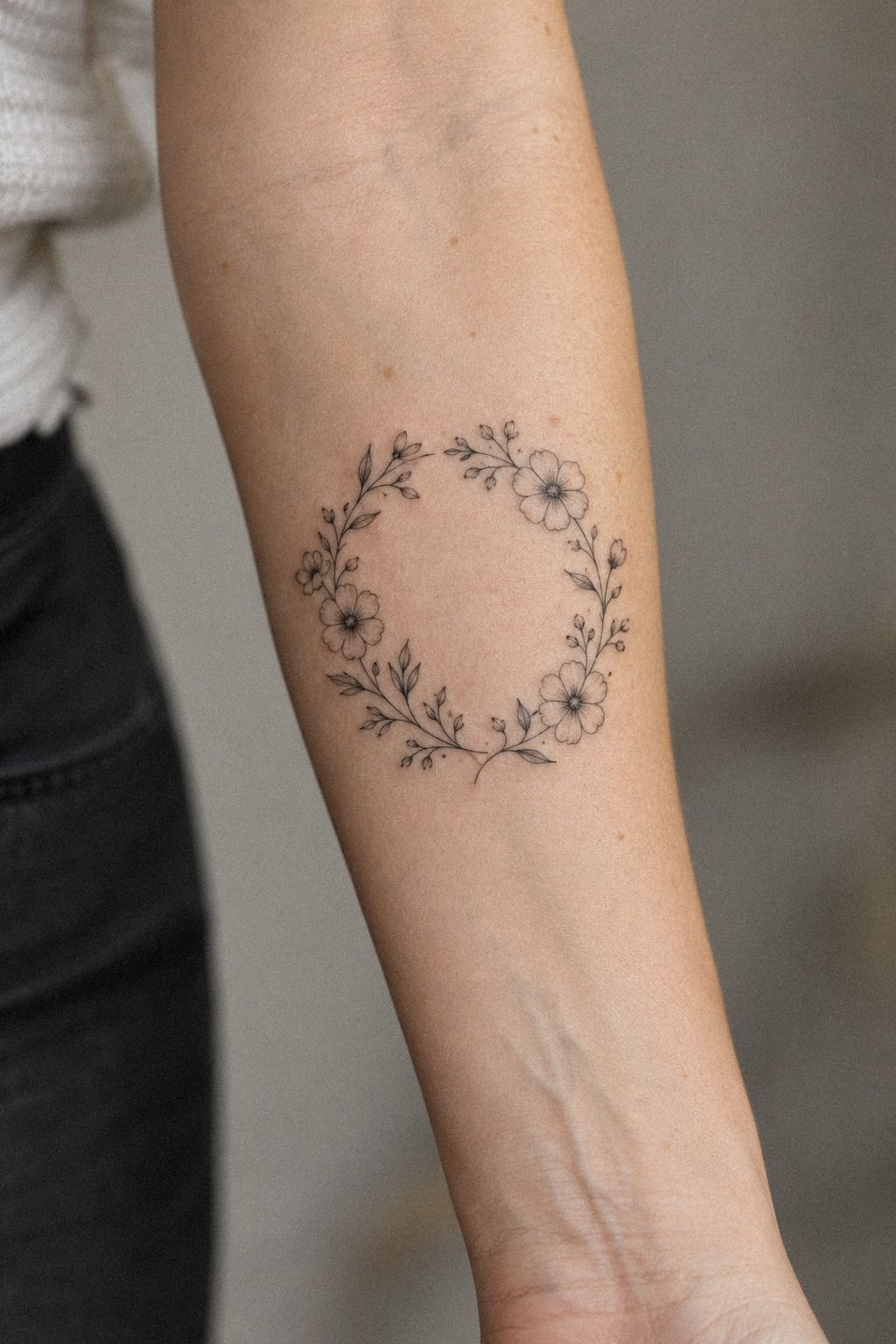
Single-needle linework gives an upper-arm design a delicate, expressive quality. I’d ask for single-needle work only from an artist with healed examples. Fresh lines can look sharper than they truly are.
Your artist should keep the petals separated. Overlapping lines can turn an elegant shape into visual noise. The Three-Line Balance helps: one outer contour, one petal detail, and one stem line.
That’s enough. I’ve seen people ask for every vein and fold, but I’d resist that urge.
A minimalist tattoo needs breathing room. Negative space gives the design a refined, timeless quality.
Ask to see healed linework before you book. A fine line can widen slightly as it settles.
You want someone who understands pressure, spacing, and skin movement. That judgment is the real value.
If your reference looks intricate, ask which details are essential and which can disappear at a smaller scale. I’d rather keep one graceful curve than squeeze in six weak ones. The strongest crown usually looks deliberate, not busy.
Compare the line quality with minimalist fine-line butterfly tattoos and minimalist moth tattoo ideas. Those motifs reveal whether an artist can manage thin curves and graceful symmetry.
4Add Birth Flowers Without Losing the Minimalist Shape
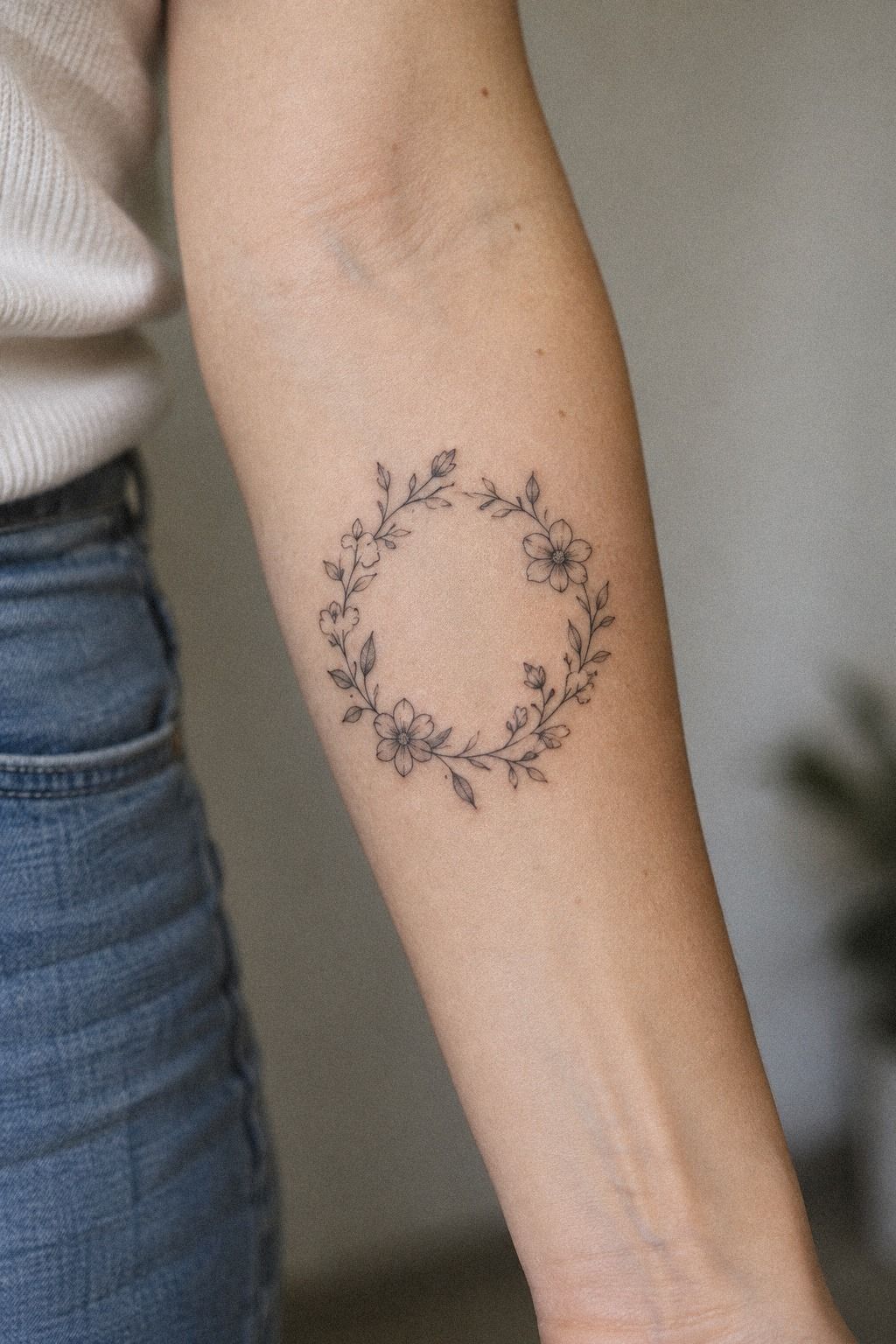
Birth flowers make a crown meaningful without forcing a large symbol into the design. A birth-flower combination can stay symbolic, personal, and sleek when each bloom has enough space.
5Let the Crown Follow the Upper Arm
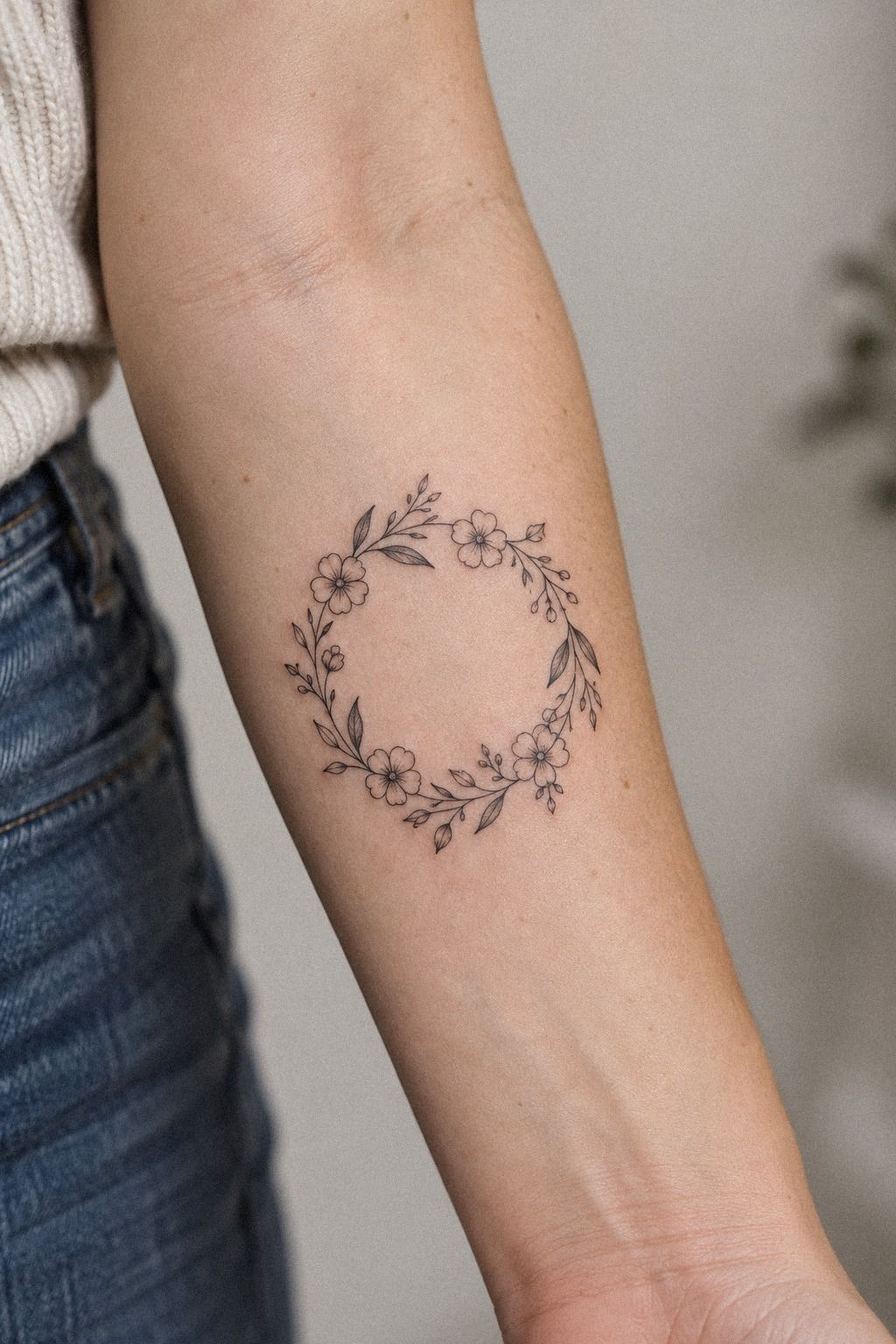
An upper-arm band works when the flower crown follows the body instead of fighting it. I’d choose one flowing stem that nearly circles the arm. Leave a deliberate opening rather than forcing a complete ring.
The Open Circle Method keeps the tattoo elegant. A full loop can look formal. A small break gives your eye somewhere to rest and makes the design feel more personal.
Your artist should draft the upper-arm placement while you stand naturally. A seated stencil may shift when your shoulder relaxes. You’ll want to check the design from the front, side, and back.
This placement has less daily friction than the wrist or ankle. You’ll still need gentle washing, careful aftercare, and UV protection during healing. Emerald ink can create a powerful, vibrant result when used sparingly.
You can make the crown fierce with pointed leaves, romantic with rounded petals, or edgy with an intentional gap through the stem. I’d keep the central flower slightly larger so the design has a clear visual center.
If you’re comparing symbolic motifs, save minimalist phoenix tattoo ideas and minimalist small butterfly tattoo references. I’d choose the flower crown for a feminine, classic feeling. A phoenix feels more fierce and empowering.
6Rib Placement or More Control? Choose Botanical Black Ink
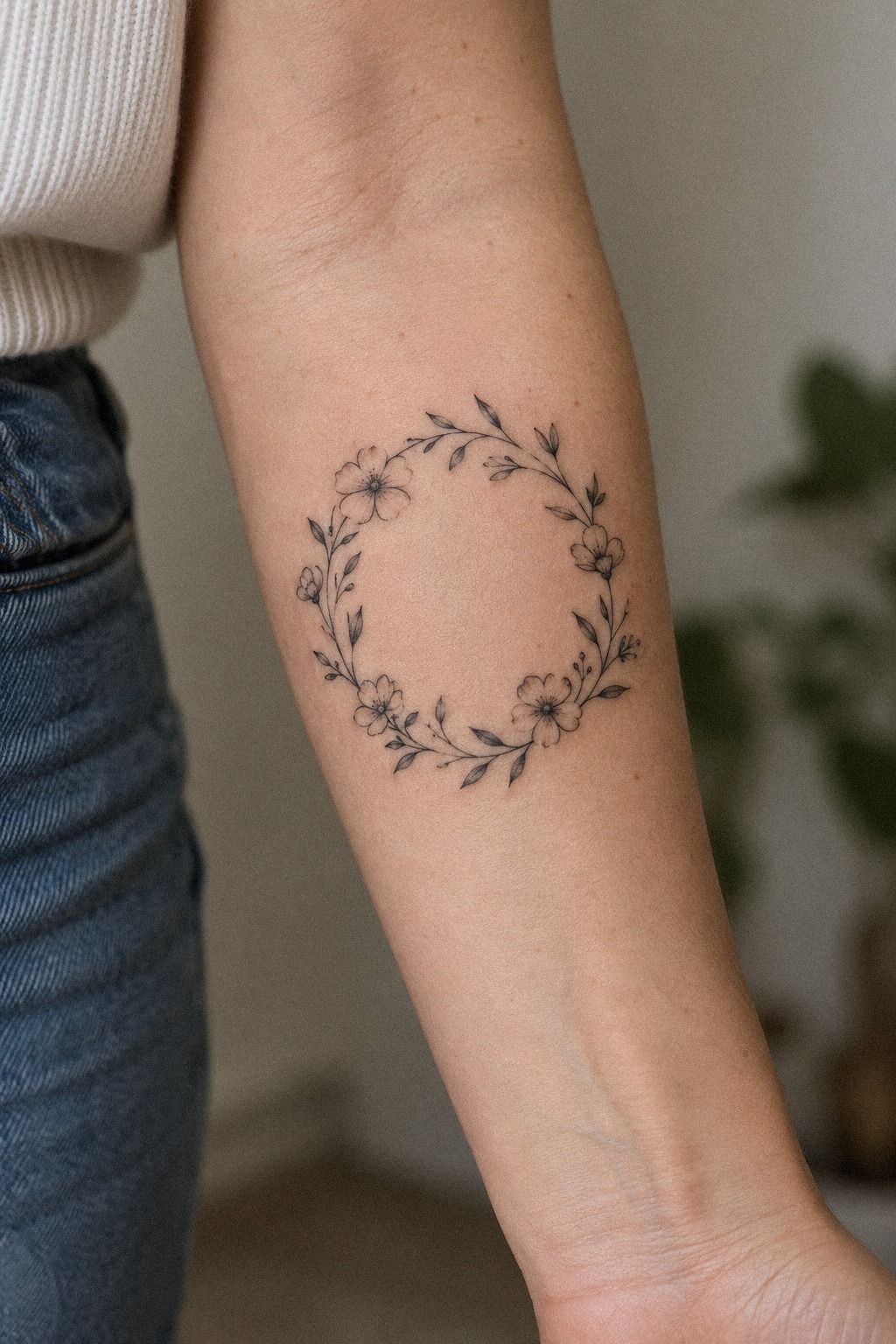
Rib placement makes a botanical design feel bold, even when the linework stays minimal. Botanical black ink offers strong contrast and keeps the leaves readable against the skin.
7Sweep a Delicate Crown Along the Collarbone
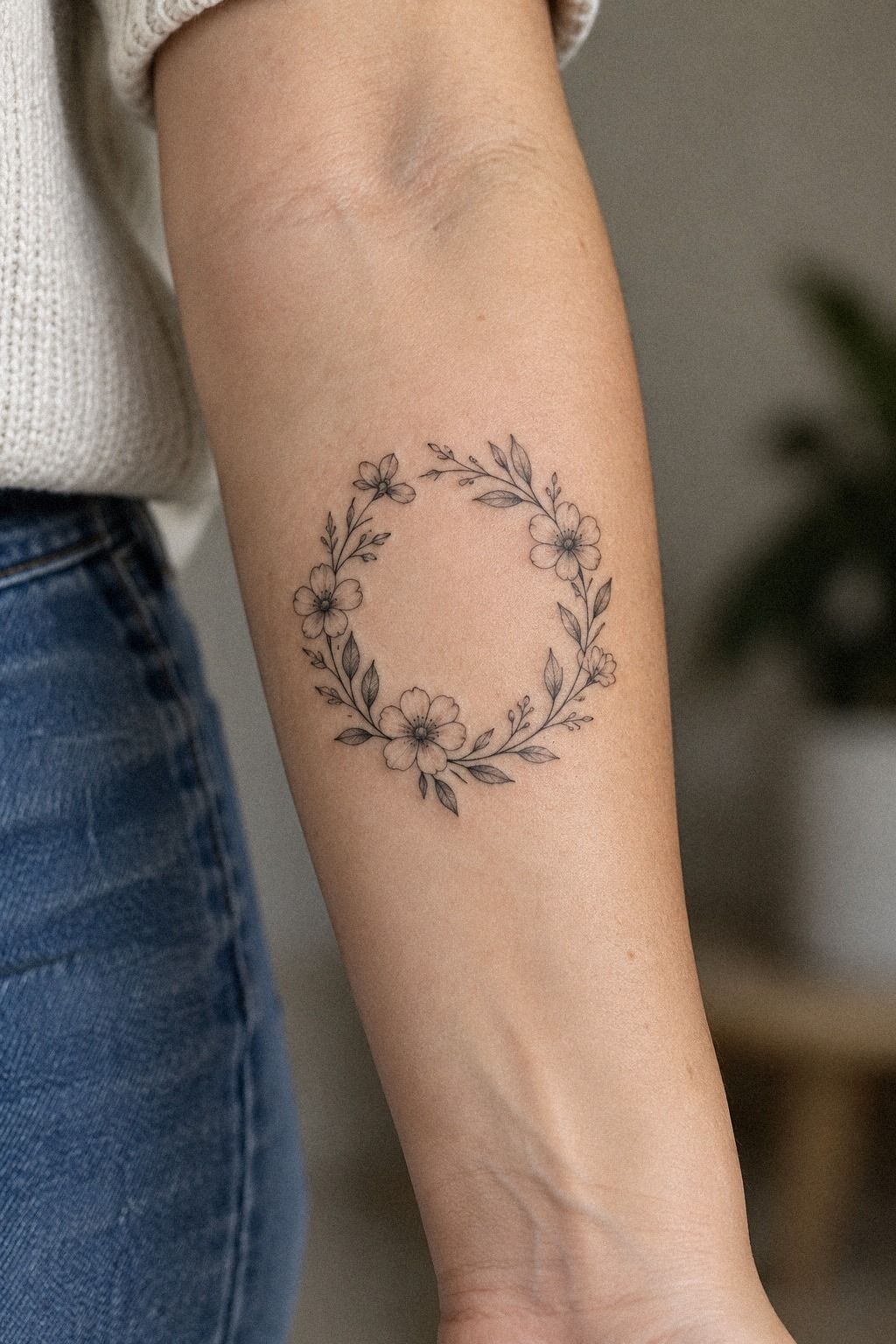
A collarbone tattoo follows a natural horizontal line. The crown should feel like it’s resting along the body. I’d angle the flower slightly toward the shoulder for a graceful direction.
The Collarbone Sweep is about proportion. Your artist can keep the main bloom near the center. Two small leaves can taper toward the shoulder.
If you’re considering text, I’d leave it out here. Words can compete with the petals. The flower already gives you a symbolic focal point.
This placement is visible, but you can still cover it. That makes it a meaningful choice if you want your first tattoo to feel personal. Choose charcoal botanical linework when longevity matters most.
You can make the collarbone crown more delicate by using fine stems and open petals. For a sharper result, add one angular leaf or a slightly heavier outer contour. I’d avoid equal sizing across every flower because it can flatten the composition.
For a lighter comparison, see minimalist fine-line butterfly tattoos and tiny flower crown references. I’d choose the collarbone over the sternum for a first tattoo. The shape is easier to read, and the session may feel more manageable.
8Wildflowers Make the Crown Meaningful
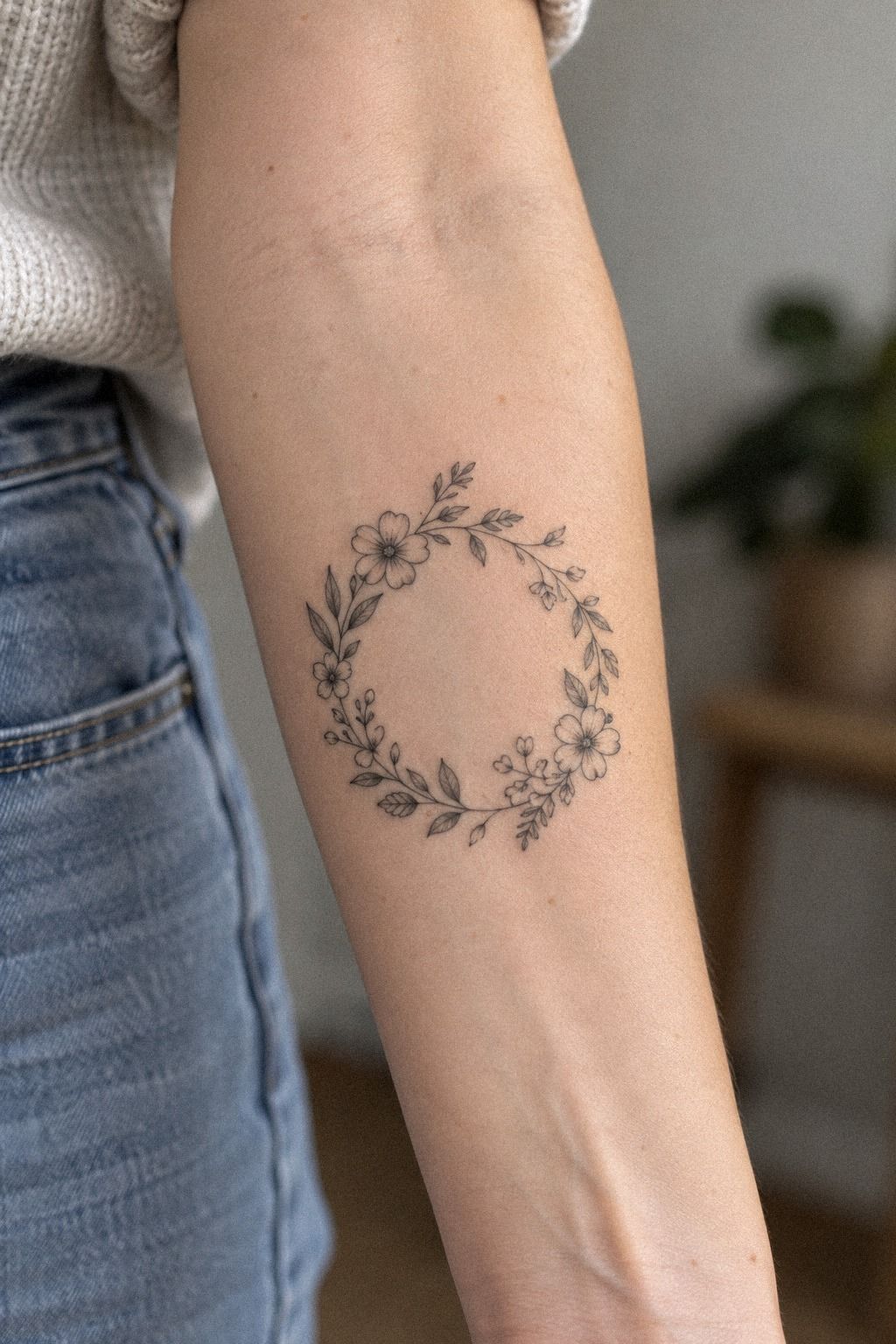
Wildflowers give a flower crown a raw, personal quality. A few meaningful wildflower stems can feel more expressive than a perfectly matched floral set.
9Reveal a Minimalist Flower Crown Behind the Neck
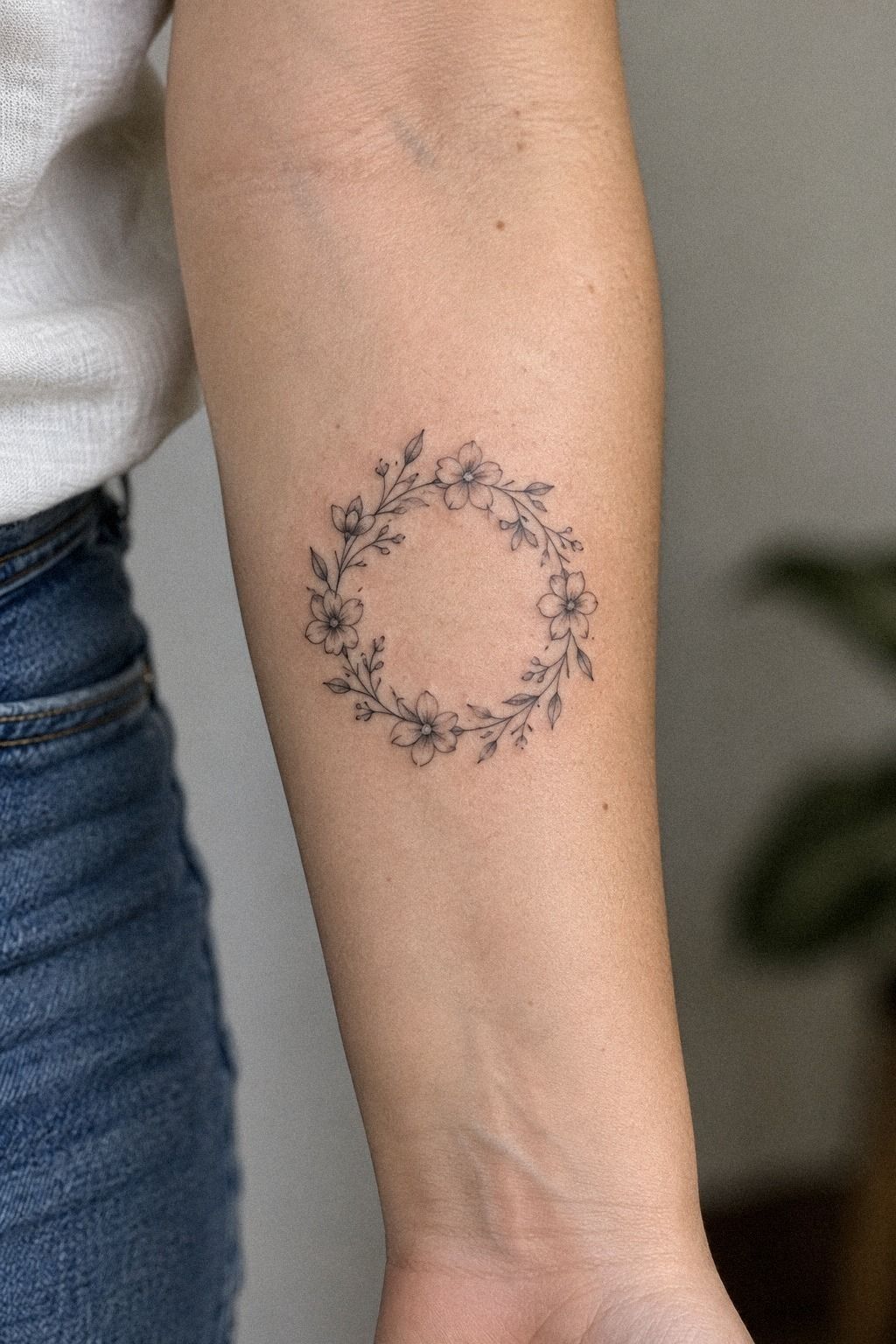
Behind-the-neck placement gives a simple flower crown an edgy reveal. I’d keep the design vertical and slightly narrower near the top. That shape follows the neck’s natural curve.
The Hairline Gap Rule is practical. Leave clear skin between the tattoo and your hairline. Otherwise, loose strands may hide the petals.
Your artist should apply the neck stencil while you’re standing straight. Then turn your head and check its position. If the flower twists out of view, the design needs adjusting.
This area can feel more sensitive than the upper arm. Hair and clothing may also brush the skin during healing. You’ll want gentle washing and no picking.
I’d skip a pale accent here. Midnight-blue linework will stay more readable when the crown is partly concealed. The neck is daring, but the narrow shape keeps it understated.
Think about your hair length, neckline choices, and how often you want the tattoo visible. A behind-the-neck crown can feel mysterious when hidden and surprisingly powerful when revealed.
For nearby scale references, save small flower crown tattoo ideas and tiny flower crown tattoo designs. The contrast is exactly why this placement works.
10Tiny Color Accents: Less Color, More Impact
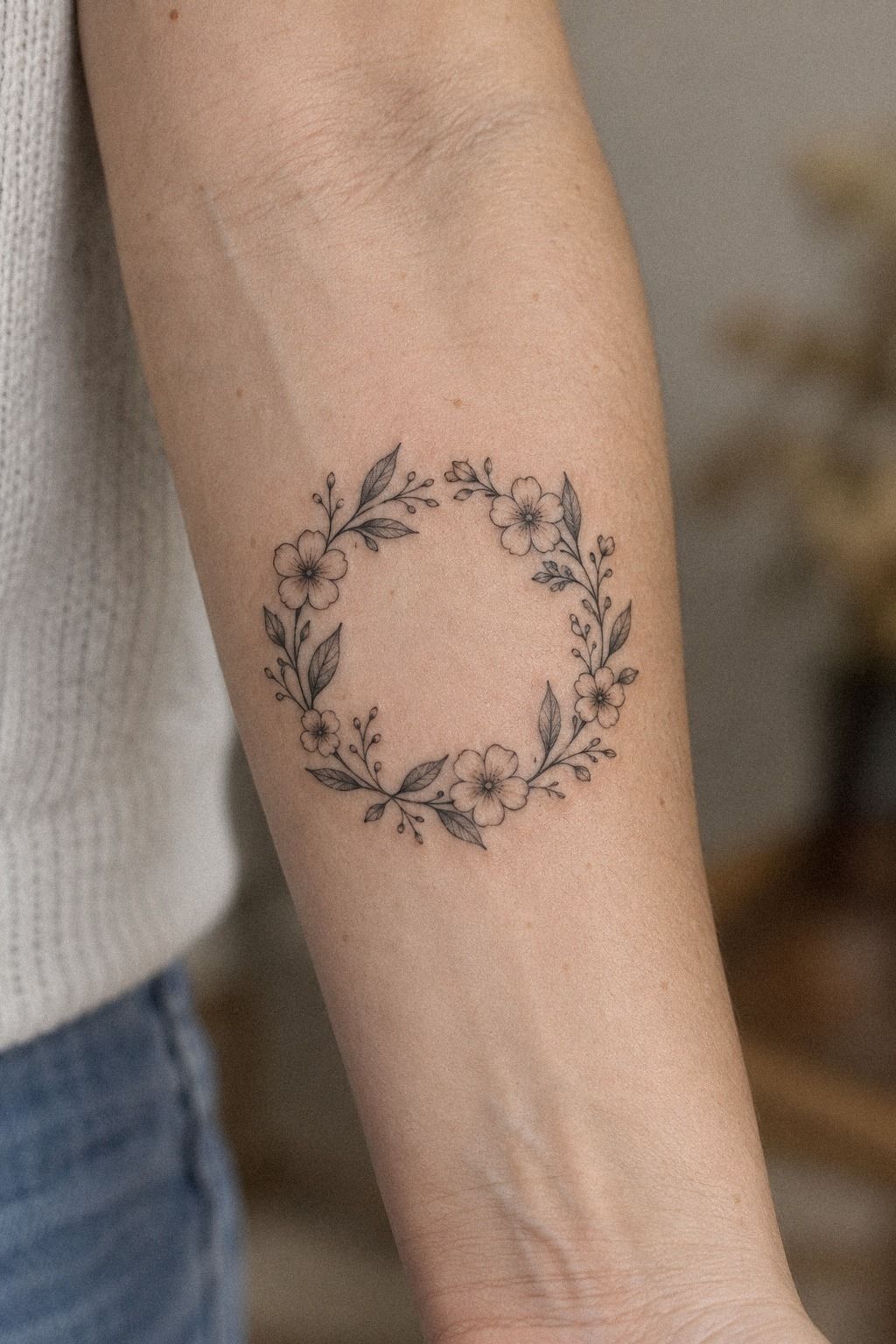
A tiny color accent can give one or two petals a vibrant point of interest. I’d keep the color contained. The black outline should carry the flower.
The Two-Color Limit keeps a minimalist tattoo sharp. Choose sage-green ink for the focal petal. Add a warm cream detail only if it has meaning and your artist can keep it readable.
Your artist might suggest a muted sage accent or a restrained warm tone. Too many shades can make the design playful when you want something timeless. Keep it restrained!
Color can soften over time, especially with repeated sun exposure. Ask how the pigment behaves in healed work and on your skin tone. That information helps you judge the long-term cost.
I’d choose color only when it carries meaning. A birth flower shade, family color, or memory can make the accent feel personal. Otherwise, black linework may offer better value.
You can also use color as a small signature instead of filling an entire flower. One vibrant center, a single leaf, or a narrow petal edge may be enough to make the crown memorable.
Compare the idea with small crown tattoo designs and minimalist fine-line butterfly tattoos. A tiny accent can make the flower unique, but the structure keeps it polished.
11Frame a Crescent Moon with a Flower Crown
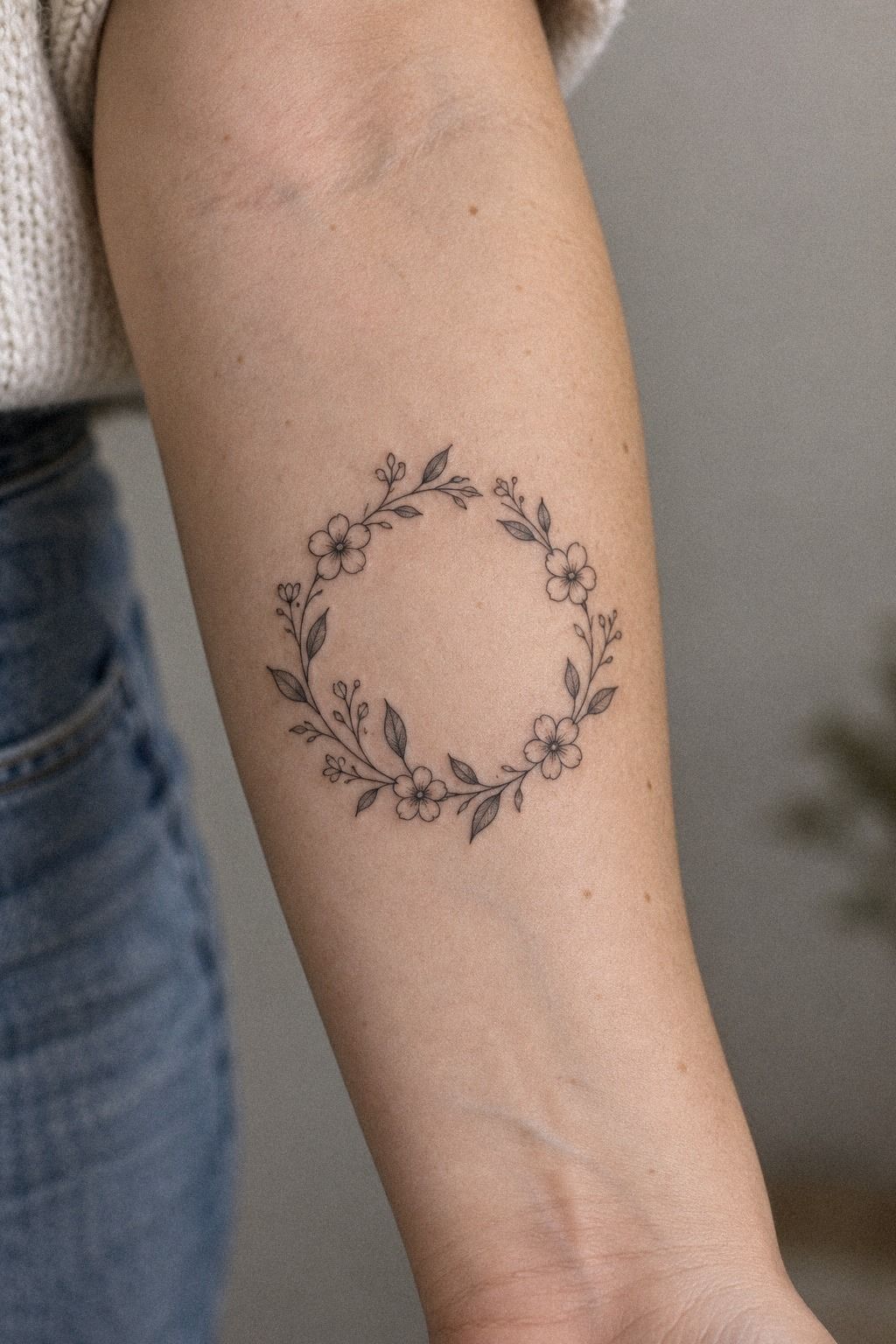
A crescent moon gives the ankle design a symbolic center. I’d place the moon inside the curve of the stem. Let the petals frame it loosely rather than touching every edge.
The Crescent Frame Rule keeps the symbols readable. Your artist can use a slightly thicker terracotta crescent with finer petals around it. That creates contrast through line weight.
I’d skip stars unless they carry personal meaning. One moon and one flower already create an elegant, sacred image. The composition feels mysterious without becoming crowded.
An ankle placement can disappear beneath a sock. Feet and ankles may feel more sensitive than the forearm, thigh, or shoulder. You’ll want comfortable footwear and careful aftercare while the surface settles.
You could place the moon at the center for a balanced look or shift it slightly to create a more expressive composition. I prefer the offset version because it feels less expected and more personal.
Before booking, compare minimalist small butterfly tattoo ideas with tiny flower crown tattoo references. I’d choose this version when you want something meaningful, haunting, and slightly daring.
What I’ve Learned About Choosing Fine Linework
I used to think the smallest tattoo would be the easiest decision. It wasn’t. A tiny design gives you less room to hide weak spacing or uneven pressure.
The strongest minimalist flower crowns I’ve seen are not the ones with the most petals. They’re the ones where every line has a job. I’d start with placement before symbolism.
Your wrist, ankle, collarbone, shoulder, and ribs all change as you move. If you’re choosing a first tattoo, ask whether you’ll enjoy seeing it every day. If not, choose a spot you can cover.
Fresh ink can look crisp, bold, and striking even when the structure is weak. Healed work reveals more. You’ll see whether the artist understands skin, spacing, and restraint.
I’d also look for consistency across different bodies and placements. One beautiful healed example doesn’t tell you enough. A strong portfolio should show delicate, intricate, and readable work after it has settled.
Trust the healed evidence! It tells you more than a perfectly presented portfolio taken immediately after the appointment.
Start With Placement, Not the Sketch
Begin by measuring the usable skin. Your artist can then scale the crown to fit your body. A design that looks sleek on paper may need more width on skin.
Ask yourself how often you want to see the tattoo. Your answer affects the placement, size, and level of detail. A personal tattoo does not need to be hidden to feel intimate.
Think about friction, sunlight, and movement. These factors can affect clarity. A well-planned tattoo placement gives your design a stronger chance of staying readable.
If you’re unsure, try a temporary version first. Wear it for a day.
Notice how you feel when you catch it in the mirror. That small test can save you from an impulsive choice.
Your first reaction matters, but so does your second. If you still like the shape after a week, the idea may have deeper staying power. I’d give an especially bold or visible placement extra time.
Test the Design Before You Commit
Print the sketch at the intended size. Hold it against your wrist, collarbone, or upper arm. You’ll notice quickly if the petals feel cramped.
Ask your artist to show alternate versions. Try a more open crown, a narrower stem, and a slightly heavier contour. Your favorite may not be the first sketch.
I also like testing the design in black and white. Color can distract from spacing. The final stencil should still feel clear without a decorative accent.
Bring references, but don’t copy one design exactly. Tell your artist what you love about each example. Your result will feel more personal when the artist can interpret your ideas.
Check the stencil while standing, sitting, and moving naturally. A crown that looks elegant in one position may tilt when your shoulder drops or your wrist bends. Small adjustments can make the final result feel much more intentional.
Cost matters, but the cheapest appointment isn’t always the best choice. A small tattoo may take less time, yet you’re paying for drawing, hygiene, setup, and judgment.
A skilled tattoo artist may charge more because the healed portfolio supports that rate. I’d rather wait for the right work than rush into a bargain piece. That is usually better value.
Set a realistic budget before you contact the studio. Include the deposit, shop minimum, tip, and possible touch-up. Knowing the full amount makes the decision less stressful.
Ask for a quote after your artist sees the size and placement. A clear estimate helps you judge the value. If the design feels rushed, the budget is not the only issue.
You can ask whether the quote includes a consultation, stencil changes, and a future touch-up policy. I’d rather clarify those details early than feel surprised later. Transparent communication is part of a professional experience.
Protect the Lines After Your Appointment
Follow the aftercare instructions your artist gives you. Wash gently, avoid picking, and keep the area away from strong sun while it heals. Your patience affects the final clarity.
A healed tattoo can look different from fresh ink. Some lines soften.
Color may settle. That change is normal, but good care protects the design.
Avoid soaking, swimming, and tight friction until the skin has recovered. Your artist may give different instructions based on the method used. Follow those instructions first.
After healing, use sunscreen when the tattoo is exposed. UV can fade color and soften fine lines. You don’t need to panic about aging, but you do need realistic expectations.
Don’t judge the crown too quickly. Peeling, dryness, and temporary dullness can make the tattoo look uneven during healing. Give your skin time before deciding whether anything needs attention.
If a touch-up is recommended, wait until the skin is fully healed and discuss it with the original artist. A delicate tattoo deserves careful correction, not repeated irritation.
A Few Things Worth Answering
How much does a minimalist flower crown tattoo usually cost?
A minimalist flower crown tattoo often costs about $100 to $300 in the US. A shop minimum may be around $50 to $100. The quoted amount depends on size, placement, artist, and region, so ask for an estimate before booking.
Are minimalist flower crown tattoos a good idea for a first tattoo?
Yes, they can be a strong first choice. You can select a manageable placement and a meaningful subject. Clean black linework keeps the image readable, but you’ll still want an artist with healed examples.
How do I choose a tattoo artist for a minimalist flower crown tattoo?
Choose an artist whose portfolio shows crisp lines, balanced spacing, and healed tattoos. A clean healed portfolio is the strongest proof, especially for ribs, ankles, or darker skin tones. Check hygiene and discuss your reference before paying a deposit.
How much do minimalist flower crown tattoos hurt?
Pain varies by placement and your own tolerance. Ribs, feet, hands, and sternum may feel more uncomfortable.
The forearm, thigh, and shoulder are often easier for many people. Placement affects comfort more than the flower design.
How long does a minimalist flower crown tattoo take to heal?
The surface usually heals in about 2 to 3 weeks. Complete healing can take about 2 to 3 months.
Gentle washing and consistent aftercare protect the lines. Avoid picking, strong sun, swimming, and soaking until your artist approves.
What’s the best placement for a minimalist flower crown tattoo?
The forearm, shoulder, upper arm, and collarbone offer readable skin and moderate comfort. The forearm is often the easiest first placement, while ankles and ribs create a more personal look with more friction or sensitivity.
Can I design a minimalist flower crown tattoo myself on a budget?
You can sketch your idea or make a temporary stencil. You should not tattoo yourself or use an unregulated home kit. A simple drawing helps your artist understand your meaning, while professional equipment and hygiene protect the result.
Where I’d Start First
If I had to pick one, I’d start with the upper-arm flower crown. It gives your artist enough space for clean petals. It is easier to live with than a neck tattoo, too.
The lines won’t fight constant shoe or wrist friction. Pin it for later and compare healed portfolios before booking. If the design still feels personal after a few weeks, it may be worth it.
For a more understated option, I’d choose the collarbone or outer ankle. For something more iconic and visible, I’d choose the wrist with one central bloom. Your best placement is the one that matches how you want the tattoo to live with you.
A minimalist flower crown can be delicate without feeling weak, symbolic without explaining everything, and bold without becoming crowded. Give the artist enough room, protect the negative space, and choose meaning you’ll still recognize years from now.

