A fine line moth tattoo can stay crisp when its scale, placement, and black ink are chosen together. I nearly dismissed mine because I wanted something more dramatic, but a small moth with spread wings felt personal, symbolic, and sharp once it healed. This is what changed my mind!
Here’s what it looked like before:
I had a clean patch of skin I’d been saving for the right idea, but nothing felt personal enough. The blank skin looked untouched and ordinary, and I kept comparing every sketch with the tiny moth references I’d saved.
I wasn’t looking for something loud. I wanted an intricate shape with feathered antennae, open wings, and enough negative space to keep the design crisp. You can see why I hesitated, because a fine line moth tattoo needs restraint or the details can blur together.
The design also had to feel worth it years from now. I didn’t want a trendy symbol that looked exciting for one month and forgettable afterward. I wanted something meaningful enough to keep studying.
- Start With a Small Fine Line Moth Tattoo on the Wrist
- Should a Crescent Moon Join the Thigh Moth?
- Behind the Ear, Keep the Moth Compact
- Collarbone or Sternum: Which Line Wins?
- Let the Ankle Moth Stay Delicate
- Add Botanical Details Without Losing the Moth
- The Forearm View: A Symbolic Fine Line Moth
- Lunar Phases Change the Moth’s Rhythm
- Open Wings Make the Upper Back Read Clearly
- What Makes a Sternum Moth Meaningful?
- Tiny Stars Around the Inner Forearm Moth
1Start With a Small Fine Line Moth Tattoo on the Wrist
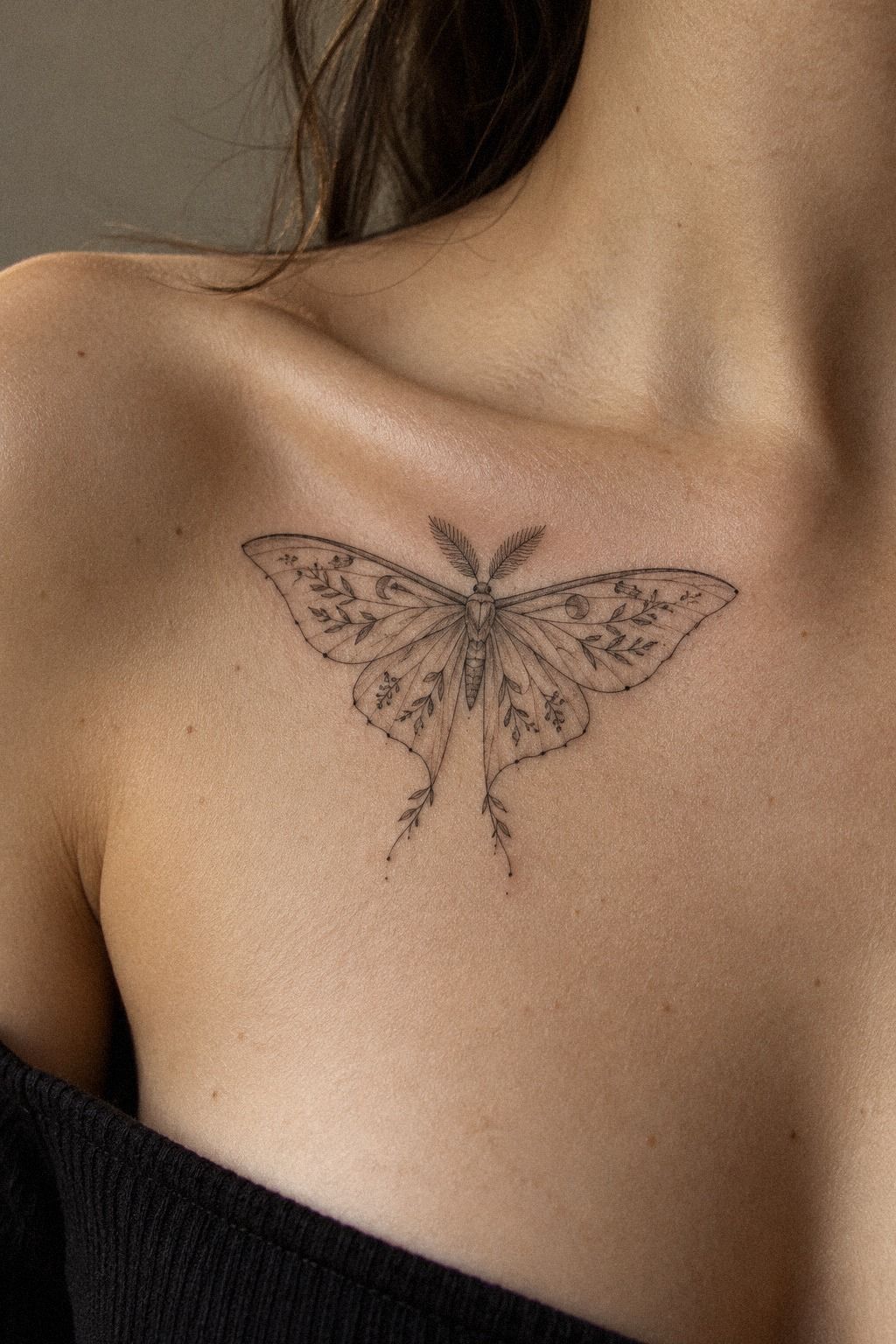
The wrist is a smart place to start when you want a small fine line moth tattoo with everyday visibility. I chose it because you’ll see the moth often, but you won’t need a large design to make it expressive. The black linework follows the wings without crowding the narrow area.
I’d skip heavy shading here. A minimal outline with feathered antennae looks more delicate than a packed silhouette, and you’ll notice the crisp edges every time you turn your hand. My first sketch had too many dots, so I removed them before the appointment.
For your wrist, ask for a stencil that leaves breathing room around the wing tips. The spread-wing stencil should look balanced from both sides, since your wrist rotates constantly. If you’re comparing scale, browse these small fine line butterfly tattoo references for similar proportions.
And don’t ignore movement. A graceful moth can look different when your hand bends, so you’ll want the wrist alignment checked while standing. That tiny adjustment mattered!
If you’re weighing the budget, ask whether the artist charges a studio minimum. A small design can still be worth the cost when the proportions, placement, and healed result are all right. I’d rather pay for restraint than save money on a crowded outline.
2Should a Crescent Moon Join the Thigh Moth?

The thigh gives you more room for a bold moth and a crescent moon without forcing every detail into a tiny shape. This placement works when you want the wings to feel expansive and slightly ornate.
I’d keep the moon secondary. A slim crescent near one wing can frame the body, while several moons may compete with the central form. The crescent moon should support the moth’s meaning rather than turn the design into a collection of unrelated symbols.
The thigh is also useful when you’re comparing cost and comfort. You can choose a larger stencil without automatically paying for an extended session, especially if the details stay clean and intentional. Ask for a time estimate before booking so the budget feels clear.
For more scale ideas, compare these tiny fine line butterfly tattoo designs before you settle on the final proportions.
3Behind the Ear, Keep the Moth Compact

Behind the ear changes the whole mood. The compact placement creates an edgy design that feels almost hidden until you turn your head. I liked that tension because you’ll get a striking shape without making it the first thing everyone sees.
The single-needle outline needs a confident hand here. There isn’t much room for correction, and the curve behind your ear can make a symmetrical moth look uneven if the stencil sits too high. I’d place the body close to the natural fold, then let the wings open toward the hairline.
You’ll also want to consider visibility at work and during healing. I kept my hair away from the area and avoided friction from tight headphones. The piece looked raw at first, but the healed lines became more understated as the surface settled.
Behind-ear work may offer good value if you want a compact design, but the price shouldn’t be your only test. I’d choose an artist with healed examples in this placement, because correction is harder when the canvas is narrow.
You can study a similar restrained approach in these minimalist fine line butterfly tattoo designs. The subject changes, but the spacing lesson carries over.
4Collarbone or Sternum: Which Line Wins?

A collarbone moth needs a flowing shape, because the body’s natural line is already graceful. The placement can feel feminine, polished, and romantic without relying on extra decoration.
I’d keep the body centered and let the wings follow the collarbone rather than crossing it at a harsh angle. The collarbone stencil should be checked while you’re standing, not only while you’re lying down. That small change can prevent a crisp design from looking tilted later.
My first thought was to add a phrase underneath, but I dropped it. You’ll get more visual impact from the moth’s symmetry and the clean skin around it. A meaningful symbol doesn’t need a caption if the shape already carries the feeling.
If you’re deciding between this and the sternum, think about visibility and movement. The collarbone reads more expressive and polished, while the sternum feels more intimate. I’d choose the collarbone when you want a romantic image that still looks sharp under an open neckline.
Check the likely budget before you fall in love with an oversized version. A small collarbone moth may offer better value than a wide composition packed with details. These small butterfly tattoo references can help you compare open-wing proportions.
5Let the Ankle Moth Stay Delicate

An ankle moth should look dainty, but it shouldn’t be vague.

6Add Botanical Details Without Losing the Moth

A spine placement makes the moth feel vertical and almost sacred. Small botanical sprigs can extend around the wings, but they should remain secondary to the central body. That hierarchy keeps the image expressive instead of crowded.
I’d use leaves with simple contours rather than dense petals. You’ll get better contrast when the moth’s black lines sit against uninterrupted skin, especially in a long placement. My first draft had flowers on both sides, and it looked ornate in a way that didn’t feel like me.
Ask your artist to test the composition from the upper back toward the lower spine. The spine stencil should follow your posture, because a design that looks centered on paper can shift when you stand. A small adjustment at the shoulder blades can make the whole piece feel more polished.
But botanical details aren’t automatically soft. They can make the moth feel fierce when the leaves point outward and the wings stay open. That contrast is the point!
If you want a related nature reference, look through this fine line butterfly tattoo collection for examples of plant and wing spacing. I’d only add those details if the extra session time feels worth it.
7The Forearm View: A Symbolic Fine Line Moth
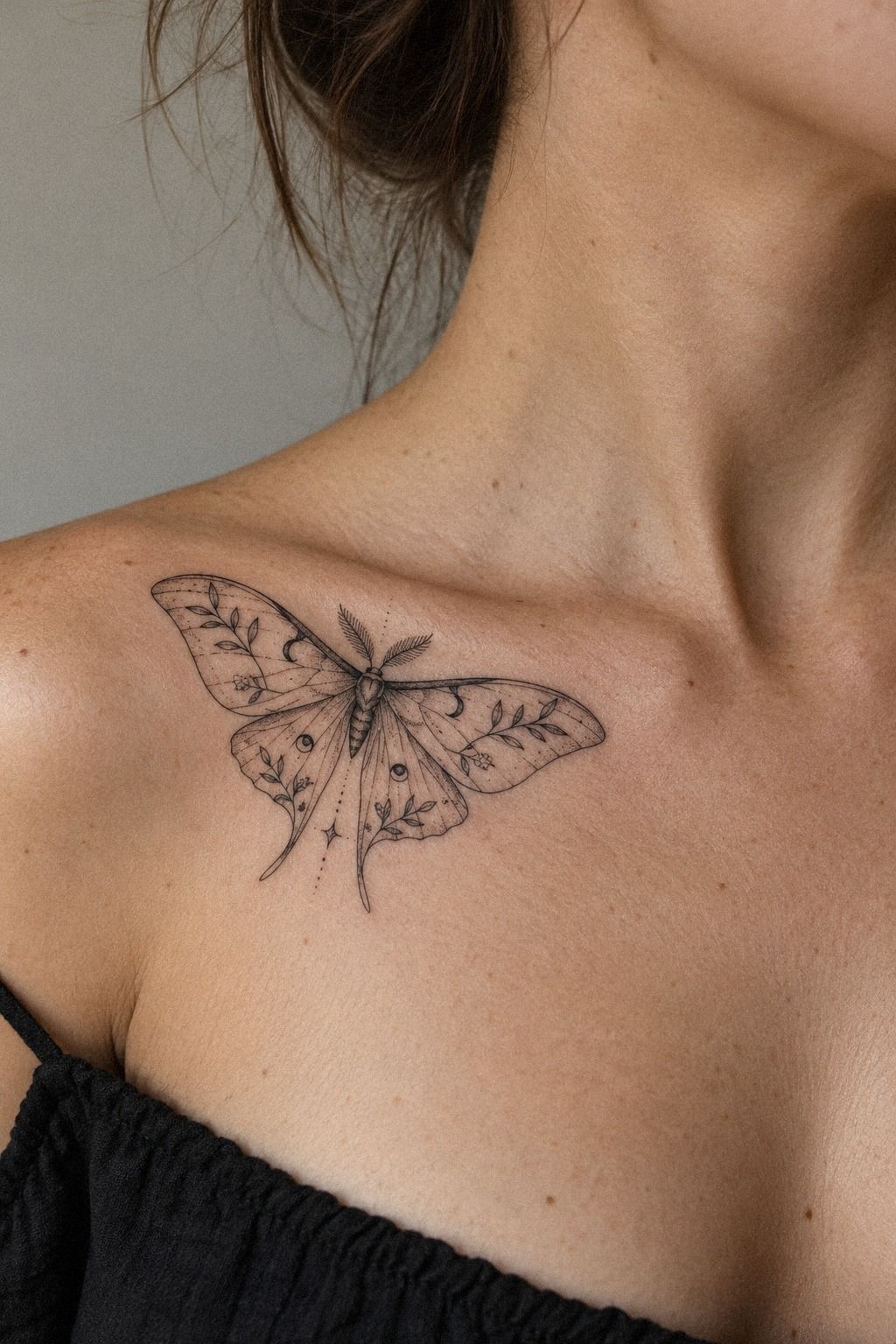
A forearm moth gives you the clearest everyday view, and a crisp black outline is easy to read when the design has enough open skin around it.
8Lunar Phases Change the Moth’s Rhythm
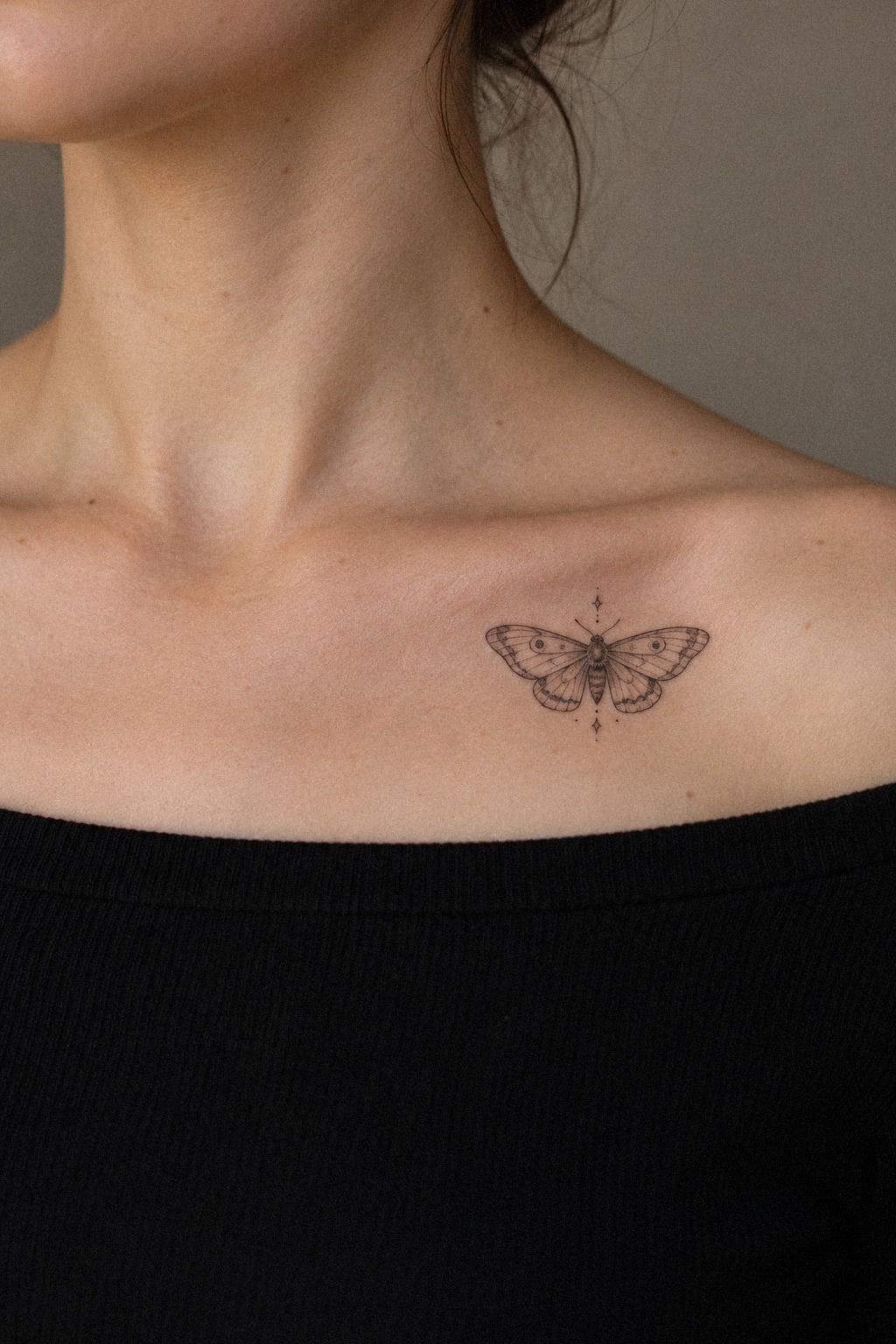
The thigh pairs a spread-wing moth with lunar phases, creating a composition that feels iconic without needing heavy shading. I liked the repeated moons because they gave the design movement without stealing attention from the wings.
The lunar phase row should be spaced evenly, but you don’t need every phase to be the same size. You’ll get a more expressive result when the central moon is slightly stronger and the outer marks stay understated. My first version looked too mathematical, so I loosened the spacing.
If you’re planning a similar piece, ask for the moth to be finalized before the moons are added. The moth body stencil establishes the center, and the lunar elements should respond to it. Otherwise, your artist may have to force the wings into a gap that was never wide enough.
And don’t overfill the negative space. A symbolic design can feel meaningful when part of the thigh remains untouched. I’d skip a full constellation border here, because the moon sequence already gives you a clear visual rhythm.
When comparing value, count the extra elements. Five tiny moons may sound inexpensive, but the stencil, placement, and additional linework can change the final cost. These tiny fine line butterfly tattoo ideas show how repeated details affect balance.
9Open Wings Make the Upper Back Read Clearly
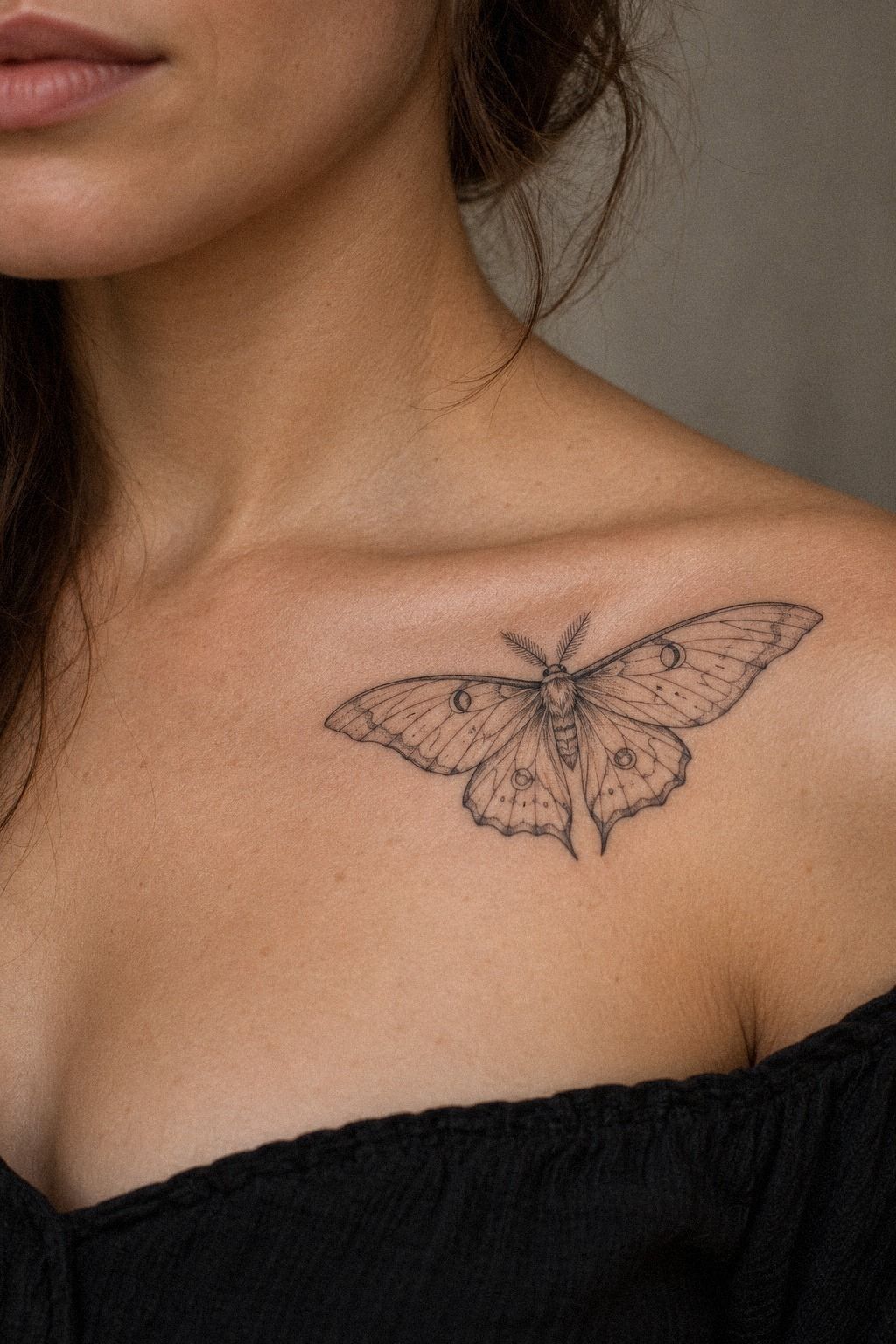
The upper-back design uses an open-wing shape as its main statement.
10What Makes a Sternum Moth Meaningful?

Sternum placement feels intimate and dramatic, but it can be more sensitive than the forearm, thigh, or shoulder. You’ll want a design that stays readable without relying on fragile micro-details.
I’d choose a clean body, sharp antennae, and moderate detail. The healed sternum design should still make sense when the skin settles, not only when the lines are fresh.
Spacing matters here. Every section of the wing should remain separated, because natural movement becomes part of the composition. Crowded lines may lose the elegant quality that made the idea appealing.
But meaningful doesn’t have to mean complicated. My strongest connection came from the moth’s open wings and the idea of moving toward something uncertain. If you want this placement, bring a healed reference and ask your artist how the design may change as it settles.
A sternum moth can be worth it when the meaning is strong, but I wouldn’t choose it only for the placement’s daring reputation. Compare these minimalist fine line butterfly tattoo designs if you’re deciding how much detail the center of the body really needs.
11Tiny Stars Around the Inner Forearm Moth

The inner forearm is a personal place for a moth surrounded by tiny stars.
Before You Book, Compare the Real Value
I’d start with the artist’s healed portfolio, not just fresh work. Fresh lines can look crisp on almost any design, but settled examples reveal whether the details stayed readable.
Ask what’s included in the quote, whether the consultation is separate, and whether touch-ups have an additional fee. A clear answer gives you better value than a low number that leaves important parts unspecified.
I’d also compare artists by consistency. One striking tattoo doesn’t tell you much; several healed moths, butterflies, and other fine line pieces give you a more reliable picture. This small butterfly tattoo reference is useful when you’re comparing scale across portfolios.
Which Details Are Worth the Budget?
The most useful fine line detail is detail that survives healing. Feathered antennae, open wing sections, and a recognizable body usually matter more than dozens of tiny dots.
I’d spend the budget on placement, stencil refinement, and a steady hand before adding extra stars or ornamental borders. The session cost should reflect the actual work involved, not simply the number of symbols in the sketch.
If the design feels crowded on paper, it won’t become clearer on skin. These small fine line butterfly tattoo references show why open spacing can make a smaller piece feel more intentional.
My Placement Shortlist
My shortlist starts with forearm placement for visibility, then wrist for a compact everyday symbol. The thigh works when you want more room, while the sternum makes sense only when you’re comfortable with its sensitivity and privacy.
I’d choose thigh placement for a wider moth with lunar details, but I’d keep the body proportionate to the wings. A bigger canvas isn’t a reason to fill every inch.
For a final comparison, save these delicate fine line butterfly tattoo ideas beside your moth references and look at them together. The strongest choice usually becomes obvious when you stop judging each sketch in isolation.
How Much It Cost: The Honest Session Ledger
My US price range sat within the typical budget for a small fine line moth tattoo, but the final number depends on the artist, region, size, and placement. You shouldn’t treat one quote as universal, especially when a boutique minimum applies even to a quick appointment.
I’d ask for the total estimate before you book, including whether the consultation is separate. The studio minimum may matter more than the number of lines, while a detailed sternum or botanical design can take longer than a plain wrist moth.
You’ll also want to budget for the part after the appointment. Gentle washing, light moisturizing, and avoiding direct sun and swimming during surface healing are standard care points. This tiny fine line butterfly tattoo collection can help you compare how detail changes across placements.
The Moth Line I Almost Talked Myself Out Of: The Night Signal Rule
I nearly chose a larger, more dramatic design because I worried a small moth would feel forgettable. That was my first mistake. The original moth sketch had extra stars, heavier wing shading, and a larger body, but none of those additions made the meaning stronger.
What changed my mind was seeing the stencil on skin. The shape looked more personal than it had on paper, especially once the feathered antennae followed the wrist. I could see the negative space working.
I could also see where extra detail would become clutter, and that pause mattered!
My second lesson was to judge the design after placement, not before. You’ll notice different things when the stencil follows a collarbone, thigh, spine, or forearm. The transfer paper outline showed me that a delicate tattoo can still feel bold when its proportions are right.
I also learned that crispness isn’t only about the artist’s line. Your aftercare, sun exposure, placement, and expectations all matter.
Surface healing takes about two to three weeks, while complete healing can take about two to three months. I’d rather choose an understated design that stays readable than chase an intricate image that loses its edges.
What People Always Want to Know
How much does a fine line moth tattoo usually cost?
A fine line moth tattoo usually costs about $100 to $300 in the US, though a boutique minimum may be about $50 to $100 and hourly rates often run about $100 to $250. My clear estimate would depend on the artist, region, size, detail, and placement.
Is a fine line moth tattoo a good idea for a first tattoo?
Yes, I think a fine line moth tattoo can be a good first tattoo when you choose a tolerable placement and a design you genuinely connect with. An understated symbol gives you clear meaning without forcing a huge commitment, especially on the forearm, thigh, shoulder, or wrist.
How do I choose a tattoo artist for a fine line moth tattoo?
I’d choose an artist with clean linework, healed portfolio photos, strong hygiene practices, and experience with fine line designs. I’d inspect the healed portfolio, not only fresh tattoos, because settled lines show how the artist’s work holds up over time.
How much does a fine line moth tattoo hurt?
Pain varies by placement. Ribs, feet, hands, and sternum tend to feel more intense, while the forearm, thigh, and shoulder are often more tolerable. My placement choice would matter more than the moth design itself, so I’d ask the artist what to expect before booking.
How long does a fine line moth tattoo take to heal?
Surface healing usually takes about two to three weeks, while complete healing can take about two to three months. Gentle washing, light moisturizer, and avoiding sun and swimming support clean healing while the skin settles around the lines.
What’s the best placement for a fine line moth tattoo?
The forearm, thigh, wrist, and shoulder are strong options because they’re often more tolerable and give the design room to remain readable. My best placement would depend on visibility, pain, movement, and sun exposure, since ultraviolet light can affect fine lines over time.
Where I’d Start First: The Wrist-Scale Rule
If I had to pick one, I’d start with the small wrist moth. Its crisp silhouette stays visible without extra shading, and you’ll notice the personal details every day.
Pin this small moth tattoo reference for later, then choose the artist whose healed work feels right. That’s the one I’d choose!