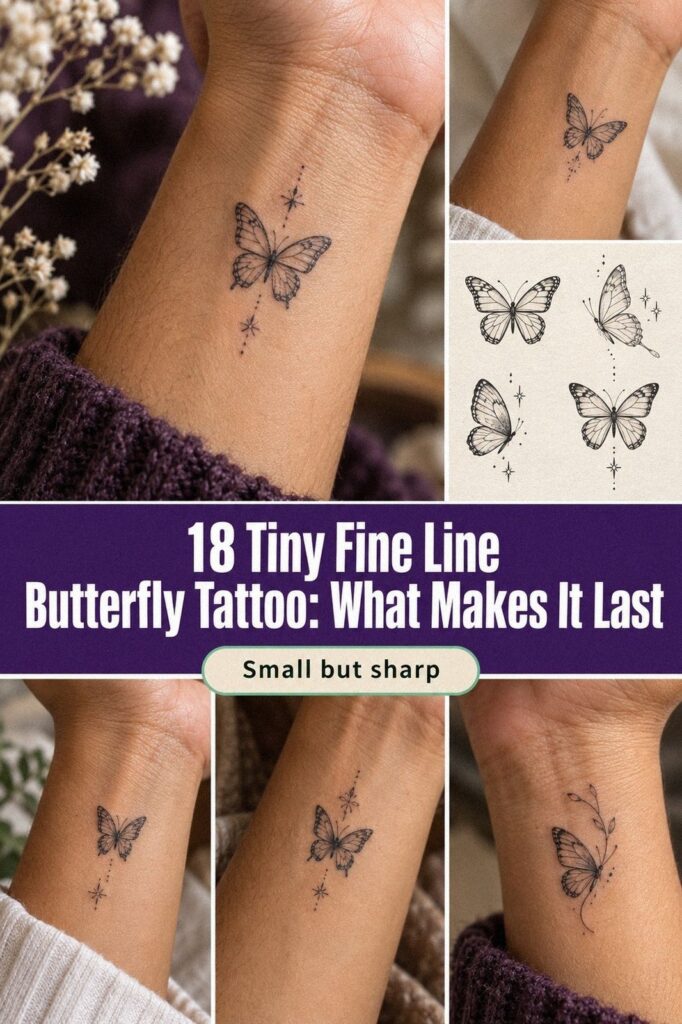
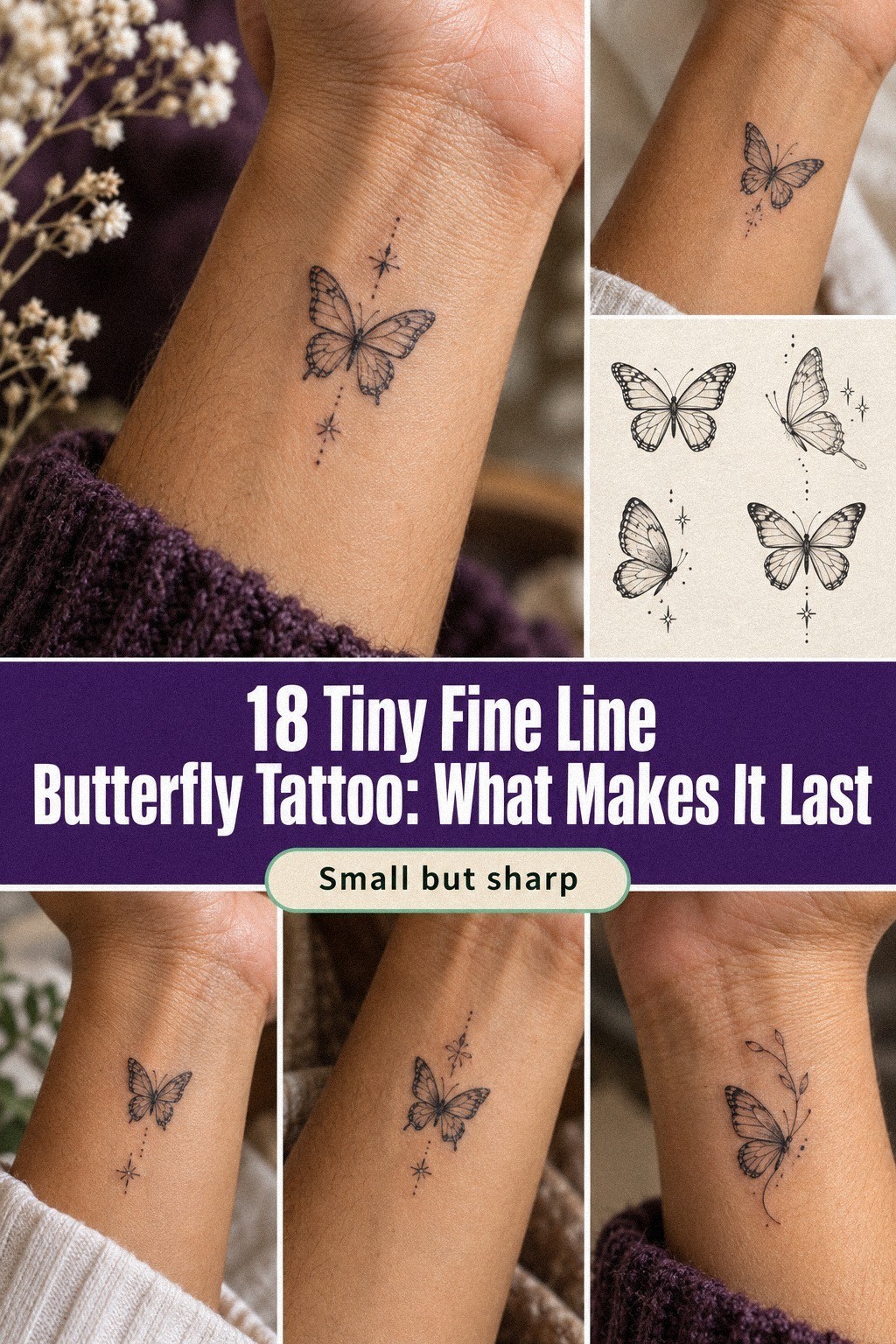
Tiny fine line butterfly tattoo designs can age well when the silhouette stays readable, the placement suits your skin, and the artist leaves enough breathing space. I learned that after choosing a crisp black ink piece that was too crowded. Your best guide is restraint, healed evidence, and a tattoo that still feels personal years later.
These ideas keep the linework minimal without making it forgettable. You’ll find wrist, ankle, rib, spine, shoulder, collarbone, and finger options, along with practical notes on healing, fading, artist selection, and long-term value.
Editor’s note: I’d rather see one meaningful butterfly silhouette with confident spacing than a tiny collection of details that only looks impressive on appointment day. The strongest version usually has one emotional idea, one clear placement, and enough open skin for the design to remain recognizable.
- Wrist Placement
- Behind-Ear Placement
- Collarbone Placement
- Botanical Details
- Finger Placement
- Ankle Placement
- Moon and Stars
- Rib Placement
- Spine Placement
- Single-Line Forearm Placement
- Shoulder Placement
- Longevity Checks
- Healing Protection
- Skin-Tone Contrast
- Artist Selection
- Daily Wear and Placement
- Cost and Long-Term Value
- My Editorial Take on Longevity
1Wrist Placement
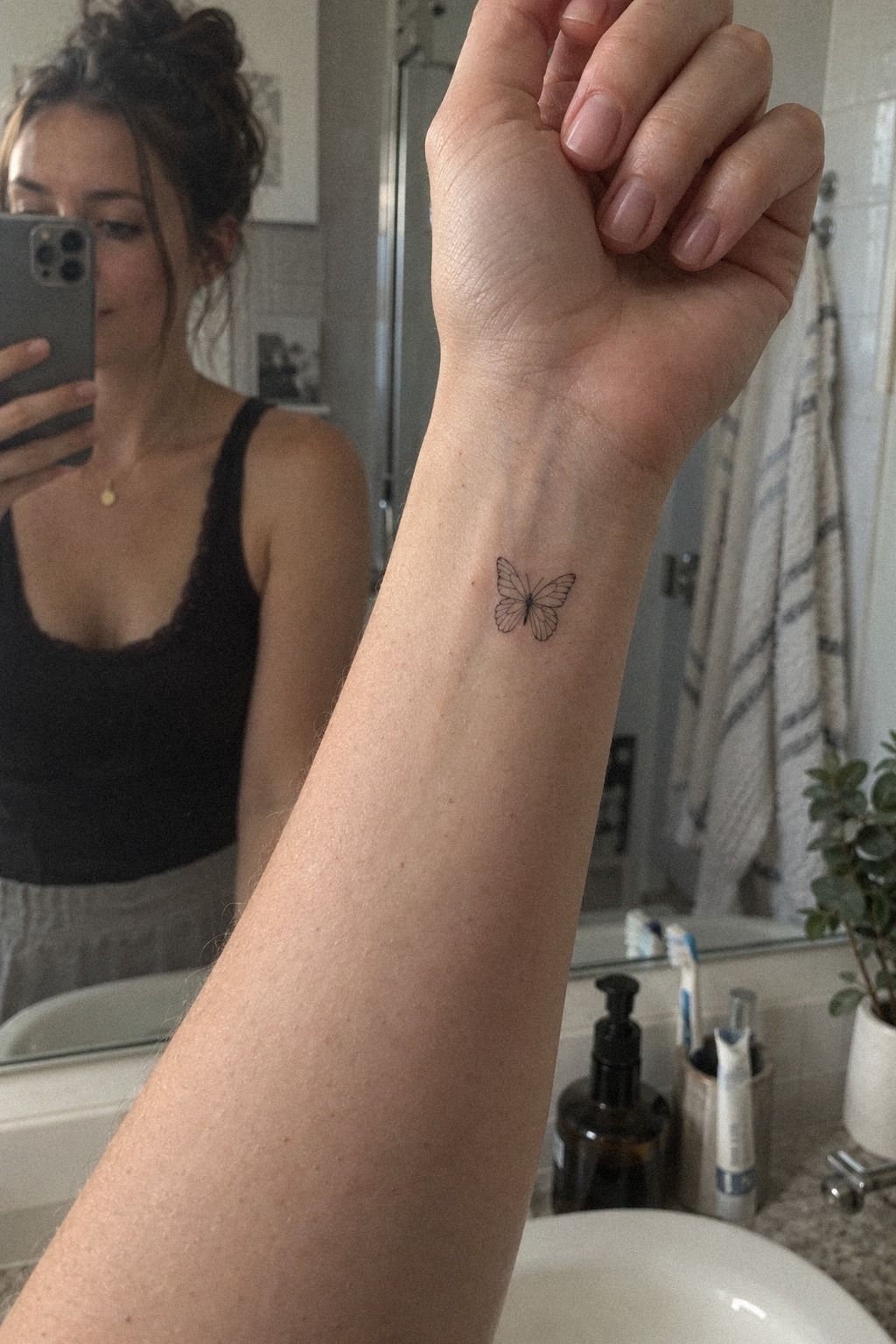
A wrist butterfly works best when the open wings stay symmetrical and the center body remains clean. On fair cool-pink skin, black ink can create a striking contrast without heavy shading. The result feels delicate, minimal, and personal.
You’ll want enough space between the wings so the lines don’t merge as they settle. I’d skip an overly intricate pattern here because wrist movement and daily sun exposure can soften tiny marks faster than you expect.
A simple vein pattern gives the artist room to preserve the silhouette. That matters more than squeezing in every decorative line. This wrist placement is visible, practical, and easy to monitor during healing.
Single-needle linework can look wonderfully fine in a fresh photograph. Your healed result is the one you’ll live with, though, so ask to see healed examples rather than relying on bright appointment-day pictures.
If you’re comparing proportions, this small fine line butterfly tattoo collection shows how small changes in wing shape affect the whole impression. That reference can save you from choosing a design that only works at stencil size.
Your wrist moves constantly, so aftercare deserves attention. Wash gently, use the product your artist recommends, and keep direct sun away while the skin settles. The first healing period usually lasts about two to three weeks.
A wrist butterfly is a crisp, expressive choice. You’ll need to treat the skin kindly at first!
2Behind-Ear Placement

Behind the ear gives a tiny butterfly a sleek, almost hidden quality. On medium warm ivory skin, open symmetrical wings can look understated while carrying a symbolic edge. You’ll see it when your hair moves, but other people may notice it only in close conversation.
That balance makes the placement intimate and meaningful. It can feel feminine or masculine depending on the wing shape, line weight, and symbolism you choose.
I’d choose a clean outline instead of ornate interior shading. The skin is compact, and the curve behind the ear leaves little opportunity to rescue crowded details later. A narrow body and two or three crisp vein lines can create a graceful effect.
The behind-ear skin needs restraint. Too many marks can blur the butterfly’s identity, especially if the lines are placed too close together or the design is smaller than your artist recommends.
Black tattoo ink usually gives the strongest long-term read for a miniature design. Your artist should still choose a line weight suited to your skin and placement rather than copying a reference exactly.
Why force a pale wash into a tiny tattoo when a sharp outline will keep the butterfly recognizable? Your goal is clarity, not visual noise. That’s better value than paying for details that may disappear.
Behind the ear can feel more sensitive than the wrist. Sound and vibration may surprise you, although the appointment is generally short for a small design. Look through these tiny butterfly tattoo designs before booking and show your artist the wing shape you actually want.
3Collarbone Placement

The collarbone gives an intricate butterfly a graceful horizontal direction. A design can follow the natural line without becoming oversized, particularly when the wings remain open and the body stays narrow.
I’d keep the central shape collarbone placement demands especially clear because the area moves when you lift your shoulders or turn your neck. A slightly larger butterfly may age better here than an ultra-tiny version packed with miniature veins.
This location can feel elegant, expressive, and quietly bold. If you want something visible but still personal, a butterfly angled slightly toward the shoulder can feel more natural than one forced into perfect symmetry.
4Botanical Details

A botanical butterfly can feel unique when the leaves support the wings instead of competing with them. On golden tan skin, symmetrical black linework with small plant marks can create a graceful, expressive image.
You’ll want the botanical detail to stay sparse. A tiny tattoo can lose its butterfly identity once every gap is filled. The botanical detail should guide the eye back toward the wings.
I’d choose one direction. Try a slender stem or two narrow leaves, but avoid combining flowers, vines, stars, and dots in one miniature piece.
The result can still feel ornate without becoming muddy after healing. Your artist should keep the botanical lines lighter than the main butterfly outline and protect the outer silhouette.
Fine black ink gives the design a strong anchor. Surrounding negative space keeps it readable. A watercolor treatment may look vibrant at first, but soft color can change more noticeably with time.
For a black-led option, compare it with these tiny black butterfly tattoo ideas. The symbolism can stay meaningful without becoming literal.
Don’t let the word “tiny” pressure you into a crowded sketch. Your artist can make the butterfly small and still preserve the wings, body, and botanical rhythm. Clean, deliberate, and meaningful.
That’s the point of this version.
One leaf may carry more feeling than a full garden. That choice can make the tattoo feel personal rather than copied, and it leaves the wing silhouette easier to read.
The best budget decision is often reducing detail before reducing artist quality. A simpler tattoo with strong line control usually gives better long-term value than a more ornate piece made by someone inexperienced.
5Finger Placement
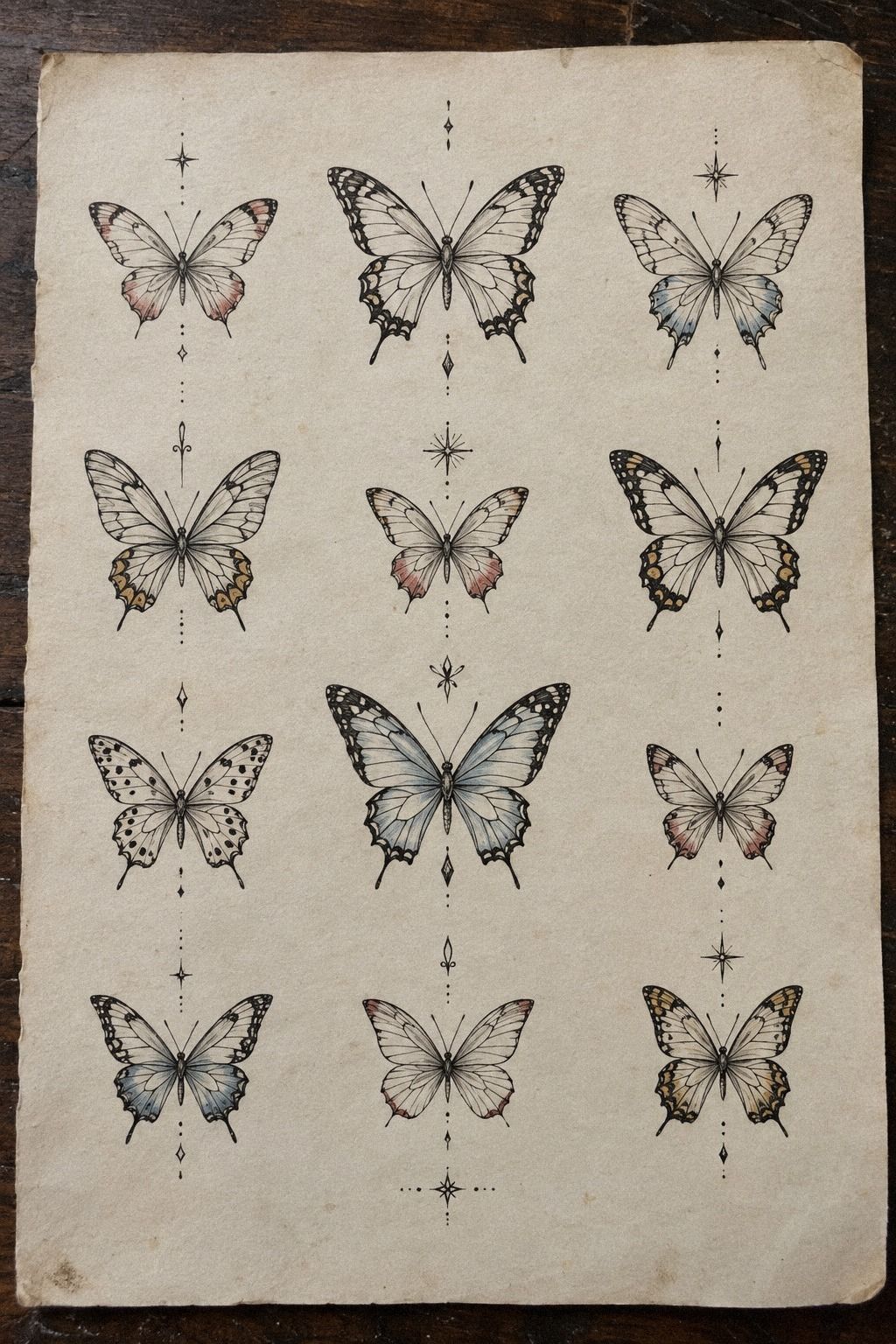
A finger butterfly is dainty, sharp, and highly visible. Its small scale can feel edgy, but the placement demands realistic expectations because fingers experience constant washing, friction, and movement.
I’d simplify the wings and avoid fragile interior marks. Finger placement can cause fine details to fade or soften sooner than they would on the forearm, so the outer contour needs to carry the meaning.
Choose an artist who regularly shows healed hand and finger work. A fresh, polished photograph can’t tell you whether the butterfly will remain readable after repeated exposure and everyday movement.
6Ankle Placement

An ankle butterfly can carry a fierce, meaningful quality because the placement feels private but grounded. On deep ebony skin, a symmetrical black outline with clear vein detail can look powerful and iconic.
Your artist should use strong contrast without forcing unnecessary thickness. Avoid lines so faint that the wing shape disappears from a short distance. The ankle placement needs a readable outer contour.
I’d place the butterfly slightly above the ankle bone instead of directly over the sharpest point. That may make the session more tolerable and gives the artist a steadier area for the body and lower wings.
You’ll still get the ankle association. Small positioning choices can protect both comfort and clarity, especially if you walk frequently or wear footwear that rubs the area.
Opaque black ink can help the design remain legible. Your artist should show healed work on a range of skin tones, not only fresh tattoos on pale skin.
That portfolio check is essential. It tells you far more than a polished social media close-up. A strong artist should answer questions about contrast, healing, and touch-ups without becoming defensive.
For the meaning, you can connect the butterfly with growth, resilience, or a personal turning point. This strength butterfly tattoo meaning guide may help you find language that feels honest instead of borrowed.
Feet and ankles can be more sensitive than the forearm. Your appointment may feel intense even if the design is tiny! If pain is a concern, ask about breaks before the session begins.
7Moon and Stars

A butterfly paired with a moon and stars can feel ethereal, romantic, and slightly haunting without needing color. The celestial marks should support the butterfly rather than become a second subject.
I’d use one small crescent and a few carefully placed points. Moon-and-stars spacing matters because crowded dots can blur into an indistinct patch as the tattoo settles.
This combination can feel sacred, expressive, or quietly empowering. Keep the butterfly’s wings larger than the surrounding marks so the main symbol remains obvious from a normal viewing distance.
8Rib Placement
A rib butterfly can look elegant and flowing because the design follows a long natural line. The placement gives you room for symmetrical wings and a slightly longer body.
Ribs can be more painful because the skin sits close to bone. Breathing also moves the area during the session. That doesn’t make the placement impossible, but it does require preparation and a realistic time estimate.
The rib placement works well for a romantic tattoo that you want to keep private. You can choose a larger scale without making the butterfly feel loud.
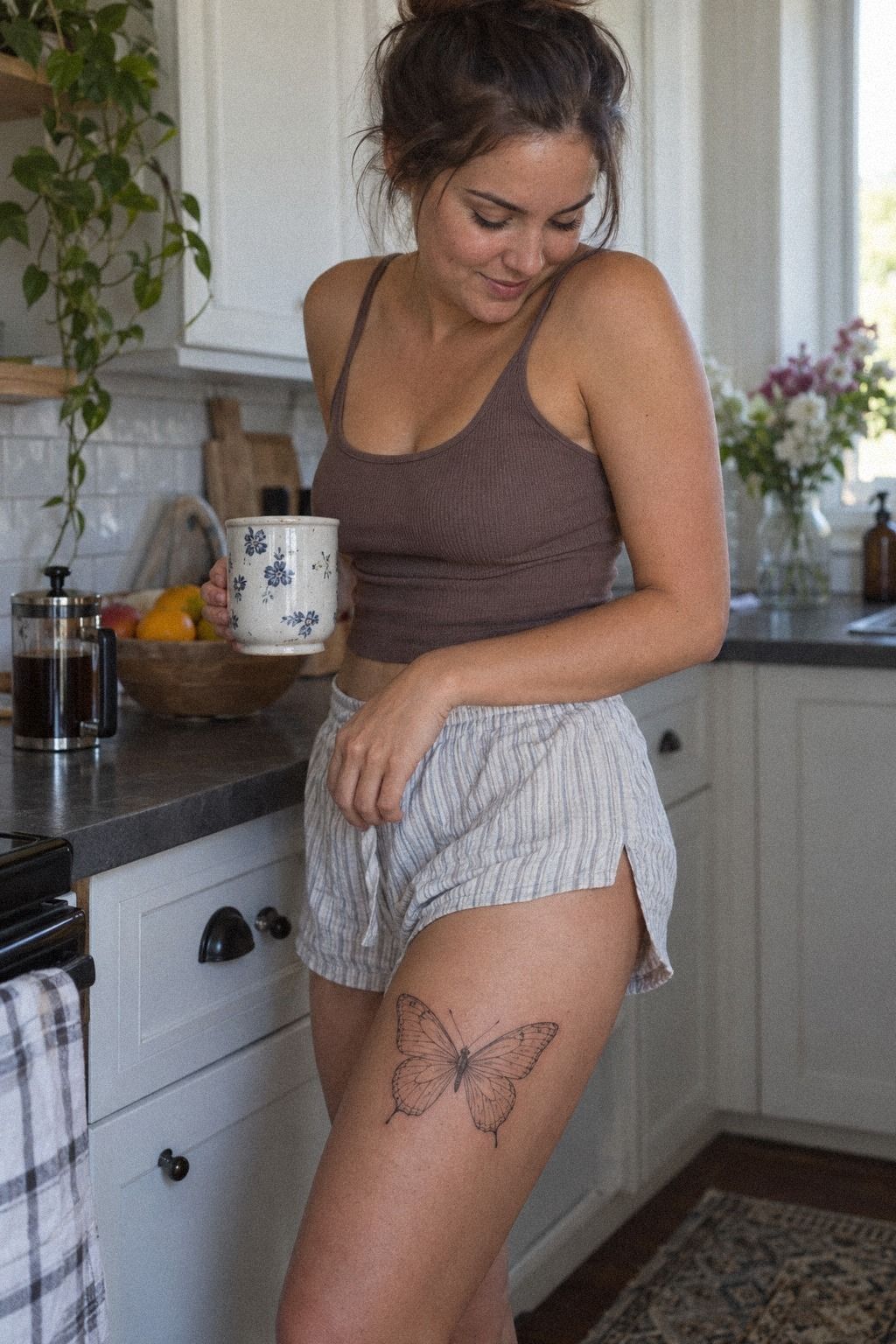
I’d consider the outer thigh if you want a similar refined effect with a more tolerable session. The thigh often gives the artist steadier skin and more control over delicate veins.
Healed black linework should be the standard you judge by. Ask how the artist spaces delicate marks and whether they recommend simplifying the inner wings.
I went back and forth on this kind of design. Extra lines look impressive in a stencil, but the cleaner version usually stays more graceful and timeless.
Your tattoo can feel intimate without being fragile. A small butterfly along the thigh is stylish, personal, and easier to protect during early healing.
If you’re deciding between a visible and private option, start with these small fine line butterfly tattoo examples and notice how much open skin each design keeps around the wings.
The value comes from choosing the placement you can live with comfortably. A slightly simpler tattoo may be worth more than an elaborate design you dread maintaining.
9Spine Placement
The spine placement makes a tiny butterfly feel romantic and deliberate. A butterfly can sit between the shoulder blades, follow the upper spine, or appear lower as part of a longer vertical arrangement.
I’d avoid stacking too many tiny symbols along the center line. Spine alignment needs to look intentional while your body bends and turns, so the artist should check the stencil in a natural standing position.
This can be a haunting, expressive choice for someone who wants personal symbolism without constant visibility. Ask whether the final scale will preserve the wings from a normal distance instead of choosing the smallest possible version.
10Single-Line Forearm Placement

A single-line butterfly is bold in concept even when the tattoo itself is tiny. On medium olive skin, one continuous-looking wing path can create a sharp, modern silhouette with an edgy quality.
You’ll get less interior decoration. The design can feel more iconic because the outline does all the work. This is a strong choice if you like expressive tattoos with a minimal structure.
I’d choose the forearm if you want to watch the tattoo age. The area is generally more tolerable than the ribs, feet, hands, or sternum, and it gives the artist steadier skin.
The forearm placement also lets the butterfly face toward your hand, toward your elbow, or slightly inward. That small direction change can affect whether the tattoo feels active, graceful, or more personal.
Continuous fine linework needs a steady artist, not just a pretty reference image. Ask whether they’ve made similar designs and look for smooth curves in healed photographs.
A shaky line can make a minimalist butterfly feel accidental. A clean curve gives it a polished, daring character.
But minimal doesn’t mean unfinished. Your artist may add one central body line or one tiny vein on each wing. That can give the butterfly structure without breaking the single-line feeling.
For more black-led inspiration, compare this idea with a tiny black butterfly tattoo before you book. Check whether the examples remain readable at their actual size.
A single-line tattoo can be affordable when the design is simple. Still, don’t choose an artist only because the quote is low. Smooth line control is the real investment.
11Shoulder Placement

A shoulder butterfly can feel playful and whimsical while still looking polished. On deep brown skin with a warm undertone, a clean black outline and open symmetrical wings can create a strong, expressive result.
You’ll have enough flexibility to adjust the scale without losing the butterfly’s identity. The placement can remain visible or covered depending on your clothing and daily preferences.
I’d avoid placing the butterfly too close to the shoulder’s highest point if you want the wings to stay level as you move. Your artist can angle the body slightly toward the collarbone or upper arm.
That small decision makes the tattoo feel more personal than a copied template. The shoulder skin also gives you a little flexibility if the artist recommends widening the design for better longevity.
Black line tattooing should be assessed through healed work on similar skin tones. Ask to see examples where the artist preserved thin lines without relying on heavy contrast in the photograph.
Your skin deserves a portfolio review based on evidence, not promises. A polished consultation should include questions about healing, fading, and possible touch-ups.
The shoulder is often a sensible first placement. It tends to be more tolerable than the ribs, hands, feet, or sternum, though the session can still feel sharp.
The result can be charming, graceful, and empowering without becoming overly ornate. If meaning matters to you, pair this idea with the strength butterfly tattoo meaning resource before settling on the final wing shape.
For another comparison, revisit the small fine line butterfly tattoo collection and look at the relationship between scale and open skin.
12Longevity Checks
I’ve learned to judge a tiny fine line butterfly tattoo in three stages: the stencil, the fresh tattoo, and the healed result. A design can look exquisite on a screen and still be too crowded for real skin.
Your artist should be willing to show you the size at actual scale. They should explain which details may soften and why the placement suits your body.
The first check is readability. I ask whether the butterfly will still look like a butterfly if one interior vein fades. If the answer is no, I simplify the design before the needle touches skin.
The second check is movement. Your wrist bends, your shoulder rotates, and your ribs expand. A centered image on a flat reference may not stay centered on you.
The third check is maintenance. Fine lines can widen slightly, and UV exposure can make black ink lose its crisp edge. That doesn’t mean you need a large tattoo.
It means you’ll want sensible line spacing, careful aftercare, and sunscreen once the skin has fully healed. These choices are understated, but they’re more useful than chasing the thinnest possible line.
I also look at the artist’s portfolio with a skeptical eye. Are the healed photos clear? Do the lines remain graceful across different placements and skin tones?
Is the studio clean and professional? Those questions protect your result. You aren’t being difficult by asking them.
You’re making a permanent decision!
A tiny butterfly can be delicate, fierce, or symbolic. It shouldn’t be treated as disposable because it’s small.
I’ve seen the most meaningful pieces come from people who took an extra week to refine the placement. That pause often produces a more timeless tattoo than rushing toward the first charming reference.
Before you book, compare your final idea with this butterfly tattoo meaning guide. Then ask yourself whether the design still feels personal without the trend attached.
13Healing Protection
The first few days matter because irritation, friction, and poor aftercare can affect how the tattoo settles. Follow the artist’s instructions rather than copying a random routine from social media.
Fresh tattoo aftercare usually means gentle washing, light moisturizing, and avoiding unnecessary rubbing. Don’t pick flakes or scratch the area, even when the skin becomes annoying.
Keep swimming, soaking, and intense friction away from the tattoo during early healing. Your artist may give slightly different instructions based on the placement, ink, and covering used.
Once the skin is fully healed, sunscreen becomes part of maintenance. UV exposure won’t erase a tattoo overnight, but repeated exposure can soften crisp edges over time.
Healing is not the moment to judge the final result. Peeling, dullness, and temporary unevenness can be part of the process, so give the tattoo time before considering any correction.
14Skin-Tone Contrast
Fine line work can look beautiful across every skin tone when the artist understands contrast, saturation, and healed changes. Ask for examples on skin similar to yours.
Healed portfolio work tells you more than a bright fresh photograph. Look for clear silhouettes, stable line weight, and examples photographed in ordinary lighting.
On deeper skin tones, black ink can create a strong result when the artist chooses appropriate saturation and spacing. The goal isn’t to copy a pale-skin reference exactly.
On lighter skin, very fine lines may appear striking at first but can become less visible if they’re placed too close together. Ask the artist what line weight they recommend for the exact location.
The right choice depends on your skin, placement, and the artist’s healed results. There isn’t one universal line thickness that works for everyone.
15Artist Selection
Start with artists who regularly show butterflies, fine line work, and healed tattoos. A beautiful portfolio with no healed examples leaves too many questions unanswered.
Artist consultation should cover the size, placement, line weight, estimated cost, aftercare, and possible touch-ups. You should feel comfortable asking direct questions.
Bring one or two references, not a folder of twenty unrelated designs. Your artist can then understand the shape, mood, and symbolism you actually like.
A skilled artist may recommend removing details. That isn’t a failure. It can be the most honest way to protect the tattoo’s long-term readability.
Pay attention to how the artist explains limitations. A thoughtful answer about fading is more reassuring than a promise that every tiny line will remain unchanged forever.
16Daily Wear and Placement
Think about how often the area bends, rubs against clothing, sees sunlight, or gets washed. These practical details can matter as much as the tattoo’s appearance.
Placement longevity varies from person to person. Fingers, hands, feet, and ankles often need more maintenance because they experience friction and exposure.
The forearm, shoulder, upper arm, and thigh are often easier options for a first tattoo. They can still feel sharp, but the skin usually gives the artist more stability.
Ribs, sternum, spine, and areas close to bone may feel more intense. Pain is personal, though, so use general guidance as a starting point rather than a promise.
If your work or routine exposes the tattoo to frequent rubbing, choose a location you can realistically protect during healing. That practical choice can matter more than chasing a specific trend.
17Cost and Long-Term Value
In the US, a tiny tattoo often falls around $100 to $300, depending on the artist, region, placement, and minimum charge. Some studios set a minimum near $50 to $100. Hourly rates may run about $100 to $250.
The cheapest quote isn’t always the best value. Ask what the price includes, whether a consultation costs extra, and whether touch-ups are charged separately.
Fine line tattoo pricing should reflect the artist’s skill, sanitation standards, time, and experience. Saving money on the appointment can become expensive if the design needs early correction.
If the quote is beyond your budget, simplify the design before switching to an inexperienced artist. Fewer details can preserve the concept while protecting the quality.
A lower price can be reasonable when the artist is experienced and the appointment is short. It becomes concerning when the artist can’t explain their process or show healed work.
18My Editorial Take on Longevity
I used to think the smallest possible butterfly would be the most refined choice. I no longer believe that. A tattoo can be dainty without being microscopic, and a slightly larger silhouette often gives the lines a better chance to remain distinct.
My personal preference is a clean outer contour with one memorable detail. That might be a narrow body, a single botanical stem, or a tiny crescent nearby. I don’t need every symbol that inspired the idea to appear on the skin.
The most stylish tattoos I’ve seen are rarely the busiest. They feel deliberate, personal, and quietly confident. That restraint can be more powerful than a crowded composition trying to explain everything at once.
I’m also skeptical of promises built around the phrase “barely there.” Extremely thin ink may photograph beautifully, but the healed tattoo still has to live through movement, sunlight, washing, and time. Choosing a skilled artist matters more than chasing an almost invisible line.
If you’re torn between two placements, choose the one that fits your actual habits. A private rib or spine tattoo may feel romantic, while a forearm or shoulder piece may be easier to monitor and protect. The right choice is the one you can care for without resentment.
I’d also protect the emotional meaning from trend pressure. Butterflies can represent growth, survival, freedom, grief, love, or a personal turning point. The symbol becomes more enduring when the shape reflects your story instead of copying the most popular reference.
There’s no shame in simplifying the tattoo during consultation. Removing one vein, widening the wings, or increasing the scale can be the difference between a fragile idea and a strong finished piece. That compromise can be powerful!
My final test is simple: would I still choose this butterfly if nobody else saw it? If the answer is yes, you’re probably close to the right concept. The tattoo should feel personal before it feels fashionable.
The Questions Worth Answering First
Are tiny fine line butterfly tattoos suitable as first tattoos?
Yes, they can be a thoughtful first tattoo because the designs are small and available in more tolerable placements. I’d still prioritize an artist with healed work over choosing the smallest possible version. A clear silhouette is easier to live with than a crowded tattoo.
Which placement usually offers the best readability?
I’d consider the forearm, shoulder, upper arm, and thigh strong choices when readability matters. The wrist and behind-ear areas offer more visibility, while the ribs and spine provide more privacy. Your choice should balance movement, sun exposure, work, and personal meaning.
How should the design change for different skin tones?
The artist should adjust contrast, saturation, spacing, and line weight to your skin rather than copying a reference exactly. Ask to see healed tattoos on skin similar to yours. That evidence is more useful than a fresh photograph under strong studio lighting.
What should I discuss with the tattoo artist?
Bring one or two references and discuss the exact size, placement, line weight, symbolism, estimated price, aftercare, and possible touch-ups. Ask to see healed work, especially for the placement and skin tone you’re considering. A good consultation should leave you informed rather than pressured.
What protects a fine line butterfly after the appointment?
Follow the artist’s aftercare instructions, wash gently, avoid picking or rubbing, and keep the tattoo away from swimming and soaking during early healing. Once the skin is fully healed, regular sun protection can help preserve the crispness of the ink.
Start With the Single-Line Rule
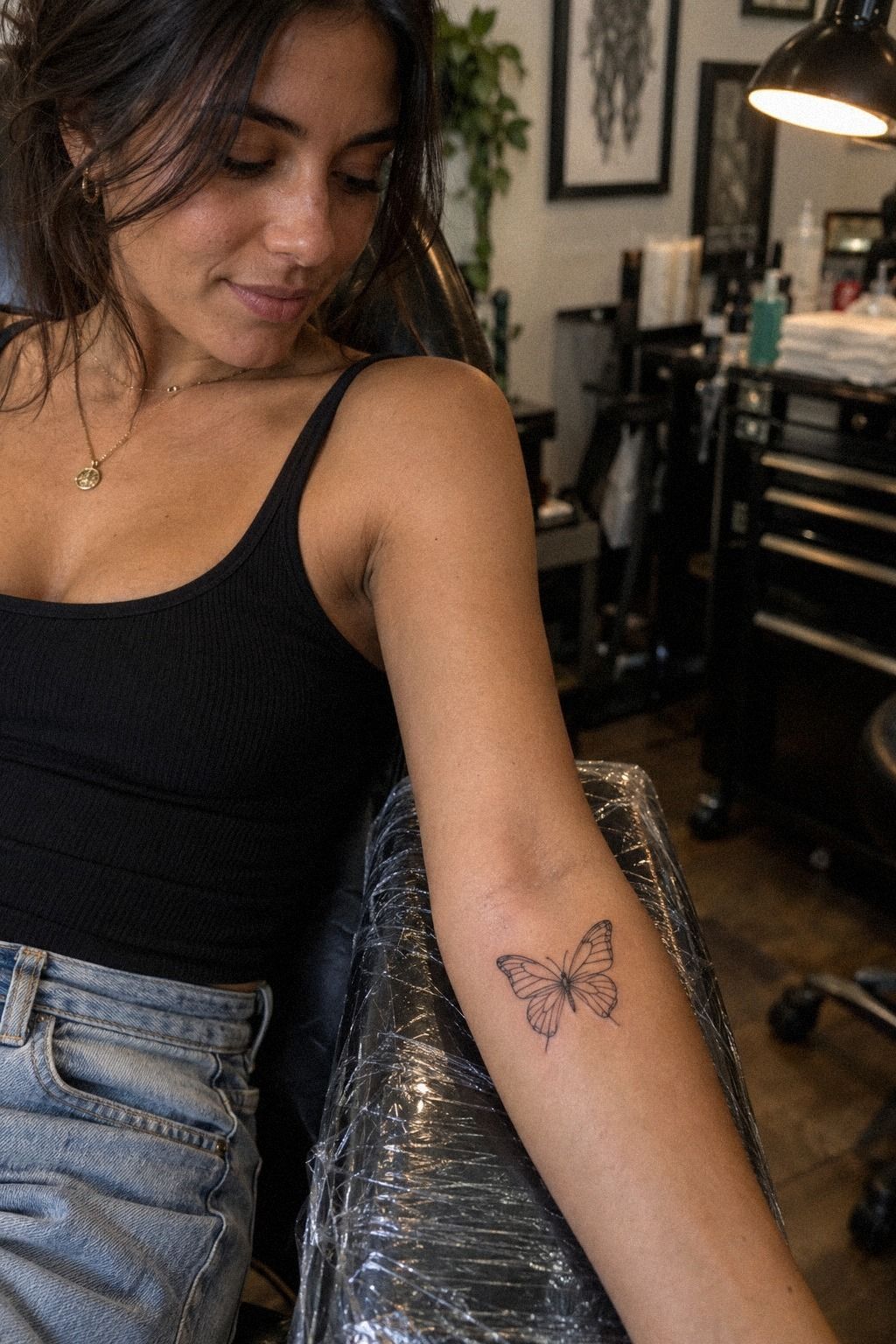
If I had to pick one, I’d start with the tiny butterfly on the forearm. The skin is more forgiving than the ribs or fingers, and a clean silhouette has room to age without collapsing into clutter.
Bring one reference and one clear placement question to your artist. Ask to see healed work. Choose the design whose meaning still feels personal when the trend disappears!


5 responses to “Low-Maintenance Tiny Fine Line Butterfly Tattoo That Ages Well”
[…] session may feel fierce even when the tattoo is tiny. For more restrained references, browse these tiny fine line butterfly tattoo ideas before you […]
[…] butterfly can feel symbolic and personal without filling the entire forearm. Look through these tiny fine line butterfly tattoo designs before your appointment so you can compare wing shapes.Not sure […]
[…] photographs, strong linework, and a studio that follows clear hygiene practices. You can review tiny fine line butterfly tattoo references for style language, but the artist’s own portfolio matters […]
[…] you’re comparing healed examples, this small fine-line butterfly tattoo page gives you a better sense of realistic texture. The peeling skin was […]
[…] slightly stronger lower wings can make the piece feel more powerful. For related proportions, these tiny fine line butterfly designs offer a useful starting point before the shape is redrawn for your […]