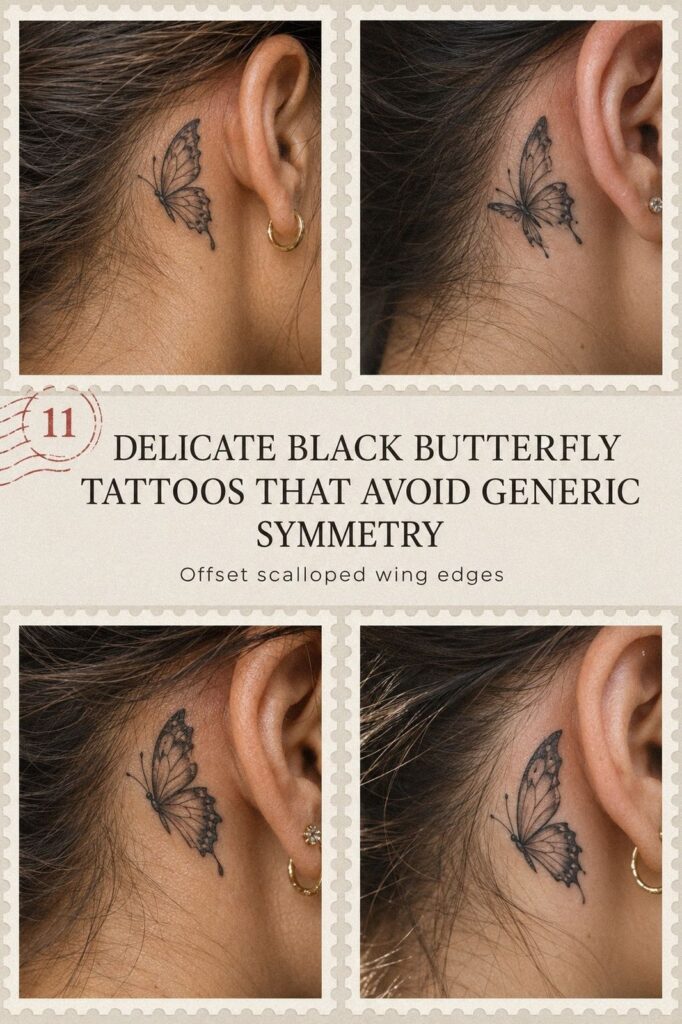
Delicate black butterfly tattoos can make a striking first piece when the placement and line weight suit your skin. I once chose a design that was too tiny, and the details blurred faster than I expected. These ideas keep the shape crisp, personal, and meaningful, with practical guidance on healing, pain, cost, and long-term wear.
Before You Choose a Butterfly
Start with delicate black butterfly tattoos that still read clearly from a normal distance. A design can feel intricate on a screen but become vague when reduced to skin. I’d compare the outer silhouette first, then study the inner marks.
Think about visibility, movement, sunlight, and your daily routine. A hidden placement may feel sacred and personal.
A visible one may feel more empowering. That small test can save money and regret!
Fine Line or Bold Contrast?
Fine-line work feels graceful, dainty, and understated. It suits symbolic designs with open wings and a few intentional veins. Fine-line tattoo work needs enough spacing, though.
Tiny marks packed together can blur as the tattoo settles.
A darker silhouette offers stronger contrast and a more timeless outline. It may deliver better value if you want the butterfly to stay readable for years. Your artist can show both options on a stencil before you decide.
- Ask for Fine Line Behind the Ear
- Is the Inner Wrist Too Small?
- The Shoulder-Blade Centerline
- Add Botanical Motion to the Forearm
- One Wing, Not Two: The Ankle Version
- Let the Crescent Moon Carry the Meaning
- Collarbone or Below It?
- Choose Ornate Ribcage Linework Carefully
- The Spine Trail: Three Butterflies in Motion
- Finger Pair, High Visibility
- Break the Rules with Abstract Dotwork
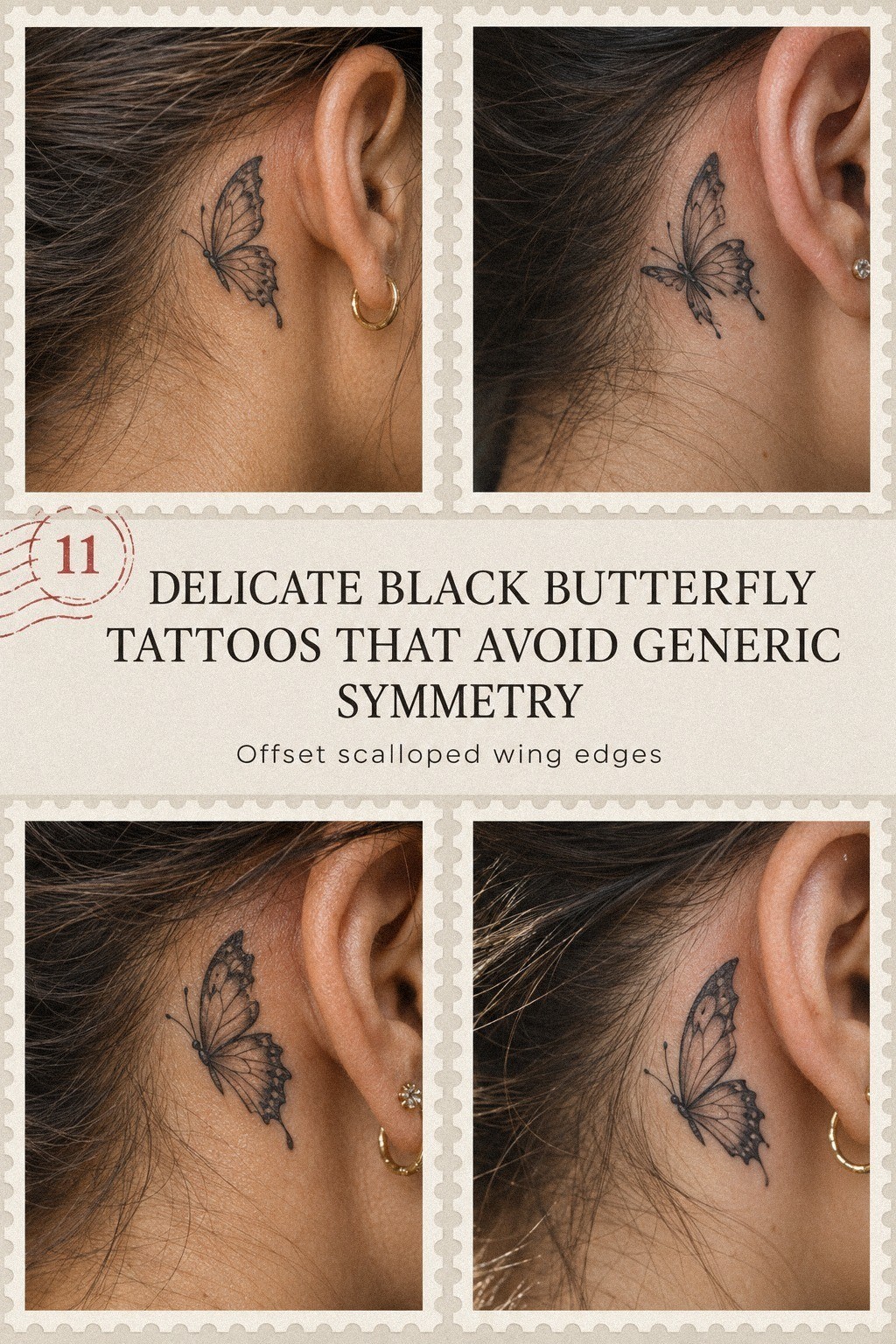
1Ask for Fine Line Behind the Ear
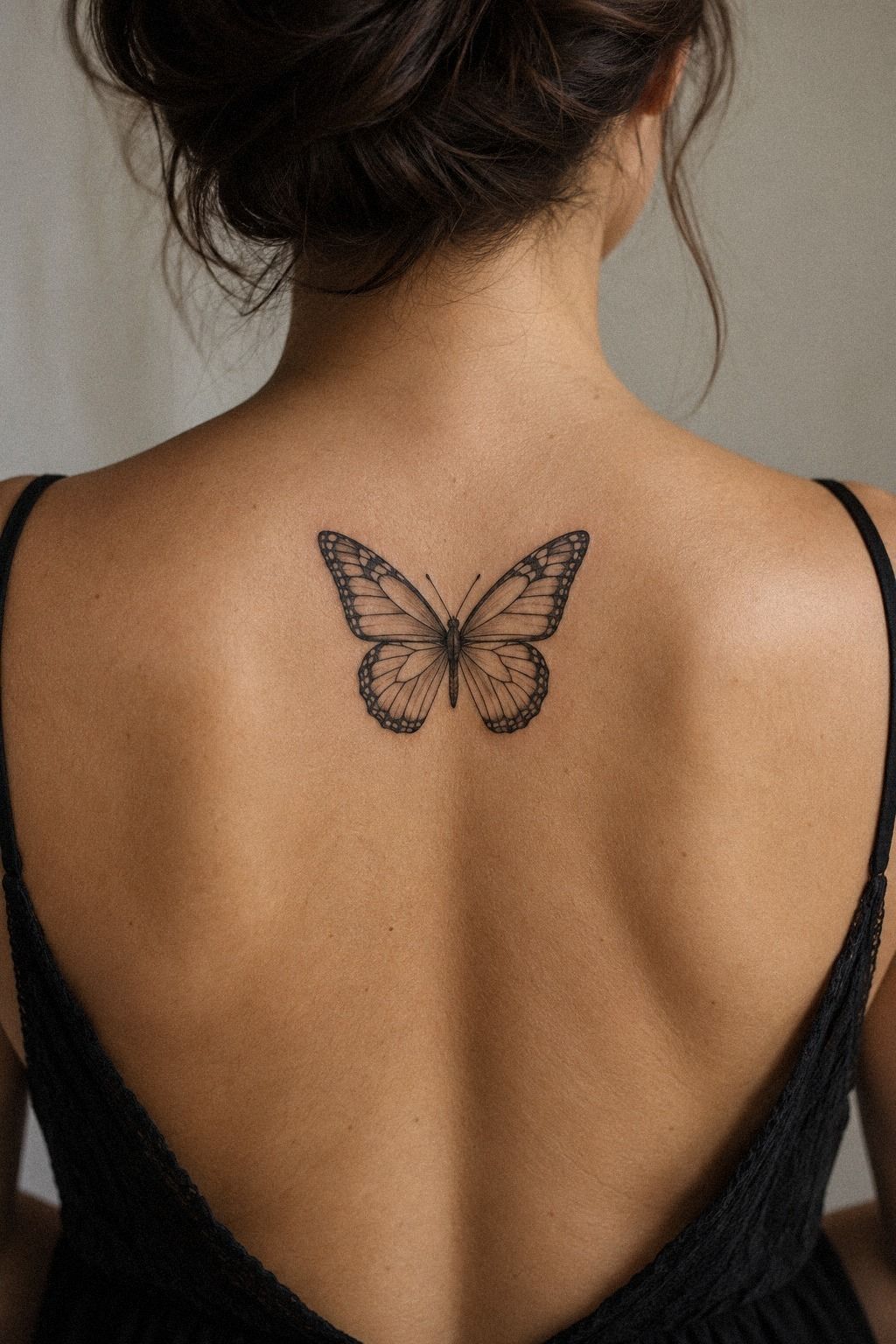
Behind the ear gives a delicate butterfly a private, almost secretive placement without making it invisible. The open wings and symmetrical veins suit single-needle linework, but your artist will need a steady hand and enough spacing between each mark. It’s graceful, understated, and quietly expressive.
You’ll want the butterfly large enough to remain readable after surface healing. A design around one inch can look dainty, but an overly compressed wing pattern may lose its crisp quality as the lines soften.
I’d skip ultra-mini details here. The skin is limited, and the curve does not forgive clutter.
Your artist should check the stencil from the side before beginning. The ear’s curve can make a symmetrical design appear tilted. A clean black ink outline, two open wings, and a small body may age better than crowded shading.
You’ll also want to think about visibility. Hair can cover it, but short hair or an updo will reveal the mark instantly.
If you’re comparing tiny placements, browse these delicate butterfly tattoo references before choosing. They’ll help you decide whether this intimate, feminine placement feels personal enough.
2Is the Inner Wrist Too Small?
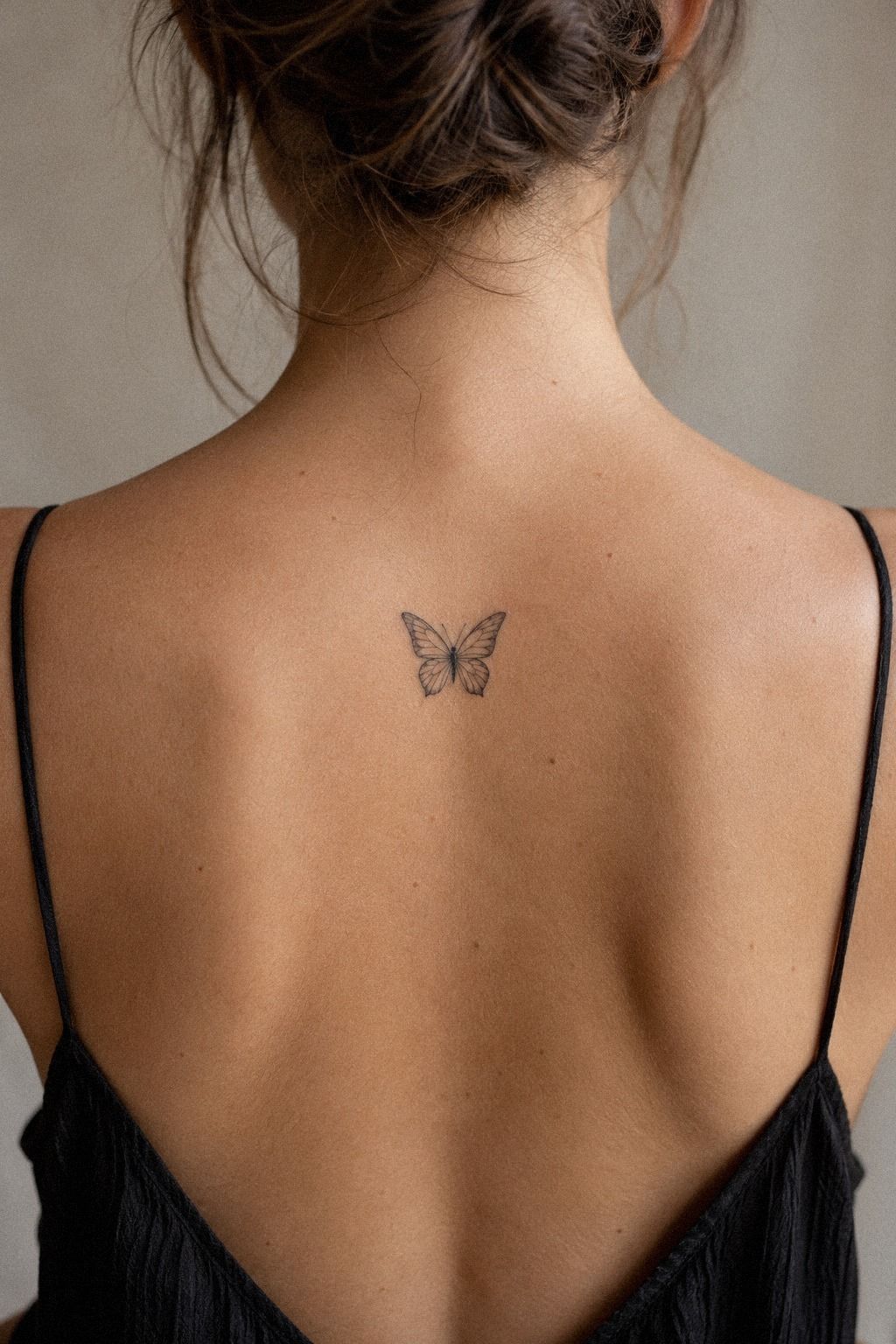
The inner wrist suits a tiny butterfly because the placement feels personal without becoming dramatic. Open wings and symmetrical veins create a soft but polished contrast. It’s a dainty choice, yet the black outline keeps it from looking timid.
You’ll want to keep the design crisp and slightly simplified. Fine details can look elegant on a stencil but disappear when reduced too far, especially around the lower wing edges. I’d choose two or three internal veins per wing rather than copying every line from a larger reference.
Wrist skin sees frequent movement, washing, friction, and sunlight. That does not mean your tattoo cannot remain timeless.
It does mean you’ll need sensible aftercare and regular sun protection. A small healed linework butterfly can stay expressive when the original design leaves enough breathing room.
If you’re unsure about scale, ask your artist to place the stencil at two sizes. View both with your hand relaxed.
The smaller one may look charming at first, but the slightly larger option often reads more clearly. Compare it with these tiny black butterfly tattoo ideas before committing.
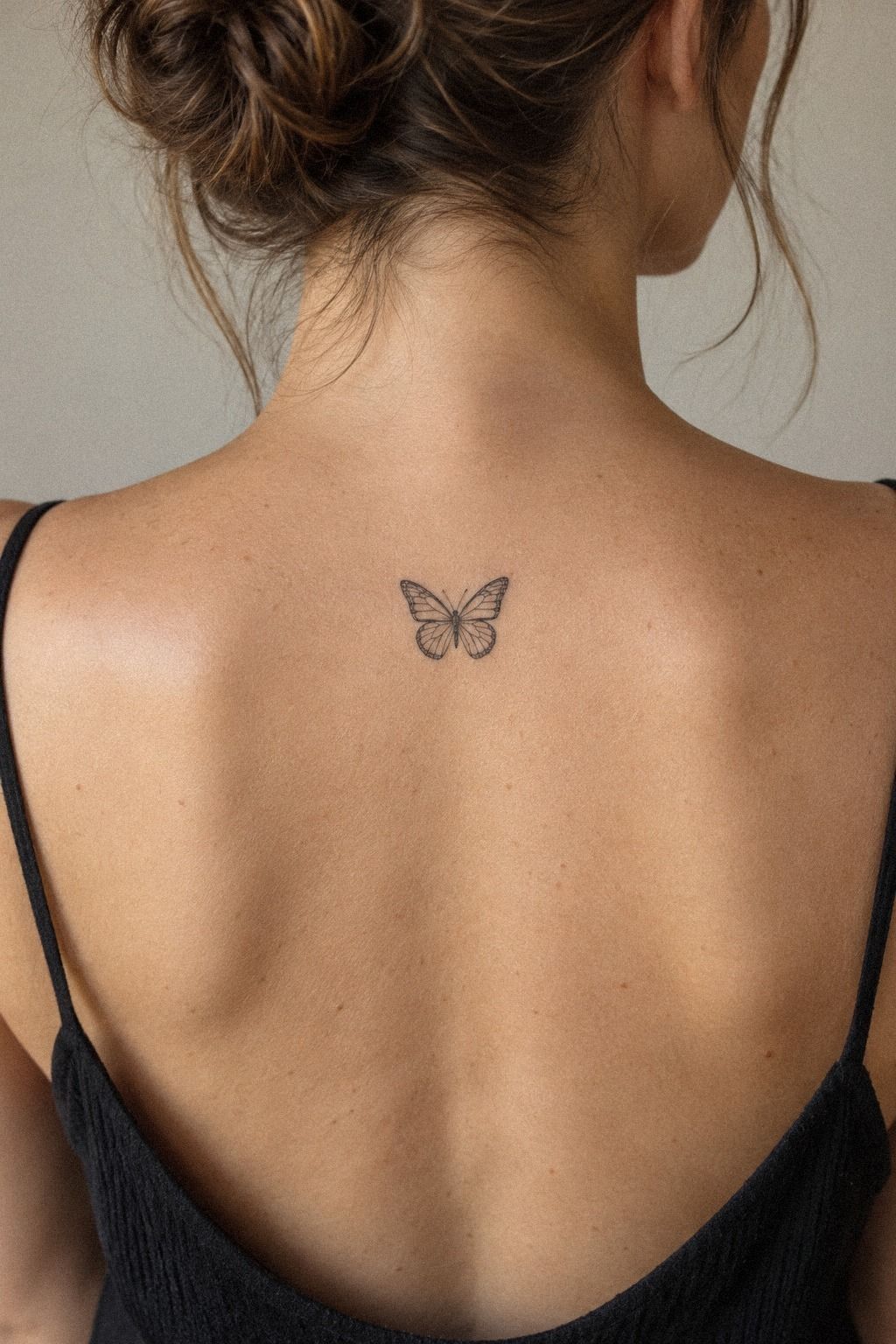
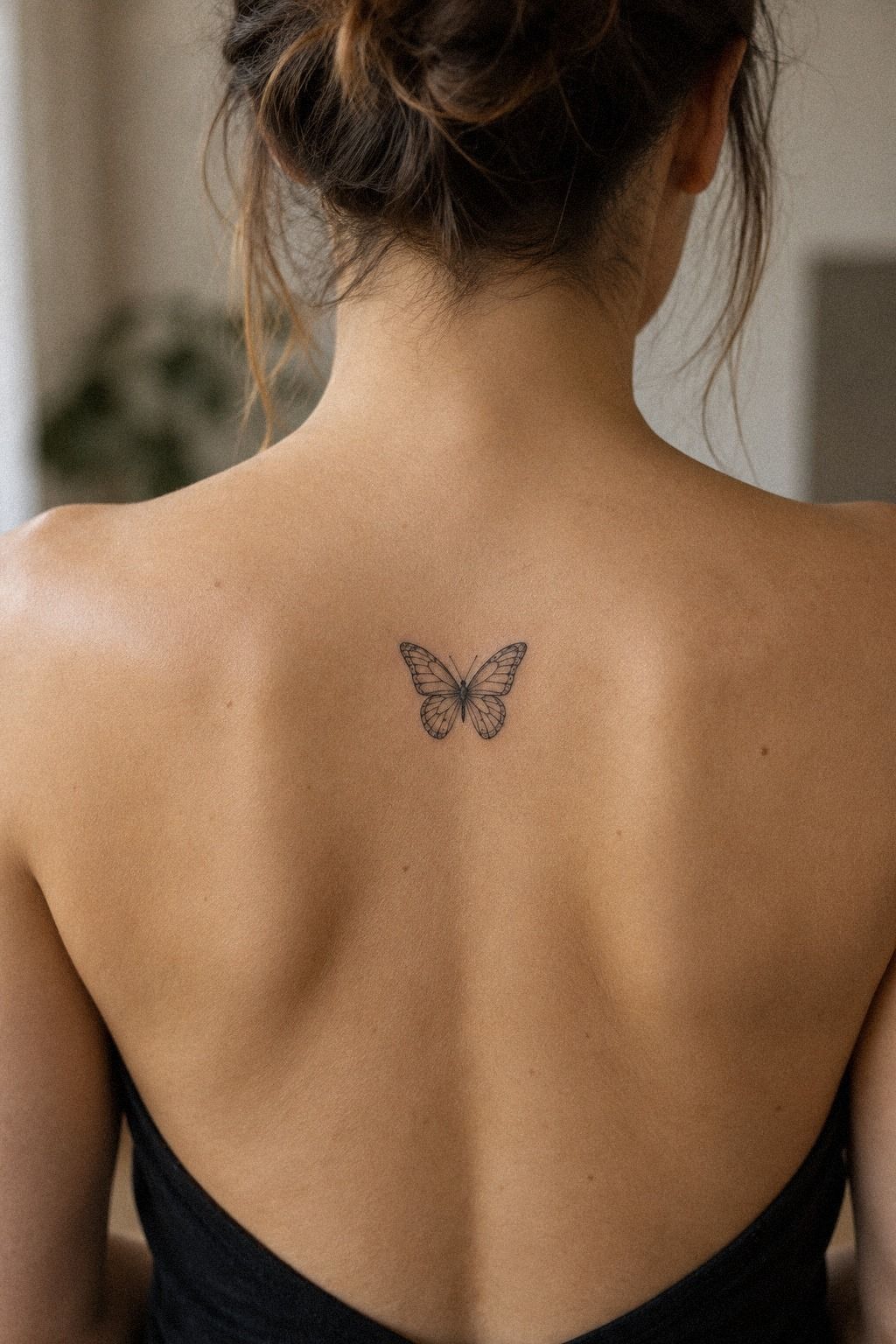
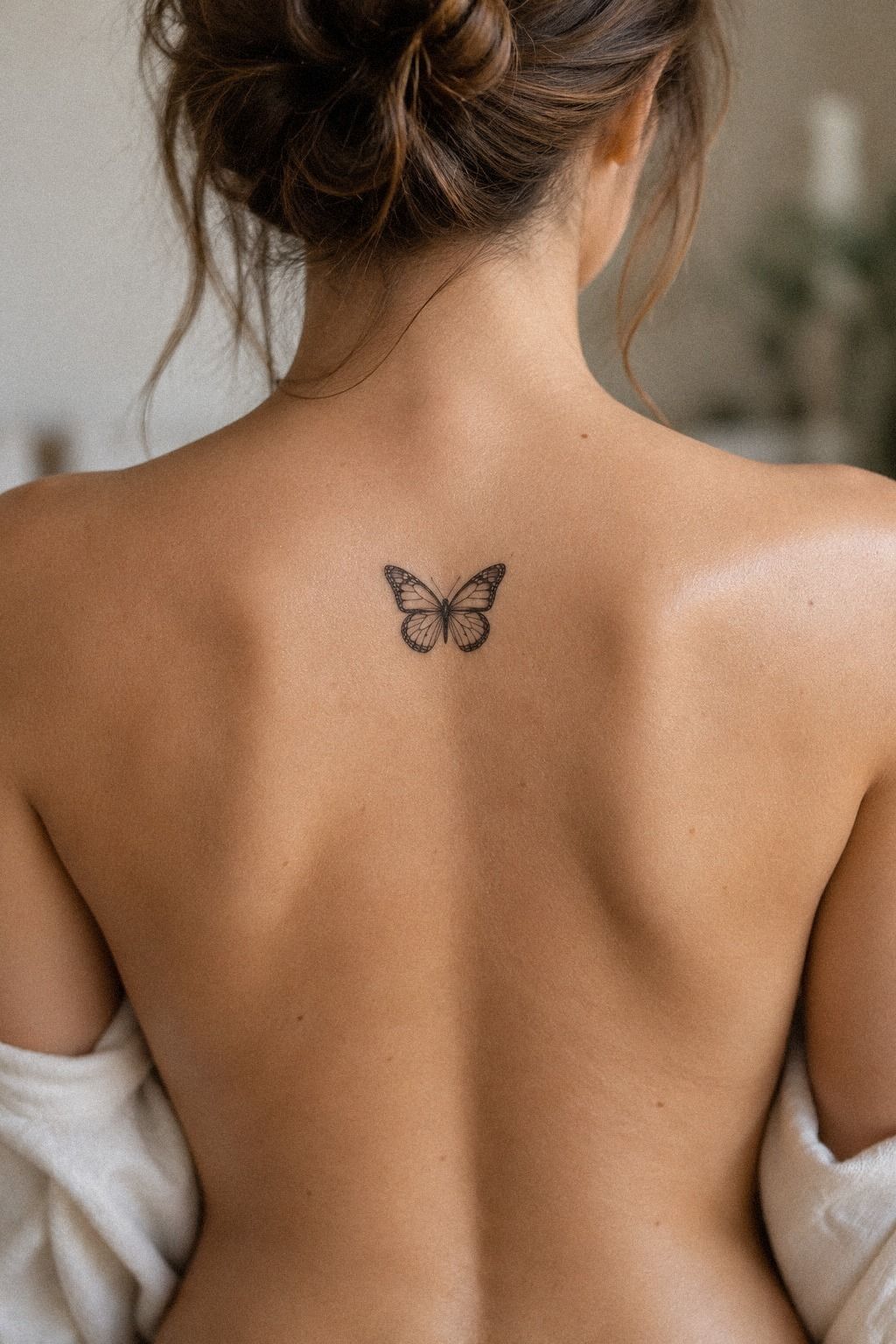
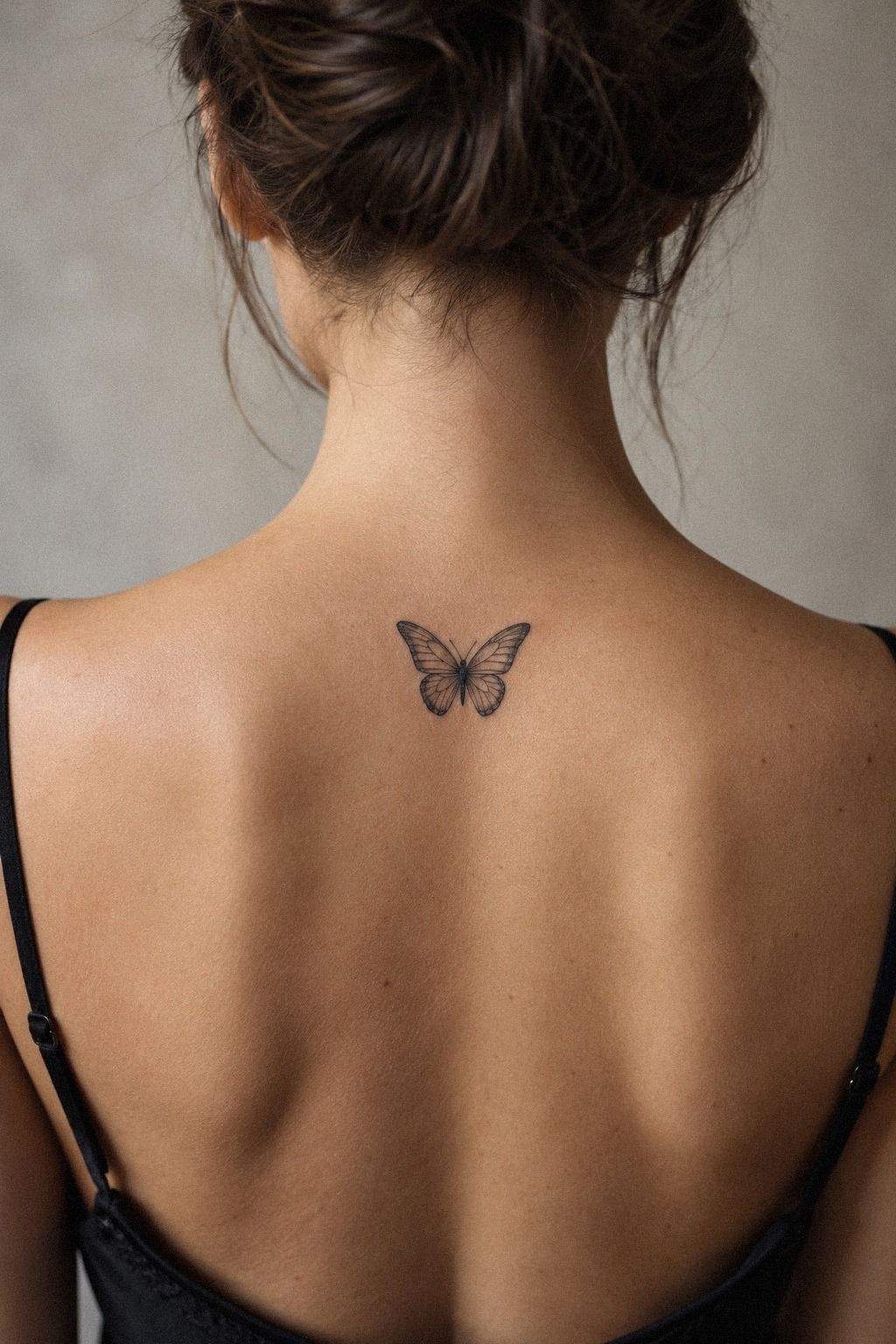
3The Shoulder-Blade Centerline
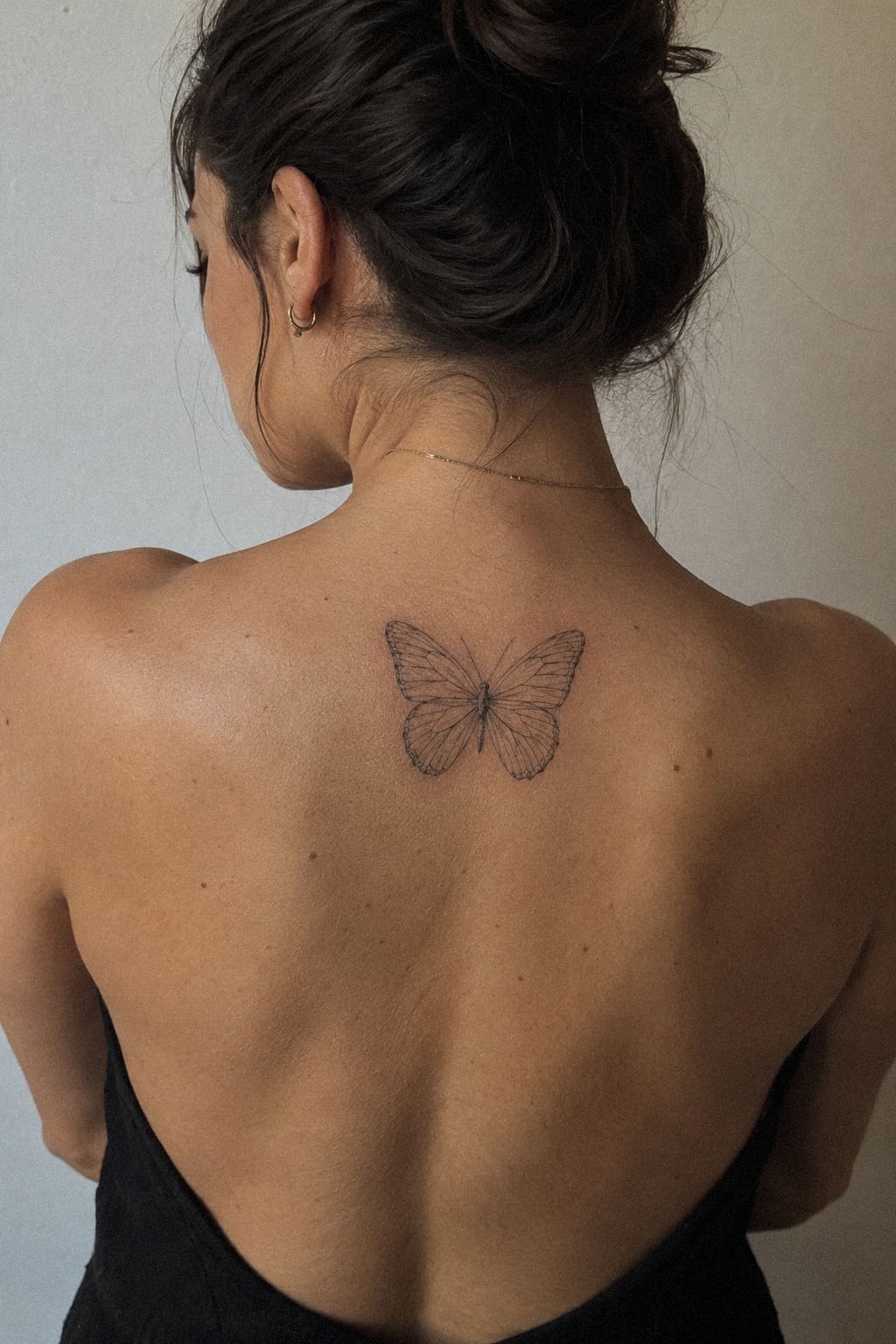
Between the shoulder blades gives your butterfly a centered, iconic position.
4Add Botanical Motion to the Forearm
A botanical butterfly on the forearm gives you space for expressive details without losing the clean black silhouette. Fine stems and pointed petals can make the composition feel intricate, flowing, and vibrant.
You’ll want the plant elements to support the butterfly instead of competing with it. A thin stem, one leaf, or a few petals can create a graceful border.
I’d avoid a full bouquet around the wings. Too many fine marks can make the design look gritty instead of polished once the lines settle.
Forearm placement is generally more tolerable than ribs, feet, hands, or the sternum, though everyone’s experience differs. Your artist can adjust contrast for your skin tone. A clear black botanical outline will remain more readable than pale, crowded micro-detail.
I once chose a design with too many tiny leaves, and the stencil looked like a thicket. You’ll get a more timeless result by limiting the plant shapes and leaving open skin around them. For symbolism, explore this guide to black butterfly tattoo meaning before adding an element that does not feel like you.
5One Wing, Not Two: The Ankle Version
A single-wing butterfly on the ankle feels edgy because it suggests motion without showing familiar symmetry. The concept has a raw, playful, vintage quality. It looks especially daring when the outer contour carries most of the visual weight.
You’ll want to choose one wing with a clear edge and a compact body. The ankle does not offer much flat skin, and a design that wraps too far can look disconnected when your foot moves. I’d keep the strongest detail near the outer edge, where the silhouette will still read.
Ankle tattoos can feel more sensitive because the area sits close to bone. Socks and shoes also create daily friction.
Your artist should discuss placement around the ankle bone before applying the stencil. A fine black flash design can look sharp there, but your footwear matters more than the reference.
If you’re drawn to the old-school sheet style, ask for a custom redraw. The result can stay classic while fitting your anatomy. These small black butterfly tattoo ideas are useful if you like a compact piece but want more than a single outline.
6Let the Crescent Moon Carry the Meaning
A crescent moon paired with a butterfly creates a symbolic, ethereal composition without needing a large design. The open wings keep the result delicate, while the crescent adds a sacred and romantic note. The pairing can feel personal without becoming literal.
You’ll want the moon and butterfly to have different visual weights. A thin crescent can sit beside the wings, while a slightly stronger outline keeps the butterfly legible.
I’d avoid filling the moon with dense black if the wings already carry solid accents. Contrast works best when your eye knows where to land.
The collarbone is visible and expressive, but it can also feel tender during the session. Ask your artist to account for the natural slope and the way your skin moves when you lift your arm. A crescent moon stencil should follow your body rather than sit flat across it.
Your meaning can stay open. The butterfly might suggest change, memory, freedom, or a shape you’ve loved for years. If you’re considering a softer color direction, compare the structure with these watercolor butterfly tattoo examples, then decide whether black still feels more honest.
7Collarbone or Below It?
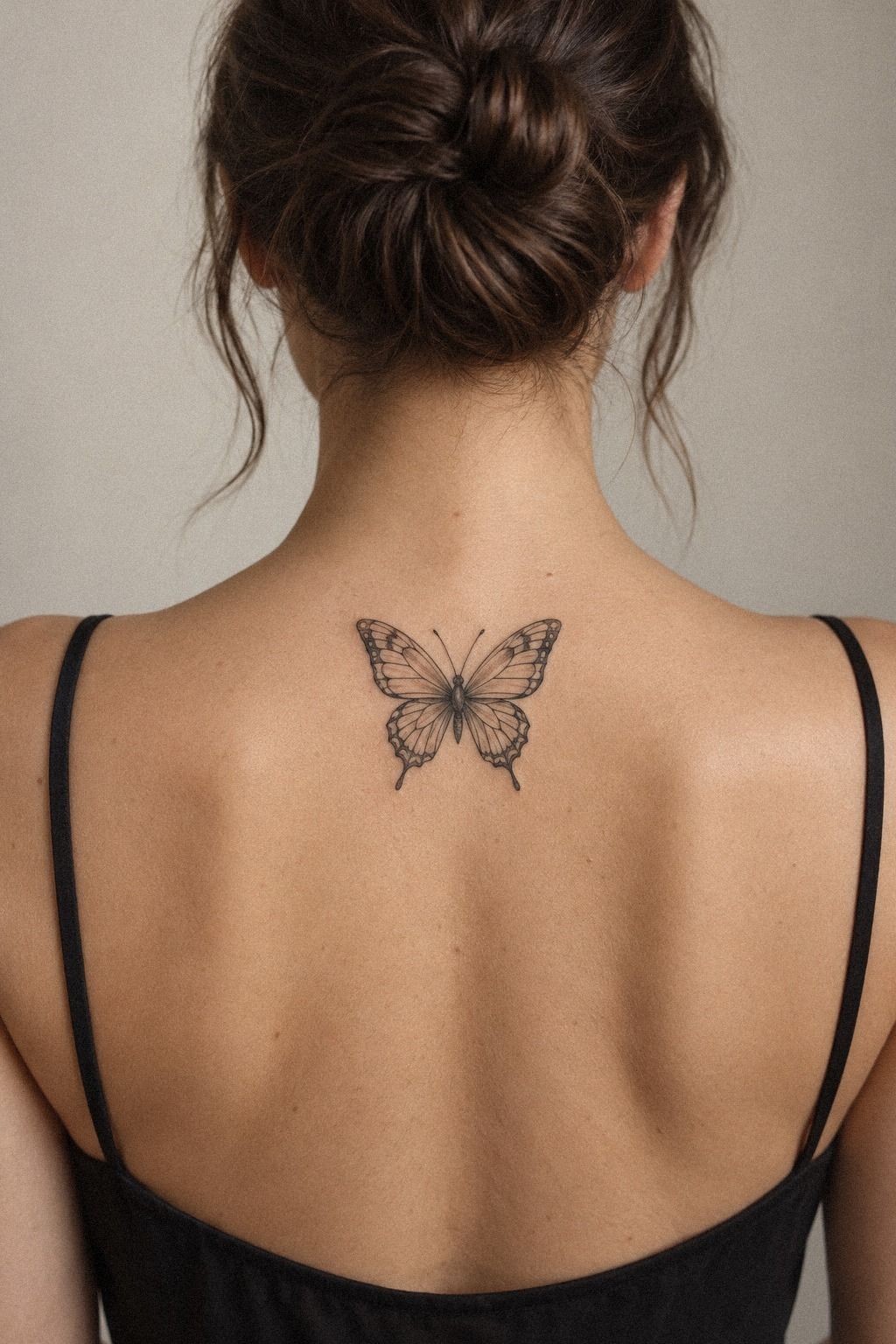
A butterfly across the collarbone has a bold, sleek presence even when the design is small. The placement follows the natural horizontal line of the body. It’s feminine, stylish, and easy to glimpse with an open neckline.
You’ll want to decide whether the butterfly should sit directly on the collarbone or just below it. Direct placement creates more visual tension, but the lower position may feel more comfortable and balanced. I’d choose the location that still looks centered when your shoulders are relaxed.
A solid silhouette can age more reliably than extremely thin internal details, especially when the tattoo sees sunlight. That does not mean you need heavy blackwork. A compact solid black butterfly with one or two open areas can keep the contrast sharp and the shape recognizable.
If you’re tempted by a very tiny version, ask your artist how the wing edges may soften over time. You’ll want a design that still looks intentional after complete healing, which often takes two to three months. Save these delicate butterfly tattoo ideas and compare the silhouettes before your consultation.
8Choose Ornate Ribcage Linework Carefully
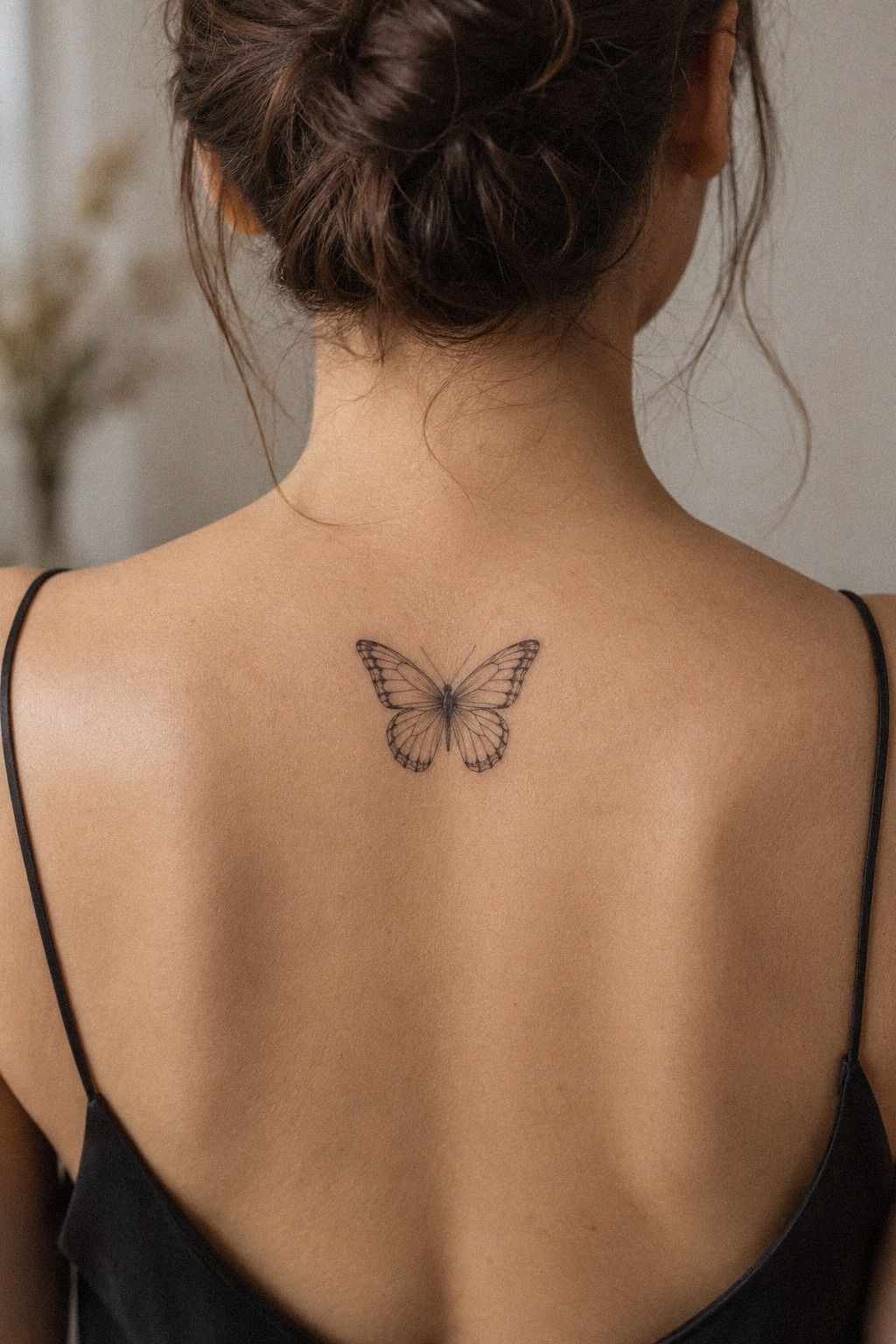
An ornate butterfly on the ribcage gives you room for intricate linework while keeping the finished piece hidden beneath most clothing. The detailed interior creates an elegant, lace-like effect. It feels timeless, polished, and daring.
You’ll want to be realistic about the placement. Ribs are commonly more painful than the forearm, thigh, or shoulder, and the skin moves as you breathe. A fine ornamental outline can still be worth it, but your artist should work slowly and keep the stencil aligned through natural breathing.
I’d skip adding extra flowers, stars, and script around the butterfly in the same session. The ornate wings already carry enough visual information. Your design will feel more expressive when the empty skin around it gives the eye a clear pause.
Aftercare matters because clothing can rub against the area during early healing. Follow your artist’s instructions, wash gently, moisturize as directed, and avoid swimming or strong sun while the surface heals. If you’re comparing smaller placements first, review these tiny fine line butterfly tattoos before choosing the more daring rib location.
9The Spine Trail: Three Butterflies in Motion
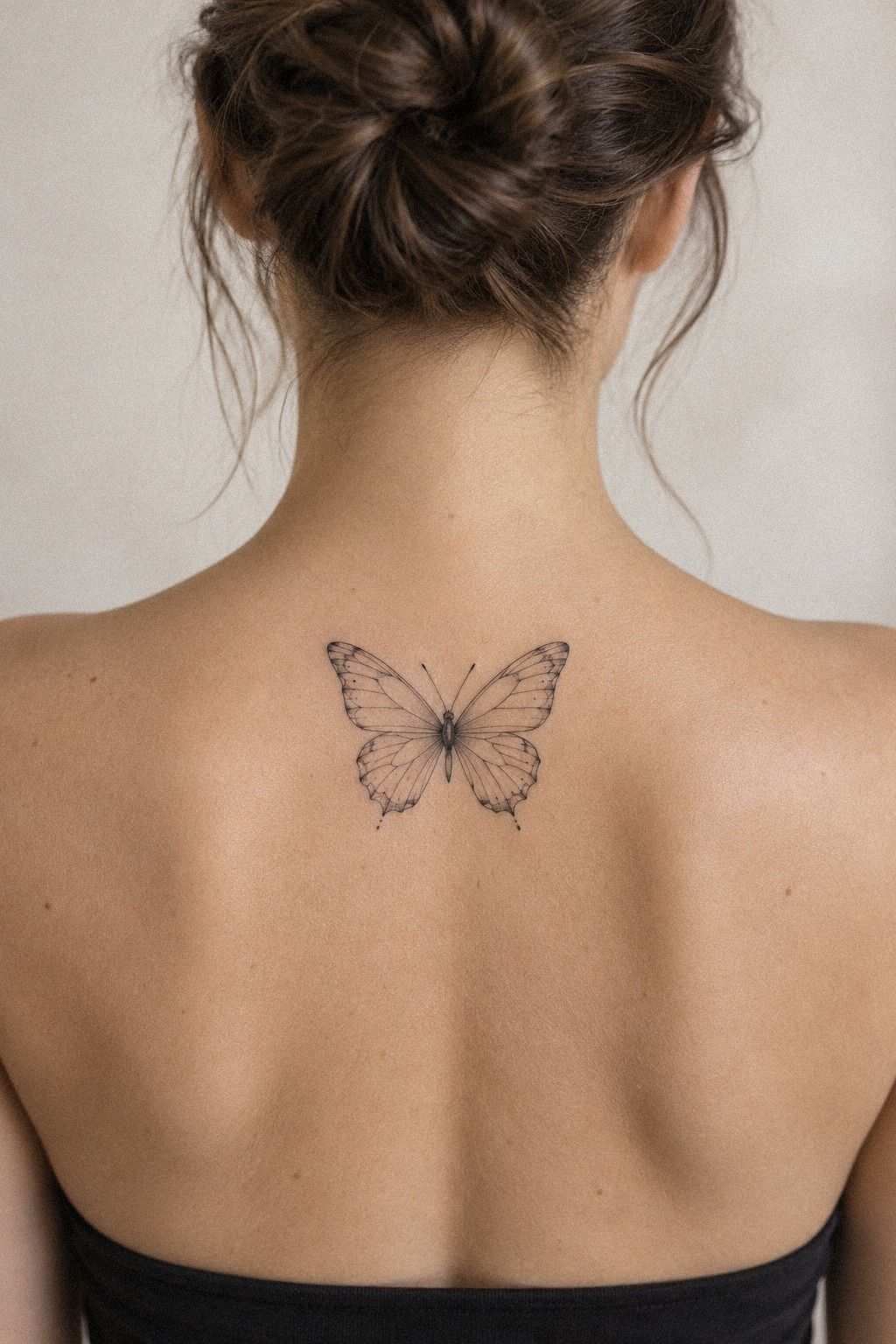
A floating trail down the spine turns one butterfly into a graceful sequence. Generous spacing makes each mark feel like it’s moving instead of forming a crowded column. It’s expressive, dramatic, and more unusual than a single centered butterfly.
You’ll want to vary the size or angle slightly while keeping the visual language consistent. Three matching butterflies can look repetitive, but three completely different shapes can feel accidental. I’d use one larger butterfly near the upper back, followed by smaller forms that drift downward.
Spine placement requires careful stencil work because the body’s centerline is not always perfectly straight. Your artist should check the alignment while you stand naturally, not only while leaning forward. A vertical butterfly stencil can look polished when the spacing is deliberate.
The area may feel more sensitive than the shoulder or forearm, and the session can take patience. You’ll also want clothing that will not scrape fresh work. For symbolism and spacing ideas, look through black butterfly tattoo meaning before deciding how many butterflies belong in the trail.
10Finger Pair, High Visibility
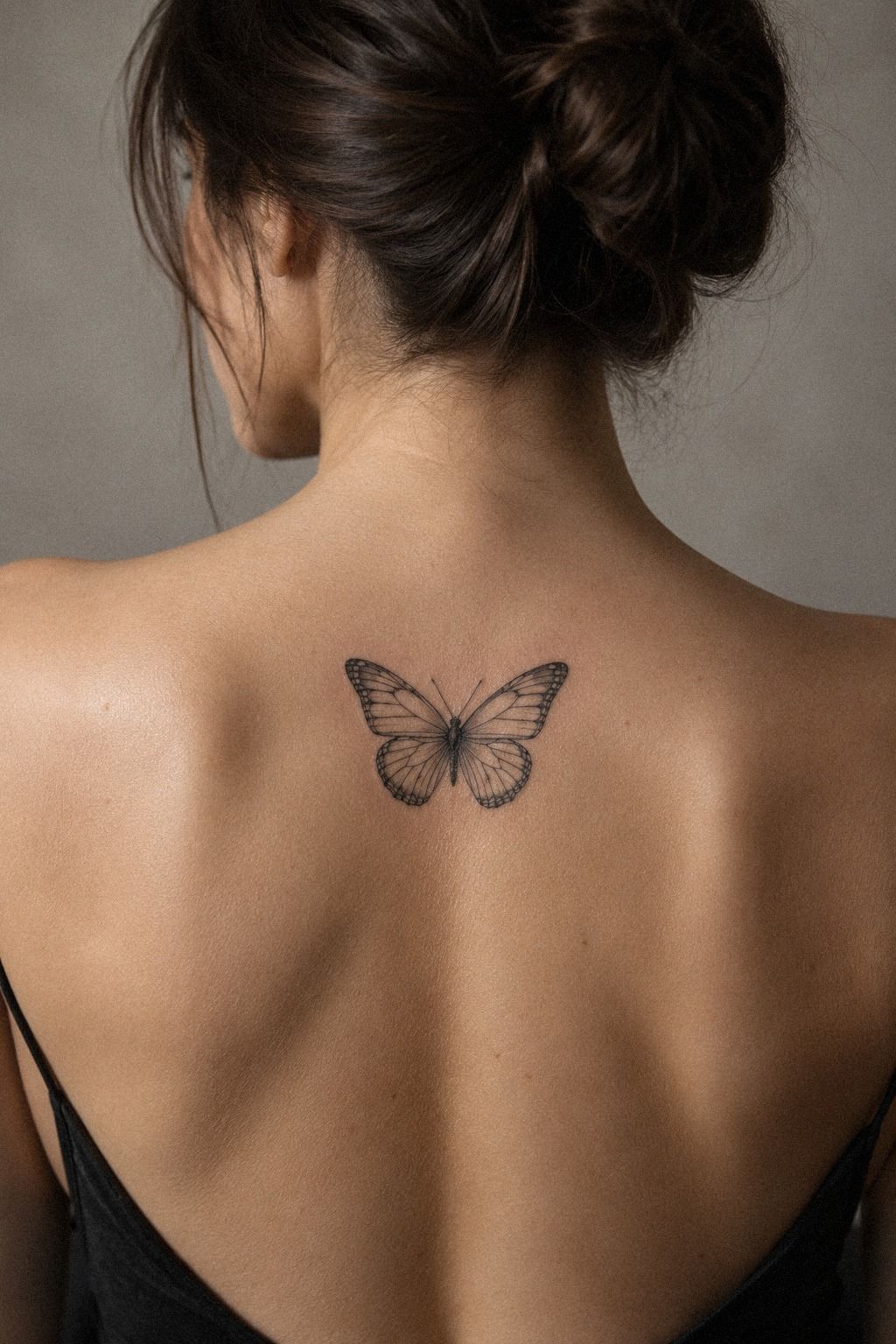
A minimal butterfly pair on the fingers feels playful and daring because the design stays visible during almost everything you do.
11Break the Rules with Abstract Dotwork
An abstract butterfly with dotwork accents lets you keep the recognizable wing shape while making the interior more unique. Broken lines, small dots, and uneven sections can create a fierce, expressive rhythm without turning the piece into a heavy block.
You’ll want the abstract marks to have a reason. They can suggest movement or change, but random decoration may look unfinished. I’d ask for a clear outer silhouette first, then use dotwork to create depth inside one or both wings.
Dotwork can feel delicate while still giving the tattoo a gritty edge. A black dotwork pattern should have enough spacing for each point to remain readable after healing. Your artist may adjust density for the body area and your skin’s undertone.
The inner forearm is often more tolerable than ribs, feet, hands, or sternum. It also gives you a practical view of the design during daily life. If you’re choosing between abstract and traditional linework, compare this approach with small black butterfly tattoo references before booking.
The Black Butterfly Choice I’d Make With My Own Skin
I’ve learned that a first tattoo should not be chosen only because the reference looks striking on someone else. Skin tone, movement, daily sun exposure, and the artist’s healed portfolio matter just as much as the drawing. A butterfly can look delicate in a saved image, then feel too fragile on your own body.
My strongest preference is clear linework with intentional open space. I’d rather see one crisp wing vein than twelve cramped marks fighting for attention. The best value is not always the lowest cost.
It comes from choosing a design that stays readable and personal.
You’ll also want to ask for healed photographs, not only fresh tattoos. Fresh black ink can look dramatically dark and sharp, while healed lines may soften or spread slightly.
That change is not automatically a problem, but it should be part of your decision. If your artist refuses to show healed work, I’d keep looking.
For me, the best butterfly balances symbolism with restraint. It can be whimsical, fierce, feminine, masculine, or completely personal, but the shape needs clarity.
Your first piece does not have to explain your entire life. It only needs to feel honest when you look down at it years from now.
Check the Cost Before You Book
Ask about the studio minimum, hourly rate, deposit, touch-up policy, and expected session length. A lower price may not offer better value if the artist lacks healed examples. The cheapest option is not always worth the cost.
Bring your placement, approximate size, and reference links to the consultation. That gives the artist enough information to discuss the likely price. Start there!
A realistic tattoo budget can reduce pressure on the day. If the quote feels too high, simplify the design or wait. A meaningful tattoo should feel worth it before the session begins.
Protect the Design After the Session
Follow the artist’s aftercare instructions, since products and bandage methods vary. Wash gently, avoid picking, and keep the area protected while the surface heals. These simple habits support clean tattoo aftercare.
Avoid swimming, soaking, heavy friction, and strong sunlight during early healing. Loose clothing can help when the placement is on the ribs, spine, ankle, or collarbone. That tradeoff matters!
Once the tattoo is fully healed, sunscreen can help protect black lines from unnecessary fading. Keep an eye on the result in natural light. If a line changes more than expected, ask your artist for advice.
The Questions Worth Answering First
How much does a delicate black butterfly tattoo usually cost?
A delicate black butterfly tattoo often costs about $100 to $300 in the United States. The final cost depends on the artist, region, placement, size, and detail level. Many studios have a minimum of about $50 to $100.
Ask for a quote after sharing the placement and reference. Browse tiny black butterfly tattoo examples before your consultation so your size choice is clear. A realistic tattoo budget makes the decision easier.
Are delicate black butterfly tattoos a good idea for a first tattoo?
Yes. Delicate black butterfly tattoos can be a meaningful first choice because the design is adaptable, readable, and available in many placements. A simple butterfly outline may feel less overwhelming than a large custom composition.
You’ll still want to avoid choosing only by trend. A timeless design should match your taste, skin, and daily life. If the placement and artist feel right, the tattoo can be worth it.
How do I choose a tattoo artist for delicate black butterfly tattoos?
Choose an artist with clean linework, healed photos, strong hygiene practices, and a portfolio that includes skin tones similar to yours. Your artist should answer questions clearly and explain how they’ll adapt the design.
You can use tiny fine line butterfly tattoo references to discuss line weight, spacing, and proportion before booking. Compare the artist’s healed work before paying a deposit.
How much do delicate black butterfly tattoos hurt?
Pain varies, but ribs, feet, hands, and the sternum are commonly more sensitive than the forearm, thigh, or shoulder. A small black design may take less time than a large one, though sensitivity still depends on your body.
You’ll want to eat beforehand, stay hydrated, and follow your artist’s preparation advice. The most tolerable placement for one person may not feel the same for you. Keep your expectations realistic.
How long does a delicate black butterfly tattoo take to heal?
The surface usually heals in about 2 to 3 weeks, while complete healing can take about 2 to 3 months. Your artist’s aftercare instructions should guide the exact routine.
You’ll want to avoid picking, soaking, and exposing the tattoo to strong sunlight while it heals. These steps help your black linework settle cleanly. If you have concerns, contact your artist.
What’s the best placement for delicate black butterfly tattoos?
The forearm, thigh, and shoulder are practical choices because they’re often more tolerable and give fine lines room to remain readable. Behind the ear, fingers, ribs, and feet offer more personality but can be more sensitive or exposed.
Choose based on visibility, comfort, and long-term wear. Compare minimalist black butterfly tattoo placements before deciding. The right placement should feel worth it, not merely fashionable.
Where I’d Start First
If I had to pick one, I’d start with the fine line butterfly behind the ear. Its symmetrical shape feels personal without forcing a whole style shift, and hair gives you control over visibility. Keep it simple!
Pin that placement for later and save this delicate butterfly tattoo guide. Then ask for a stencil, review healed examples, and choose the size that still looks clear when your skin is relaxed.

