
Delicate fine line butterfly tattoo ideas can stay discreet at work when you choose placement before detail. I once picked a tiny design without checking how the skin moved, and the result looked cramped. These striking examples pair crisp linework with smart locations, realistic healing expectations, and enough contrast to remain readable. Start small, but don’t erase the personality.
- Hide a Small Butterfly Behind the Ear
- Follow the Collarbone’s Natural Line
- Build a Botanical Butterfly on the Wrist
- Add Crescent Moon Details to a Butterfly
- Align a Fine Line Butterfly With the Spine
- Match Delicate Butterflies on the Fingers
- Layer Intricate Wing Linework on the Forearm
- Float a Butterfly Above Wildflowers
- Mark Meaning With a Birthstone Accent
- Wrap Flowing Lines Around the Ankle
- Let a Shoulder Butterfly Carry the Contrast
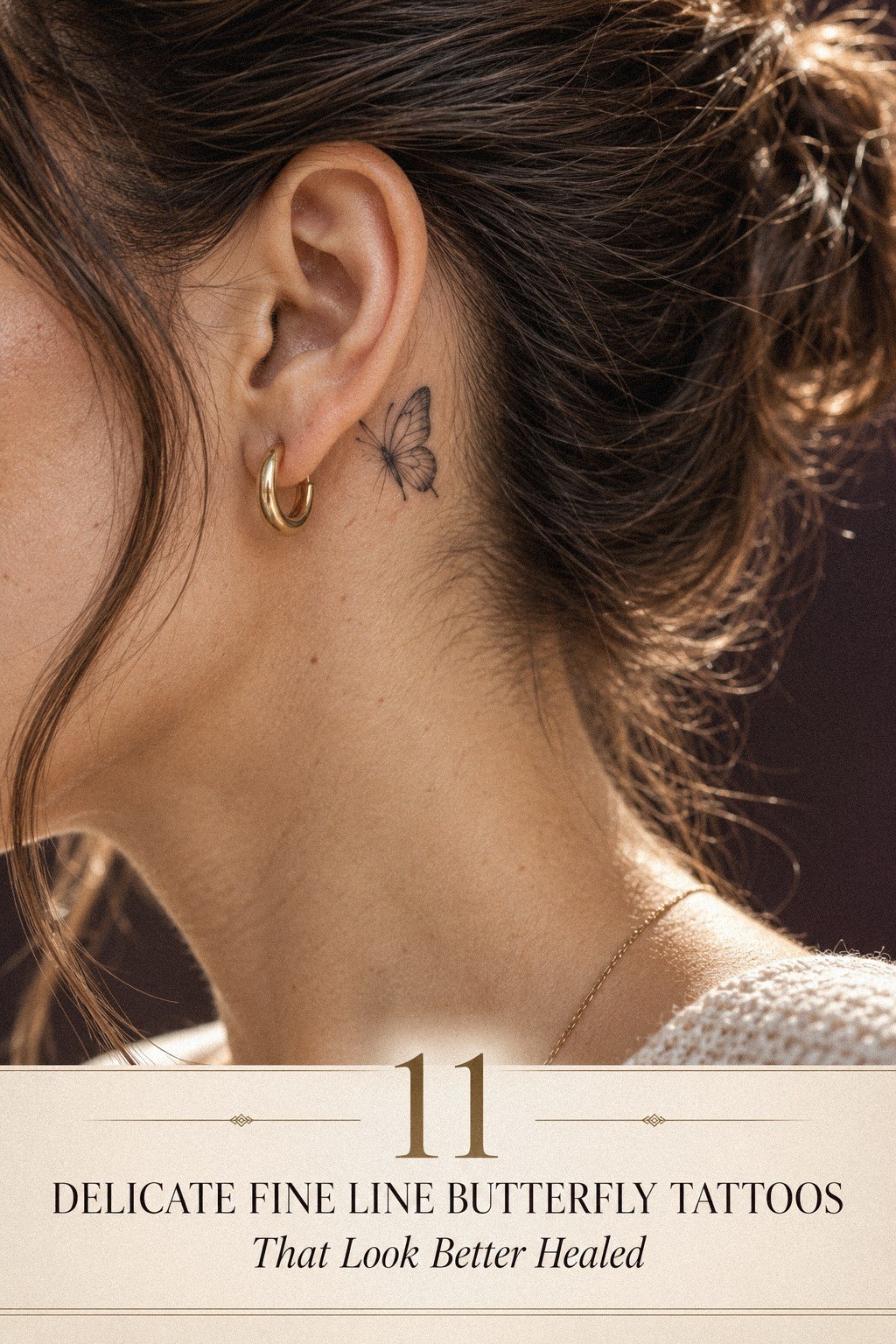
1Hide a Small Butterfly Behind the Ear
A small butterfly behind the ear is a behind-the-ear placement with an elegant edge. Keep the wings open, symmetrical, and crisp, with a narrow body and restrained internal veins. Your hair can cover it during work, while a ponytail reveals the design later.
I’d keep the wings close to 1 inch wide. Extra detail can blur when the area is tight, especially if the design is dainty rather than bold.
Ask your artist for a fine-line approach with slightly reinforced outer contours. Those lines need enough weight to survive normal fading, shampoo, friction, and sunlight.
If you want a restrained color note, terracotta or olive can echo the butterfly’s striking character without overwhelming the delicate structure.
If you’re comparing tiny placements, this tiny fine line butterfly collection gives you a useful scale reference. A delicate butterfly here feels personal without becoming precious!
2Follow the Collarbone’s Natural Line

A collarbone butterfly gives your design a graceful, flowing direction, even when the wings remain symmetrical.
A muted clay accent or a thin aged-brass tone can make the idea feel expressive while keeping the linework understated.
3Build a Botanical Butterfly on the Wrist

This wrist design blends a butterfly with botanical structure, creating a symbolic, organic look without losing its fine-line character. Let one stem rise toward the lower wing instead of filling every gap with leaves.
The vertical arrangement can make your wrist look longer, which is why I prefer this format over a wide horizontal butterfly. It feels more polished when the stem direction remains simple.
Keep the leaf shapes sparse and leave breathing room around the wings. A 1 to 2 inch height gives the artist more control than a crowded miniature.
Wrists receive frequent washing and friction, so you’ll need gentle aftercare while the surface heals for roughly 2 to 3 weeks. Complete settling can take 2 to 3 months.
For a plum, gray, or rose-gold accent, ask your artist to keep the color secondary to the botanical silhouette.
Your minimalist fine line butterfly tattoo guide can help you compare cleaner botanical options. The result can be graceful, meaningful, and quietly personal.
4Add Crescent Moon Details to a Butterfly

A crescent moon turns this thigh butterfly into something ethereal, meaningful, and quietly romantic. The moon can sit above the body, beside one wing, or slightly behind the upper contour.
You’ll have more room on the thigh, so your artist can preserve fine details without forcing every mark into a tiny space. That extra skin area supports a more ornate design without making it feel crowded.
I’d place the moon slightly off center instead of stacking it like a perfect emblem. That small shift makes your tattoo feel hand-drawn rather than stamped.
A 3 inch butterfly can hold a thin crescent, two tiny stars, and restrained dot shading. Your artist should still avoid pale gray as the main structure.
Deep navy ink gives the lines a stronger anchor as they soften. If you want a quieter emotional tone, save these delicate butterfly tattoo designs for your consultation.
The mood is sacred, but it isn’t overly ornate. That balance is what makes the idea timeless!
5Align a Fine Line Butterfly With the Spine

A spine placement works best when your butterfly follows the body’s vertical rhythm. Choose a narrow silhouette that aligns with the vertebrae instead of fighting the natural center line.
You’ll want to test the design against your posture before committing. A shape that looks balanced on paper may need a slight adjustment when your shoulders relax.
I’d skip a very tiny butterfly directly over the vertebrae if you’re hoping for crisp internal veins years from now. A 2 to 3 inch design gives the artist more room to protect the central silhouette.
Emerald or gold accents can add a vibrant note, but the cream-toned negative space should remain visible.
Spine tattoos can feel sharper than forearm or thigh work because the area is close to bone. Your comfort may vary, so ask about the likely pain level before you book.
If you’re planning a vertical motif, compare it with this delicate black butterfly tattoo inspiration. The result can be bold while remaining understated beneath clothing.
6Match Delicate Butterflies on the Fingers

Matching finger butterflies are playful, dainty, and much more visible than most ideas in this list. Choose related silhouettes rather than identical microscopic details.
Finger tattoos often fade or soften faster because of washing, friction, and constant movement. That makes simplicity more valuable than miniature decoration.
I’d choose a clear wing structure with a defined center line. Tiny shading can close up quickly, especially when the design is under 1 inch wide.
Forest green or rust can create a daring accent, but natural skin breaks should separate the color from the fine lines.
Your artist may recommend a touch-up after the tattoo settles, but no responsible professional can promise that every fine mark will last forever.
Keep the design around 0.75 to 1 inch, and ask for healed examples from the same placement and skin tone when possible. For smaller alternatives, look through these tiny small butterfly tattoo ideas.
A matching pair can work beautifully if the symbolism feels personal. This concept is feminine, expressive, and wonderfully direct!
7Layer Intricate Wing Linework on the Forearm
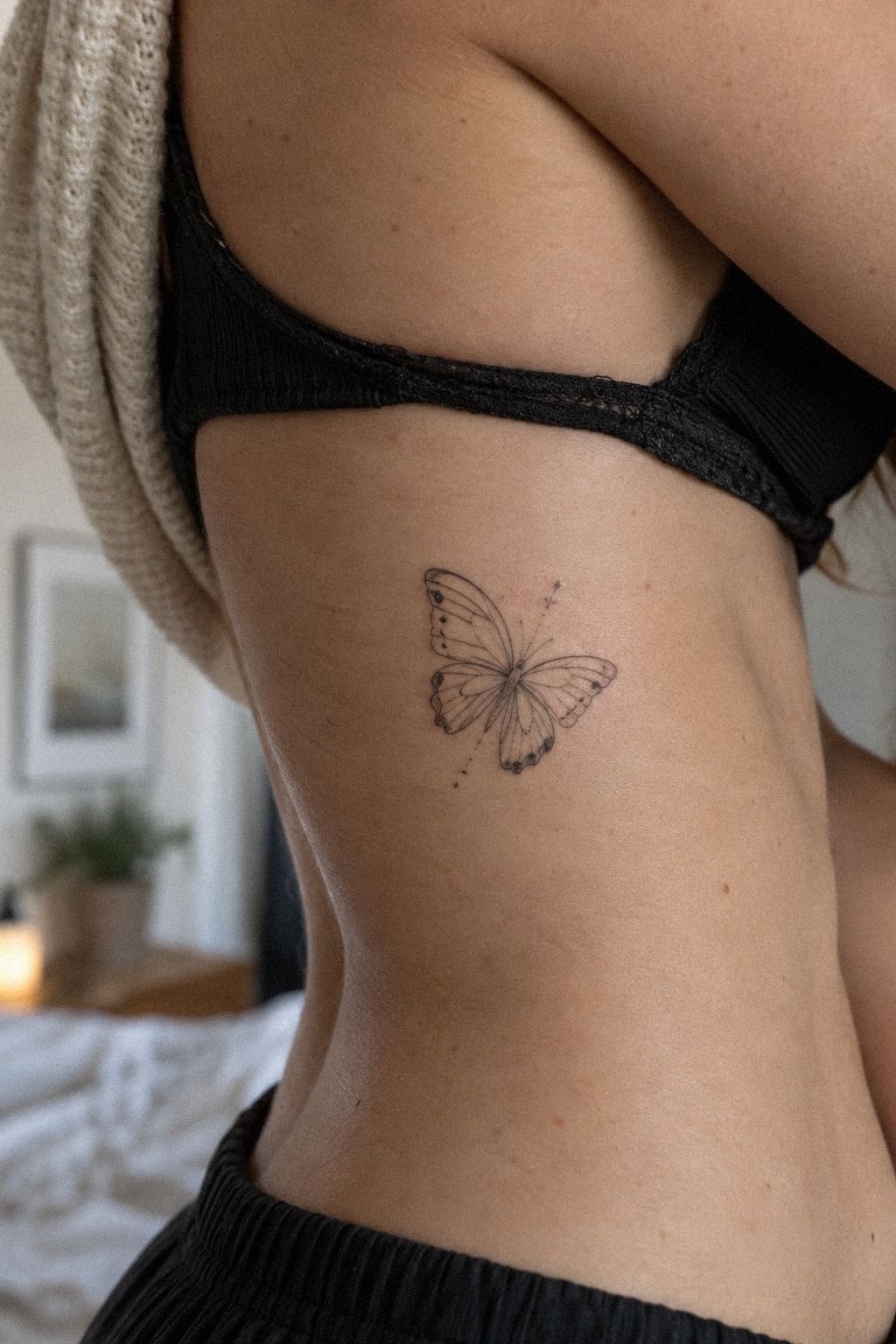
An ornate forearm butterfly lets your artist build intricate, powerful wings without making the tattoo look heavy. The outer contour should remain clean while the interior carries the drama.
Ask for three line densities: a crisp outer edge, medium wing veins, and a few lighter decorative marks. That hierarchy gives your eye somewhere to rest.
A 2 to 4 inch forearm design usually offers enough space for this treatment. Your artist should make the final call after considering your skin, preferred orientation, and long-term clarity.
Dusty rose or charcoal can soften the composition, while a small brass-colored accent keeps it vibrant.
Too much weight everywhere can turn fine linework into a dark patch. The most striking version often contains fewer marks than you expected.
If you’re weighing this against a simpler shape, compare the delicate black butterfly tattoo gallery and notice how solid black anchors hold up visually.
Your tattoo can feel ornate without becoming cluttered. Keep it readable!
8Float a Butterfly Above Wildflowers
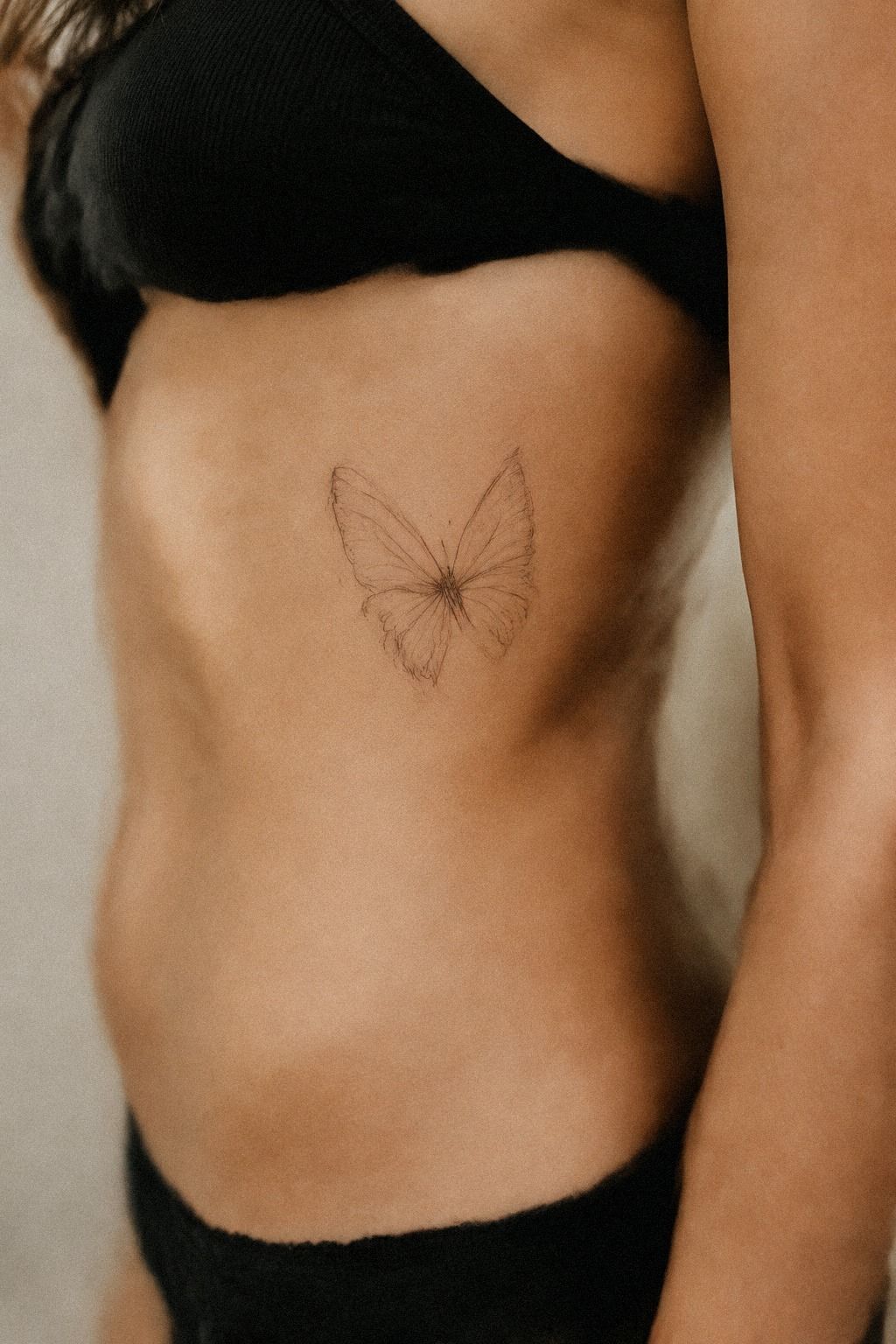
This forearm idea uses a single stemmed flower beneath a butterfly, giving you a graceful composition with gentle movement.
A warm-white, camel, or black accent can keep the wildflower detail delicate instead of competing with the butterfly.
9Mark Meaning With a Birthstone Accent

A birthstone detail can make your butterfly feel personal, vibrant, and slightly daring without adding color across the whole design. Choose one accent that carries a real connection.
Tell your artist whether the mark represents a birth month, a family member, or simply a color you carry with you. The meaning should be clear to you even if nobody else notices it.
I’d use one restrained midnight-blue or copper accent rather than several bright shades. An ivory gap can keep the color from closing into the wing structure.
Your artist should explain how that pigment may soften over time and how sun protection affects it. Keep the main structure in black so the butterfly stays readable if the accent fades first.
A consultation should include color longevity and healed examples, not only fresh work. If you prefer a purely black option, compare these minimalist butterfly tattoo ideas before deciding.
The symbolism feels meaningful, while the layout stays sleek. That contrast makes the design feel polished rather than predictable.
10Wrap Flowing Lines Around the Ankle

An anklet butterfly works best when the wings and body follow the curve of the ankle.
Sage green or warm cream can make the flowing lines feel graceful, while a natural wood-toned accent keeps the idea understated.
11Let a Shoulder Butterfly Carry the Contrast

A shoulder butterfly can carry stronger outer contours while keeping the interior delicate, sharp, and empowering. Position it so the wings remain balanced when your arm hangs naturally.
The skin shifts when you lift your arm, so your artist should check the stencil in more than one position. That small step protects the symmetry.
I’d choose selective reinforcement instead of pale gray lines throughout. Fine lines can widen as they age, and a strong silhouette gives your design a better chance of staying recognizable.
A terracotta or olive accent can echo the butterfly’s bold personality, while a dark outline keeps the shape crisp.
Your shoulder is often more tolerable than the hands, feet, ribs, or sternum. Clothing friction can still irritate fresh work, so plan your first few days carefully.
Ask for healed photographs on deeper skin tones, then discuss contrast, line weight, and sun protection. This delicate butterfly tattoo collection can help you compare shoulder scale before your appointment.
The finished piece feels fierce, iconic, and still workplace-friendly!
Choose Placement Before Detail
The most important decision is where the butterfly will live. Behind the ear, upper thigh, and shoulder beneath a sleeve offer privacy, while the forearm and wrist make the design easier to admire.
A discreet placement can be worth the tradeoff if your workplace has strict appearance rules. Check your policy before booking, especially if you’re considering hands, fingers, or the ankle.
Work visibility also affects how often the tattoo receives sunlight. Forearms, wrists, and ankles need more consistent protection than a covered upper thigh.
I’d choose the location first, then redraw the butterfly for that anatomy. A reference should guide the idea, not dictate every millimeter.
For a quick comparison, this black butterfly tattoo inspiration shows how the same symbolic direction can look more discreet or more visible depending on scale.
Can Fine Line Stay Readable Over Time?
Fine line doesn’t mean every line must be equally thin. A strong outer edge, medium veins, and lighter accents create a clearer visual hierarchy.
Your artist may simplify the design after seeing your skin in person. That isn’t a failure. It’s often the best value decision for a tattoo you want to remain readable.
Ask how the artist balances line weight with your preferred size. A tiny butterfly with too many equal lines can lose its shape as the ink settles.
Look for healed work, not only fresh work. Fresh ink can look crisp and breathtaking while hiding how the design will behave after several months.
A healed portfolio tells you more than a perfect appointment-day photograph. Compare the softened edges, remaining gaps, and overall silhouette before deciding.
Black Ink or Color?
Black ink usually provides the strongest anchor for a delicate butterfly. It keeps the outer silhouette clear when smaller details soften.
Color can be meaningful, but it changes the maintenance conversation. Sun exposure and natural fading may affect bright accents sooner than black structure.
If your budget is limited, spend first on a strong outline and an experienced artist. A single polished accent often offers more value than several rushed colors.
This black butterfly tattoo inspiration can help you compare crisp silhouettes. The style can feel raw, edgy, or classic depending on the wing structure.
A color accent works best when it has a reason to exist. If you’re adding pigment only because the design feels empty, ask whether more negative space would solve the problem more elegantly.
Workday Visibility and Clothing
A workplace-friendly tattoo doesn’t have to be invisible all the time. It needs a placement you can control with ordinary clothing.
Behind the ear disappears beneath loose hair. The upper thigh stays private under most workwear. A shoulder butterfly can remain covered by a standard sleeve.
Finger and wrist designs are harder to conceal, even when they’re tiny. Consider that visibility before deciding whether the lower price of a small design is worth the professional tradeoff.
Cover-up clothing should be comfortable during healing. Avoid anything that presses directly against fresh ink or repeatedly drags across the area.
If your policy is strict, the upper thigh or behind-ear option gives you more control than a hand tattoo. This small butterfly tattoo guide can help you compare discreet proportions.
What Will the Tattoo Cost?
Tattoo cost depends on the artist’s minimum, location, size, color, and design complexity. A tiny butterfly may still cost more than expected because many studios charge a minimum fee.
These are planning ranges, not promises. Your artist’s minimum and local pricing can change the final cost.
For a clearer budget estimate, ask whether the quote includes the consultation, stencil changes, color, and a possible touch-up. That question can prevent surprises.
The cheapest appointment isn’t always the best value. Clean healed work matters more than saving a small amount upfront.
Before booking, compare this fine line butterfly tattoo collection with the scale you actually want. The smallest reference may require more precision than a slightly larger, more readable design.
How Does Healing Affect Long-Term Clarity?
The surface commonly heals in 2 to 3 weeks, but complete settling can take 2 to 3 months. Follow your artist’s instructions rather than copying a routine from social media.
Wash gently, avoid picking, and keep pools and prolonged soaking out of the early healing period. Your artist may recommend a specific moisturizer or a thin layer of aftercare product.
Sun protection becomes part of protecting your investment. UV exposure can fade black ink and soften delicate contrast over time.
Healing time varies by placement, skin, clothing friction, and personal health. Ask what changes should prompt a message to the studio or a medical professional.
A tattoo that remains legible is usually worth more than one that looked impressive only on appointment day.
Your delicate black butterfly tattoo inspiration can help you judge whether a design has enough contrast before you commit to a very small version.
How to Bring a Reference
Bring one primary reference and one backup. Explain what you love about each instead of asking for an exact copy.
You might love the wing shape, the moon, the open gaps, or the overall mood. Those details help your artist create something personal and anatomically suitable.
Tell them what must remain visible. If the butterfly needs to stay discreet at work, say that before the stencil is placed.
This fine line butterfly tattoo collection can help you compare scale, while this minimalist butterfly tattoo guide can help narrow the structure.
A responsible artist may make the butterfly wider, simplify the veins, or remove tiny accents. That’s how a meaningful idea becomes a polished tattoo.
Bring a note about your preferred placement, scale, and contrast. Clear priorities make the consultation faster and give the artist room to make thoughtful adjustments.
What I’ve Learned About Fine Line Butterflies
I used to think the smallest butterfly would automatically be the easiest choice. It isn’t. A tiny design can demand more precision because every wing vein, gap, and curve has less room to breathe.
I’ve seen people choose a reference that looked exquisite on a screen, then ask an artist to shrink it until the details became too close together. That’s where a crisp black outline matters more than extra decoration.
Your best decision starts with placement, not mood. If you need privacy during work, behind the ear, upper thigh, or shoulder beneath a sleeve gives you control.
If you want to admire the design daily, the forearm or wrist offers visibility but requires more sun protection. Hands, fingers, feet, ribs, and sternum can be more painful or demanding during healing.
I’d also ask for healed photographs taken after at least several months. Fresh ink can look striking, but the settled version tells you whether the lines remain readable.
Fine lines may spread slightly with age, and UV exposure can speed fading. Sunscreen becomes part of protecting your investment.
A black anchor, enough negative space, and a size your artist can execute cleanly will beat a crowded miniature every time. What’s the point of choosing a delicate tattoo if you’ve squeezed out the detail that made you love it?
For a consultation, bring one primary reference and one backup. Show your preferred placement, explain what must remain visible, and let the artist redraw the design for your anatomy.
A responsible artist may simplify the veins or remove tiny accents. That isn’t losing the concept. It’s how your personal idea becomes a tattoo that can age with more clarity.
If you want another comparison point, these small black butterfly tattoo ideas show how bold outer edges can support a restrained interior.
A Few Things Worth Answering
How much does a delicate fine line butterfly tattoo usually cost?
A delicate fine line butterfly tattoo in the US typically costs about $100 to $300, depending on size, placement, artist, and region. Some studios have a minimum of roughly $50 to $100, while hourly rates often fall around $100 to $250. Artist experience and clean healed work matter most.
Are delicate fine line butterfly tattoos a good idea for a first tattoo?
Yes, they can be a good first tattoo if you choose a practical placement and a design your artist can execute clearly. Forearm, thigh, and shoulder placements are often more tolerable than hands, feet, ribs, or sternum. A readable silhouette gives your first piece staying power.
How do I choose a tattoo artist for delicate fine line butterfly tattoos?
Review portfolios for clean linework, balanced symmetry, and healed photographs rather than relying only on fresh images. Look for experience with fine line tattoos and confirm the studio follows strong hygiene practices. A specialist should explain line weight and aging honestly.
How much do delicate fine line butterfly tattoos hurt?
Pain depends on your sensitivity and the location. Ribs, feet, hands, and sternum are often more painful, while the forearm, thigh, and shoulder are usually more tolerable. Placement changes the experience more than the butterfly itself, so ask your artist what to expect.
How long does a delicate fine line butterfly tattoo take to heal?
The surface commonly heals in about 2 to 3 weeks, while complete settling can take roughly 2 to 3 months. Wash gently, moisturize as directed, avoid pools during early healing, and protect the tattoo from sunlight. Patient aftercare helps the lines settle cleanly.
What’s the best placement for delicate fine line butterfly tattoos?
Behind the ear is discreet, while the forearm is easier to see and protect. The thigh and shoulder offer more space for readable detail and are often more tolerable than hands or feet. Choose the placement that fits your work, pain comfort, and desired visibility.
Where I’d Start First
If I had to pick one, I’d start with the forearm butterfly above wildflowers. You’ll have enough space for clean spacing, easier healing access, and a placement that won’t force the artist to erase the details you loved.
If privacy matters more than daily visibility, I’d choose the behind-ear butterfly or the upper-thigh crescent design. Both can stay personal during work while still feeling meaningful.
Pin one reference for later and take the healed example to your consultation. The best butterfly is the one that still feels like you after the novelty fades.
For a final black-ink comparison, browse these minimalist small butterfly tattoo ideas and choose the version whose personal symbolism still feels powerful at a practical size.

