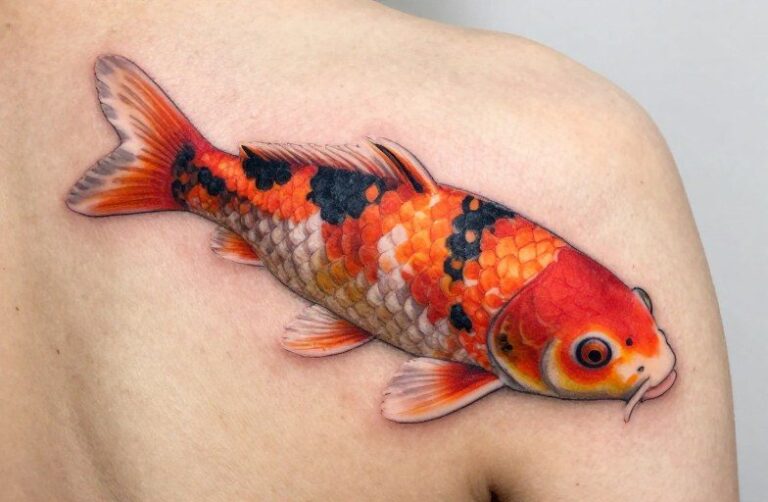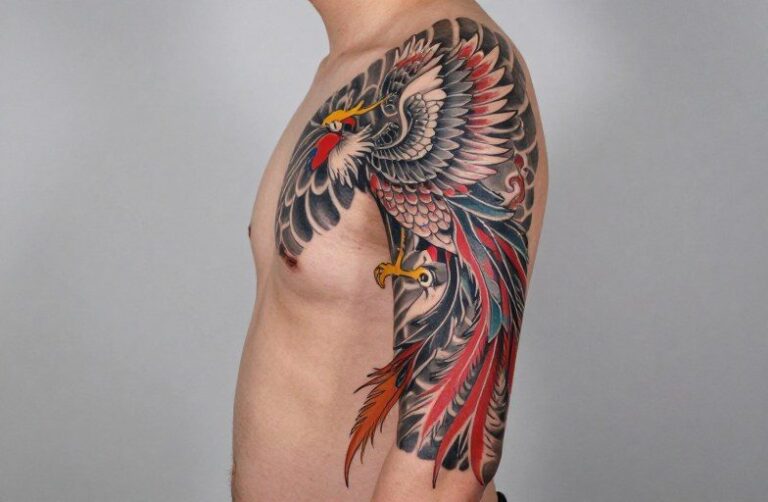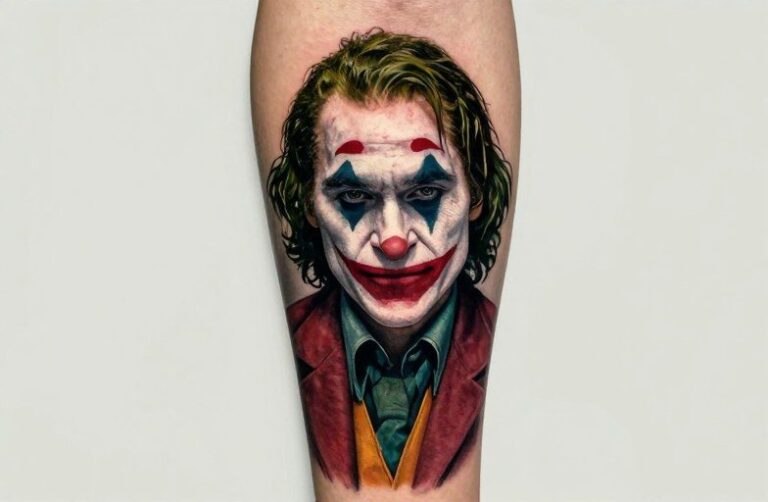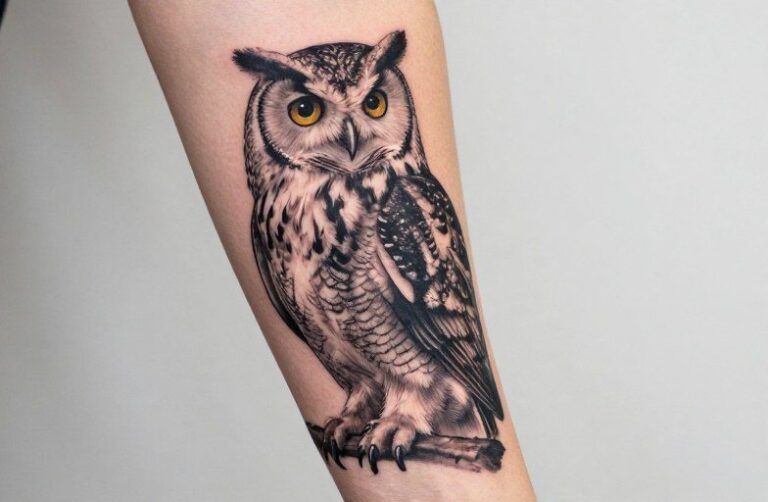
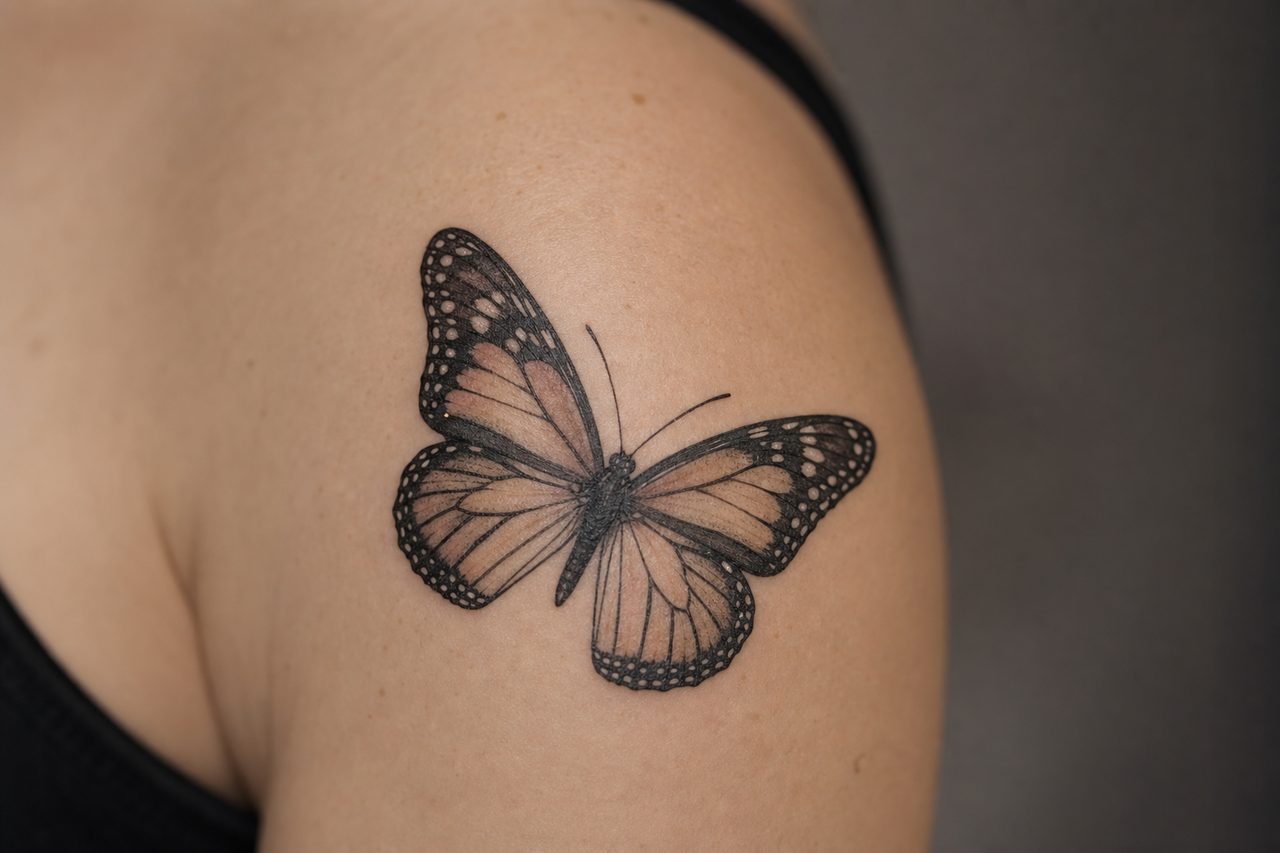
A realistic butterfly tattoo reproduces the insect’s actual anatomy, veined wings, segmented body, compound eyes, antennae with clubbed tips, rather than flattening it into a symbol or decorative shape. The goal is illusion: wings that appear to cast shadow, scales that catch light, a body that looks three-dimensional against skin. This demands technical precision from the artist and realistic expectations from the wearer about how detail ages and where on the body it holds up.
Key Characteristics & Motifs
Realism in butterfly work hinges on specific visual elements that separate it from traditional or neo-traditional approaches. The wing patterns must follow actual species morphology, monarch orange bands, blue morpho iridescence, swallowtail tails and eyespots, not invented color schemes. Foreshortening matters: a butterfly viewed from above shows both wings spread flat; in profile, wings overlap and the body becomes cylindrical. Most successful pieces choose one clear angle rather than muddling several.
Species Accuracy vs Artistic License
Some collectors want exact species replication, down to correct wing vein branching and scale density. Others prefer a composite: the general structure of one species with color saturation pushed for skin impact. Both approaches work, but the artist needs to know which you want before the stencil goes on. Photographic reference from multiple angles helps, single-source images flatten the subject and miss how wings curve in space.
Background and Context
Butterflies in nature rarely sit on empty space. Many realistic pieces incorporate leaves, branches, or implied light sources to ground the insect. Others use negative space deliberately, letting the body and wings emerge from bare skin. The choice affects composition: a butterfly landing on a collarbone reads differently than one mid-flight across a shoulder blade with motion blur on the wing edges.
Linework & Technique
The technical foundation of realistic butterfly tattoos sits in two approaches: smooth color gradation for vivid species, or black-and-grey with extreme value range for sculptural form. Neither is easier. Both require the artist to build tone through multiple passes rather than relying on outline to hold the image together.
Color Saturation and Layering
Vivid butterflies, morphos, birdwings, some swallowtails, demand saturated blues, oranges, and greens that sit bright against melanin-rich skin. This means packing pigment densely through the dermis without blowout. Artists typically work from light to dark in color realism, building mid-tones first then dropping in shadows and highlights. White and pale yellow go in last, often healed and touched up, since they sink or disappear fastest. The wing veins get pulled with a single tight needle grouping, sometimes grey-washed, sometimes dark enough to read as shadowed grooves.
Black-and-Grey Approach
Without color, the artist must communicate species identity through value alone: the dark marginal bands of a monarch, the pale spots on a painted lady, the transparency of cabbage white wings where light passes through. This demands broader value range than most black-and-grey subjects, true whites (skin, no ink), deep blacks, and everything between. Smooth shading prevents the moth-like, fuzzy appearance that kills the realism.
Choosing the Right Artist
Not every realism specialist handles insects well. Butterflies combine portraiture-level detail with unusual textures, powdery scales, glassy eyes, filament antennae, that differ from skin, fur, or mechanical subjects. Portfolio review should show:
- Actual insect or at least small-scale organic realism, not just large animal portraits scaled down
- Healed results, not just fresh photography; color vibrancy and line crispness at six months reveal technique
- Wing transparency handled without muddy grey smears
- Antennae and leg details that survived healing without blurring into thick lines
Ask specifically about their reference process. Artists who work from a single Pinterest image tend to reproduce flatness. Those who build composite references from entomological sources, macro photography, and their own sketches understand the structure they’re tattooing. Geographic proximity matters less than fit, traveling for the right artist beats convenient mediacy with a subject this technically demanding.
Modern Variations
Contemporary approaches stretch the realistic foundation without abandoning it entirely. Double exposure butterflies contain landscape or sky imagery within the wing silhouette, still anatomically correct, but carrying secondary content. Others play with scale: butterflies rendered at actual size (often smaller than people expect, two to four inches wingspan) versus enlarged to ten or twelve inches for dramatic detail. Some collectors request partial decomposition or damage, tattered wings, missing scales, to reference impermanence without abandoning the realistic rendering style.
Biomechanical and Fusion Styles
A smaller subset combines realistic butterfly anatomy with mechanical elements: visible gears in the thorax, wire-frame wing veins, metal where chitin should be. This requires an artist comfortable in both realism and technical illustration, since the mechanical parts must match the lighting and perspective of the organic ones or the piece collapses visually.
Cost & Sessions
Realistic butterfly work ranges from small single-session pieces to extensive multi-session projects. A palm-sized black-and-grey piece with moderate detail typically runs three to five hours. Full color, large scale, or complex background extends to two or three sessions of similar length. Pricing structures vary by region and artist tier, some hourly, some per session, some flat project rates for work they can estimate accurately.
The real cost consideration is touch-up necessity. Pale colors, fine lines, and white highlights often need reinforcement after healing. Budget for this; it’s not a failure of the artist but the reality of how light pigments settle in dermis. Discuss touch-up policy before booking, some artists include them within a window, others charge separately.
Common Mistakes to Avoid
Placement errors top the list. Butterflies need relatively flat, stable skin to preserve wing symmetry and detail. The center of the chest, inner bicep, and abdomen all shift and stretch enough to distort the image over time. The upper back, outer upper arm, thigh, and calf offer better longevity. Finger and hand placement almost guarantees blur and fade; the detail simply cannot hold at that scale with that much movement and sun exposure.
Size Compromise
Going too small destroys the effect. At under three inches wingspan, realistic vein structure becomes impossible; the artist must simplify to illustrative or traditional styling. Collectors sometimes request tiny butterflies behind ears or on wrists expecting photographic detail. The physics of skin and ink don’t allow it. Commit to the scale the subject demands, or choose a different style.
Aftercare Neglect
Color realism with heavy saturation requires disciplined aftercare. Premature sun exposure fades blues and greens fastest. Picking at scabs pulls pigment from precisely the fine lines that define wing veins. Swimming with fresh work introduces infection risk that can permanently damage the tattoo. The first two weeks determine much of the long-term appearance.
Final Word
A realistic butterfly tattoo succeeds when the insect looks like it could lift off the skin, when light seems to pass through wing membranes, when the body casts a believable shadow, when the antennae taper to fine points that survived the healing process. This requires the right artist, the right scale, the right placement, and the patience to let dense color work heal properly. The result, done well, carries the specific pleasure of trompe-l’oeil: a moment of nature held still, examined closely, made permanent.
Frequently Asked Questions
How long does a realistic butterfly tattoo take to heal?
Surface healing takes two to three weeks, but full settling of color and final clarity of fine lines can take two to three months. Plan touch-ups no earlier than three months out.
Do realistic butterfly tattoos work on darker skin tones?
Yes, but color choice matters. Deep blues, magentas, and oranges show better than pale yellows or whites. A skilled artist adjusts value contrast to ensure the form reads clearly without relying on light pigments alone.
Will the colors fade to grey over time?
All color tattoos shift with age and sun exposure. Blues and blacks tend to hold longest; reds and yellows fade faster. Realistic butterflies with strong value structure remain readable even as saturation softens.
Can a realistic butterfly cover up an older tattoo?
Cover-up feasibility depends on the existing tattoo’s darkness and location. Dark, saturated old work limits options since butterfly realism needs light areas for wing highlights. A skilled artist can assess whether partial fading or a different approach works better.