Watercolor dragon tattoos can stay discreet without looking timid. I once chose a design that was too crowded for its placement, and the color clouded the fine details. These ideas use readable linework, thoughtful scale, and placements you can cover when needed. That is the whole trick!
Editor’s note: Keep the silhouette strong, the color plan limited, and the meaning personal. A smaller tattoo can still feel striking, intricate, and expressive when every mark has a job.
- How a Wrist Coil Keeps a Dragon Discreet
- Petal-Scale Balance for Blossoming Wings
- Let the Forearm Carry the Motion
- The Constellation Scale Map
- Behind the Ear, Barely There
- Build the Ankle Spiral
- The Shoulder Arc
- What Japanese Folklore Adds to the Flow
- Minimal Linework, Maximum Identity
- Ocean Colors, Crisp Structure
- Hide the Ribcage Emblem
- Hidden Placement Comparison: What Disappears Most Easily?
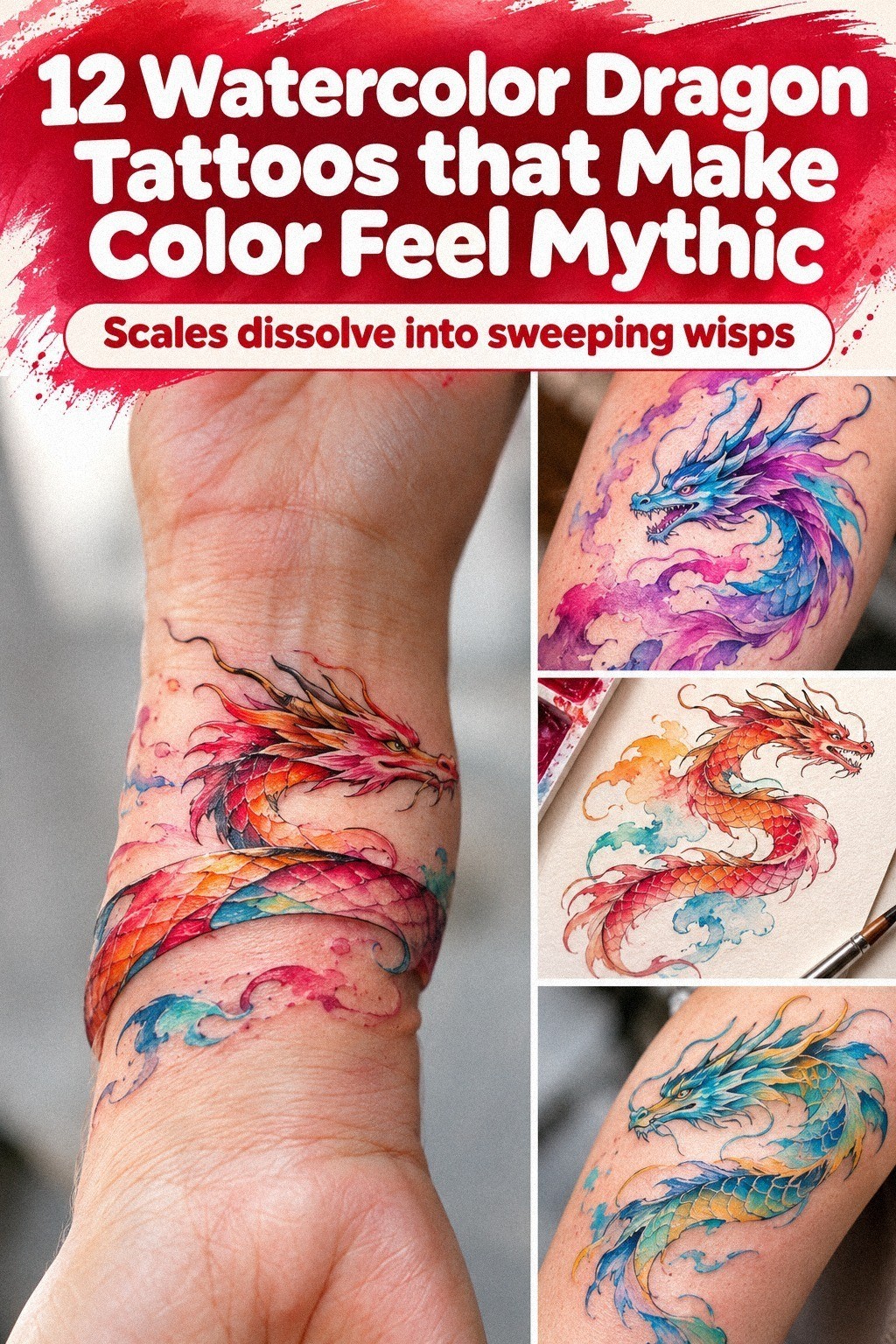
1How a Wrist Coil Keeps a Dragon Discreet
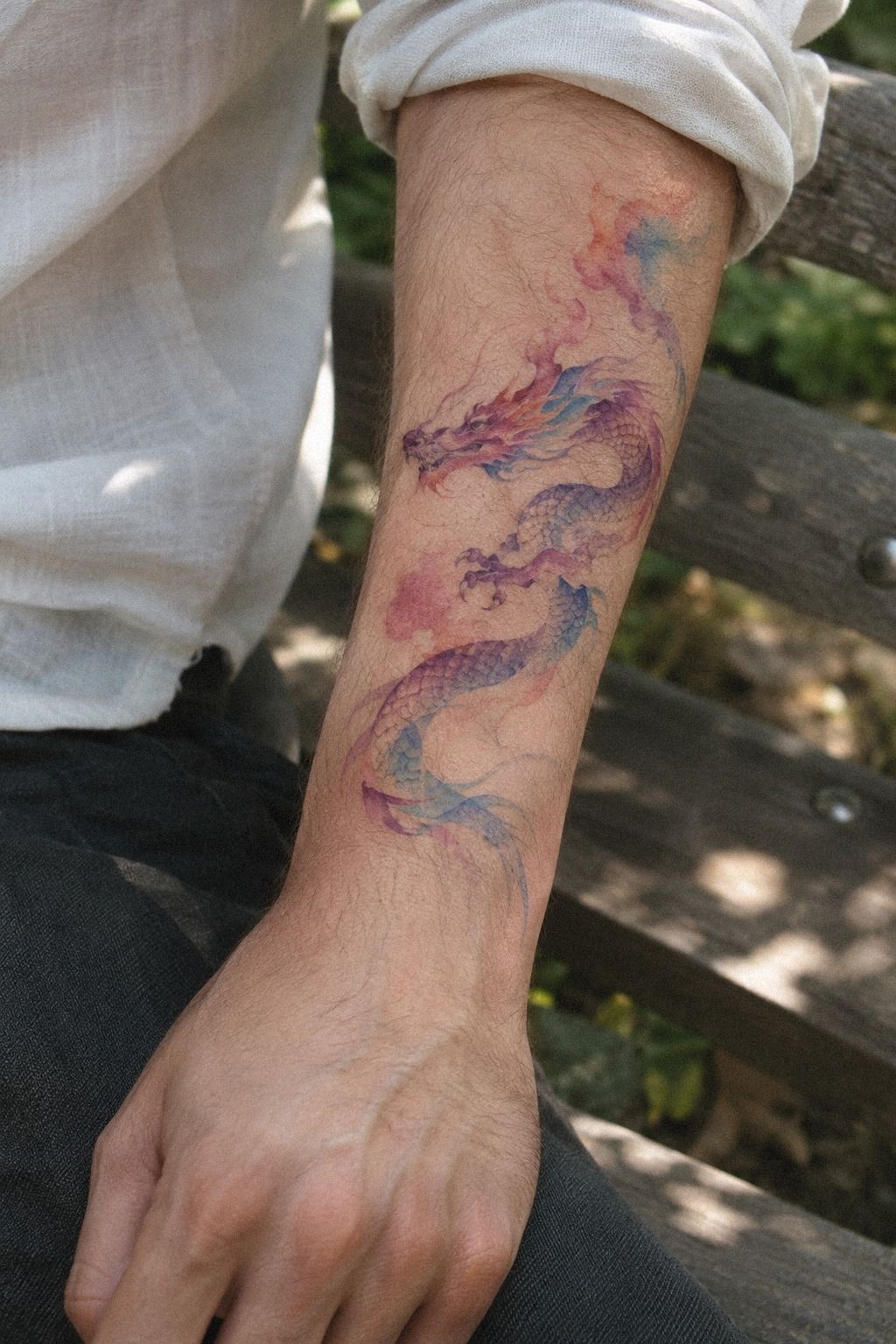
A small dragon curling around the wrist feels personal because you’ll see it constantly, while sleeves or a watch can cover it when needed. Keep the head crisp and let the tail taper into fine black linework instead of forcing every scale into a tiny area. I’d choose an understated silhouette over a crowded miniature scene because the wrist moves, bends, and catches sunlight all day.
For your artist, bring a reference with a clear coil, one visible eye, and a limited wash of color. Terracotta pigment with touches of muted olive and stone can look striking against fair cool-pink skin without becoming loud. Your dragon can feel delicate and fierce at once if the line weight changes near the head and thins along the tail.
I’d avoid placing the busiest detail directly over the wrist crease. That spot folds constantly, and you’ll want the central shape to remain readable as your hand moves.
A slightly higher placement gives your artist more stable skin and keeps the design easier to hide beneath a cuff. Your small dragon tattoos board can help you compare scale before booking.
A tiny symbol near the coil can add meaning without making the piece ornate. A moon, a single star, or a narrow flame works better than a full background.
If you’re choosing between more color and cleaner anatomy, choose cleaner anatomy. The dragon’s posture should carry the idea.
For aftercare, you’ll want gentle washing and light hydration while the surface heals for roughly two to three weeks. Keep your wrist out of direct sun during that stage.
The finished tattoo may feel crisp and playful now, but protecting it helps the delicate color remain expressive. Artist-approved healing instructions should always take priority.
2Petal-Scale Balance for Blossoming Wings
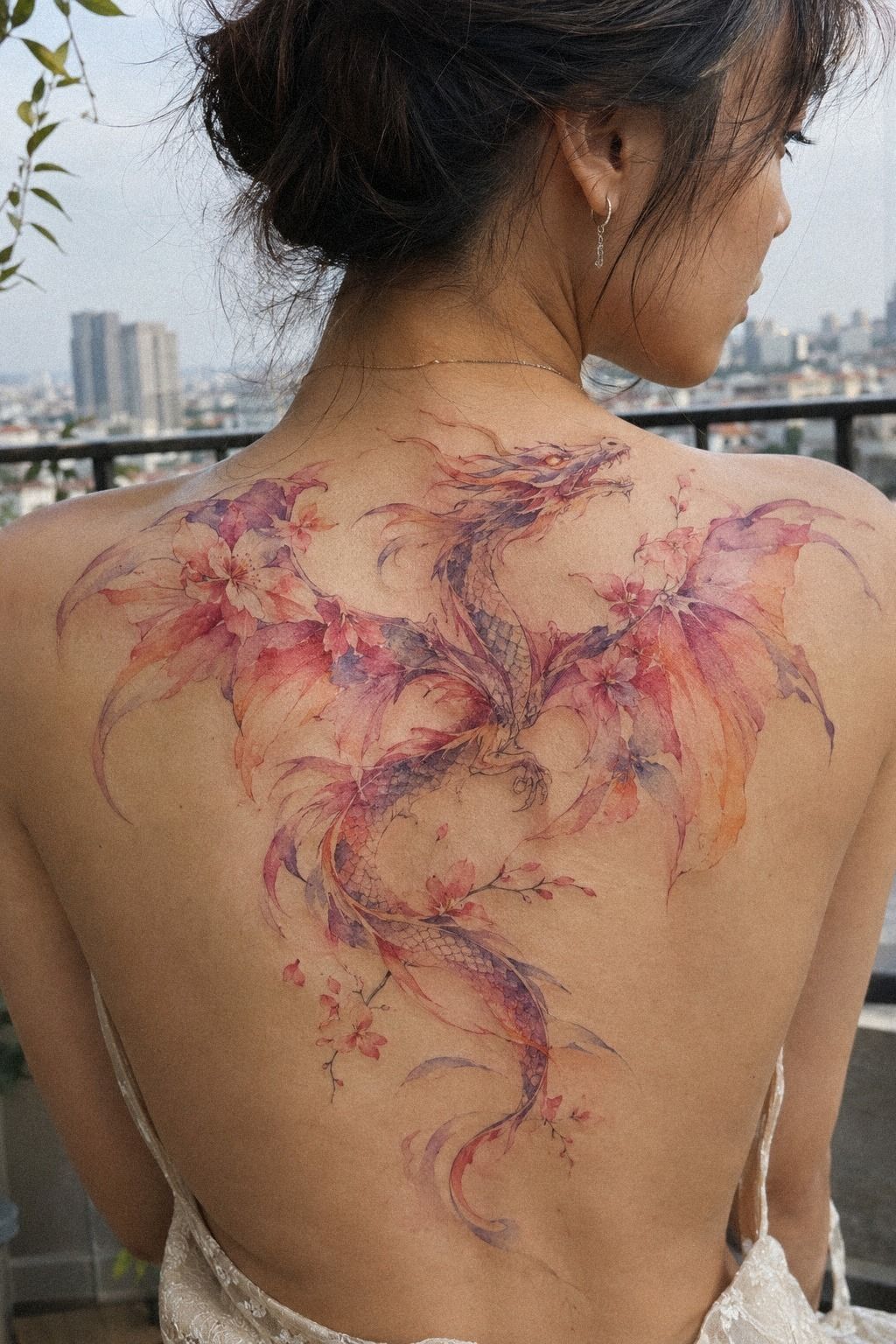
A dragon with wings shaped like blossoms gives your upper back enough surface for a graceful silhouette and layered color. Ask for blossoming wing shapes that open away from the spine, with the dragon curling through the center rather than sitting stiffly across the skin. This placement can feel feminine, symbolic, and quietly powerful when the wings remain open.
Your artist might use clay, warm linen, and aged-brass tones for the wings, then reserve deeper pigment for the dragon’s face and spine. That contrast keeps the piece readable against medium warm ivory skin.
I’d skip a full rainbow wash here. It can look vibrant in a sketch but muddy once too many translucent colors overlap.
The upper back is easy to conceal under most shirts, so you can make your design more expressive without committing to constant visibility. A rounded composition will disappear beneath a scoop neck, while a taller design can stay hidden under a standard crew neck. If you’re collecting references, compare this idea with watercolor unique butterfly tattoos for wing movement.
I once saw a winged design lose its elegance because every feather had the same outline. Your dragon will look more intricate if the artist leaves a few wing sections as open skin. Negative space gives the color room to breathe and makes the central curl feel sharper.
That restraint is what keeps the piece timeless.
Bring your artist a healed-portfolio example, not only a fresh photograph. Watercolor effects can soften, and fine lines may spread slightly over time.
A bold anchor line through the dragon’s spine gives your tattoo structure while the petal color stays ethereal. You’ll get a romantic image with a stronger backbone.
Healed portfolio examples are worth more than a dramatic first-day result.
3Let the Forearm Carry the Motion
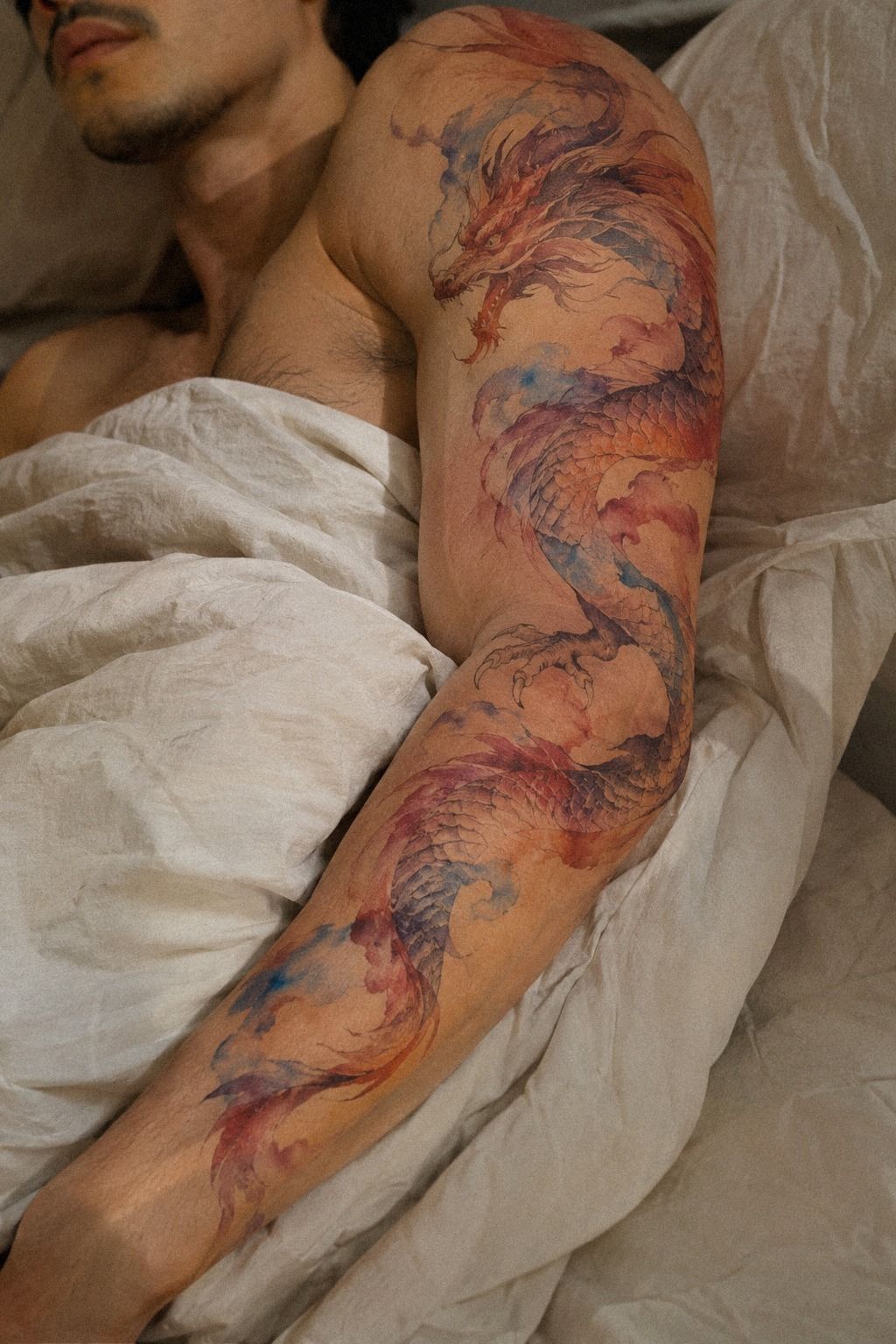
A forearm dragon works best when its body follows the long direction of the limb. A flowing S-curve can make a small design feel longer without making it visually loud. I’d keep the head near the elbow side and let the tail narrow toward the wrist.
The inner forearm gives you a readable view throughout the day, but a long sleeve can cover it quickly. Inner-forearm placement also gives your artist a relatively stable surface for a clean stencil and controlled color transitions.
Use one dominant wash, such as plum, then reserve grey and rose-gold tones for the eye or wing tips. Too many colors can flatten the anatomy. A crisp head and one sharp claw will usually create more identity than a dozen tiny scales.
If your goal is discreet visibility, choose the inner forearm over the outer forearm. The outer side announces the tattoo sooner when your arm rests naturally. The inner side keeps the dragon available to you while remaining easier to cover at work or during formal events.
4The Constellation Scale Map

Celestial scales can make a collarbone dragon feel unique without adding a giant scene around it. Picture a slim body with small star points worked into selected scales, plus a navy-and-white wash that follows the curve of your collarbone. The result is symbolic, expressive, and slightly haunting, especially when the open skin remains part of the design.
Ask your artist to treat the stars as structure, not decoration. Navy pigment around the dragon’s spine can anchor the shape, while white and walnut-brown notes give the scales a polished glint.
I’d avoid outlining every star. Too many hard points will compete with the dragon’s head.
This placement has a clear advantage when you want the tattoo hidden under a high neckline. It also has a practical limitation: the collarbone is close to bone, so the session may feel sharper than an upper-arm appointment. Your artist can adjust the scale and pacing if you’re new to tattooing.
You don’t need to prove anything through a longer session.
A small constellation tied to your birth month can make the design meaningful, but you’ll want to check the star arrangement before the stencil is applied. Fine-line celestial marks can blur if they’re too close together. Give each point breathing room, then let the dragon carry the emotional weight.
I’d pair this concept with a simple tail rather than extra clouds, moons, and planets. Your dragon already has a strong story.
Another symbol may make the image feel ornate instead of meaningful. For more restrained references, browse minimalist dragon tattoos and notice how little detail can still create a recognizable creature.
5Behind the Ear, Barely There

Behind-the-ear dragon tattoos are ideal when you want a dainty idea that disappears beneath your hair. A short profile, curved horn, or tiny wing can suggest the creature without reproducing every anatomical detail. This is a discreet choice with an edgy little flash of personality.
Keep the design simple enough to read at a glance. Behind-the-ear placement has limited surface and constant movement from hair, glasses, and daily washing. A clean jawline and one tapered tail will age more gracefully than a dense cluster of scales.
Color can work here, but I’d keep it focused. An emerald wash beneath the wing or a single gold-and-cream eye may be enough. Small watercolor accents should support the silhouette rather than cover it.
This spot is easy to conceal with hair, but it is not invisible when your hair moves. Ask yourself whether you want occasional discovery or complete privacy. If you want the latter, the upper back or ribs will serve you better.
6Build the Ankle Spiral

An ankle dragon can wrap around the limb like a narrow ribbon, with the head resting above the outer ankle and the tail tapering toward the heel. This shape feels graceful and personal, especially when you want the design hidden under socks or trousers. Keep the spiral open enough that ankle movement doesn’t swallow the anatomy.
Against deep ebony skin, forest-green watercolor with rust and warm oak-brown accents can create a bold, elegant contrast. Ask your artist to test color visibility and explain how the selected pigments will appear on your skin tone. The goal isn’t the brightest possible wash.
It’s a readable dragon with a warm, vibrant center.
Ankles can be more sensitive than forearms or thighs, and bony areas may feel sharper during the appointment. Your watercolor owl tattoos references can help you compare compact compositions, but a dragon needs a longer directional flow. I’d favor a low, horizontal head over a tiny upright creature that loses its shape.
Leave the heel crease and the most mobile fold relatively open. Your tattoo will heal more comfortably when the design doesn’t push dense pigment into every moving section.
After healing, limit direct UV exposure because sunlight can fade watercolor effects. You’ll want sunscreen to become part of your normal routine once the skin is fully healed.
If you’re torn between a full ankle band and a partial curl, choose the partial curl. A complete band can look generic, while a broken spiral feels more expressive.
One strong wing, horn, or eye gives your dragon a memorable focal point without making the placement heavy. Partial-spiral composition usually gives you more breathing room.
7The Shoulder Arc
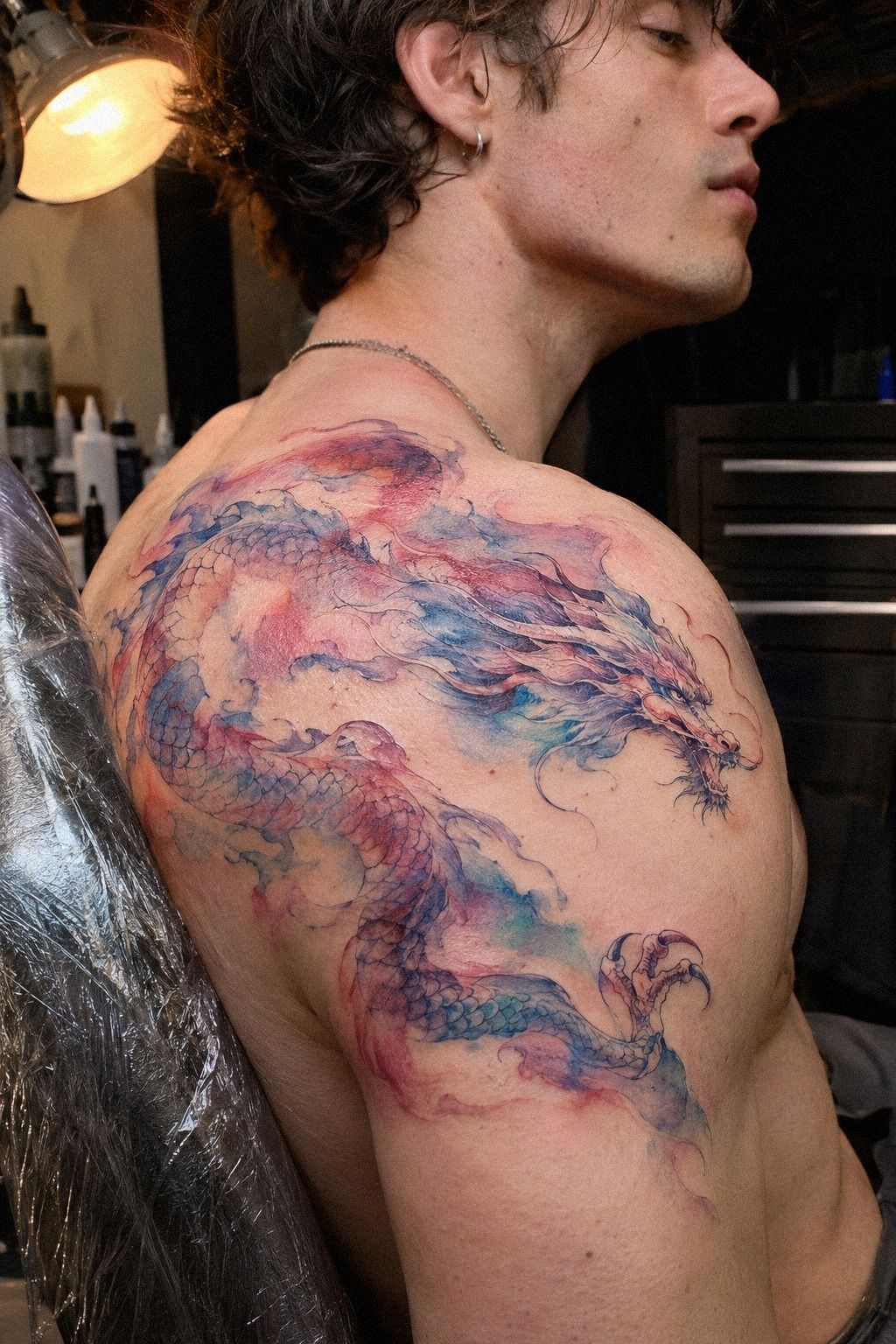
A shoulder dragon can follow the natural arc from the upper arm toward the collarbone, giving you a bold composition that clothing can cover easily. Let the dragon’s body curve with the shoulder instead of laying it across the muscle like a sticker. That movement makes the design feel alive, sleek, and powerful.
For fair cool-pink skin, dusty-rose watercolor with charcoal and brass-toned accents can create a sharp contrast, especially when the wash fades toward the outer wing. Your artist should place the darkest line around the head, rib cage, and main limb. Those anchors help the image stay readable while the softer color remains expressive.
The shoulder is often more tolerable than ribs, hands, feet, or sternum, but the upper arm and collarbone won’t feel identical. Ask for breaks if you need them. I’d rather see you leave with a clean, finished section than push through discomfort and compromise the linework.
A shoulder placement gives you styling flexibility. A tank top can show the full dragon, while a T-shirt can cover most of it.
If you’re considering a larger piece, connect the tail to the arm rather than filling the entire shoulder with background color. Your skin should remain part of the composition.
Use a healed reference to judge the relationship between color and line. Greywash shading can add depth beneath the wing, but too much grey may mute a bright wash. If you’re comparing animal subjects, watercolor eagle tattoos can teach you about wing direction without dictating your dragon’s anatomy.
8What Japanese Folklore Adds to the Flow

Japanese folklore gives your dragon a strong visual language through long movement, cloud shapes, and controlled color. You can borrow the sense of motion without copying a specific traditional image. A long body, lifted whiskers, and a deliberate curve often say more than a crowded collection of symbols.
Decide what the folklore means to you before adding motifs. A pearl may suggest wisdom, a wave may suggest endurance, and a flame may suggest transformation. Japanese-inspired linework should feel considered rather than pasted onto a generic dragon.
For a discreet result, use one cultural cue and let the anatomy lead. A narrow collarbone piece or an upper-back design can carry the movement while remaining easy to cover. I’d avoid adding clouds, waves, flowers, and stars all at once.
If you want a stronger masculine direction, use a longer body, darker contour, and restrained color. A softer palette and smaller wing can feel feminine without becoming decorative. The best choice is the one that matches your meaning, not a category assigned by someone else.
9Minimal Linework, Maximum Identity
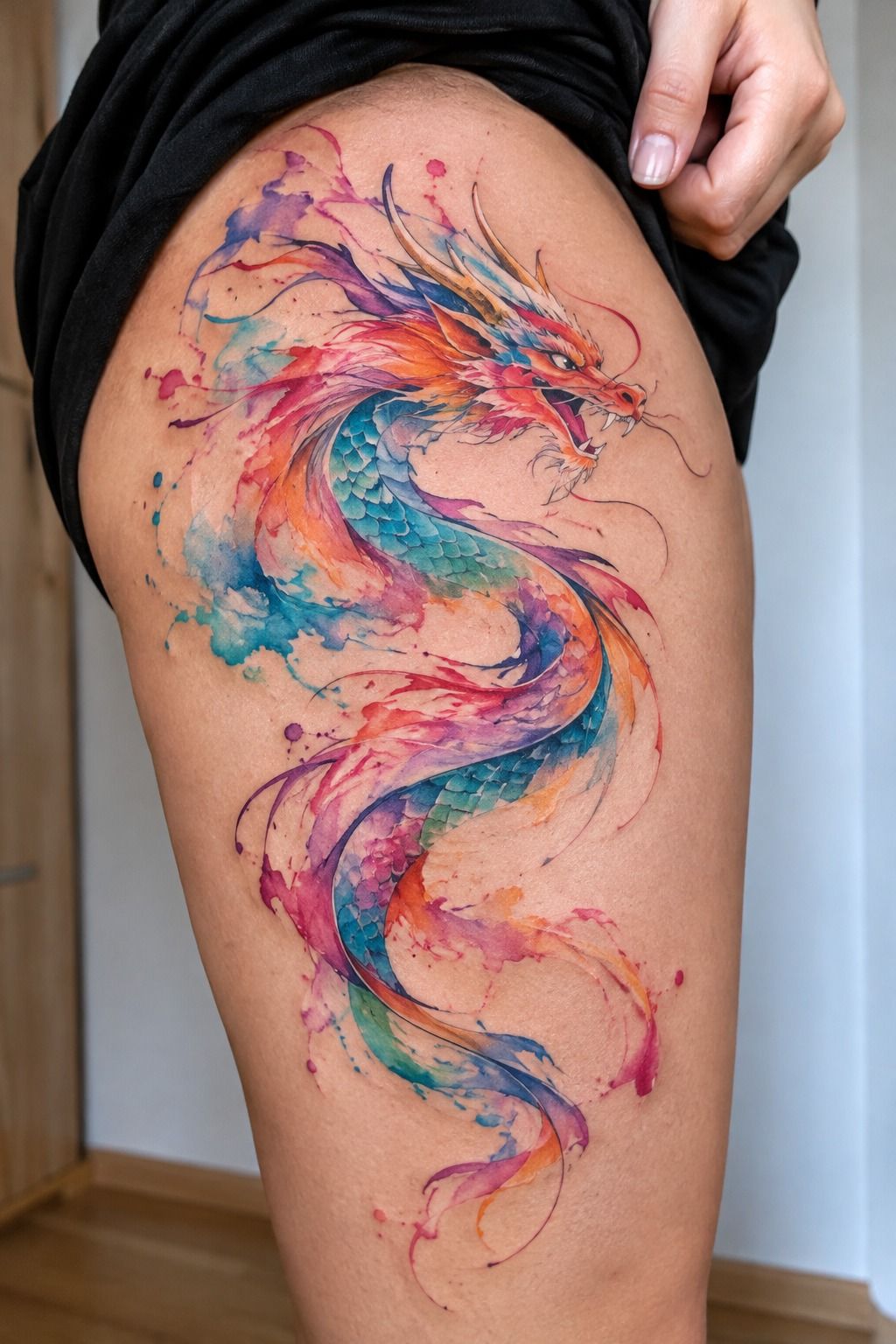
Minimal dragon tattoos can feel crisp and modern when the artist gives the line room to breathe. A thigh placement offers enough surface for a thin body, a small wing, and one watercolor mark without forcing the design into a cramped shape. The result can be understated, stylish, and quietly daring.
For medium olive skin, midnight-blue watercolor with copper and ivory accents can create a subtle focal point. Ask your artist to leave selected scales implied rather than outlined.
Your dragon will read more clearly if the eye, jaw, and tail have priority. I’d skip a pale wash that covers the entire body but adds no structure.
The thigh is generally more tolerable than ribs, feet, hands, or sternum, and it’s easy to conceal beneath clothing. You’ll still want to consider friction from tight garments during healing. Wear soft, loose fabric and follow the studio’s aftercare advice while the surface settles over roughly two to three weeks.
Fine lines can spread slightly over time, so placement and UV protection matter. Single-needle linework may look exquisite when fresh, but your artist should explain how the healed version will change. A touch of stronger black at the head can protect the design’s identity as the watercolor softens.
I made the mistake of treating minimal as “less planning.” It isn’t. Your artist needs a strong silhouette, clean spacing, and a clear stopping point. If you want more small-scale references, compare this with tiny dragon tattoos before choosing the final size.
10Ocean Colors, Crisp Structure

Ocean colors work beautifully when the dragon’s body appears to move through a current. Use a clean split reference, with the stencil or illustration on one side and the finished tattoo on the other, so you can see how the design changes on real skin. Your artist should explain which marks will stay crisp and which will remain soft.
A sage-green, warm-cream, and natural wood-brown palette can feel vibrant, polished, and playful without overwhelming a small placement. Keep the strongest color near the head, wing, or central coil, then let the wash fade into lighter green. I’d avoid stacking several pale colors over each other.
This idea works on the forearm, shoulder, or upper back, depending on how visible you want it. For more discreet wear, your upper back can hide the full color story beneath a shirt. For a daily glimpse, the inner forearm gives you a readable view while remaining easier to cover than a hand tattoo.
Your artist should stencil the full shape before any color begins. Look at it while standing, bending, and turning your arm.
Does the dragon still look balanced when your skin moves? If not, change the curve then.
A crisp stencil check can prevent an expensive correction later!
For related color references, browse watercolor eagle tattoos and watercolor snake tattoos. Use them for pigment placement, not for copying anatomy. The most meaningful version will have one ocean detail that belongs to your story.
Color placement should support the creature, not replace it.
11Hide the Ribcage Emblem
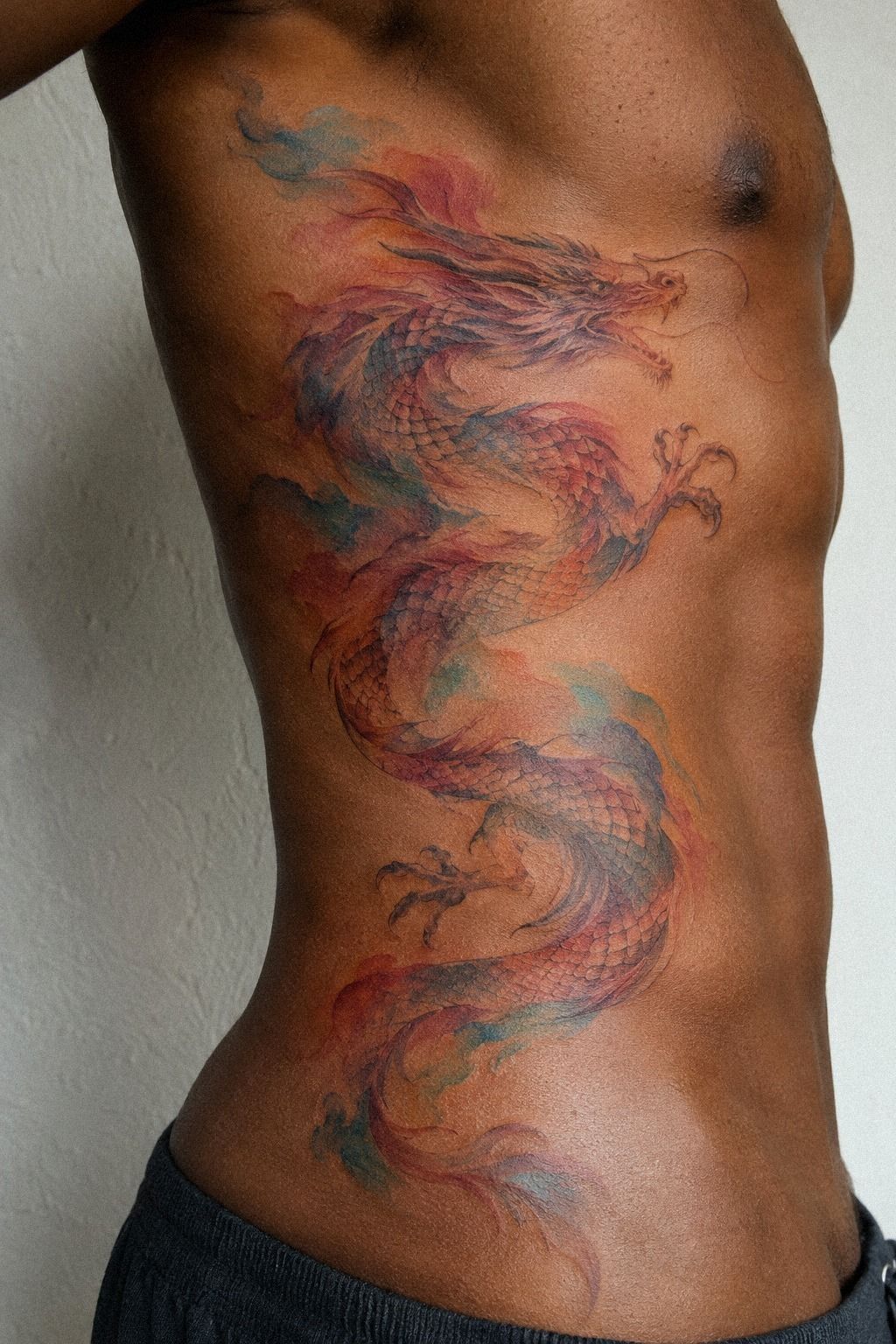
A ribcage dragon is one of the most private placements, and that privacy can make the design feel sacred and personal. Let the body follow the ribs in a long, graceful curve, with the head angled toward the sternum or side. You’ll get a meaningful piece that stays hidden under everyday clothing.
For deep brown skin with a warm undertone, terracotta watercolor with stone and olive accents can create a refined, expressive image. Ask your artist to use contrast carefully and keep the main silhouette strong. A dragon that disappears into a broad color cloud may look romantic in a sketch but lose its identity once healed.
Ribs, feet, hands, and sternum are commonly described as more painful zones than the forearm, thigh, or shoulder. You’ll want to plan your session around your comfort, and you shouldn’t feel pressured to finish everything at once. A shorter appointment can protect both your skin and the quality of the linework.
A symbolic mark near the dragon can carry more weight than extra decoration. A broken circle, a small flame, or one star may represent resilience, protection, or a private promise.
I’d choose one symbol and explain its meaning to your artist. Too many icons can make the composition feel ornate instead of intimate.
The healing surface generally takes about two to three weeks, while complete healing can take roughly two to three months. Follow the studio’s instructions, wash gently, moisturize lightly, and avoid pools and strong sun during healing.
For another private placement study, look through minimalist dragon tattoos. Rib placement can be worth the commitment when privacy matters most.
12Hidden Placement Comparison: What Disappears Most Easily?
If concealment is your first priority, the upper back usually offers the strongest balance of privacy, scale, and readable anatomy. A standard shirt can cover it completely, while a lower neckline can reveal only part of the design. Upper-back concealment works especially well for wings, long bodies, and layered color.
The ribs are even more private in everyday clothing, but they bring a sharper appointment and less forgiving skin movement. A rib dragon can feel sacred and raw, though you’ll need to think carefully about comfort, healing friction, and how much surface the artist needs.
The inner thigh offers excellent privacy and generous skin for a graceful dragon. It can remain hidden under most clothing, but tight fabric may irritate the healing surface. Inner-thigh placement is a practical choice when you want a larger design without constant visibility.
The shoulder sits in the middle. A short sleeve can hide much of it, while a tank top reveals the full arc. It gives you more daily control than the ribs or upper back, but it is less discreet than the thigh.
The wrist and ankle are easiest to glimpse and easiest to cover selectively. A cuff, watch, sock, or trouser leg can help, but these placements still appear during movement. My ranking for concealment is upper back first, ribs second, inner thigh third, shoulder fourth, then wrist and ankle.
That distinction matters! Choose the placement based on the moments when you need privacy, not only how the tattoo looks in a stationary sketch. A discreet dragon should remain readable when covered, uncovered, moving, and partially revealed.
The Cost of Keeping Watercolor Readable
A watercolor dragon’s cost depends on size, detail, placement, artist experience, and local rates. A tiny behind-the-ear design may take less time than a flowing shoulder piece, but intricate color transitions can still affect the quote. Ask what you’re paying for before you compare numbers.
A lower price doesn’t always mean better value. The strongest investment is usually an artist who understands healed color, clean anatomy, and your skin tone.
If the design matters deeply, I’d rather reduce the size than remove the work that keeps it readable. Artist hourly rate is only one part of the decision.
Which Placement Gives You the Best Value?
Your budget should include the tattoo, consultation, aftercare supplies, and possible touch-up. A smaller placement can control the price, but a cramped design may not offer good value if it loses its shape. The smartest choice balances visibility, comfort, scale, and long-term readability.
A partial ankle curl, small wrist coil, or minimal thigh dragon can be a sensible starting point. You’ll spend less than you might on a large rib or shoulder composition, while still getting a personal piece.
“Affordable” only helps when the final design still feels intentional. Touch-up planning belongs in the original budget.
When Color Meets Your Skin Tone
Color behaves differently across skin tones, and your artist should discuss contrast without making promises they can’t keep. Pigment selection may need adjustment so the head, wings, and tail remain distinct after healing.
Ask to see healed examples on skin close to yours. A watercolor effect can stay vibrant, delicate, or muted depending on the pigments and the artist’s technique. I’d trust a direct conversation more than a filter-heavy portfolio image.
A Healed Portfolio Tells the Truth
Fresh tattoos often look exceptionally vibrant because the skin is newly worked. A healed portfolio shows whether the fine lines remain crisp, whether the color still supports the silhouette, and whether the dragon feels expressive after the surface settles.
Look for healed work at several scales and placements. You’re checking consistency, not hunting for one perfect photograph.
If an artist only shows fresh tattoos, ask why. Ask anyway!
Healed color examples can reveal whether pale washes disappear, whether black anchors remain sharp, and whether the dragon’s posture still reads months later. This matters more than a dramatic first-day result.
What to Bring to the Consultation
Bring two or three references, a rough size, your preferred placement, and the meaning you want the dragon to carry. You don’t need to arrive with a finished drawing. Your artist should help turn the idea into a design that fits your anatomy.
Tell them whether you want discreet, visible, symbolic, fierce, or delicate. Mention your comfort with color and whether you’re planning to cover the tattoo at work or during formal events.
Clear priorities make the consultation more useful. Placement measurements can prevent a promising idea from becoming cramped.
Ask about the artist’s approach to simplified scales, color longevity, and healed line spread. A professional should explain what can be removed without weakening the dragon. Stencil approval is your chance to check scale, angle, and concealment before the appointment begins.
Protect your boundary if the artist dismisses your questions or promises impossible permanence. You’re allowed to pause, revise, or leave. Protect that boundary!
Before You Book a Watercolor Dragon
I’d judge a tattoo artist by healed photographs, line control, and placement judgment before I’d judge them by a dramatic fresh-color image. Fresh watercolor can look vibrant and delicate, but healed work tells you whether the dragon still reads after the skin settles. A healed portfolio should carry more weight than a polished social post.
Your consultation should cover the reference, size in inches or centimeters, color plan, expected session length, and aftercare. A professional should explain what can be simplified without losing the dragon’s identity.
I’d be wary of anyone who promises that every tiny scale will remain unchanged forever. Fine lines can widen, and UV exposure can fade color.
Cost varies by artist and region. In the US, a shop minimum may sit around $50 to $100, while hourly rates often fall around $100 to $250. Your final quote depends on placement, complexity, artist experience, and session time, so treat these as typical planning references rather than a promise.
Written pricing can help you plan your budget.
But the cheapest quote isn’t always the most personal choice. Your design will live with the artist’s line decisions, and a clean, well-placed dragon is worth more than a crowded bargain.
If you’re still comparing creatures, the realistic owl tattoos and watercolor bird tattoos galleries can help you notice how different silhouettes age. Final quote and healed quality should be considered together.
My Editorial Take on Keeping It Low-Key
I like a tattoo that reveals itself gradually. A hidden dragon does not need to announce its meaning to every person who sees you. The upper back, ribs, and inner thigh all give the design a private charge, while the wrist offers a more everyday relationship with the image.
I’m also wary of watercolor designs that depend entirely on pale washes. They may look ethereal at first, but a dragon needs structure after the color settles. A few confident black anchors, especially around the eye, jaw, spine, and tail, make the design more timeless.
My favorite approach is usually one dominant color, one supporting accent, and open skin. That combination gives the dragon a polished silhouette without making it feel crowded. If every scale, star, cloud, and flame competes for attention, the meaning becomes harder to feel.
I would spend more time choosing the artist than choosing the exact shade of blue. The artist’s judgment decides whether the dragon fits your anatomy, whether the placement stays discreet, and whether the fine details remain legible. A meaningful concept deserves that patience.
The Questions Worth Answering First
How much does a watercolor dragon tattoo usually cost?
I would plan for about $50 to $100 at a shop minimum or roughly $100 to $250 per hour in the US. My final quote would depend on region, size, placement, detail, and artist experience. I’d ask for written pricing and a consultation before booking.
Are watercolor dragon tattoos a good idea for a first tattoo?
I think a watercolor dragon can be a meaningful first tattoo if I choose readable linework and a manageable placement. I’d consider the forearm, thigh, or shoulder before the ribs, feet, hands, or sternum. My first piece should feel personal, not selected only because the style is trending.
How do I choose a tattoo artist for watercolor dragon tattoos?
I would look for clean linework, healed photographs, and experience with watercolor effects. I’d also check studio hygiene, consultation habits, and examples on skin close to mine. A dramatic fresh tattoo can be striking, but I would trust consistent healed work more.
How much do watercolor dragon tattoos hurt?
I would expect discomfort to vary by person and placement. Ribs, feet, hands, and sternum are commonly sharper, while the forearm, thigh, and shoulder may feel more tolerable. I’d tell my artist when I need a pause, especially near bone or a sensitive fold.
What’s the best placement for watercolor dragon tattoos?
I would choose the placement according to visibility, comfort, and the dragon’s shape. I’d pick the upper back or ribs for maximum privacy, the thigh for generous coverage, and the wrist for daily visibility with selective concealment. I’d make sure the silhouette has enough room to remain readable.
The Choice I’d Make First
If I had to pick one, I’d start with the small wrist dragon. Its coil stays readable, a cuff can hide it, and the placement lets you enjoy the design daily without committing to a large session. I’d compare the idea with our small dragon tattoos guide, then choose the wrist only if that balance still feels personal and worth it.