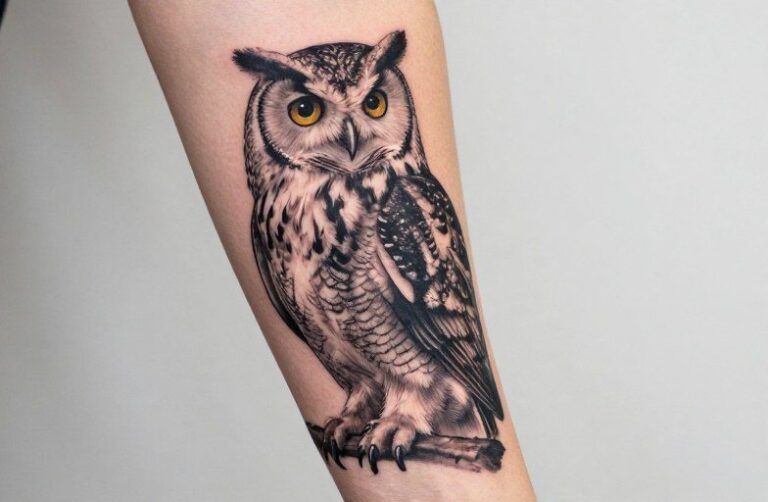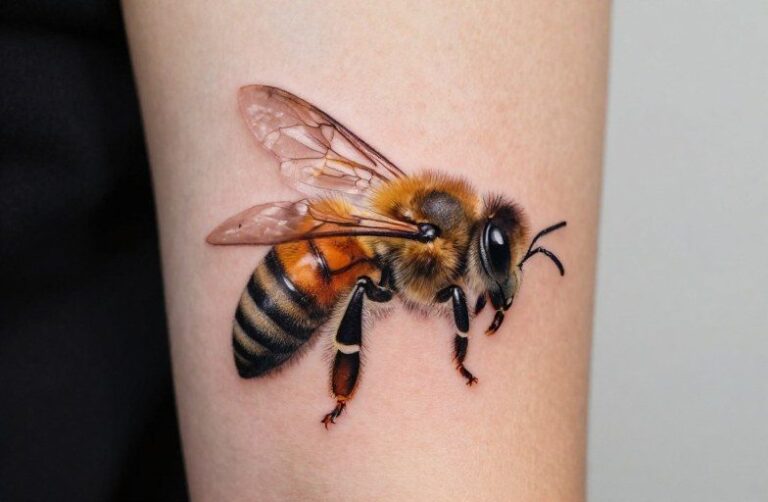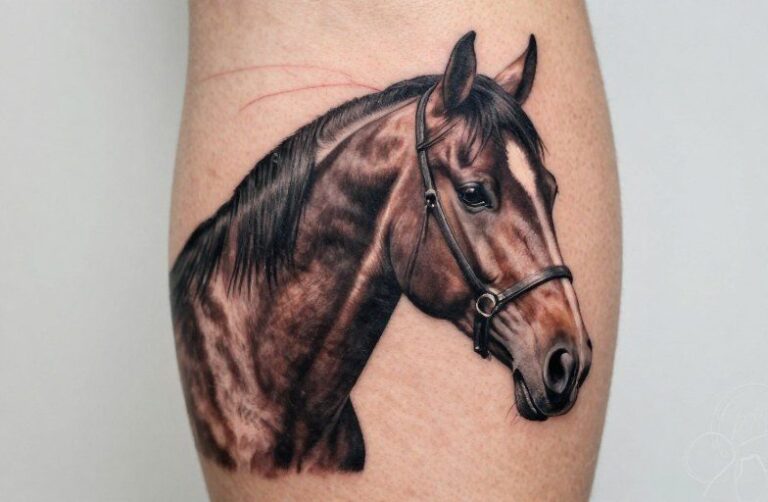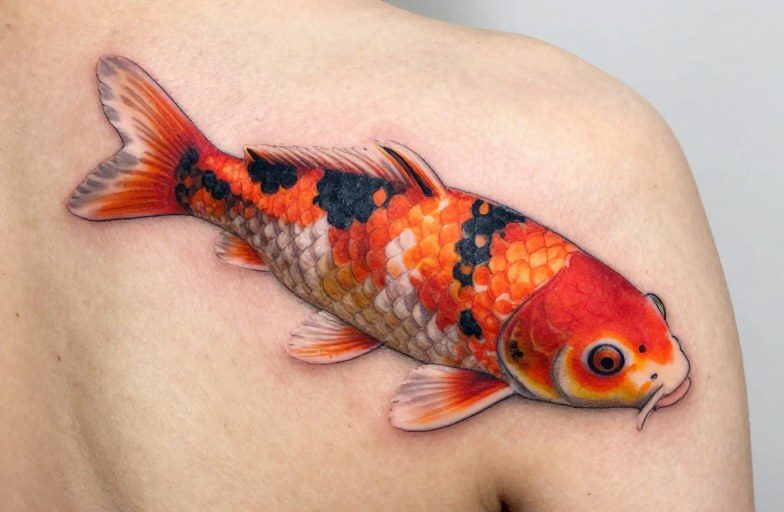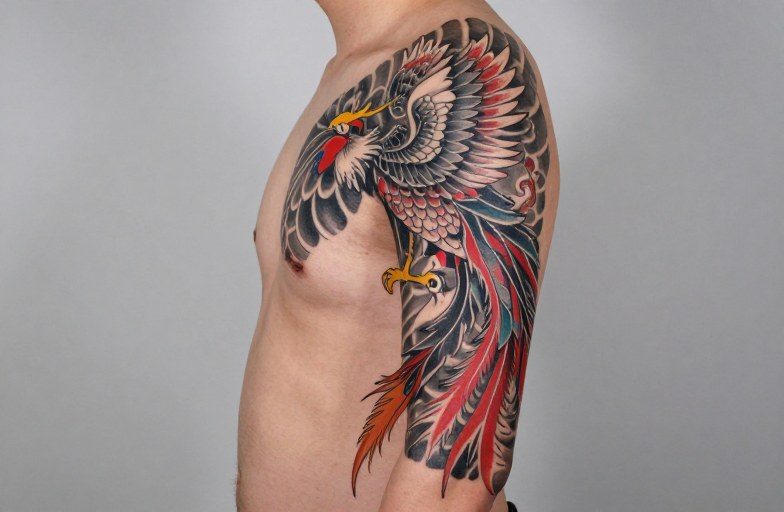
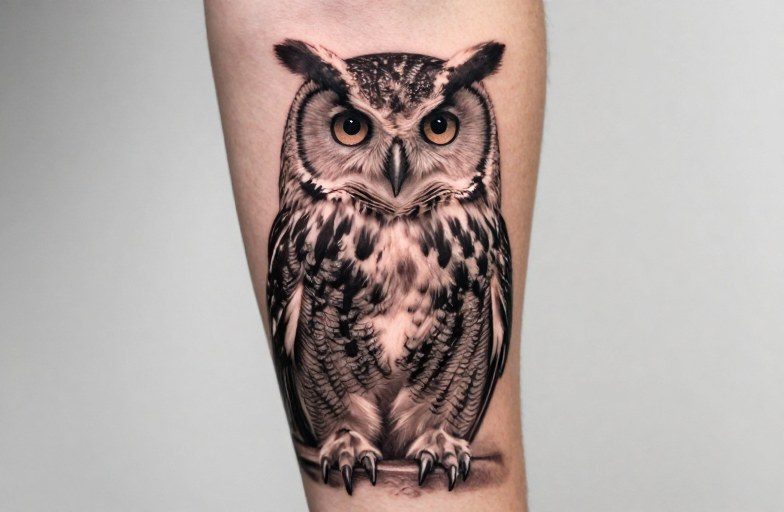
A realistic owl tattoo renders the bird with photographic accuracy, individual feather barbs catching light, the asymmetric placement of forward-facing eyes, the soft gradations between facial disc plumage and the sharper wing covert textures. Unlike illustrative or traditional owl designs that flatten forms into pattern, realism demands anatomical correctness, value control, and an understanding of how avian structure differs from mammalian fur or human skin. The result sits in uncanny territory: clearly a tattoo, yet reading at glance like a photograph transferred onto the body.
Key Characteristics & Motifs
Realistic owl work lives or dies in the details most viewers won’t consciously notice. The facial disc, that circular arrangement of feathers framing the eyes, requires subtle value shifts rather than hard outlines. Artists build this through stippled greywash or layered color glazing, creating the illusion of downy texture without ever drawing a literal circle. The beak presents another challenge: its curved, keratinous surface reflects light differently than surrounding feathers, demanding sharper highlights and compressed darks.
Eye Detail and Expression
Owl eyes dominate realistic compositions for good reason. They’re disproportionately large, fixed in the skull, and surrounded by complex feather architecture. A strong piece captures the nictitating membrane’s translucency, the specular highlight placement that suggests moisture, and the iris pattern specific to species, Great Horned Owls show amber with dark barring, Snowies display vivid yellow, Barn Owls carry dark eyes that read almost black in shadow. Getting the catchlight wrong, or flattening the cornea’s curvature, instantly breaks the illusion.
Feather Grouping and Flow
Individual feathers aren’t drawn separately in quality realism. Instead, artists work in feather groups, contour feathers, coverts, primaries, using directional flow to suggest underlying anatomy. The wing’s leading edge shows tighter, more overlapping barbs; the trailing edge softens into down. On a Barn Owl, this contrast between crisp wing feathers and the ghostly, heart-shaped facial disc creates natural visual hierarchy. On a Great Grey, the facial disc’s concentric rings become the compositional anchor.
Color vs Black and Grey
This choice shapes every technical decision that follows. Black and grey realism dominates owl work for practical reasons: the natural color palette of most North American and European species already reads as neutral, browns, greys, buff, white. Removing color doesn’t sacrifice much information, and greywash ages more forgivingly than saturated pigment.
When Color Works
Color earns its place with specific species and effects. Snowy Owls benefit from warm ivory and cool shadow tones that prevent a washed-out appearance. The iridescent sheen of a Great Horned Owl’s facial feathers, subtle purple-green shifts in certain light, can be suggested through limited color glazing over a grey base. Burrowing Owl eyes, a striking yellow-gold, often warrant pure color to avoid muddiness. The key restraint: color should enhance structure, not decorate it. Rainbow owls with no species reference age poorly and read as novelty.
Black and Grey Technique
- Smooth greywash for facial disc softness, typically 3-5 value steps
- Darker, more saturated blacks at eye sockets and beak base for depth
- Negative space highlights reserved for specular catches on eyes and beak
- Stipple or whip-shading for downy texture; smooth single-needle for individual barb detail
Choosing the Right Artist
Realistic animal work requires a specific skill set distinct from portrait realism or floral realism. An artist strong in photorealistic human faces may struggle with feather texture, scale, and the particular challenge of avian eyes. Portfolio review should focus on:
- Evidence of completed bird or owl pieces, not just mammals
- How they handle fine detail at the actual size you want, many artists post large-scale work that won’t translate to a 4-inch forearm piece
- Healed results, not just fresh photography; greywash in fresh work looks darker and more contrasted than it settles
- Whether their realism leans “smooth” (airbrushed, minimal texture) or “detailed” (individual element focus), owls generally favor the latter
Geographic specialization matters less than it once did, but be prepared to travel. The handful of artists who consistently produce outstanding realistic owls often book 6-12 months ahead. Consultation should include discussion of reference quality, your provided photo directly affects outcome. Low-resolution or heavily filtered images limit what an artist can extract.
Modern Variations
Contemporary realistic owl work has developed several hybrid approaches that maintain anatomical accuracy while introducing stylistic elements.
Double Exposure and Compositional Layering
Some designs integrate landscape or sky elements within the owl’s silhouette, forest canopy visible through translucent wing feathers, moonlight catching the facial disc’s edge while mountain terrain fills the body contour. This requires exceptional planning; the underlying owl anatomy must remain readable even where “interrupted” by secondary imagery. The effect works best when the secondary element shares value range with the feather area it replaces.
Fragmented or Partial Compositions
Rather than full-body rendering, many collectors opt for close-cropped studies: the facial disc filling a shoulder cap, a single eye at scale across the inner bicep, talons gripping a branch that extends beyond the frame. These compositions allow larger scale detail in limited space and avoid the compositional awkwardness of full-body owls on curved body areas.
Neo-Traditional Realism Hybrids
A growing approach maintains realistic rendering in the face and eyes while simplifying body and wing feathers into bolder, more graphic shapes with limited but strategic linework. This bridges the gap between strict realism and more stylized tattoo traditions, often aging better than pure photorealism while preserving the owl’s recognizable presence.
How It Ages
Realistic owl tattoos face predictable aging challenges. The fine detail that makes them striking fresh, individual barb suggestions, subtle greywash transitions in the facial disc, tiny highlight dots in the eye, is most vulnerable to time and sun exposure.
Structural Aging Patterns
Greywash softens and cools over 5-10 years. Warm brown tones in color work often fade faster than blacks, leaving a cooler, flatter appearance. The facial disc’s delicate value shifts blur together, potentially reading as a flat grey oval if originally too subtle. Eye detail suffers disproportionately: small highlights close, iris patterns simplify, and the contrast that creates “life” diminishes.
Mitigation Through Design
- Starting with slightly more contrast than looks ideal fresh, artists call this “accounting for the 20% fade”
- Building facial disc value shifts across broader areas rather than micro-gradients
- Keeping eye highlights large enough to remain distinct at 0.5mm minimum
- Prioritizing placement on less sun-exposed areas: upper inner arm, thigh, torso side
Touch-ups every 5-8 years maintain clarity, but can’t recover detail that was never tattooed deeply enough. Discuss long-term expectations with your artist; some prefer to design with aging explicitly in mind, sacrificing some fresh impact for longevity.
Cost & Sessions
Realistic owl work commands premium rates due to time investment and technical difficulty. A palm-sized black and grey piece runs 3-5 hours; a full-color forearm or thigh composition with environmental elements may require 15-25 hours across multiple sessions.
Pricing structures vary: hourly ($150-$400+ depending on region and artist reputation) versus flat day-rate for larger work. Multi-session pieces often use day-rates for efficiency. The facial disc and eye detail alone might consume a full session, with subsequent sessions addressing body, wings, and background.
Healing between sessions matters more for realism than many styles. Greywash settles and reveals its true values only after 6-8 weeks; rushing subsequent sessions risks over-saturation in areas that already carry sufficient pigment. Budget time, not just money.
What to Remember
Realistic owl tattoos succeed when they honor the actual animal’s architecture, the asymmetry, the texture contrasts, the eye’s particular depth, rather than treating the owl as a generic symbol. Choose an artist with demonstrated bird-specific work, not just general realism skill. Prioritize healed portfolio evidence over fresh photography. Design with aging in mind: slightly bolder contrast, slightly larger detail, slightly more reserved color than your instinct suggests. The owl’s presence in tattoo form should feel earned through technical patience, not borrowed from the species’ cultural associations. What remains on your skin in twenty years depends entirely on decisions made in consultation, not just execution.
Frequently Asked Questions
What’s the best owl species for a realistic tattoo if I want maximum detail?
Great Horned Owls and Barn Owls offer the most visual complexity, facial disc patterns, feather texture variety, and distinctive eye color. Snowy Owls work well but have less surface detail, relying more on subtle value control for their soft appearance.
Can realistic owl tattoos work on small scales like the wrist or behind the ear?
Extremely difficult. The eye detail and facial disc structure that define realism need minimum space to read correctly; below 3-4 inches, you lose the very specifics that make the style work. Consider a partial composition, just an eye or talon detail, rather than full facial disc at small scale.
How do I know if a reference photo will work well for tattooing?
Look for sharp focus on the facial area, natural lighting that shows feather texture without harsh shadows, and high resolution. Avoid filtered or heavily compressed images. The best references show the owl at a slight angle rather than straight-on, which creates more dimensional tattoo compositions.
Why do some realistic owl tattoos look muddy after healing?
Usually from greywash packed too densely in the facial disc, or color values too similar to each other. The facial disc needs breathable value steps, distinct light, mid, and dark areas that remain separate even when softened. Muddiness also comes from sun exposure without protection during the first year.