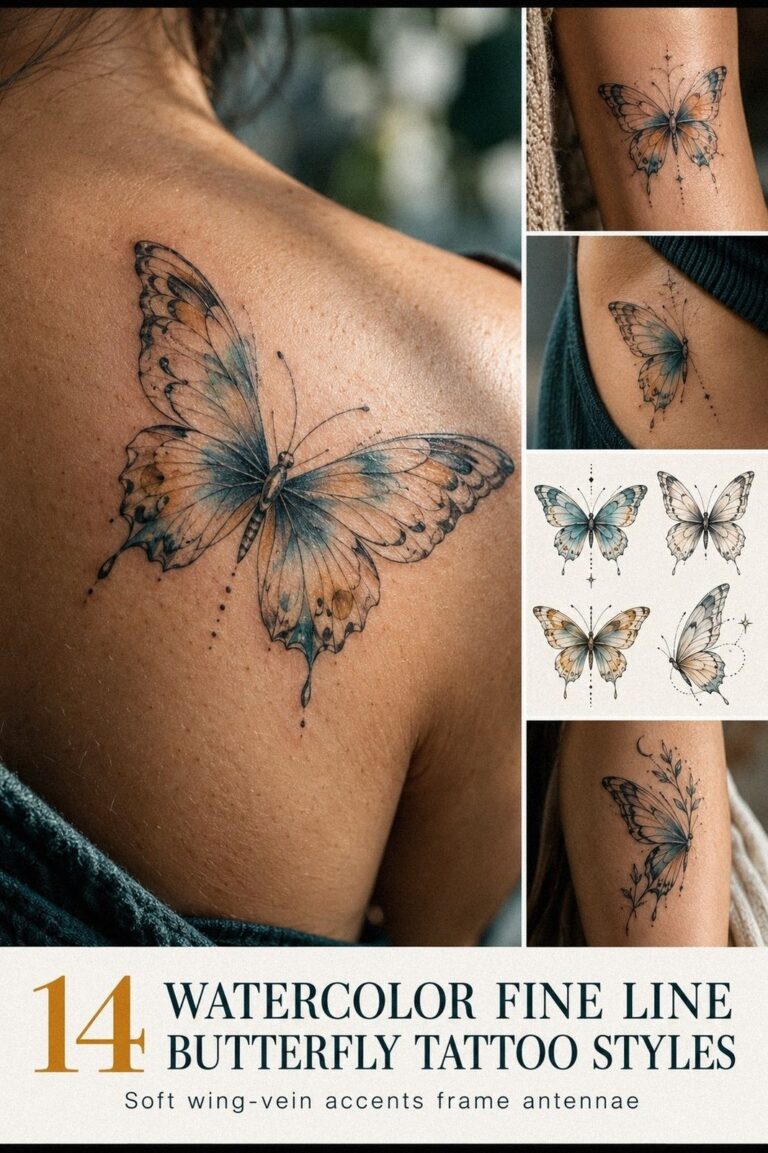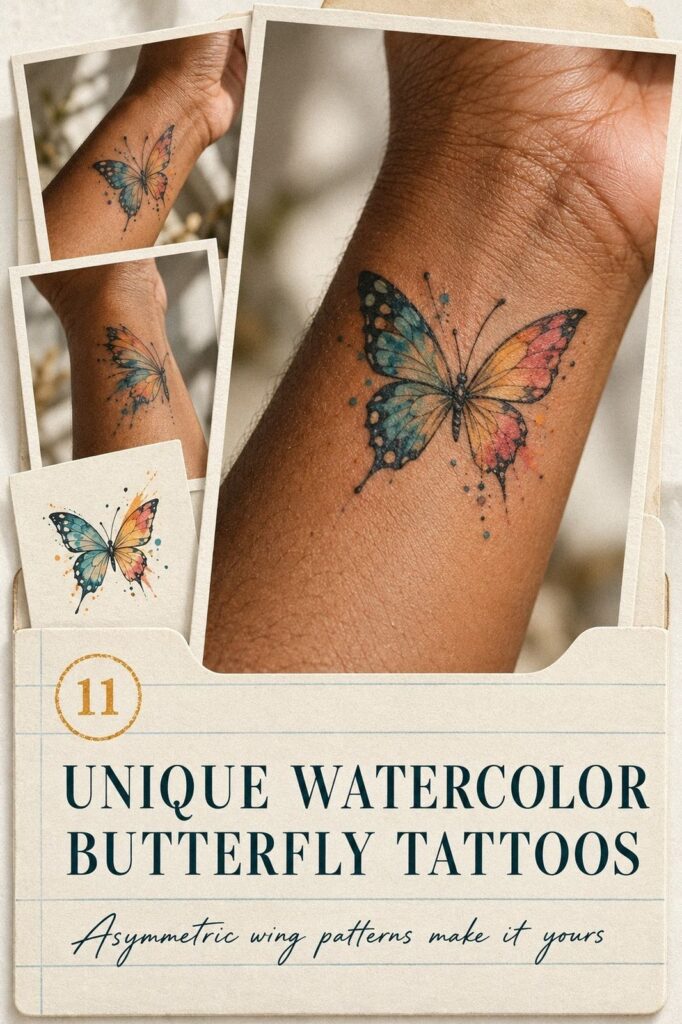
Watercolor unique butterfly tattoos can fit one sitting when the design stays clean, compact, and placement-smart. I’ve learned that a watercolor butterfly silhouette matters more than collecting every tiny detail. You’ll feel the difference when the outline stays crisp!
These ideas keep color expressive, placement practical, and the session manageable. I’d rather choose a meaningful, striking design with breathing room than chase detail that won’t hold up. Your best pick may be smaller than you think.
- Start with Small Watercolor Butterfly Tattoos on the Wrist
- Can Fine Linework Keep a Watercolor Butterfly Clear?
- Let the Shoulder Carry Colorful Watercolor Butterfly Tattoos
- Behind the Ear, Keep Minimal Watercolor Butterfly Tattoos
- Botanical Details Meet Ornate Watercolor Butterfly Tattoos
- What Can a Symbolic Watercolor Butterfly Say Along the Collarbone?
- Bold Forearm Color or Delicate Discretion?
- Shape Delicate Watercolor Butterfly Tattoos Around the Ankle
- When Whimsical Ink Splashes Frame a Watercolor Butterfly
- Best Friends, Matching Watercolor Butterfly Tattoos, Different Details
- Abstract Geometry Against Watercolor Softness
1Start with Small Watercolor Butterfly Tattoos on the Wrist
Small watercolor unique butterfly tattoos work beautifully on the wrist when the wings stay open and symmetrical. A striking terracotta, stone, and olive pigment pairing can look delicate without disappearing, especially when the design leaves visible skin between each wash. If you want something personal that you can glance at all day, this is my favorite starting point.
Ask your artist for a clear wing shape before adding color. A 3RL needle can create a crisp outer line, but tiny interior marks need space or they’ll blur together as the tattoo settles. I’d skip an overly intricate body here because the wrist moves constantly and fine detail can lose its edge.
Your stencil should sit where your wrist crease bends least, not directly across the deepest fold. An open-wing silhouette will read more clearly than a closed butterfly, especially when your hand is relaxed. You’ll want to check it with your wrist relaxed, turned, and palm-facing before the needle starts.
For a softer result, choose two main pigments and one small accent. Eternal Ink watercolor pigment can suggest a wash, but your artist should leave some skin visible between the colors. That negative space keeps the design understated instead of turning into a saturated dot.
I made the mistake of treating the wrist like a flat surface. It isn’t.
Your artist may angle the wings slightly so they follow the wrist curve, and that small adjustment makes the finished tattoo look more graceful when you move. If your budget is tight, this restrained format can also keep the appointment shorter.
For more compact references, compare this idea with tiny unique butterfly tattoos and small unique butterfly tattoos. You’ll see how much cleaner a restrained silhouette can look.
2Can Fine Linework Keep a Watercolor Butterfly Clear?
Fine-line watercolor butterfly tattoos suit the sternum when you want something minimal but still polished. The central question is whether the design has enough contrast to remain readable after the first brightness softens. I’d choose a fine-line watercolor butterfly before adding any decorative detail.
A sternum placement can feel intimate and symbolic, but it isn’t the easiest area for everyone. The skin is close to bone, and breathing creates constant movement during the appointment. If you’re comparing cost against value, a smaller sternum butterfly may be worth it only when the artist has strong healed examples.
Use a fine-line outline around the body and the largest wing edges, then let the color do less work. Too many thin marks can create visual noise, while a few controlled lines keep the result sleek. This is where restraint becomes more elegant than complexity.
A clay pigment anchor beneath the body can help the surrounding watercolor stay legible. I wouldn’t make every edge dark, though. Leave selected sections open so the butterfly retains a delicate, feminine quality rather than becoming a heavy emblem.
Before booking, study fine-line butterfly tattoo examples alongside this watercolor butterfly tattoo guide. Look for healed examples, not only fresh color. That comparison tells you whether the artist’s style is genuinely worth it.
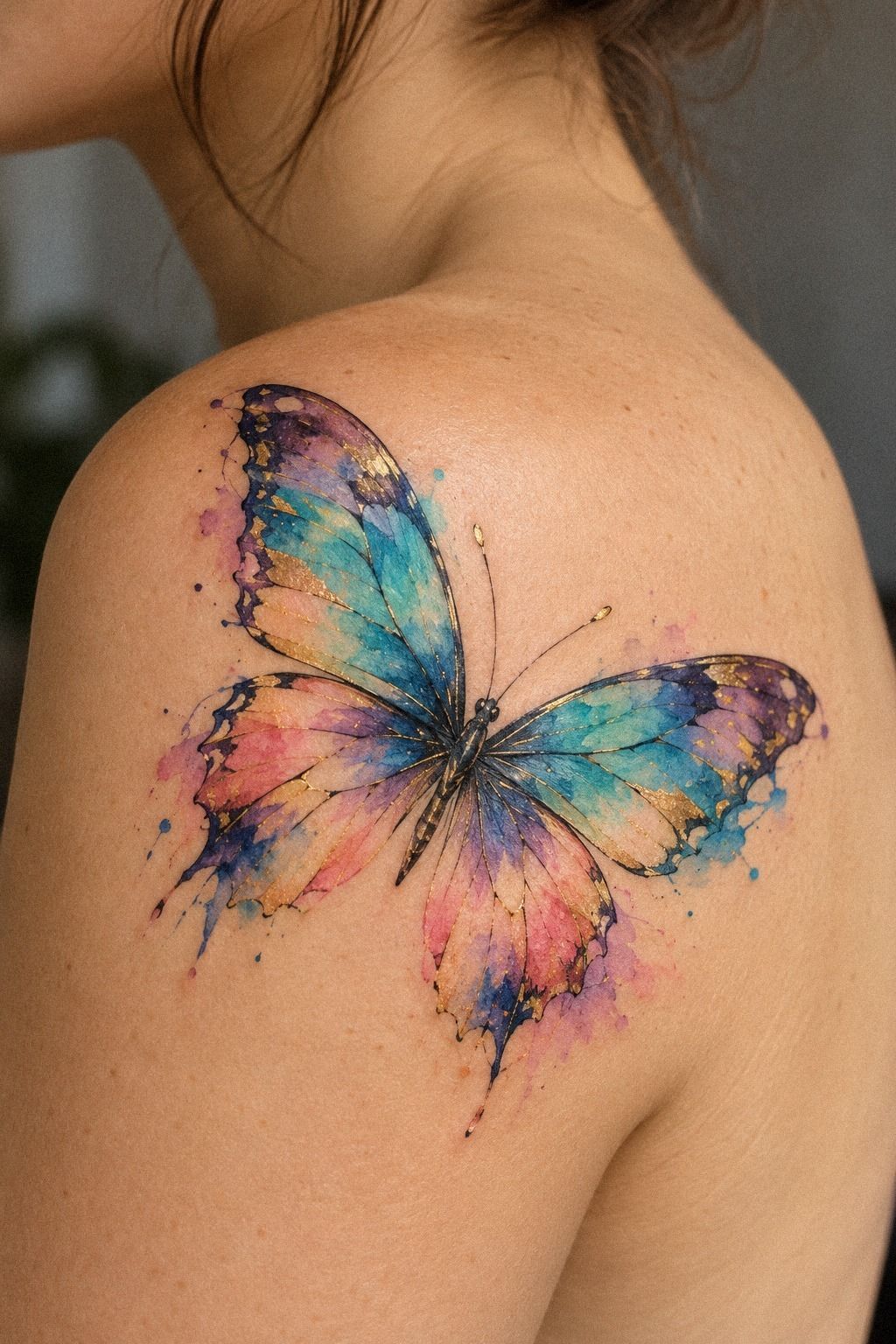
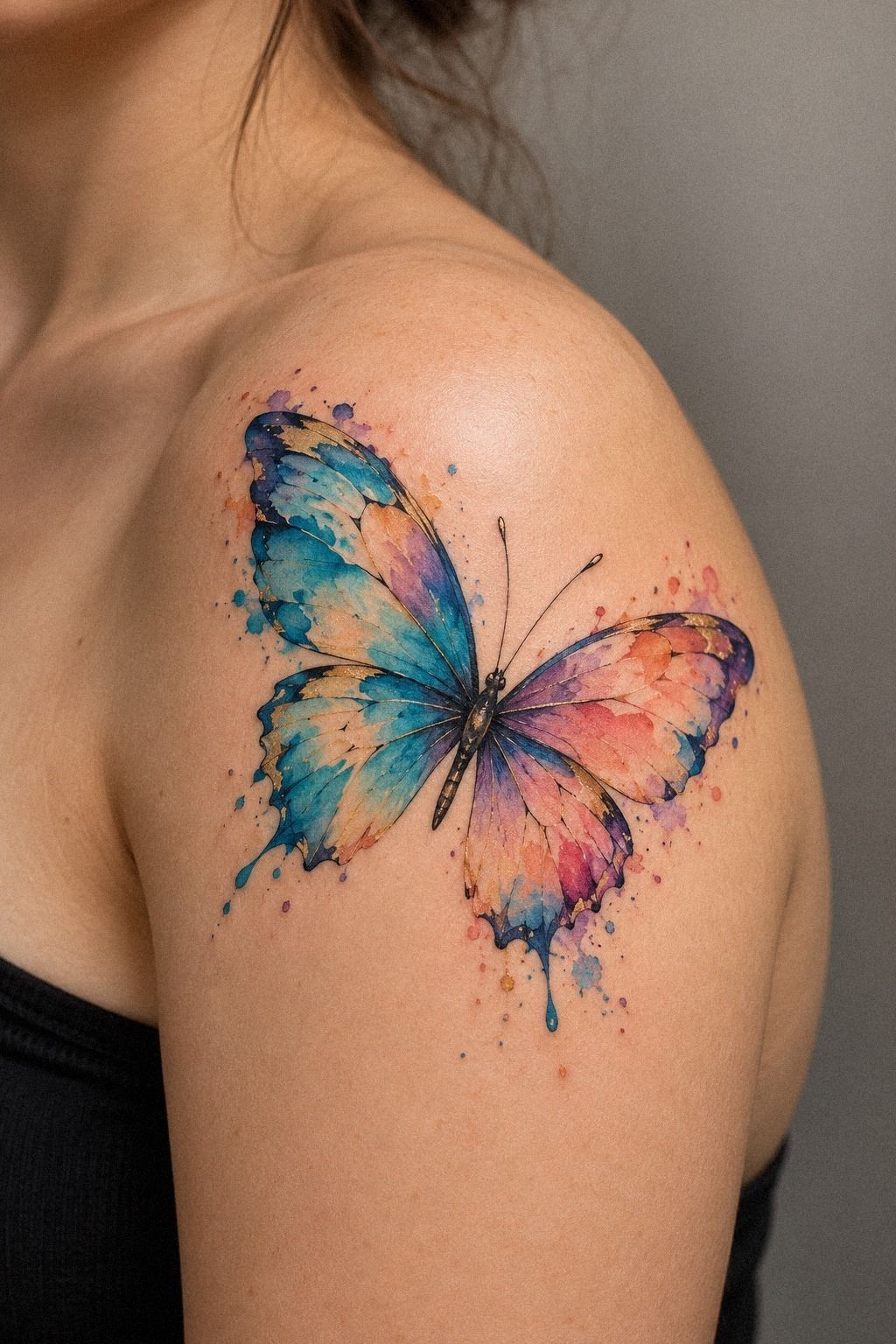
3Let the Shoulder Carry Colorful Watercolor Butterfly Tattoos
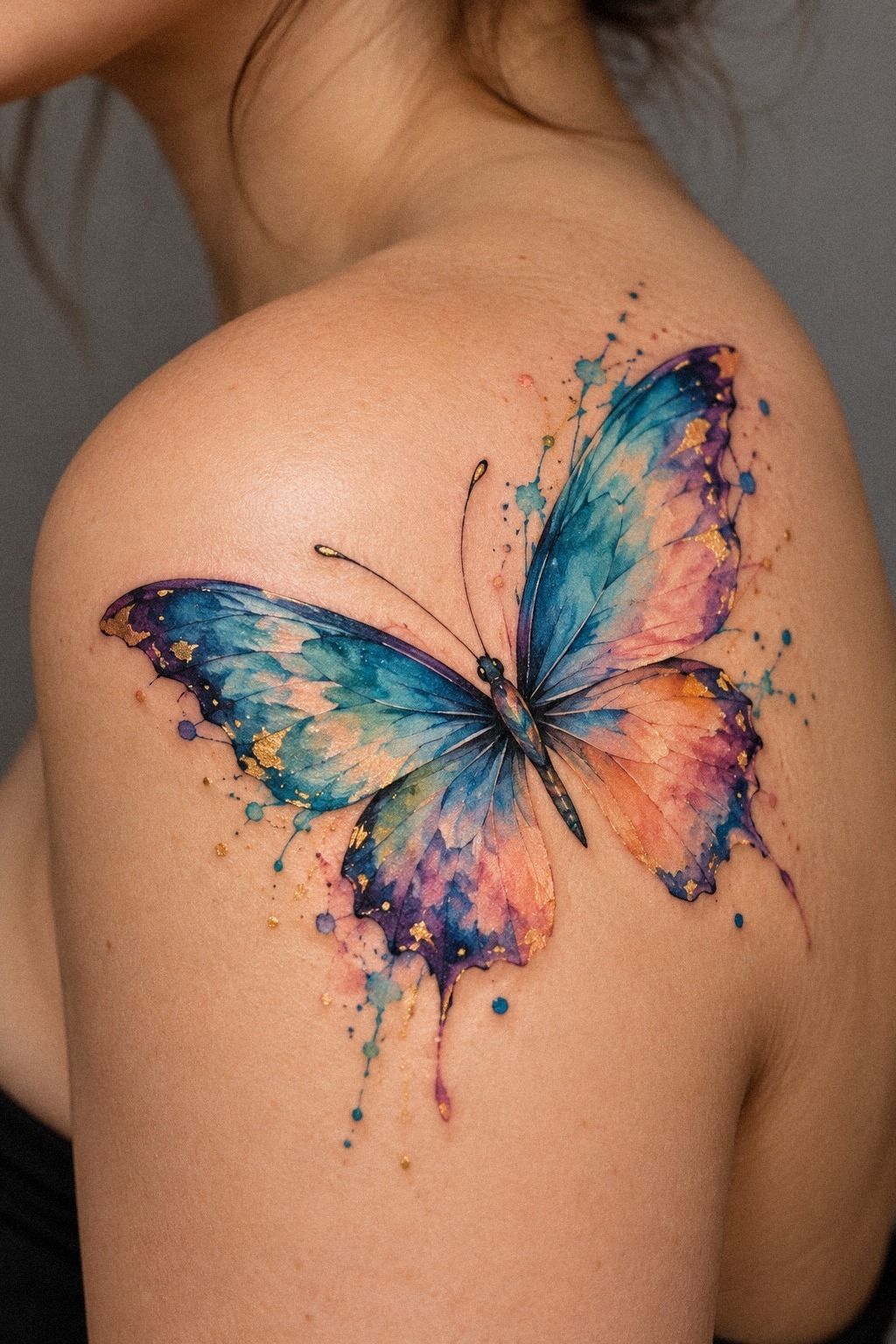
Colorful watercolor butterfly tattoos across the shoulder give you more room for expressive wings and flowing pigment. A plum, grey, and rose-gold color palette can feel vibrant without making the design look crowded. Keep the center crisp, then let the outer washes fade into the skin.
4Behind the Ear, Keep Minimal Watercolor Butterfly Tattoos
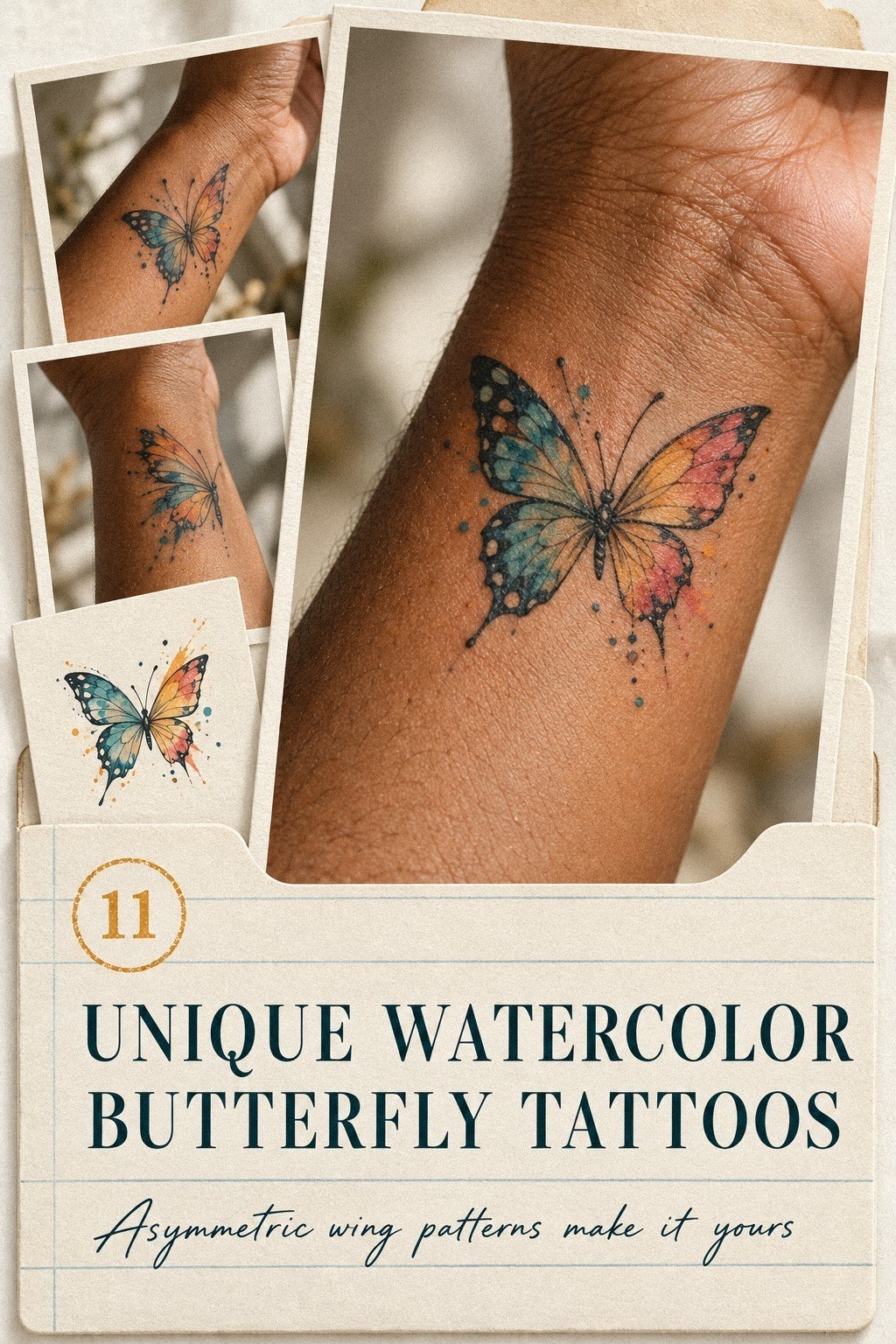
Minimal watercolor butterfly tattoos behind the ear are a dainty choice when you want visibility only when you want it. A navy and white pigment contrast can feel feminine, understated, and quietly personal. It’s also small enough to suit someone who doesn’t want a large commitment during a first appointment.
A behind-the-ear placement needs a simple shape. I’d choose two open wings, a narrow body, and one soft pigment transition rather than trying to reproduce every mark from a larger reference. Tiny details can disappear quickly when the design is reduced.
The skin here can be sensitive, and the artist may need to work carefully around the curve. Ask about breaks, sound levels, and aftercare before you book. If your budget allows only one small tattoo this season, the value comes from clarity, not complexity.
Use a minimal wing shape with enough contrast to remain visible beneath hair. A tiny butterfly can still feel iconic when its proportions are right. That discretion matters!
Wash the area gently with a fragrance-free cleanser and follow the artist’s instructions. Hair products, headphones, and friction can irritate the placement while it settles. For related ideas, browse these small unique butterfly tattoos before choosing your final size.
5Botanical Details Meet Ornate Watercolor Butterfly Tattoos
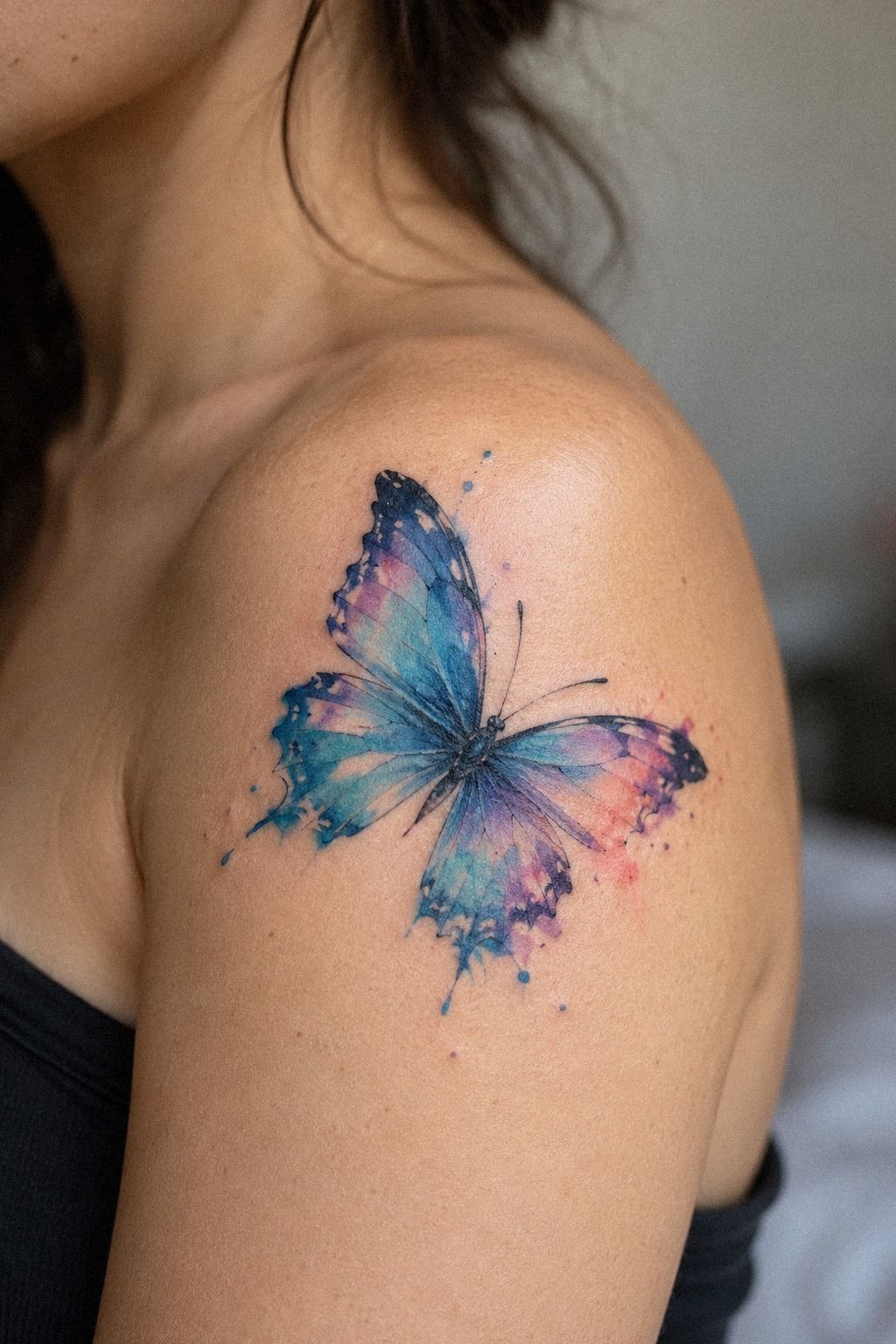
Ornate watercolor butterfly tattoos with botanical details work best when one plant supports the butterfly rather than competing with it. Emerald, gold, and cream pigments can make the piece feel ornate and timeless, but the botanical detail should remain lighter than the wings. One meaningful stem is usually enough.
6What Can a Symbolic Watercolor Butterfly Say Along the Collarbone?
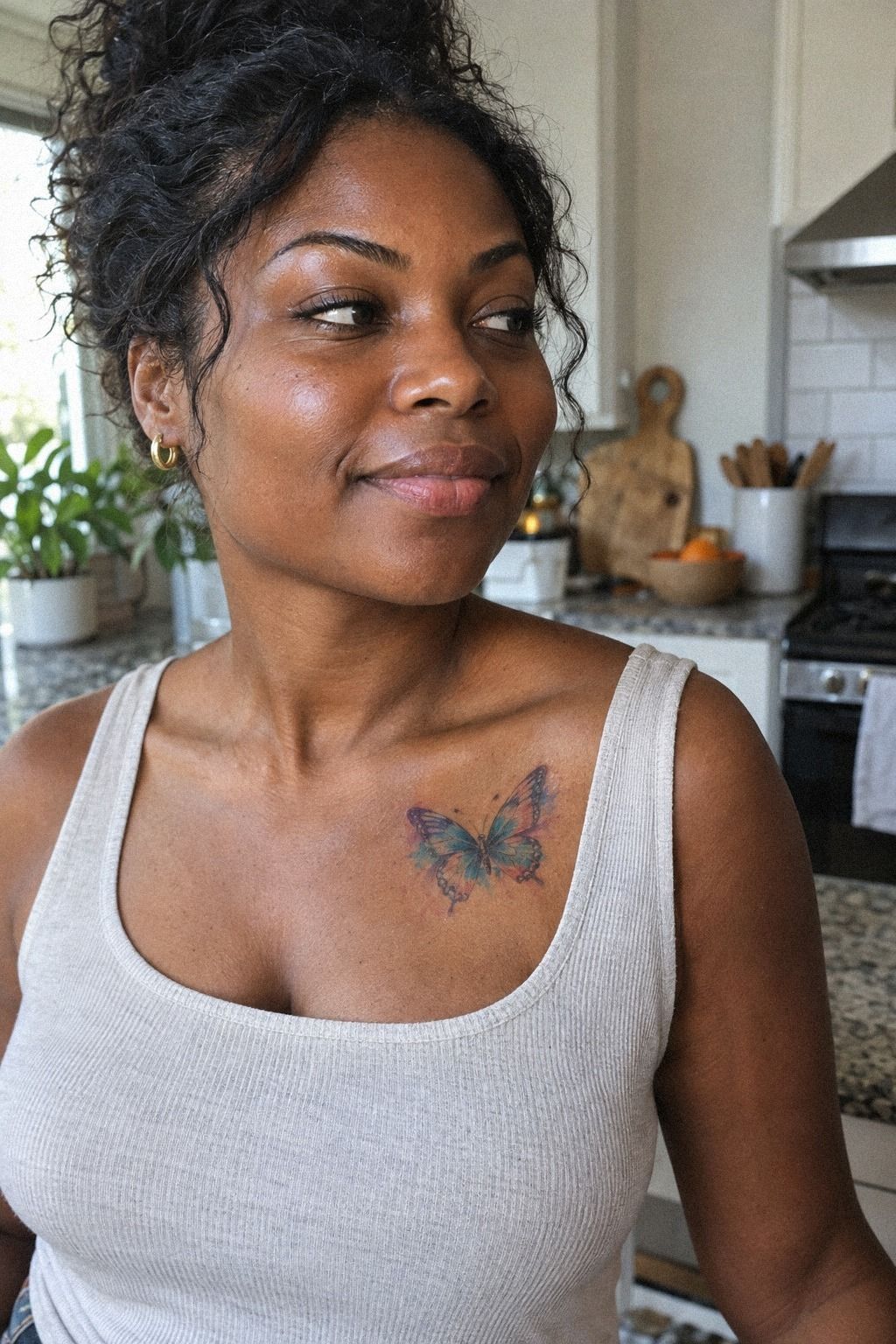
Symbolic watercolor butterfly tattoos along the collarbone can carry a meaningful idea without looking like a literal emblem. Forest green and rust pigments can give the design a grounded, expressive character, while the placement naturally follows a horizontal line. It suits a butterfly connected to change, survival, freedom, or a private milestone.
Start with the collarbone placement and its natural curve. A butterfly that sits too close to the center can feel cramped, while one that follows the bone toward the shoulder may look more flowing. Your artist should stencil the design while you stand normally.
The symbolism can stay subtle. A personal symbol such as a birth flower, small star, or single letter may matter more than a complicated explanation. I prefer one meaningful detail over a crowded collection of symbols that nobody can read.
A little negative space around the wings will keep the piece from looking heavy. The collarbone moves whenever you speak, stretch, or lift your arms, so the design needs flexibility. That combination can feel sacred, haunting, and quietly empowering.
For a different direction, compare this idea with a realistic butterfly tattoo guide. You may find that a simplified watercolor shape communicates your story with more grace and better value.
7Bold Forearm Color or Delicate Discretion?
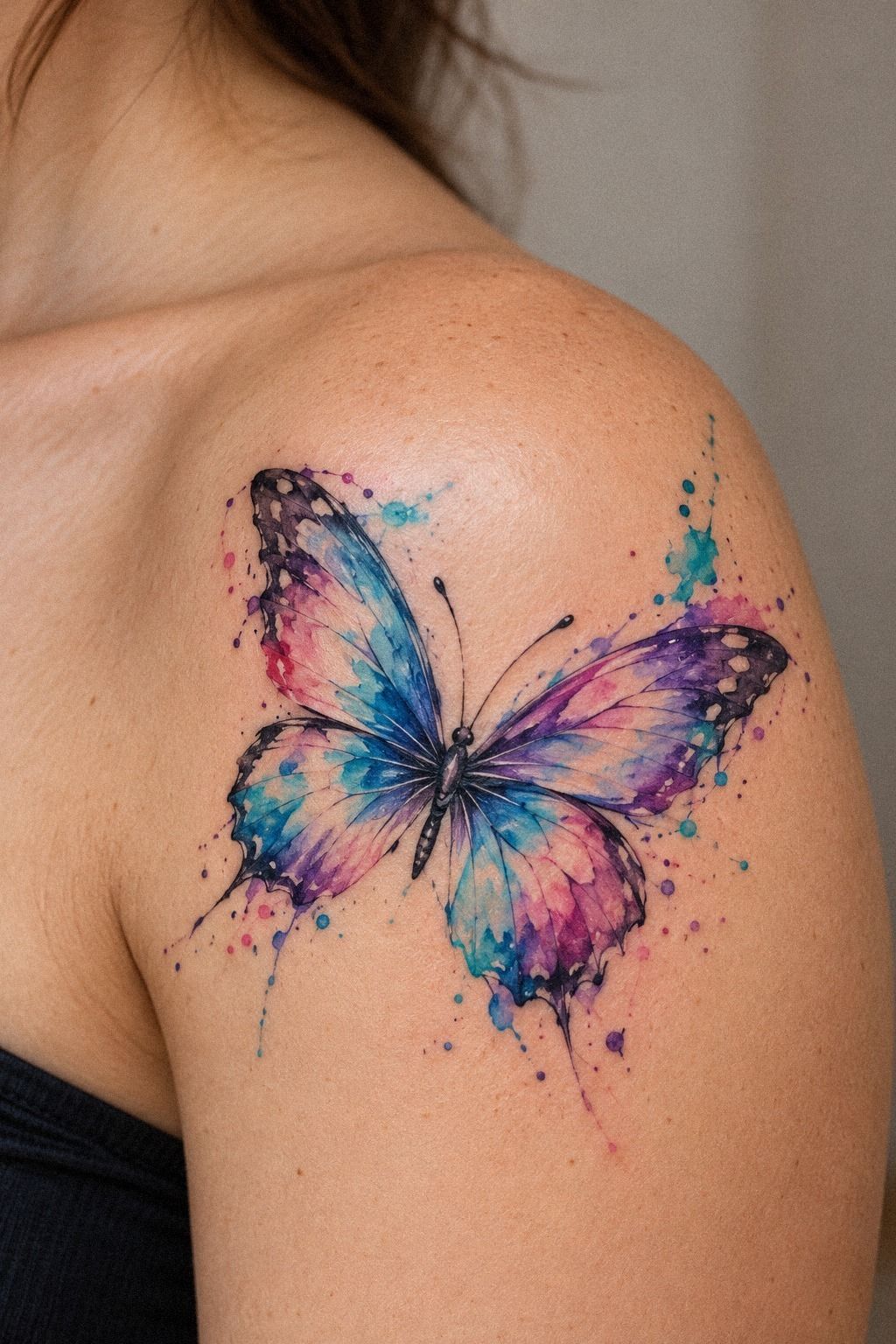
Bold watercolor butterfly tattoos on the forearm give you a strong balance of visibility, space, and comfort. A dusty rose, charcoal, and brass pigment combination can feel powerful without becoming harsh. The forearm also gives the artist enough length for a larger wing span and a more striking composition.
Bigger doesn’t always mean better. I’d choose a bold central body and let the color fade toward the edges. That contrast gives the tattoo a daring finish while preserving skin between the washes.
The forearm placement is often more tolerable than ribs, feet, hands, or sternum. It’s also easier to protect from direct friction during healing. You’ll still need to avoid soaking it and keep sunlight away while the surface settles.
Ask for smooth grey shading only where it strengthens the wing structure. A healed portfolio matters more than a bright studio sample because fresh pigment can hide spacing problems. Look for examples several months old before you decide whether the artist’s work is worth the cost.
I’d choose the forearm if you want to see the tattoo often and don’t mind answering questions about it. A bold placement is expressive and empowering, but it’s less discreet than behind the ear or ankle. That tradeoff matters when you’re planning your budget and daily routine.
Protect the work from direct sun exposure after healing, especially if the wings use pale watercolor pigment. Choose a licensed artist and reputable studio rather than chasing the lowest price. You can compare a smaller version with small unique butterfly tattoos and the broader watercolor butterfly tattoo guide.
8Shape Delicate Watercolor Butterfly Tattoos Around the Ankle
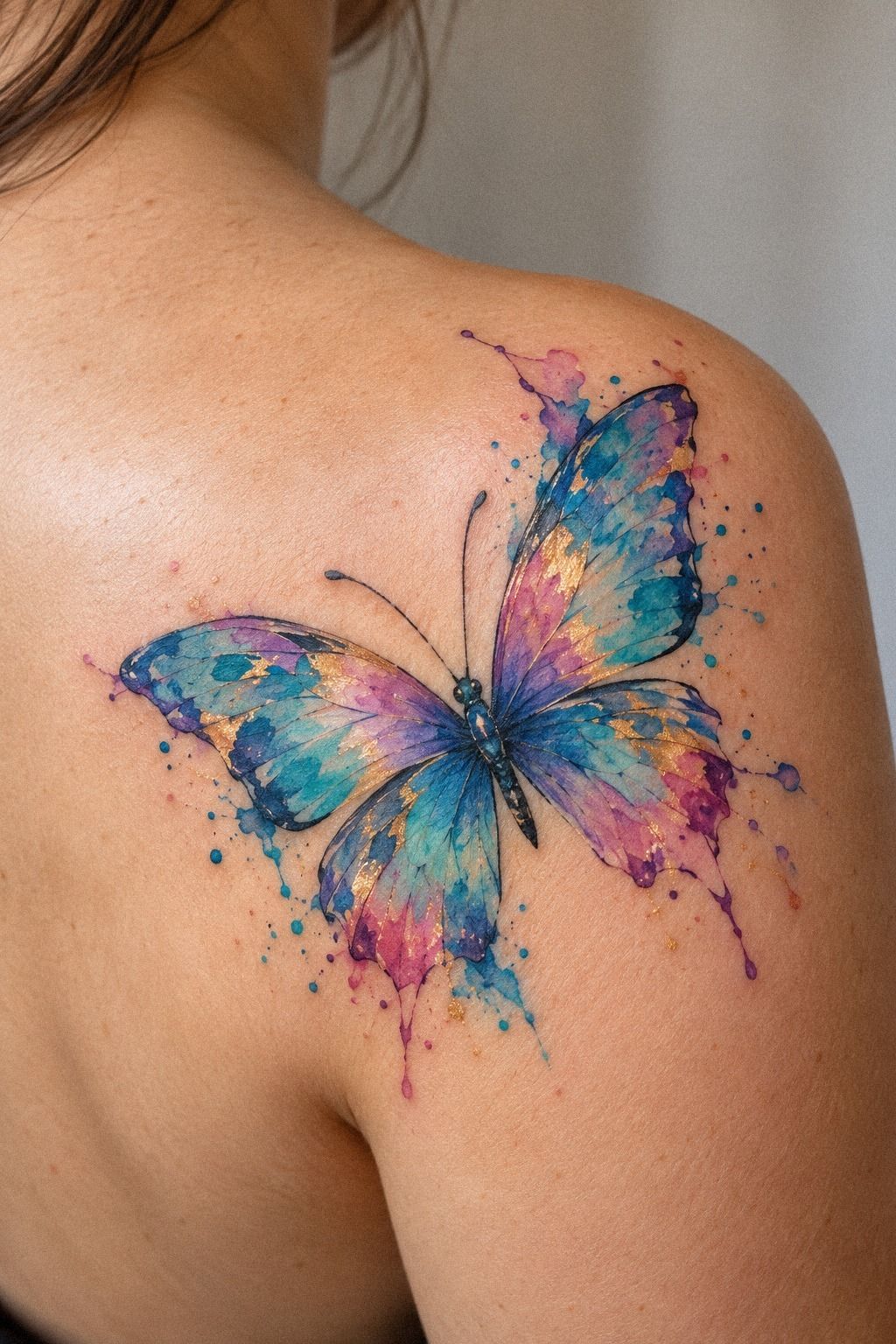
Delicate watercolor butterfly tattoos for the ankle can look graceful when the wings follow the curve above the foot. Warm white, camel, and black accent pigments can feel ethereal and personal, especially when the design remains small enough to disappear beneath a sock or shoe.
The ankle bone needs careful stencil placement. A butterfly placed directly over the hardest point may feel sharper during the session, while a position slightly above or beside it can be more manageable. Ask your artist to show you both options before the needle starts.
Choose a delicate wing span with clear outer edges. Tiny interior veins may not hold as well as two or three purposeful marks. The design should still read when your foot is relaxed, walking, or pointed.
Friction is the main concern. Shoes, socks, and movement can irritate the area while it heals, so your aftercare plan needs to be realistic. If your budget is limited, this placement can still offer good value because a compact design may require less time.
A clean aftercare film can protect the tattoo initially, but follow the artist’s specific instructions rather than improvising. For a sharper reference point, compare these minimalist butterfly tattoos before you settle on color and size.
9When Whimsical Ink Splashes Frame a Watercolor Butterfly
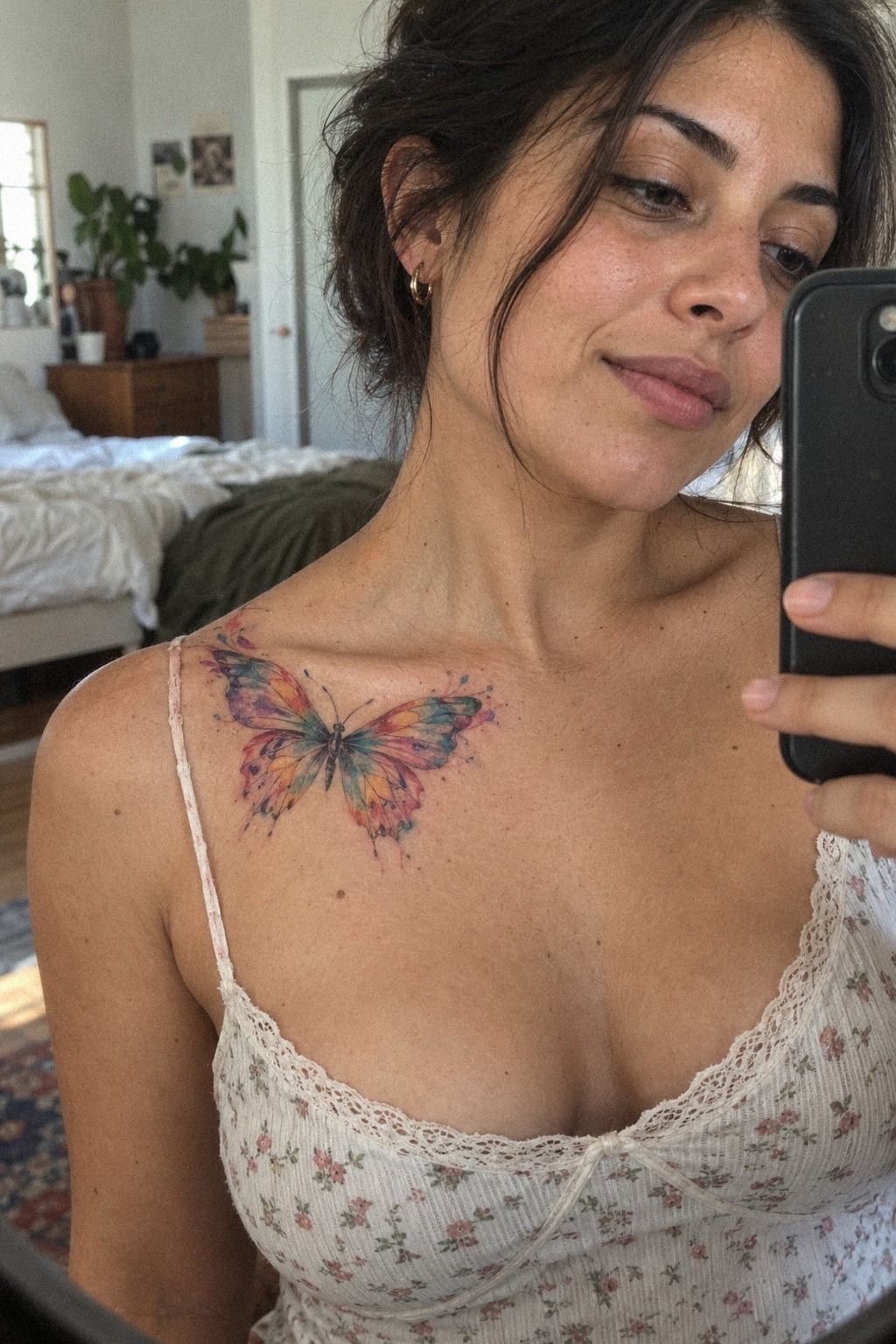
Whimsical watercolor butterfly tattoos with ink splashes bring a playful edge to the collarbone. A midnight blue, copper, and ivory pigment mix can feel vibrant and expressive, with small splashes that look intentional rather than accidental.
The move is controlling the splashes, not scattering marks everywhere. Ask your artist to keep most of the movement around the outer wings, then let one or two dots trail toward the shoulder. That’s the trick!
Use irregular pigment flecks instead of perfect circles. Uniform dots can make a tattoo look like a repeated stamp, while varied marks create a more organic rhythm. Your artist should still know exactly where each mark belongs before the needle begins.
This style can be edgy and daring, but it shouldn’t hide the butterfly. Keep the wing edges sharp enough to read, particularly if the color is light. A clean silhouette gives the whimsical details somewhere to land.
If you’re choosing this for a first-tattoo plan, remember that the collarbone placement remains visible with many necklines. That visibility can feel empowering, but it may not suit every workplace or preference. Browse watercolor fine-line butterfly tattoo examples for a calmer outline to pair with the splashes.
The contrast keeps the design stylish instead of chaotic.
10Best Friends, Matching Watercolor Butterfly Tattoos, Different Details
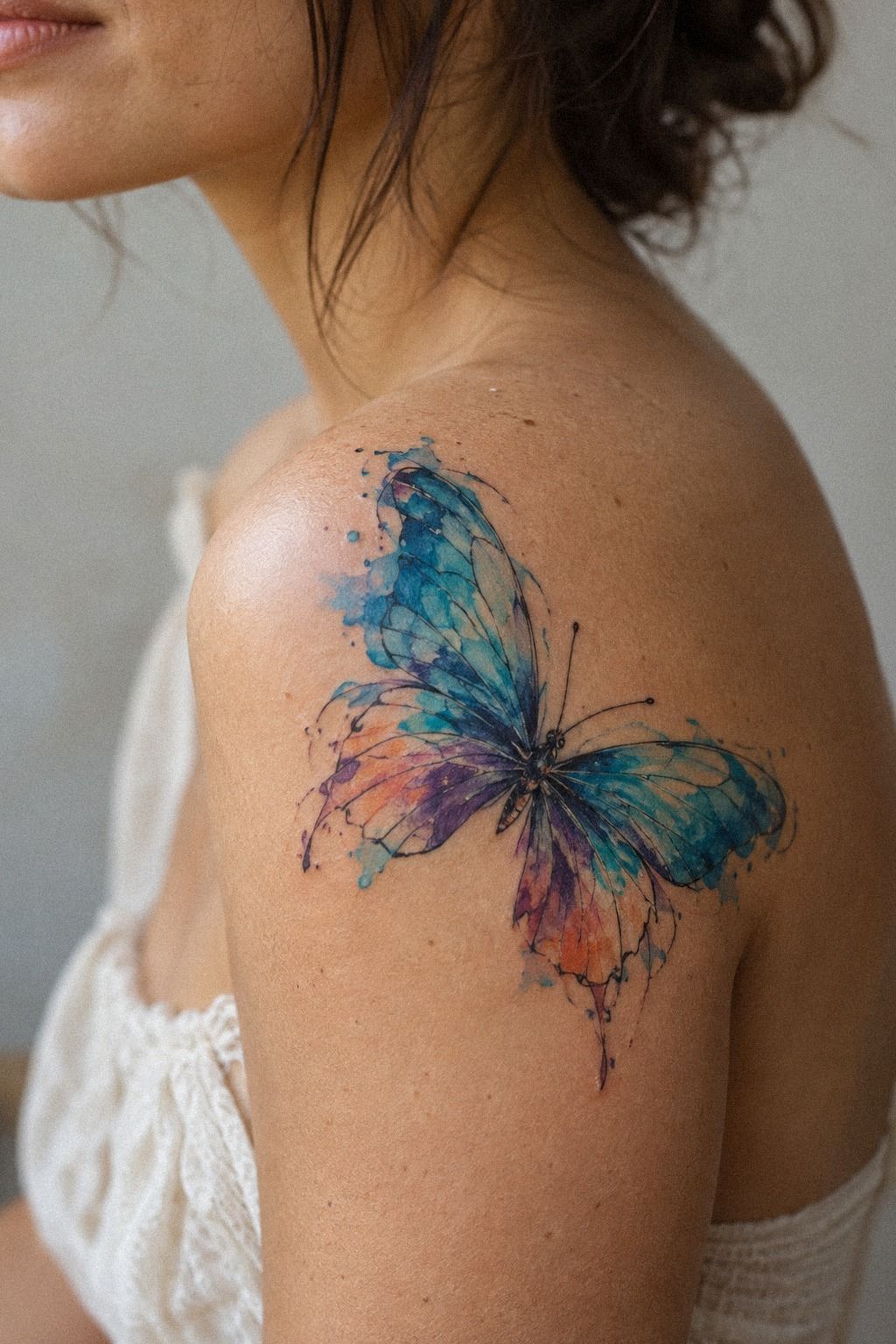
Matching watercolor butterfly tattoos for best friends work best when the designs share one recognizable feature and still suit each person. Sage green and warm cream pigments can make the pair feel romantic and connected without forcing identical copies. Match the wing rhythm, then let each friend choose a personal detail.
11Abstract Geometry Against Watercolor Softness
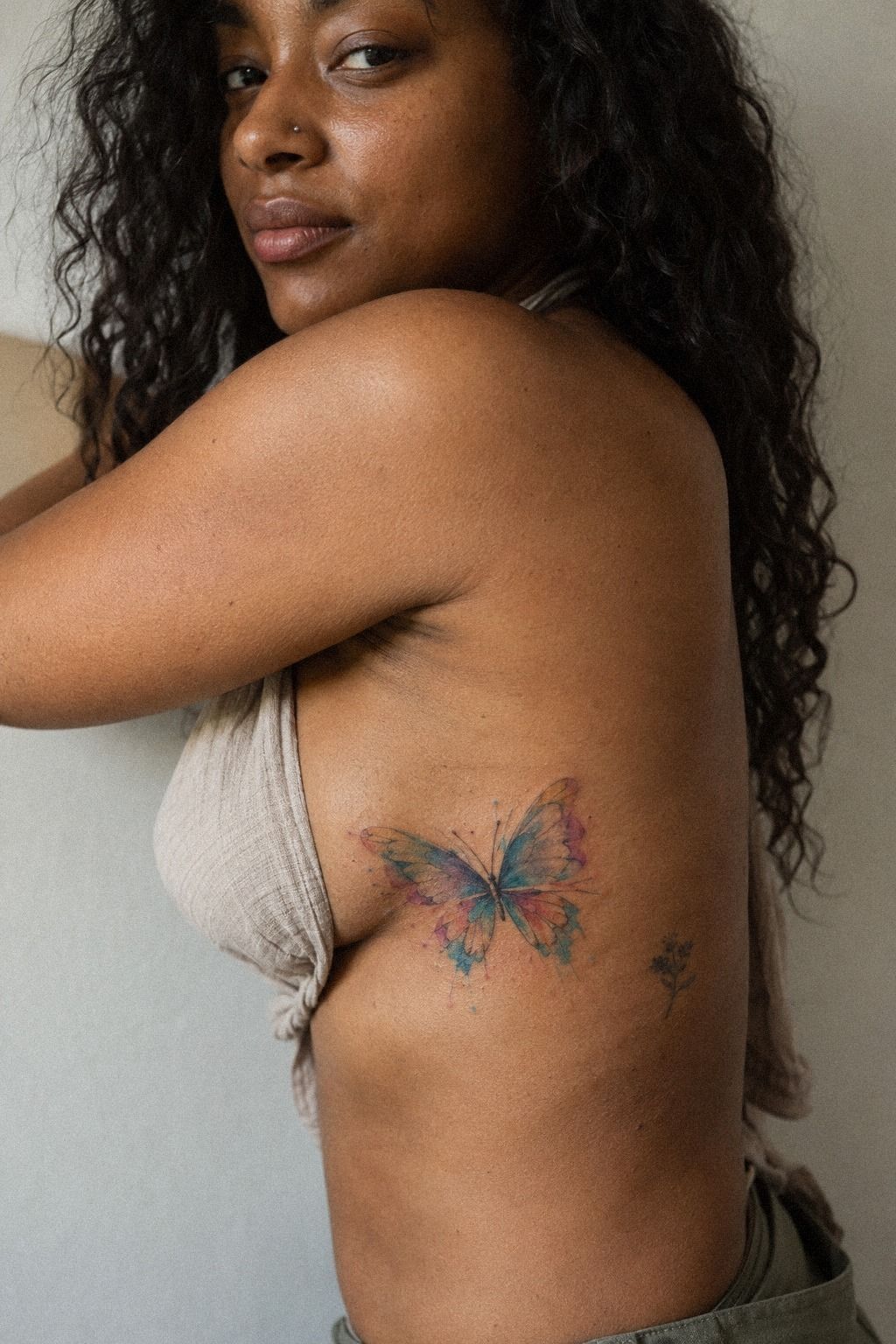
Abstract watercolor butterfly tattoos with geometric accents suit the ribs when you want something raw and unusual. A terracotta, stone, and olive palette can ground the design without making the butterfly feel overly soft or predictable.
Rib tattoos are often more painful than forearm, thigh, or shoulder placements because the skin sits close to bone and moves with breathing. You’ll want to discuss the session honestly. A smaller abstract piece may be more manageable than a detailed design that keeps you still for too long.
The strongest composition uses one geometric idea, such as a triangle behind the body or two thin arcs crossing the wings. Angular linework can sharpen the watercolor, but too many shapes will compete with the butterfly and make the piece feel mechanical.
I’d keep the abstract marks uneven in scale. One larger shape, two narrow lines, and a few open gaps can create a gritty, refined rhythm. Your artist should leave enough skin between the geometry and pigment so the design doesn’t become a dark patch.
Because the ribs move, stencil checking deserves patience. Stand, breathe normally, and look at the design from the front and side. A shape that looks centered while you’re lying down may shift when your posture changes.
For a gentler comparison, review these minimalist unique butterfly tattoos before your appointment. You may decide that one sharp geometric accent is enough to make the design feel personal. Choose a licensed artist with a healed rib-tattoo portfolio, especially if you’re weighing pain against value.
The Design Test I Use
I used to think a watercolor tattoo became more special with every extra detail. That belief gave me a crowded stencil, a longer appointment, and a design that looked better on paper than it did on skin.
Now I start with the clear butterfly silhouette, then ask whether every mark supports it. If the answer is no, I remove it.
The best one-sitting butterfly isn’t necessarily the smallest one. It’s the one with a clear center, enough breathing room, and a placement you can tolerate without tensing every muscle.
Your artist’s advice should change the drawing when anatomy demands it. That isn’t losing the idea; it’s giving the idea a body.
Eternal Ink, Skin, and the Healed Result
Color needs restraint, too. A watercolor effect depends on skin showing through, so a fully saturated wing can lose the ethereal impression people wanted in the first place.
I prefer one dark anchor, two related pigments, and a few imperfect edges. That combination looks expressive without asking fine lines to carry too much.
I also care more about healed portfolios than dramatic studio samples. Fresh ink can look vibrant under bright lights, but healed work tells you whether the artist understands spacing, pigment placement, and line weight. Ask for healed color examples, ask about aftercare, and ask how the design should be adjusted for your skin.
Cost, Value, and Session Planning
The practical facts matter. Typical US shop minimums sit around $50 to $100, while hourly rates often fall around $100 to $250, depending on the artist and region. A written quote gives you a clearer idea of cost before you commit.
You don’t need to buy tattoo supplies online or chase the cheapest appointment. Choose a licensed artist whose portfolio shows clean healed work, clear hygiene practices, and watercolor tattoos that still read after the first brightness softens. That long-term value is usually more important than saving a little upfront.
How I Protect the Color
I protect a new tattoo with gentle washing, light moisturizing, and patience. Simple aftercare instructions are easier to follow than an elaborate routine, so ask your artist exactly what they recommend for your skin and placement.
Avoid soaking, swimming, tight friction, and direct sun while the surface settles. Don’t pick at flakes or judge the final color during the first few days. The pigment can look brighter, darker, or more uneven before the skin finishes healing.
My Shortlist Before Booking
Before booking, I’d bring one primary reference and one backup direction. A focused reference set gives your artist room to create while making your priorities clear. Too many unrelated examples can produce a design that feels borrowed instead of personal.
I’d also confirm the artist’s license, hygiene process, deposit policy, session length, and aftercare support. Ask whether the quoted price includes drawing time and whether a small stencil adjustment changes the cost. Those details make the appointment feel more predictable.
The Questions I Get Asked Most
How much does a watercolor unique butterfly tattoo usually cost?
A watercolor butterfly tattoo commonly falls around a $50 to $100 shop minimum or a $100 to $250 hourly rate in the US. Your final cost depends on the artist, region, size, placement, and detail. A clear quote should come after the artist reviews your reference and stencil plan.
Are watercolor unique butterfly tattoos a good idea for a first tattoo?
Yes, they can be a good first tattoo when you choose a tolerable placement and avoid excessive micro-detail. Forearm, thigh, and shoulder placements are often easier than ribs, feet, hands, or sternum. Your design should still feel meaningful, not selected only because it looks gentle online.
How do I choose a tattoo artist for watercolor unique butterfly tattoos?
Choose an artist with clean linework, healed portfolio photos, and strong hygiene practices. Healed watercolor examples matter more than one bright fresh tattoo. Ask how the artist handles skin tone, color spacing, placement movement, and aftercare before you book.
How much do watercolor unique butterfly tattoos hurt?
Pain varies by placement, but ribs, feet, hands, and sternum are commonly more sensitive than forearm, thigh, or shoulder areas. Placement comfort depends on anatomy and your own tolerance. Tell your artist if you need breaks, especially during a first session.
How long does a watercolor unique butterfly tattoo take to heal?
The surface usually heals in about 2 to 3 weeks, while complete healing can take about 2 to 3 months. Gentle washing and light moisturizing support aftercare. Avoid direct sun, soaking, and swimming until your artist says the skin has settled.
What’s the best placement for watercolor unique butterfly tattoos?
The forearm and shoulder are strong choices when you want easier visibility and a more tolerable session. The wrist or ankle works for a smaller, more discreet piece, but movement and friction matter. Your artist should place the stencil while you stand naturally.
Where can I buy watercolor unique butterfly tattoos, and is there an affiliate disclosure?
You don’t buy a tattoo online. You book with a licensed artist or reputable studio after reviewing healed work, hygiene standards, and pricing. There are no affiliate links here, so you won’t be directed to a shop or product seller through this guide.
Where I’d Start First
If I had to pick one, I’d start with the shoulder butterfly. It gives your artist room for color, usually feels more tolerable than bone-heavy placements, and still looks striking under a sleeve. I’d bring this watercolor butterfly tattoo guide to the consultation and ask for one focused design.
That’s worth protecting! Choose the placement you can live with, the artist whose healed work you trust, and the level of detail your skin can realistically carry.