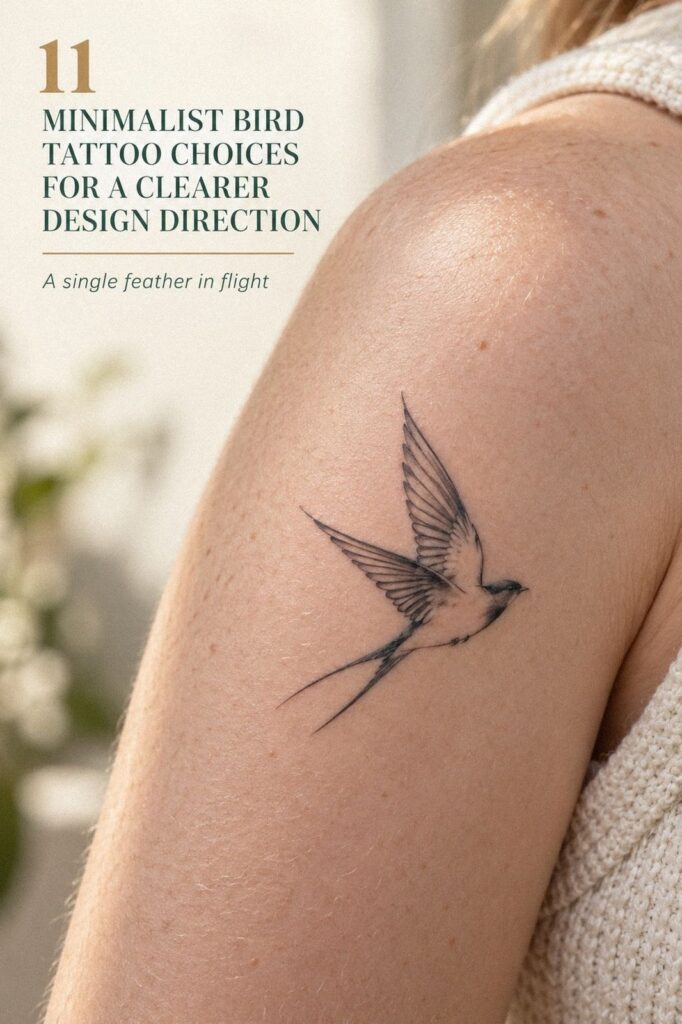
You want a minimalist bird tattoo that reads clearly now and still feels personal years later. The hard part isn’t choosing a bird. It’s balancing scale, line weight, placement, and healing before you book. I’ve learned that a tiny design needs more planning than a large one. Start here.
- Start with Small Minimalist Bird Tattoo Silhouettes
- Fine-Line Birds Need Meaningful Details
- Where Should a Minimalist Bird Tattoo Go?
- Keep Wing Shapes Crisp and Easily Readable
- Plan Matching Minimalist Bird Tattoos for Couples
- Meaning Over Trend: Choose a Bird From Memory
- Leave Negative Space Around Delicate Bird Lines
- Add Tiny Symbols Without Crowding the Bird
Editor’s note: The strongest hidden tattoos usually have one idea, one meaningful detail, and enough skin left open for the design to breathe.
- Start with Small Minimalist Bird Tattoo Silhouettes
- Fine-Line Birds Need Meaningful Details
- Where Should a Minimalist Bird Tattoo Go?
- Keep Wing Shapes Crisp and Easily Readable
- Plan Matching Minimalist Bird Tattoos for Couples
- Meaning Over Trend: Choose a Bird From Memory
- Leave Negative Space Around Delicate Bird Lines
- Add Tiny Symbols Without Crowding the Bird
- What Does Each Bird Species Say?
- Pain or Privacy? Weigh Placement Carefully
- Protect Fresh Minimalist Bird Tattoos During Healing
1Start with Small Minimalist Bird Tattoo Silhouettes
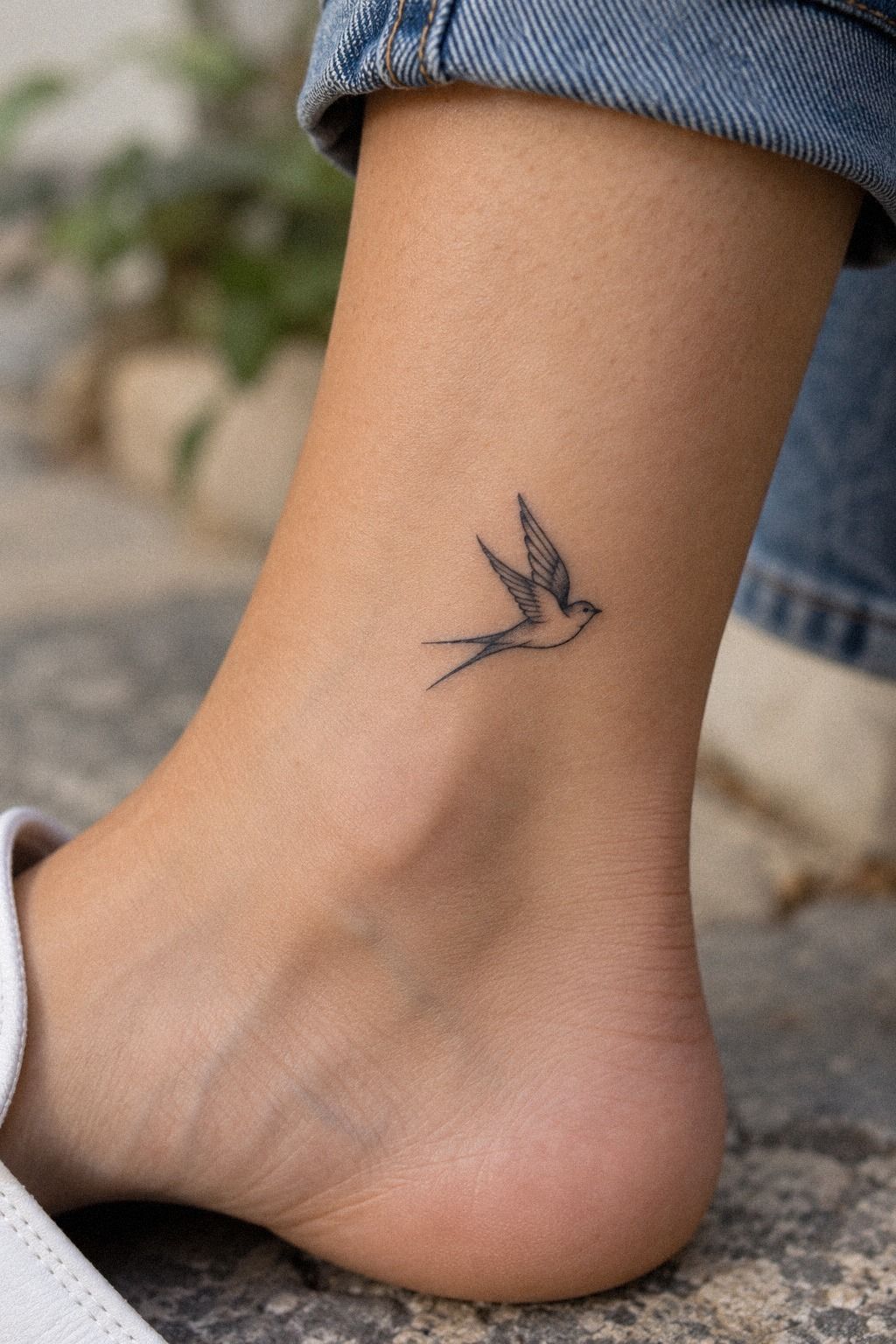
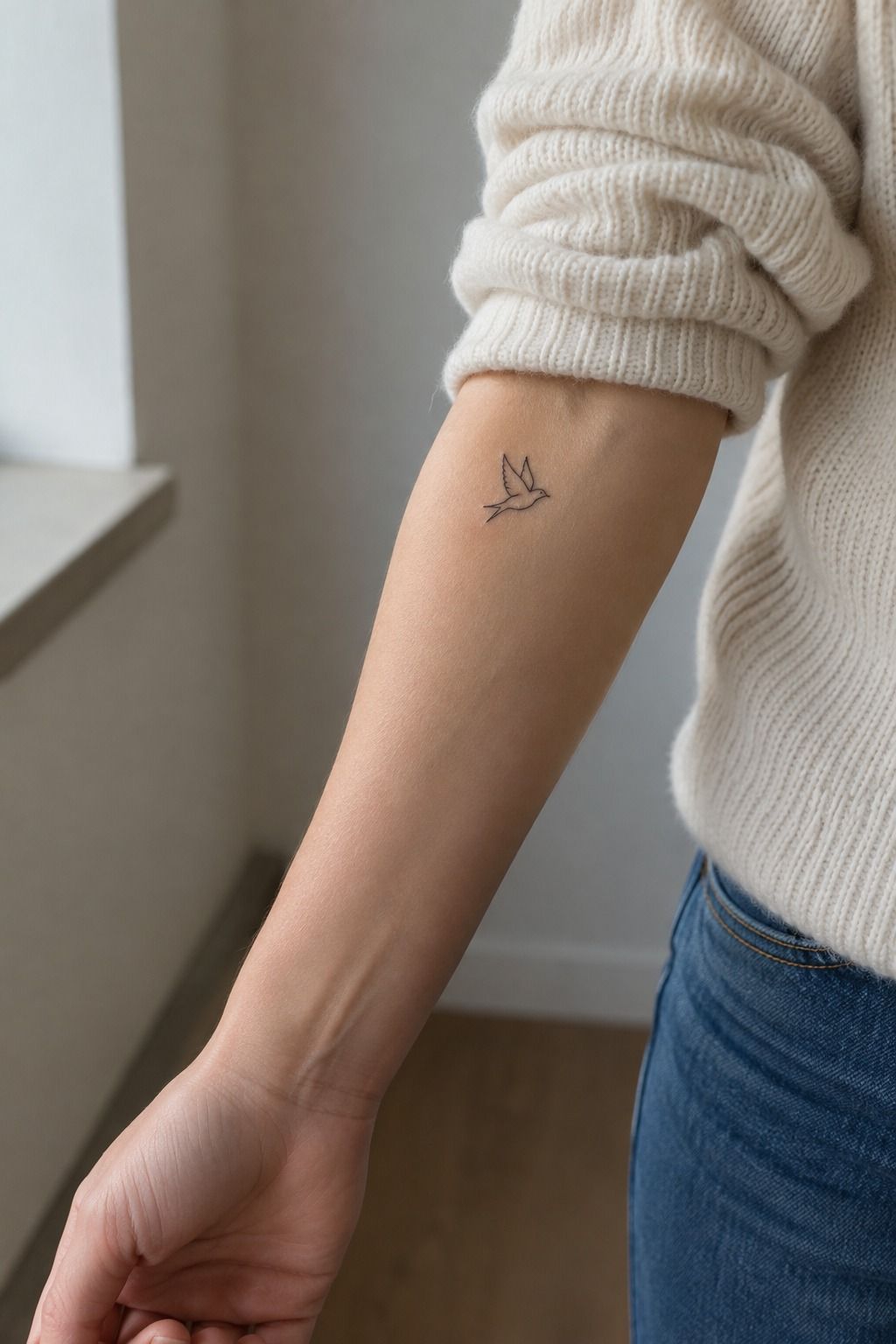
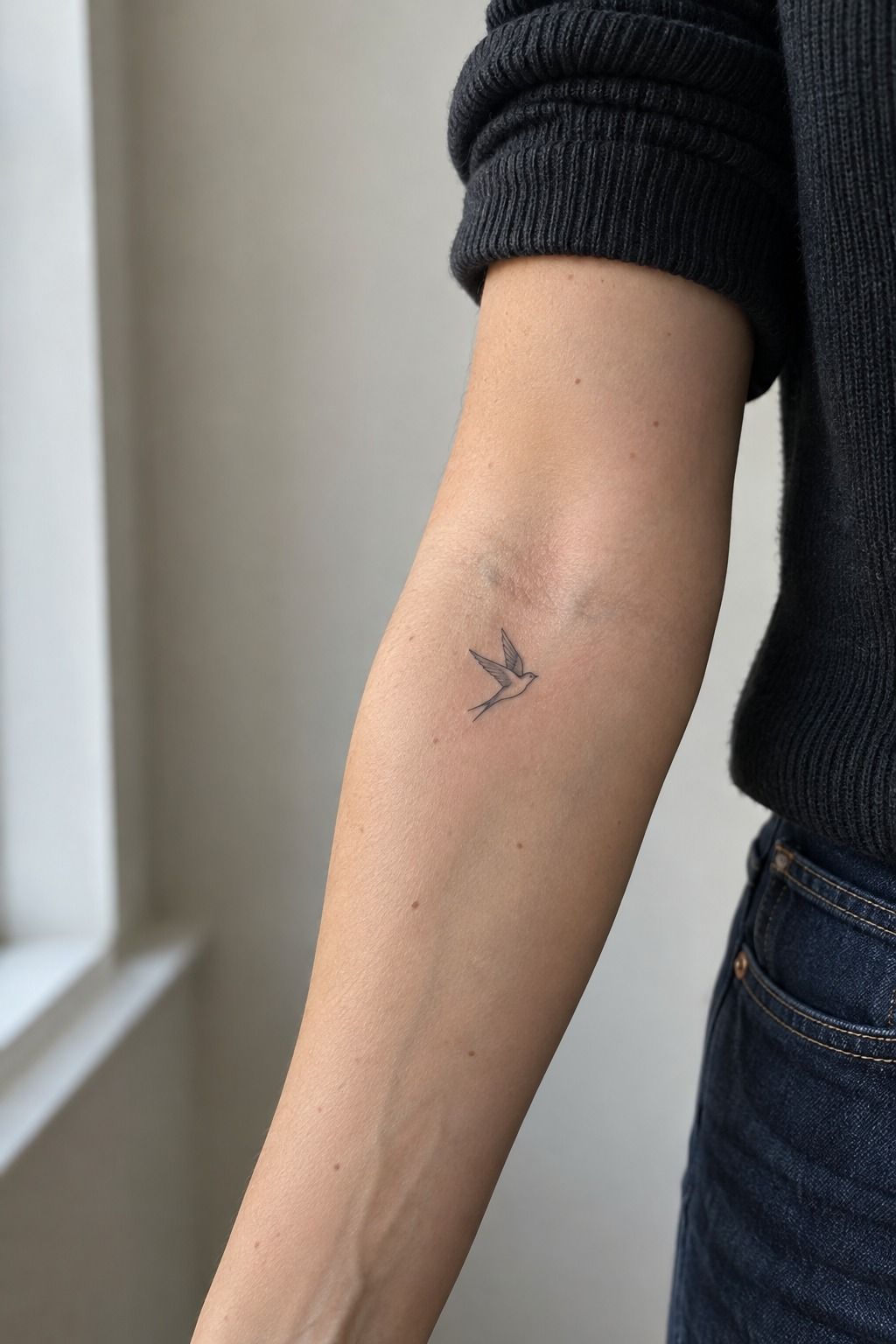
Begin with the bird’s outer shape, not the feathers. A small black ink silhouette should still read as a bird when you glance at it from several feet away.
Ask your artist to show the design at the intended size on paper, then cover it with a sleeve or long shirt cuff. If the wing disappears, your outline needs a sharper angle or slightly larger scale.
For this placement, a mid-flight bird works because the inner forearm gives the wings space to open horizontally. You don’t need a dramatic pose.
A delicate body, two crisp wing arcs, and a tapered tail can look more striking than a crowded illustration. I’d skip a front-facing bird at this size because the beak and eyes can collapse into one dark mark.
Try a one-inch paper mockup first, then compare it with examples of tiny bird tattoos and small bird tattoos. Your artist can adjust the silhouette without committing to ink, and you’ll notice whether the design feels personal or merely pretty. That pause matters!
If you’re hiding it beneath a sleeve, keep the highest wing point away from the exact place where fabric rubs constantly. A fine cotton sleeve can drag across fresh skin, so your placement should account for daily clothing, not just visibility. The final outline should look crisp, minimal, and quietly expressive.
2Fine-Line Birds Need Meaningful Details

Fine-line work can carry meaning, but every detail needs a job. On the shoulder, an open-wing bird gives your artist enough surface to add one meaningful feature, such as a split tail, a small eye, or a distinctive feather break. More than that can make the design ornate instead of understated.
Choose one detail tied to your story. A swallow might point toward return and loyalty, while a wren may feel personal because it reminds you of a childhood garden.
You don’t need to explain the symbol to anyone else. A single-needle configuration can keep the mark sleek, but your artist should still show healed examples because fresh lines often look darker than they will later.
Look through small bird tattoos and tiny owl tattoos, then save designs with a similar scale, not just birds you like. You’ll want to compare line spacing, wing angles, and how much skin remains open inside the form.
I wouldn’t copy a reference exactly. Use it to identify the one feature that makes your bird meaningful.
Fine lines aren’t automatically fragile. They can age gracefully when your artist leaves breathing room between marks and avoids squeezing detail into a tiny shape.
Ask for a sterile stencil transfer first, and look at it while your shoulder is relaxed. Skin moves, and your tattoo should still look bold, elegant, and readable when you do.
3Where Should a Minimalist Bird Tattoo Go?

Placement changes the message before anyone knows the symbolism.
The inner forearm feels visible and expressive, while the upper arm gives you more privacy. Behind the ear feels edgy and dainty, but it leaves less room for a wide wing shape. Choose the location that supports the meaning, clothing, and scale of your bird tattoo placement.

4Keep Wing Shapes Crisp and Easily Readable

Wing structure is the make-or-break detail in a minimalist bird. Behind the ear, the available skin is narrow, so the wings should use two or three clean directional lines instead of a cluster of individual feathers. Your artist can suggest movement with spacing, not extra marks.
Ask to see the stencil with your hair both tucked back and down. A fine black outline should remain visible when the ear is partly covered, but it shouldn’t become a heavy patch behind your head.
I made the mistake of approving a tiny design without checking it from the side once. The angle looked sharp in a mirror and flat in ordinary life afterward.
A crisp wing has a clear leading edge, an open center, and a tail that finishes the gesture. You can test that shape with a pen on tracing paper.
If the bird looks expressive at a glance, the design is doing enough. If you need to inspect every feather, it needs editing.
Don’t confuse more ink with more clarity. A single-use razor and clean stencil can help your artist position the shape accurately, yet the final result depends on restraint.
Behind the ear is an edgy, dainty placement, and it rewards an iconic outline more than a miniature anatomical study. Every line should earn its place!
5Plan Matching Minimalist Bird Tattoos for Couples
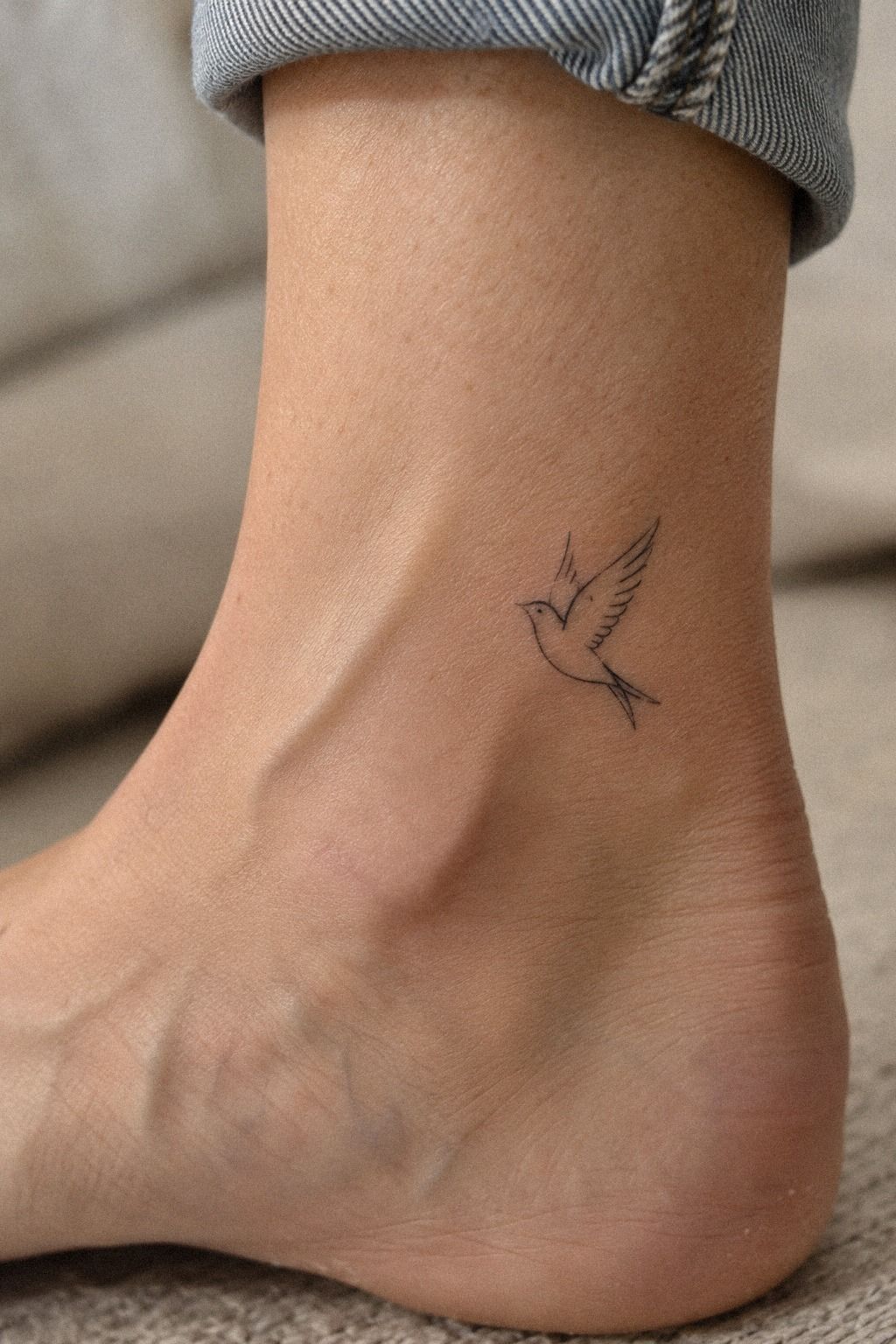
Matching tattoos work best when they share a visual language rather than becoming identical copies. On a traditional flash sheet, look for two birds that face one another, follow the same flight path, or use related wing shapes. The designs can be different species while still feeling like a pair.
One person might choose a swallow, while the other prefers a sparrow. That’s fine.
The connection can live in the line weight, size, or direction. I’d avoid names and matching dates if you want the tattoos to remain meaningful even as your relationship changes.
Compare ideas with tree and bird tattoo meaning and small bird tattoos if your shared story involves family, distance, or returning home. You don’t need a complicated symbol. A small branch, mirrored flight, or two different tails may be enough to make the pair feel personal and symbolic.
Discuss placement before either of you books. A black transfer sheet can show whether the birds will sit naturally on each body, because identical designs rarely occupy identical anatomy. Your tattoos can be romantic without looking forced, and the strongest pair will still work independently if life takes an unexpected turn.
6Meaning Over Trend: Choose a Bird From Memory
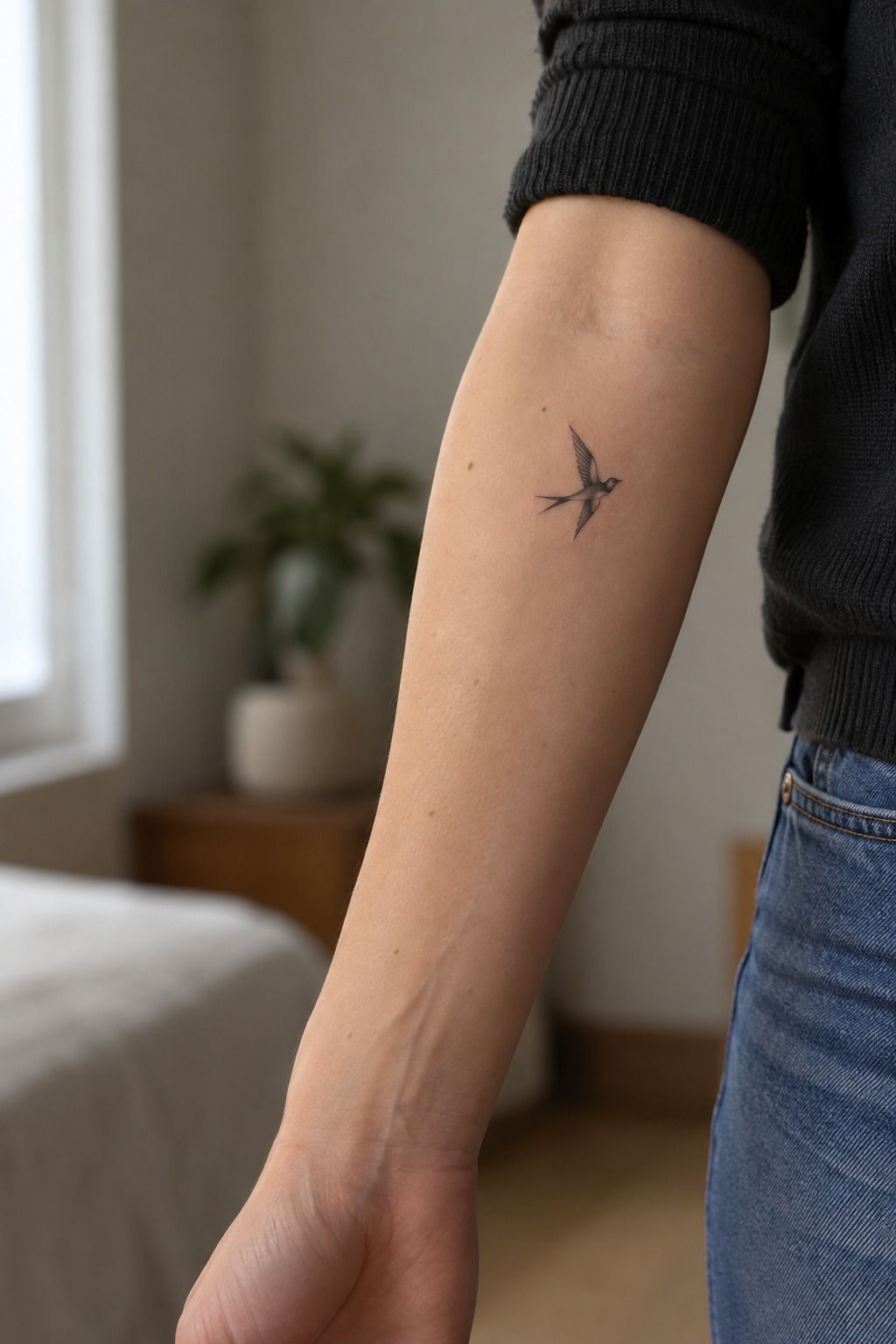
The most personal bird usually comes from a memory, not a trend list. Think about the bird you saw outside a childhood window, the species connected to a relative, or the sound that marked a particular place. Your thigh gives you more surface for a distinctive silhouette, so you can choose a species with recognizable proportions.
A deep black pigment can hold a strong silhouette on deep ebony skin, but your artist should understand how contrast appears on your undertone. Ask to see healed work on skin close to yours, not only fresh examples. That’s a practical way to protect the bold shape and keep the final design honest.
You might choose a cardinal because it reminds you of someone, or a crane because its posture feels powerful. You might choose a tiny local bird nobody else recognizes.
I prefer the latter when the memory is strong. A meaningful tattoo doesn’t need to announce its meaning to strangers.
Look at tiny owl tattoos or tiny phoenix tattoos if your memory points toward wisdom, recovery, or reinvention. Your bird can be fierce, haunting, or quietly personal without adding a paragraph of symbols around it. The best choice often feels obvious once you stop asking what will look most impressive to everyone else.
7Leave Negative Space Around Delicate Bird Lines
Negative space is part of the design, not leftover skin.
Ask your artist to protect the open areas inside and around the wings. Those gaps keep a delicate bird outline readable as the tattoo settles and ages. A crowded silhouette may feel intricate at first, but an airy one usually remains more graceful.
8Add Tiny Symbols Without Crowding the Bird

A small symbol can deepen a bird tattoo, but it shouldn’t compete with the bird itself. On the shoulder, place one restrained mark near the flight path, such as a star, crescent, branch, or tiny initial. The accent symbol should become visible only after someone looks closely.
Test several distances between the bird and the symbol during the planning stage. Too close, and the design becomes one dark cluster.
Too far, and the second mark looks accidental. I’d keep the symbol smaller than the bird’s body so the eye reads the bird first.
A crescent might represent a night journey. A star might mark direction.
A branch can suggest return or family. You don’t need three symbols to explain one feeling.
An understated mark often stays more meaningful because it leaves room for your own interpretation.
Browse small bird tattoos and tiny bird tattoos for examples of restrained additions, but don’t treat any reference as a fixed formula. A single dot accent can look playful and vibrant, while an old reference may not carry the same weight in ten years. Your artist can help you simplify the idea without removing its emotional core.
9What Does Each Bird Species Say?

Species matters when the bird itself carries the story. A swallow can suggest return, a dove can feel sacred, and a raven can bring a darker, more dramatic edge. Choose the species that matches your experience, not the one that receives the most saves.
Study a blackwork reference sketch beside real bird references so you can see which features define the species. A pointed wing, forked tail, or rounded head may be enough. Your artist doesn’t need to draw every feather, but they do need to preserve the identifying gesture.
If you’re unsure, write three words about what you want the tattoo to hold. Maybe they’re “freedom, survival, distance.” Search for a species that fits those words, then compare it with minimalist unique butterfly tattoos and tree and bird tattoo meaning if you want a lighter or more symbolic alternative. You can change direction before the stencil, and you should.
Symbolism shouldn’t overpower your taste. A matte black ink study may look refined on paper, yet the species still needs to feel like yours.
I wouldn’t choose a raven because it is fashionable if your real memory belongs to a sparrow. The personal choice will age better than the trendy one.
10Pain or Privacy? Weigh Placement Carefully
Pain varies by person, but placement gives you useful planning information. Ribs, feet, hands, and sternum are commonly more painful because they have less padding and sit near bone. Forearms, thighs, and shoulders are often more tolerable, especially for a first tattoo.
A printed placement stencil lets you compare a sensitive area with a more forgiving one before booking. If you’re nervous, ask your artist how long the appointment may take and whether the design can be divided into shorter sessions. You don’t have to prove anything by choosing the hardest location.
The same bird can feel completely different on the collarbone and thigh. Your tolerance, session length, and artist’s technique all matter.
A clean disposable barrier supports hygiene, but it won’t erase discomfort. Plan for the placement you can actually live with!
11Protect Fresh Minimalist Bird Tattoos During Healing

Aftercare starts before you leave the studio. Follow your artist’s instructions for washing, moisturizing, and covering the fresh tattoo, because products and wrap timing can vary. In general, gentle washing, light hydration, and avoiding sun and swimming are standard parts of a careful plan.
Use a fragrance-free cleanser and clean hands when you wash the area. Don’t scrub, pick, or apply a thick layer of lotion.
Surface skin may heal in about two to three weeks, while complete healing can take about two to three months. That deeper timeline is why you shouldn’t judge the final line weight too quickly.
Keep clothing from rubbing the fresh ankle design. A loose cotton sock can be more comfortable than tight elastic, but your artist’s instructions come first. If the tattoo becomes unusually hot, increasingly painful, or develops concerning discharge, contact a qualified medical professional rather than guessing.
Healing doesn’t end when the peeling stops. Protect your tattoo from UV exposure once it has healed, because sunlight can soften fine lines and fade contrast. I like to check the design at the two-week and two-month marks, so you can see how the crisp, meaningful shape settles into your skin.
Why I Still Prefer a Small Bird With One Strong Idea
I’ve designed and collected enough small tattoos to know that restraint is harder than decoration. The first sketch usually has too much: a moon, three stars, a branch, extra feathers, maybe a date squeezed beneath the bird.
It feels meaningful because every part has a story. Then the design goes on skin, and all those stories compete for the same few millimeters.
The strongest minimalist bird I’ve seen usually has one clear decision behind it. The species carries the memory.
The wing angle carries the movement. The placement carries the privacy or visibility.
Everything else can stay on the page. That’s why I prefer an intricate idea reduced to a crisp outline over a busy tattoo that explains itself too loudly.
I also think people underestimate how much anatomy changes a design. A collarbone curves. An ankle narrows.
Behind the ear, hair and shadow become part of the final result. Your artist isn’t only copying a drawing.
They’re adapting a solid black pigment mark to skin that bends, stretches, ages, and meets sunlight.
I won’t pretend fine line is maintenance-free. Lines can spread slightly, and UV exposure can soften detail.
Still, a well-planned bird with enough negative space can remain timeless, elegant, and recognizable. My own favorite designs aren’t the loudest ones. They’re the ones that still make sense when nobody else is looking.
A Quick Placement Check
Before you approve the stencil, wear the clothes you normally use when you want the tattoo hidden. Raise your arm, bend your wrist, sit down, and look at the design from the side. A sleeve coverage test can reveal rubbing points that aren’t obvious while you’re standing still.
Check the placement in ordinary lighting, too. A tattoo can look powerful when you first see it and feel too visible during a normal workday. You’ll know more after ten quiet minutes of movement than after one quick glance in the studio mirror.
Ask whether the design stays readable when your arm bends. A visible wing shape may need a slight adjustment near a joint, especially if the bird crosses a crease. Small changes before the appointment can protect the graceful gesture.
Before You Book the Appointment
Bring a short reference folder, but don’t arrive with twenty unrelated designs. Choose examples that show scale, line weight, and the kind of silhouette you prefer. Your artist needs to understand the visual language, not reproduce another person’s tattoo.
Ask about healed results, skin-tone experience, touch-up policy, and aftercare. A healed portfolio tells you more than a feed full of fresh black ink. If the artist avoids practical questions, you don’t have to keep the appointment.
You can also compare small bird tattoos with tiny phoenix tattoos before your consultation. Those references can clarify whether you want a literal species, a symbolic silhouette, or a more abstract flight gesture.
The One-Detail Rule
When a bird already has a clear silhouette, one small detail can make it personal. It might be a split tail, a missing feather, a tiny star, or a wing angle connected to a memory. Two details can work, but only if they remain visually separate.
I’d write the meaning in one sentence before adding anything. If you can’t explain what the extra mark contributes, leave it out. A single symbolic detail often feels more powerful than a cluster of references.
Care After the Appointment
Keep the first few days simple. Follow the artist’s directions, wash gently, avoid soaking the tattoo, and don’t pick at peeling skin. Products vary, so your artist’s instructions should guide the exact routine.
Once the tattoo has healed, sun protection becomes part of its long-term care. A broad-spectrum SPF can help preserve contrast, especially on exposed placements such as the collarbone, wrist, or ankle. Fine lines need protection if you want that sharp, polished look to last.
The Questions Worth Answering First
How much does a minimalist bird tattoo usually cost?
A minimalist bird tattoo typically costs about $100 to $300 in the US, while a shop minimum may be about $50 to $100. Some artists charge around $100 to $250 hourly. Your chosen tattoo artist and region will affect the final quote.
Ask whether the price includes the stencil consultation and aftercare instructions. A simple bird may take less time than a detailed one, but a custom linework design still reflects the artist’s planning.
Are minimalist bird tattoos a good idea for a first tattoo?
Yes, they can be a strong first choice because forearm, thigh, and shoulder placements are often more tolerable, and a clear silhouette is easy to understand. Choose a small black design with open spacing if you want a calm introduction to tattooing.
You should still select a species that feels meaningful. Browse small bird tattoos and look for healed examples before booking, because fresh ink doesn’t show the final softness of the lines.
How do I choose a tattoo artist for minimalist bird tattoos?
Choose an artist whose portfolio shows clean linework, healed examples, and tattoos on skin tones similar to yours. Ask about their experience with fine line tattoos, studio hygiene, and how they plan for fading or line spread.
Don’t rely only on a polished social feed. Your consultation should include stencil placement, size, and aftercare.
If the artist dismisses those questions, keep looking. You can also review tiny bird tattoos to identify the line quality you want to discuss.
How much do minimalist bird tattoos hurt?
Pain is usually more noticeable over ribs, feet, hands, and sternum, while forearms, thighs, and shoulders are often more tolerable. A collarbone tattoo may feel sharper than a thigh tattoo because the skin sits closer to bone.
Your session length and personal tolerance matter, too. Eat beforehand, stay hydrated, and tell your artist if you need a pause. There’s no prize for pretending you’re comfortable.
How long does a minimalist bird tattoo take to heal?
The surface usually heals in about two to three weeks, while complete healing can take about two to three months. During that period, gentle washing, light moisturizing, and avoiding direct sunlight and swimming support the skin.
Follow your artist’s specific instructions, since wrap type and products vary. Don’t pick peeling skin or judge the final ink too soon. The lines can look softer as the tattoo settles.
What’s the best placement for minimalist bird tattoos?
The best placement depends on visibility, pain tolerance, clothing, and how much surface the bird needs. The inner forearm offers visibility, while the thigh gives you more privacy and an uninterrupted area for open wing shapes.
If you want the tattoo hidden under a sleeve, test the stencil with your usual clothes. Your best placement is the one that still feels right during an ordinary day, not only when you first approve the design.
Where I’d Start First
If I had to pick one step, I’d start with the silhouette. A clean outer shape survives clothing, distance, and time better than extra feather detail. Save that sketch, test it under your sleeve, and bring it to your artist before discussing symbols.
You can explore small unique butterfly tattoos for comparison, or revisit tiny phoenix tattoos if your idea involves transformation. But the bird should remain the decision that leads.
Start with the bird, and let everything else earn its place!


2 responses to “How to Design Minimalist Bird Tattoos That Hide Under a Sleeve – 11 Ideas”
[…] elegant quality people want from this style. If you’re comparing bird symbols, our collection of minimalist bird tattoos can help you decide whether an eagle feels more personal than a swallow or […]
[…] can compare this style with minimalist bird tattoos before you book. A single-needle approach is edgy at once, but it isn’t automatically fragile. […]