
A delicate dragonfly tattoo can stay under sleeves when you choose clean scale, sensible placement, and enough contrast for healed skin. I’ve learned that the hard part isn’t picking a motif, it’s keeping a dainty idea readable after the first excitement fades. Use this guide to plan a personal, graceful piece you’ll still want to show years from now.
- Start With Small Delicate Dragonfly Tattoo Linework
- Pick Meaningful Wing Details For Your Dragonfly
- Place Your Delicate Dragonfly Tattoo Strategically
- Start With Small Delicate Dragonfly Tattoo Linework
- Pick Meaningful Wing Details For Your Dragonfly
- Place Your Delicate Dragonfly Tattoo Strategically
- Keep Fine Lines Crisp And Graceful
- Plan A Symbolic Dragonfly Tattoo Composition
- Choose Vibrant Accents For Delicate Wings
- Add Intricate Details Without Losing Delicacy
- Match Unique Dragonfly Ideas To Your Style
- Prepare For Fine-Line Tattoo Pain
- Protect Your Dragonfly Tattoo During Healing
- Personalize Your Delicate Dragonfly Tattoo Meaning
1Start With Small Delicate Dragonfly Tattoo Linework

Begin with the silhouette, not the tiny decorations. Ask your artist to sketch single-needle linework on an upper-arm template, keeping the wings open and the body easy to recognize. If you’re drawn to terracotta, olive, and muted stone accents, a stone-gray outline can keep the design readable without making it feel heavy.
Your dragonfly should have one obvious direction. A slight upward angle feels hopeful and flowing, while a horizontal pose feels more understated beneath a sleeve.
I wouldn’t start with a crowded design. You can always add details later, but you can’t easily reclaim negative space once it’s gone!
Keep the stars separate from the body. Three tiny stars in different sizes can create a whimsical orbit around the wings, but they shouldn’t touch every edge. If you’re drawn to miniature pieces, compare this approach with these tiny dragonfly tattoo ideas before you settle on a final scale.
Ask your artist how the design will look after healing, not only on the stencil. Terracotta ink can soften slightly as your skin settles, and extremely close lines may merge over time. You’d rather have four readable wing sections than ten delicate marks that disappear into one dark patch.
For an upper arm, place the motif where your sleeve naturally falls, then move your arm through a few positions. A fine-point needle can create an elegant finish, but your artist still needs room to work without stretching the design into an awkward curve.
2Pick Meaningful Wing Details For Your Dragonfly

Choose one wing detail that carries meaning for you. Vein-like lines can suggest resilience, movement, or a fresh start, while open negative space can feel more airy and symbolic. If you want an expressive tattoo, tell your artist the story first and let the drawing grow from that story.
For a shoulder design, let the dragonfly curl along the limb rather than sitting flat like a logo. That flowing direction gives your piece motion. I like it better than a stiff, perfectly centered insect because your eye follows the body naturally from shoulder toward arm.
For a medium warm ivory complexion, ask to see a stencil in the same pose before any color is discussed. A shoulder stencil lets you judge whether the wings follow your anatomy or fight it. Clay, soft linen-toned neutrals, and aged-brass-inspired gold can become a striking accent family, but you don’t need every shade.
Consider adding one meaningful mark, such as a small crescent, a star, or a single dot sequence. Keep the accent physically separate from the wing structure. Your design can be intricate without becoming ornate, and that balance is where a delicate dragonfly tattoo feels most convincing.
If you like symbolic insects but want a softer silhouette, browse delicate moth tattoo designs and compare their wing spacing. Don’t copy the shape blindly. Your dragonfly should still feel sleek, graceful, and unmistakably yours.
3Place Your Delicate Dragonfly Tattoo Strategically
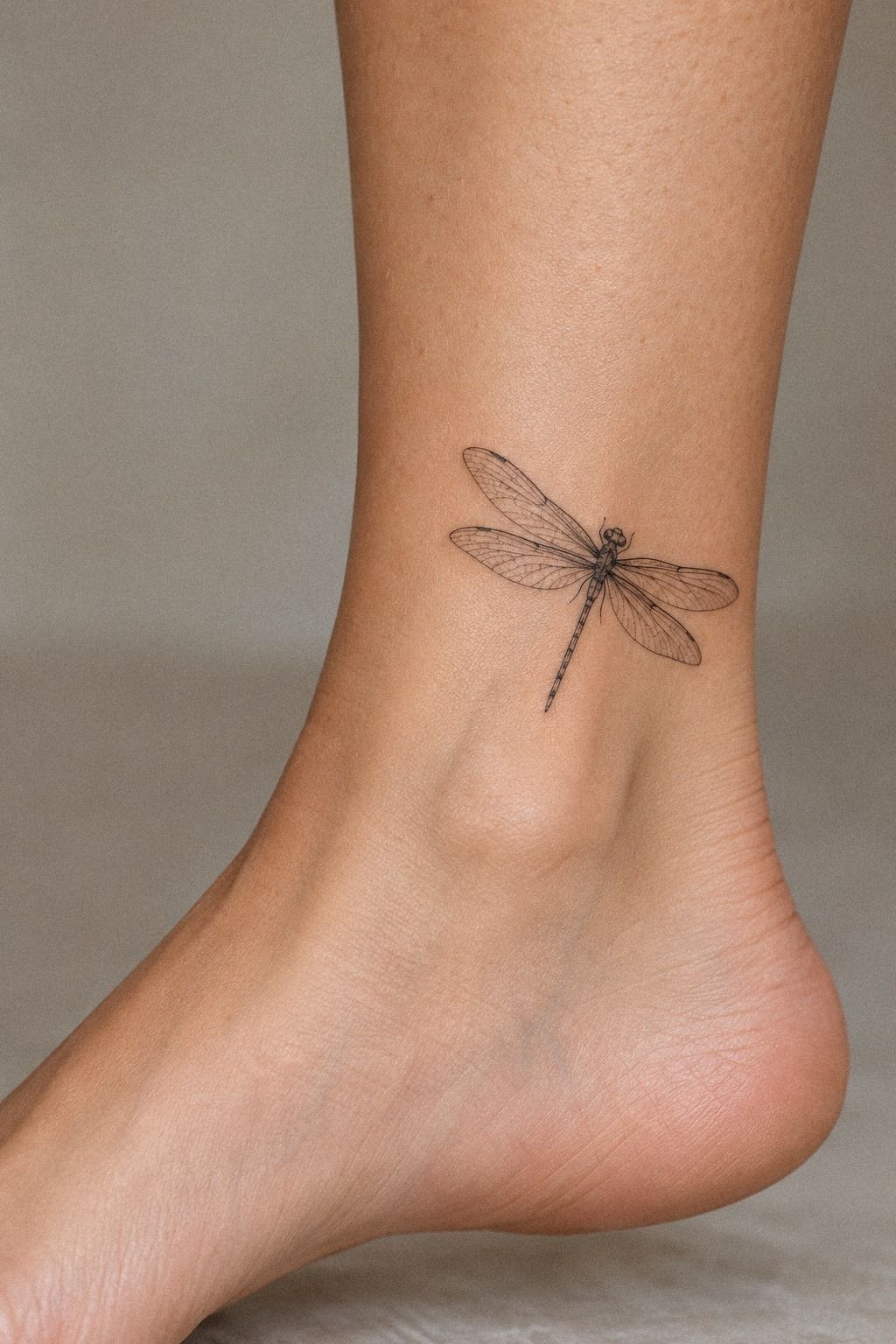
Test the inner forearm placement with a paper mock-up before booking. A dragonfly curling along the limb works because it follows the long visual path of the forearm. You can hide it beneath many sleeves while still seeing it when your arm turns palm-up.
Your skin moves differently near the wrist, elbow, and crease. Ask your artist to keep the head and wing joints away from the deepest fold. A forearm stencil should be checked with your arm relaxed, bent, and rotated, because a placement that looks sharp in one position may look compressed in another.
If you’re choosing between the inner forearm and upper arm, decide how visible you want your tattoo to be at work or during formal events. A plum, gray, or rose-gold accent can make the forearm version feel vibrant, while the upper arm gives the design more protection from daily friction and sunlight.
The inner forearm is usually more tolerable than ribs, feet, hands, or sternum, though everyone’s experience differs. I wouldn’t choose a placement only because it sounds easy. Your daily habits matter too, especially if your sleeve rubs the area or your work keeps your arms in direct sun.
For a smaller motif, compare your proportions with these small dragonfly tattoo examples. You’ll want the body to remain readable from a few feet away, not only when you hold your arm close to your face.
4Keep Fine Lines Crisp And Graceful

Fine lines look polished when they have breathing room. Ask your artist to separate the wing veins instead of stacking them into a dense web. Navy, white, and soft charcoal accents can look crisp and striking on warm tan skin when the spacing is deliberate rather than microscopic.
Your artist should show you healed examples, not only fresh tattoos. Fresh skin can make a line appear sharper than it will later.
I once admired a photo where every scale looked exquisite, then saw the healed version and realized the spacing was too tight. That changed how I review portfolios!
A healed fine-line tattoo tells you more than a fresh one ever will. Look for edges that remain clear, curves that still connect, and negative space that hasn’t collapsed.
You don’t need the thinnest possible line. You need a line weight that suits your skin, placement, and the way you live.
Skip unnecessary shading if the design already has a strong outline. A small gray wash can add depth, but too much can make an understated dragonfly look muddy beneath clothing. If you’re unsure, ask for a navy-and-charcoal version beside a lightly shaded version and compare them in ordinary light.
Your best reference portfolio will show several healed pieces from the same artist. Review minimalist dragonfly tattoo styles for line spacing, then choose the option that still reads cleanly when your arm isn’t perfectly posed.

5Plan A Symbolic Dragonfly Tattoo Composition

Use a flash sheet to compare several compositions before you commit. An emerald, gold, and cream palette can feel sacred and timeless when the dragonfly remains the clear focal point. Keep the body strong, the wings open, and any surrounding marks secondary.
6Choose Vibrant Accents For Delicate Wings

Color can make a delicate dragonfly feel vibrant, but it shouldn’t rescue a weak outline. Start with a clear structure, then consider one accent in the wings. Forest green and rust can create a bold contrast on deep ebony skin with a warm undertone without turning the piece into a heavy block.
A transparent color wash can keep the wings light while adding personality. Blue, teal, violet, or emerald may suit a dragonfly, but your artist should test how the pigment interacts with your undertone. What looks bright on a screen may heal more quietly on skin.
You don’t need multiple colors to make a powerful statement. One sharp accent near the thorax or wing tips can look more stylish than a rainbow palette. I’d skip scattered color dots unless they serve the composition, because random accents can make your tattoo feel playful in a way you didn’t intend.
Ask about touch-up expectations before you choose a very pale shade. Light pigments can require more patience during healing and may be less visible under certain lighting. Your artist should explain what will remain subtle and what will stay bold after the surface has settled.
For another approach, compare your palette with delicate butterfly tattoo ideas. You’ll see how a restrained accent can keep an elegant design readable, especially when you want the tattoo to remain discreet beneath sleeves.
7Add Intricate Details Without Losing Delicacy

Add detail in layers, and stop before the design starts explaining itself too loudly. A dragonfly curling along the ribs can carry an intricate feeling through fine scales and claw details. You can borrow that daring energy while keeping the outer silhouette open and easy to read.
Your artist might suggest tiny scale marks, short antennae, or a few controlled shadows. Choose only the details that survive at the finished size. A micro-shading pass can give the body depth, but it won’t fix a wing that was drawn too small in the first place.
Rib placement gives you room for a longer composition, yet it also introduces movement, friction, and a more intense sensation during the session. If you’re choosing the ribs because the design feels intimate, plan your sleeve coverage and aftercare around clothing that won’t press against fresh skin.
I like one detailed focal point and simpler wings around it. That hierarchy keeps the tattoo elegant instead of busy. You can make the body more ornate while leaving the wing membranes mostly open, which creates a sharp contrast between texture and space.
If your reference board is filling with competing insects, narrow it down before your consultation. A delicate black butterfly tattoo can help you compare body detail, but your dragonfly should keep its own recognizable anatomy and direction.
8Match Unique Dragonfly Ideas To Your Style

Choose a style family before you collect individual details. Warm white, camel, and black accents can support a classic, understated design, while sharper contrast can push it toward an edgy or minimalist direction. Pick the mood that feels personal before you choose every mark.
9Prepare For Fine-Line Tattoo Pain
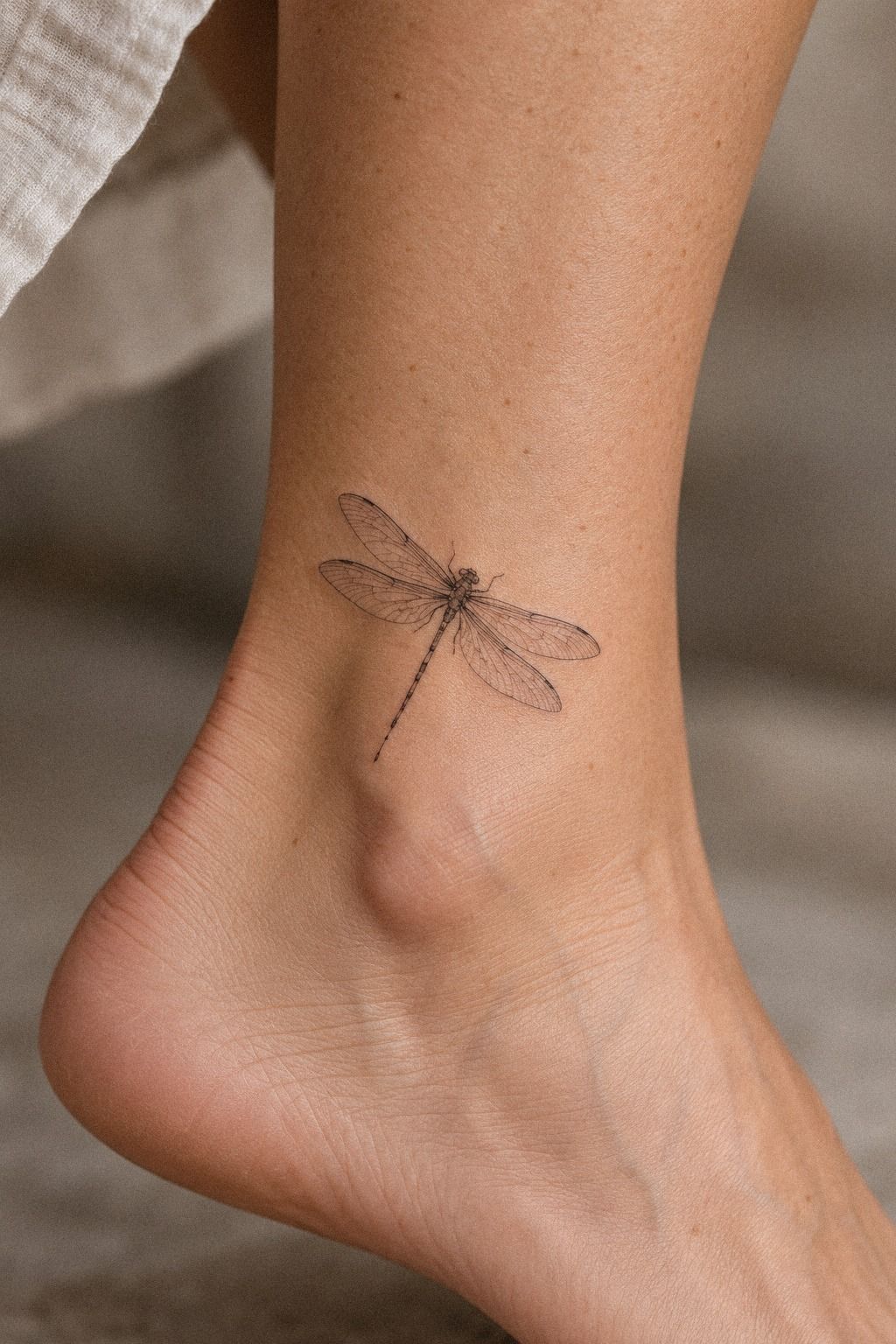
Rib tattoos can feel fierce because the skin is close to bone and moves with every breath. A midnight-blue, copper, and ivory dragonfly on the ribs can feel romantic and haunting, so prepare for a more intense session than you might expect from the small size. Fine-line work may be quick, but quick doesn’t mean sensation-free!
Use this table as a general US guide, not a promise. Your pain level can change with sleep, stress, hydration, placement, and the artist’s technique.
Bring water, eat beforehand, and tell your artist if you need a pause. You don’t have to prove anything by staying silent. A calm session and a steady pace can make the experience feel far more manageable.
If you’re nervous, choose the upper arm, shoulder, or forearm rather than ribs, feet, hands, or sternum. Your first tattoo doesn’t need to be a test of endurance. You can still create an intimate, meaningful, and polished piece with a more forgiving placement.
10Protect Your Dragonfly Tattoo During Healing

The key comparison is simple: fresh stencil on one side, healed linework on the other. Your goal is to protect the skin while it settles, not to keep inspecting it every hour. A delicate tattoo needs ordinary, consistent care more than dramatic attention.
Surface healing usually takes about 2 to 3 weeks, while complete healing can take roughly 2 to 3 months. Your artist’s instructions should lead, especially if they use a specific bandage. Wash gently, moisturize as directed, and don’t pick at peeling skin.
Avoid direct sun and swimming while the tattoo heals. A gentle fragrance-free cleanser is usually more sensible than a strongly scented product, but follow the aftercare plan your artist gives you. You don’t need to layer several products over the area or keep it constantly covered.
Sage green and warm cream accents can remain soft and graceful once the tattoo has healed, but the ink still needs protection. Friction can irritate fresh skin, and tight sleeves can make you forget that the area is still vulnerable. If you’re planning a session before a holiday, leave enough time for healing instead of scheduling it right before a pool day.
After healing, protect your tattoo from UV exposure because fine lines can soften and spread with time. A small dragonfly tattoo guide can help you compare designs that use stronger outlines and open space, both of which tend to age more clearly.
11Personalize Your Delicate Dragonfly Tattoo Meaning

Meaning should guide the final edit, not decorate it after the design is finished. Terracotta, stone-gray, and olive accents can feel raw yet personal, while a small black-veined detail can add a sharp, expressive finish.
The Personal Rule I Use Before Booking
I don’t believe a delicate tattoo needs to be tiny to feel refined. The better question is whether the artist has given the design enough space to breathe, especially around the wings, body, and small accents. A compact dragonfly can be graceful, but an undersized one may lose its identity once the lines soften.
I also look at healed portfolios before I look at booking prices. Cost matters, and a typical US shop minimum may sit around $50 to $100, while hourly rates often fall near $100 to $250. Still, the cheapest appointment isn’t useful if the artist’s fine-line work doesn’t age clearly.
Placement is my next filter. I prefer an upper arm or forearm for a first piece because you can see the design, protect it beneath sleeves, and usually tolerate the area more easily than ribs, feet, hands, or sternum. That doesn’t make those zones wrong.
It means your daily comfort should have a vote.
Finally, I keep the symbolism focused. One dragonfly, one meaningful accent, and one strong silhouette will usually outlast a crowded collection of references.
You don’t need to prove the story in the drawing. Let the linework stay quiet enough that you can keep discovering it.
A Few Things Worth Answering
How much does a delicate dragonfly tattoo usually cost?
A delicate dragonfly tattoo usually costs about $100 to $300 in the US, though artists and regions vary. Shop minimums often sit near $50 to $100, while hourly rates may be about $100 to $250.
– Artist portfolio – Placement and size – Regional pricing
Are delicate dragonfly tattoos a good idea for a first tattoo?
Yes, they can be a good first tattoo when you choose a tolerable placement and an artist with healed fine-line work. An upper arm, shoulder, or forearm may feel more manageable than ribs, feet, hands, or sternum.
– Readable outline – Moderate placement – Meaningful subject
How do I choose a tattoo artist for a delicate dragonfly tattoo?
Review healed photos, not only fresh work, and look for clean line control, balanced negative space, and clear studio hygiene. Your artist should explain scale, aftercare, and how the design may soften over time.
– Healed linework – Portfolio consistency – Clean hygiene
How much do delicate dragonfly tattoos hurt?
Pain varies, but ribs, feet, hands, and sternum are often more intense, while the forearm, thigh, and shoulder are commonly more tolerable. Your session may still feel manageable if you eat, hydrate, and request breaks.
– Rib sensitivity – Forearm comfort – Shorter session
How long does a delicate dragonfly tattoo take to heal?
The surface usually heals in about 2 to 3 weeks, while complete healing can take roughly 2 to 3 months. Wash gently, moisturize as directed, avoid sun and swimming, and follow your artist’s instructions.
– Two to three weeks – Two to three months – Gentle aftercare
What’s the best placement for a delicate dragonfly tattoo?
The forearm, shoulder, and upper arm are strong choices because they offer readable space and are often more tolerable than ribs or hands. Your best placement depends on visibility, sleeve coverage, friction, and how the design follows your anatomy.
– Upper-arm coverage – Forearm visibility – Shoulder movement
Where I’d Start First
If I had to pick one step, I’d start with the healed portfolio. A clean fresh stencil can charm you for an hour, but healed linework tells you whether the dragonfly will stay readable beneath sleeves. Save your favorite reference, ask for a custom stencil, and give the design room to breathe.

