Fine line snake tattoos can stay crisp when placement, scale, and aftercare work together. I learned that after choosing a design that was too tiny for its details. Now I look for clean movement, readable symbolism, and skin that won’t blur the story. These ideas are delicate, personal, and far more expressive than copied flash.
Editor’s note: The best fine line snake tattoo isn’t always the most intricate or expensive. Start with the meaning, then test the silhouette, placement, and budget. If the design still feels personal after you remove half the details, it’s probably worth it.
- Let the Snake Travel Down Your Forearm
- Would a Small Snake Behind Your Ear Feel Personal?
- Wrap the Ankle Without Closing the Circle
- Pair the Snake With Botanical Details
- Build an Open Crescent Around the Serpent
- What Makes a Spine Snake Worth the Commitment?
- Let Tiny Florals Carry One Specific Meaning
- Make the Symbol Private, Not Predictable
- Why Does a Wrist Coil Need an Opening?
- Add Geometry Without Trapping the Snake
- Fine Line Versus Bold Blackwork Silhouettes
1Let the Snake Travel Down Your Forearm
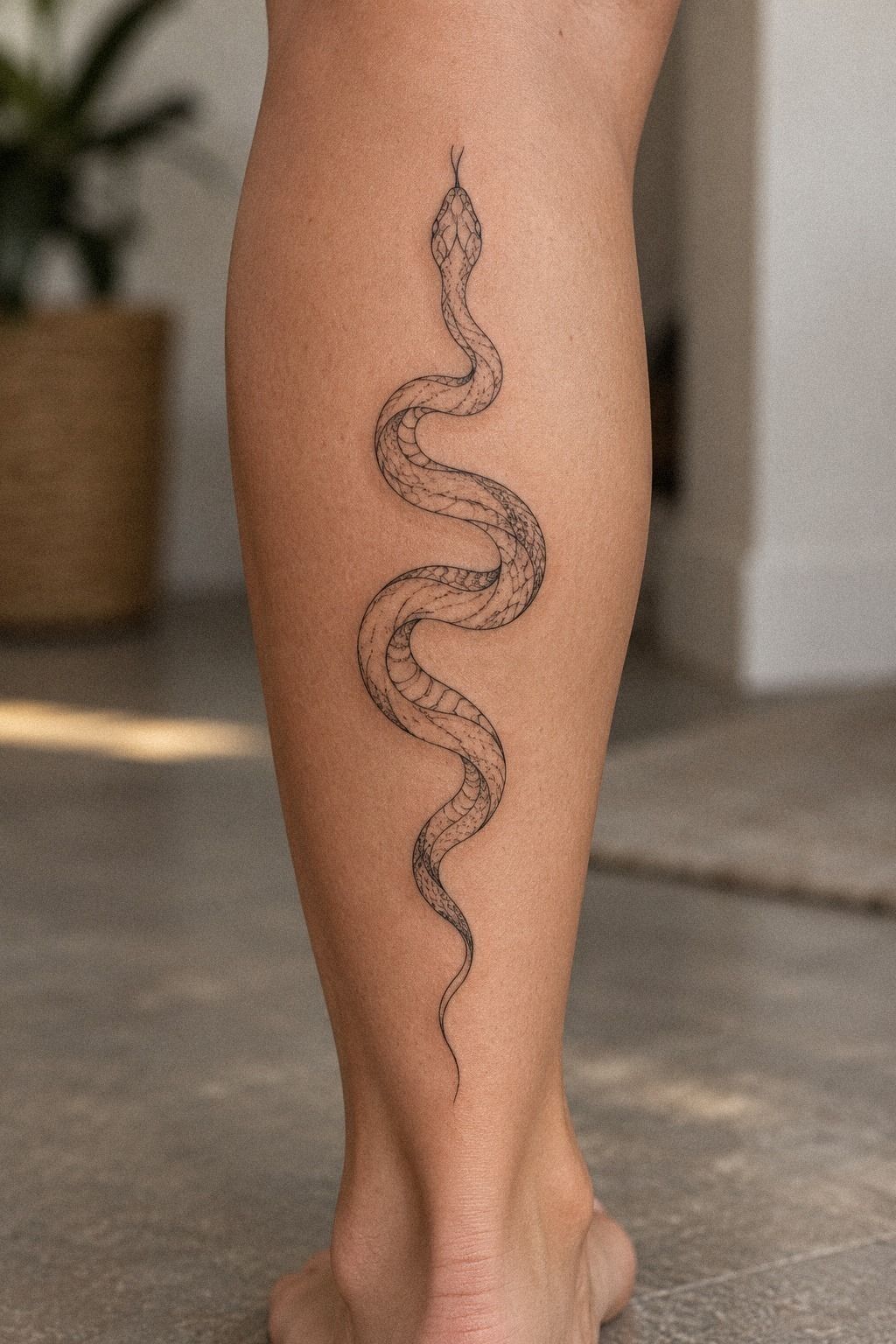
A forearm snake gives you a long, natural path for the body to curve. You can follow the inner arm with a slim serpent, a small open mouth, and scales that remain readable without crowding the design. I prefer single-needle linework here because the skin gives the artist enough room to create graceful movement.
Keep the head slightly above the wrist and let the tail taper toward the elbow. That layout feels sleek instead of stiff, and your tattoo will read clearly when your arm is relaxed. For more placement inspiration, compare it with these small snake tattoos.
A terracotta and olive ink palette with open negative space looks crisp without heavy shading. You don’t need dense blackwork to make the serpent powerful. Add one tiny symbol near the head, such as a star, initial, or short line, if your meaning needs a private marker.
I made the mistake of squeezing too many scales into a small design once. Don’t.
You want the linework to breathe, especially if you’re choosing a piece you may see every day. The forearm is one of the more tolerable placements, so you can focus on precision instead of bracing through the session.
A forearm design can be an excellent value when you want detail without an oversized appointment. Ask about the artist’s minimum tattoo price, hourly rate, and healed results before deciding whether the cost is right for you.
2Would a Small Snake Behind Your Ear Feel Personal?
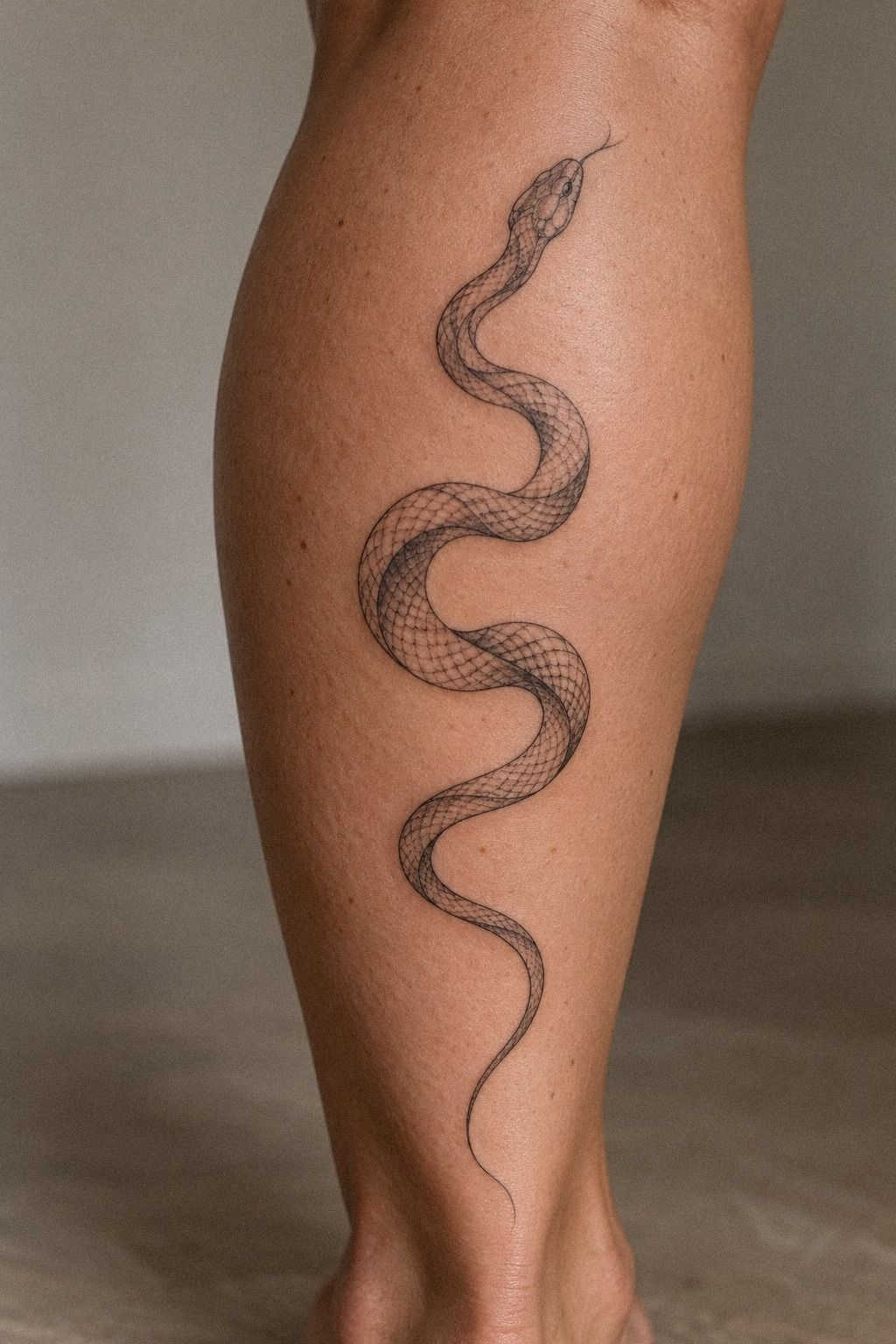
Behind the ear is a striking place for a small snake because the design appears only when your hair moves. A dainty serpent silhouette can stay understated there, especially when the curve follows the natural line behind the ear.
3Wrap the Ankle Without Closing the Circle
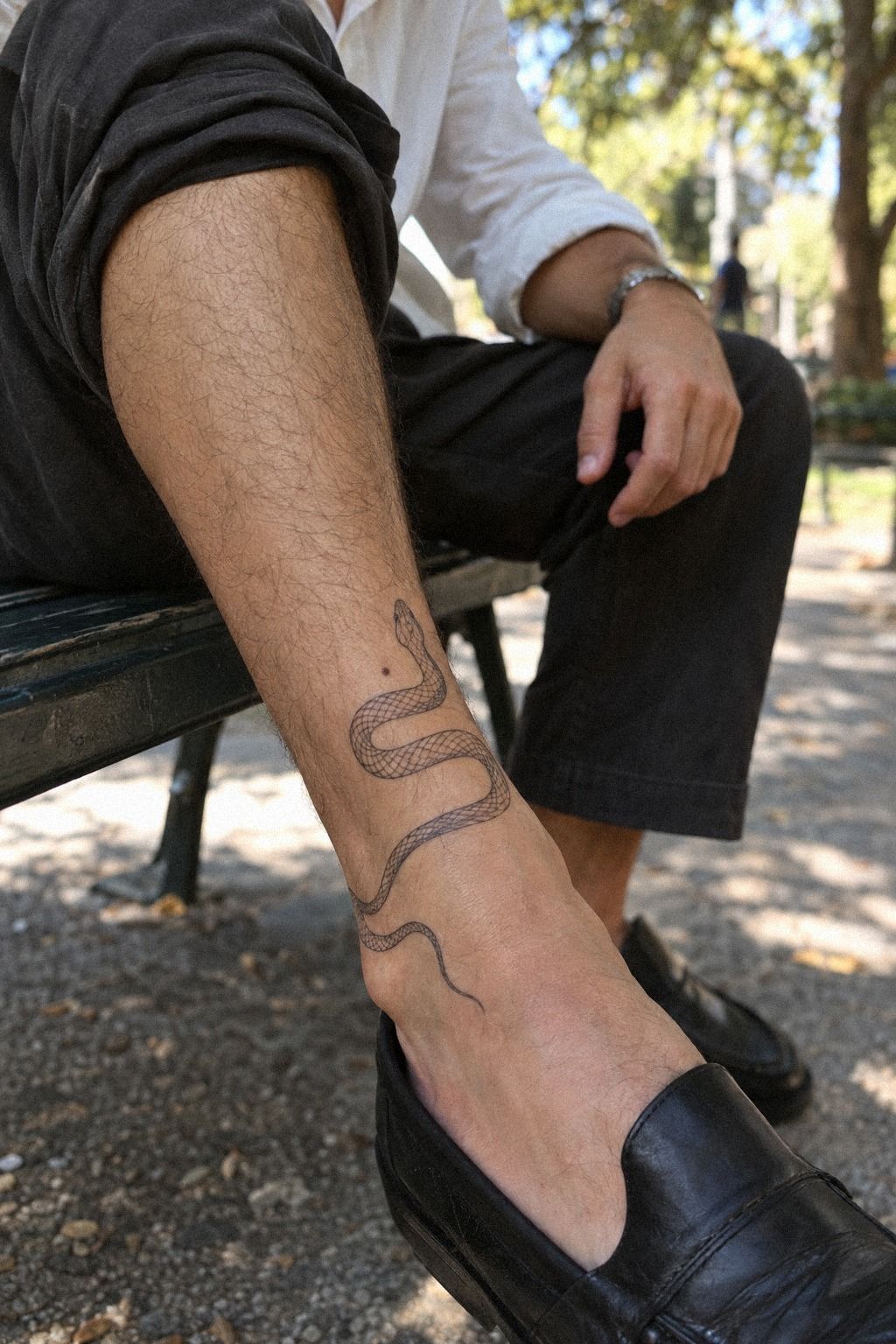
An ankle snake works best when its body follows the bone instead of fighting it. You can choose a loose coil around the ankle, with the head resting toward the front and the tail disappearing slightly behind the heel. That arrangement feels flowing and expressive without looking like a solid band.
I’d choose plum-toned linework with muted grey accents for medium olive skin. Too much shading can flatten the curve, while a clean outline keeps the design sharp from different angles. Your artist should check the stencil from the side before starting, because a centered front view won’t show how the shape travels.
The ankle is more sensitive than the forearm or thigh, so you’ll want a clear design and a realistic session plan. A small piece may take less time, but the bone and thinner skin can make the experience intense. If you’re comparing silhouettes, these fine line eagle tattoos show how strong shapes can stay readable with restrained detail.
Don’t wrap the snake so tightly that the tail meets the head without a pause. A little negative space gives your eye somewhere to rest, and your tattoo will look more intentional as the fine lines soften over time. It’s a classic placement with a daring shape.
Before booking, ask whether the ankle tattoo cost changes with the wraparound layout. A quote based only on the snake’s size may not include the extra time needed to align the stencil around the bone.
4Pair the Snake With Botanical Details
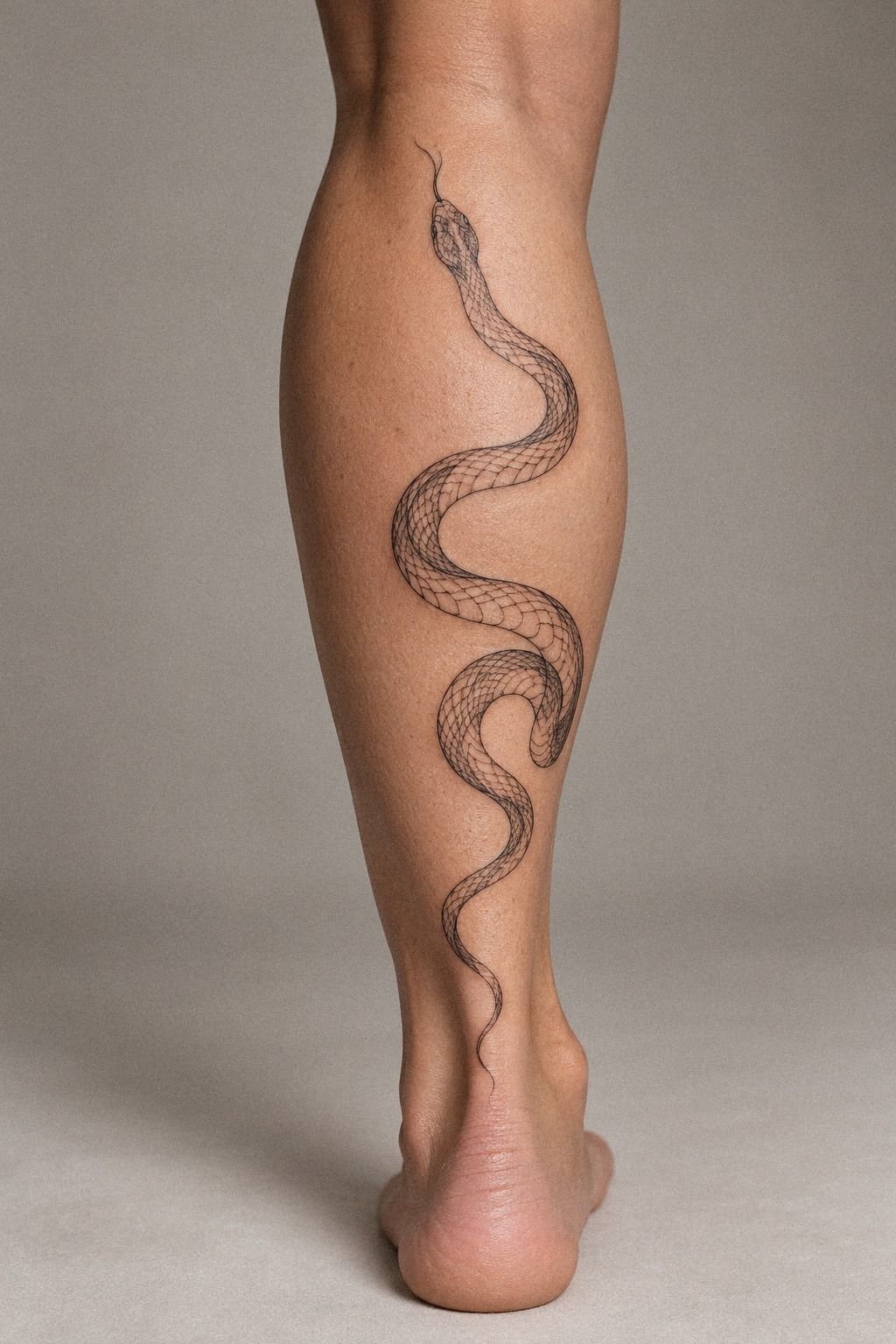
A snake with botanical details can feel symbolic without becoming crowded. One navy serpent with restrained botanical marks can look elegant when the leaves support the curve instead of competing with it.
5Build an Open Crescent Around the Serpent
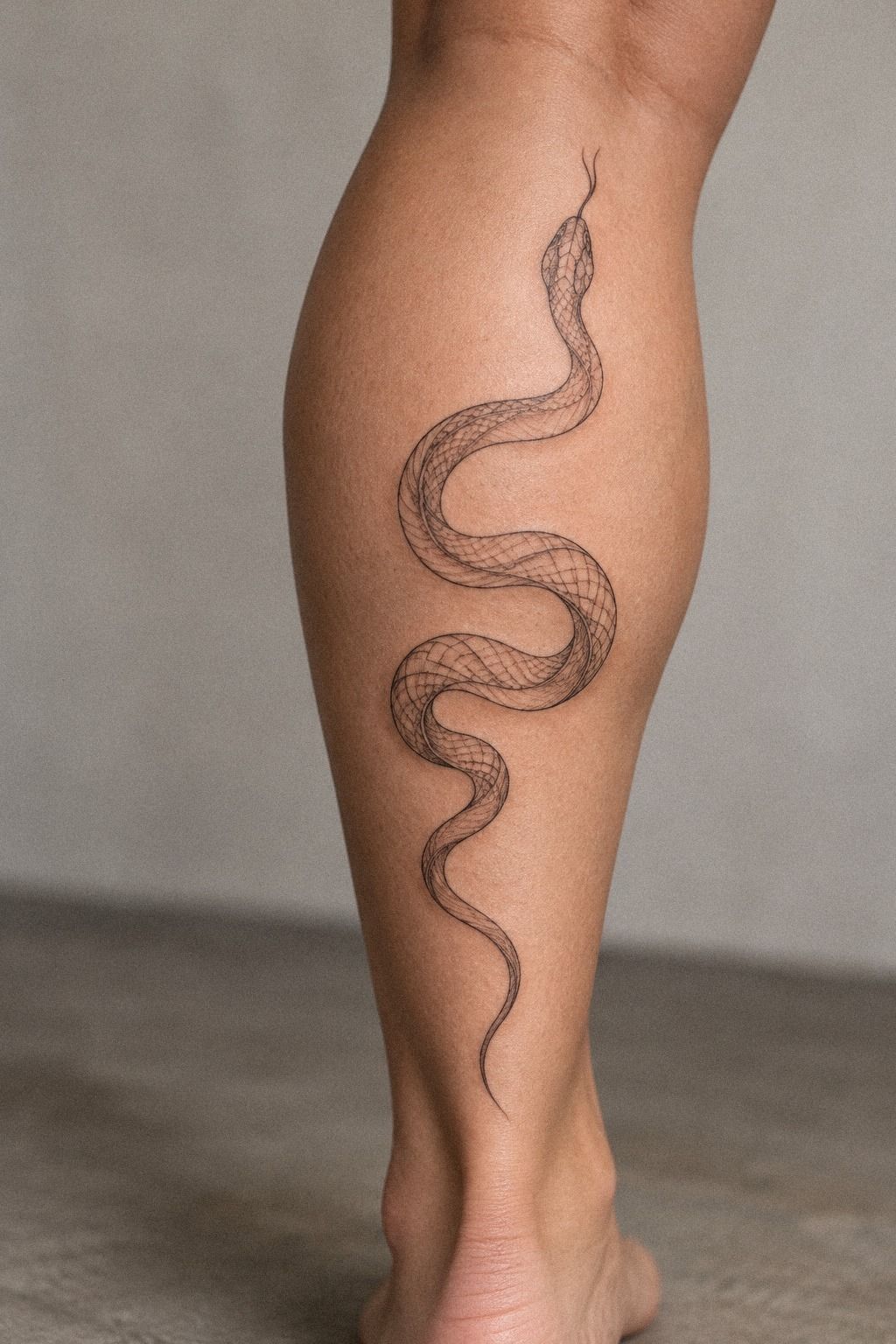
A crescent-shaped snake gives you an elegant silhouette with a slightly haunting pull. You can curve the serpent around an open crescent, letting the head point inward while the tail follows the lower edge. On a traditional flash sheet, that shape reads immediately, which makes it useful when you’re comparing references with an artist.
I’d keep the crescent open rather than filling it with stars, dots, and tiny planets. The empty center creates contrast, and your eye can find the snake before it gets lost in extra marks. This is a minimal idea, but it doesn’t feel plain.
Use a deep emerald ink outline for the moon and reserve the most intricate marks for the snake’s head. If you want a little color, ask about a restrained gold-toned accent after the artist reviews your skin and the design size. Emerald is a striking anchor for this crescent.
You can study more compact compositions in these small fine line butterfly tattoos. The same principle applies: one clear silhouette, one meaningful detail, and enough skin around the design. That balance keeps your crescent romantic instead of cluttered.
A crescent can also be a smart budget choice because the open center uses skin as part of the design. You’re paying for intentional linework, not a dense field of filler.
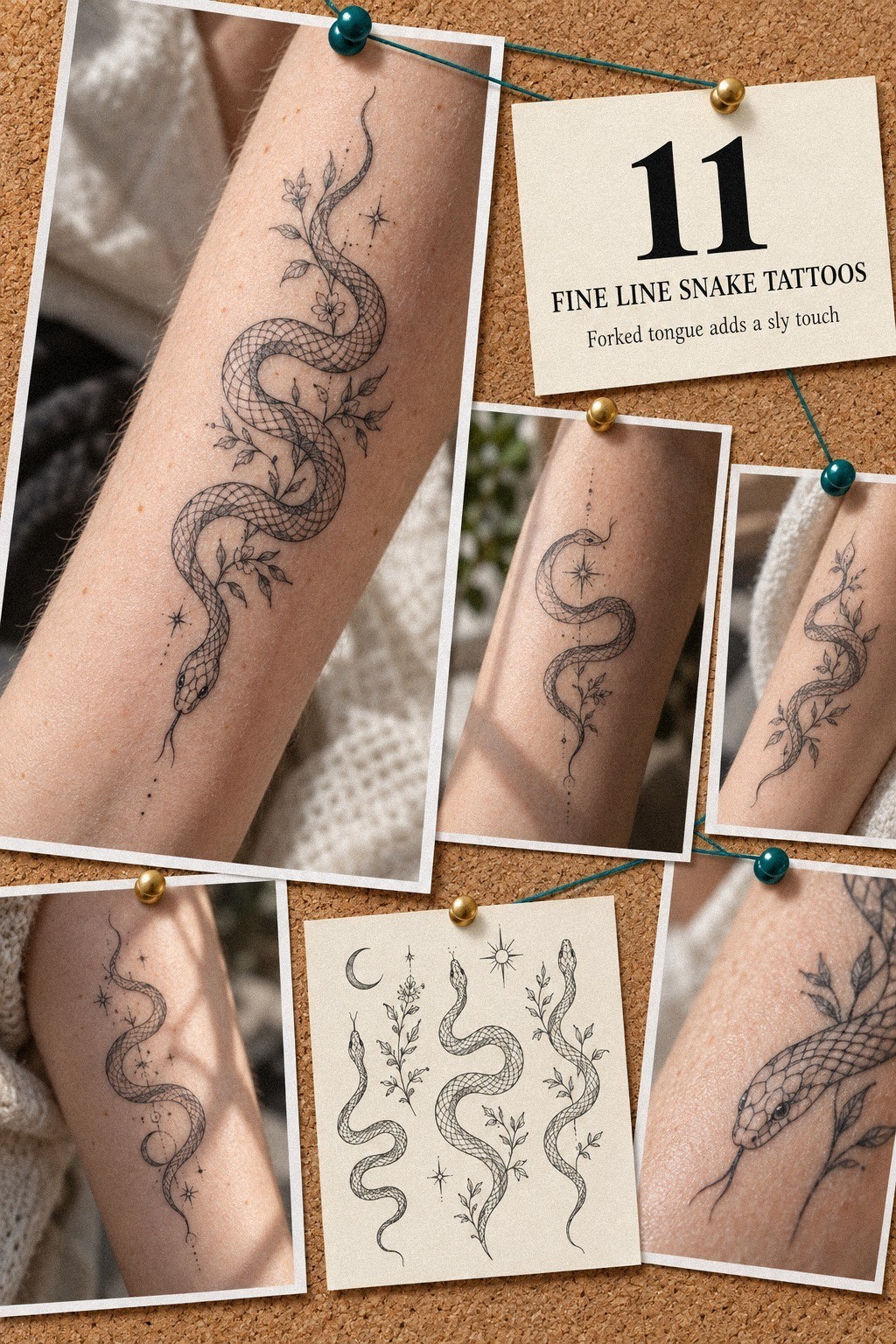
6What Makes a Spine Snake Worth the Commitment?
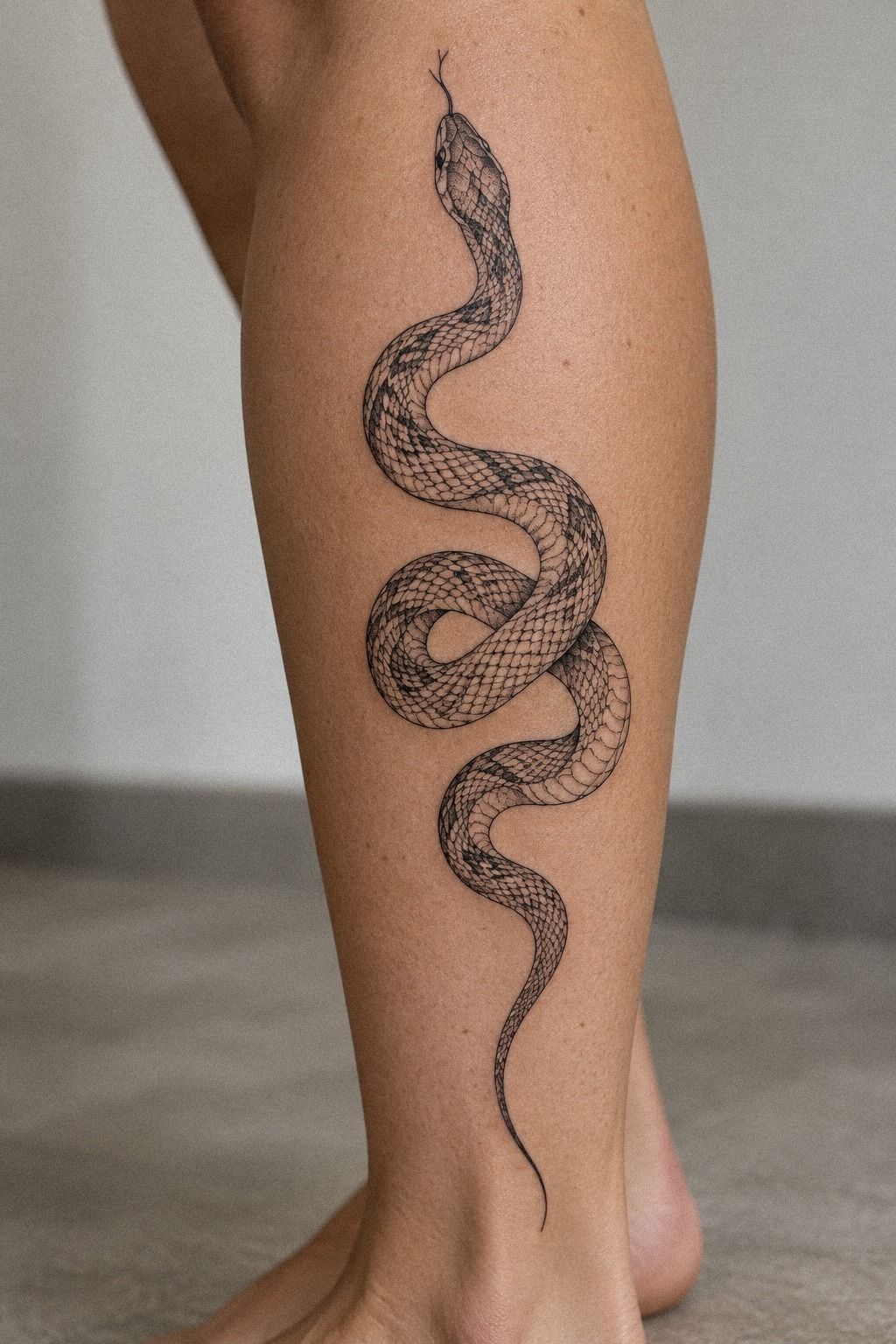
A spine snake has an iconic vertical rhythm, so your artist needs to measure the body rather than place a generic image down the center. You can let the head sit between the shoulder blades and send the tail toward the lower back, with slight bends that follow your posture.
Against deep ebony skin, forest-green ink with a restrained rust accent can create a bold outline, but the artist should test the stencil and discuss how small details will translate. I’d skip pale filler marks that may disappear visually. A clean contour will give your design more authority.
The spine is an osseous placement, and it can be more painful than the forearm, thigh, or shoulder. Your session may also feel longer because the body needs small adjustments between sections. Bring a reference that shows the full vertical shape, not only the head.
Don’t let the dramatic placement force you into a dramatic design. A quiet, meaningful snake can feel more powerful than a large composition with too many extras. Before booking, compare the vertical balance with these fine line owl tattoos and ask yourself what you want your tattoo to say when nobody else is looking.
A spine tattoo may be worth it if the vertical placement carries real meaning for you. It may not be the best value if you’re choosing it only because the silhouette looks impressive in a reference.
7Let Tiny Florals Carry One Specific Meaning
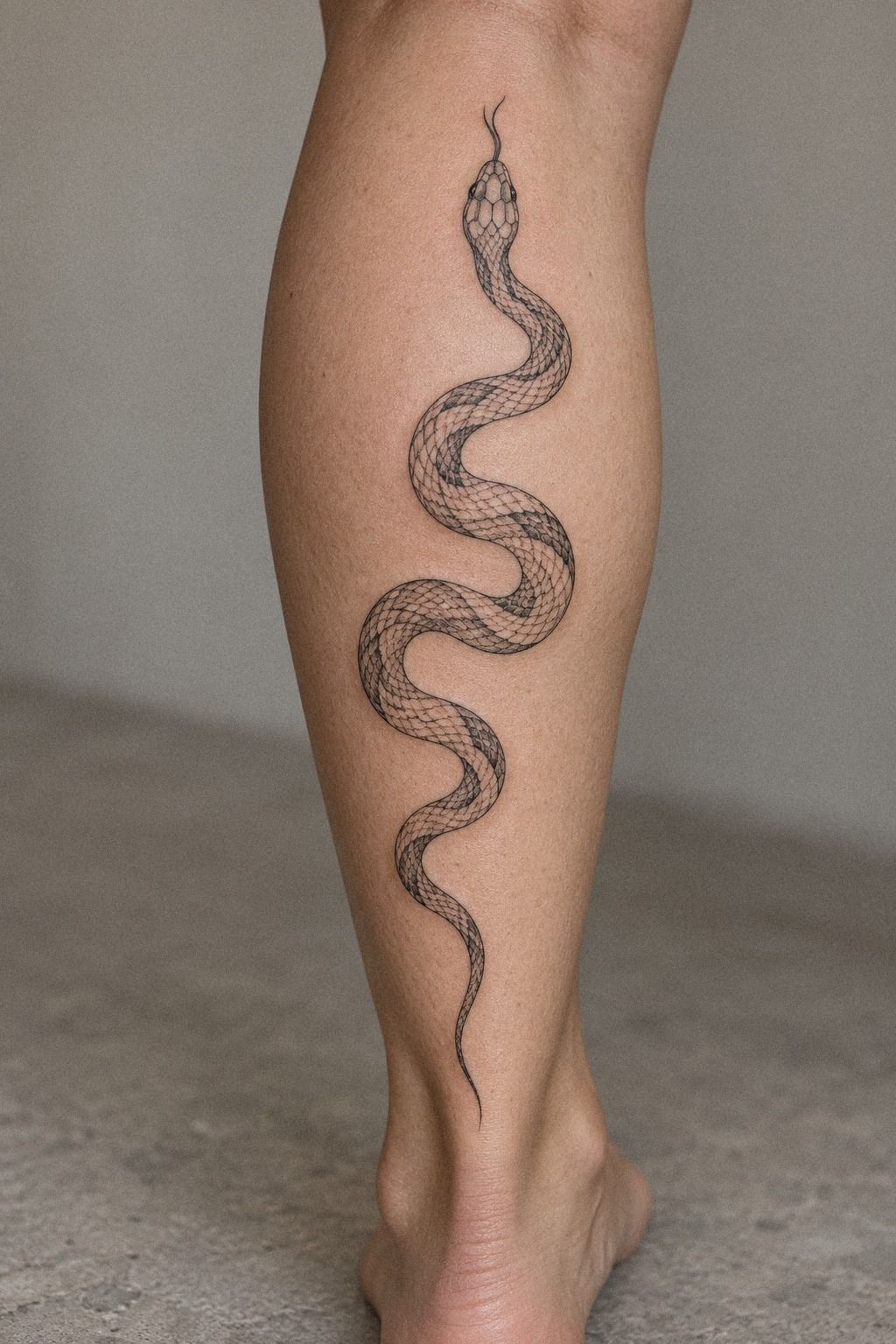
Tiny florals can soften a snake without making it feminine by default. You can place one delicate wildflower near the head, another at the tail, and leave the middle of the body almost untouched. That spacing creates a polished rhythm and lets the serpent remain the main subject.
For fair cool-pink skin, charcoal snake linework with dusty-rose florals will look crisp when the stems are simple and the petals aren’t reduced beyond recognition. Your artist should draw the flowers at a size that preserves their shape after healing. Tiny doesn’t mean microscopic.
I’d choose one flower with a reason behind it. A forget-me-not may mark remembrance, while a poppy can carry grief, sleep, or resilience depending on your story. The best detail is the one you can explain to yourself, even if you never explain it aloud.
If you want another delicate reference, look through this watercolor fine line butterfly tattoo collection for ideas about winged softness and negative space. Keep the snake in charcoal and let the floral detail carry the lighter mood. The contrast feels graceful, not ornamental for its own sake.
Ask whether the floral addition changes the appointment length or the artist’s minimum tattoo price. A single flower may add little, while several tiny petals can require surprising precision.
8Make the Symbol Private, Not Predictable
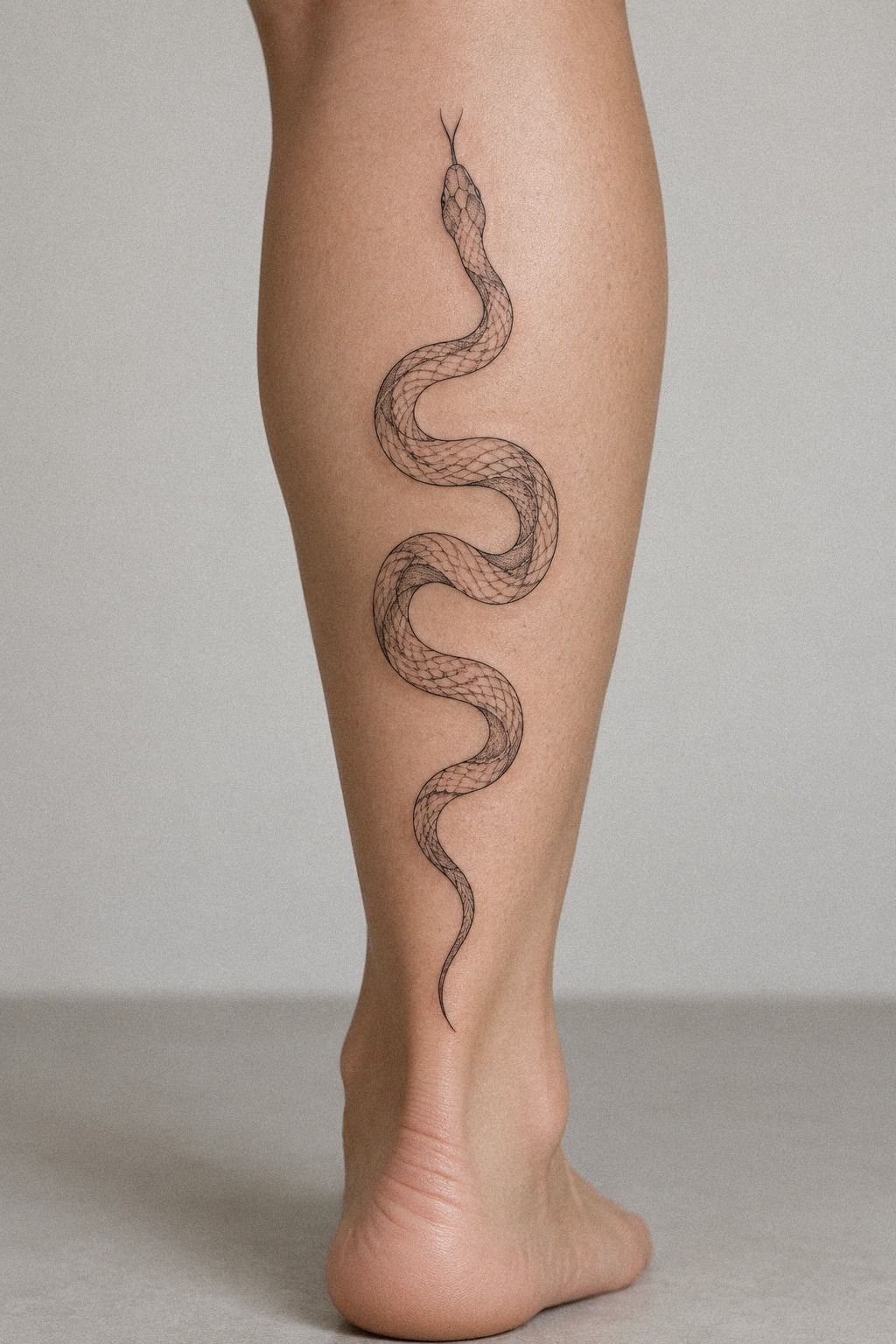
A meaningful symbol turns a familiar snake into something only you can read. Choose a personal symbol that connects to a memory, promise, or private turning point instead of borrowing an obvious meaning.
9Why Does a Wrist Coil Need an Opening?
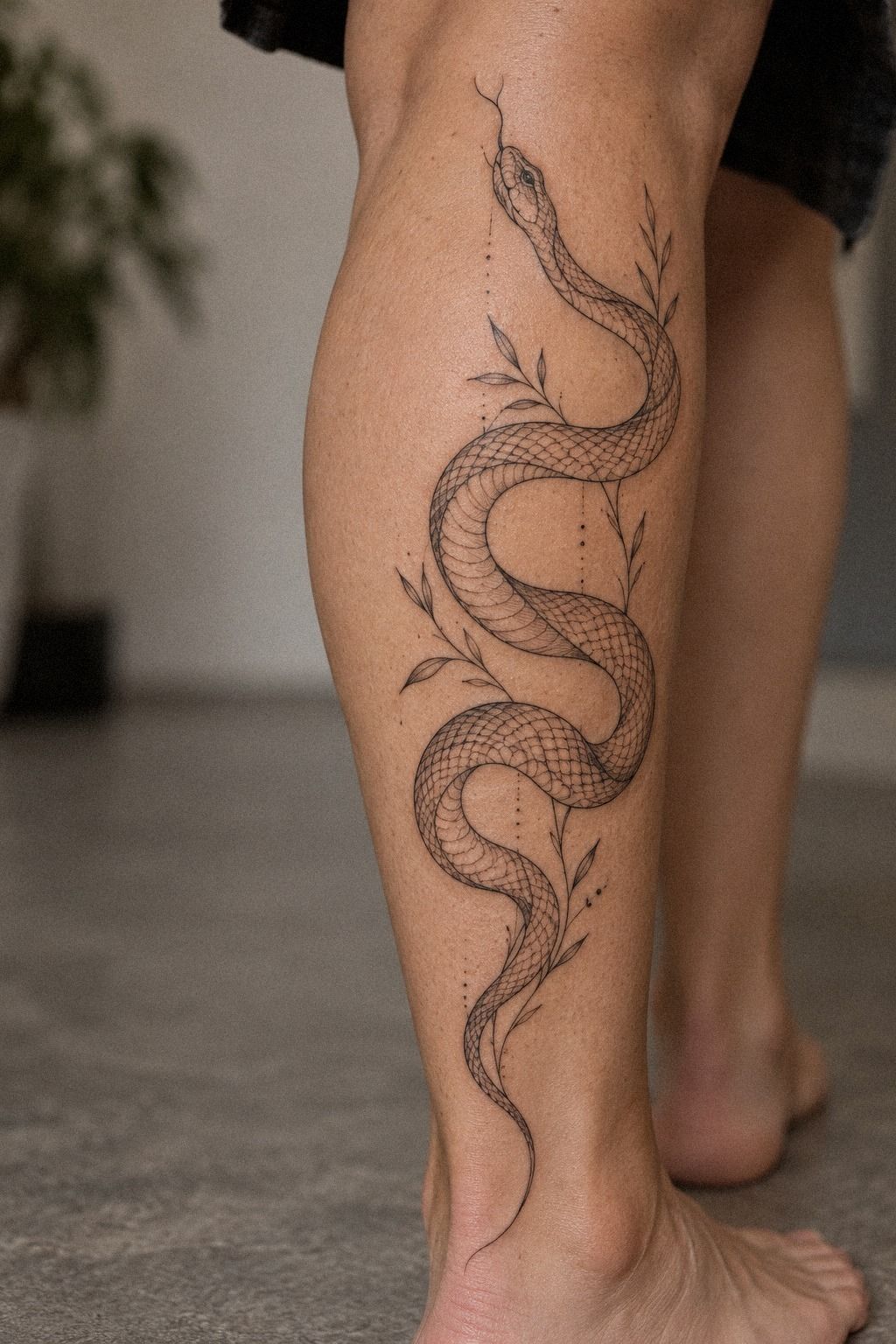
A wrist snake should be compact, readable, and comfortable from every angle. You can curl the body around the wrist without making a complete bracelet, leaving a deliberate opening near the underside. That gap keeps the design light and gives your skin room to show through.
On medium olive skin, midnight-blue serpent linework with a copper accent can stay crisp when the artist uses a confident outline and avoids fragile clusters of scales. I’d choose a slightly thicker contour for the head, then let the tail fade into simpler marks. Your wrist moves constantly, so clarity matters more than extra detail.
The placement is visible, which makes it a good choice for a personal reminder you don’t mind seeing throughout the day. It’s also exposed to frequent washing and sunlight, so you’ll need steady tattoo aftercare and sun protection once the surface has healed.
For a smaller comparison, browse these tiny fine line butterfly tattoo ideas. Notice how the best wrist designs don’t try to fill every inch. And if you’re worried about pain, wrists can feel sharper than thighs or forearms, but the session is often brief when the design stays restrained.
A wrist snake can be excellent value when visibility matters more than size. Ask whether the artist charges a flat rate or an hourly fee, since a tiny design may still meet the studio minimum.
10Add Geometry Without Trapping the Snake
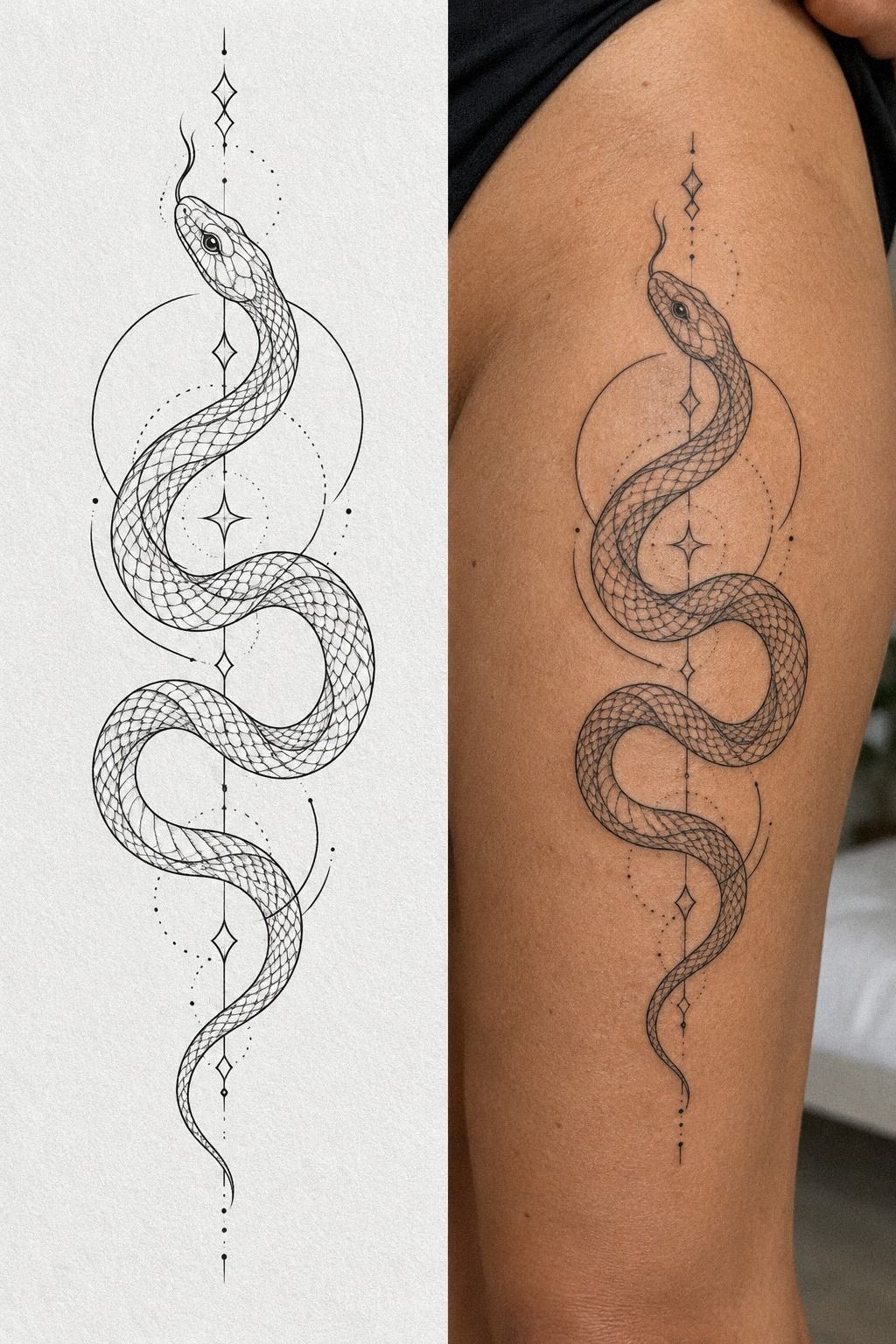
Geometric accents give a snake a crisp, modern structure. You can place a small triangle behind the head, use a thin circle around one coil, or add three measured dots along the spine. The geometry should support the movement, not trap it inside a rigid frame.
A split reference showing healed fine-line work beside the stencil is especially useful here. You can see whether the original spacing survived the healing process, and your artist can explain which marks may soften. That comparison is more valuable than heavily edited artwork.
I’d avoid perfect symmetry if the snake itself is curved and organic. A clean triangle beside a flowing body can feel sharp and daring, while a full geometric frame may make the tattoo look static. Your design needs contrast, not strict repetition.
Before booking, compare healed examples and ask about placement, aftercare, and how the artist handles skin movement. These fine line owl tattoos offer useful examples of geometric framing around organic forms. Good linework can be quiet and fierce!
The value of geometry depends on restraint. If every gap needs a circle, dot, and triangle, you’re paying for clutter rather than a clearer tattoo.
11Fine Line Versus Bold Blackwork Silhouettes
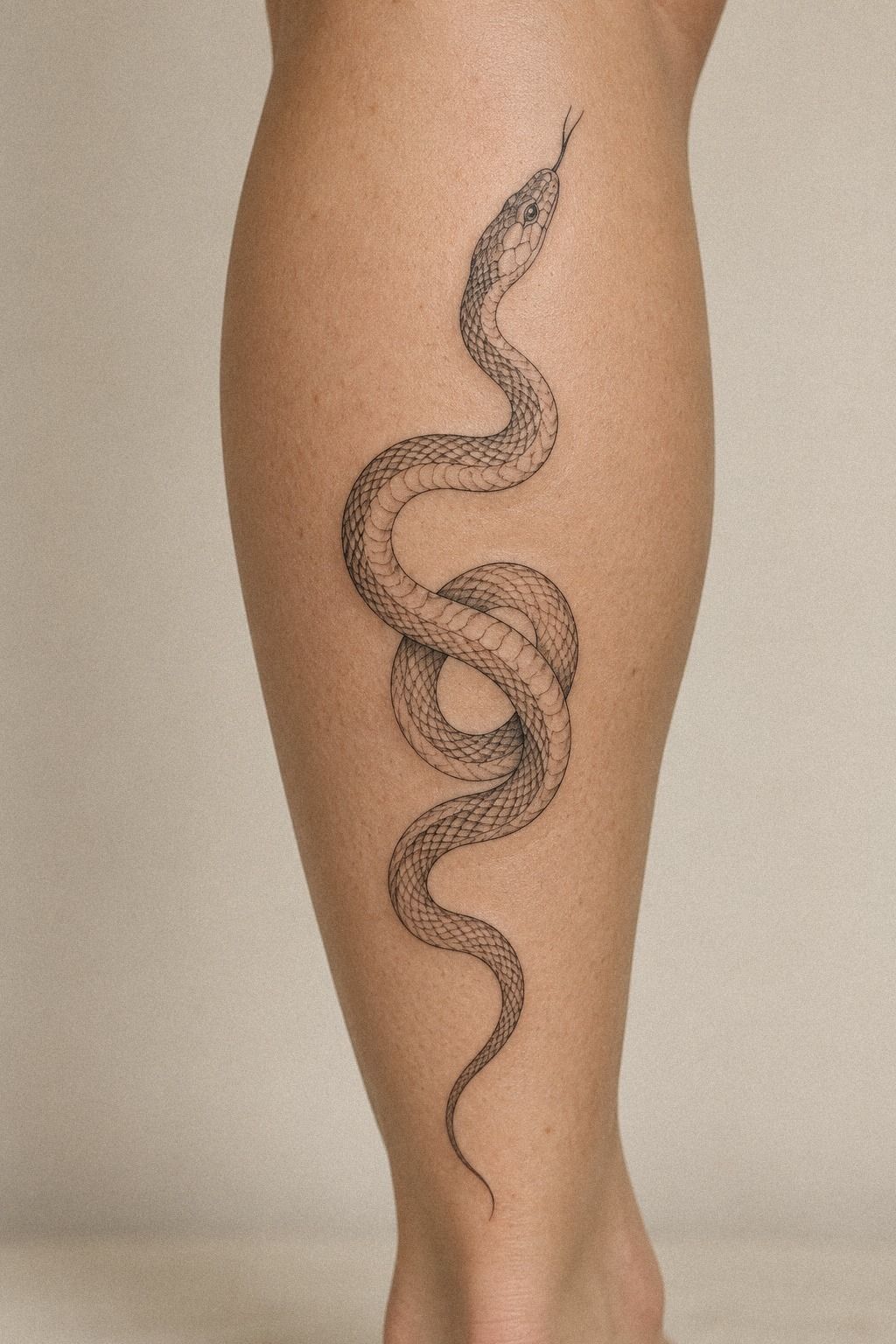
A bold blackwork silhouette may sound opposite to fine line, but the two styles can work together. You can keep the snake’s body in clean fine lines, then use a small solid black head or tail tip as the visual anchor. That contrast makes the design easier to read from a distance.
On deep brown skin with warm undertones, your artist should prioritize clear shape and strong contrast. I’d skip gray filler that may lose definition. A small solid section can age better than a collection of fragile marks, especially on a visible collarbone placement.
The collarbone has a sharp, elegant line, but it can be more sensitive than the forearm or thigh. Your artist should place the stencil while your shoulder rests naturally, because the design can shift when you lift your arm. Check the placement from several positions before committing.
Don’t confuse more black with more meaning. A single dark scale cluster can represent protection, survival, or a turning point if it connects to your story. Pair the silhouette with small snake tattoo references and choose the version that still feels personal without an explanation.
A bold accent can be worth the spend if it improves readability. It isn’t good value when it’s added only to make a small piece look more dramatic. Worth the spend!
The Three-Point Aging Check
Before you book, inspect three things: healed examples, line spacing, and placement. Your artist’s fresh work may look crisp, but healed tattoo examples tell you how the lines settle after the surface has recovered. Look for readable curves, clean gaps, and symbols that haven’t merged.
Fine lines can widen with time, especially when they’re packed too closely or placed where skin moves and receives repeated sun. Black solid areas and sensible placement tend to age better than ultra-fine details scattered across a small design. You’ll want to ask direct questions rather than rely on a polished portfolio.
Check whether the artist works in fine line regularly, follows strong hygiene practices, and can show healed results in similar skin tones. A personal consultation is worth the time. You don’t need the most ornate design; you need an artist whose judgment matches your idea.
Ask how the tattoo may change over five or ten years, not only how it looks on appointment day. That conversation can protect your budget and your expectations.
Is Fine Line Snake Work Right for Your Story?
A snake can represent renewal, protection, temptation, wisdom, resilience, or a private change that doesn’t need a public explanation. Your meaning doesn’t have to match a dictionary definition. If the symbol connects to a memory, the design already has more weight than a trend.
Think about visibility, pain, and how often you want to see it. Forearm, thigh, and shoulder placements are usually more tolerable, while ribs, feet, hands, sternum, and other bony areas can feel sharper. That difference matters if you’re planning your first tattoo.
Would you rather have a sleek outline that people notice slowly, or an expressive symbol that reads from across the room? Your answer will guide the scale, placement, and level of detail. A personal tattoo should feel like yours before it ever touches your skin.
If you’re uncertain, begin with a temporary placement test or a printed stencil. It can reveal whether the location feels empowering, awkward, or too visible before you commit the full cost.
The Placement Meaning Map
Placement changes how a snake behaves visually. A wrist design becomes a daily reminder, a spine design feels private and vertical, and a behind-the-ear piece can stay hidden until you choose to reveal it. Your body location becomes part of the meaning.
These are typical US reference points, not a promise from any individual studio. You’ll want to ask for a quote after the artist sees the actual design. For another placement comparison, review these small eagle tattoos and notice how body position changes the silhouette.
If your chosen placement is painful or exposed, plan your schedule so you can protect the tattoo during early healing. The best value includes an appointment you can realistically care for afterward.
Set a Budget That Protects the Design
A low quote isn’t always a bargain if it comes from an artist who rarely works with fine lines. The tattoo may be small, but the decisions around spacing, stencil alignment, and skin movement still require skill.
Build your tattoo budget around the studio minimum, consultation, deposit, aftercare supplies, and possible touch-up policy. Ask what’s included before you compare prices. Clear information makes the final cost easier to judge.
I’d rather reduce the number of symbols than reduce the artist’s experience. One polished, understated snake can have more value than a larger, cheaper design that loses its shape.
If you’re comparing prices, ask whether the quote reflects the full session or only the drawing time. That question can prevent an unpleasant surprise. Worth the spend!
Questions Worth Asking Before You Book
Ask whether the artist has healed examples on skin similar to yours. A healed linework portfolio can tell you more than fresh work viewed under bright studio lights.
Ask how the artist would adjust the design for your exact placement. A snake drawn for the forearm may need wider curves on the ankle, a shorter body behind the ear, or a stronger contour on the wrist.
Finally, ask about hygiene, deposits, touch-ups, and aftercare. You’re not being difficult. You’re deciding whether the artist’s process matches the meaning you’re trusting them with.
A careful consultation can be a meaningful part of the tattoo’s value. If the artist rushes your questions, the appointment may not be worth the cost.
Why I Choose Meaning Over Extra Detail
I’ve drawn and collected enough tattoo references to know when a design is trying too hard. A snake with moons, roses, stars, initials, dates, and a full border may look impressive on a screen, but I rarely remember it later. The designs that stay with me usually have one clear movement and one detail that carries a real story.
My own mistake was choosing detail before meaning. I liked the look of dense scales, so I kept adding them until the snake lost its shape. The correction was simple: remove half the marks, open the curves, and let the head do more work.
That decision made the tattoo feel sharper and more personal.
I also used to treat placement as an afterthought. I’d find a design I loved, then ask where it could fit. Now I reverse that order.
Your forearm, ankle, spine, wrist, or thigh changes how the design moves, how visible it feels, and how much detail the skin can hold. A striking idea in one location may look cramped in another.
For me, the best fine line snake tattoos aren’t the most delicate or the most ornate. They’re the ones where the symbol, body placement, and line weight agree.
You can choose an understated coil and still make it powerful. You can use a vibrant botanical detail without turning the piece into unrelated marks.
The goal isn’t to impress everyone. It’s to recognize yourself in the design years later.
The Questions Worth Answering First
How much does a fine line snake tattoo usually cost?
A small fine line snake tattoo usually costs about $100 to $300 in the US, depending on the artist, region, placement, and detail. Studio minimums may sit around $50 to $100, while hourly rates often fall near $100 to $250. Ask for a written quote before paying a deposit.
Are fine line snake tattoos a good idea for a first tattoo?
Yes, especially on a tolerable placement such as the forearm, thigh, or shoulder. A simple readable design gives you a manageable first experience, but you’ll still need an artist with clean healed linework and strong hygiene practices. Start with a meaningful shape rather than an overly intricate concept.
How do I choose a tattoo artist for fine line snake tattoos?
Review healed portfolio examples, not only fresh work. Look for consistent line spacing, clear curves, similar skin tones, and a studio that follows proper hygiene. Ask how the artist would scale your snake for the placement you want and whether touch-ups are included in the price.
How much do fine line snake tattoos hurt?
Pain varies by person and location. Ribs, feet, hands, and sternum are often more painful, while forearms, thighs, and shoulders tend to be more tolerable.
Your placement matters more than the snake design when you’re estimating discomfort. A shorter appointment may help, but sensitivity still varies.
How long does a fine line snake tattoo take to heal?
The surface usually heals in about 2 to 3 weeks, while complete healing can take about 2 to 3 months. Wash gently, moisturize lightly, avoid swimming during early healing, and protect healed linework from UV exposure. Follow your artist’s aftercare instructions if they differ from general guidance.
What’s the best placement for fine line snake tattoos?
Forearms, thighs, shoulders, and wrists are popular because they offer readable curves and practical visibility. A spine or ankle can feel more dramatic, but those bony placements may hurt more. Choose the spot that fits your meaning, lifestyle, pain tolerance, and budget.
Where I’d Start First
If I had to pick one, I’d start with the forearm snake. You’ll get the cleanest curve, easier aftercare, and enough skin for meaningful detail without crowding the design. Pin the small snake tattoo guide for later and bring one strong idea to your artist.
Start with one clear curve, one private symbol, and one artist whose healed work you trust. That combination can make a delicate snake feel bold, timeless, and completely yours. Start there!