A snake tattoo most commonly represents transformation and rebirth, drawn from the animal’s literal shedding of skin. Beyond that single reading, snakes carry dense symbolic weight across cultures, danger, healing, fertility, and forbidden knowledge all thread through the imagery. What your specific snake tattoo communicates depends on species, posture, accompanying elements, and placement.
Who Chooses This Tattoo
People drawn to snake imagery often arrive with a specific life transition in mind: recovery, leaving a relationship, career reinvention, or surviving something that required fundamental change. The snake’s shedding process offers a visceral, biological metaphor that resonates more literally than abstract symbols like phoenixes.
Placement Patterns
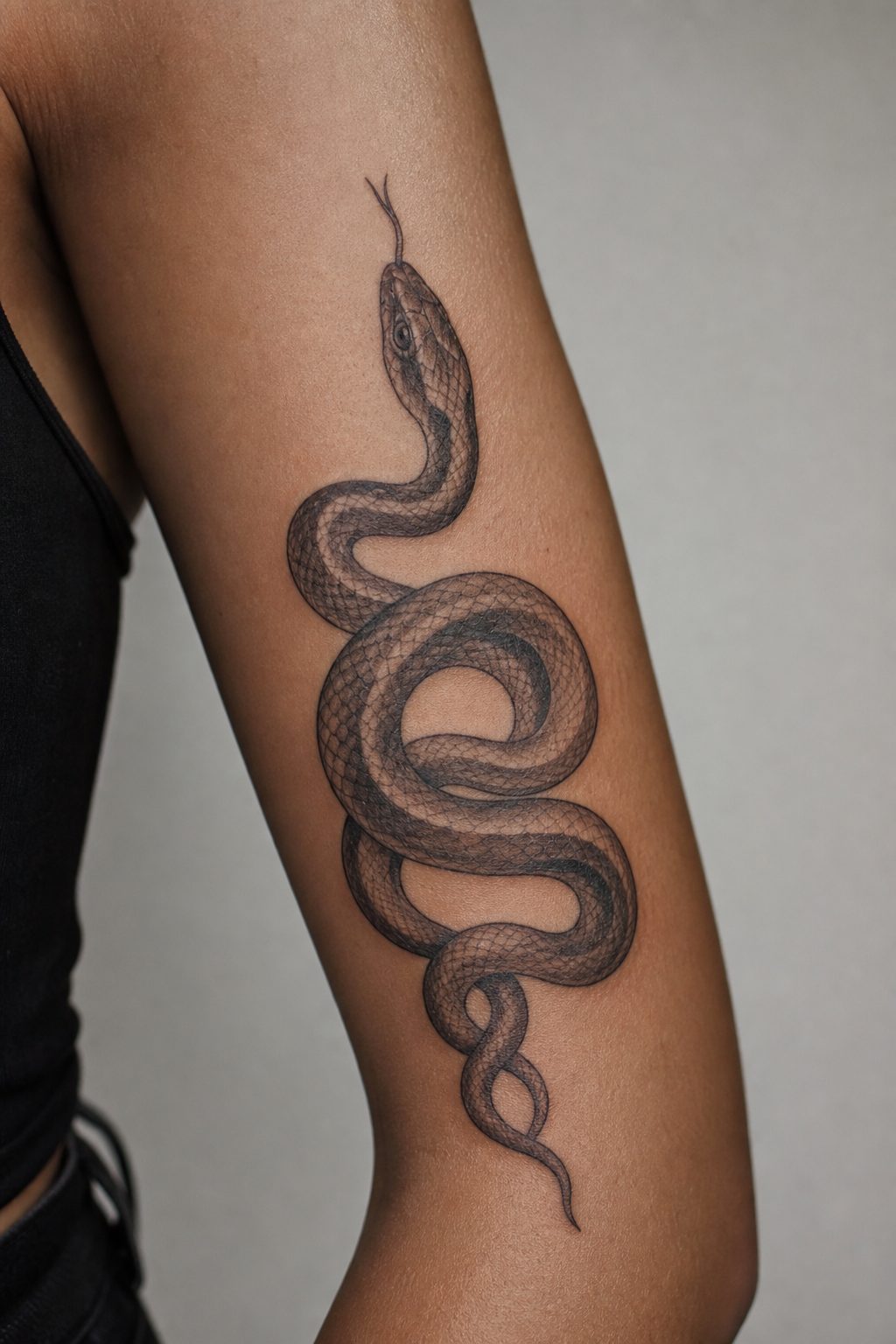
Snake tattoos follow distinct placement logic. Coiled snakes wrap forearms, calves, and ribs, body parts that curve naturally, letting the snake’s body flow with anatomy rather than fight it. Striking or rearing snakes occupy chests, upper backs, and thighs where there’s vertical space to show aggression or alertness. Small single snake heads appear on hands, behind ears, and on ankles as more discreet markers.
People choosing visible placements (hands, neck, forearms) typically accept the snake’s historical association with danger and outsider status. Concealed placements, ribs, upper thighs, back, often serve more private commemoration.
Gender and Cultural Demographics
Snake imagery crosses demographic lines more evenly than some tattoo motifs. In Western tattooing, women have increasingly reclaimed snake symbolism from its earlier masculine-coded association with biker and military traditions. Japanese-inspired snake designs (hebi) attract collectors specifically interested in that tradition’s technical and symbolic conventions.
Personal & Modern Meanings
Contemporary snake tattoo wearers layer personal significance onto traditional symbolism. The shedding skin reads as recovery from addiction, mental health struggles, or abusive situations, survival that required leaving an entire previous self behind. The snake’s venom connects to creative or destructive intensity: people who feel their own emotional intensity as simultaneously dangerous and powerful.
- Dual nature: creative/destructive, healing/poisonous, protector/threat
- Sexual symbolism: kundalini energy, sensuality, temptation narratives reclaimed
- Boundary crossing: snakes inhabit liminal spaces (ground and underground, water and land)
- Patience and timing: coiled waiting, striking only when ready
Modern snake tattoos sometimes deliberately subvert negative associations, taking a symbol historically used to demonize women (Eve’s serpent, Medusa’s hair) and wearing it as claimed identity. This reclamation appears frequently in feminist and queer tattooing communities.
Common Variations & Styles
Specific snake species carry distinct symbolic weight. Rattlesnakes signal American Southwest regional identity, warning, and defensive readiness. Cobras connect to Egyptian royalty and protection, or to South Asian spiritual traditions. Pythons and boas emphasize constriction, patience, and raw power without venom. Garden snakes and garter snakes serve as gentler, more personal totems.
Traditional and Neo-Traditional
American traditional snake tattoos feature bold black outlines, limited color palettes (red, green, yellow, black), and specific poses: coiled around daggers, hearts, or roses. The dagger-through-snake motif specifically represents triumph over betrayal or temptation. Neo-traditional work expands color range and anatomical detail while keeping the graphic readability that makes these designs age well.
Japanese (Irezumi) and Realistic Styles
Japanese snake tattoos (hebi) typically appear as large back pieces or sleeves, often paired with peonies, skulls, or cherry blossoms. The hebi protects against sickness and bad fortune in this tradition. Realistic black-and-grey snake portraits demand technical precision in scale texture and eye reflection; these age better with slightly larger sizing since fine scale detail blurs over decades.
Minimalist and Fine Line
Single-line snake silhouettes and small geometric interpretations suit people wanting symbolic reference without dramatic visual weight. These require careful artist selection, thin lines spread and fade faster on snake imagery than on simpler shapes, and a blurred snake outline becomes unrecognizable mush faster than, say, a flower or letterform.
Mythology & Folklore
Snake mythology spans virtually every culture, though specific meanings diverge sharply. Rather than flattening these into universal “snake wisdom,” understanding particular traditions helps inform respectful design choices.
Mediterranean and Biblical
The serpent in Genesis, often linked to temptation and forbidden knowledge, coexists with the bronze serpent staff of Moses used for healing. Asclepius’s rod, central to Western medicine, features a single snake coiled around a staff. Greek mythology includes the regenerating serpents of the Hydra and the protective snake coiled around Athena’s shield.
Asian Traditions
Chinese folklore includes the White Snake legend, where a snake spirit transforms into a woman, themes of shapeshifting, love across boundaries, and nature’s power. The nagas of Hindu and Buddhist tradition are serpent deities associated with water, protection, and hidden treasure. Japanese folklore sometimes depicts snakes as vengeful spirits or as protective entities tied to particular locations.
Indigenous American and African
Feathered serpent deities, Quetzalcoatl in Mesoamerica, various horned and feathered snakes in North American traditions, connect sky and earth, combining snake and bird symbolism. Some West African and diasporic traditions associate snakes with ancestral communication and divine messengers. Specific tribal meanings vary enormously; generic “Native American snake meaning” claims usually erase this diversity.
History & Cultural Roots
Snake imagery in tattooing carries specific historical trajectories. Maritime and military tattooing in the 19th and early 20th centuries popularized certain snake motifs: the “Don’t Tread on Me” rattlesnake, coiled snakes with “Hold Fast” banners, and snake-and-dagger combinations signaling combat experience or survival.
Japanese tattooing’s snake imagery developed through the Edo period’s visual culture, with printed designs (ukiyo-e) circulating among common people forbidden from wearing the fine fabrics that marked aristocratic status. Elaborate tattooing became alternative display.
Contemporary snake tattoo popularity surged with renewed interest in traditional and neo-traditional styles starting in the 1990s, and again with the 2010s fine-line minimalist trend. Social media visibility has accelerated certain motifs, coiled snake rings around fingers and arms, snake-and-moon combinations, sometimes faster than their symbolic depth can sustain.
Similar & Related Symbols
People considering snake tattoos often explore related imagery. Understanding distinctions helps clarify what you actually want.
- Dragon: More explicitly powerful and mythical; snakes stay closer to earth, biology, and intimate transformation
- Ouroboros (snake eating its tail): Specifically cyclical time, eternal return, and self-consuming creation, distinct from linear rebirth
- Phoenix: Dramatic, fiery, external destruction and return; snake transformation is quieter, ongoing, internal
- Butterfly: Similar metamorphosis symbolism but coded feminine, delicate, and socially acceptable; snakes carry more edge and danger
- Skull with snake: Mortality plus transformation; the snake consuming or emerging from the skull specifically
- Rose with snake: Beauty and danger intertwined, temptation, or the coexistence of softness and threat
Combinations matter enormously. A snake alone reads differently than a snake coiled around a specific object. The direction of coil (clockwise vs. counterclockwise in some traditions), head position (raised, striking, resting), and mouth state (open with fangs, closed, tongue flicking) all shift interpretation.
Final Word
Snake tattoo meaning ultimately anchors in biological reality: an animal that literally outgrows and discards its previous form. That concrete process grounds the symbol’s more abstract associations in something viscerally real. Choose your specific snake, style, and accompanying elements with the same intention you’d bring to any permanent mark. The image has carried weight for millennia precisely because it refuses single, simple interpretation, transformation itself is never simple, and danger never entirely separable from power.
Frequently Asked Questions
Does a snake tattoo always mean rebirth, or can it have negative meanings?
Rebirth is common but not universal. Snakes also symbolize danger, deception, vengeance, and forbidden knowledge depending on cultural context and specific design. A striking cobra with bared fangs reads very differently than a sleeping coiled garden snake.
How well do detailed snake tattoos age over time?
Fine scale detail and subtle shading blur within 5-15 years depending on sun exposure, skin type, and ink quality. Bold-lined traditional snakes with strong contrast age most reliably. Realistic snakes need larger sizing and ongoing touch-ups to maintain readability.
What’s the difference between a Japanese hebi snake and Western snake tattoo traditions?
Japanese hebi tattoos typically appear in larger compositions with specific color conventions and protective symbolism against misfortune. Western traditional snakes favor bold outlines, limited palettes, and narrative pairings like daggers, hearts, or banners with explicit textual messages.
Is it culturally appropriative to get a snake tattoo from a tradition outside my own?
Generic snake imagery crosses cultures widely, but specific sacred motifs, certain naga depictions, exact patterns from Indigenous ceremonial traditions, or tribal-specific feathered serpent designs, require research and often direct permission. When uncertain, consult artists from that tradition and prioritize universal snake biology over culturally specific sacred imagery.