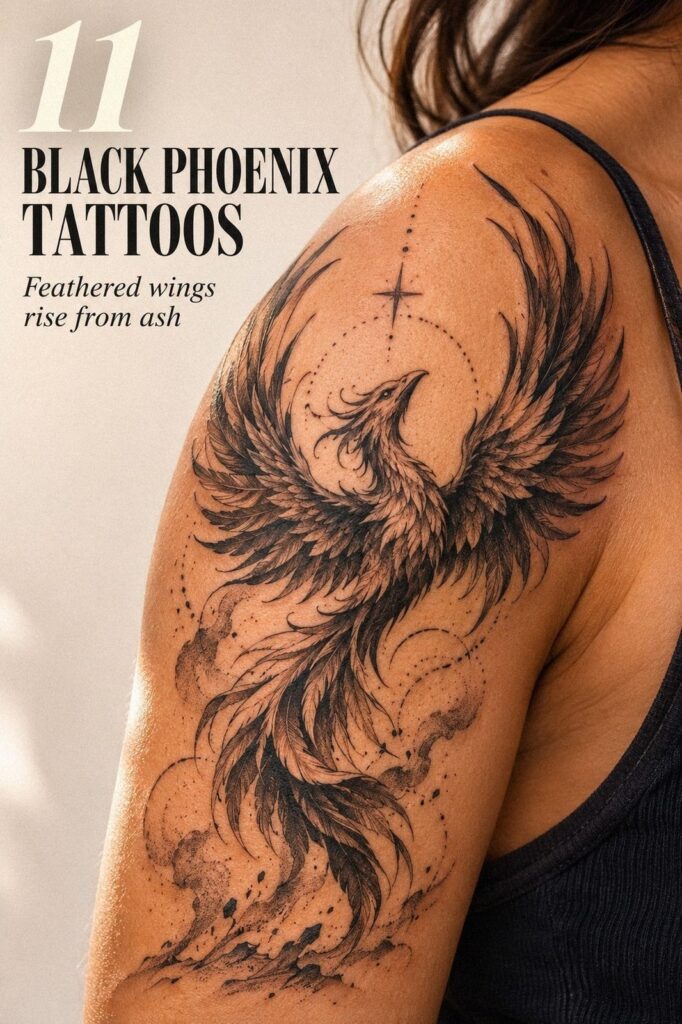
Black phoenix tattoos stay sharp longest when you choose readable shapes, thoughtful placement, and enough breathing room. I learned that after seeing delicate feathers blur when the design was packed too tightly. Start with meaning, test the stencil, and plan for healing over 2 to 3 weeks. Your future skin will thank you!
- Start With Meaningful Black Phoenix Tattoos Ideas
- Choose Intricate Linework For Black Phoenix Tattoos
- Choose Small Black Phoenix Tattoos Details
- Place Black Phoenix Tattoos On Visible Skin
- How Should Flowing Wings Follow Your Anatomy?
- Add Symbolic Flames To Black Phoenix Tattoos
- Keep Delicate Feathers Crisp During Healing
- Plan Unique Black Phoenix Tattoos With Contrast
- Balance Bold Silhouettes And Fine Details
- Match Phoenix Scale To Your Body
- Protect Striking Ink Through Aftercare
1Start With Meaningful Black Phoenix Tattoos Ideas
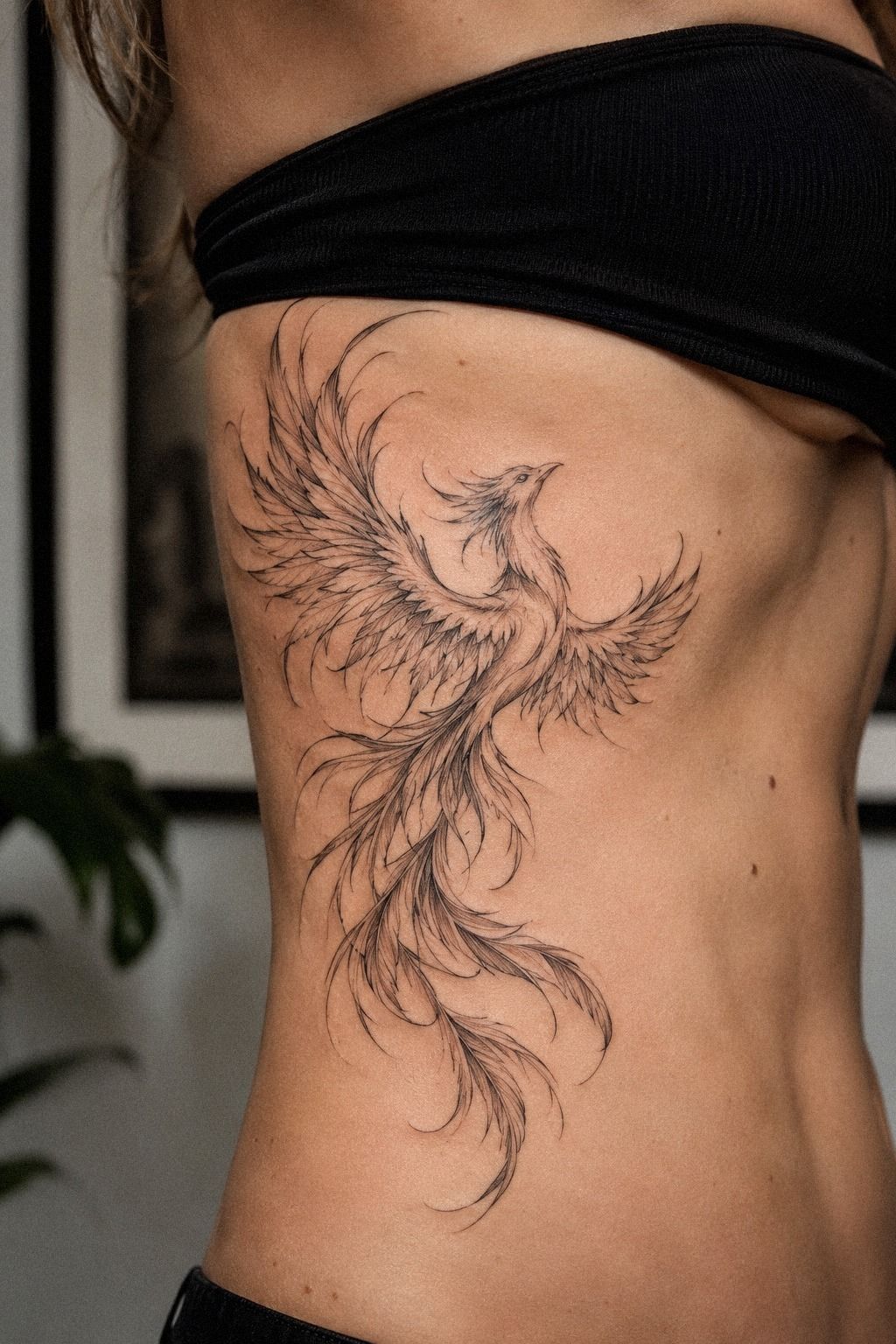
Begin with the feeling you want the phoenix to carry. Rebirth can feel empowering, grief can become sacred, and survival can look raw without turning the tattoo into a literal story.
Write three personal words before you open reference images. Your strongest idea will usually be more meaningful than the most ornate design on your screen.
A small star grouping can represent direction, recovery, or a private milestone. I’d choose an olive-black star tattoo with crisp spacing over a crowded emblem because small symbols stay readable when your ankle moves. A restrained terracotta or warm-gray accent can make the concept more symbolic, striking, and deeply personal.
Use references from tiny phoenix tattoos and minimalist phoenix tattoos to compare moods, not copy designs. Your artist can combine one star, one feather, and a curved wing into something personal. And if your meaning needs a paragraph to explain, the image may be working too hard.
Before you book, sketch the idea as a thumbnail. A bold outline, one open wing, or a single rising feather should still read at that size.
This is the Meaning Compass: choose the symbol that still feels personal when every tiny mark disappears. You’ll know it works when your reason sounds simple and your design still feels striking.
A Meaning Check Before You Book
Ask yourself what you’d still want if nobody else saw the tattoo. That question strips away trend pressure. A phoenix can be fierce, sacred, haunting, romantic, or empowering, but the strongest choice usually connects to a memory you’ll recognize years from now.
The right reference gives your artist direction without becoming a template. You don’t need to copy a pose, flame, or feather pattern exactly. Save examples that show line quality, scale, and mood, then explain what you like about each tattoo reference.
I’d also write down what the phoenix means in one sentence. That sentence can guide every later choice, from wing direction to flame shape. A clear emotional center keeps the final piece expressive instead of merely decorative.
2Choose Intricate Linework For Black Phoenix Tattoos
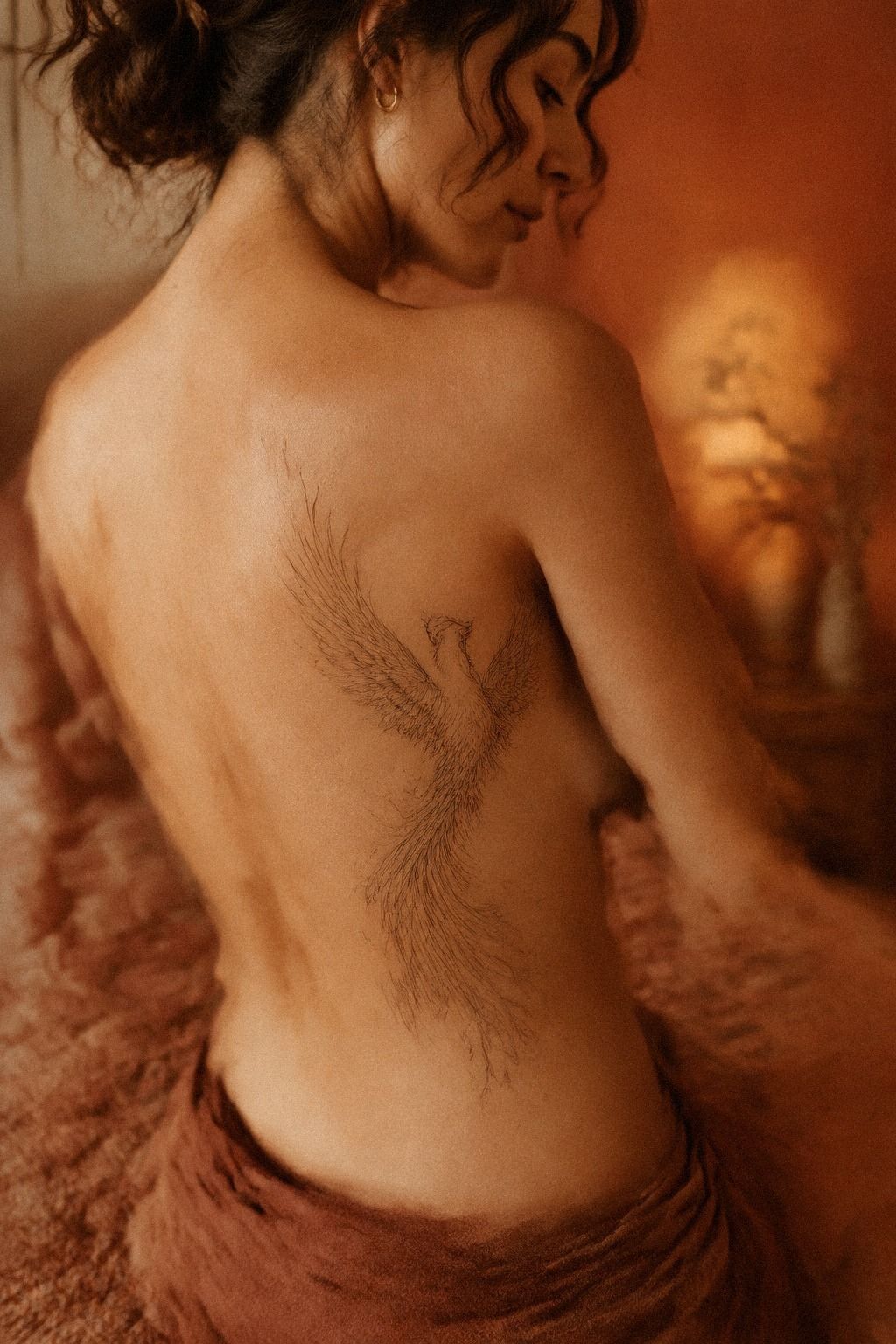
For the inner forearm, ask for linework that follows the phoenix’s body instead of filling every feather with black. Your artist should build the bird from a clear silhouette first.
If the outline is confusing, details won’t rescue it. The result can be intricate without becoming fragile.
Ask to see healed examples of single-needle linework, not only newly completed work. Fresh ink can look sharper, darker, and more dramatic than it will after the surface settles.
You’re looking for lines that remain separate around the neck, wing joints, and tail. I’d skip an artist whose portfolio shows only newly finished pieces.
A useful test is the three-distance check. View the drawing close, from a normal conversational distance, and as a small image on your phone.
Your eye should catch the phoenix at all three distances. That’s why fine line phoenix tattoos can help you compare open spacing and graceful movement before your consultation.
And don’t let the phrase fine line push you toward fragile detail everywhere. A few crisp heavier marks can anchor the wing while thinner strokes describe feathers. Your black ink should create contrast, not a gray fog.
The result can be sleek and expressive without becoming visually busy.
I’d ask one practical question during the consultation: which lines will still matter if the smallest marks soften? That answer tells you whether the artist is planning for longevity.
A crisp contour and a controlled interior usually matter more than a dazzling quantity of detail. That matters!
3Choose Small Black Phoenix Tattoos Details
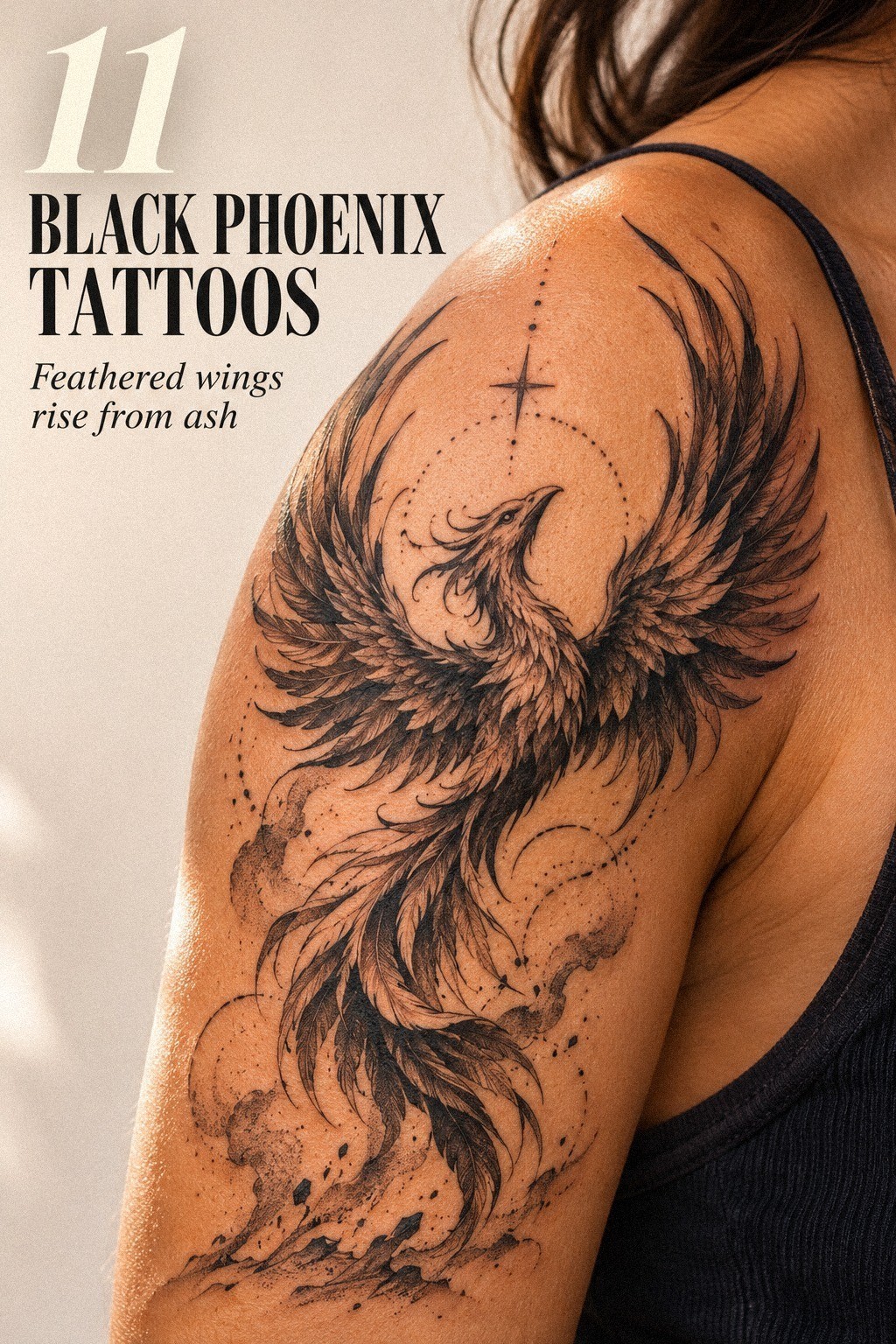
Small details need a strict hierarchy. Choose one main feature for the shoulder design, such as the eye, the lifted head, or the split tail.
Then let the remaining marks support it. A hair-thin accent can feel delicate, but too many accents will merge as the tattoo settles.
The shoulder gives you a curved surface, so your artist should place the phoenix where the wing can follow the natural slope. A fine-line phoenix with an open tail will usually read better than a closed knot of feathers. I’d keep the body slightly larger than the decorative marks because your eye needs a stable center.
Bring one reference for the line quality and another for the pose. You don’t need to force both images into one design.
Your artist can borrow the flowing wing from one and the understated face from another. Compare delicate phoenix tattoos with small black phoenix tattoos that use negative space and muted plum, gray, or rose-gold accents.
The Two-Weight Rule is useful here: one line weight for the main contour and one lighter weight for interior feathers. You’ll get depth without stuffing the shoulder with ink. And if the stencil looks like a lace pattern instead of a bird, remove details before the session begins.
Clean skin around the shape is part of the design.
Some marks can be dainty without being essential. I’d protect the head, wing break, and tail direction first, then question every tiny accent. That edit often makes the result more powerful.
The Readability Test
Shrink your chosen design until it fits inside a thumbnail on your phone. Can you still identify the head, wing, and tail?
If not, the concept needs a clearer hierarchy. A tattoo doesn’t have to be large to feel bold, but it does need a recognizable phoenix silhouette.
Ask whether each small mark earns its place. The most worthwhile details support motion, symbolism, or expression. Marks added only because the skin looks empty may make the finished tattoo less crisp.
Try the same test while turning your phone slightly. If the shape collapses when viewed off-center, the design may need a stronger outer contour. That simple check can save you from an intricate tattoo that only works from one position.
4Place Black Phoenix Tattoos On Visible Skin
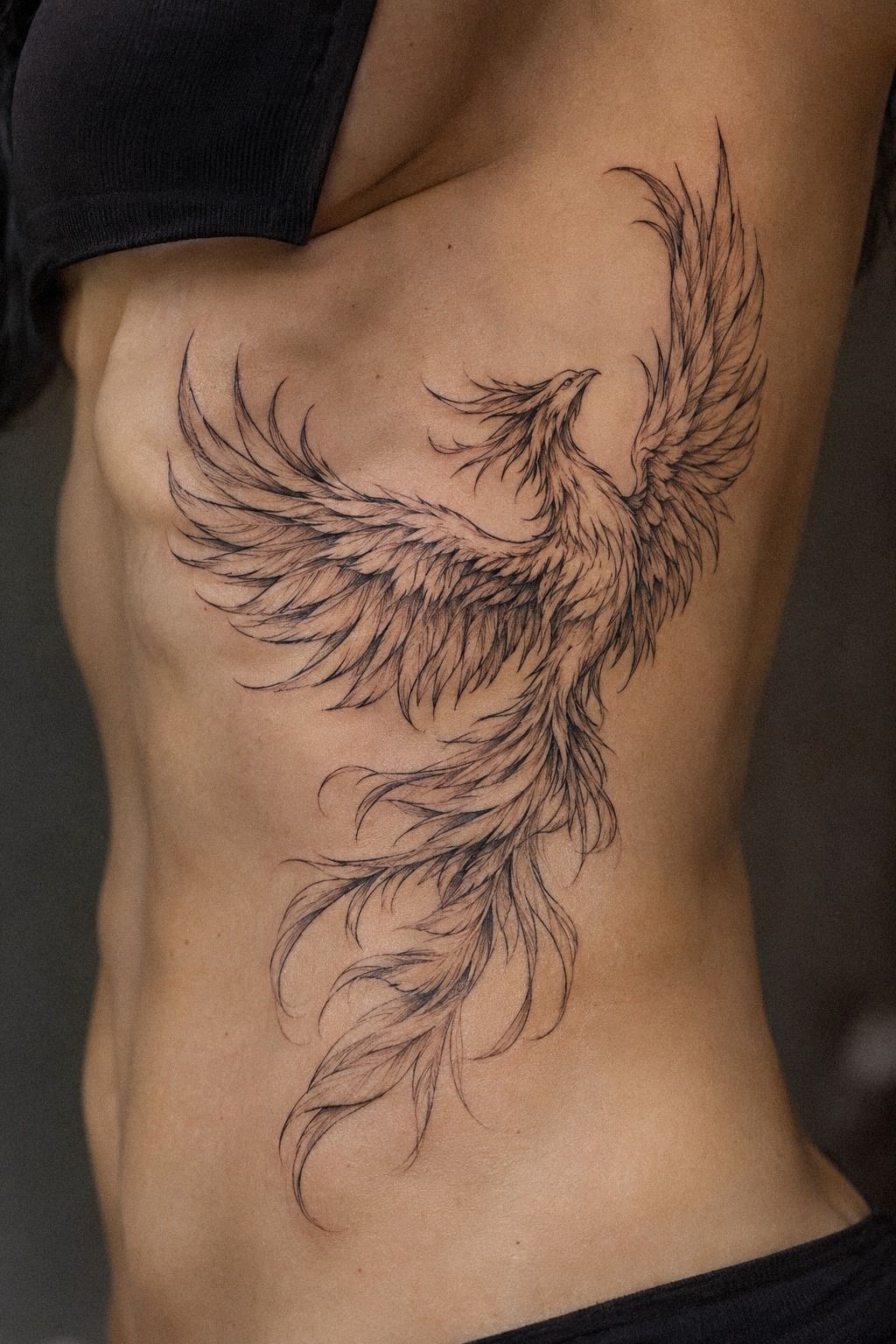
Visible placement changes the conversation. The inner forearm is easy to see and generally more tolerable than ribs, feet, hands, or the sternum.
Your design should still look intentional when your wrist turns and your arm relaxes. A phoenix that only reads from one angle needs a better placement plan.
Use the forearm’s long direction for the body and tail. A blackwork phoenix can rise toward the elbow or descend toward the wrist, but the wing shouldn’t end awkwardly at the crease. I’d avoid placing the smallest feather directly over a bend because repeated movement can make that detail harder to read.
Ask your artist to show the stencil while you stand naturally. Don’t judge it only with your arm held stiffly in front of you.
You’ll notice whether the head points toward your hand, your elbow, or the viewer. For comparison, browse small phoenix tattoos and study how each silhouette uses available skin.
Visibility also affects sun exposure. Your broad-spectrum sunscreen becomes part of the long-term plan once the tattoo has fully healed.
The first aftercare period is different, so follow your artist’s instructions for washing and moisturizing. A visible tattoo can be bold and personal, but it needs your daily attention.
I’d also consider how often clothing crosses the area. Constant rubbing can make the early days more annoying, especially around the waist, ankle, or collarbone. A thoughtful placement can feel elegant and practical at the same time.
5How Should Flowing Wings Follow Your Anatomy?
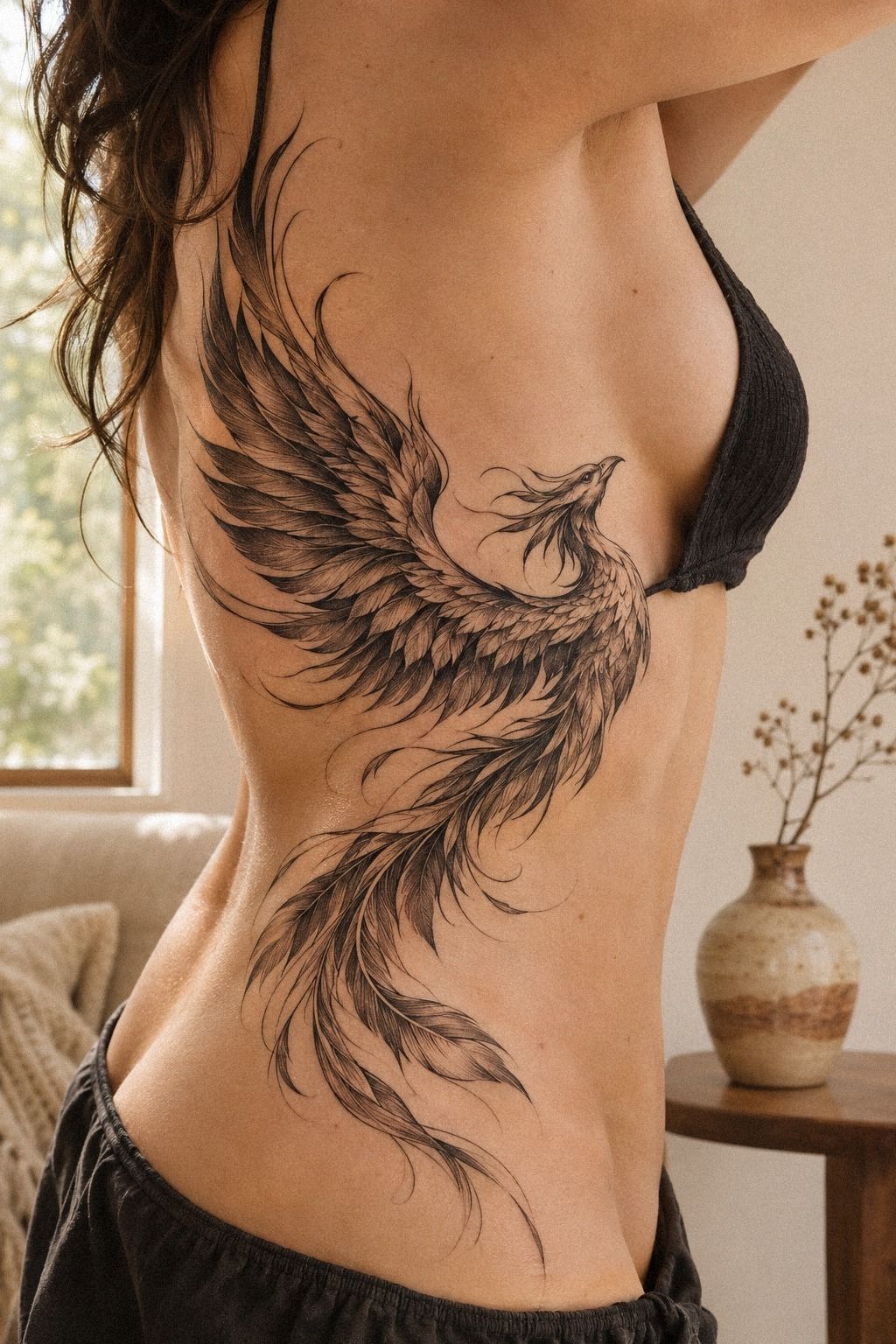
A wing should move with the body instead of sitting across it like a separate sticker. An emerald, gold, or cream accent can follow the wing’s curve without overpowering the black contour. The best wing direction feels graceful when your body is relaxed and still reads clearly when you move.
6Add Symbolic Flames To Black Phoenix Tattoos
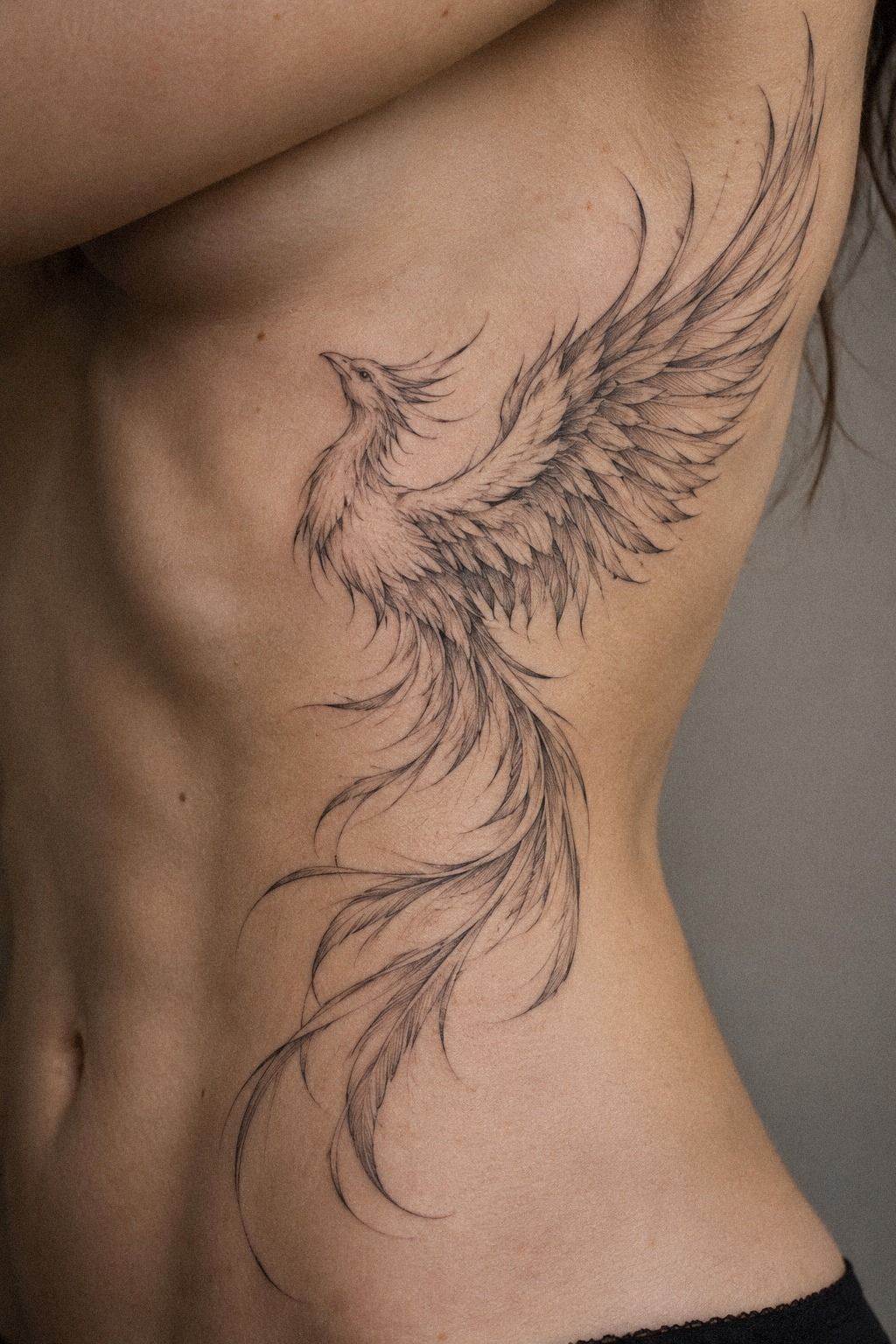
Flames should explain the phoenix, not compete with it. Choose pointed, curved, or ribbon-like flames based on your meaning.
A restrained flame can suggest renewal, while a jagged one can feel gritty and defiant. The right shape makes the tattoo more symbolic and less predictable.
Ask your artist to separate flame tips from feather tips. When both shapes use identical points, the lower half can become difficult to read.
A black flame motif with three clear directions will usually look more polished than a wall of repeated spikes. I’d keep the flames lighter than the main silhouette so the bird remains the first thing you see.
The calf has enough length for a vertical design, but it still moves when you walk. Your stencil should follow the leg rather than sit flat against it.
Turn sideways and check the profile. If you can still see the head, wing, and flame rhythm, the placement is working.
Could a flame be a memory, a family symbol, or a marker of change? Give it a reason before you add it. That decision keeps the tattoo expressive instead of decorative.
For darker visual references, black snake tattoos can show how a strong silhouette moves around a long body.
I’d avoid adding flames simply because the lower edge feels unfinished. Empty skin can create a meaningful pause. Sometimes the most daring edit is stopping before the design fills every available inch.
7Keep Delicate Feathers Crisp During Healing
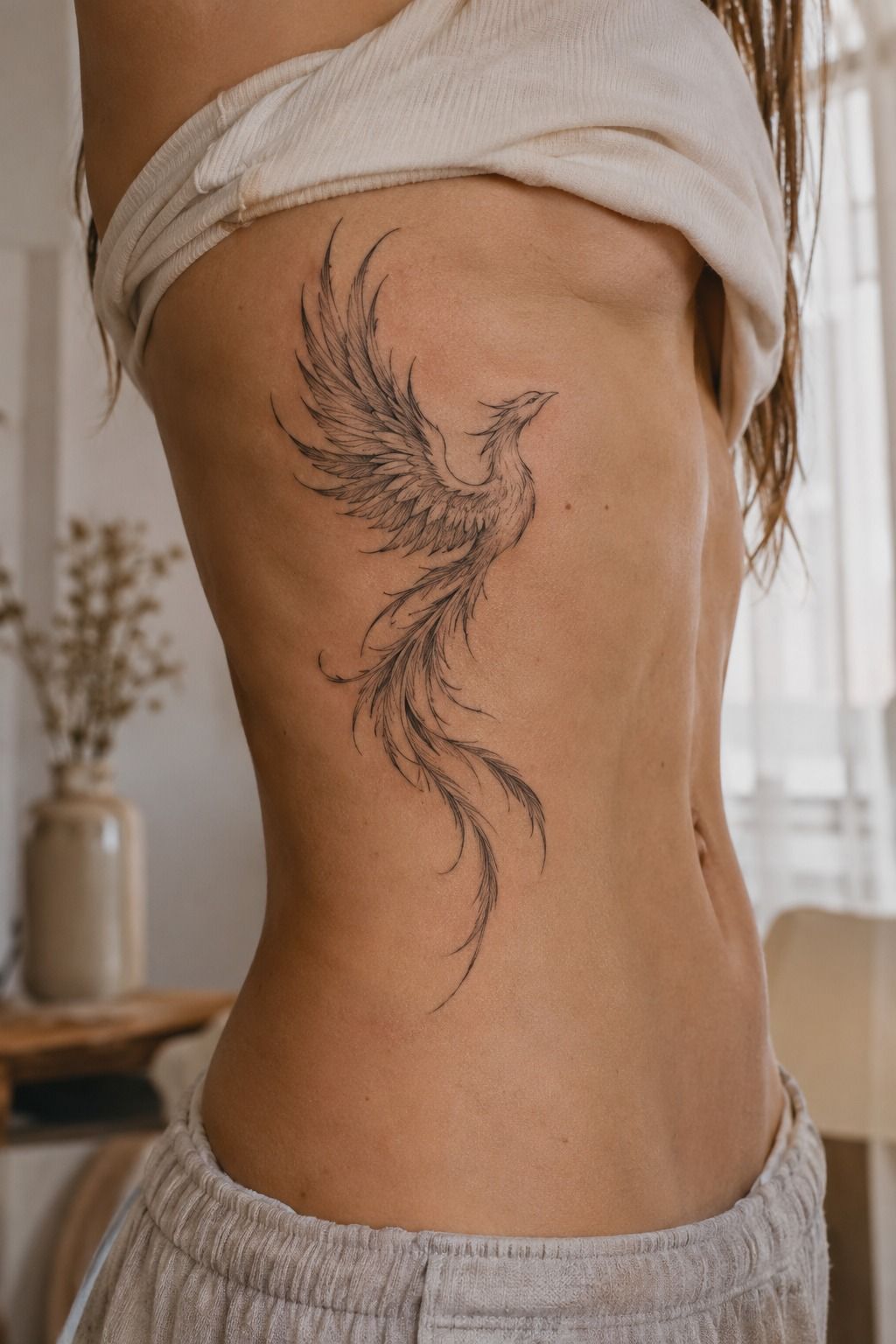
Delicate feathers depend on separation. If the marks sit too close together, swelling can temporarily hide the pattern and later settling can soften the gaps. Your artist should leave enough negative space for each feather group to breathe.
Follow the aftercare instructions exactly, even when the surface looks mostly healed. Don’t scratch, pick, soak, or cover the tattoo with products your artist hasn’t recommended. A crisp design can become irritated when impatience takes over.
The first 2 to 3 weeks are about protecting the surface. The next several weeks are about letting the tattoo settle. You’ll notice that the skin can look slightly different as the linework integrates, and that change doesn’t automatically mean anything went wrong.
If feather separation matters most to you, say so during the consultation. Your artist can simplify the pattern, increase spacing, or use a stronger contour. A slightly less intricate tattoo may deliver better long-term value than a crowded one.
The delicate phoenix tattoos you collect should help you compare spacing, not encourage you to copy every feather. I’d rather see five clear marks than fifteen cramped ones. Dusty rose, charcoal, and muted brass-gold can add contrast without hiding the feather structure.
The Healing Timeline in Plain Language
During the first days, the skin may feel tender and look more dramatic than the finished result. By the second or third week, the surface usually feels calmer, though complete settling can take 2 to 3 months. Your healing timeline should shape your expectations.
You shouldn’t judge the final sharpness on day one. Wait until the skin has settled before deciding whether a small touch-up is worthwhile. Patience protects both your budget and your peace of mind.
If the tattoo becomes unusually hot, increasingly painful, or concerning in another way, contact a qualified medical professional. Your artist can explain normal aftercare, but they can’t diagnose a health problem.
8Plan Unique Black Phoenix Tattoos With Contrast
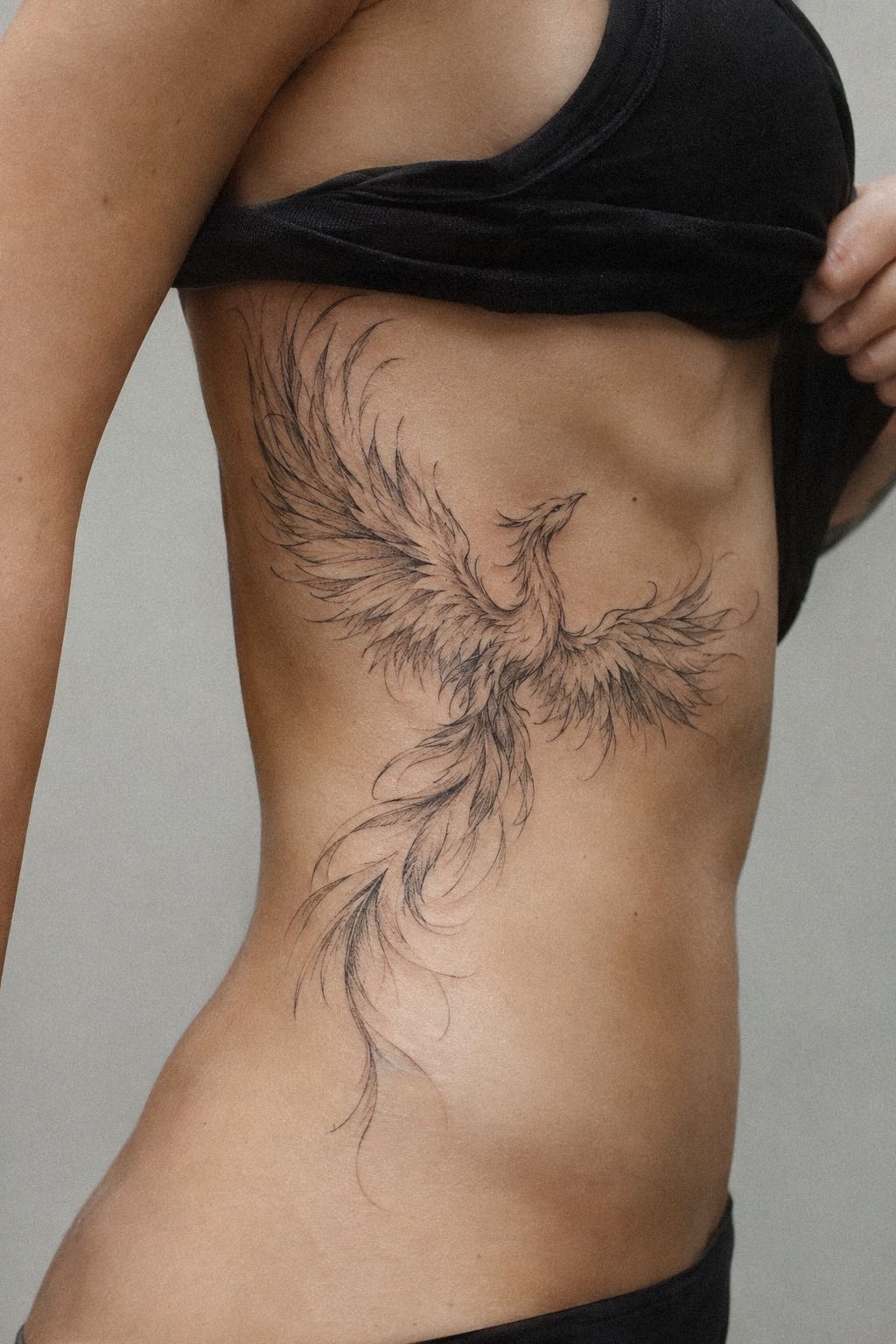
Contrast gives a black phoenix its voice. Use solid black only where you need a visual anchor, then leave selected feathers open.
A dark body can sit beside lighter linework without losing its shape. Your artist should plan every dark area before the tattoo begins.
Try a three-part value map: open skin, fine black lines, and one deeper black section. A solid-black wing can make the rising body feel powerful, while negative space around the tail keeps the design bright. I’d avoid shading every feather because a full gray wash can age less clearly than deliberate contrast.
Your skin tone also matters to the final effect. Discuss how black ink will appear on your skin after healing, especially if you’re choosing hair-thin lines.
An experienced artist can adjust spacing, thickness, and contrast without changing the phoenix’s meaning. The most unique design is the one built for you, not the one that looks unusual online.
For more comparison, study unique black phoenix tattoos and note where the artists leave untouched skin. Ask yourself one honest question: do you want a quiet, understated bird or a bold emblem people notice immediately? Both can be timeless, but they need different planning.
Contrast also changes the tattoo’s cost. More saturated areas may take longer, while a carefully edited design can deliver stronger visual value without adding unnecessary detail. Ask what the artist would remove first if you needed to protect your budget.
A contrast map keeps the design legible from across a distance and at close range. I’d put the darkest value where the phoenix needs structure, then let the rest remain lighter and more open. Midnight blue, copper, and ivory accents can feel stylish while preserving the black focal point.
9Balance Bold Silhouettes And Fine Details
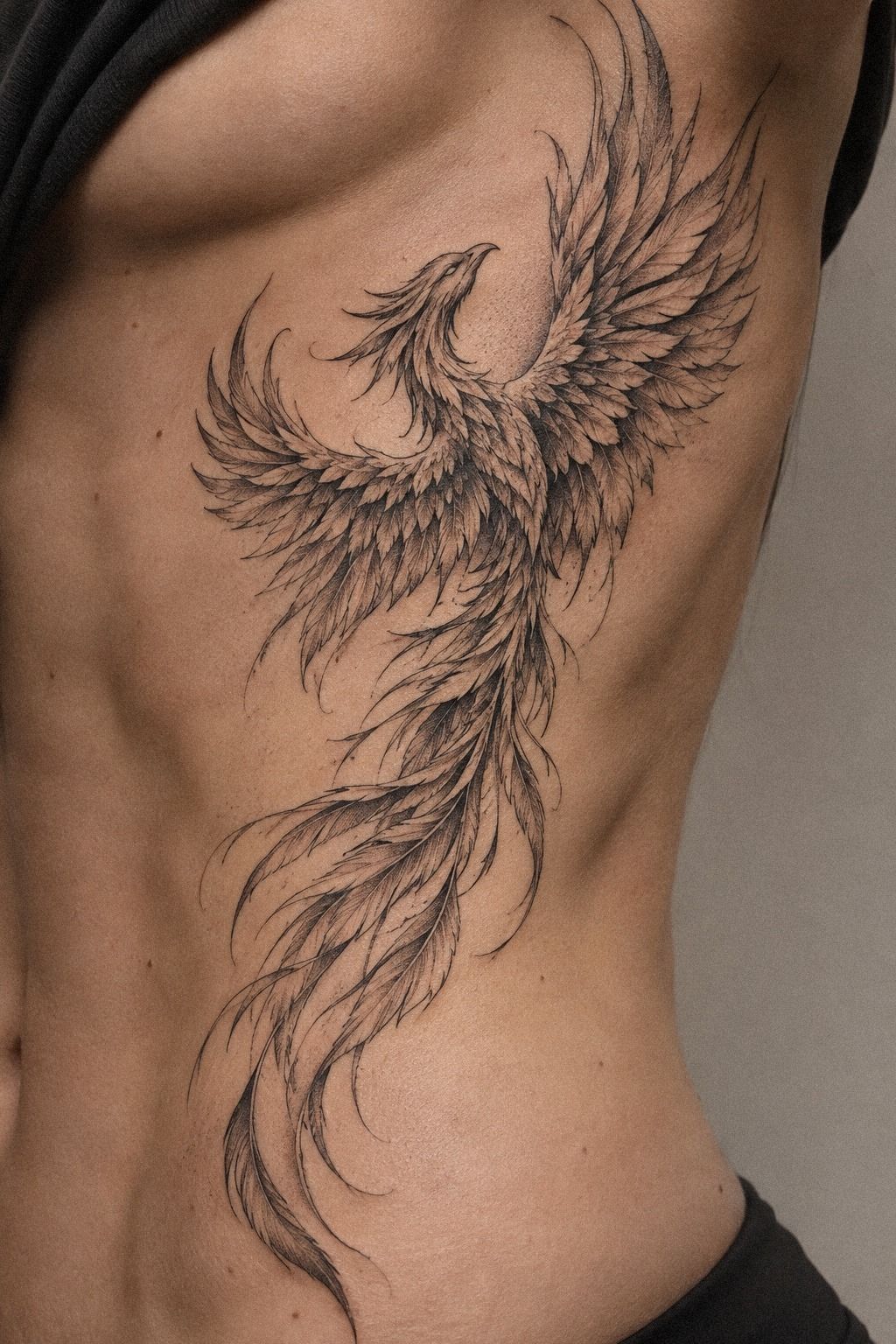
A bold silhouette gives your inner-forearm phoenix a readable backbone. A phoenix silhouette can stay iconic with only a few fine marks, especially when the body remains open and the wing has a clear edge.
10Match Phoenix Scale To Your Body

Scale should follow the body, the design density, and your tolerance for detail. A healed black tattoo will usually lose some surface sharpness as the skin settles, so microscopic marks need enough space from the beginning. I’d rather see a slightly larger phoenix with clean feathers than a tiny one that becomes a dark mark.
Compare the stencil on your collarbone while standing, sitting, and turning slightly. A design that looks elegant in one position may feel cramped when your shoulder shifts. Your artist should explain how the contour changes with movement.
Session length depends on size, detail, placement, and the artist’s pace. Ask whether the design fits into one session or needs more time. Your budget can vary because a studio may charge a minimum of about $50 to $100, while hourly rates often fall around $100 to $250 in the US.
Use these as planning references, not a promise from a particular artist. Consultation deposit policies vary, and a respected artist may price by project instead of by the hour. Your best question is, “What would you change if this were your own skin?” The answer often reveals how carefully they think.
A smaller piece can still feel striking if its silhouette is clean. A larger piece can feel dainty if its lines remain open and controlled. Scale isn’t about being dramatic; it’s about giving each important mark enough room.
Is a Larger Phoenix Worth the Extra Cost?
Sometimes it is. A larger design can preserve feather spacing, readable flames, and a graceful wing for longer.
But size alone doesn’t guarantee quality. Ask whether the additional scale improves the design or simply increases the price.
A tattoo quote should reflect the actual work involved, including drawing time, placement complexity, saturation, and revisions. If the artist can explain the value clearly, you’ll have a better basis for deciding whether the investment feels worthwhile.
I’d compare two versions of the same concept: one compact and one slightly larger. Look at what disappears in the smaller version. If the eye, wing break, or tail becomes muddy, the extra scale may be worth it.
11Protect Striking Ink Through Aftercare
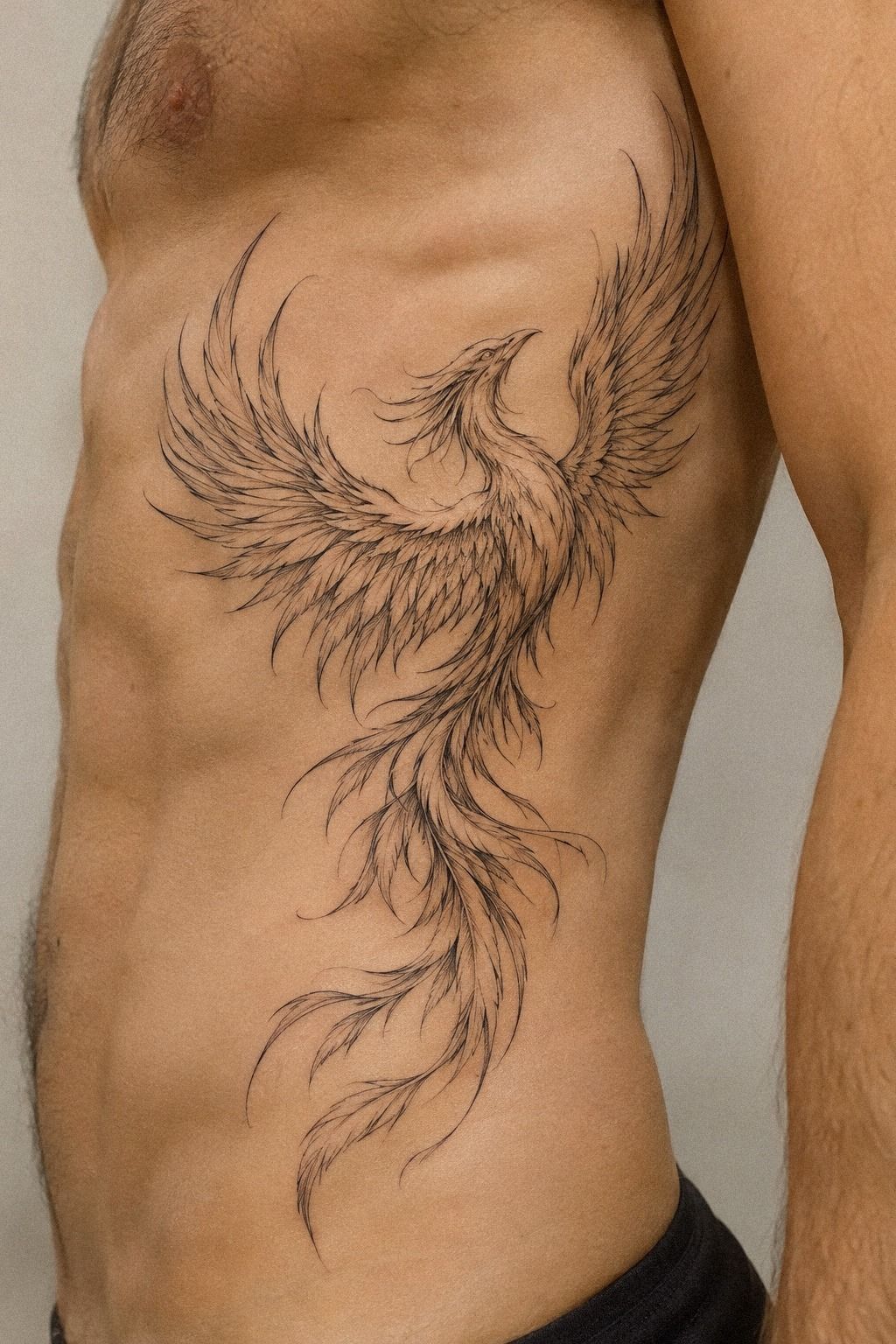
Aftercare starts with listening. Follow the instructions your tattoo artist gives you for washing, moisturizing, covering, and activity. A sternum phoenix can look striking on deep brown skin, but friction from clothing may affect your comfort during the first days.
Your skin’s response should guide the routine.
Avoid swimming and direct sun while the tattoo is healing, and don’t pick flakes or scabs. Once the skin is fully settled, use broad-spectrum SPF whenever the area is exposed. UV exposure can soften fine lines and reduce the sharp contrast that makes blackwork feel crisp.
Take progress notes at one week, one month, and after the full 2 to 3 month settling period. You’ll notice changes that daily mirror checks hide. I’d also keep the artist’s healed-work instructions because your skin may need a small touch-up later.
The Aftercare Shield is simple: gentle washing, light moisturizing, no soaking during healing, and consistent sun protection afterward. You’re protecting an expressive, personal mark, not chasing a frozen day-one result. A black phoenix can remain elegant and powerful when your care is patient.
Don’t improvise with harsh products because the tattoo looks dull for a few days. That temporary softness can be part of normal settling. Stay consistent, and ask your artist when you’re unsure.
What Should You Ask Before the Appointment?
Ask about the artist’s healed work, expected session length, total price, aftercare products, and revision policy. You’ll also want to know whether the deposit applies to the final cost. Clear answers make the appointment feel more worthwhile.
Bring your references, but stay open to edits. Your artist may suggest a sharper contour, a larger scale, or fewer interior marks. Those changes can protect the final tattoo design without weakening its meaning.
Also ask how the artist prepares the skin, handles consent, and explains aftercare. A professional consultation should feel clear, respectful, and unhurried. Trust your instincts if the conversation feels rushed.
The Three-Contour Rule: Why This Tattoo Ages Better
I’ve changed my mind about what makes a phoenix tattoo memorable. I used to think the most intricate drawing would carry the most meaning, but I’ve watched crowded feathers lose their clarity while simpler silhouettes kept their edge.
Now I look for three contours first: the body, the main wing, and the rising tail. If those three paths work, the design has a strong future.
The first contour should tell your eye what the subject is. The second should show movement.
The third should create a pause, usually with open skin or a separate flame shape. This is where many bold ideas become less polished.
People add more because the empty area feels unfinished, but that pause is doing real work.
I’m also firm about healed portfolios. A newly completed tattoo can look vibrant, crisp, and almost theatrical. Your settled tattoo is the honest version.
Ask to see work after at least several weeks, and ask how the artist would adapt a design for your skin, placement, and daily sun exposure. That conversation matters more than a popular social feed.
Finally, choose the detail you’re willing to lose. Every tattoo softens a little with time, and the best designs plan for that reality.
Your phoenix shouldn’t depend on one microscopic eye or a perfect row of barbs. It should remain symbolic, recognizable, and personal after the surface has changed.
That’s the difference between decoration and a lasting mark.
The tiny phoenix tattoos you admire can still teach you something, even if your final piece is larger. Look for the contour that survives first. That’s usually the idea worth carrying forward.
The Questions I Get Asked Most
How much does a black phoenix tattoo usually cost?
A black phoenix tattoo often costs about $100 to $300 in the US for a smaller design, though the artist, region, placement, and detail change the quote. Studio minimums may run about $50 to $100, while hourly rates commonly fall around $100 to $250. Ask for a written estimate so your budget stays realistic.
Are black phoenix tattoos a good idea for a first tattoo?
Yes, black phoenix tattoos can suit a first tattoo because clear linework and moderate placements are easier to plan. Your inner forearm, shoulder, or thigh may feel more tolerable than ribs, feet, hands, or sternum. Choose a meaningful, manageable first tattoo rather than the most dramatic one.
How do I choose a tattoo artist for black phoenix tattoos?
Choose an artist with a healed portfolio showing clean linework, controlled black areas, and designs similar to yours. Studio hygiene matters just as much. Your consultation should cover placement, scale, aftercare, and how the artist adjusts detail for your skin.
How much do black phoenix tattoos hurt?
Pain varies by person and placement. Ribs, feet, hands, and sternum are often more painful because they have less padding or sit near bone.
Inner forearm, thigh, and shoulder are commonly more tolerable, so your first tattoo may feel easier there. You won’t know your exact experience until the appointment, but good preparation helps.
How long does a black phoenix tattoo take to heal?
The surface usually heals in about 2 to 3 weeks, while the tattoo can take about 2 to 3 months to settle completely. Your routine should include gentle washing, appropriate moisturizing, and avoiding sun, pools, and soaking during the healing stage. Don’t rush the process because the final clarity depends on it.
What’s the best placement for black phoenix tattoos?
Inner forearm, shoulder, and thigh are strong choices when you want readable lines and moderate comfort. Your artist can match the phoenix’s direction to the body’s movement.
Avoid placing the finest details directly over constant bends or heavy friction. The best tattoo placement is the one that supports both meaning and longevity.
Where I’d Start First: The Placement Filter
If I had to pick one step, I’d start with the stencil and placement. A clear design can’t rescue a cramped curve or hidden wing.
Stand, sit, and move before you approve it. Keep the stencil available for your consultation while the idea still feels personal.
I’d also compare the expected cost with the design’s long-term value. A slightly larger, cleaner phoenix may be more worthwhile than a cheaper version packed with fragile details.
Keep it readable! That decision protects the meaning, the budget, and the future shape of your tattoo.
Before committing, compare the stencil with unique black phoenix tattoos and black phoenix tattoo references. You’re looking for a design that feels daring but still belongs to you.
My final filter is simple: does the phoenix remain recognizable, meaningful, and sharp when you blur your eyes? If yes, you’ve probably found the right balance between intricate detail and lasting clarity. Trust that pause!