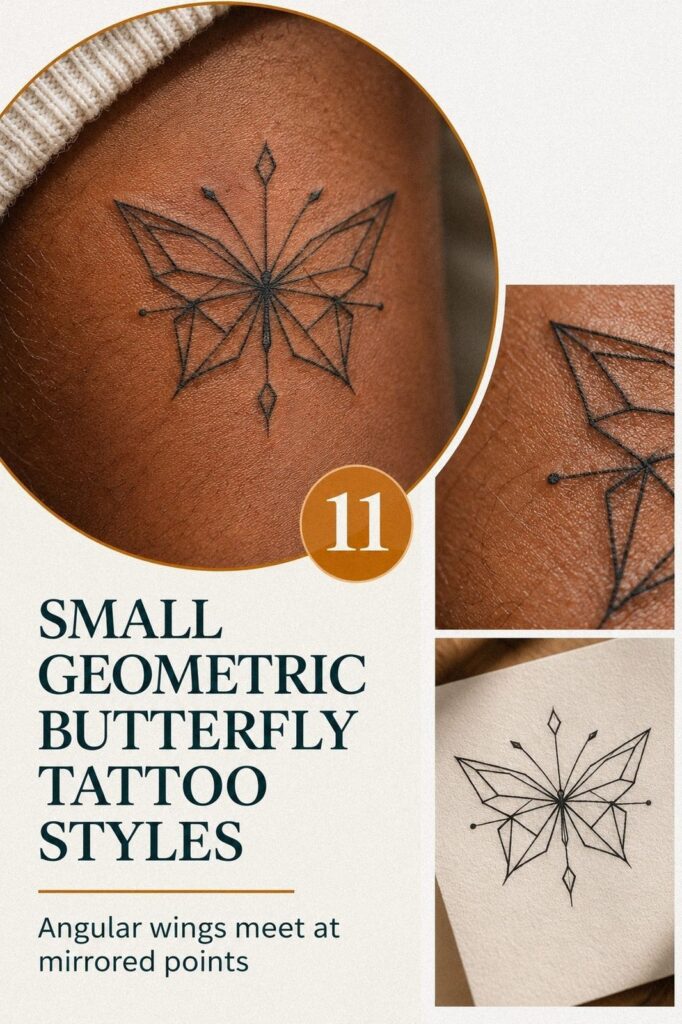
A small geometric butterfly tattoo can feel personal when its symmetry, placement, and line weight match your story. I once chose a design that looked striking on paper but felt generic on skin. These ideas show how delicate geometry can become meaningful, expressive, and unmistakably yours.
- ✓ Fine Line Geometric Butterfly Tattoo on Wrist
- ✓ Why Behind the Ear Works for a Symmetrical Butterfly
- ✓ Build a Dotwork Geometric Butterfly on the Ankle
- Fine Line Geometric Butterfly Tattoo on Wrist
- Why Behind the Ear Works for a Symmetrical Butterfly
- Build a Dotwork Geometric Butterfly on the Ankle
- Can Sacred Geometry Stay Clear on a Finger?
- Let Negative Space Trace the Collarbone
- Choose Bold Blackwork on the Forearm
- Origami’s Folded Planes Make a Sleek Symbol
- Color or Restraint? Geometric Butterfly on the Ribs
- The Triangle Anchor Method for a Minimal Neck Tattoo
- Matching Geometric Butterfly Tattoos Without Copying Each Other
- When Abstract Angles Meet the Shoulder Blades
1Fine Line Geometric Butterfly Tattoo on Wrist
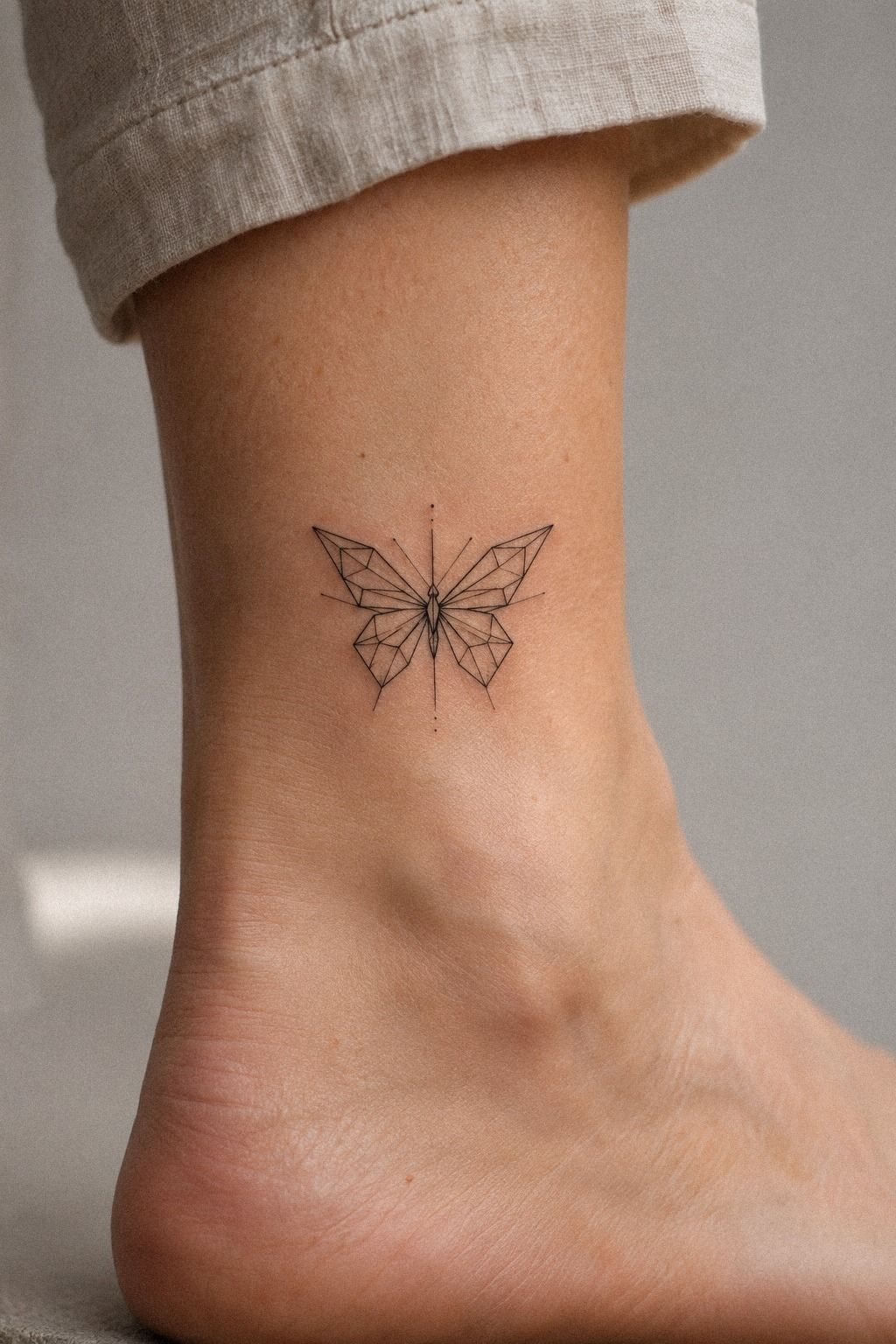
A wrist design works best when you keep the fine linework crisp and restrained. This small geometric butterfly has open wings, mirrored sections, and a narrow center that follows the wrist without wrapping too far around it. If you want something visible but still understated, this placement gives you control over how often you see it.
I’d ask for a symmetrical stencil first, then check it with your hand relaxed and your fingers slightly open. Your wrist shifts shape when you move, and a butterfly that looks balanced at one angle can lean at another. That small check matters.
The single-needle detail should support the silhouette, not compete with it. I’d skip tiny interior ornaments that sit too close together because they may soften as the tattoo ages. A clean center, two or three wing divisions, and sharp outer points will read better.
You can compare this approach with our small fine line butterfly tattoo ideas before your appointment. The goal isn’t to copy one image. It’s to notice which details still look personal when the design is only a few centimeters wide.
You can also browse tiny butterfly tattoo designs if you’re weighing a simpler silhouette. A wrist tattoo can be easier to budget than a highly detailed piece. If the placement feels right and the design holds its shape, it may be worth it for someone who wants daily visibility without a dramatic commitment!
2Why Behind the Ear Works for a Symmetrical Butterfly

Behind the ear gives a symmetrical small butterfly tattoo a quiet, slightly edgy character. The black ink stands out without requiring heavy shading, while the discreet placement keeps the symbol mostly private under your hair.
The side stencil check is simple: the butterfly’s center should follow the curve behind your ear, while the wings should open toward the neck rather than pointing straight down. You’ll want your artist to check the stencil from the side and front. A design that looks fine in a mirror may disappear when your head turns.
I’d use crisp linework with modest wing compartments here. Too many tiny shapes can blur into one dark mark, especially in a tight area. The most striking version usually has one strong outer contour, a small central diamond, and enough open skin to keep the design readable.
Look through these small butterfly tattoo designs if you’re still deciding how abstract your wings should be. Your favorite may be the one with fewer lines, not the most ornate option. That’s where the personal feeling often appears.
You can also read about butterfly tattoo meaning before choosing the symbol’s emotional direction. Behind-ear work can cost more than expected if the design requires repeated stencil adjustments. Ask about the studio minimum and estimated session length before you book.
A dainty, polished symbol can still feel powerful when its proportions are deliberate.
3Build a Dotwork Geometric Butterfly on the Ankle
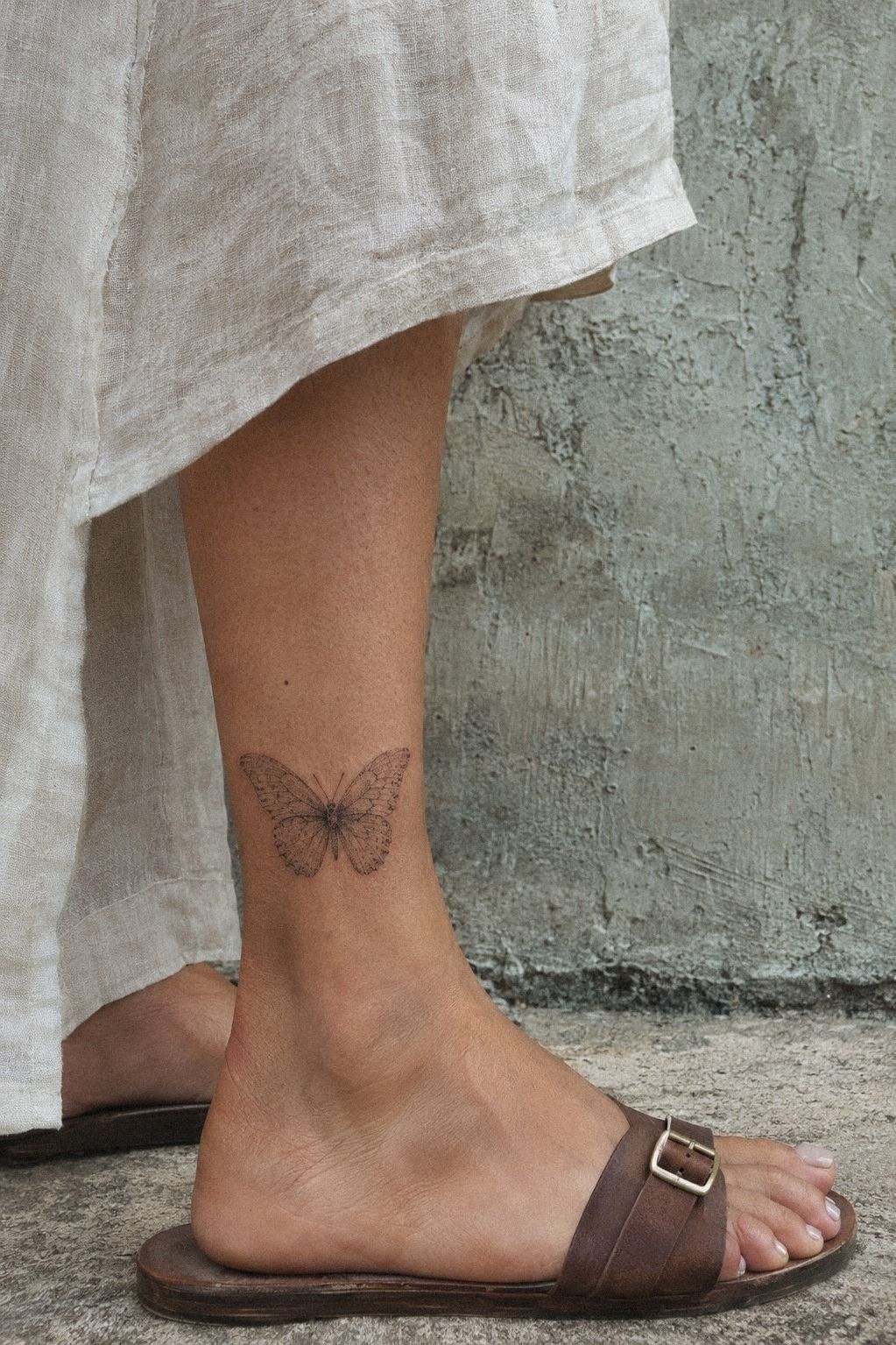
Dotwork gives an ankle butterfly a softer rhythm than solid black lines.
4Can Sacred Geometry Stay Clear on a Finger?

A tiny sacred geometry butterfly tattoo on the finger needs ruthless editing. The sacred geometry should use a central shape and mirrored wings rather than a crowded pattern.
The finger placement should follow the finger’s length. I’d place the butterfly between joints or along the side, depending on how visible you want it. Your hands move constantly, and a horizontal design may stretch visually when you bend your finger.
Finger tattoos can fade or soften faster than tattoos on some larger, less exposed areas. That doesn’t make them a bad idea, but you should choose an artist who’ll be direct about future touch-ups. I’d skip extremely delicate interior lines if the whole concept depends on them remaining razor sharp.
Start with tiny small butterfly tattoo examples and notice which silhouettes survive at small scale. A minimal triangle or a pair of open wing shapes may age more clearly than a complicated mandala.
A custom stencil can help you judge whether the design still feels balanced when your hand is relaxed, curled, and turned sideways. The hand is a bold location, so your choice should feel personal rather than impulsive. This placement is playful, sharp, and slightly daring.
If you’re unsure, test the stencil for a day and watch how often you look at it. A clear answer often appears before you expect it, especially when the tattoo feels like a true tattoo!

5Let Negative Space Trace the Collarbone

A negative space butterfly along the collarbone can look elegant because the skin does some of the drawing.
6Choose Bold Blackwork on the Forearm

Bold blackwork gives the forearm butterfly a fierce, graphic presence. The bold blackwork should use solid wing sections, strong symmetry, and enough open skin to prevent the design from becoming a single block.
The forearm is one of the more tolerable placements for many people, and it gives your artist a stable surface. I’d still ask for a stencil from several angles because your arm rotates. A butterfly that looks centered palm-up may shift when your hand turns outward.
I’d choose a solid fill over muddy gray shading for this idea. Solid black with sensible spacing tends to age more clearly than a collection of faint micro-details. Your artist can keep the outer edges sharp while using one or two open breaks to make the wings feel lighter.
Compare it with these small butterfly tattoo arm ideas if you’re deciding between inner and outer forearm placement. The inner forearm feels more intimate, while the outer forearm reads more iconic.
A bold piece doesn’t have to be large. A compact shape with a crisp silhouette can feel powerful, masculine, feminine, or entirely outside those labels. That flexibility is what makes the style so expressive.
Ask for a healed portfolio before you book, especially if you’re considering dense black sections. Fresh blackwork can look dramatic, while healed work reveals whether the edges stayed clear. And yes, a little blackwork can make a tiny butterfly look surprisingly commanding!
7Origami’s Folded Planes Make a Sleek Symbol
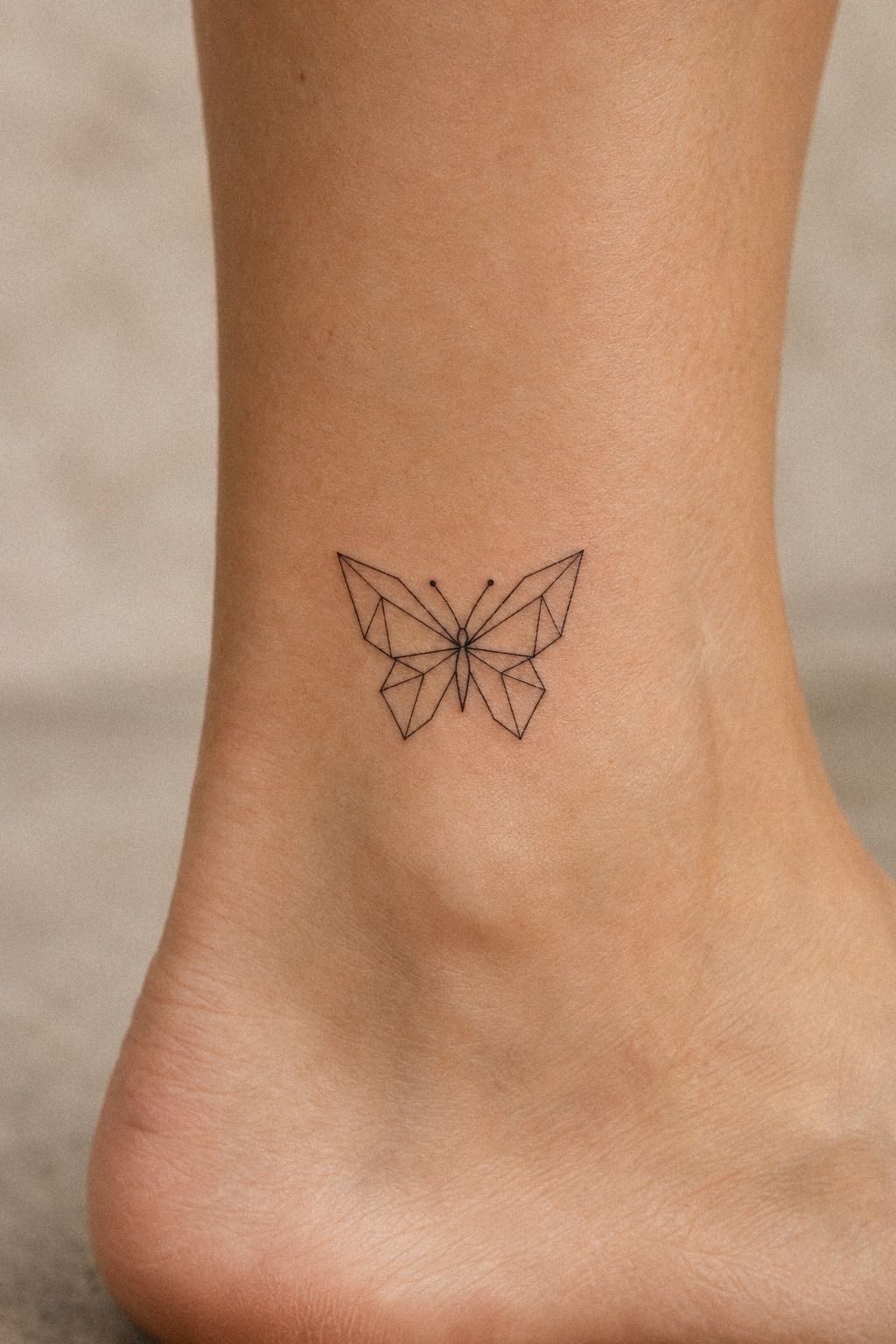
An origami-inspired butterfly turns folded planes into a sleek tattoo language. The angular linework suggests paper creases without pretending to reproduce every fold.
If you want a geometric butterfly tattoo idea that feels playful but polished, the shoulder gives the design enough surface to breathe. Your artist can position the center near the rounded shoulder and let the wings point slightly toward the chest and back.
When I plan an origami-style piece, I focus on three physical elements:
– Open skin breaks: clear gaps between planes. – Sharp corner points: a silhouette that doesn’t become round. – Consistent line weight: no accidental heavy patches.
I’d skip faux-folds that don’t connect to the main structure. They can make the butterfly look more like a random polygon than a recognizable symbol. Your artist should be able to explain why each line exists, especially if the piece is compact.
For more reference, browse minimalist butterfly tattoo designs and compare the versions with fewer planes. You can also look at tiny butterfly tattoo designs to see which silhouettes remain legible at a smaller scale. You’ll probably find that the most charming option is also the most readable.
8Color or Restraint? Geometric Butterfly on the Ribs
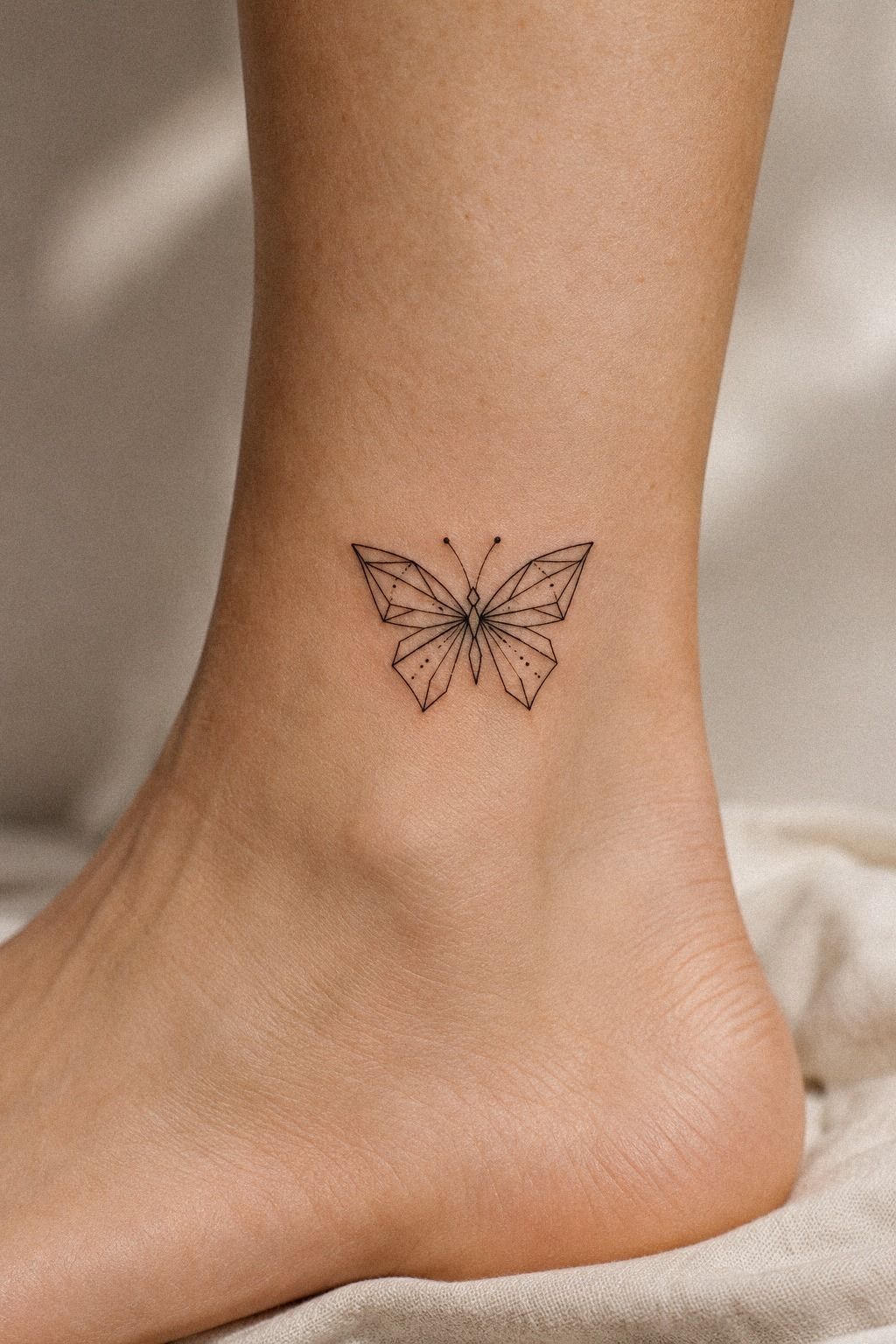
Color can make a geometric butterfly feel vibrant without losing its structure. This approach uses warm neutral color inside symmetrical wing compartments, with the outline keeping everything sharp.
I’d choose warm white, camel, and black accents rather than filling every section with unrelated shades. Camel with black can look refined, while three or four competing colors may distract from the butterfly itself. Your artist should show you how the color palette may look against your skin tone.
Rib tattoos can be more uncomfortable than forearm, thigh, or shoulder placements because the area is close to bone and moves as you breathe. That doesn’t mean you should avoid it. It means you’ll want a design that doesn’t require an unnecessarily long session.
The controlled color should sit inside clear geometric compartments, not spill across the outline. Ask how the pigment may change as it settles and how you’ll protect it from UV exposure.
You can compare this with watercolor small butterfly tattoo ideas if you’re torn between controlled geometry and softer color movement. I’d choose the geometric version if you want the butterfly to remain sharp. It’s daring, romantic, and quietly dramatic against the ribs.
It holds its nerve!
You might also compare darker references through small black butterfly tattoo ideas if you’re considering blackwork instead of color.
9The Triangle Anchor Method for a Minimal Neck Tattoo

A minimal triangle butterfly tattoo on the neck can look iconic because it reduces the subject to a few deliberate shapes. The triangle motif creates the body and wing structure at once.
The triangle anchor keeps the design from drifting into generic linework. Use one central triangle, two mirrored wing angles, and a small gap where the shapes meet. Your artist can adjust the point so it follows the neck rather than aiming awkwardly toward the jaw.
I’d place the design slightly to one side instead of directly under the chin. That gives you more control over visibility and lets the tattoo follow the neck’s natural movement. A central placement can look striking, but it’s harder to hide.
Look at small butterfly tattoo inspiration before you decide how abstract to go. I’d avoid tiny text or extra symbols beside it because the neck already supplies enough visual tension.
If you’re worried that minimal means forgettable, it doesn’t. A sharp silhouette can be more memorable than a crowded one. This is an empowering, understated choice for someone who wants a personal mark that doesn’t need a paragraph of explanation.
10Matching Geometric Butterfly Tattoos Without Copying Each Other

Matching geometric butterfly tattoos work best when the pair feels connected without becoming identical. The paired stencil can show the same structure in two stages, which is useful if you and someone else are planning a shared piece.
The Matching Mirror Rule lets each person choose a slightly different size or placement while keeping the center, wing count, and line style consistent. Your bodies won’t have identical proportions, and forcing the exact same stencil can make one tattoo look less natural.
I’d ask for healed portfolio photos from the artist, not only fresh tattoos. Fine lines can soften, and small interior geometry may open or blur over time. Your appointment should include a conversation about placement, skin movement, and realistic aftercare.
For a related single-person option, see small geometric butterfly tattoo designs. You might decide that one shared motif is enough, while each person chooses a different location.
Matching tattoos can be playful and deeply symbolic, but they shouldn’t be pressured. If you’re both comfortable with the design years from now, the result can feel timeless.
If one person is uncertain, pause. A meaningful tattoo needs willingness from both sides.
You can also compare tiny butterfly tattoo designs for variations that keep the shared idea but change the wing structure.
11When Abstract Angles Meet the Shoulder Blades
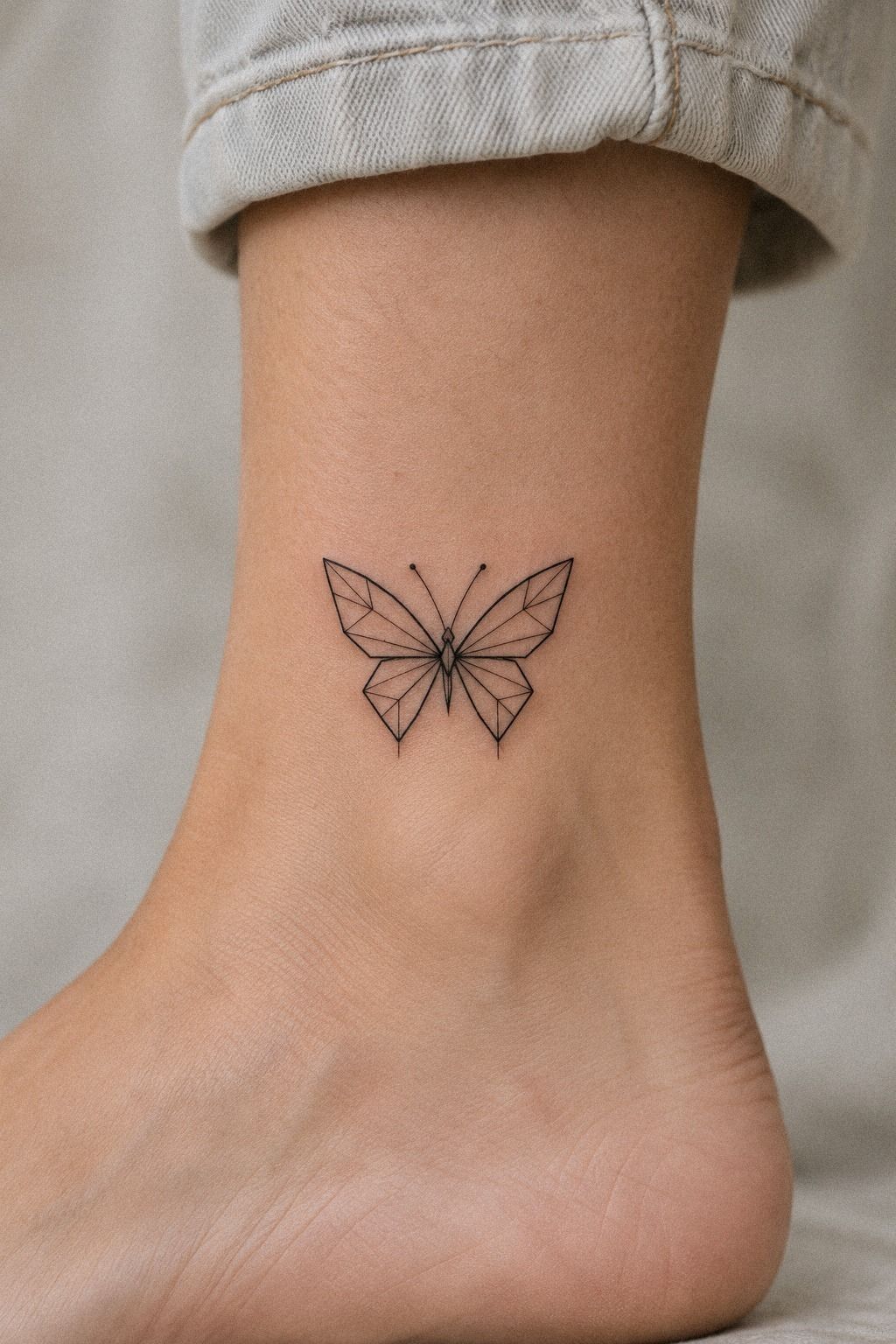
An abstract angular butterfly between the shoulder blades gives you the most artistic freedom of these ideas. The abstract black design uses open wings, fractured planes, and a strong center without relying on a literal butterfly outline.
The shoulder blades offer a broad, stable area, but your spine should guide the composition. I’d keep the central axis clean and let the wing angles travel outward. Your artist can use the natural space between the blades to create symmetry without making the tattoo look rigid.
This is where I’d consider a slightly larger small tattoo, still compact enough to feel intentional. A design that’s too tiny may lose the angular relationships that make it interesting. You’ll want enough surface for the negative spaces to remain visible after healing.
Choose deep black ink if longevity is your priority, then protect the piece from direct sun once it has healed. Fine lines can widen, while solid black and sensible spacing often stay readable longer.
If you want another direction, compare small black butterfly tattoo references before your consultation. I’d choose this abstract version over a crowded realistic one because it leaves room for your interpretation. It’s raw, haunting, and iconic without announcing every meaning at once.
Before You Commit, Test the Silhouette
A stencil test is one of the best ways to understand whether a small geometric butterfly feels right on your body. Ask to see the printed stencil from several angles before the appointment starts.
Look at it while your wrist bends, your shoulder relaxes, or your neck turns. The body movement may make the design look less balanced than it did in a flat reference.
I’d also take a quick photo in normal lighting. If the butterfly disappears or becomes visually crowded, the issue may be size rather than the artist’s skill. That size adjustment can make the final result much more worth it.
For a second opinion on scale, compare the stencil with small fine line butterfly tattoo ideas. You’ll notice quickly whether the design still feels crisp, personal, and recognizable.
Placement Changes the Symbol
Placement changes more than visibility. It affects whether the tattoo feels private, expressive, edgy, or quietly personal. A placement choice should match how often you want to see the symbol and who you want to share it with.
The wrist and forearm make the butterfly part of your daily visibility. The ribs, shoulder blades, and collarbone can feel more intimate. The neck and hand make a more daring statement.
There isn’t one universally best location. Your budget, work setting, pain tolerance, and long-term comfort all matter. Choose the position that supports the meaning instead of letting a trend make the decision for you.
You can revisit butterfly tattoo meaning if the emotional purpose is still unclear. The right placement often becomes obvious once you decide whether the symbol is meant for you, for others, or for both.
Line Weight Is a Budget Decision
Line weight affects both the appearance and the cost of a geometric butterfly. A healed line that remains readable can offer better value than a fragile detail that needs early correction.
A simple design may fit within a studio minimum, while a symmetrical piece with color, tiny compartments, and repeated stencil adjustments may take longer. Ask whether your quote covers design time, setup, and touch-up advice.
Here’s a practical starting point for budgeting:
Prices vary by region, artist experience, placement, and detail. A consultation is worth the money when it prevents you from choosing a size that can’t support the design. Ask how much design time is included before you approve the final quote.
You can compare simpler approaches in minimalist butterfly tattoo designs before deciding whether extra geometry is worth the cost.
Color, Contrast, and Skin Tone
Color should serve the butterfly’s structure rather than overwhelm it. The color palette can be vibrant, vintage, or restrained, but the wing divisions still need clear contrast.
Ask your artist how each pigment may appear on your skin tone and how the colors may settle. A design that looks delicate and ethereal in a digital reference may need stronger contrast to remain legible in person.
If color pushes the quote beyond your budget, blackwork with one controlled accent may deliver more value. You don’t need every section filled to make the design feel expressive.
For softer color references, see watercolor small butterfly tattoo ideas. For a sharper alternative, small black butterfly tattoo designs may help you compare contrast without adding pigment.
What Makes a Small Design Worth It?
A small tattoo is worth it when every line has a job. The custom stencil should reflect your preferred shape, placement, and level of visibility rather than simply repeat the most popular reference.
I’d ask myself three questions: Will I still like the silhouette without color? Does the placement suit my routine? Would I pay the quoted price for this exact version, not a larger or more dramatic one?
That last question protects your budget. A meaningful, polished design can be a better investment than a complicated tattoo chosen only because it looks impressive online.
If you’re comparing scale, start with small fine line butterfly tattoo ideas and judge whether the design still feels expressive when reduced.
Care That Protects the Geometry
A surface tattoo generally heals in about 2 to 3 weeks, while deeper settling can take about 2 to 3 months. During that period, follow your artist’s instructions for aftercare, gentle washing, moisturizer, sun protection, and swimming.
Don’t pick at peeling skin or judge the final result too early. The lines may look darker, softer, or uneven while the surface settles.
Once healed, sunscreen helps preserve contrast, especially in delicate linework and bright color. Good care won’t stop every natural change, but it can help your tattoo remain crisp and recognizable.
Meaning Without a Script
A butterfly can represent change, memory, freedom, grief, or a period of life you don’t want to forget. The symbolic meaning doesn’t need to be obvious to anyone else.
Some people prefer an ornate story with recognizable references. Others want a minimal mark that only they understand. Both choices can be meaningful when the design reflects a real decision.
I like the idea of one personal reference that belongs to you. It might be an uneven wing angle, a small gap, or a color only you recognize. That personal detail can make a classic symbol feel new.
Why This Symbol Keeps Feeling Personal
I’ve noticed that the strongest small tattoos aren’t always the most detailed ones. They’re the ones with a decision behind every line. A butterfly can represent change, memory, freedom, grief, or simply a period of life you don’t want to forget.
I once made the mistake of choosing a design because it looked impressive in a saved image. On my skin, the details sat too close together and the whole thing felt less personal than I expected. I’d now choose a crisp silhouette, a clear center, and one unusual detail that belongs to me.
The practical side matters too. A tattoo should fit your body, your budget, and your tolerance for future touch-ups. Why rush the part that decides whether the result will still feel like yours later?
Your artist should show healed work, explain how the design may age, and tell you when a line is simply too fine for the intended size. I’d rather hear that detail won’t hold before the appointment than pretend every reference image is equally realistic. That honesty can save you from unnecessary future touch-ups.
The Questions I Get Asked Most
How much does a geometric small butterfly tattoo usually cost?
A geometric small butterfly tattoo usually costs about $100 to $300 in the US, although artists may charge a studio minimum of about $50 to $100 or an hourly rate near $100 to $250. Your artist, region, placement, and detail level will affect the final quote. A consultation gives the clearest estimate.
Are geometric small butterfly tattoos a good idea for a first tattoo?
Yes, they can be a good first tattoo because you can choose a manageable size and placement while keeping the design meaningful. Forearm, shoulder, and thigh placements are often more tolerable than ribs, feet, hands, or sternum. A clear silhouette is easier to understand and discuss.
How do I choose a tattoo artist for geometric small butterfly tattoos?
Choose an artist with healed examples of clean linework, symmetry, and geometric designs. Ask about studio hygiene, stencil adjustments, and how fine lines may age on your skin. A healed portfolio tells you more than a fresh photo, so request both when you can.
How much do geometric small butterfly tattoos hurt?
Pain varies by person and placement. Ribs, feet, hands, and sternum are often more sensitive, while forearm, thigh, and shoulder placements may be more tolerable. Your session can feel easier when the design is simple, the appointment is planned, and you’re rested.
How long does a geometric small butterfly tattoo take to heal?
The surface usually heals in about 2 to 3 weeks, while complete settling can take about 2 to 3 months. Wash gently, moisturize as directed, avoid swimming, and protect the healed tattoo from strong sun. Good aftercare helps preserve clean lines.
What’s the best placement for geometric small butterfly tattoos?
Forearm, shoulder, and collarbone placements offer strong visibility and enough surface for clean geometry. Choose ribs, feet, hands, or sternum when the meaning matters more than comfort. Your ideal placement balances visibility, pain, movement, and how the lines may age.
Where should I buy a geometric butterfly tattoo design?
You don’t need to buy a tattoo kit or use an unlicensed design source. Save references, then work with a professional artist who can create a stencil for your body. A custom consultation is safer and more personal than copying an anonymous file.
Where I’d Start First
If I had to pick one, I’d start with the fine line geometric butterfly on the wrist. Its open silhouette stays readable, and you’ll see the symbol every day without committing to a large piece. Pin the small fine line butterfly guide for later and bring one clear reference to your artist.