
I‘ve made the mistake of choosing a tattoo from a thumbnail instead of its placement. A delicate butterfly tattoo can look crisp, symbolic, and personal, but size and line spacing decide how it ages. You don’t need the loudest design. You need one your skin can carry. Start here.
- Small Delicate Butterfly Tattoo Behind the Ear
- Fine Line Butterfly Along the Collarbone
- Watercolor Butterfly With Translucent Wings
- Unique Butterfly With Botanical Linework
- Delicate Butterfly Tattoo on the Wrist
- Matching Butterflies Across Both Ankles
- Tiny Butterfly Trail Up the Spine
- Ornate Butterfly With Jewel-Inspired Details
- Minimal Butterfly Tattoo Between the Fingers
- Moonlit Butterfly Design on the Shoulder
- Symbolic Butterfly Emerging From Fine Shading
1Small Delicate Butterfly Tattoo Behind the Ear

A small butterfly behind the ear has an intimate quality. Terracotta, stone, and olive accents with crisp open lines can keep the wings readable without making the placement feel crowded. The body can angle slightly toward the hairline instead of sitting directly inside it.
The skin behind your ear can be sensitive, and you’ll hear more of the machine than expected. A short tattoo session may be enough for a compact design, but careful stencil placement still matters. That restraint matters!
I’d skip extremely tiny vein details because hair, friction, and sunscreen can soften a crowded design. A graceful wing outline with three or four interior marks feels more timeless than a miniature copy of a highly detailed reference.
For proportion ideas, compare these small butterfly tattoo ideas. The strongest layouts leave clear open skin around the wings, which helps the tattoo stay delicate rather than indistinct.
2Fine Line Butterfly Along the Collarbone

A collarbone butterfly can look sleek and expressive because the natural bone creates a graceful visual direction. Clay, linen, and aged-brass tones can give the collarbone placement a polished, personal gesture without overwhelming the skin.
I’d choose single-needle work only when the artist can show healed results. Healed fine-line tattoos reveal whether thin veins remain legible after the surface settles, which is more useful than judging freshly completed work.
Your collarbone moves with your shoulders, clothing, and sleep position, so placement matters more than a trendy reference. A small design can work beautifully here, but the scale should follow your anatomy rather than an arbitrary measurement.
A small black body with slightly stronger lower wings can make the piece feel more powerful. For related proportions, these tiny fine line butterfly designs offer a useful starting point before the shape is redrawn for your collarbone.
3Watercolor Butterfly With Translucent Wings

A watercolor butterfly gives you a vibrant option without turning the whole design into a heavy block of color. Plum, grey, and rose-gold washes behind clear black contours can create an ethereal result while preserving the butterfly’s identity.
The wings should contain distinct sections with open skin between the color fields. Professional tattoo pigment still needs structure, and a design made only from pale washes may lose definition as the color settles. Fewer colors usually create a more elegant result.
Compare these watercolor butterfly tattoo examples with your preferred skin undertone. The best version often feels expressive because it has restraint, not because it contains every shade.
4Unique Butterfly With Botanical Linework
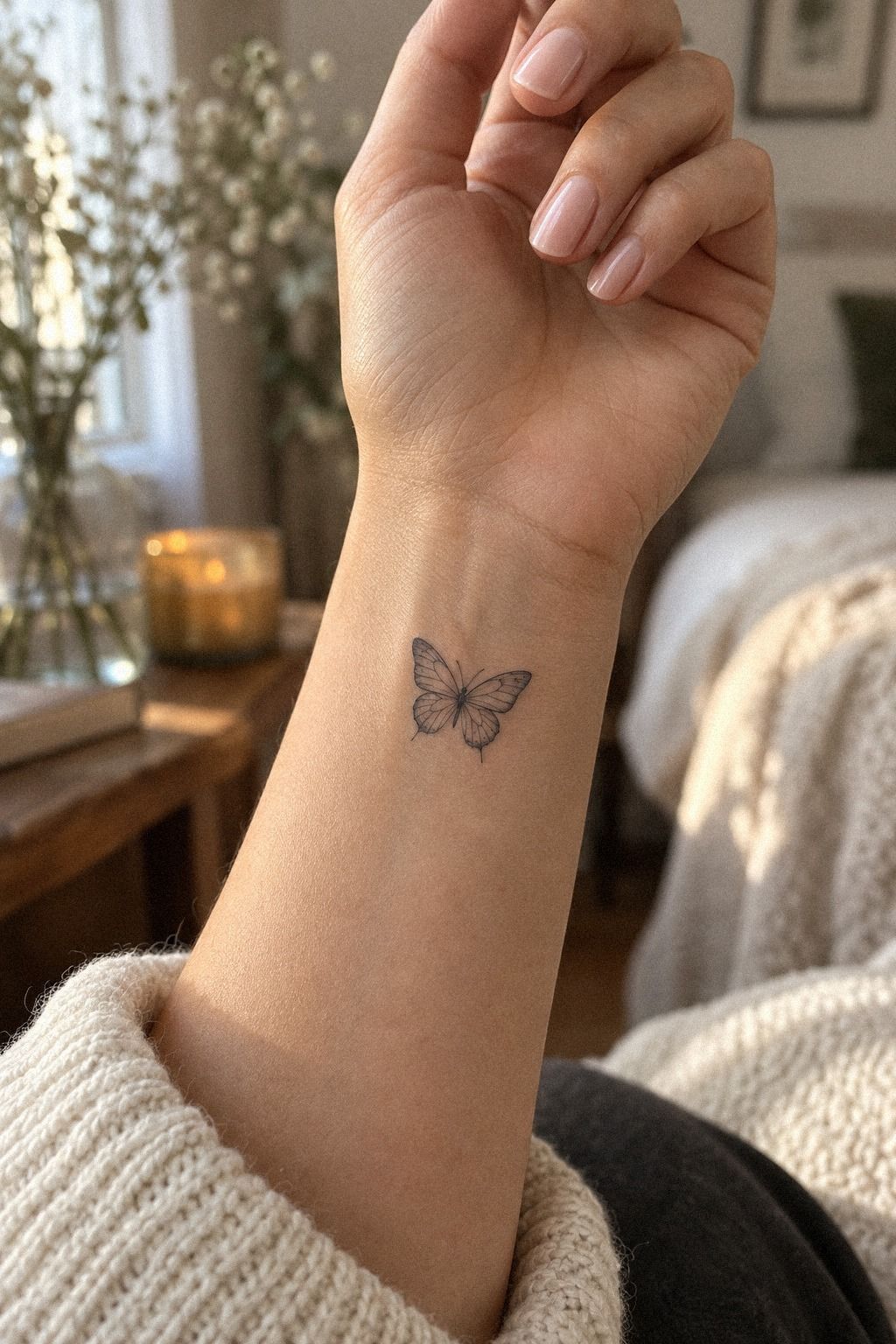
A butterfly with botanical linework feels meaningful when the plant supports the wings instead of competing with them. Navy, white, and deep brown accents with fine botanical lines can create a flowing connection between nature and movement.
Your ankle already has a strong curve. A vertical composition may feel sleek, while a horizontal one can spread too widely across the bone. The final stencil should follow the shape of your leg instead of forcing a fixed arrangement.
The ankle can feel more sensitive near the front and sides, especially where shoes rub. A slightly raised placement may reduce constant friction, although no location is completely protected from movement or sunlight.
One recognizable leaf can look more elegant than a crowded garden. One leaf is enough! These unique butterfly tattoo designs can help you judge how much botanical detail the ankle can carry without losing the butterfly’s silhouette.
5Delicate Butterfly Tattoo on the Wrist
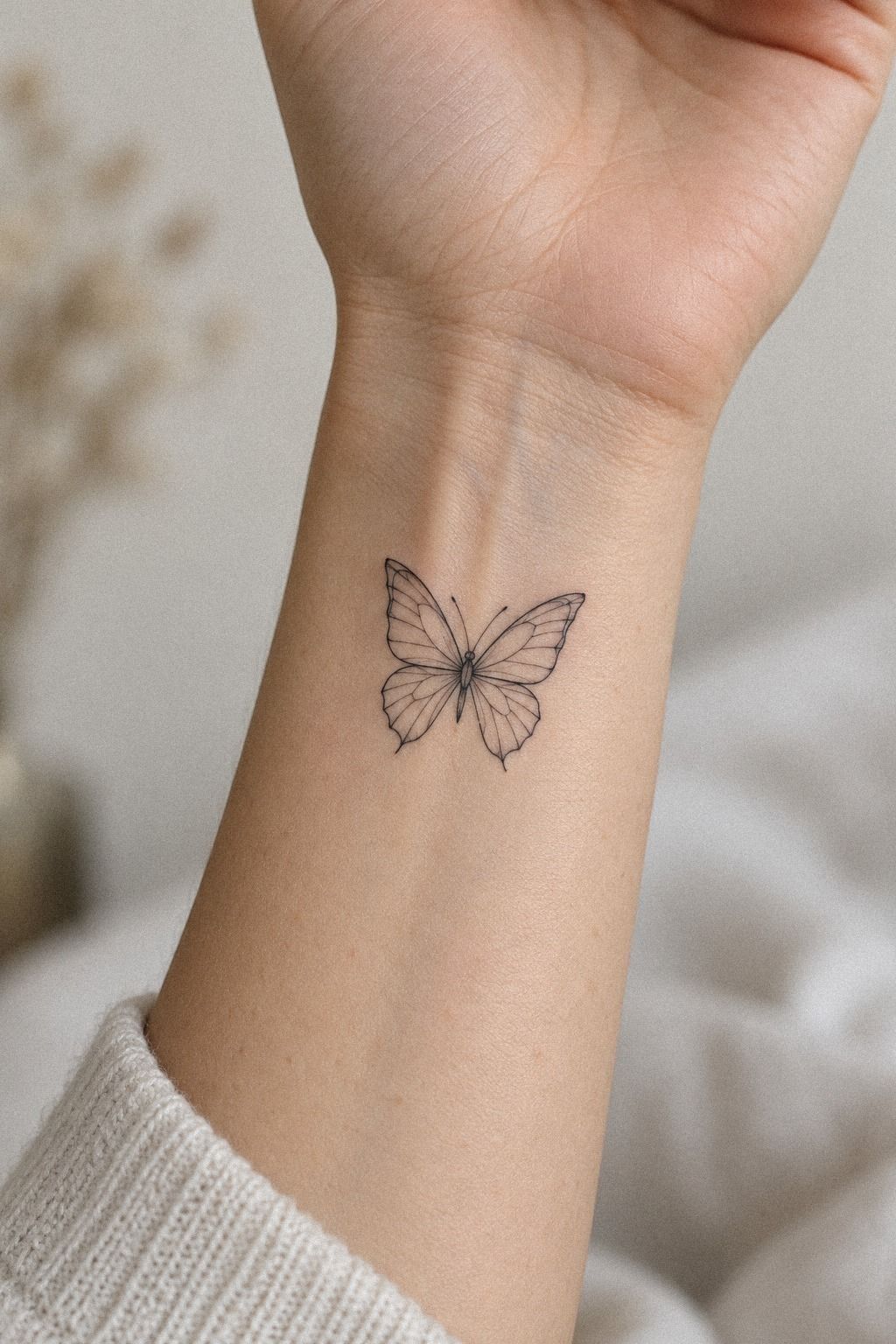
A wrist butterfly works best when the silhouette remains recognizable from a distance. Emerald, gold, and cream accents around open wing shapes can look understated while leaving enough untouched skin inside the design to keep it light.
Wrist tattoos meet handwashing, sunlight, sleeves, and daily contact with surfaces. Archival black ink can help, but realistic aftercare expectations matter more than a promise of permanent sharpness. Tiny isn’t always delicate.
Sometimes it’s simply hard to read.

6Matching Butterflies Across Both Ankles

Matching butterflies across both ankles can feel playful, symbolic, and surprisingly personal. Forest green, rust, and natural brown accents with strong black contours can help each design remain visible while preserving an elegant shape.
I’d avoid making the pair microscopic copies. Your ankles won’t have identical curves, so mirrored placement should be balanced rather than mechanically identical. Matching does not require every mark to be the same.
Plan both stencils together. A butterfly that sits perfectly on one ankle may land too close to the bone on the other, and a small adjustment can preserve the visual weight of the pair.
The placement may feel more intense than an upper arm or thigh. Have the artist show both stencils before starting, then compare these tiny butterfly tattoo designs for proportions that can be adapted to each ankle.
7Tiny Butterfly Trail Up the Spine
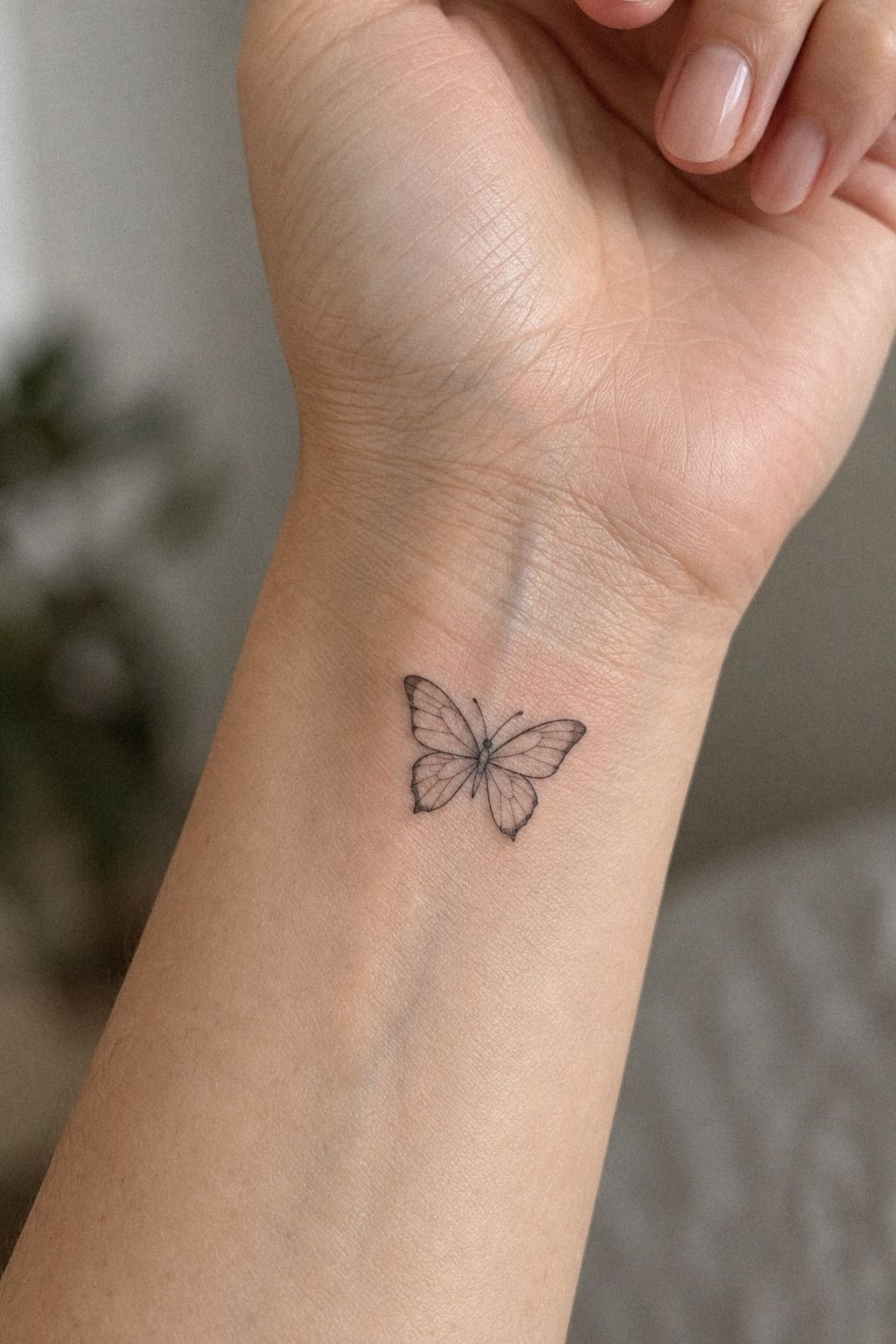
A trail of tiny butterflies along the spine creates a flowing composition rather than one isolated emblem. Dusty rose, charcoal, and brass accents can give three open-wing motifs a romantic rhythm as they move from the upper back downward.
I’d avoid a perfectly straight row because it can look stiff. A subtle curve, generous spacing, and slight variation make the trail feel more expressive. The spine is bony, so many people experience it as more intense than the forearm or shoulder.
8Ornate Butterfly With Jewel-Inspired Details
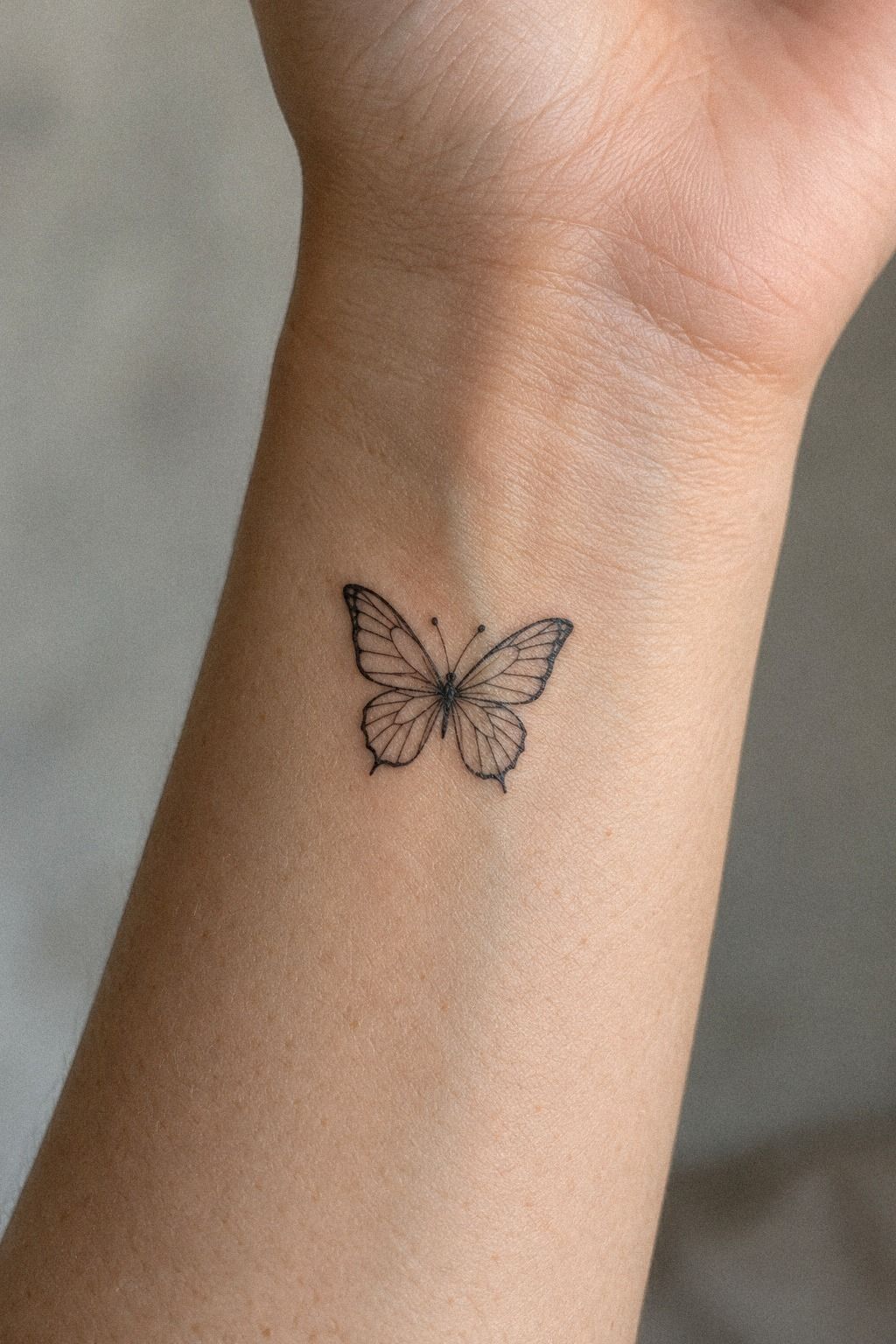
An ornate sternum butterfly can feel daring and feminine without becoming heavy. Warm white and camel accents against ornate black detailing, small circles, and crisp internal lines create a stylish focal point on the body.
The sternum is sensitive, and even a compact design can feel sharper over the bone. Check the stencil from several angles before the session begins because a symmetrical composition makes small shifts noticeable.
Selective grey shading can create depth while leaving open skin between the wing sections. Greywash tattoo shading will not imitate metal or gemstones, so the design should rely on contrast and shape rather than metallic promises.
Ornate doesn’t mean oversized. A compact arrangement with three levels of detail can look more timeless than enormous wings packed with decoration.
These tiny black butterfly tattoo references can help you decide how dark the sternum piece should become. Symmetry magnifies every choice!
9Minimal Butterfly Tattoo Between the Fingers
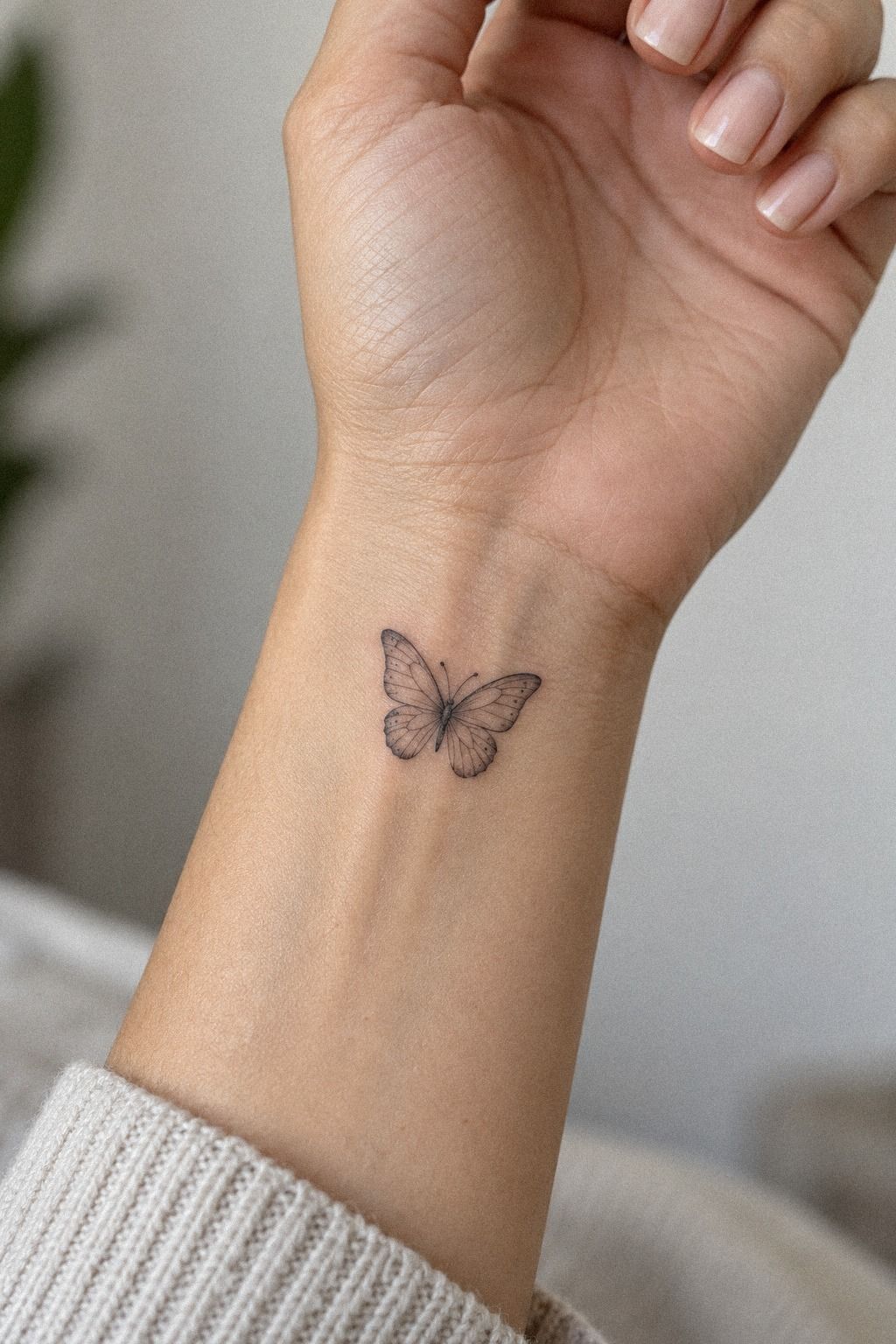
A minimal butterfly between the fingers is edgy because the placement is so visible. Midnight blue, copper, and ivory accents around a clean open-wing outline can look sharp and playful, but finger tattoos often need more maintenance than protected areas.
Hand movement, washing, friction, and sunlight can soften delicate details quickly. If placement matters more to you than maximum longevity, compare these tiny butterfly tattoo ideas and choose the version with the fewest fragile interior marks.
10Moonlit Butterfly Design on the Shoulder

A moonlit butterfly on the shoulder gives you space for a crescent, small stars, or soft shading without compressing every line. Sage green and warm cream accents around a haunting greywash effect can feel romantic while the butterfly remains recognizable.
The shoulder is often more tolerable than the ribs, feet, hands, or sternum. Loose clothing and careful sun protection will make healing easier, especially when the tattoo sits where straps or seams can rub.
11Symbolic Butterfly Emerging From Fine Shading
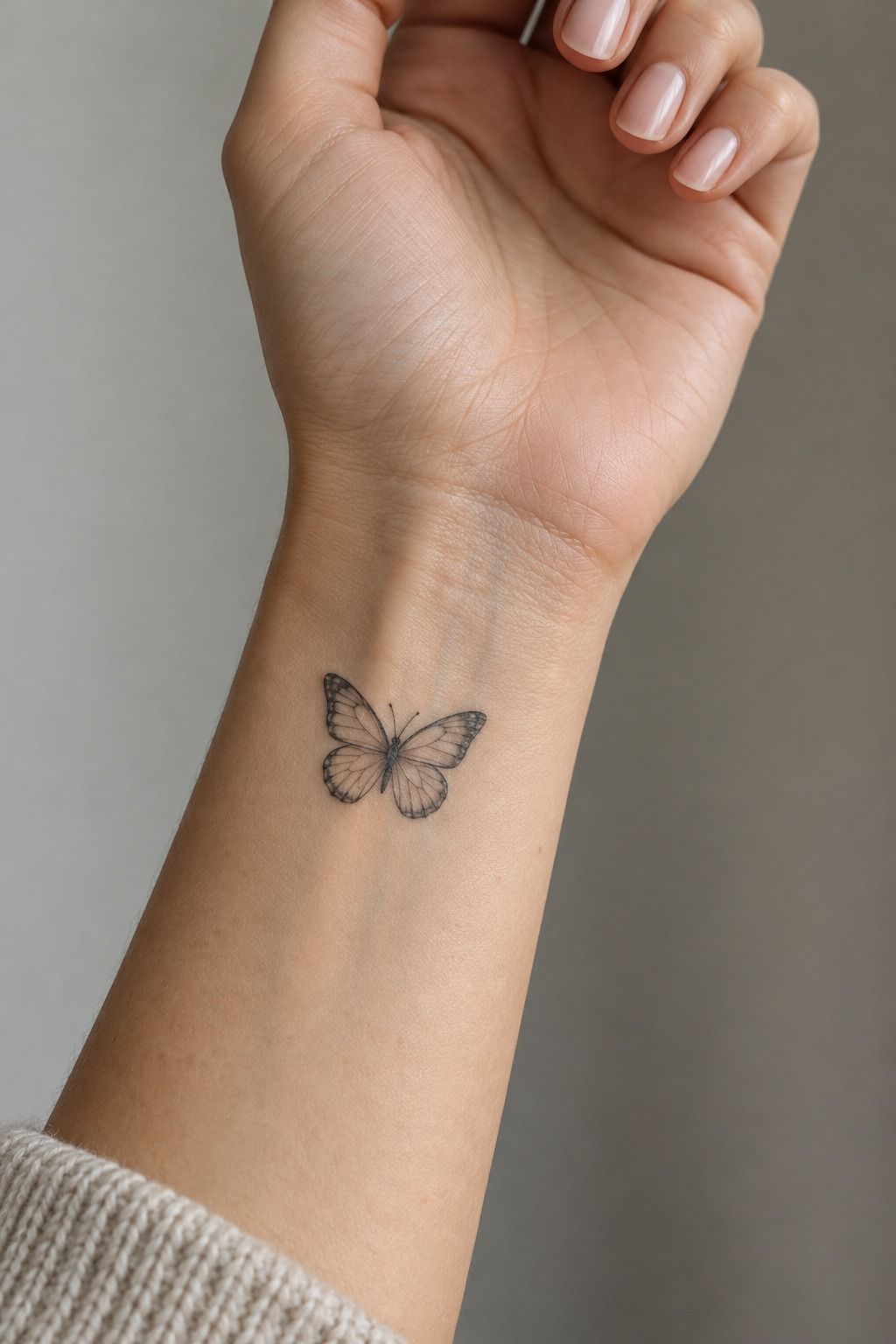
A butterfly emerging from fine shading can represent change without relying on a loud symbol. Terracotta, stone, and olive shading beneath powerful black contrast can make the design feel raw, expressive, and personal.
The inner forearm is often more tolerable than the sternum, feet, or ribs, and it offers enough space for a symbolic composition. Decide whether the butterfly faces toward your wrist or elbow because that small choice changes how the design reads to you each day.
The strongest symbolic tattoo is the one you can explain in your own words. It can feel sacred without needing a paragraph of symbolism, and it can remain meaningful even when the original moment has changed.
For placement references, compare these small butterfly arm tattoos before choosing a custom direction. A personal version should feel iconic to you, not copied from someone else.
The Negative-Space Method
I’ve learned that delicate tattoo design is less about removing detail and more about deciding which detail earns its place. A butterfly needs a readable body, a clear outer shape, and intentional open skin between the veins.
For a first tattoo, I’d rather see one crisp outline and three useful interior marks than twelve thin lines competing for attention. That approach can feel minimal and understated while still giving the design personality.
Open skin is not unfinished. It helps your eye understand the wings before it notices the smaller details, especially on a collarbone, finger, or ankle. That is why a simple structure often produces the most timeless result.
If symbolism matters to you, this butterfly tattoo meaning guide can help you consider transformation, freedom, memory, or renewal without forcing one interpretation onto your design.
Fine Line Over Fussy Detail
I’m firmly on the side of fine line over fussy detail for a first butterfly tattoo. A dainty piece can still be intricate, but every mark should have a job. I’d skip any design that needs a magnifying glass to understand.
Slightly stronger outer wings with lighter interior veins create a sharp healed silhouette. The exact line weight depends on your skin, placement, and artist, but visible separation should remain a priority.
A tattoo can be romantic and edgy at the same time. You don’t have to choose between a feminine butterfly and a fierce one; the difference comes from line weight, placement, and contrast.
These tiny fine line butterfly ideas can provide a personal starting point. Bring the concept to your artist and let them decide what should be enlarged, simplified, or removed for your skin.
Is Delicate Really the Right First Tattoo?
Yes, I think a delicate butterfly can be an empowering first tattoo when you choose the artist and placement patiently. The design is recognizable, adaptable, and easy to make personal through wing shape, color, shading, or position.
“Delicate” shouldn’t mean fragile or impossible to read. I’d choose meaningful linework over a miniature design packed with details that may blur together after healing.
My own mistake was treating fresh ink as the finished result. It isn’t. The surface may settle in two to three weeks, while the tattoo can take two to three months to fully heal.
That difference changes how I judge a first tattoo. Realistic healing expectations matter more than a perfect first-day appearance, particularly with fine lines, pale color, or placements exposed to friction.
Those are broad US references, and your artist, region, size, and placement can change the final answer. Shop minimums mean a tiny tattoo may not cost proportionally less than a larger one.
I’d also pay attention to how the design fits your daily life. A finger tattoo may feel bold and stylish, while a shoulder piece may be easier to protect; neither is automatically the better choice.
For more restrained ideas, browse these minimalist butterfly tattoo designs. The right reference should help you explain your taste, not pressure you into copying a finished tattoo.
A Few Things Worth Answering
How much does a delicate butterfly tattoo usually cost?
I’d expect about $50 to $100 for a shop minimum or roughly $100 to $250 per hour in the US. The final price depends on the artist, region, size, placement, and color. I’d request a quote before booking because a small design can still meet the studio minimum.
Is a delicate butterfly tattoo a good idea for a first tattoo?
I think it can be an excellent first tattoo because the motif is adaptable and personal. I’d choose a placement I can protect, review healed work from the artist, and remove details that may not remain readable. A patient first choice usually matters more than chasing the smallest possible design.
How do I choose a tattoo artist for a delicate butterfly tattoo?
I’d look for healed fine-line work, consistent line quality, and examples on skin tones similar to mine. I’d also check whether the artist explains scale, placement, and aftercare clearly. A fresh tattoo can look impressive, but healed portfolio work tells me far more.
How much do delicate butterfly tattoos hurt?
I’d expect the sensation to vary by person and placement. Ribs, feet, hands, and sternum often feel more intense, while the forearm, thigh, and shoulder are commonly more tolerable. Placement sensitivity should influence my decision, but it wouldn’t be the only factor.
How long does a delicate butterfly tattoo take to heal?
I’d plan for about two to three weeks of surface healing and two to three months for complete healing. I’d wash gently, moisturize as directed, avoid swimming, and protect the tattoo from direct sun while the skin settles. Consistent aftercare gives the design its best chance to heal cleanly.
Where I’d Start First
If I had to pick one, I’d start with the fine line butterfly along the collarbone. It feels personal without being overly exposed, and the placement gives the wings enough space to stay crisp.
I’d choose a classic silhouette, a slightly tilted body, and fewer interior veins than my first impulse suggests. That combination feels feminine, stylish, and durable enough to remain meaningful long after the appointment.


3 responses to “11 Delicate Butterfly Tattoo Choices For A First Tattoo Without Regret”
[…] you’re comparing tiny placements, browse these delicate butterfly tattoo references before choosing. They’ll help you decide whether this intimate, feminine placement feels personal […]
[…] You’ll need to be realistic about longevity. Fine lines may widen, and pale color can fade faster with repeated UV exposure, so sunscreen matters once the tattoo has healed. For another animal design with delicate movement, compare it with this delicate unique butterfly tattoo guide. […]
[…] It’s a tattoo that stays readable, personal, and comfortable in your actual life. For more directions, compare these fine line butterfly tattoo designs. […]