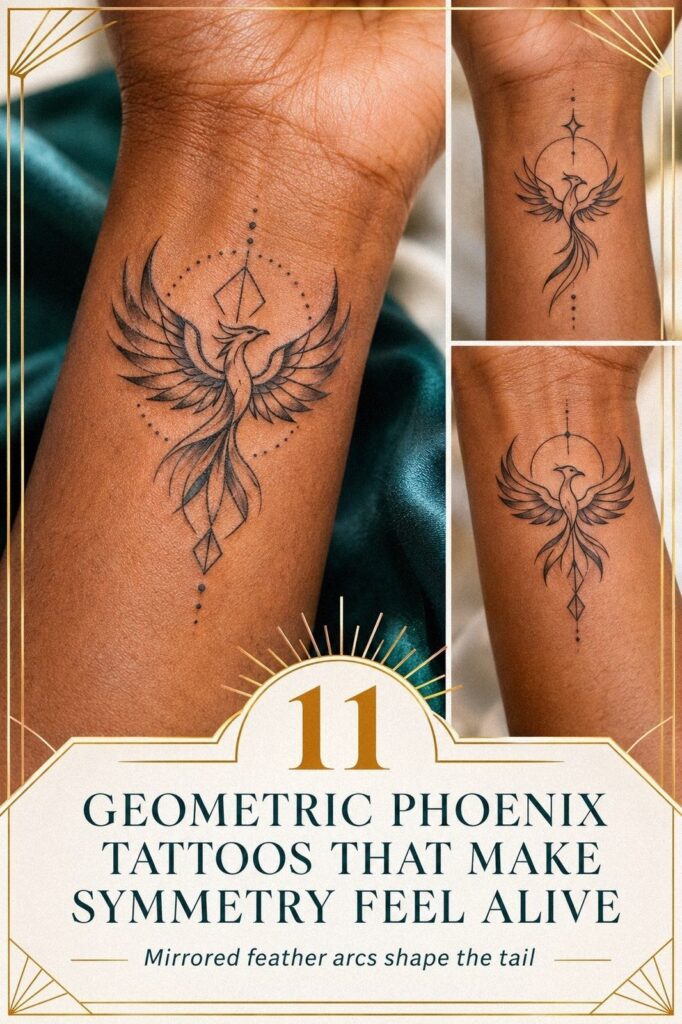
Geometric phoenix tattoos can support a lower-pain plan, but placement matters more than the bird. I once chose a tiny design because it looked easy, then learned that thin lines over bone can feel fierce. These 11 ideas pair crisp geometry with smarter placement, scale, and aftercare. Start with anatomy, not the trend.
Quick answer: choose a readable silhouette, a tolerable placement, and an artist whose healed work matches your goals. That combination gives you better value than chasing the smallest possible tattoo.
- Small Geometric Phoenix Wrist Tattoos
- Can a Geometric Phoenix Chestpiece Work on the Ankle?
- Fine-Line Geometric Phoenix Rib Tattoos
- Go Bold With Blackwork Geometric Phoenix Sleeve Designs
- The Flash-Sheet Problem: Geometric Phoenix Back Tattoos
- Finger Tattoos: Minimal or Too Fragile?
- Build the Mandala Around the Phoenix
- Watercolor Meets Sharp Geometry
- Why Thigh Placement Changes the Whole Shape
- The Neck Test
- Rebirth and Resilience: A Phoenix With Meaning
1Small Geometric Phoenix Wrist Tattoos
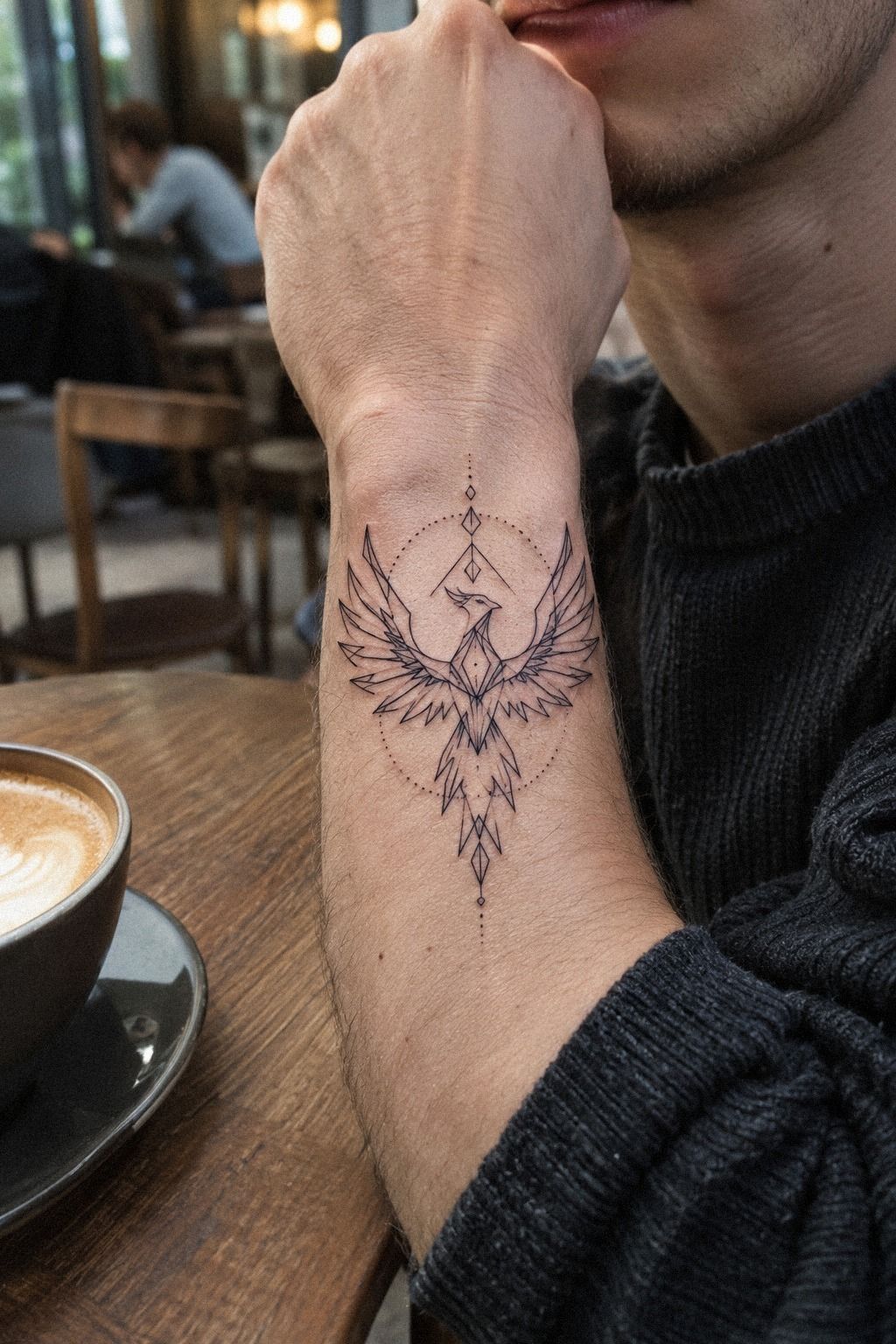
A small wrist phoenix works when you keep the silhouette precise geometry and let the wings follow the natural length of the wrist. Warm terracotta, muted olive, and soft cream can create a striking color story without heavy fill. You’ll want enough open skin around the bird so the geometry doesn’t blur into one dark mark later.
The wrist placement is visible, personal, and easy to compare with your stencil before you book. It isn’t automatically painless, though. The skin is thin, and the area can feel sharp, so a compact design may shorten the session and protect your budget.
I’d choose a fierce head, two angular wings, and one tail point instead of a crowded body. The small phoenix silhouette should still be readable from a few feet away. If you’re drawn to compact designs, compare it with these tiny phoenix tattoos before deciding.
Keep the line weight crisp and avoid placing every feather inside the bird. Your artist can use three or four intentional interior marks, then leave the rest open. A dainty tattoo needs breathing room, not decoration packed into every corner.
If you’re planning your first tattoo, ask for a stencil test and look at your wrist while it bends. You’ll notice whether the phoenix stays balanced or twists awkwardly. I’d rather see a simple, polished bird that ages clearly than an intricate miniature that loses its shape.
2Can a Geometric Phoenix Chestpiece Work on the Ankle?
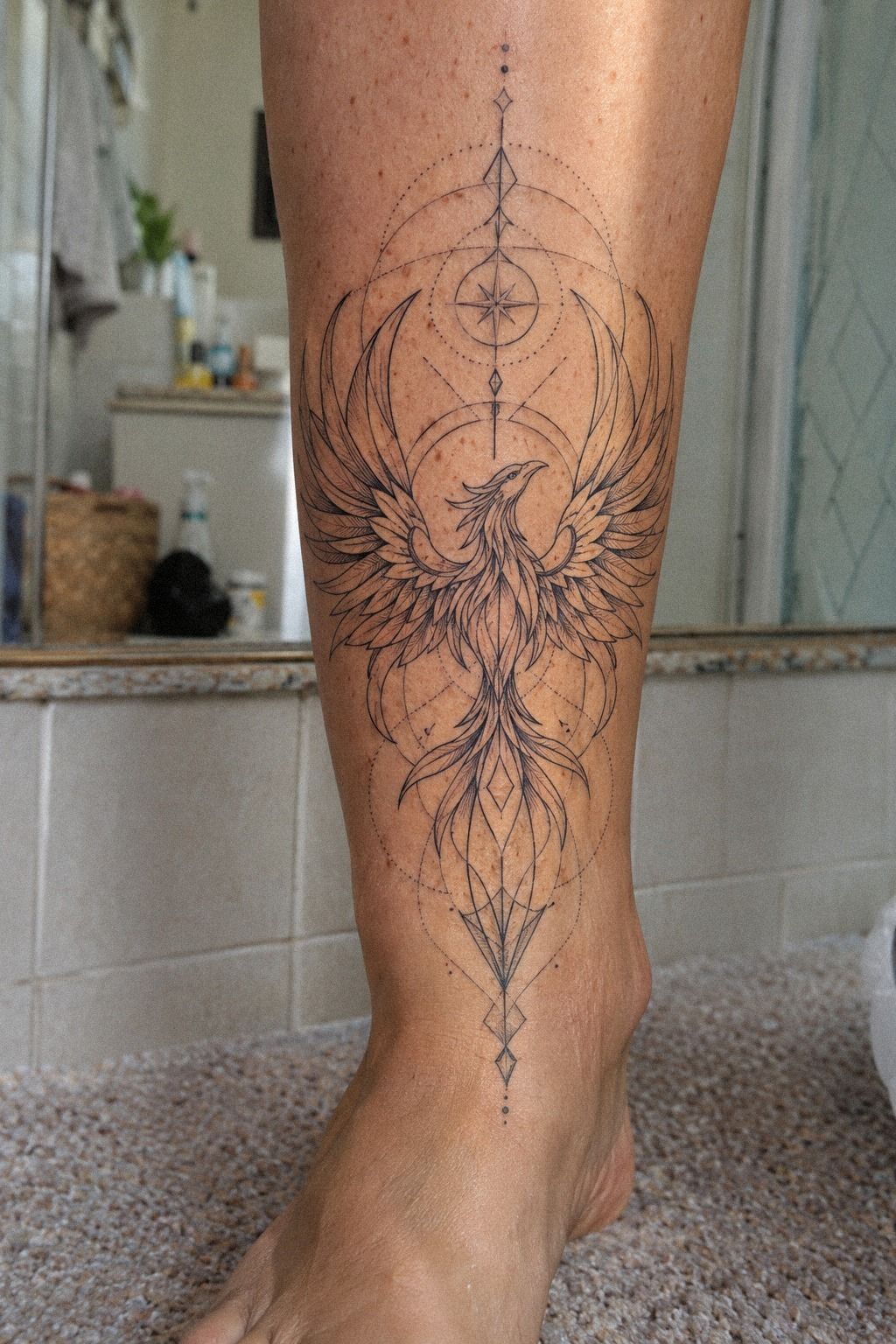
Sacred symmetry belongs naturally across the chest, where the wings can spread from a central point. A clay, warm-cream, and muted-gold palette gives the design an elegant, symbolic quality. The ankle can carry a smaller adaptation, but compressing this ornate composition would sacrifice its balance.
I’d keep the chestpiece placement centered on the sternum or slightly above it, depending on your anatomy and comfort. The phoenix can have a sacred central diamond, mirrored wings, and sharp tail geometry. It should feel powerful without becoming dense.
An ankle version would need a minimal body, a single wing shape, and fewer interior marks. That makes it more delicate and more vulnerable to fading through friction. If you want the full symmetrical idea, I’d choose the chest and discuss the scale honestly with your artist.
3Fine-Line Geometric Phoenix Rib Tattoos
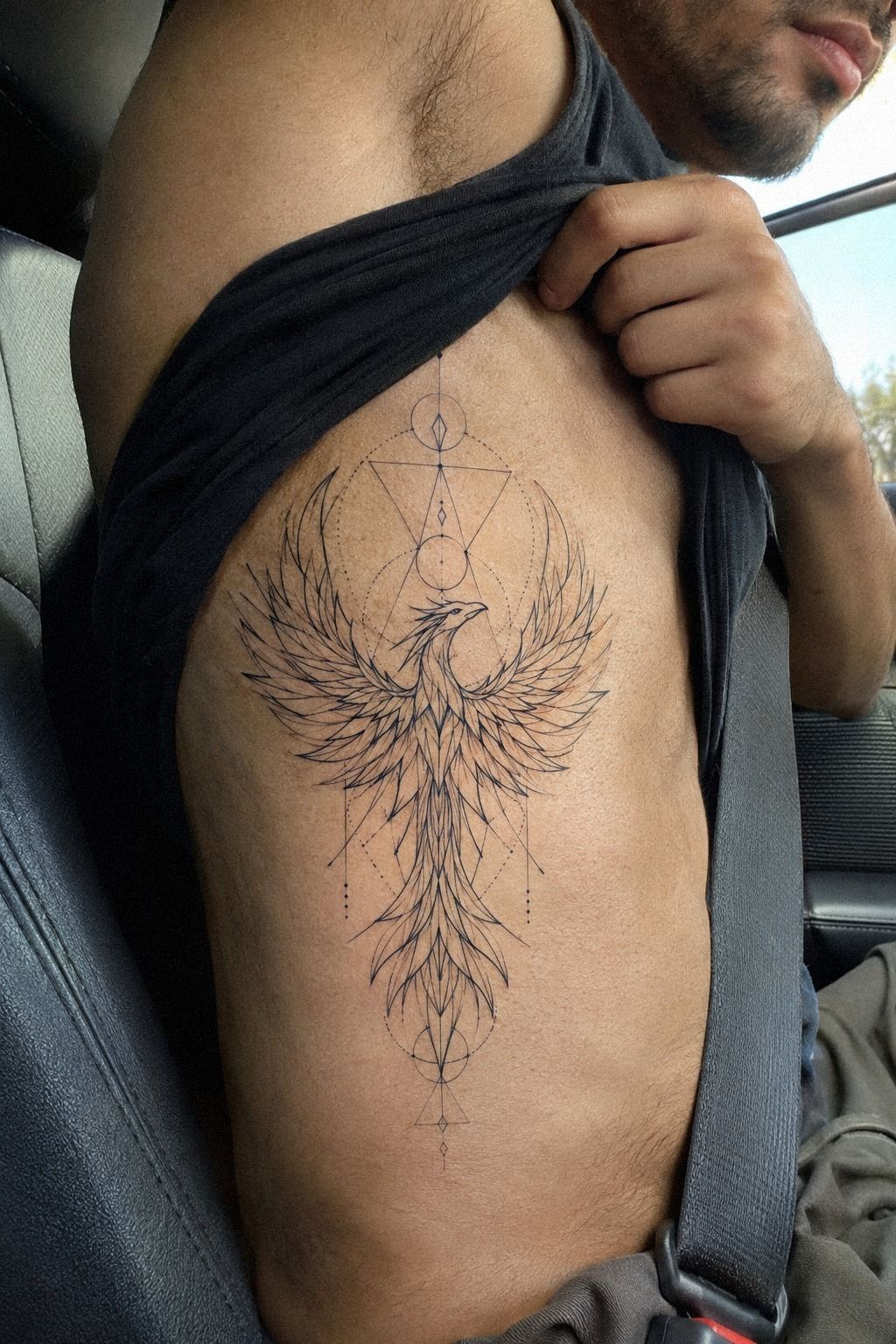
Fine-line ribs create a haunting setting for a phoenix because the design can follow the curve of the body instead of sitting like a sticker. Plum, soft grey, and muted rose-gold accents can make the fine-line geometry feel delicate while preserving its sharp structure. You’ll want the bird to feel longer than it is wide.
The rib placement is one of the more painful choices in this list. The skin is close to bone, and breathing moves the area while you’re being tattooed. I’d keep the first session focused and avoid an oversized composition that turns a meaningful idea into a marathon.
A narrow phoenix with a pointed crown, open wings, and a long geometric tail will flow better than a round mandala. The single-needle detail can be expressive, but it should support the silhouette rather than compete with it. If you’re unsure, ask for two stencil sizes and compare them in a relaxed posture.
You may love how the design looks fresh, but your artist should also show healed examples. Healed linework can soften, and very fine lines may widen with time. That doesn’t make the tattoo a bad choice, but it means you shouldn’t cram ten tiny marks into every feather.
A rib phoenix should also respect your breathing pattern. The wings can angle slightly forward, while the tail follows the natural length of the side. That flowing adjustment often feels more polished than forcing perfect symmetry onto a moving area.
For a related animal structure, look through these geometric snake tattoos and study how curves and angles share the skin. A polished rib phoenix should feel flowing, not rigid. If you’re sensitive to pain, the forearm or thigh will usually be a gentler starting point.
4Go Bold With Blackwork Geometric Phoenix Sleeve Designs
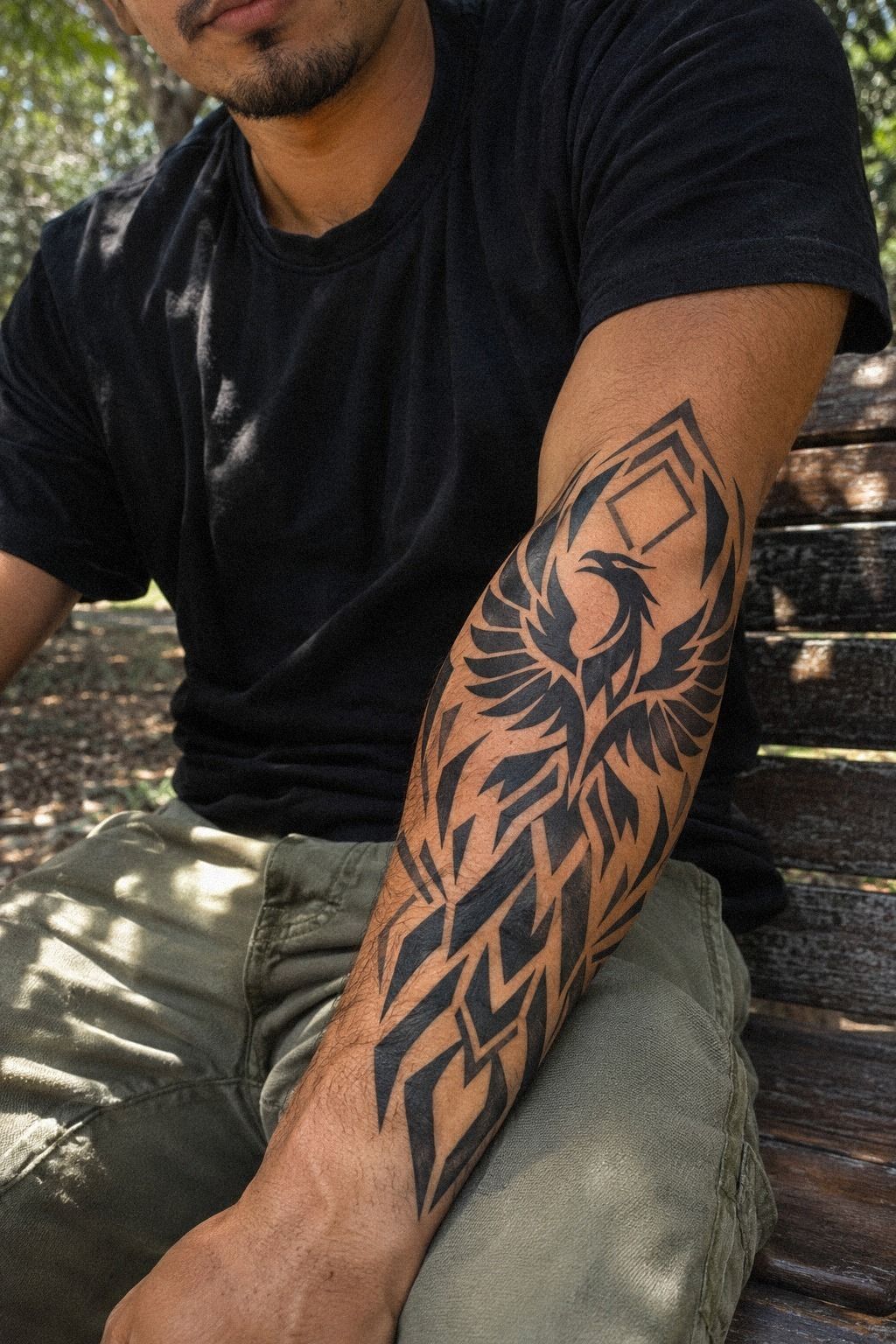
A bold forearm sleeve gives the phoenix room to look powerful. Bold blackwork creates strong geometric sections that can be read from a distance. This is the place for fierce wings, solid anchors, and larger negative gaps between the forms.
The solid dark fill should be deliberate, not scattered. A deep navy-black body with small white-skin breaks can preserve the force of blackwork while giving the design more rhythm.
I’d put the darkest area near the body or lower wing, then let the tail break into sharp open shapes. Go bold!
The forearm sleeve is practical because you can plan it in stages. If you’re concerned about sitting through a long appointment, start with the phoenix body and add supporting geometry later. Your artist can keep the first section complete instead of leaving you with a partial outline.
Controlled greywash shading may soften the transition between solid pigment and bare skin, but don’t let it turn the phoenix muddy. I’d choose crisp borders and a few controlled grey areas over an all-over haze. The contrast will help the design stay readable as the skin changes.
You can pair this idea with a broader animal theme by saving these geometric owl tattoos. The owl reference can help you compare eye shapes, wing angles, and blackwork density. For a lower-pain session, the outer forearm may offer better value than spending more time on ribs, feet, or sternum.
5The Flash-Sheet Problem: Geometric Phoenix Back Tattoos
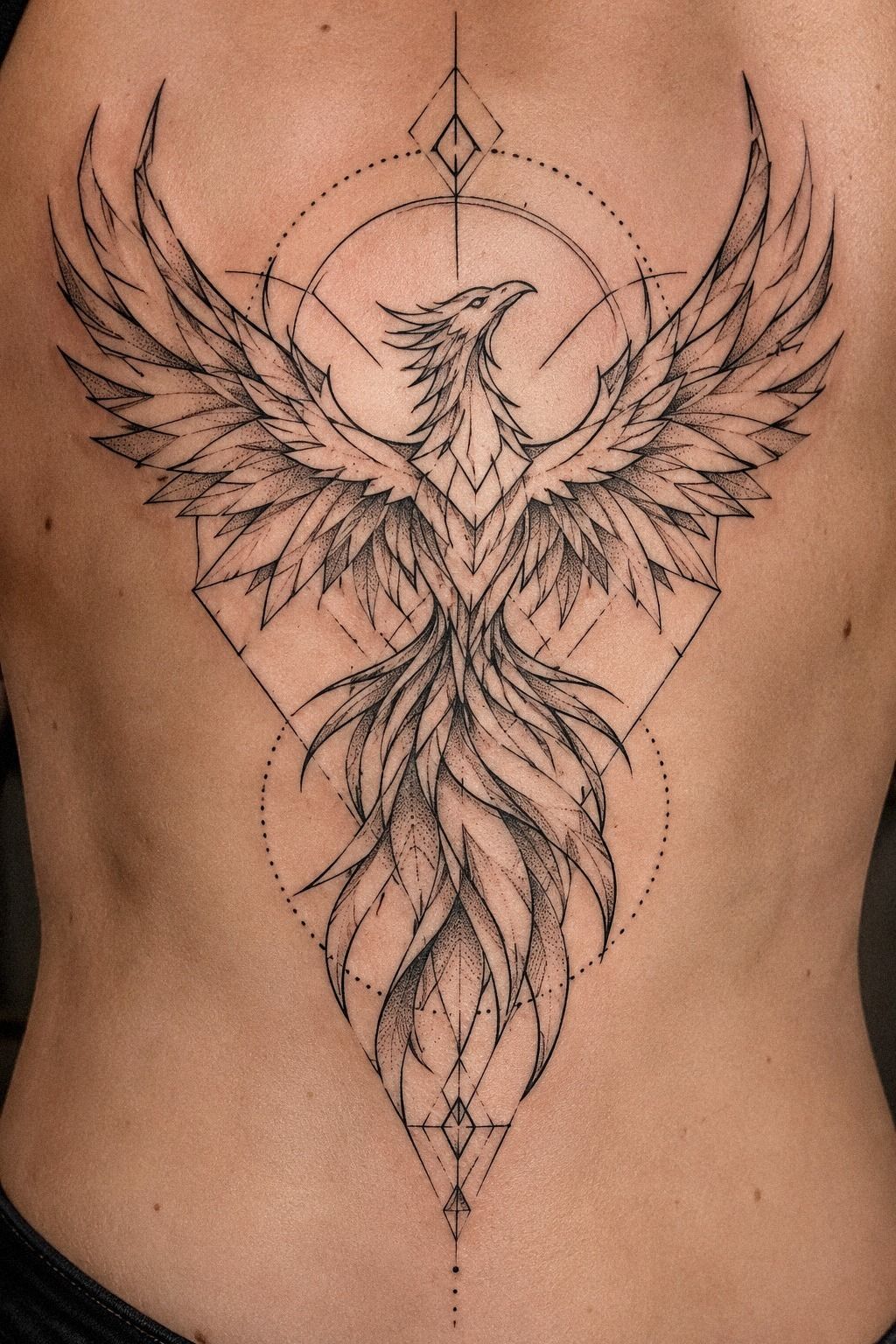
A back phoenix deserves more planning than a quick flash-sheet choice. Radiant angles can travel outward from the spine, while emerald, warm gold, and cream accents give the design an iconic quality. The wings should follow your anatomy rather than stopping at an arbitrary rectangle.
The back placement gives you space for a larger symbolic bird, but it also makes stencil alignment important. I’d test the central point while standing naturally and keep the tail aligned with the body’s length. A daring composition can still feel understated when the negative space is intentional.
You can compare wing widths, tail shapes, and color density before choosing one direction. Back symmetry is especially important if you want mirrored wings. Slight asymmetry can feel expressive, but accidental imbalance usually reads as unfinished.
A full back design may require several appointments. If that sounds excessive, begin with the phoenix itself and leave the surrounding rays for later. A timeless central bird is better than an ornate plan you cannot comfortably complete.
6Finger Tattoos: Minimal or Too Fragile?
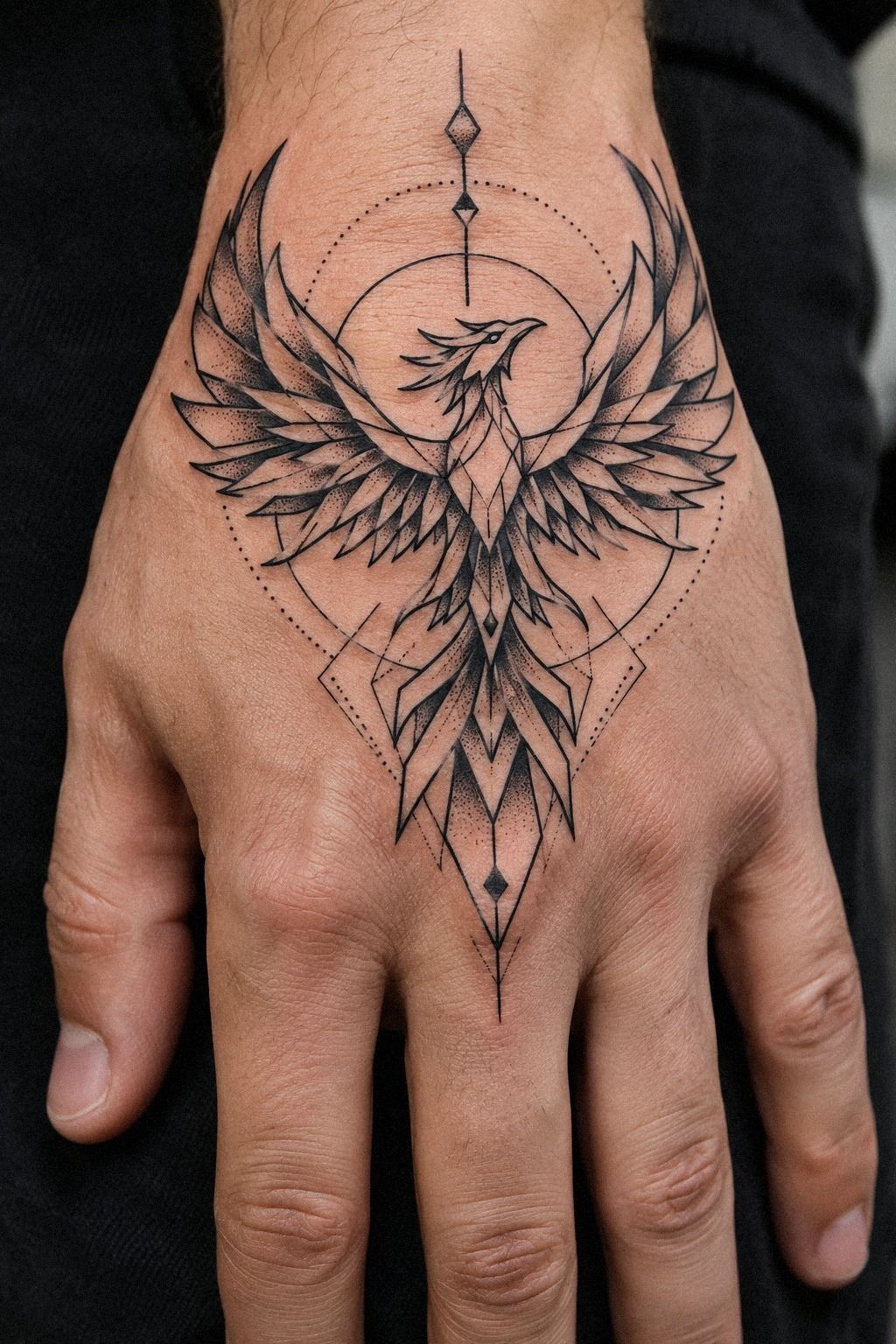
A finger phoenix has to be minimal because the surface is narrow and constantly used. Forest green, rust, and warm brown can give minimal linework a vibrant, earthy character without requiring dense shading. You’ll want a simple head, one angular wing, and a tail that follows the finger rather than wrapping randomly.
The finger placement is visible and expressive, but it can be demanding. Hands wash, bend, rub against objects, and meet sunlight often.
I’d avoid promising that every fine detail will stay unchanged. A bold, clear symbol is the better choice if you want the tattoo to remain legible.
One strong option is a small body with a negative-space triangle between the wings. That opening gives the phoenix a recognizable center without requiring dense shading.
The result can feel edgy and understated at the same time. If you’re considering an even smaller motif, compare it with these minimalist phoenix tattoos.
The tiny phoenix head should face toward the hand’s natural movement. Ask your artist to show the stencil while your finger is straight and bent. But don’t make the bird so small that the eye and beak become a dark dot after healing.
This is a dainty idea with a strong personality, but it may not be the best value if you want perfect detail for years. It’s one of the placements I’d choose only after seeing healed finger work from the artist. Be honest about your priorities!
7Build the Mandala Around the Phoenix
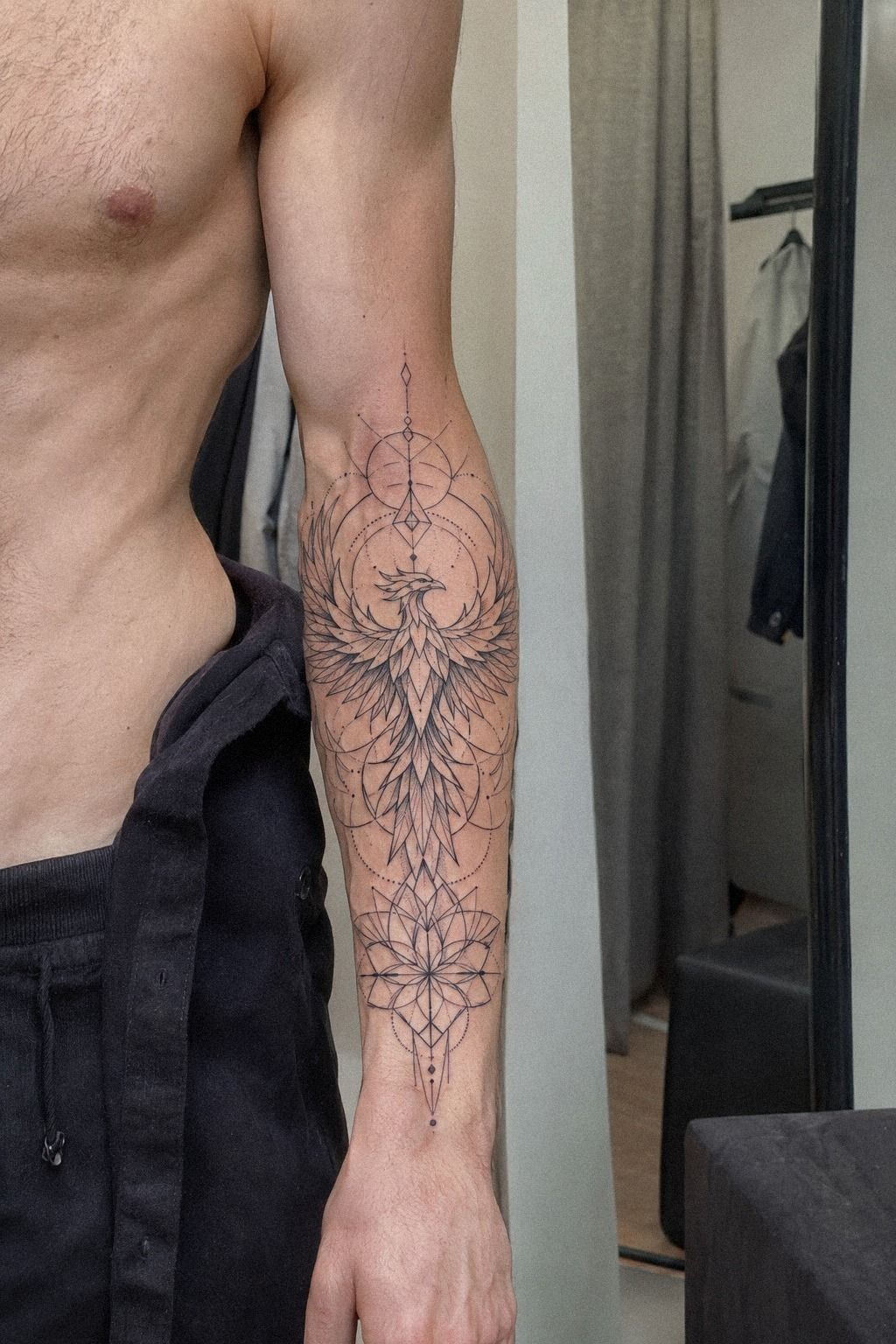
An intricate mandala can work beautifully on the forearm because the area gives the design a clear vertical direction. Dusty rose, charcoal, and muted gold create an ornate but balanced palette around the mandala geometry.
I’d place the phoenix at the center and let the outer marks echo its wings rather than compete with them. A symbolic circle, pointed petals, and a few open gaps can make the design feel sacred without turning every inch into detail.
The forearm placement gives you a practical balance between visibility and comfort. Keep the central bird readable first, then add the mandala elements in measured layers. This keeps the composition graceful and protects the meaning of the phoenix.
A mandala needs restraint. If each ring has a different pattern, the tattoo can become gritty instead of polished. Choose one repeated shape and one contrasting break, then let the phoenix remain the expressive focus.
8Watercolor Meets Sharp Geometry
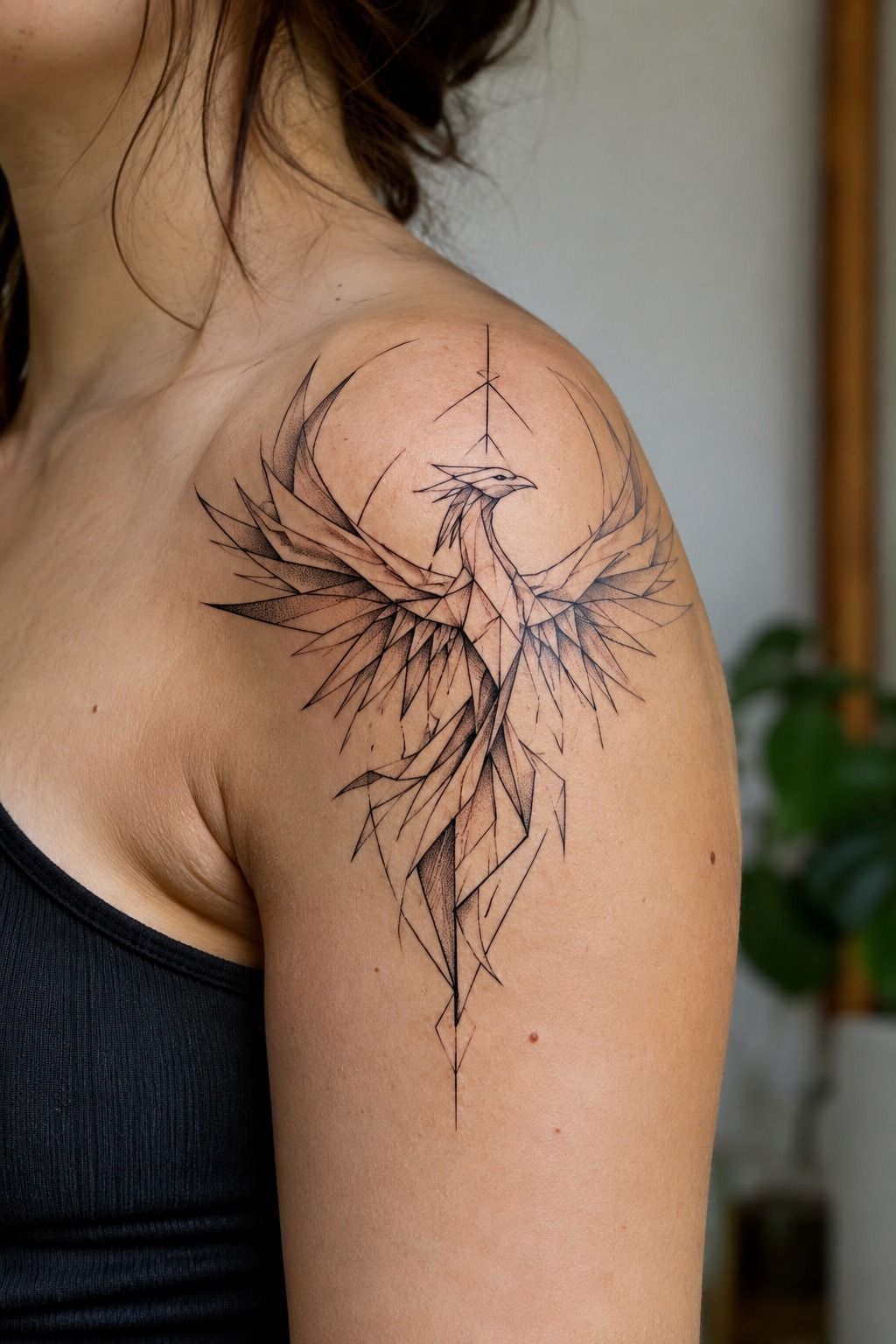
Watercolor color can make a geometric phoenix feel vibrant without abandoning structure. A warm-white field with camel and black accents can add a romantic softness while the main silhouette remains readable.
The sharp linework should be completed first as the visual skeleton. I’d keep the outline black, then use a restrained camel wash around the wings and tail.
That contrast creates an elegant look while keeping the phoenix readable. And yes, the contrast matters!
A shoulder gives you a broad, curved surface, so the shoulder placement can carry an open-wing design without forcing it into a narrow shape. If you’re worried about discomfort, the outer shoulder is commonly more tolerable than the ribs or sternum. Still, every person’s sensitivity differs.
The camel pigment can suggest warmth, movement, or renewal without overpowering the black structure. I’d skip a full rainbow wash because it can compete with the linework. A focused color range will feel stylish and polished.
You can compare the approach with these watercolor phoenix tattoos. Look for healed examples, not only fresh work. A watercolor phoenix can be empowering, but the black structure is what keeps the idea from becoming vague.
9Why Thigh Placement Changes the Whole Shape
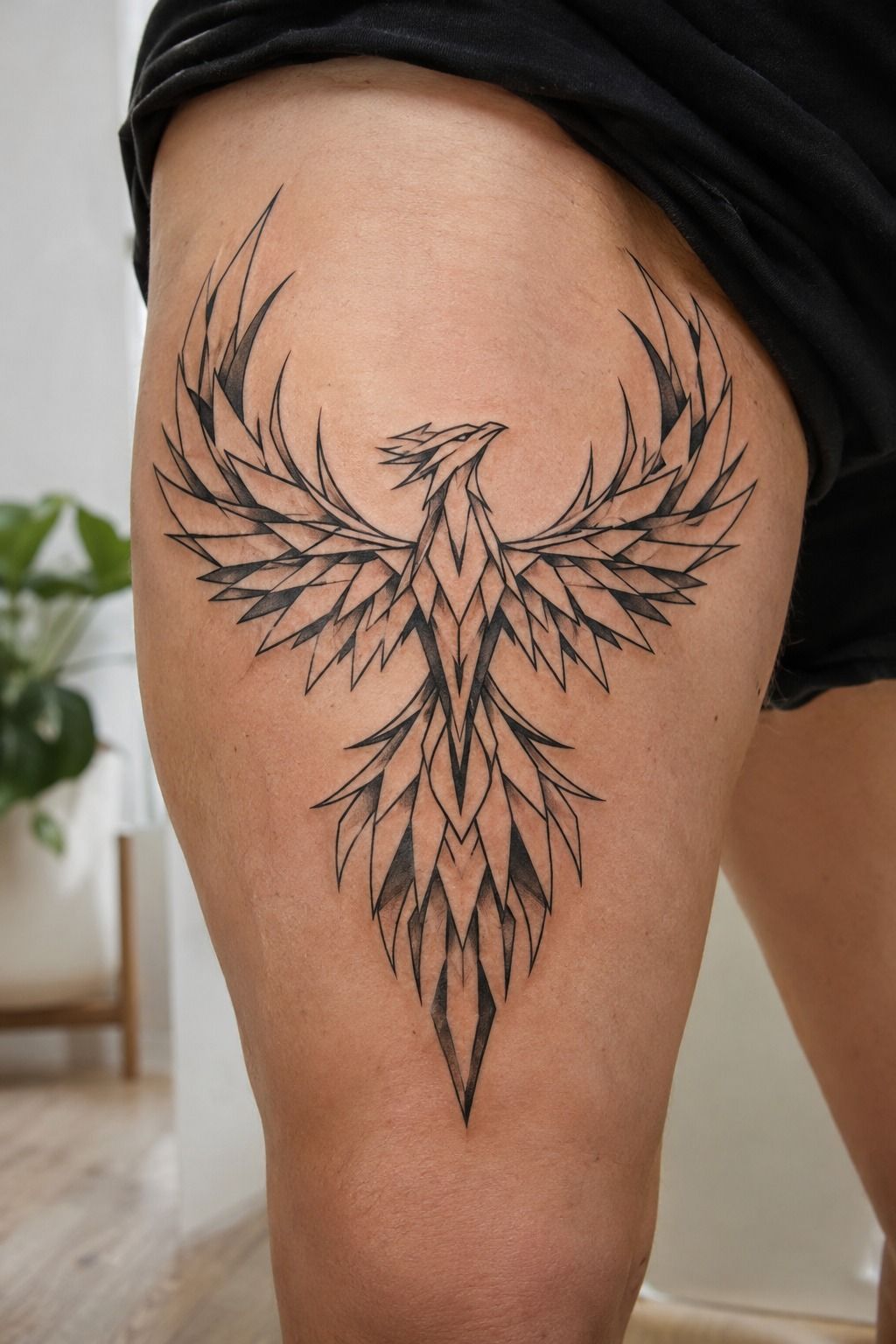
A thigh phoenix gives you enough space for flowing wings and a longer tail without forcing every angle into a tiny design. Midnight blue, copper, and ivory can make flowing geometry feel vibrant and graceful. You’ll want the bird to feel like it’s rising, not sitting flat.
The thigh placement is often a more tolerable choice than bony areas, especially if you’re planning a larger session. That doesn’t mean you should rush. Ask for a stencil and walk around with it briefly so you can see how the design moves when your leg bends.
The phoenix wings can open toward the hip while the tail points toward the knee. I’d choose that vertical flow over a centered circle because the leg already gives you a strong direction. The result feels graceful and powerful without needing excessive ornament.
Controlled navy-grey shading can give the body weight while leaving the wing edges open. If you’re after a lower-pain appointment, a thigh design may let you keep the image substantial without placing it on ribs or feet. For a smaller version, these small phoenix tattoos offer useful scale references.
Your artist should show how the design will move from standing to seated positions. A tattoo can appear balanced while standing and awkward when the leg turns. Choose a meaningful silhouette first, then let the details follow your anatomy.
10The Neck Test
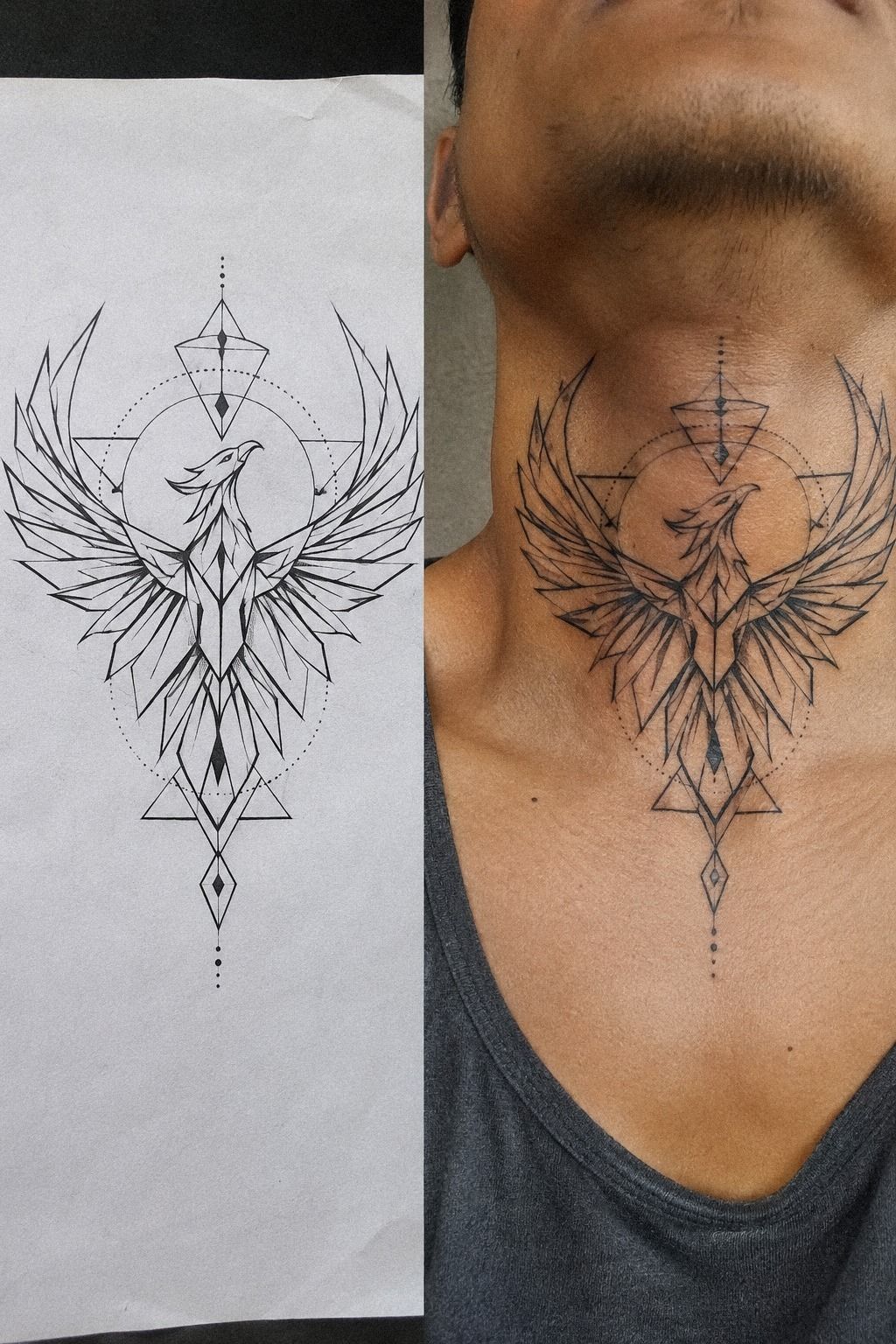
A clean split between stencil planning and healed results is useful because it shows how a clean stencil becomes a real tattoo after the skin settles. You’ll want to judge both stages, not only the fresh outline.
A healed neck tattoo can look crisp, edgy, and highly visible, but the neck isn’t the safest choice for everyone’s first experience. Skin thickness, sun exposure, and personal sensitivity all matter. I’d ask your artist for healed neck examples before you commit.
The unique placement makes the phoenix feel iconic, especially when the head sits below the hairline and the wings follow the neck’s width. Sage green, warm cream, and soft brown can make the design feel expressive without relying on heavy saturation.
A crisp outline is essential here. I’d avoid a dense mandala with many tiny intersections because the neck moves constantly. One center point, two wings, and a sharp tail will give you an expressive result that doesn’t depend on fragile micro-detail.
The neck skin can be exposed to sunlight, collars, and friction during healing. Follow your artist’s aftercare instructions, wash gently, moisturize as directed, and avoid swimming until the surface has healed. A sleek tattoo should still look personal when the stencil is long gone.
11Rebirth and Resilience: A Phoenix With Meaning
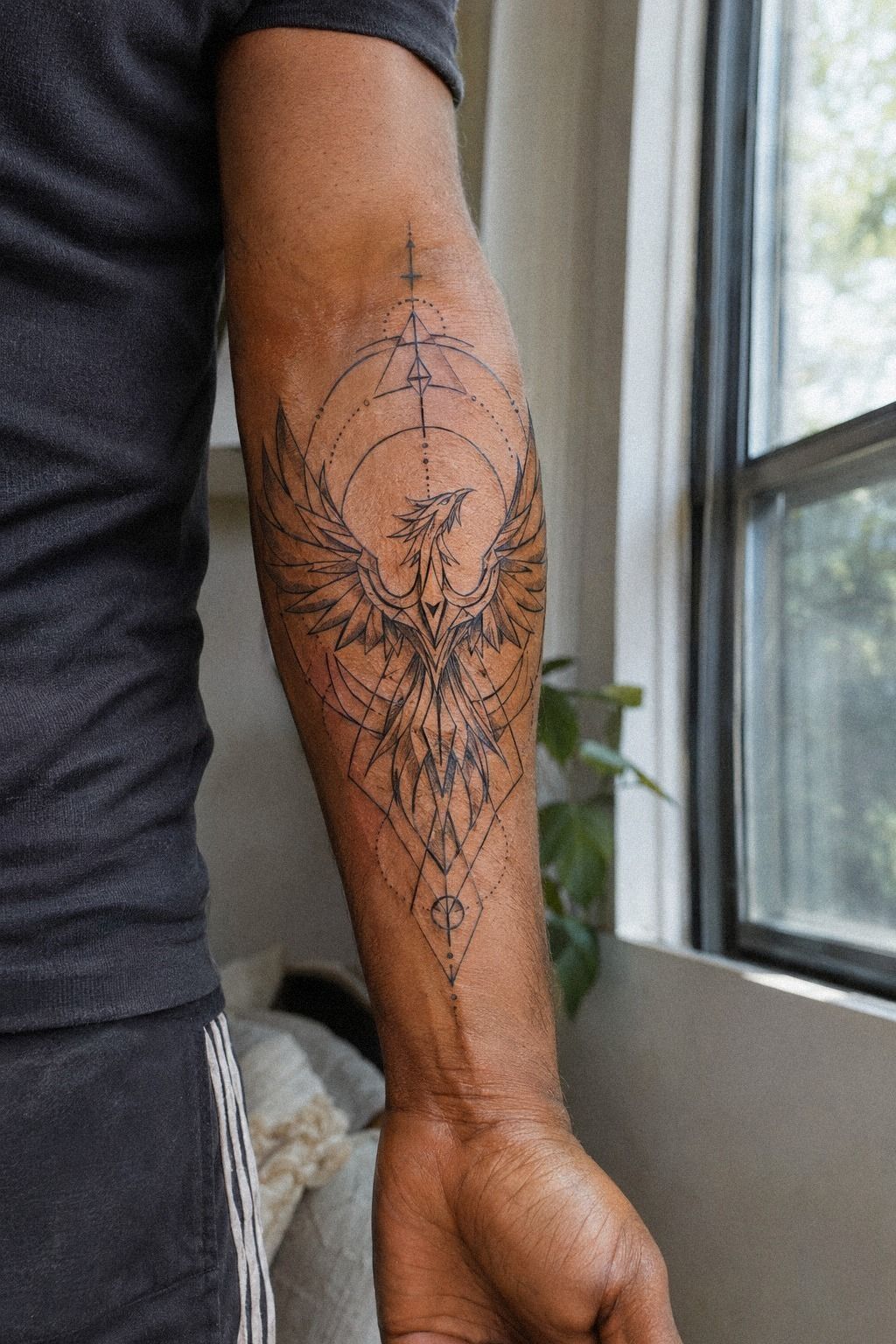
This phoenix uses terracotta, muted olive, and soft cream to create a resilience symbol with an earthy, personal character. The bird can represent survival, a new chapter, family, or personal power.
An empowering phoenix doesn’t need every traditional flame or feather. You can make the meaning more personal by choosing one feature that carries the story: a rising tail, an open wing, or a central point that suggests renewal.
The strongest symbolic designs are often understated. A romantic reference, a sacred detail, or a sharp geometric break can say more than a crowded collection of symbols. Your artist should understand why the phoenix matters before refining the drawing.
A terracotta-and-olive concept can feel classic without becoming predictable. If you want a more masculine or feminine direction, change the line weight and wing posture rather than forcing a stereotype. The result can remain personal, timeless, and meaningful.
Start With Placement, Not Pain
Pain matters, but it shouldn’t be the only decision. Placement tolerance affects session length, concentration, and how confidently your artist can place the geometry. A design that costs slightly more but heals clearly may offer better value than a rushed bargain.
Outer forearm, thigh, and shoulder placements are often easier starting points than ribs, feet, hands, or sternum. You’ll still feel the process, and everyone reacts differently. Ask how long the appointment may last so you can compare the cost with the time involved.
I’d also consider visibility, clothing friction, and how often the area meets sunlight. A daring neck tattoo may suit one person, while a personal thigh design may make more sense for another. There isn’t one universally correct placement.
Choose the location that supports the design’s strongest feature. A delicate wrist phoenix needs open spacing, while an ornate back phoenix needs room for symmetry. That small decision can make the finished tattoo feel polished instead of forced.
How Geometry Ages on Skin
Geometric tattoos depend on spacing, contrast, and controlled line weight. Negative space gives each wing and feather room to remain distinct as the skin changes. If every gap is filled, the phoenix may lose clarity sooner.
Healed work tells you more than fresh work. Healed examples reveal whether the artist protects symmetry, chooses sensible scale, and understands how fine lines settle. That evidence is worth reviewing before you place a deposit.
Fine lines may soften, pigment may settle, and small gaps may narrow. That’s normal, but it’s also why a readable silhouette matters. A timeless design plans for the healed tattoo, not only the first-day result.
Color can change the mood as it settles. Pigment contrast helps separate wings, rays, and tail marks when the palette includes softer shades. Ask your artist which colors will hold the strongest definition on your skin and in your chosen placement.
Cost, Value, and Session Length
Your total cost depends on size, placement, detail, color, and the artist’s rate. Session planning can help you choose between one long appointment and two shorter visits. A smaller design isn’t always cheaper if it requires fragile detail and careful precision.
Here’s a practical planning range for the United States. Rates vary by city, artist, demand, and shop policy.
Ask whether the quote includes design time, touch-up policy, and the shop minimum. Budget clarity keeps the decision practical. I’d rather simplify the tail or reduce color than choose an artist whose work doesn’t match the design.
A quote is only useful when you understand what it covers. You’ll want the expected deposit, appointment length, payment schedule, and possible second-session cost in writing. That makes the choice more straightforward.
A smaller tattoo can still be iconic when the silhouette carries the meaning. Don’t pay for ornate detail that disappears into a difficult placement. Spend where it protects line quality, anatomy, and long-term readability.
Choosing Color Without Losing Structure
Color should reinforce the phoenix rather than hide its geometry. Color restraint keeps the silhouette crisp, especially when you’re combining watercolor with black linework. Terracotta, copper, camel, or a single jewel tone can suggest flame without turning the design into visual noise.
Ask how the pigment may settle on your skin and placement. Pigment selection affects both the initial cost and the long-term balance of the piece. A focused palette can be more stylish than a crowded range of shades.
A feminine or masculine reading shouldn’t dictate the palette unless that matters to you. The design can remain personal, elegant, and strong through its shapes rather than relying on a stereotype.
For a sharper result, use one dominant color and one supporting accent. An emerald wing with cream gaps feels daring; a plum phoenix with grey shading feels haunting. The best choice depends on your skin, placement, and the artist’s healed color work.
Vet the Artist Before You Pay
Look for an artist whose portfolio includes geometric animals, your preferred skin tone range, and healed examples. Portfolio evidence matters more than a single striking design. You’ll want to see consistent symmetry across different bodies and placements.
During the consultation, ask how the artist handles stencils, line weight, touch-ups, and movement. Consultation questions can reveal whether they understand your priorities. If the answers feel rushed, keep looking.
Pay attention to how they discuss limitations. A polished artist should explain when a tiny mark may spread, when color may soften, and when a larger scale will protect the design. That honesty is more valuable than a promise of perfect permanence.
I’d also ask whether they have completed phoenixes, mandalas, blackwork, or watercolor geometry recently. Relevant experience matters because each style asks for different decisions. You want someone who can protect both the symbol and the anatomy.
Aftercare That Protects the Design
Follow the care instructions your artist gives you, including washing, moisturizing, clothing, and sun exposure. Healing guidance protects the crisp edges that make geometric tattoos work. Don’t pick at peeling skin or return to swimming too early.
Plan the appointment around a few quiet days if possible. Aftercare timing is especially important for fingers, necks, and areas that rub against clothing. Good care doesn’t guarantee unchanged lines, but it gives the tattoo its best start.
If anything looks unusually painful, swollen, or irritated, contact a qualified medical professional. Your artist can explain normal healing, but they shouldn’t replace medical advice when something seems wrong.
Sun protection matters after healing, too. UV protection can help preserve contrast and softer color accents. Once your artist confirms the tattoo is fully healed, use appropriate sunscreen whenever the area will be exposed.
The Three-Anchor Geometry Rule I Trust
I’ve learned that the strongest phoenix tattoos usually have three anchors: one dominant silhouette, one meaningful placement, and one line-weight decision. The geometric structure should be readable before anyone notices the small details. If the wings disappear into the surrounding marks, the design has lost its first job.
The phoenix itself is a symbolic subject, but symbolism doesn’t rescue a weak drawing. You’ll want to decide whether your tattoo represents survival, a new chapter, family, or personal power.
I’d write that reason down before your consultation. It helps you reject details that look impressive but don’t belong to your story.
The second anchor is saturation. Black saturation can create a bold focal point, while open skin keeps the composition light enough to age with clarity.
Fine-line details can be elegant, but they shouldn’t carry the entire image alone. A strong artist knows when to let one line disappear.
The third anchor is placement. Fine-line details may soften or widen over time, and UV exposure can affect every tattoo. That’s why I’d choose a tolerable area with enough room for the design rather than forcing a tiny phoenix onto a painful, busy spot.
The fourth consideration is color discipline. Accent color should guide attention toward the phoenix’s center instead of competing with the wings. A restrained terracotta, plum, navy, or emerald detail can make the tattoo feel vibrant without weakening its structure.
You don’t need the largest tattoo to make the strongest statement. You need a design that survives the first excitement and still feels personal later. For another geometric comparison, save these geometric unique butterfly tattoos and study how restraint can make a symbol more powerful.
The Questions Worth Answering First
How much does a geometric phoenix tattoo usually cost?
I’d budget about $100 to $300 for a small or medium geometric phoenix in the US, though the artist and region matter. Shop minimums often run about $50 to $100, while hourly rates may be $100 to $250. A written quote protects your budget.
Are geometric phoenix tattoos a good idea for a first tattoo?
Yes, I’d consider one on an outer forearm, thigh, or shoulder where sessions can feel more manageable. Clear geometry makes the design easy to understand, and you can choose a compact size.
Your artist should still show healed linework before you book. Browse these geometric owl tattoos for structure ideas.
How do I choose a tattoo artist for geometric phoenix tattoos?
I’d choose an artist with clean geometric work, healed photos, strong hygiene practices, and a portfolio that includes your preferred placement. Healed examples reveal real line quality. Ask how they handle symmetry, negative space, and skin movement before you pay a deposit.
How much do geometric phoenix tattoos hurt?
I’d expect ribs, feet, hands, and sternum to feel more intense because they’re close to bone or receive constant movement. Forearms, thighs, and shoulders are often more tolerable.
Placement controls the experience, but pain varies from person to person. These minimalist phoenix tattoos show ideas that can shorten a session.
How long does a geometric phoenix tattoo take to heal?
I usually allow about 2 to 3 weeks for the surface to heal and 2 to 3 months for complete healing. I’d wash gently, moisturize as directed, avoid strong sun, and stay out of pools during early healing. Consistent aftercare protects clean lines. See these small phoenix tattoos for compact designs.
What’s the best placement for geometric phoenix tattoos?
I’d start with the outer forearm, thigh, or shoulder when I wanted a more tolerable placement and readable geometry. Ribs, feet, hands, and sternum can hurt more.
Your best placement balances visibility, anatomy, and longevity, so ask for a stencil before deciding. These watercolor phoenix tattoos show how placement changes the design.
Can I do a geometric phoenix tattoo myself on a budget?
No. I wouldn’t tattoo myself or use an unlicensed setup to save money. Professional hygiene and consistent linework are worth the cost, especially for a design that depends on symmetry.
I’d save for a reputable artist, reduce the size, or choose a simpler version instead.
The One-Placement Rule I’d Use
If I had to pick one, I’d start with the outer forearm phoenix. It’s usually more tolerable than ribs or hands, gives geometry room to stay readable, and makes aftercare easier to manage. Pin the forearm idea for later and compare it with the geometric eagle tattoo guide before booking.
That choice gives you a striking, meaningful design without forcing every detail into a difficult placement. If the stencil still feels balanced when you move, the concept may be worth it.
Choose the placement that lets the phoenix remain personal, readable, and powerful. A smaller polished tattoo can be more timeless than an ornate design that never settles comfortably into your anatomy.