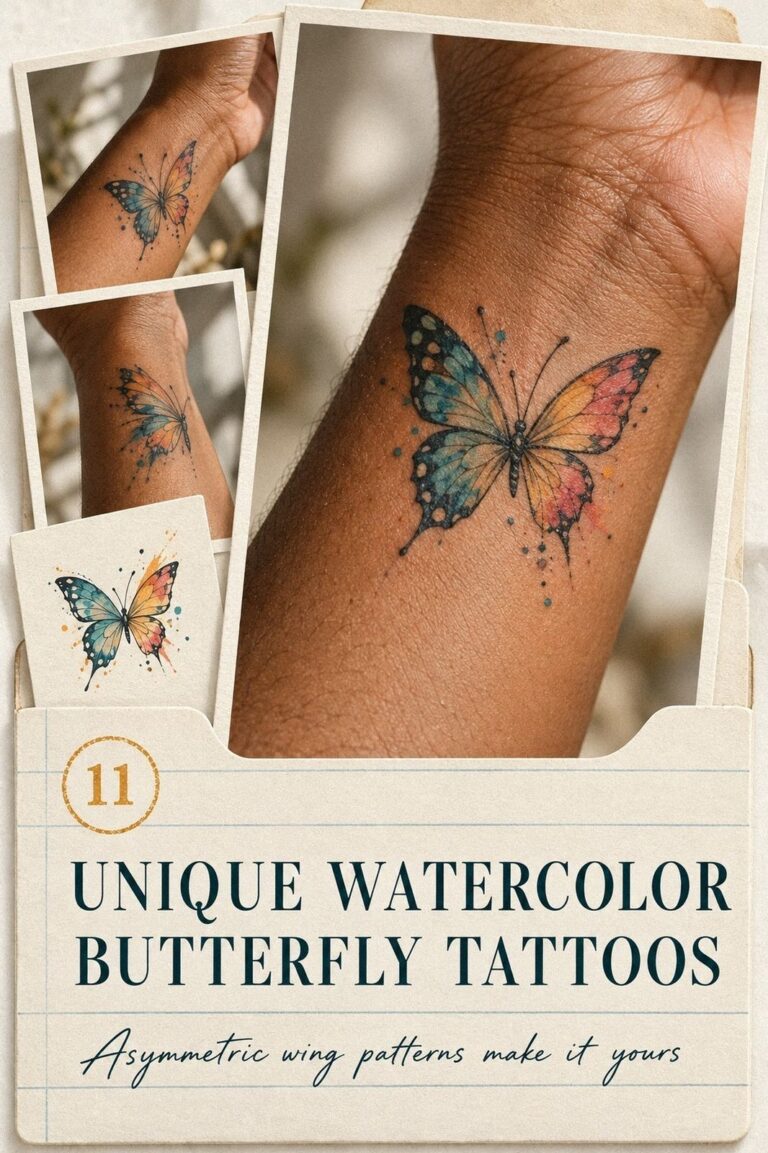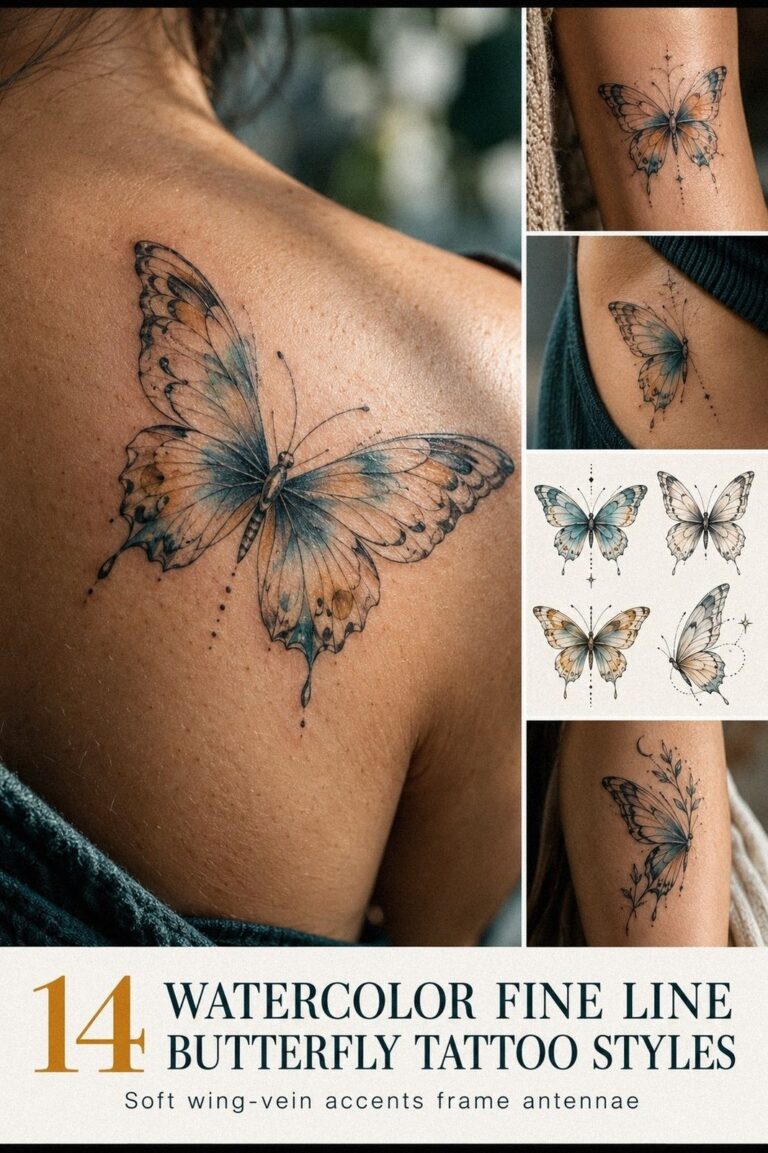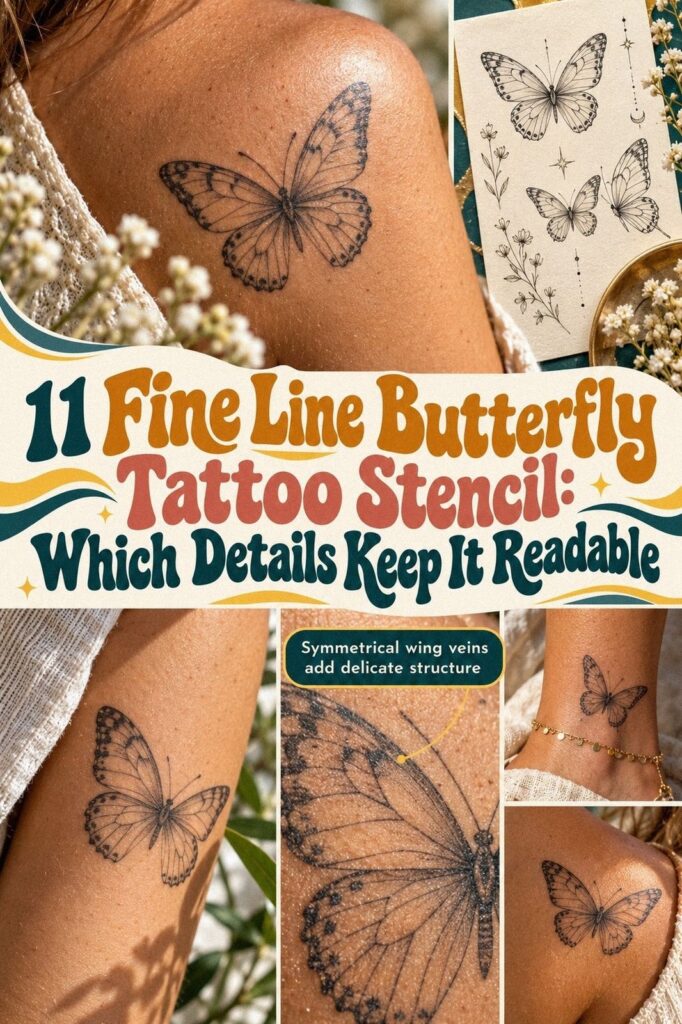
Fine line butterfly tattoo stencil ideas can look delicate without disappearing into visual noise. I once chose a design that was too small, too crowded, and impossible to read from a few feet away. Your stencil should show the full silhouette, the wing rhythm, and the skin you’ll leave open. Start clean. Start personal.
Editor’s note: The best butterfly stencil isn’t the busiest one. It’s the design that still feels meaningful when you see it from across the room, after the excitement fades, and years after the appointment.
- Start Small With a Fine Line Butterfly Tattoo Stencil
- Which Fine Line Butterfly Tattoo Stencil Fits Your Style?
- The Rib Curve Method for a Unique Fine Line Butterfly
- Wrist Contrast, Kept Deliberate
- Let the Ankle Butterfly Point Upward
- Behind the Ear, Where a Fierce Silhouette Wins
- How Should a Butterfly Sit on the Shoulder Blade?
- Ribs or Ribcage? Follow the Body’s Motion
- Keep a Finger Butterfly Sharp and Compact
- Botanical Tension: Butterfly Against the Stem
- A Symmetrical Thigh Stencil With Space to Breathe
1Start Small With a Fine Line Butterfly Tattoo Stencil
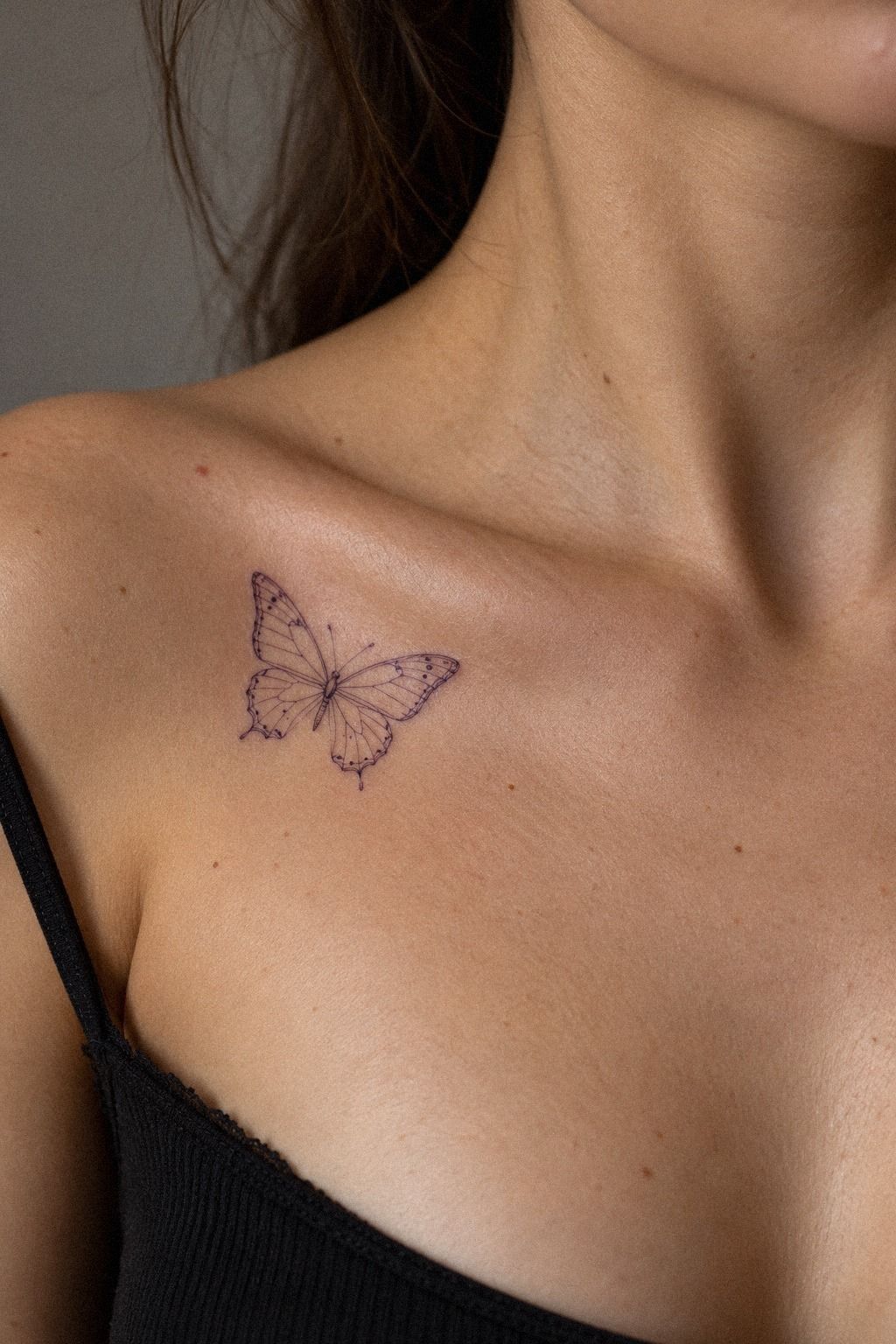
A small wrist butterfly works best when the outer wings stay terracotta and olive ink accents and the inner veins remain selective. Your artist can keep the open-wing shape symmetrical without filling every panel, which gives the design a striking, delicate quality on fair cool-pink skin. I’d choose a butterfly that reads clearly at roughly 1 to 2 inches rather than squeezing in ten tiny details.
The useful idea here is my Wrist-Scale Rule: your stencil needs one dominant silhouette, two or three internal vein paths, and enough unmarked skin to keep the shape legible. Fine linework can look graceful on the wrist, but it won’t forgive crowded decoration. If you’re comparing proportions, browse these tiny fine line butterfly tattoo references before you commit.
Keep the contrast intentional. A stone-toned stencil solution should transfer the wing edges cleanly, while the finished tattoo can use a few stronger anchor lines near the body. I’d skip a completely uniform outline because it often looks flat, especially when your wrist bends throughout the day.
For a first tattoo, this is a bold but understated choice. Your wrist makes it visible, your artist can place it quickly, and the open shape won’t feel heavy. If you’re unsure, print the stencil at several sizes and hold each one against your wrist for a full afternoon.
That small test can save you a surprisingly emotional redesign!
2Which Fine Line Butterfly Tattoo Stencil Fits Your Style?
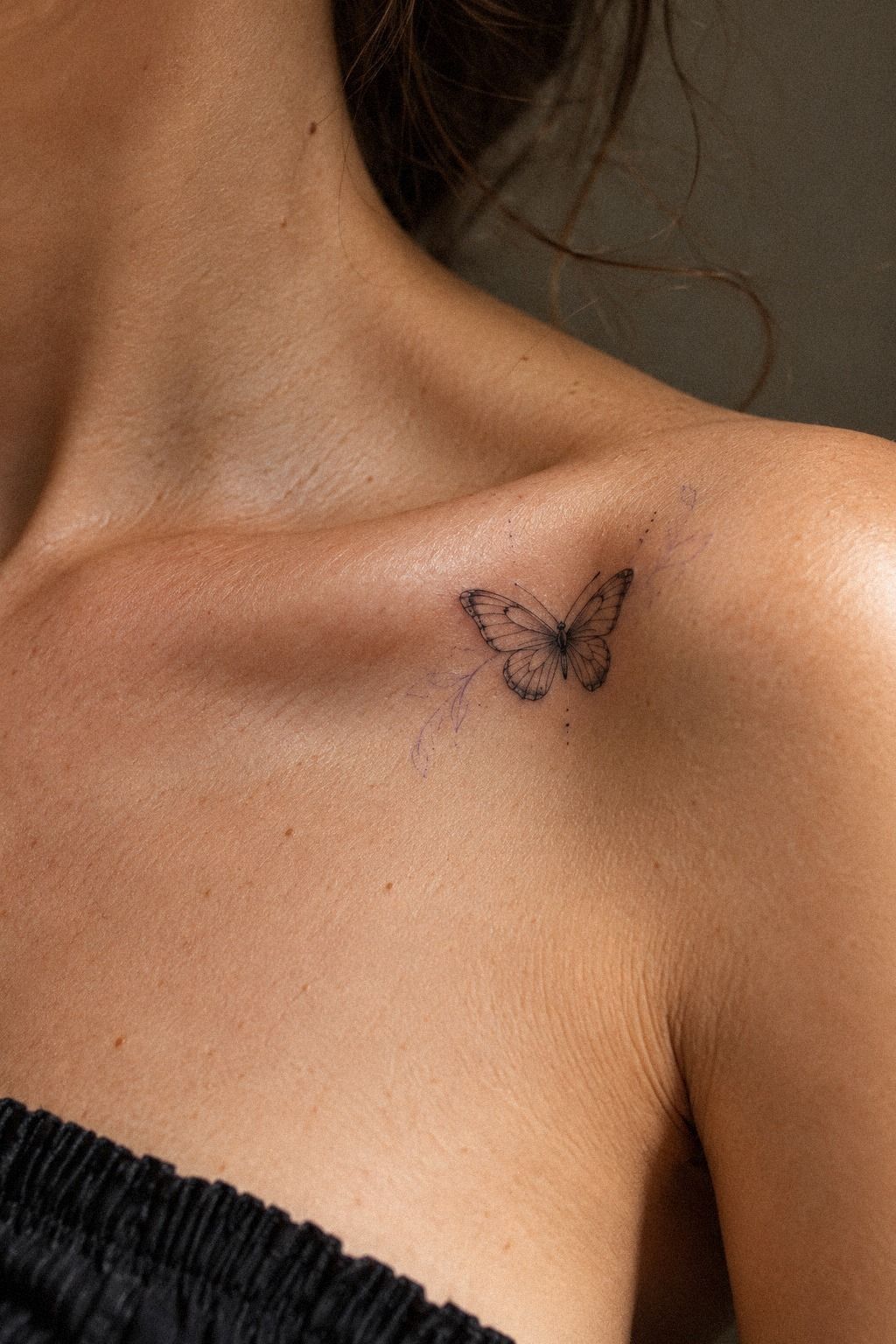
Shoulder placement gives your butterfly more breathing space, so you can explore a more intricate stencil without losing the elegant outline. A clay, soft linen, and aged-brass color direction can make the design feel personal while keeping the wings readable.
3The Rib Curve Method for a Unique Fine Line Butterfly
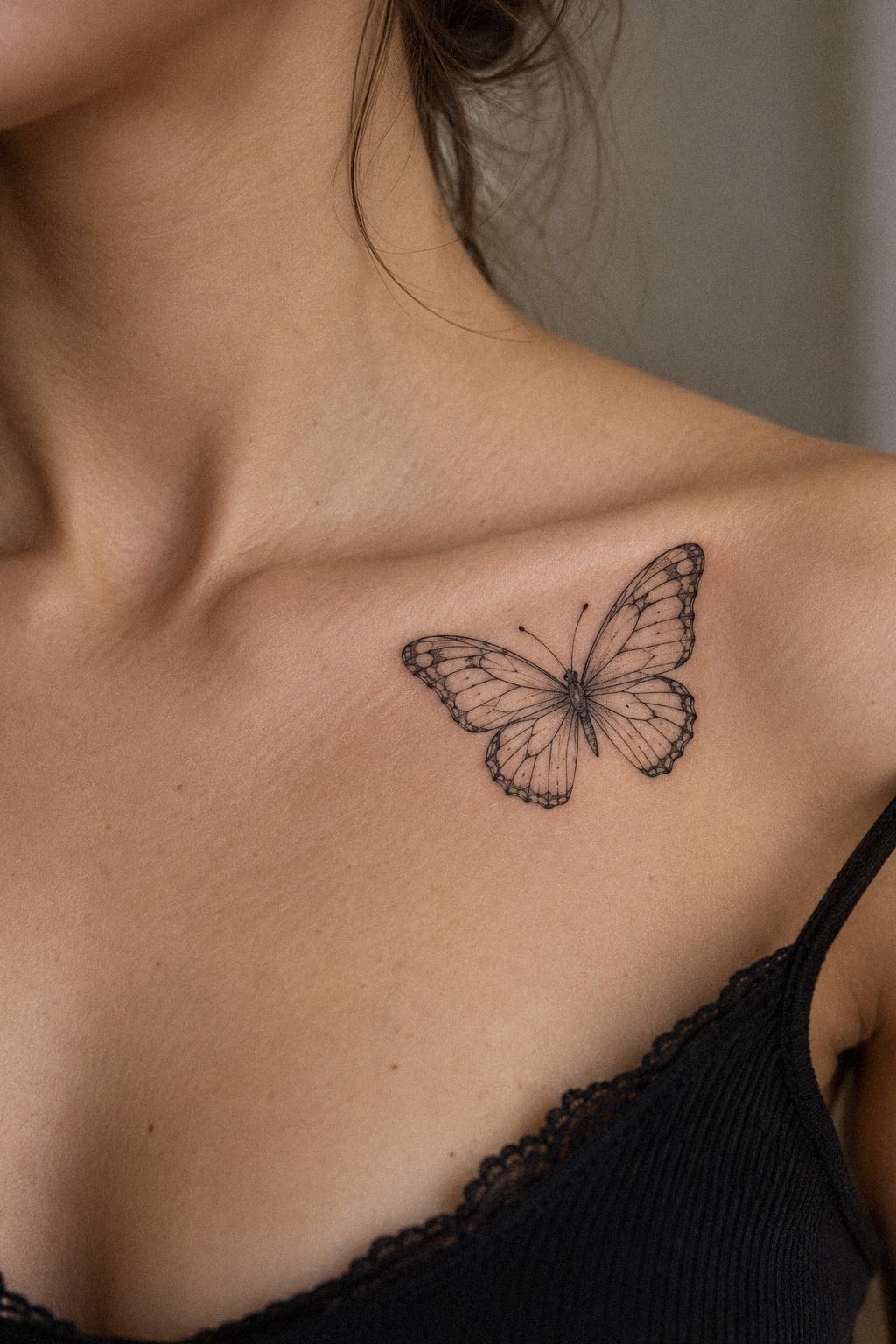
Rib placement gives a unique fine line butterfly tattoo stencil a private, personal feeling. Plum, grey, and rose-gold accents can create an expressive alternative to solid black, while the wings stay light and flowing. Your artist should follow the natural rib curve instead of forcing the butterfly into a perfectly horizontal position.
This is where the Rib Curve Method helps. Place the stencil, breathe normally, and look at it while your torso is relaxed.
If the lower wing points sharply into a rib line, you’ll notice the tension every time you twist. A flowing butterfly that follows your shape will feel more intentional than a rigid design copied from a flat page.
Ribs can be more painful than the forearm, thigh, or shoulder because the area is closer to bone and has less cushioning. Your artist may suggest a slightly larger stencil so the fine details don’t need to sit on top of one another. Matte stencil paper can help you judge the final shape before the session starts.
I’d skip extremely tiny lettering or micro-symbols inside the wings. They may seem meaningful now, but your skin needs room for every line to remain distinct. You can look through this fine line butterfly tattoo collection for rib-friendly proportions, then bring one favorite silhouette to your consultation.
Remember that your ribs move with every breath. That movement can make a symmetrical butterfly feel haunting and powerful, which is why this placement can look so personal. If you’re nervous, ask your artist to let you stand, sit, and bend before the stencil is finalized.
That pause is worth it!
4Wrist Contrast, Kept Deliberate
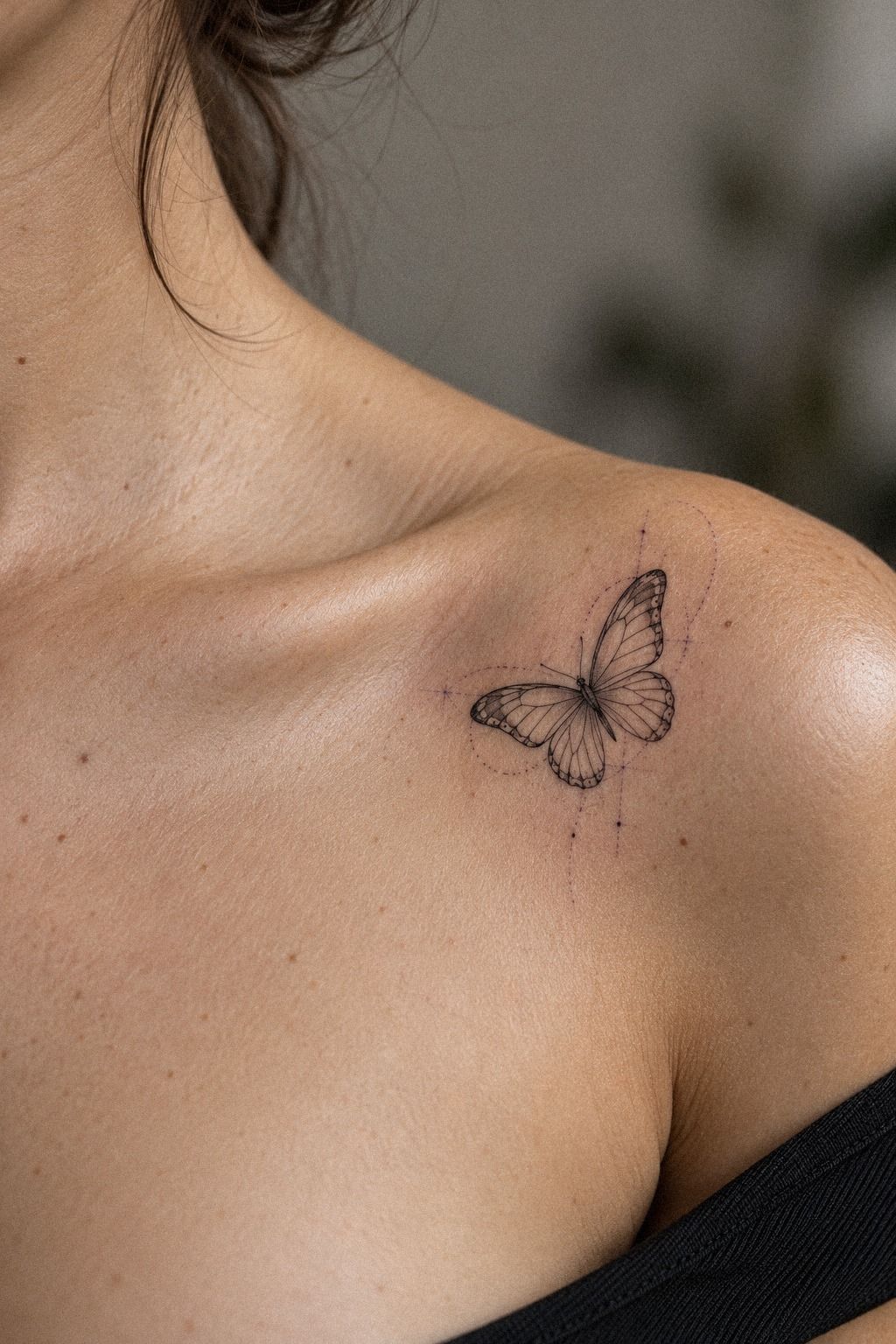
A navy and white wrist fine line butterfly tattoo stencil can feel bold without becoming heavy when the artist uses contrast with restraint. The placement stays visible, while the open wing structure keeps it sleek.
5Let the Ankle Butterfly Point Upward
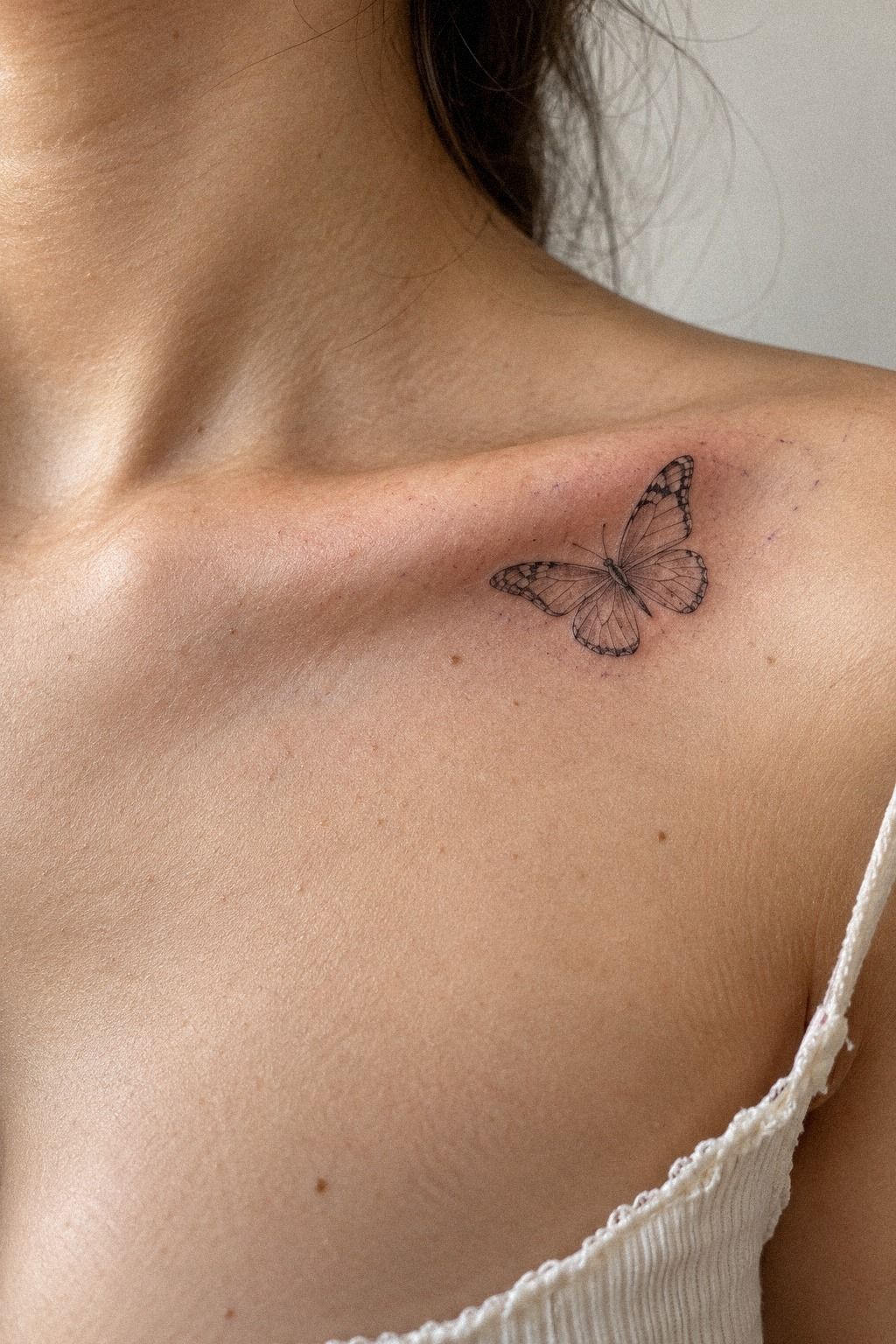
An ankle butterfly works beautifully as a traditional tattoo flash sheet concept, especially when the design is shown on aged off-white paper before it reaches skin. Look for emerald, soft gold, and cream accents, plus a body shape that doesn’t depend on color alone. Your artist can then translate the stencil into a clean, personal version.
The ankle has a strong visual rhythm because the butterfly sits near the foot and lower leg. You’ll want to decide whether the body points upward, toward the toes, or across the ankle bone. I’d choose an upward flight direction because it follows the leg’s length and gives the design a more daring, animated posture.
A flash sheet may show several variations, such as fine emerald linework, a rounded wing, a pointed wing, or a slightly vintage contour. Don’t copy every option into one tattoo. Your stencil needs one clear identity, and a simple outline will usually age more gracefully than dense interior decoration.
Pain can feel sharper near the ankle bone and foot than it does on the shoulder or thigh. Your session may be brief, but you’ll still want to arrive rested and hydrated. If you’re collecting references, compare this tiny butterfly tattoo stencil page with minimalist fine line butterfly tattoos before choosing your final shape.
Give your artist room to adjust the stencil around movement. Your ankle bends, your shoe rubs, and the skin doesn’t stay still.
I’d rather see a slightly wider wingspan than a cramped butterfly tucked directly onto the bone. It’ll look more polished when your foot is relaxed.
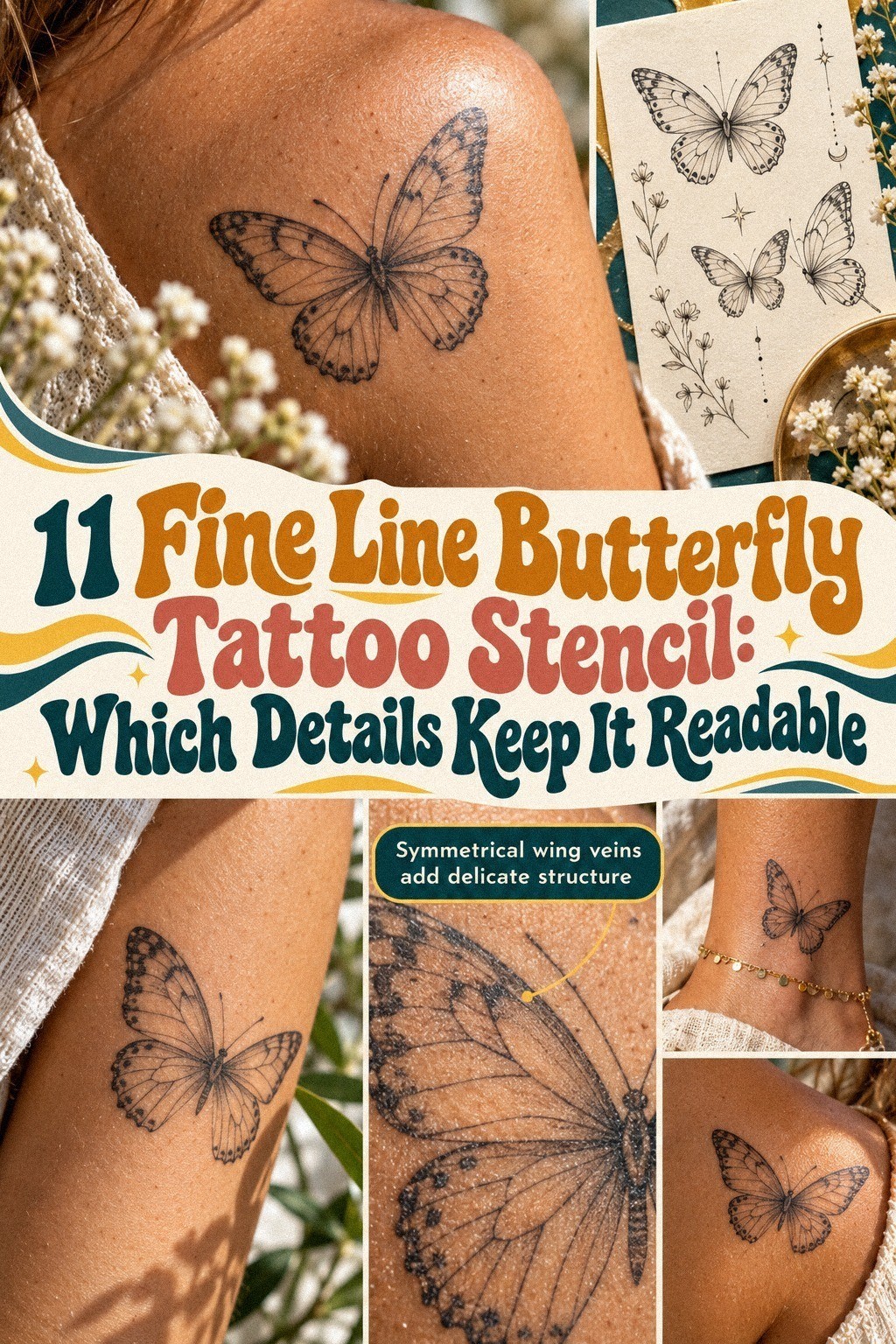
6Behind the Ear, Where a Fierce Silhouette Wins
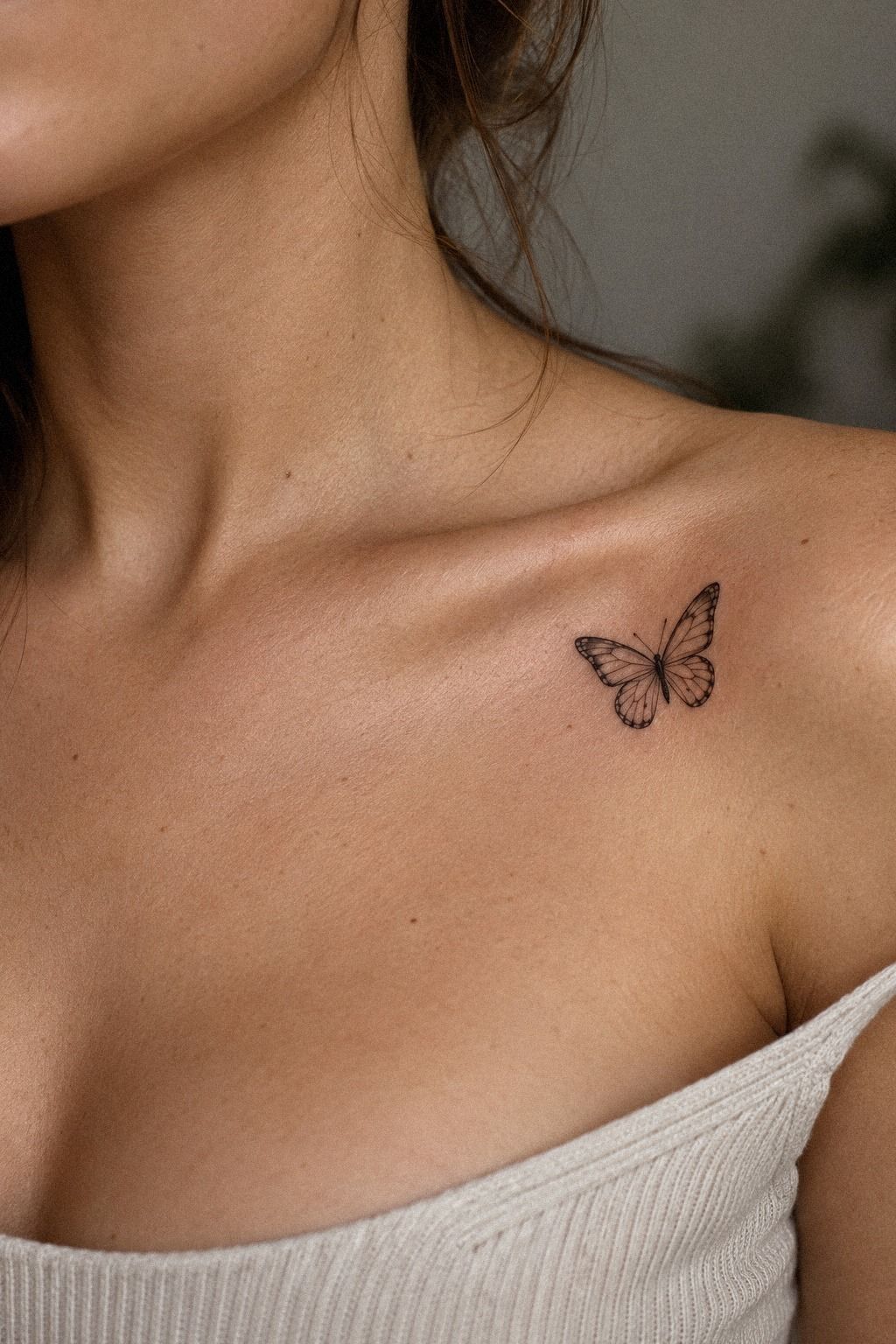
Behind-ear butterfly stencil linework needs a compact shape with a fierce silhouette. Forest-green and rust accents can make the small placement feel expressive, but the compact wing outline should remain the priority.
7How Should a Butterfly Sit on the Shoulder Blade?
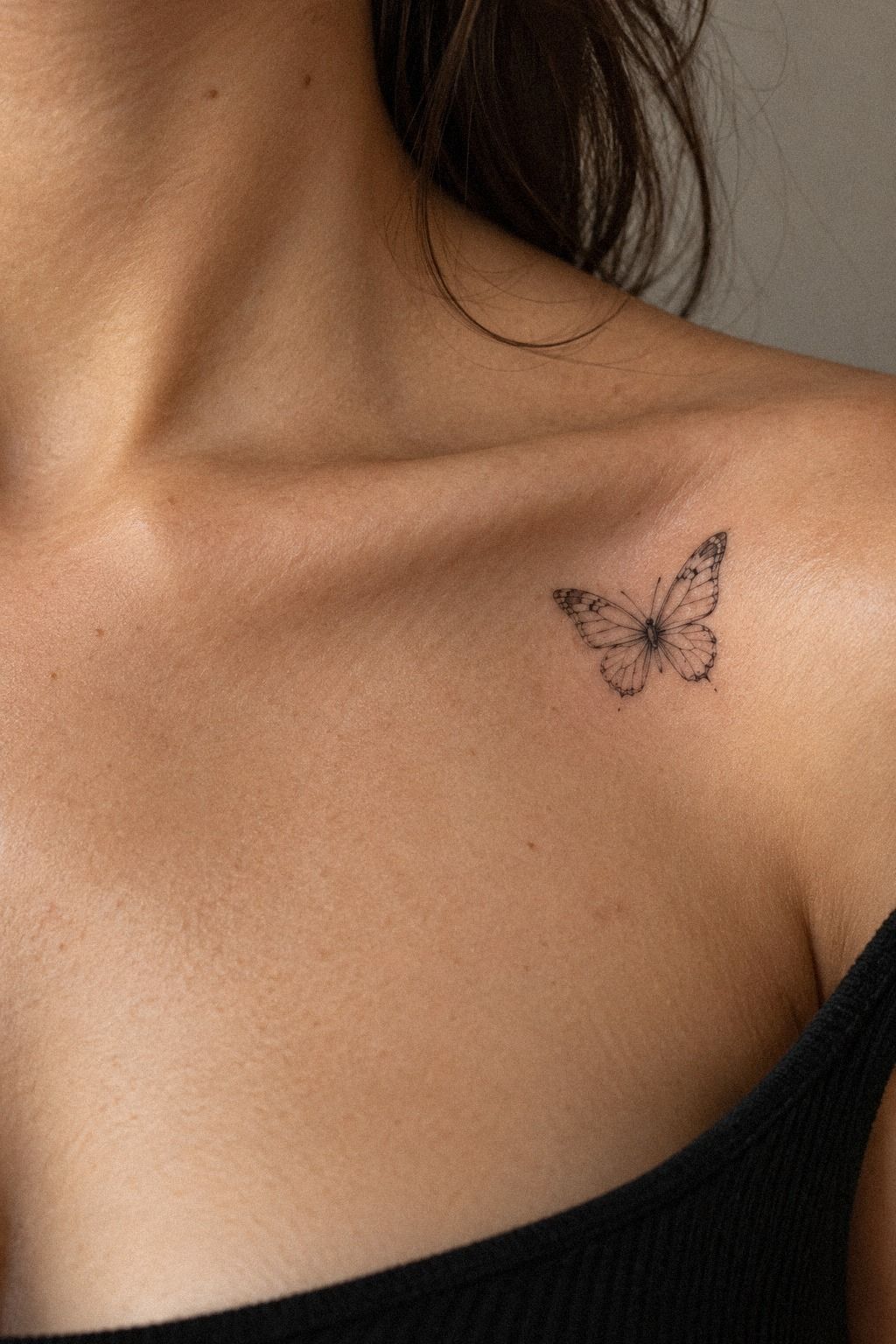
A shoulder blade butterfly stencil design can support a larger, more ornate composition because the skin gives your wings space to open. Dusty rose, charcoal, and brass accents can replace a fully black direction while keeping the symmetry easy to read. Your artist should use a few delicate veins without overwhelming the shoulder.
Try the Shoulder Blade Anchor: place the butterfly slightly off the spine, then align the body with the shoulder blade rather than the center of your back. You’ll get a more natural pose, and the wings can follow the movement of your shoulder when you reach or stretch. Your artist should check the stencil with your arm relaxed and raised.
This placement is a good place for a symbolic detail, such as a tiny star, a broken wing edge, or a botanical stem. Fine transfer lines should show the shape without committing you to every interior mark. I’d choose one meaningful accent, because several symbols competing inside the wings will weaken the main image.
Don’t let a reference decide the size for you. Your shoulder blade may need a wider design than the example you saved, especially if you want the wing tips to remain crisp after healing. For a stronger black-and-white direction, look at these fine line black butterfly tattoo references.
You’ll also have more flexibility with clothing than you might expect. A tank top shows the wings, while a T-shirt can cover them. I’d choose this placement if you want something personal that can still feel bold when you decide to reveal it.
8Ribs or Ribcage? Follow the Body’s Motion
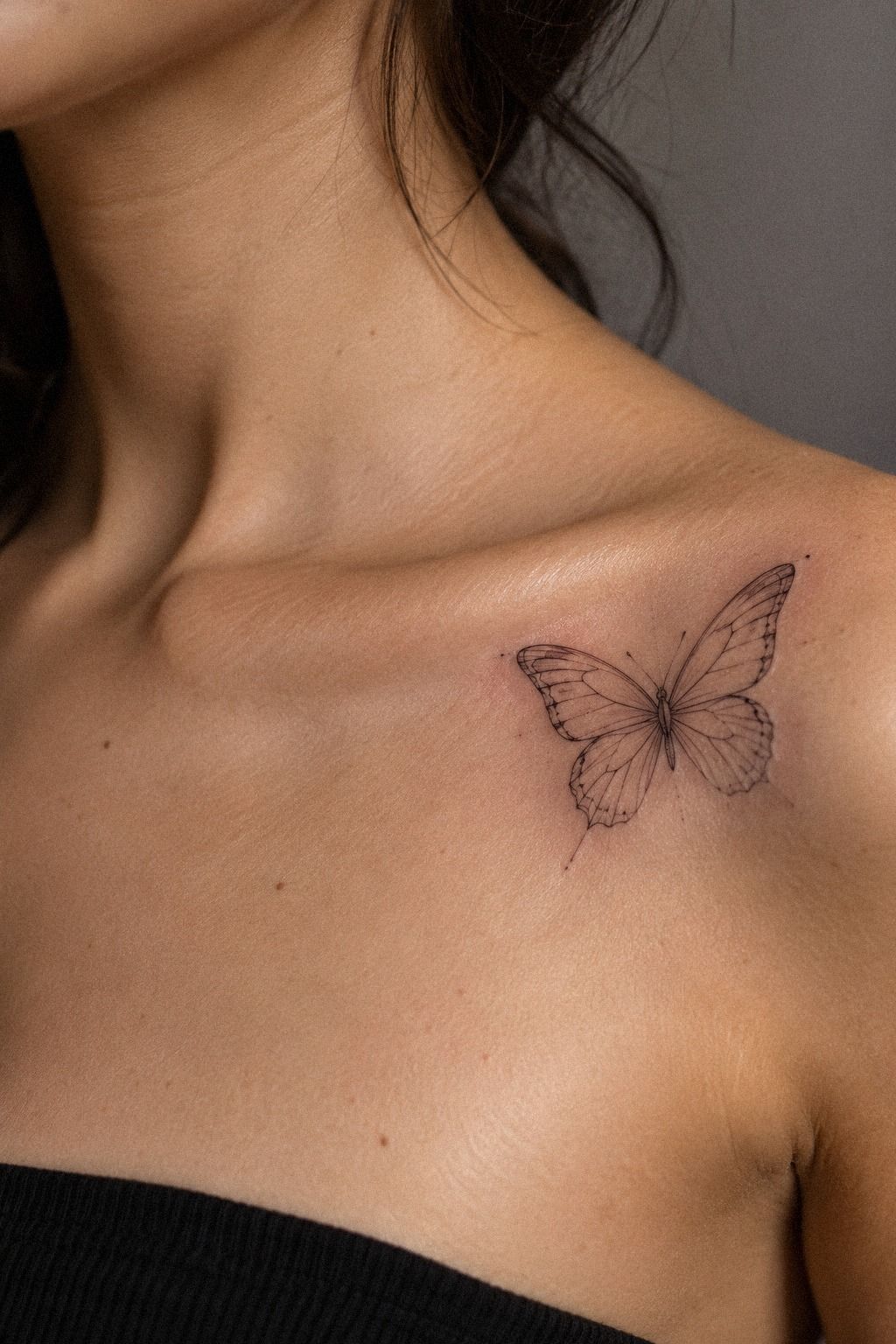
A ribcage fine line butterfly stencil can look romantic and raw when the wings follow the body instead of sitting flat across it. Warm white, camel, and black accents keep the design crisp while allowing the natural skin tone to remain part of the image. Your artist should place the body where the rib curve feels least forced.
The ribcage has more movement than most people expect. You’ll breathe, twist, and reach while the tattoo heals, so a design with overly close wing veins can feel cramped. My Rib Curve Method favors a strong outer silhouette, two main interior lines, and small details only where they support the shape.
You may find the ribs more painful than your forearm, thigh, or shoulder. That doesn’t mean you need to abandon the placement, but you should plan for a calm session and loose clothing afterward. Breathable cotton clothing can reduce friction while the surface heals over roughly 2 to 3 weeks.
I’d avoid a tiny butterfly that sits directly on the sharpest rib point. A slightly larger stencil gives your artist more control and lets the body curve look intentional. If you’re deciding between side and rib placement, compare this small fine line butterfly tattoo reference with a simpler minimalist butterfly tattoo design.
Your finished tattoo may feel more intimate than visible, which is part of its appeal. Keep the design expressive rather than crowded. A few crisp lines can say more than a full page of decoration.
9Keep a Finger Butterfly Sharp and Compact
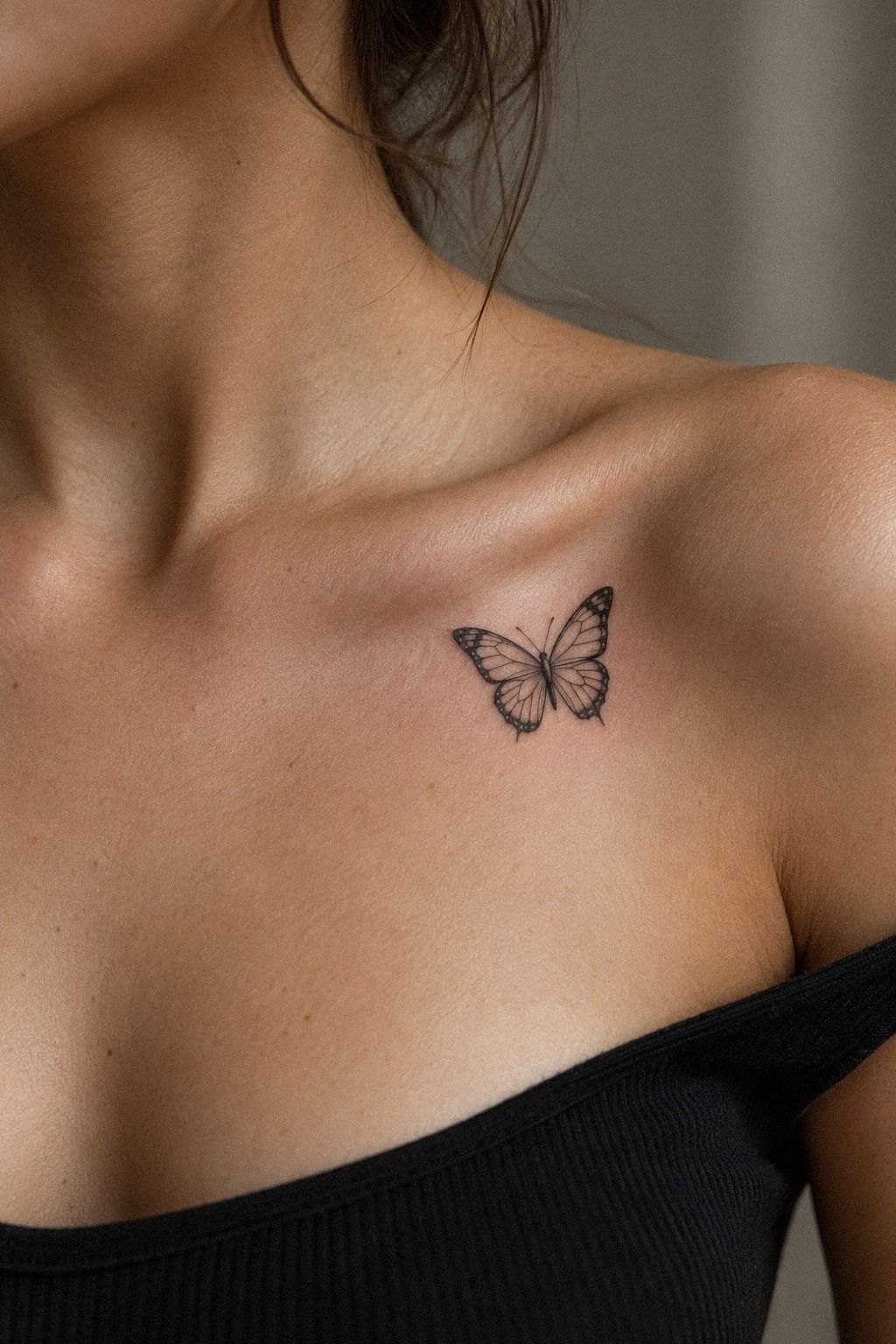
A finger fine line butterfly stencil needs a sharp, compact silhouette because the placement is narrow and constantly moving. Midnight blue, copper, and ivory accents can make the finger wing pattern feel daring without adding excess detail.
10Botanical Tension: Butterfly Against the Stem
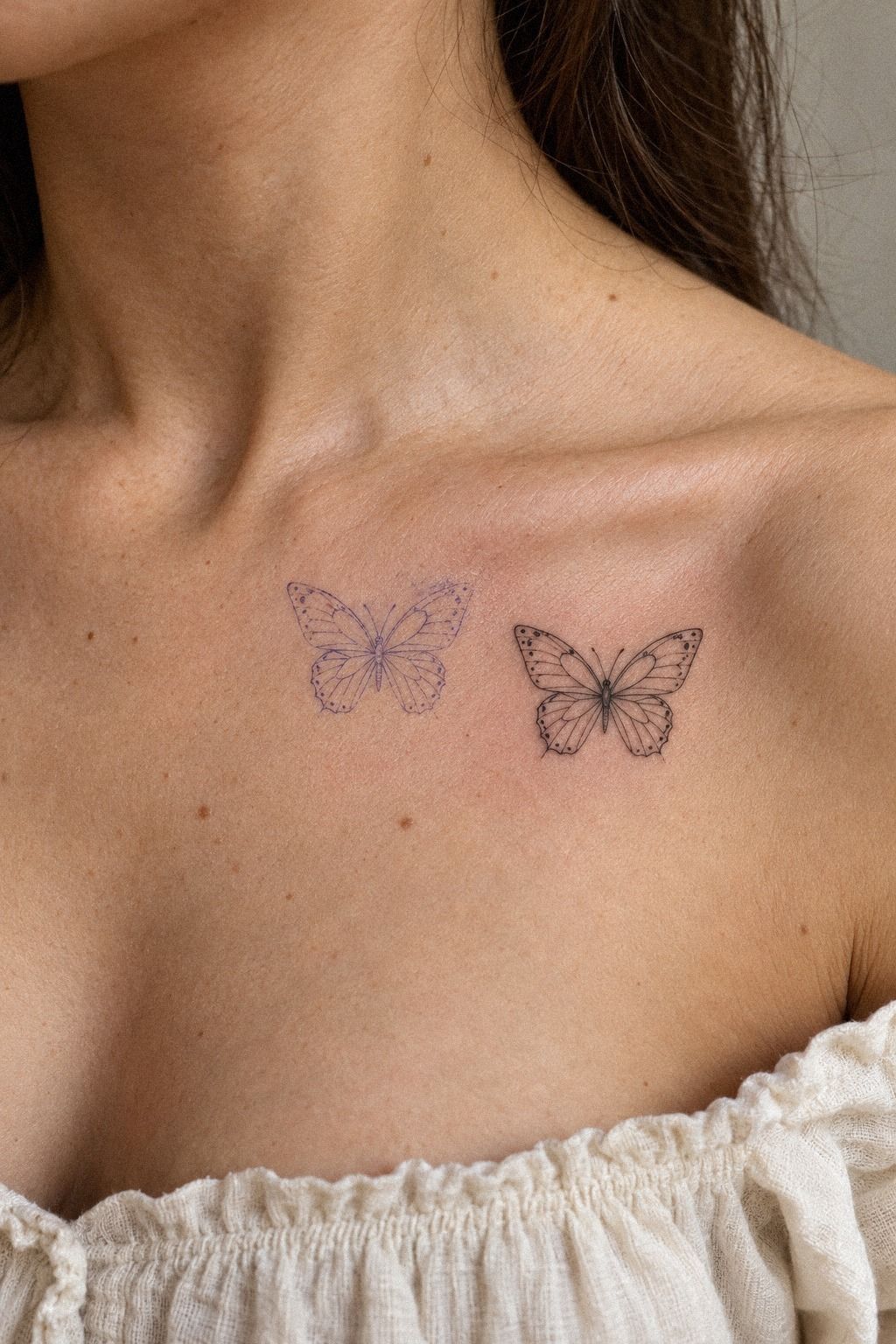
A botanical fine line butterfly stencil works when the plant element supports the butterfly instead of competing with it. Sage green and warm cream accents can soften the contrast, while the white-paper stencil lets you judge which lines remain readable after the skin has settled.
Your botanical detail can be one stem, a small leaf pair, or a delicate sprig passing behind one wing. I’d avoid a full wreath because it can turn a striking butterfly into a generic floral emblem. The most elegant version usually has one organic curve and one clear focal point.
The Botanical Tension Rule gives you contrast: keep the butterfly symmetrical, then let the stem bend slightly. That mix feels expressive and natural without making the whole stencil uneven. Fine botanical linework should stay lighter than the butterfly’s main outline, or the plant will steal attention.
Ask your artist to show healed examples, not only fresh work. Fine lines can expand subtly, and UV exposure can soften them further over time. Gentle aftercare means washing carefully, moisturizing lightly, and avoiding direct sun and swimming while the surface heals.
You can explore watercolor fine line butterfly tattoo references if you like the idea of a future color accent, but I’d keep the stencil simple first. Your butterfly should work as a complete drawing before any color enters the conversation. That makes it more timeless and easier to judge.
11A Symmetrical Thigh Stencil With Space to Breathe
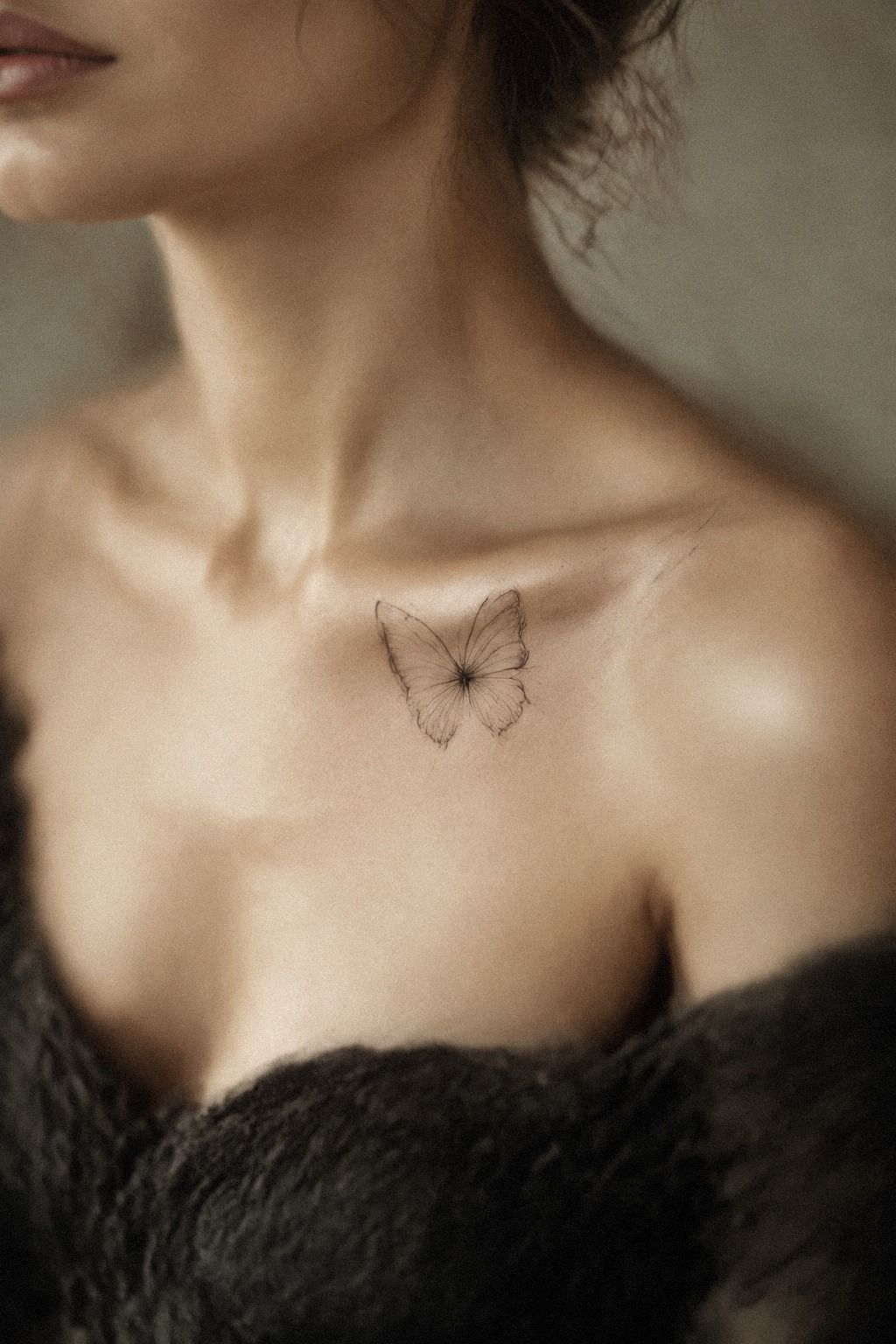
A symmetrical fine line butterfly stencil on the thigh gives you space to make the wing structure bold, balanced, and highly personal. Terracotta, stone, and olive accents can make the silhouette stand out while the open skin keeps the design graceful. Your artist should center the body according to the thigh’s natural line.
The Thigh Symmetry Check is worth doing before the appointment. Stand normally, sit down, and look at the stencil from a few steps away.
If one wing seems higher because of the body’s curve, your artist can adjust the placement before the tattoo begins. You’ll get a more polished result when the design works in motion.
This is the placement where you can add a more intricate vein pattern or a small symbolic mark. Bold blackwork with restrained grey shading can create dramatic contrast, but I’d keep the shading controlled if your goal is fine line delicacy. Too much fill will change the character of the butterfly.
Your thigh is generally more tolerable than ribs, feet, hands, or sternum, though every body responds differently. A larger stencil may take longer than a tiny wrist piece, so ask how many hours the artist expects and whether breaks are sensible. For another clean direction, compare this fine line black butterfly tattoo collection with watercolor butterfly tattoo ideas.
I’d pick this version if you want the most space for detail without making the design feel heavy. Your butterfly can be personal, powerful, and still delicate. The open wings will carry the meaning; the extra lines should earn their place.
The Silhouette Comes First
I used to think the smallest stencil would be the safest first tattoo. It wasn’t.
My first reference had narrow wing tips, several tiny dots, and an interior pattern that looked intricate on paper but became visual static when I reduced it. I kept trying to rescue it with more detail. That was the wrong direction.
A butterfly needs a readable body and a silhouette you can recognize without leaning close to the skin. Readable wing silhouette matters more than decorative complexity. If the outline works by itself, the tattoo has a stronger chance of staying elegant as the fine details soften.
Placement Changes the Decision
Now I look at three things before I fall for a reference: the outer contour, the amount of open skin, and the placement’s movement. A wrist bends. Ribs expand.
Fingers rub against everything. The same striking design won’t behave identically in all three places.
I’d rather choose a crisp, understated stencil that respects the body than copy an ornate design that only works at one size. If you’re comparing a shoulder with a ribcage, these minimalist butterfly tattoo references can help you see how open space changes the mood.
Ask for Healed Work
I also learned to ask for healed work. Fresh ink can look sharp, dark, and polished, but fine lines may soften as the tattoo settles.
A surface usually heals in about 2 to 3 weeks, while complete healing can take roughly 2 to 3 months. Healed portfolio examples tell you far more than fresh appointment work.
During that time, gentle washing, light moisturizing, and avoiding sun and swimming matter more than buying another aftercare product. Simple care wins. A reputable artist should explain the process without making dramatic promises about how every line will age.
Make the Consultation Earn Its Price
Your consultation should include real questions. How large does the artist recommend the butterfly? Which lines are essential?
What happens if a detail doesn’t hold? How many hours might the session take?
Is the placement more painful because it sits near bone?
A serious artist won’t rush those answers. They’ll show you portfolio work, healed examples, and a stencil that fits your skin rather than forcing your skin to fit a template. That conversation is part of the tattoo consultation value, especially when the design is meaningful or the price is higher than expected.
Choose Meaning Over Maximum Detail
I don’t think a first tattoo has to be timid. It can be bold, symbolic, romantic, or edgy.
The move is not making it complicated. Choose one feature that means something to you, give it enough space, and let the linework breathe.
If you’re still weighing the cost, ask whether the extra detail changes the meaning or only increases the price. A simpler design can be more empowering, more timeless, and easier to recognize. Good stencil, better decision!
The Questions I Get Asked Most
These are the practical questions I’d ask before booking a fine line butterfly tattoo stencil.
How much does a fine line butterfly tattoo stencil usually cost?
A fine line butterfly tattoo commonly costs about $100 to $300 in the US, depending on size, placement, artist, and region. Some shops have a minimum around the studio minimum of $50 to $100, while hourly rates often sit near $100 to $250. Ask for a written quote before booking so you can judge whether the price fits your budget.
Are fine line butterfly tattoo stencil designs a good idea for a first tattoo?
Yes, they can be a strong first choice because the subject is readable, adaptable, and easy to personalize. A clear butterfly silhouette helps you understand the stencil before the session, while a shoulder, thigh, or forearm placement is often more tolerable than ribs, feet, hands, or sternum.
How do I choose a tattoo artist for fine line butterfly stencil work?
Choose an artist with a portfolio showing clean healed linework and healed examples, not only fresh tattoos. Look for consistent symmetry, controlled spacing, and studio hygiene. You’ll also want an artist who explains how your chosen placement may affect pain, healing, and long-term line softness.
How much do fine line butterfly tattoo stencil designs hurt?
Pain varies, but ribs, feet, hands, and sternum are commonly more painful than the forearm, thigh, or shoulder. A comfortable placement choice can make your first session easier. Your artist should discuss the location honestly, and you can ask for breaks if the session feels intense.
How long does a fine line butterfly tattoo stencil take to heal?
The surface usually heals in about 2 to 3 weeks, while complete healing takes roughly 2 to 3 months. Gentle aftercare means washing carefully, moisturizing lightly, avoiding direct sun, and skipping swimming until the surface has settled.
What’s the best placement for fine line butterfly tattoo stencil designs?
The best placement depends on visibility, pain tolerance, and how much detail you want. A shoulder or thigh gives your artist more space, while a wrist feels more visible and personal. Ribs, feet, and hands can be more painful and may need extra thought about long-term wear.
If you want the best value, choose the placement that supports the design instead of forcing the design into a smaller area.
Where I’d Start First
If I had to pick one, I’d start with the shoulder blade butterfly stencil. It gives your artist space for a crisp silhouette, protects the fine details better than a finger, and still feels personal when covered. Pin the idea for later and bring one clear reference to your consultation.
That’s the one!