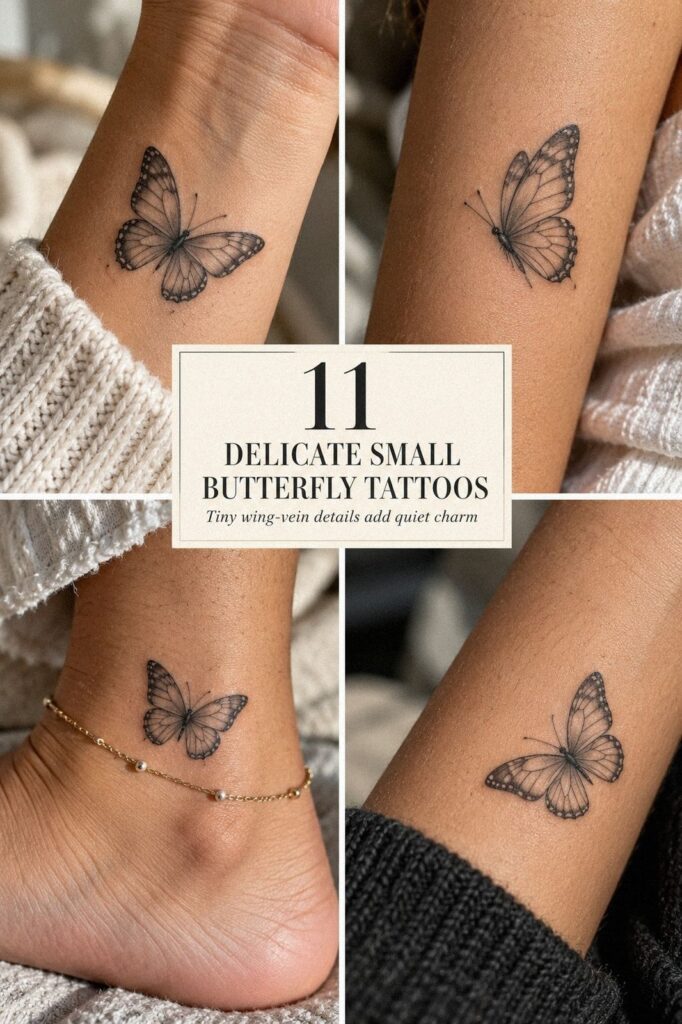
A delicate small butterfly tattoo can stay crisp, symbolic, and easy to cover at work. I’ve learned that placement matters more than making the design impossibly tiny, especially when fine lines meet friction, sunlight, and daily movement. These ideas keep the wings graceful, personal, and low-profile without making them disappear. You’ll want to save a few!
- Delicate Small Butterfly Tattoo on the Wrist
- Tiny Blue Delicate Butterfly Tattoo with Linework
- Delicate Small Butterfly Tattoo Behind the Ear
- Unique Delicate Small Butterfly Tattoo with Birthstone
- Delicate Small Butterfly Tattoo on the Collarbone
- Minimal Delicate Butterfly Tattoo with Fine Dotwork
- Delicate Small Butterfly Tattoo with Floral Details
- Unique Delicate Small Butterfly Tattoo in White Ink
- Delicate Small Butterfly Tattoo on the Ankle
- Symbolic Delicate Small Butterfly Tattoo with Initials
- Delicate Small Butterfly Tattoo with Colorful Wings
1Delicate Small Butterfly Tattoo on the Wrist
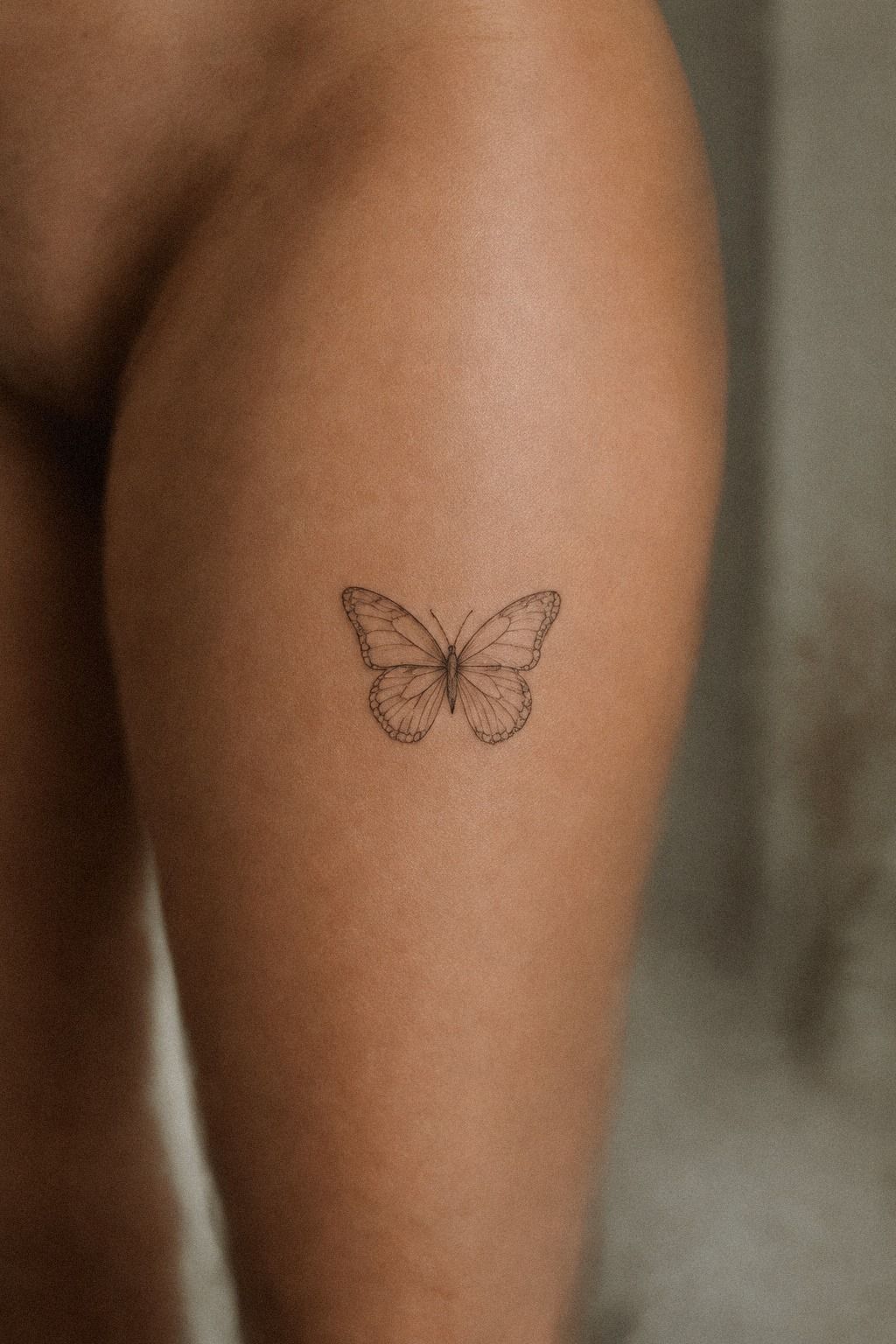
A wrist butterfly is crisp, visible, and easy to admire without feeling overwhelming. Ask your artist for open wings, balanced symmetry, and single-needle linework that follows the natural curve of your wrist. It’s a graceful choice if you want a personal design you can cover with a watch or cuff.
Keep the butterfly small enough that the wing veins don’t crowd each other. A clean outline with two or three interior marks will age more clearly than a miniature copy of a highly intricate reference. You’ll want to show your artist the exact design and explain whether you prefer a delicate or sharper finish.
Your wrist bends, rubs against desks, and sees sunlight. Your artist may suggest slightly stronger lines than you expect. I’d skip ultra-faint grey ink here because it can lose contrast faster than a controlled black design.
For a low-profile workday, a slim watch band or long sleeve can cover the piece without pressing directly on it. Terracotta pigment gives the butterfly a warm, expressive edge, while a muted olive accent keeps the shape soft.
You can compare proportions with these small fine line butterfly tattoo designs before your appointment. You can also review these small butterfly tattoo references if you’re unsure about wing width.
Why choose a hidden tattoo if you don’t want to see it yourself? The wrist gives you visibility without demanding attention.
The wrist can also suit a symbolic design. I’d keep the body narrow, the wings open, and the center detail meaningful. A tiny star, dot, or initial may be enough.
Think about your job before you book. If you type all day, wear a watch, or lift objects often, ask whether another placement would give you better long-term value. A slightly larger tattoo in a protected area may be worth it.
2Tiny Blue Delicate Butterfly Tattoo with Linework
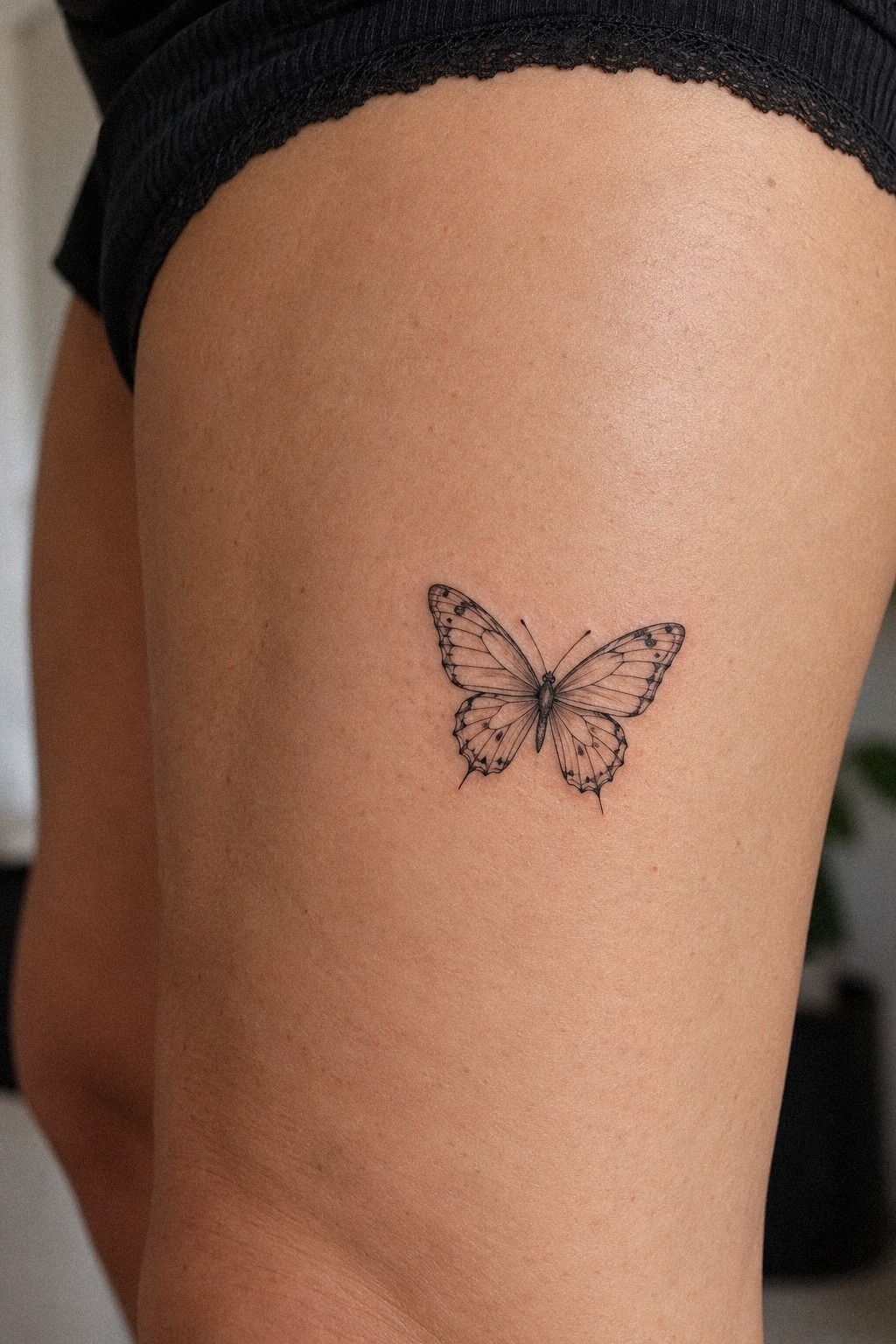
The open wings can still feel vibrant when the final design uses muted clay and soft gold accents rather than a loud range of colors. On warm ivory skin, a restrained palette can look sharp without becoming overwhelming, especially when the artist leaves generous negative space between the wing sections.
Ask whether your artist prefers muted clay pigment or a deeper charcoal tone for the linework. Very pale color may read beautifully at first but can soften during healing. You’ll want the outline to carry the design even if the center lightens.
The shoulder gives you more freedom than the wrist because clothing can cover it easily. It’s also a comfortable place to position a small design, though you shouldn’t ignore backpack straps or tight fabric while the skin settles.
Don’t fill every wing with color. I’d keep the body and outer contour dark, then use a restrained clay accent in two inner panels. That contrast makes the butterfly playful rather than flat, and it keeps the design readable from a short distance.
A fine warm-toned line can work well with a small design, but your artist should show healed examples, not only fresh photographs. Browse these tiny small butterfly tattoo ideas and notice how color changes the mood without changing the silhouette.
If you’re watching your budget, ask whether one accent color changes the cost. Some studios charge more for color work, while others price by size and time. Knowing the quote early helps you decide if the extra color is worth it.
I like clay and gold when the meaning feels personal. They can suggest warmth, freedom, memory, or a favorite place. Your butterfly doesn’t need a long explanation if the color already says something to you.
3Delicate Small Butterfly Tattoo Behind the Ear
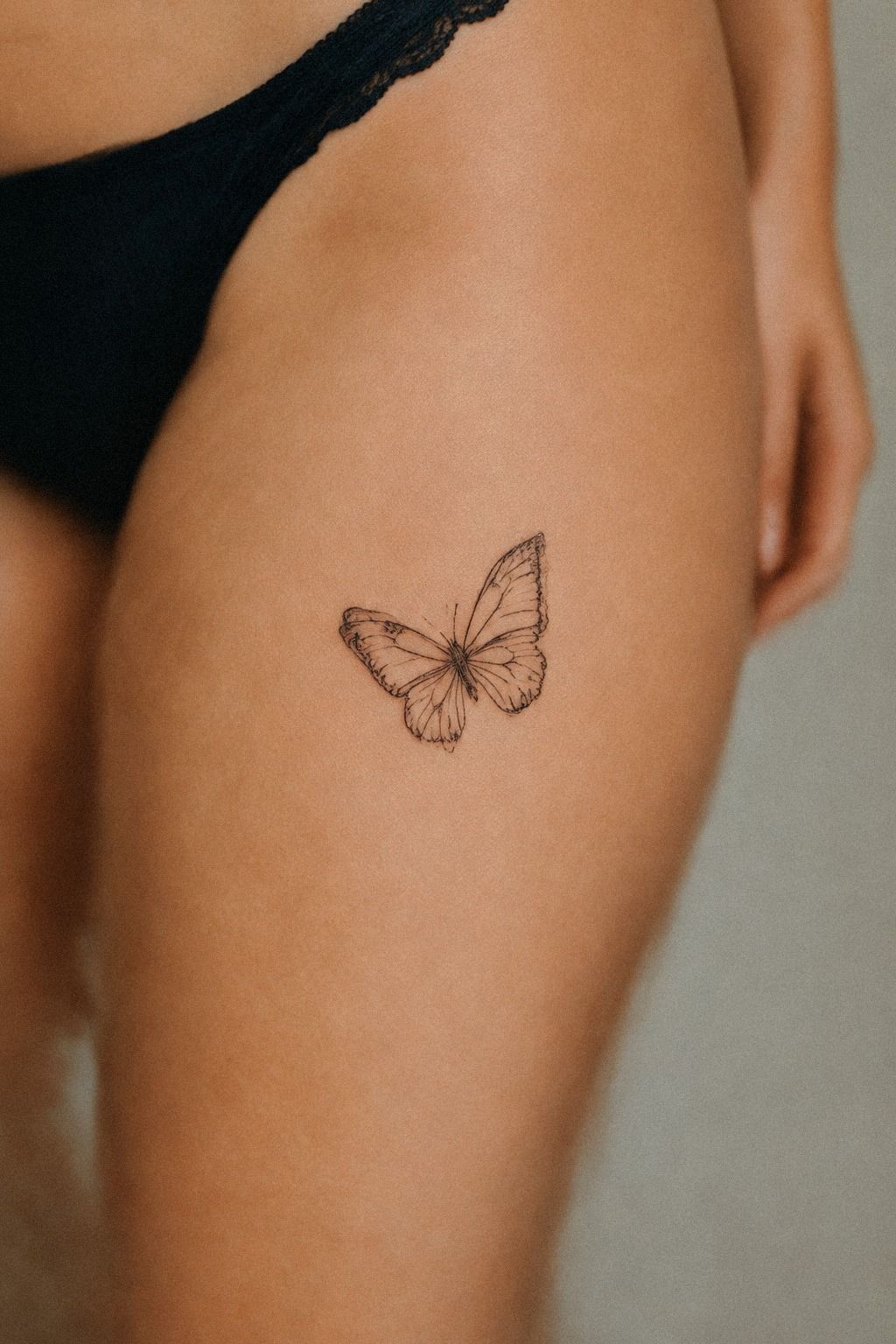
Behind the ear is a sleek placement when you want a tattoo that stays private under your hair. The butterfly can be open-winged and symmetrical, but it should remain simple enough to follow the small, curved area behind the ear.
A plum-toned outline will give you a striking result against olive skin. Your artist may adjust the spacing between the wings because the skin there isn’t flat. A design that looks balanced on paper can feel crowded once placed.
You’ll need to plan around hair, headphones, glasses arms, and daily friction. The area can be tender, and you don’t want to keep touching it while it heals. Keep your aftercare simple, follow the artist’s written instructions, and avoid scented products.
I’d choose a minimal butterfly here instead of a heavily shaded one. Dense shading can make a tiny piece look like a dark mark, while negative space keeps the shape clear and recognizable.
For more discreet placement ideas, compare these simple small butterfly tattoos. You can also explore these unique small butterfly placements before deciding.
The behind-ear version feels intimate, personal, and slightly edgy without needing extra decoration. That small pause before someone notices it matters!
This placement can be harder to inspect by yourself. You may need a mirror or someone you trust during aftercare. If you’re prone to irritation from hair products, ask your artist how to protect the area.
The cost may be close to a studio minimum, even if the tattoo takes only a short time. Ask about the shop minimum before you commit. A clear quote protects your budget and prevents an awkward surprise.
4Unique Delicate Small Butterfly Tattoo with Birthstone
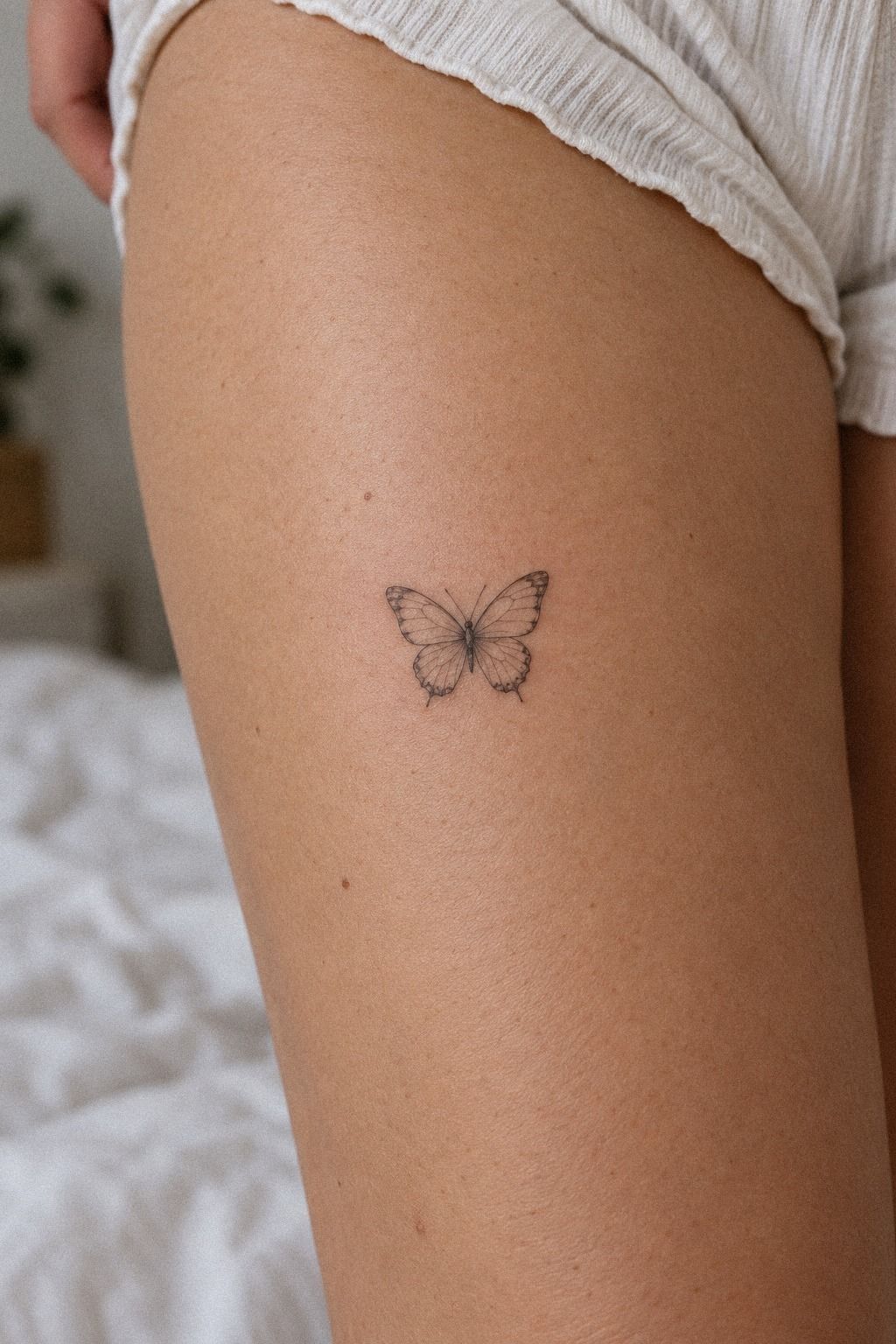
A birthstone detail gives your butterfly a meaningful focal point without turning it into a crowded charm collection. I’d choose one small stone-inspired mark, not several competing symbols.
A birthstone accent can be a dot, tiny oval, or restrained color wash inside one wing. Your artist can keep the silhouette clean while making the detail feel personal.
If the month has several traditional stones, pick the color that means something to you. A deep garnet red can feel bold, while a pale sapphire blue may look more understated.
Don’t force a realistic gemstone shape into a miniature design. A simple colored point can be more readable and more timeless than a tiny faceted drawing.
The placement matters here. A shoulder, upper arm, or collarbone gives the artist enough control to keep the birthstone separate from the wing veins.
You can compare symbolic ideas in this butterfly tattoo meaning guide. A meaningful detail works best when it supports the butterfly instead of explaining your entire story.
That restraint is empowering. One birthstone can honor a birthday, a loved one, or a private milestone without making the tattoo feel overly literal. That’s the point!
5Delicate Small Butterfly Tattoo on the Collarbone
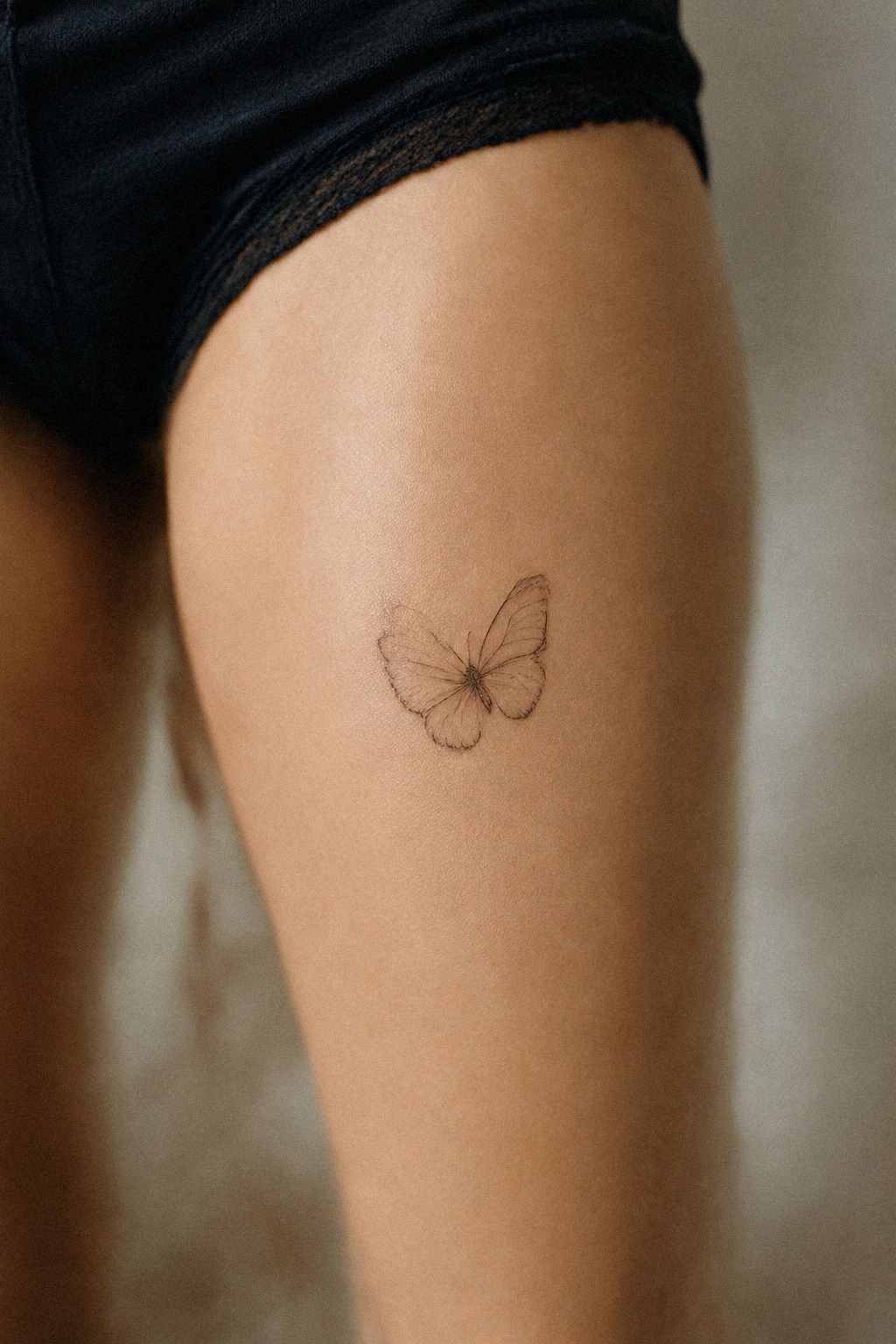
A collarbone butterfly can look romantic and expressive when the wings follow the line of the bone rather than sitting stiffly above it.
6Minimal Delicate Butterfly Tattoo with Fine Dotwork
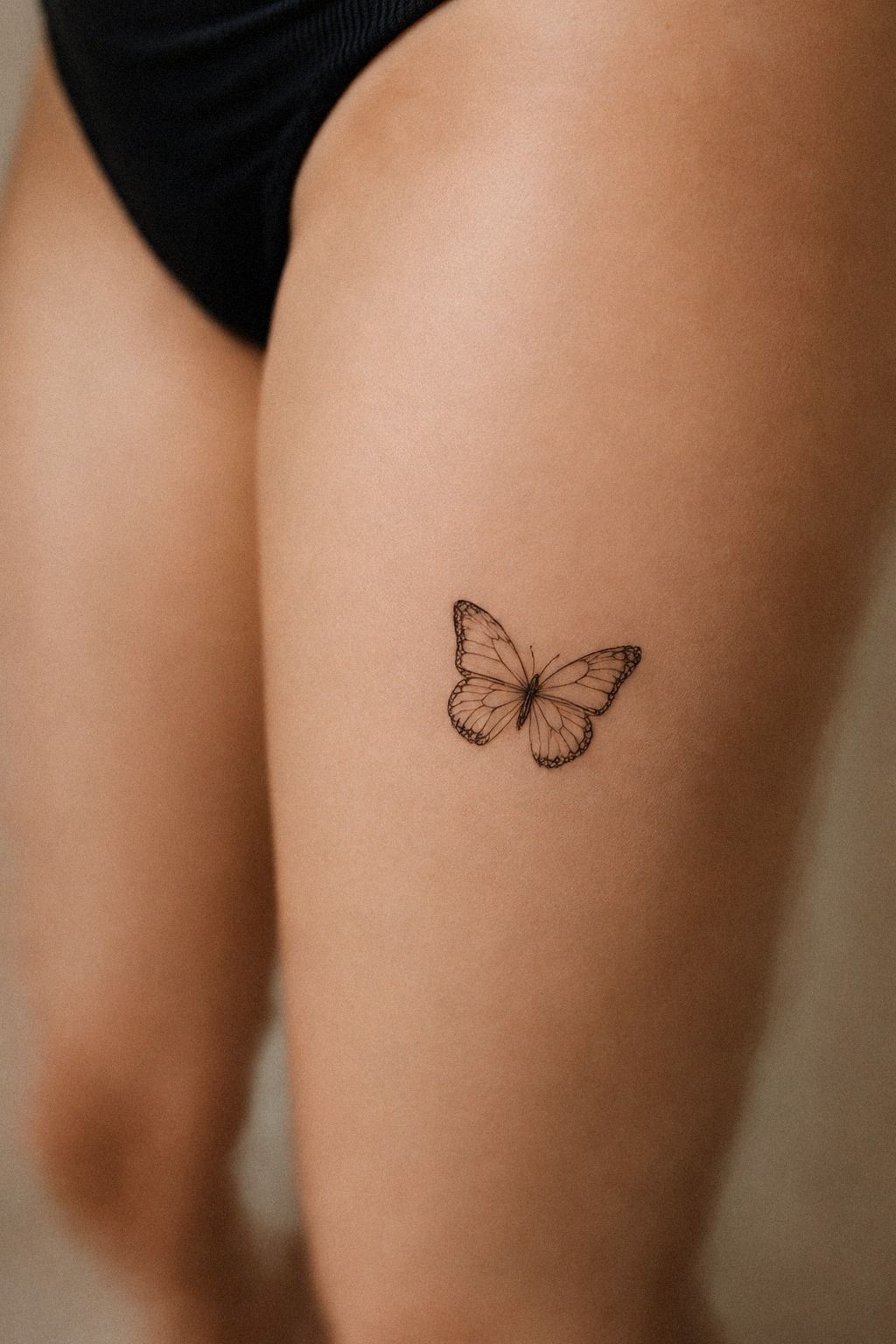
Fine dotwork gives a minimal butterfly a soft, intricate surface without heavy solid shading. The technique can look ethereal when the dots are spaced carefully and the wings remain open.
Ask for fine dotwork shading only where it improves the silhouette. Too many dots can blur together as the tattoo settles, especially in a very small design.
A dotwork butterfly can feel vintage, sacred, or quietly symbolic. The effect depends on whether the marks follow the wing structure or sit randomly inside it.
I’d keep the body darker than the wings. That small contrast gives the eye an anchor and helps the design stay readable from a normal distance.
Dotwork also works well with a single meaningful symbol. A star, crescent, initial, or tiny flower can sit in one wing without overwhelming the butterfly.
You can compare dot density with these small fine line butterfly designs. Notice which examples still look clear when you stop viewing them up close.
If your artist recommends a slightly larger size, listen carefully. The extra width may protect the delicate pattern and keep the design from becoming a dark speck.
7Delicate Small Butterfly Tattoo with Floral Details
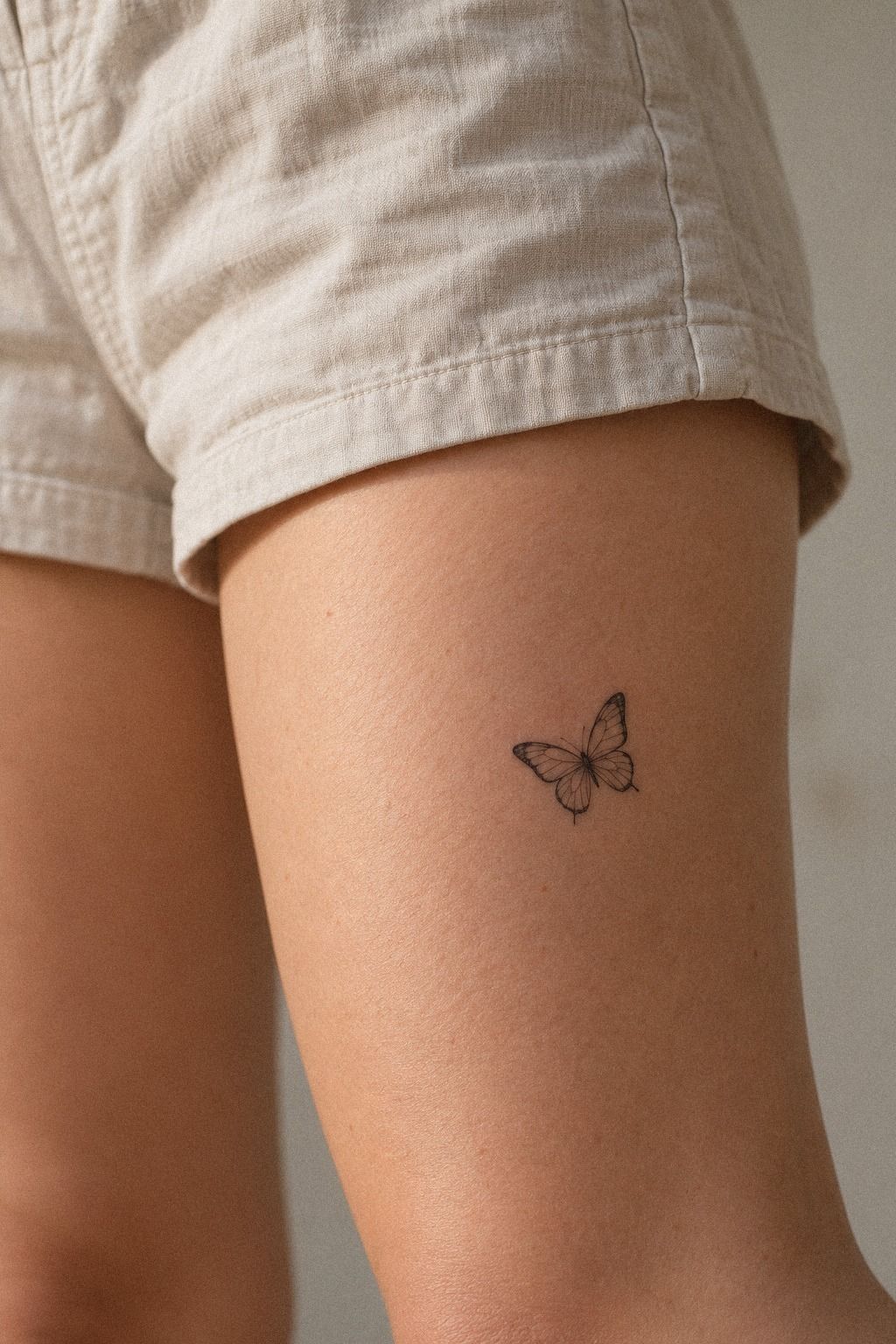
A butterfly paired with a wildflower sprig feels romantic and organic, but the floral detail should remain secondary to the wings.
8Unique Delicate Small Butterfly Tattoo in White Ink
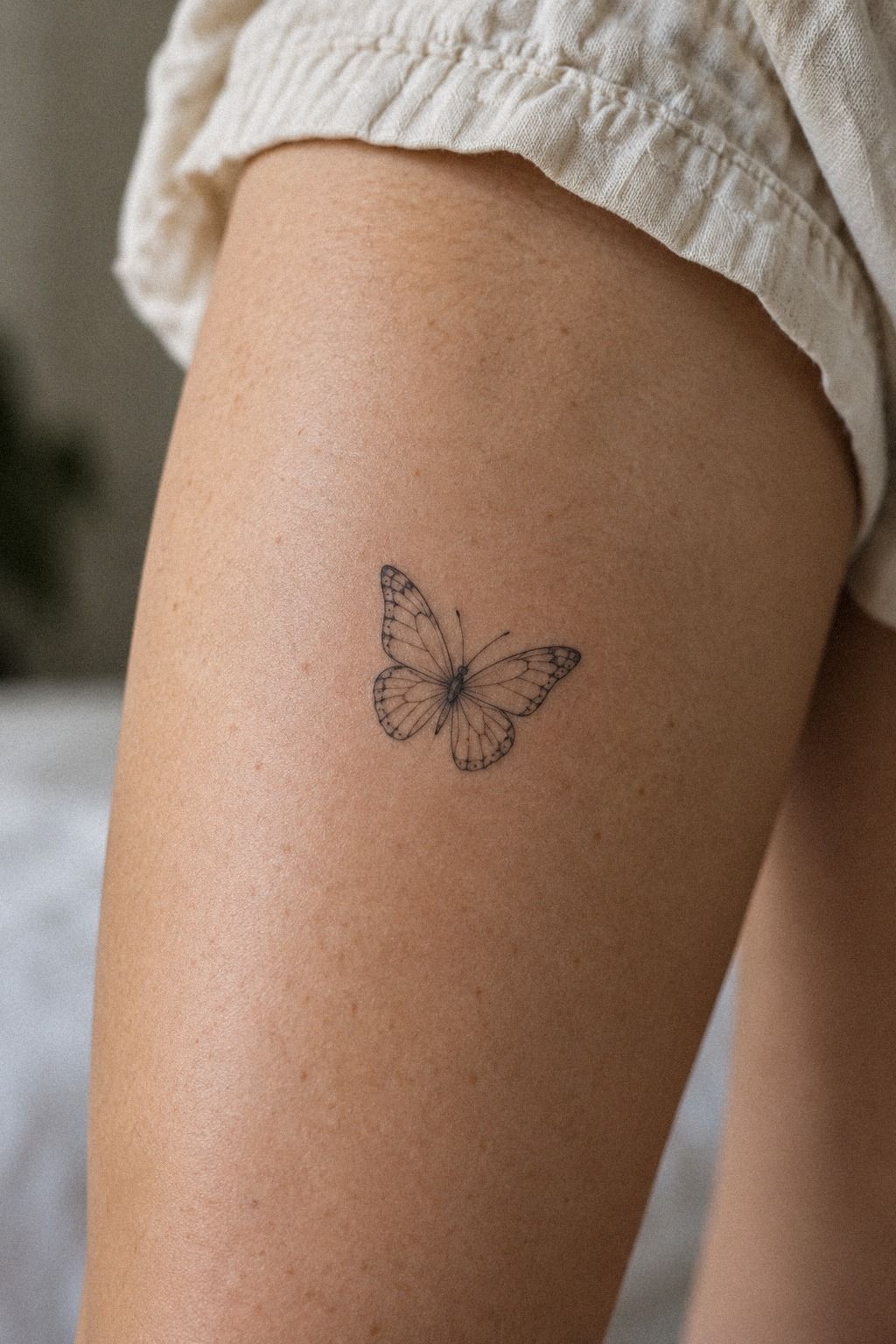
White ink creates a daring, subtle effect on the ribs, especially when the butterfly is made from open wings and crisp interior marks. It can feel almost ethereal when the design stays restrained.
Ask your artist about white ink pigment and healed examples on skin close to yours. Fresh white ink can look striking, but it may soften, warm, or become less visible as the skin settles.
The ribs are easy to cover at work, but the placement can be more sensitive. You can request breaks and discuss whether a slightly larger outline would protect the design.
I wouldn’t use white ink for every mark. A black body or a few crisp anchors can keep the butterfly recognizable if the pale sections fade into the surrounding skin.
White ink can be meaningful when you want a private symbol rather than an immediately visible statement. It’s understated, but it still has an edgy quality.
Ask what touch-up expectations are realistic. Healed white ink may not resemble the fresh version exactly, and that’s something you should understand before booking.
9Delicate Small Butterfly Tattoo on the Ankle
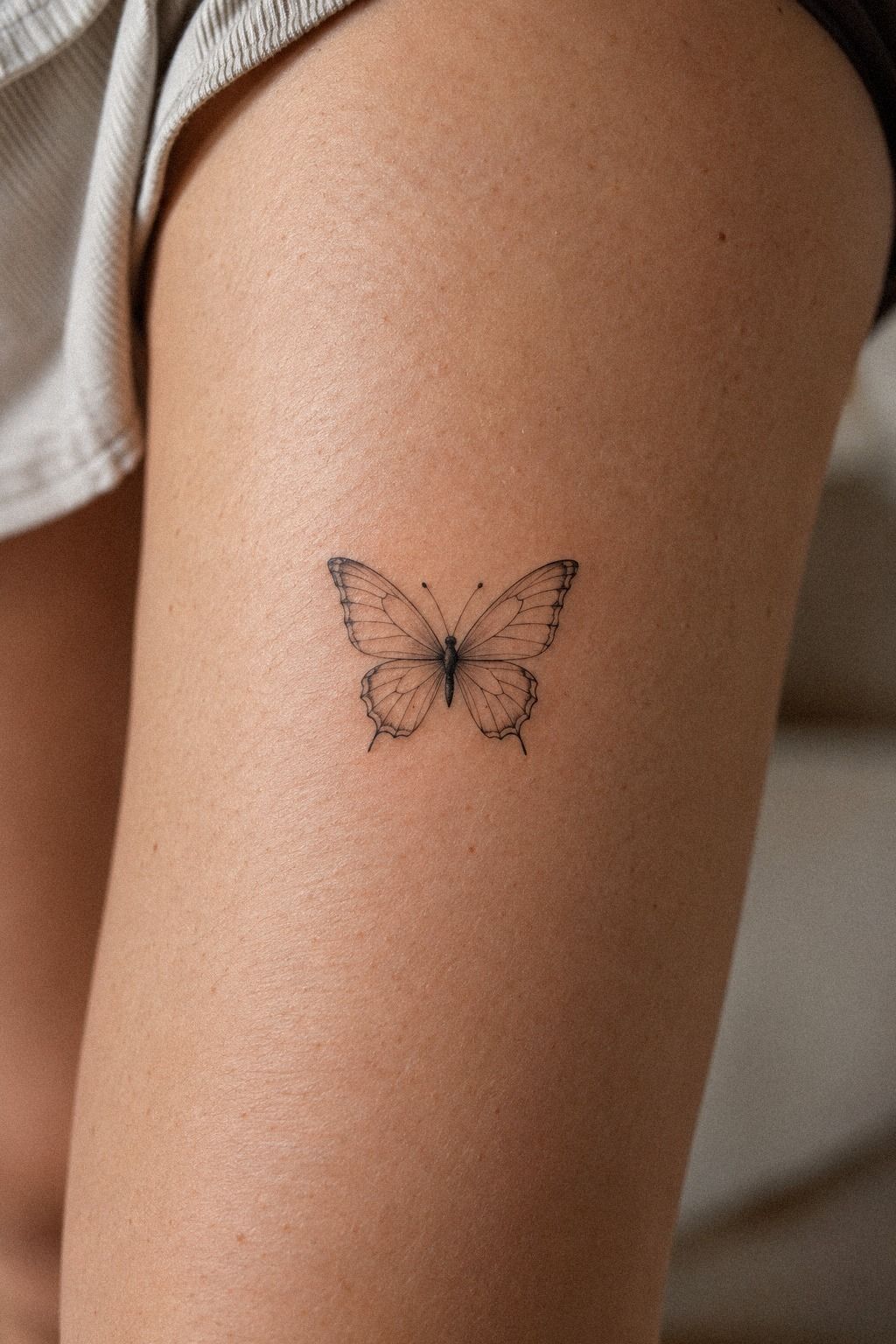
An ankle butterfly feels dainty and quietly feminine, especially when the wings sit just above the ankle bone rather than wrapping around the foot. The placement is easy to hide with socks and trousers, which makes it useful for a low-profile work tattoo.
Ask for fine ankle linework with a clear body and open wing shape. You’ll want to avoid putting the smallest details directly over a spot that rubs against shoe edges or sock seams.
The ankle can be more uncomfortable than the upper arm or shoulder because there’s less padding near the bone. It also sees friction, sweat, and sunlight, so your aftercare routine matters while the surface heals.
A midnight-blue outline with a tiny ivory center and copper accent can look timeless, but I’d avoid a pale-only design here. Shoes and movement can make a low-contrast butterfly harder to read. The outer contour protects the silhouette.
Healing takes patience. The surface may settle in about 2 to 3 weeks, while the tattoo can continue settling more completely over roughly 2 to 3 months. You’ll want to avoid pools and direct sun during that period.
For alternative placements, compare these small butterfly tattoo ideas. You can also review this butterfly symbolism guide if the meaning matters as much as the placement. The ankle is understated, practical, and still graceful when you choose carefully.
An ankle tattoo can be affordable if the design stays simple. Ask about the shop minimum, then compare that cost with a larger upper-arm design. The cheaper option isn’t always the better value if it won’t suit your daily routine.
10Symbolic Delicate Small Butterfly Tattoo with Initials
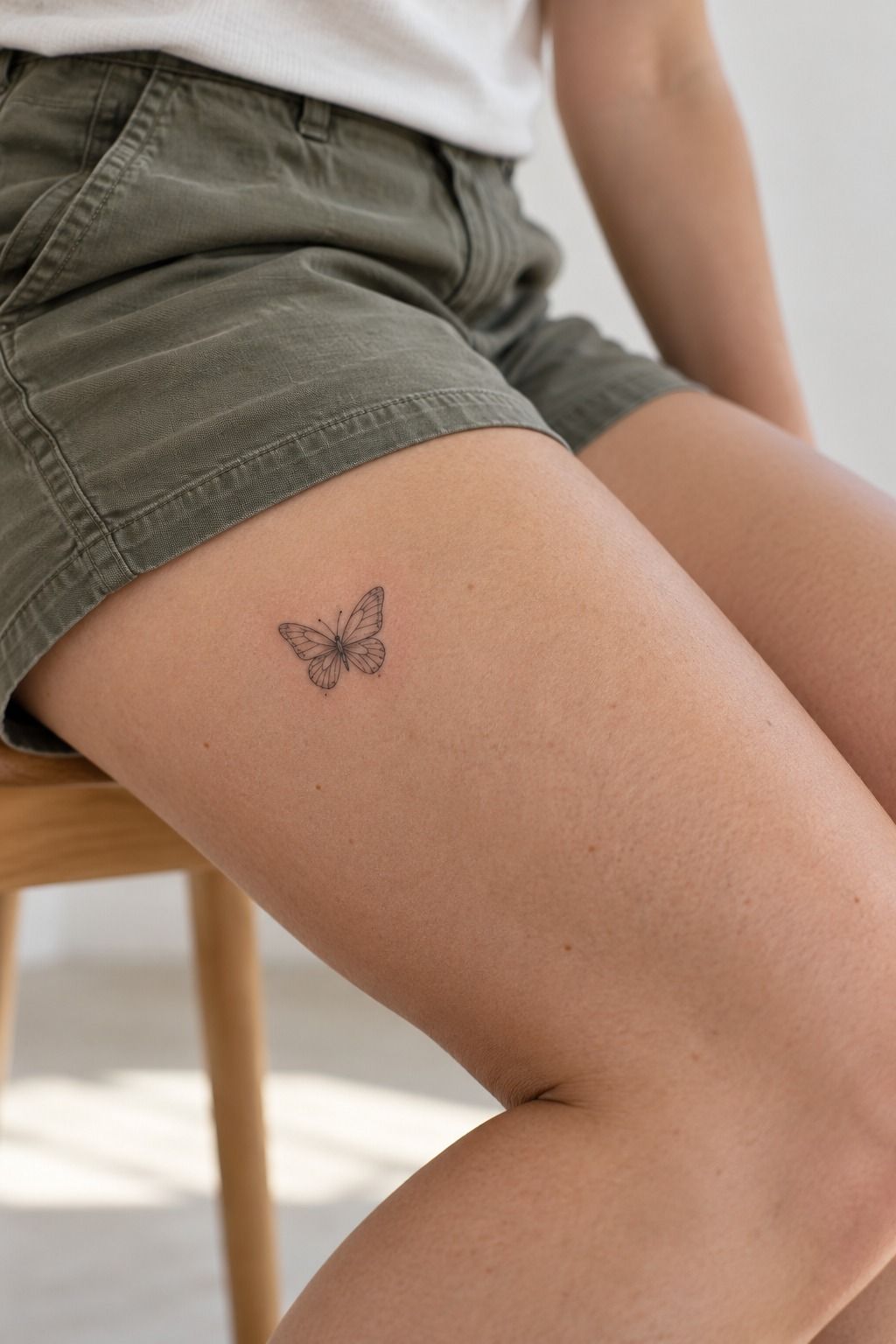
Initials can make a butterfly deeply personal, but they need to stay small enough that the design doesn’t become a crowded monogram.
11Delicate Small Butterfly Tattoo with Colorful Wings
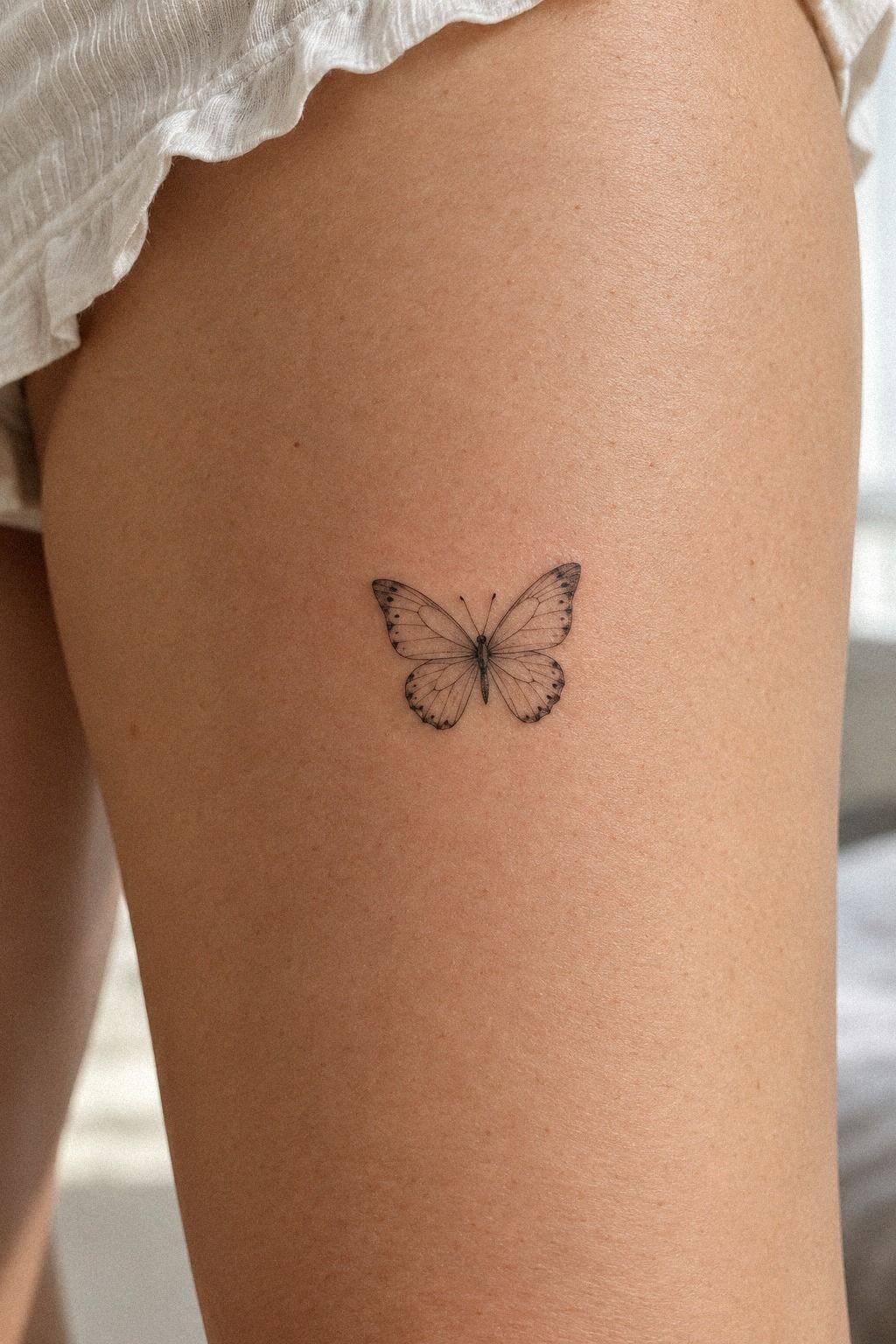
Colorful wings let you make the butterfly vibrant and playful while keeping the outline fine. On deep brown skin with warm undertones, your artist can help you choose saturated colors that remain distinct instead of blending into one soft patch.
Consider terracotta pigment with olive and muted stone-colored accents. You’ll want the darkest outline to carry the shape, with color placed inside the wings rather than around the edges.
The shoulder is a practical location because you can cover it at work and still see the tattoo in sleeveless clothing. It also gives the artist enough space to separate the colors, which matters more than adding extra wing details.
I’d avoid using every color in the palette. A restrained combination looks more polished, while too many shades can make a small butterfly feel busy. The most striking version usually has one dominant color and one supporting accent.
But color requires realistic maintenance. UV exposure can fade pigment, and healed ink won’t look identical to the fresh version. Ask for healed color examples and follow your artist’s care instructions closely.
For another clean starting point, browse these small fine line butterfly tattoo references. A colorful butterfly can be bold without becoming loud when the wings still have space to breathe.
If you’re working with a firm budget, ask whether two colors would create the effect you want. You may not need five pigments. A focused palette can look more elegant and may cost less.
Your artist should also discuss how the colors may settle on your skin. Saturated pigment can remain vibrant, but sunlight still matters. Use the care plan you’re given, and don’t judge the final result too quickly.
A Shoulder or Wrist: Which Placement Gives Better Value?
The shoulder usually gives you more space, easier coverage, and less daily friction. The wrist gives you more visibility but can face constant movement, sunlight, and contact with desks or clothing.
I’d choose the shoulder if you want the safest balance between personal meaning and workplace privacy. You can still see it when you want to, and your artist has more space to keep the wings crisp.
If you love seeing your tattoo every day, the wrist may be worth it. Just accept that a visible placement can require more care. Your lifestyle should decide, not a trend.
For a second comparison, review this small butterfly tattoo arm placement guide. It can help you weigh visibility, movement, and coverage before you commit.
What Should You Ask During the Consultation?
Bring a few references, but don’t arrive with a design that leaves no room for professional judgment. Ask your artist what they’d simplify, what they’d enlarge, and how the tattoo may settle.
Request to see healed tattoo examples in a similar style. Fresh tattoos can look sharper than settled work. You deserve to judge the result using realistic evidence.
Ask about the total cost, the studio minimum, color fees, touch-ups, aftercare, and expected healing time. These questions make the appointment easier and protect your budget.
You should also ask how the placement works with your job. If you need to cover the tattoo every day, test that with the clothing you actually wear. A design is only useful when it fits your life.
I’d also ask whether the artist has worked with your skin tone and the pigment choices you want. That conversation can prevent a disappointing mismatch later.
How Can You Keep a Small Butterfly Readable?
Start with a clear silhouette. The body, outer wing edge, and main interior marks should remain distinct. Tiny details are optional.
Your artist may recommend a slightly larger size than you planned. Listen to that advice if it protects the design. A bigger tattoo can still be discreet when the placement is easy to cover.
Avoid stacking too many symbols. One flower, initial, color, or birthstone is often enough. Meaning becomes stronger when the composition has breathing space.
For more ideas about shape and proportion, review this butterfly tattoo meaning guide. Notice which designs remain readable without relying on dense detail.
I’d prioritize the outer contour over decorative marks. A sharp silhouette gives the eye something reliable to recognize, even if a tiny interior detail softens.
Is a Small Butterfly Tattoo Worth the Cost?
For many people, yes. A small butterfly can carry strong personal meaning while requiring less time than a large custom piece. The value depends on design quality, placement, and how well the tattoo fits your routine.
Here’s a realistic cost guide for the United States:
Many shops have a $50 to $100 studio minimum, while hourly rates may land around $100 to $250. Your region, artist’s experience, placement, and color choices can move the final quote.
A low price isn’t always a good deal. If the lines are too faint, the details are too crowded, or the placement faces constant friction, you may spend more later on correction or cover-up work.
I’d rather pay for a thoughtful consultation and a clean silhouette than save money on a rushed design. Your tattoo will be with you much longer than the appointment lasts.
A polished result can still be affordable when you choose one clear idea. You don’t need multiple colors, dense shading, or ornate symbolism to make the piece feel personal.
What I’ve Learned About Small Butterfly Ink
I used to think making a tattoo smaller automatically made it more discreet and easier to live with. It doesn’t. A tiny design still needs enough space for the body, wing outline, and interior marks to remain separate after healing.
When I’ve seen small butterflies age poorly, the problem usually wasn’t the subject. It was crowding, weak contrast, or a placement that experienced too much friction.
My strongest preference is a clear silhouette with one memorable detail. That might be terracotta pigment, a birthstone dot, a flower stem, or one initial. I don’t want every meaningful idea pushed into the same design.
A symbolic tattoo becomes more personal when you leave something out. Your artist can give the remaining marks more space. That choice often creates better long-term value.
I’m also careful about white ink and ultra-pale grey. They can look elegant and understated in a fresh photograph, but you shouldn’t choose them without seeing healed examples.
Ask your artist what they’d change after working on similar skin. Listen if they recommend a darker anchor.
That advice isn’t a failure of your vision. It’s part of protecting it.
Finally, I’d rather see a delicate butterfly placed well than an intricate one squeezed into a fashionable spot. You’ll live with the movement, sunlight, clothing, and visibility every day.
Choose the location first, then let the design respond to your body. That’s how a small tattoo stays personal, expressive, and timeless instead of becoming a tiny blur you have to explain.
The Questions I Get Asked Most
How much does a delicate small butterfly tattoo usually cost?
I’d budget about $100 to $300 in the United States for a delicate small butterfly tattoo. Many shops have a $50 to $100 studio minimum, and artists may charge around $100 to $250 hourly. My quote would change with placement, color, custom drawing time, and the artist’s experience.
Are delicate small butterfly tattoos a good idea for a first tattoo?
I think they can be a meaningful first tattoo because you can choose a manageable placement and a clear subject. A simple silhouette is easier to discuss than a crowded design, and your artist can adjust the size for comfort and long-term readability.
How do I choose a tattoo artist for delicate small butterfly tattoos?
I’d look for a portfolio with clean linework, healed photographs, and work on skin tones similar to mine. Healed linework examples matter more than fresh images. I’d also confirm studio hygiene, licensing, consultation details, and experience with fine-line designs.
How much do delicate small butterfly tattoos hurt?
I’d expect discomfort to vary by person and placement. Ribs, feet, hands, and sternum can feel more intense, while the forearm, thigh, and shoulder are often more tolerable. Placement comfort matters, so I’d tell the artist if I needed breaks or a shorter session.
How long does a delicate small butterfly tattoo take to heal?
I’d expect the surface to take about 2 to 3 weeks to heal, while complete settling can take about 2 to 3 months. Gentle aftercare means washing lightly, moisturizing as directed, avoiding pools, and protecting the tattoo from strong sunlight.
What’s the best placement for a delicate small butterfly tattoo?
I’d choose the shoulder or upper arm when I want lower friction and easy coverage at work. The wrist and ankle are more visible but can experience more movement or rubbing. Placement visibility should match your dress code, comfort, and long-term care habits.
Where I’d Start First
If I had to pick one, I’d start with the delicate small butterfly tattoo on the shoulder. It’s easy to cover, gives the wings breathing room, and avoids the constant rubbing a wrist or ankle can get.
I’d choose one clear silhouette, one meaningful detail, and a line weight your artist believes will settle well. That combination can feel bold, personal, and understated at the same time.
Pin that idea for later and compare it with this small butterfly tattoo guide. Your best design won’t be the smallest one. It’ll be the one that still feels like you years from now!

