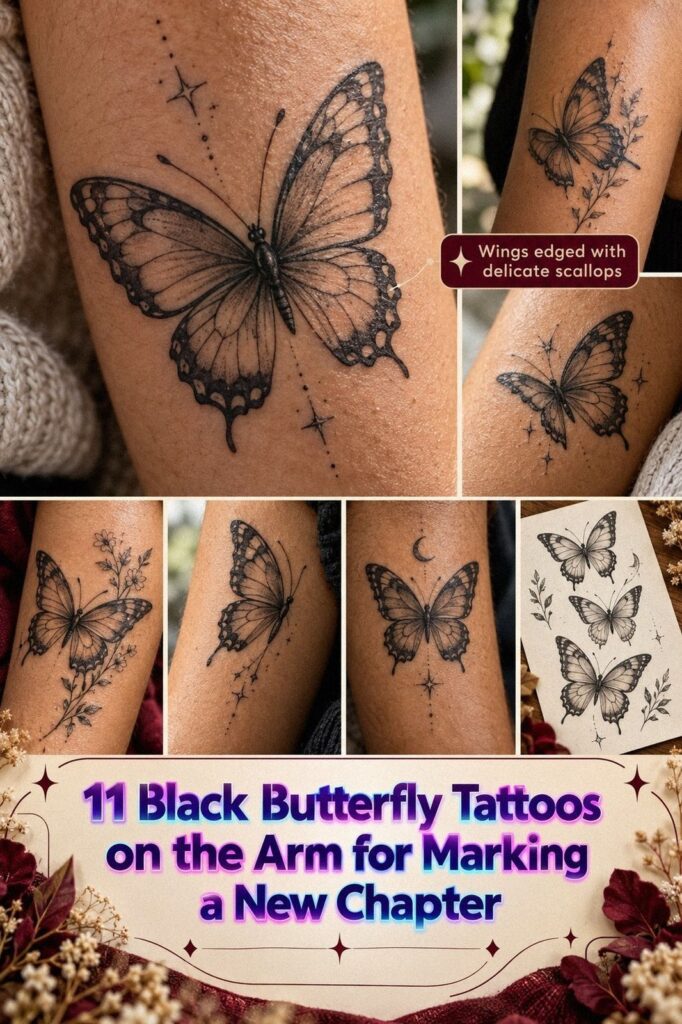
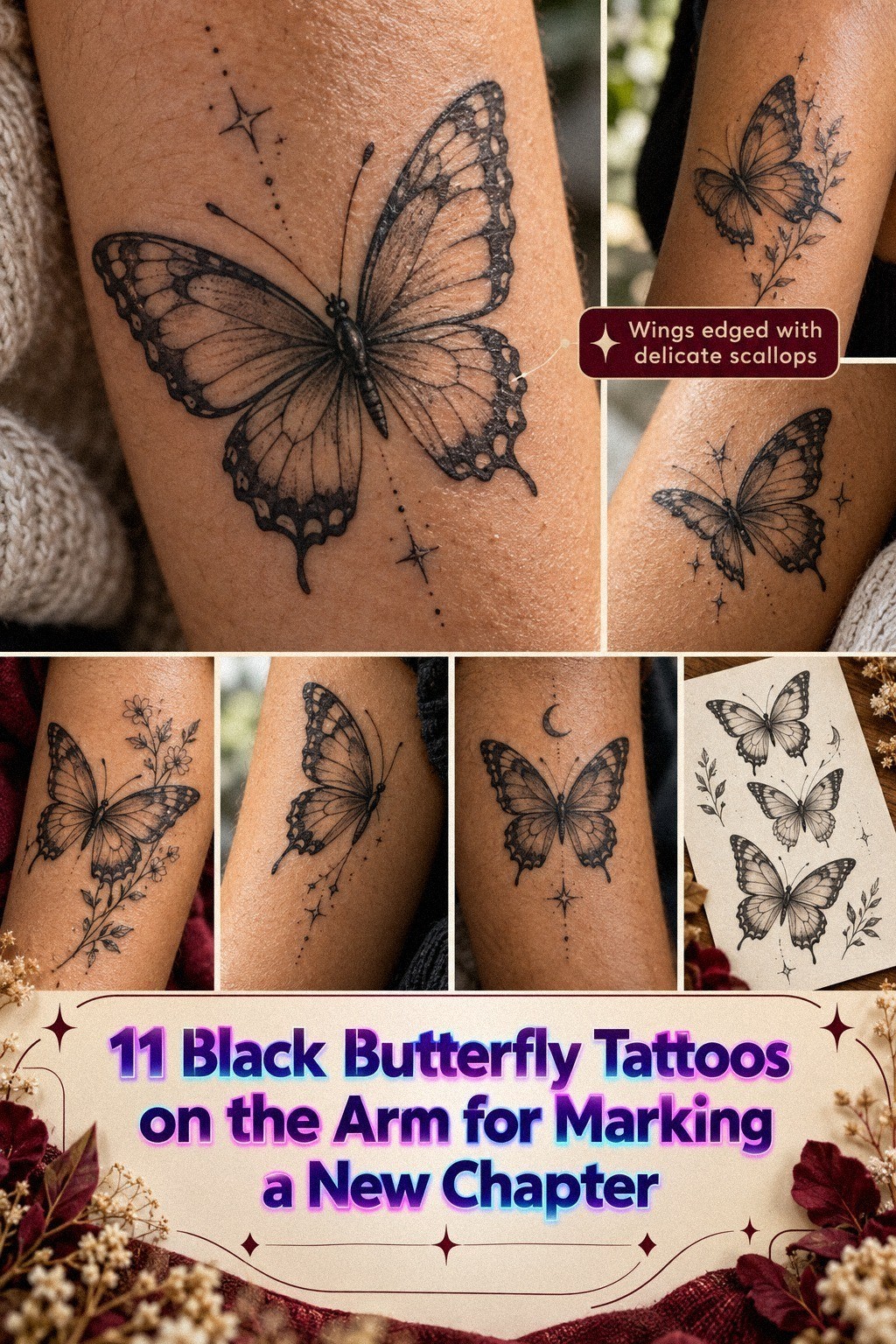
A black butterfly arm tattoo fits a real budget when you settle size, placement, and linework before booking. I learned that after sketching one design three times because the wing tips fought the forearm. Start smaller, compare healed work, and keep the plan personal. You’ll spend less and choose better!
- Start With Small Black Butterfly Tattoo Arm Ideas
- What Makes Intricate Wing Linework Work?
- Place A Black Butterfly Above The Elbow
- A Crisp, Meaningful Silhouette
- Plan Unique Black Butterfly Tattoo Arm Details
- Delicate Wings, Feminine Energy
- Add Symbolic Dots Around The Butterfly
- Match Bold Ink With Your Arm Shape
- The Flowing Forearm Butterfly
- Balance Ornate Details With Skin Movement
- Prepare Meaningful Aftercare For Striking Arm Ink
1Start With Small Black Butterfly Tattoo Arm Ideas
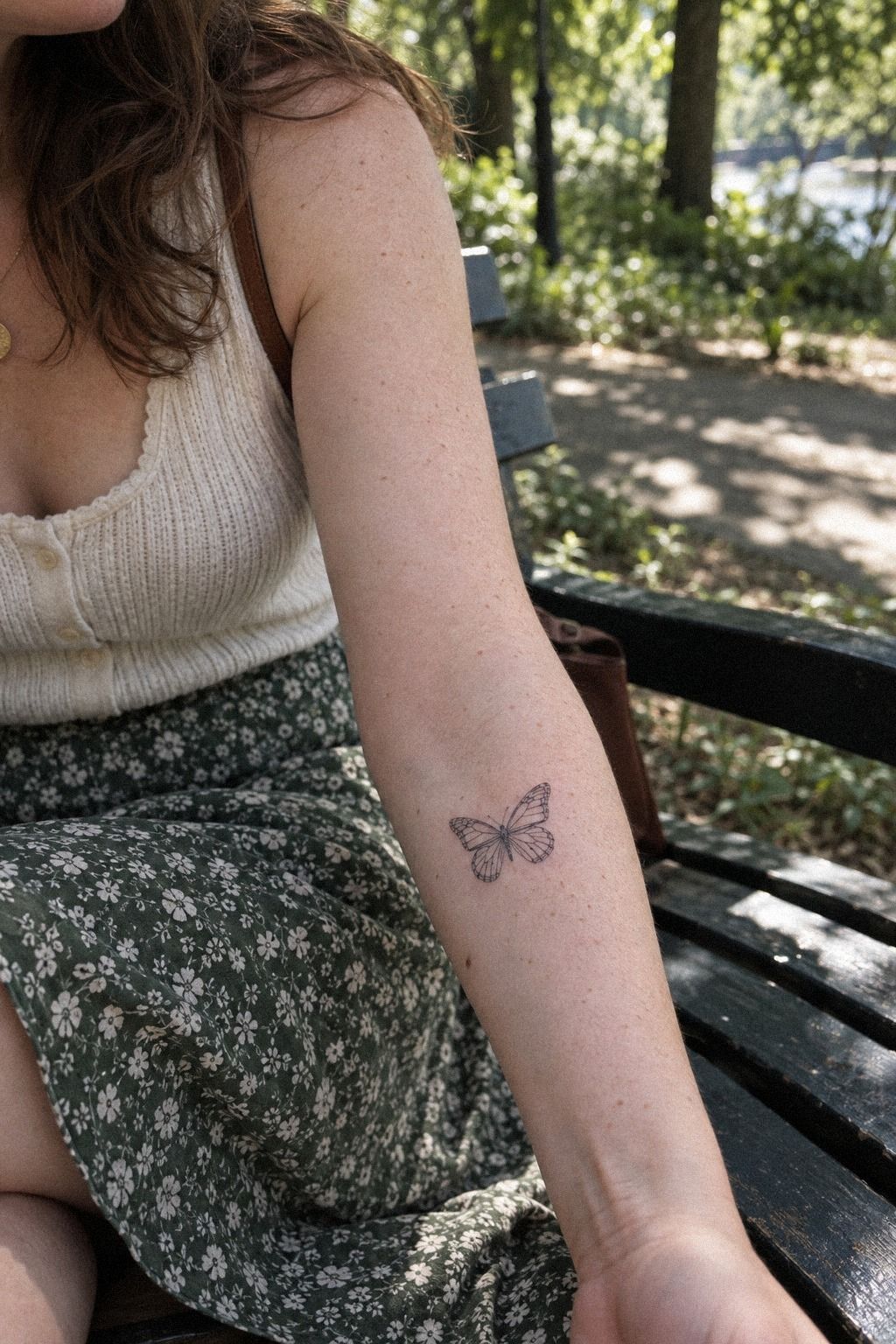
Start with the smallest version you’d still recognize from several feet away. A small butterfly can look minimal, delicate, sleek, and meaningful when the outline has enough open skin around it. That approach keeps the design readable without demanding a long appointment.
Browse these tiny butterfly tattoo arm references before you save a favorite. The useful comparison isn’t only the shape. Look at the spacing, wing width, and direction of the body.
A small tattoo needs negative space to stay crisp rather than crowded.
Ask your artist to sketch the butterfly on transfer paper before anything begins. You’ll want to see how the wings sit beside your wrist, tendons, and natural arm curve. I’d keep the body centered and let the upper wings follow the forearm instead of forcing perfect symmetry onto moving skin.
A small design can still carry a powerful idea. You might use one wing shape from a family symbol, a flight path from a meaningful memory, or a tiny mark hidden inside the lower wing. Keep that detail visible at your chosen scale, or your personal reference won’t survive.
The open-wing outline should look balanced when your arm hangs naturally, not only when you pose. If you’re unsure, ask for the stencil in two sizes and wear each for a few minutes. Your arm will tell you which one feels right.
You can also compare small butterfly tattoo arm ideas before your consultation. I’d save three favorites, then delete anything that doesn’t suit your actual arm.
2What Makes Intricate Wing Linework Work?

Wing linework depends on spacing more than quantity. Intricate veins need room to remain separate, especially if the butterfly is small. Ask whether each interior mark will still read after healing, then remove any line that only fills space.
3Place A Black Butterfly Above The Elbow
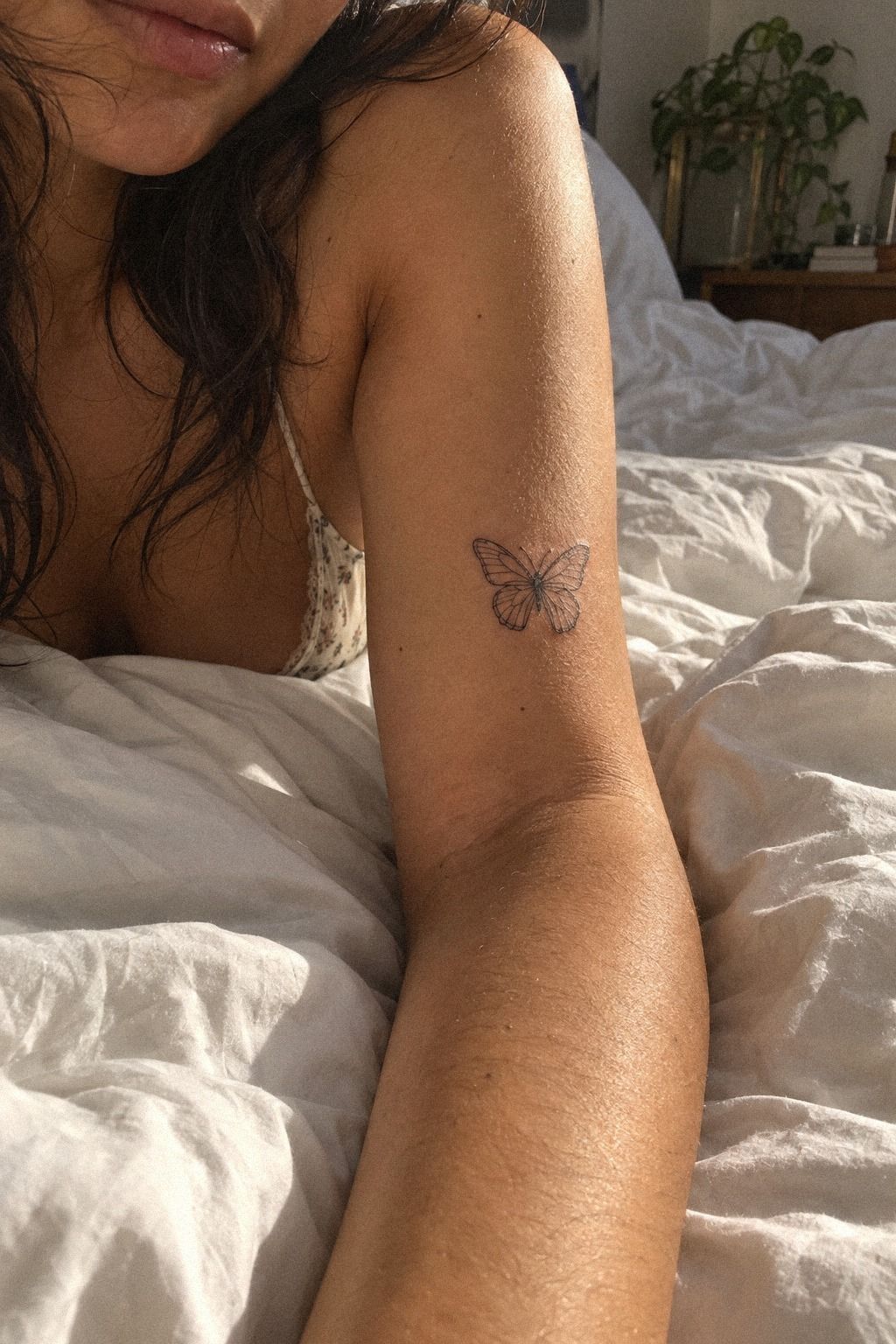
An above-elbow butterfly can feel bold without making the joint carry every line. Place the lower wing tips above the crease so they won’t fold directly into it. I’d choose an understated gap rather than pushing the butterfly too close to the joint for extra drama.
Use your elbow crease as a boundary, not a target. Ask to stand, bend, and relax your arm while the upper-forearm placement is stenciled. Skin shifts more than you’d expect, and the design may tilt when your elbow is bent.
The small butterfly tattoo arm ideas page can help you compare visibility. You’ll see how a piece above the elbow can show with short sleeves but disappear beneath a longer sleeve. That flexibility matters if you’re balancing personal meaning with work or family settings.
A butterfly with a personal symbol should still look intentional in several positions, not like it’s trying to escape the crease. I’d rotate your wrist, lower your arm, and check the stencil from the side before approving it.
The elbow boundary can also protect your budget if the design stays compact. You may need less time than you would for a large wraparound piece, but your final quote will still depend on the artist and region.
4A Crisp, Meaningful Silhouette
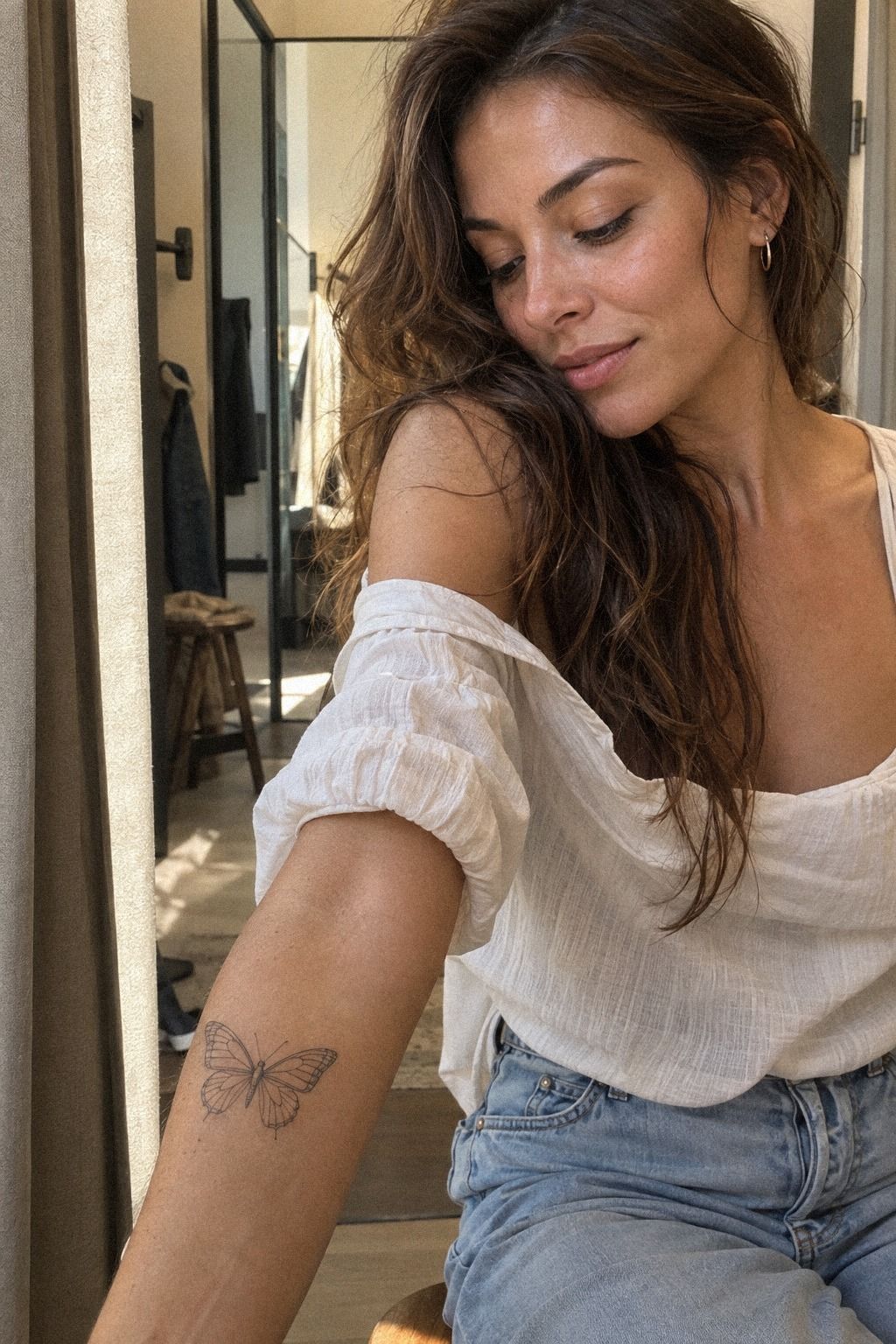
Start with the outside shape, then decide which interior marks deserve to stay. A fierce butterfly should read immediately, even when viewed from a distance. If the silhouette feels weak, extra decoration won’t rescue it.
Ask your artist to print the design as a plain black silhouette first. If you don’t like the butterfly without decorative veins, the detailed version probably won’t feel right either. I’d rather see a polished outer edge than a busy drawing with no identity.
A small black butterfly tattoo guide can help you compare solid black areas with open skin. You’ll want enough contrast for the wings to remain visible, but not so much filled ink that the delicate parts disappear.
Think about how the tattoo may change with sunlight and time. Very fine lines can spread, and UV exposure can fade black ink. A timeless silhouette with sensible spacing usually holds its character better than an overloaded design built around tiny decoration.
Keep the lower wing points slightly shorter if your forearm narrows toward the wrist. That sharp adjustment can make the silhouette look polished from several angles. Your artist should adapt the butterfly to your arm, not paste the same drawing onto every client.
5Plan Unique Black Butterfly Tattoo Arm Details
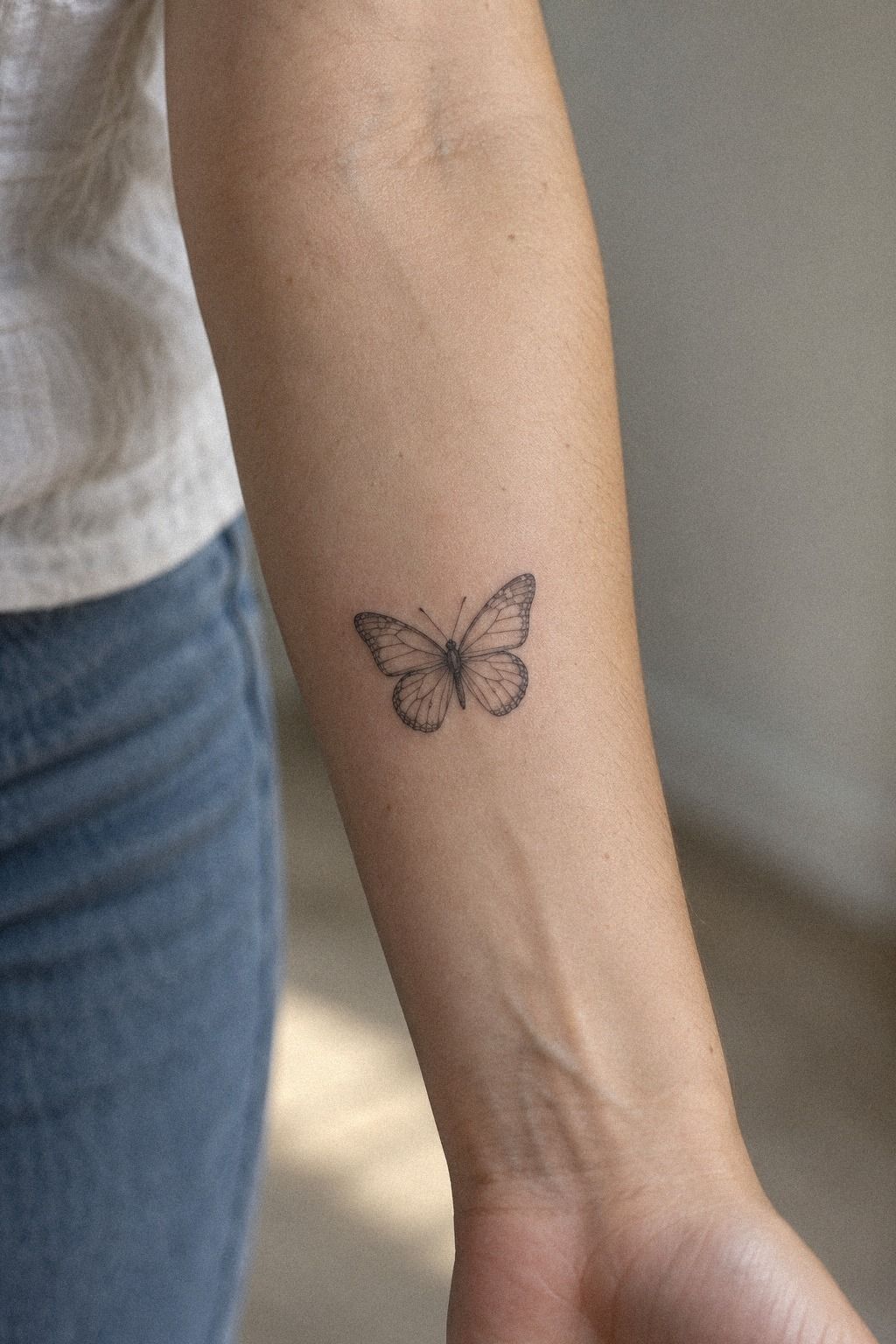
Your first sketch doesn’t need to be the final one. Lay out several black butterfly variations and compare their bodies, wing cuts, antennae, and surrounding marks. A personal design begins with choices, not with adding every symbol you like.
Build a three-detail rule for your unique butterfly: one meaningful shape, one linework choice, and one placement decision. For example, you might choose a crescent cut in one wing, vintage crosshatching, and a position facing toward your hand.
Use a paper flash sheet or digital board, then remove anything that only looks interesting in isolation. I’d keep the wing shape and lose decorative stars if they don’t relate to you. Your tattoo should feel personal, not like every saved reference arrived at once.
Compare the unique black butterfly tattoo arm collection with your own sketches. You’ll find that originality often comes from proportion rather than strange decoration. A longer body, one uneven wing edge, or a changed vein pattern can make a familiar subject feel new.
Bring no more than three finalists to your consultation. You’ll get clearer feedback, and your artist can explain which design will age best. I learned that too many references create a muddled brief, especially when one image has a different scale or line weight.
A daring detail can still be subtle. The strongest choice is often the one only you understand. Keep it personal!
6Delicate Wings, Feminine Energy
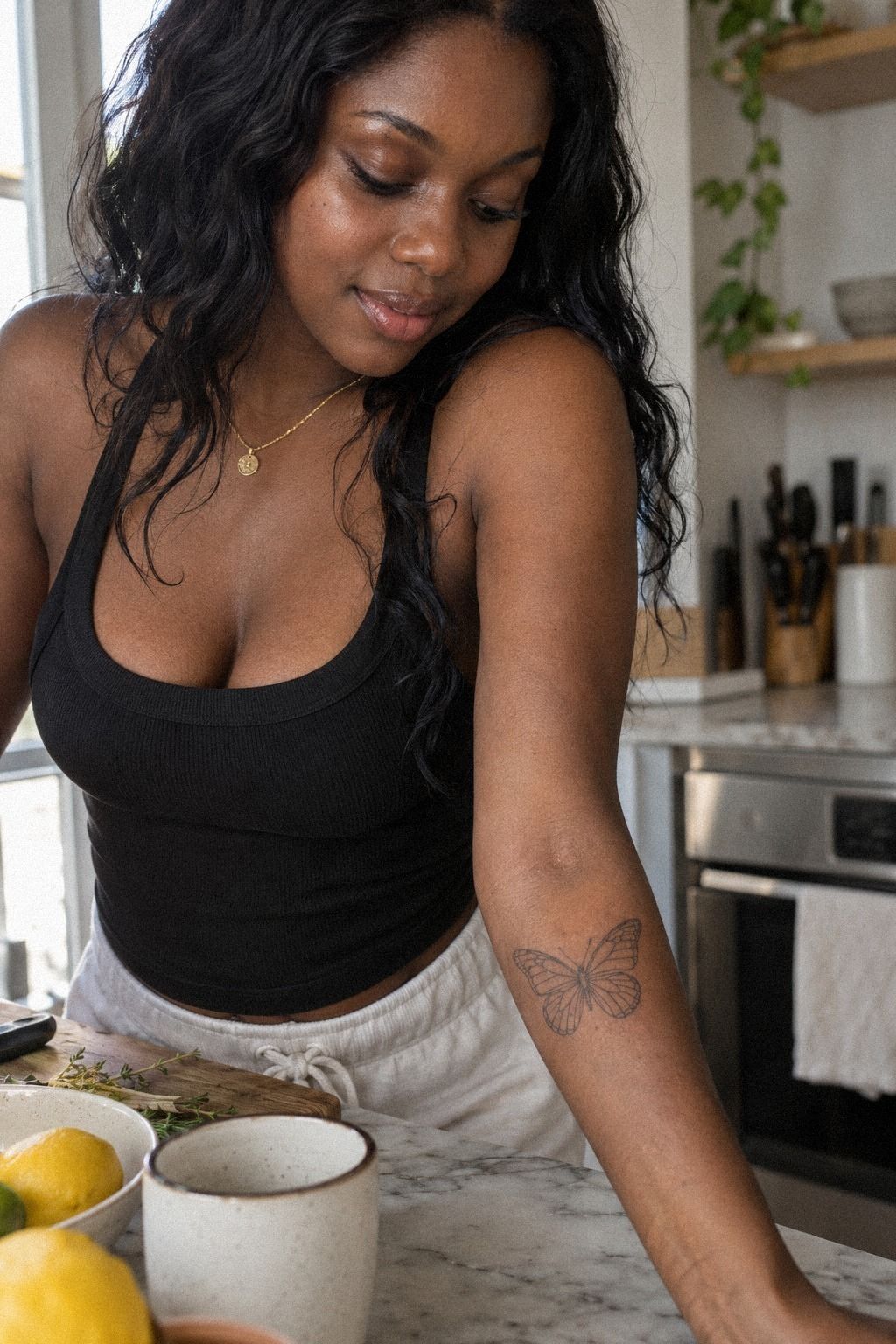
Delicate wings can create a feminine, romantic effect without turning the butterfly into a fragile ornament. A dainty body, graceful antennae, and restrained spacing can keep the result elegant while preserving its meaning.
I’d avoid shrinking every feature just to make the tattoo seem softer. A feminine design still needs a clear silhouette, enough contrast, and a placement that follows your arm naturally.
7Add Symbolic Dots Around The Butterfly
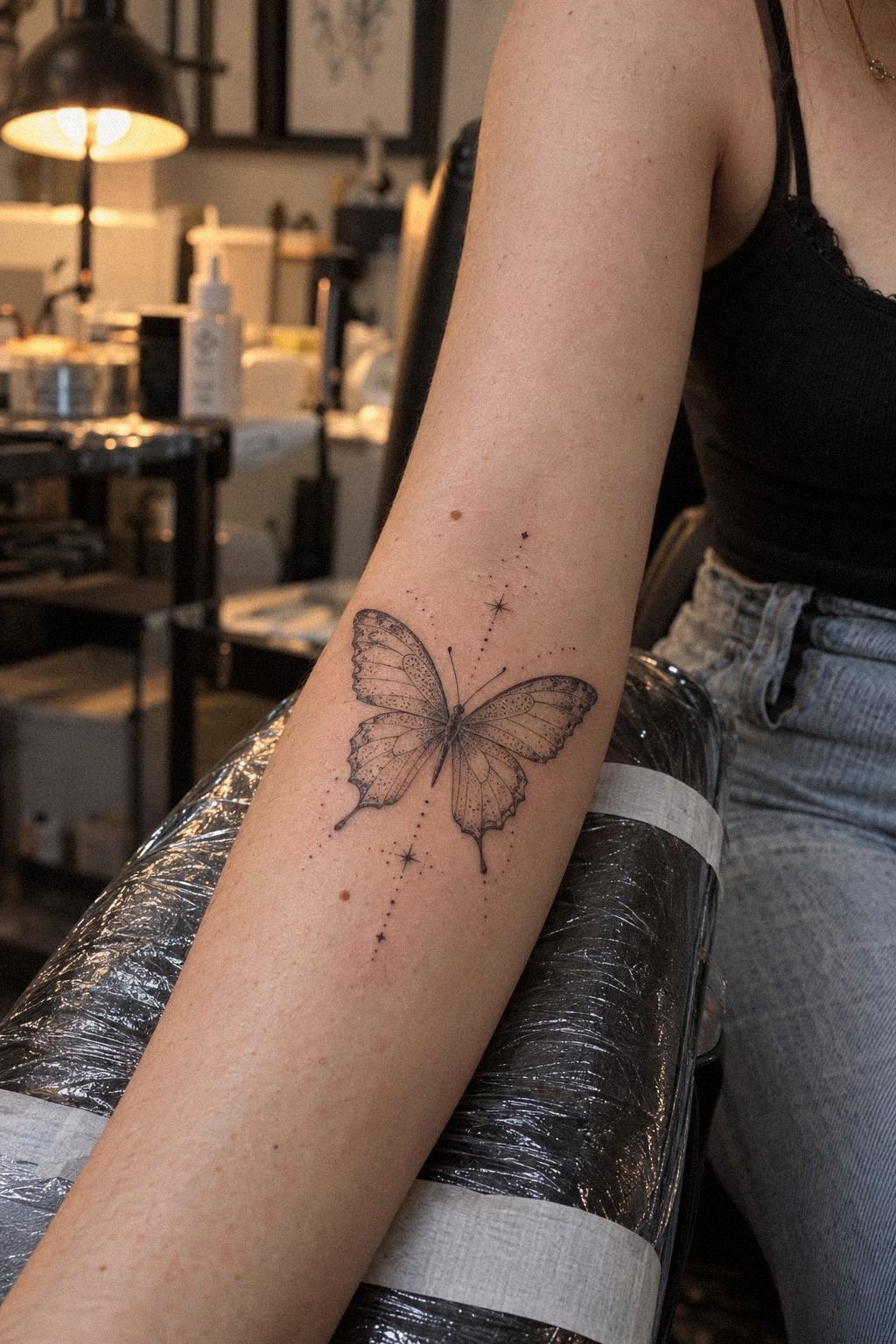
Dotwork around a butterfly can feel playful, whimsical, or sacred, depending on what the marks represent. Start with a reason for each dot cluster before asking for decoration. Random dots may look stylish now but meaningless later.
Try a constellation spacing rule: one close group near the wing, a second lighter group moving outward, and no dots where they compete with the silhouette. You’ll get movement without turning the tattoo into a cloud of noise.
Study these geometric black butterfly tattoo examples for spacing ideas. Even if you don’t want a geometric butterfly, repeated points can teach you about rhythm. Your artist can soften that rhythm so the design stays expressive instead of mechanical.
Three dots might mark a date, a transition, or a private reference. You don’t have to explain every symbol. A haunting detail can remain yours alone, and that mystery may make the tattoo more meaningful.
Keep symbolic dotwork away from the deepest elbow crease and wrist fold. Those areas move, rub, and receive more daily contact. A stencil consultation will show you where the marks can sit without crowding the butterfly.
8Match Bold Ink With Your Arm Shape
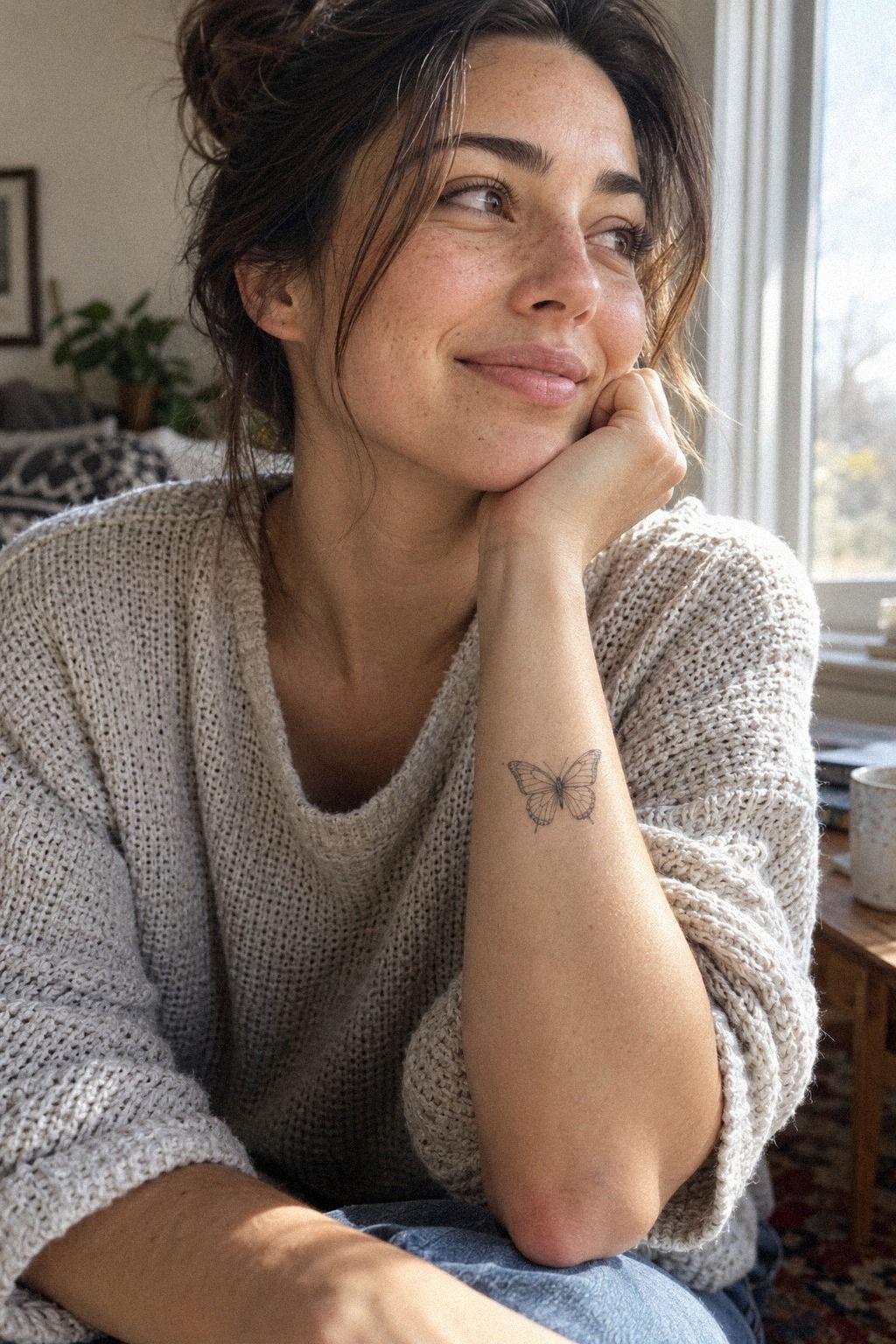
Black areas can work when the design follows your arm’s natural length. Start by measuring the available skin, then ask your artist to build the butterfly around that space. A powerful tattoo needs structure, not simply more ink.
A forearm flow test helps here. Place the stencil on the outer, inner, and central forearm, then rotate your wrist.
You’ll see which position keeps the wings readable. I’d skip a perfectly horizontal butterfly if your arm is narrow, because it may look compressed from the side.
Look at the minimalist black butterfly tattoo examples even if you want more ink. Minimal designs reveal how silhouette and arm shape work together. You can borrow the clean contour, then increase wing density without losing movement.
Bold ink needs restraint around the edges. Your artist can use solid black in the body and selected wing sections, leaving other areas open. That contrast prevents a gritty design from becoming one flat block after the tattoo settles.
This is where budget and scale meet. A larger butterfly may take more appointment time, and hourly rates in the United States commonly sit around $100 to $250. Ask whether the artist quotes by piece or time, because complexity matters as much as size.
9The Flowing Forearm Butterfly
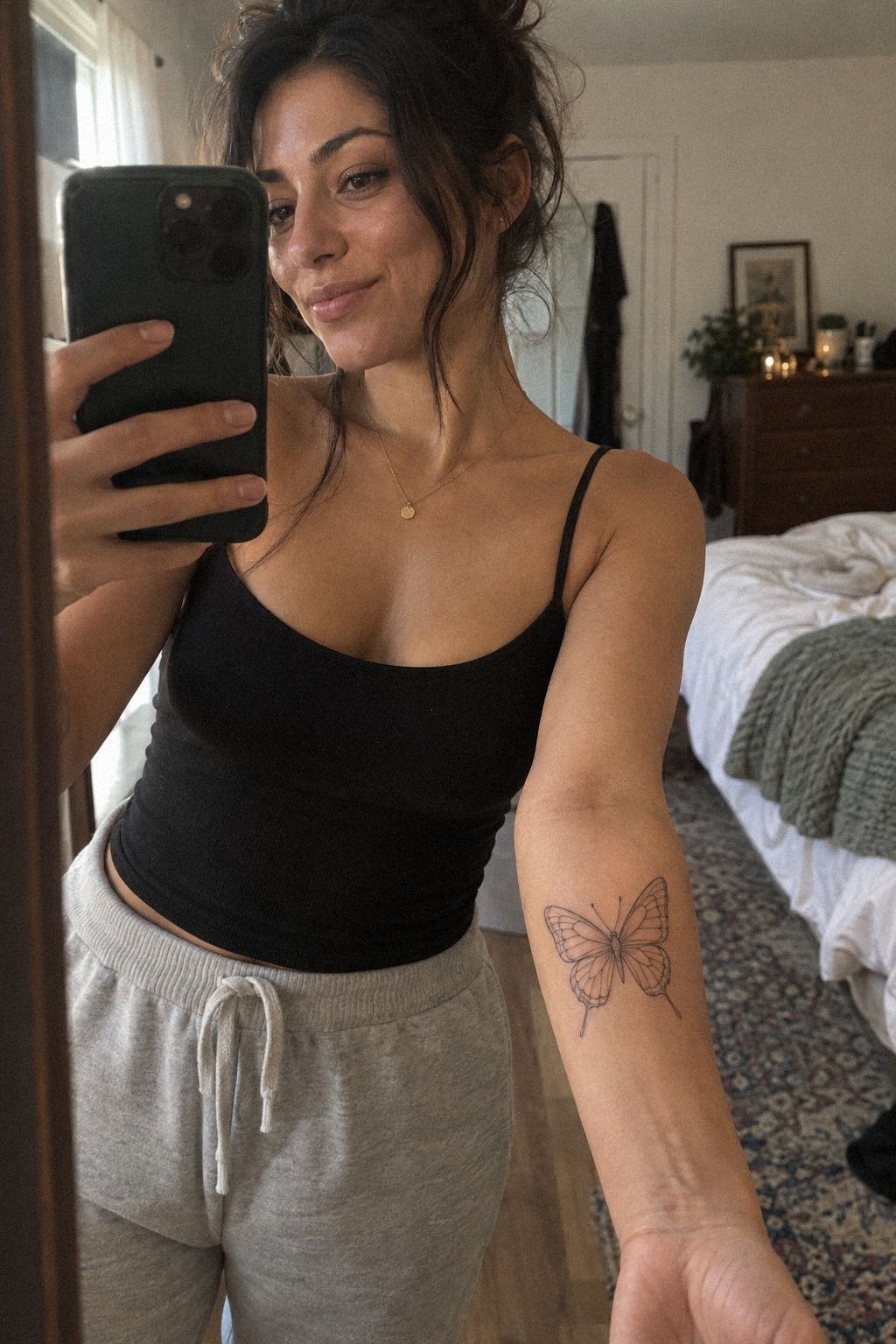
A flowing forearm butterfly follows the arm instead of sitting rigidly across it. A graceful diagonal can make the wings feel expressive while giving the body a clear direction.
Ask your artist to test the design with your arm relaxed and rotated. The best placement should remain recognizable without forcing the butterfly into a perfectly horizontal position.
10Balance Ornate Details With Skin Movement
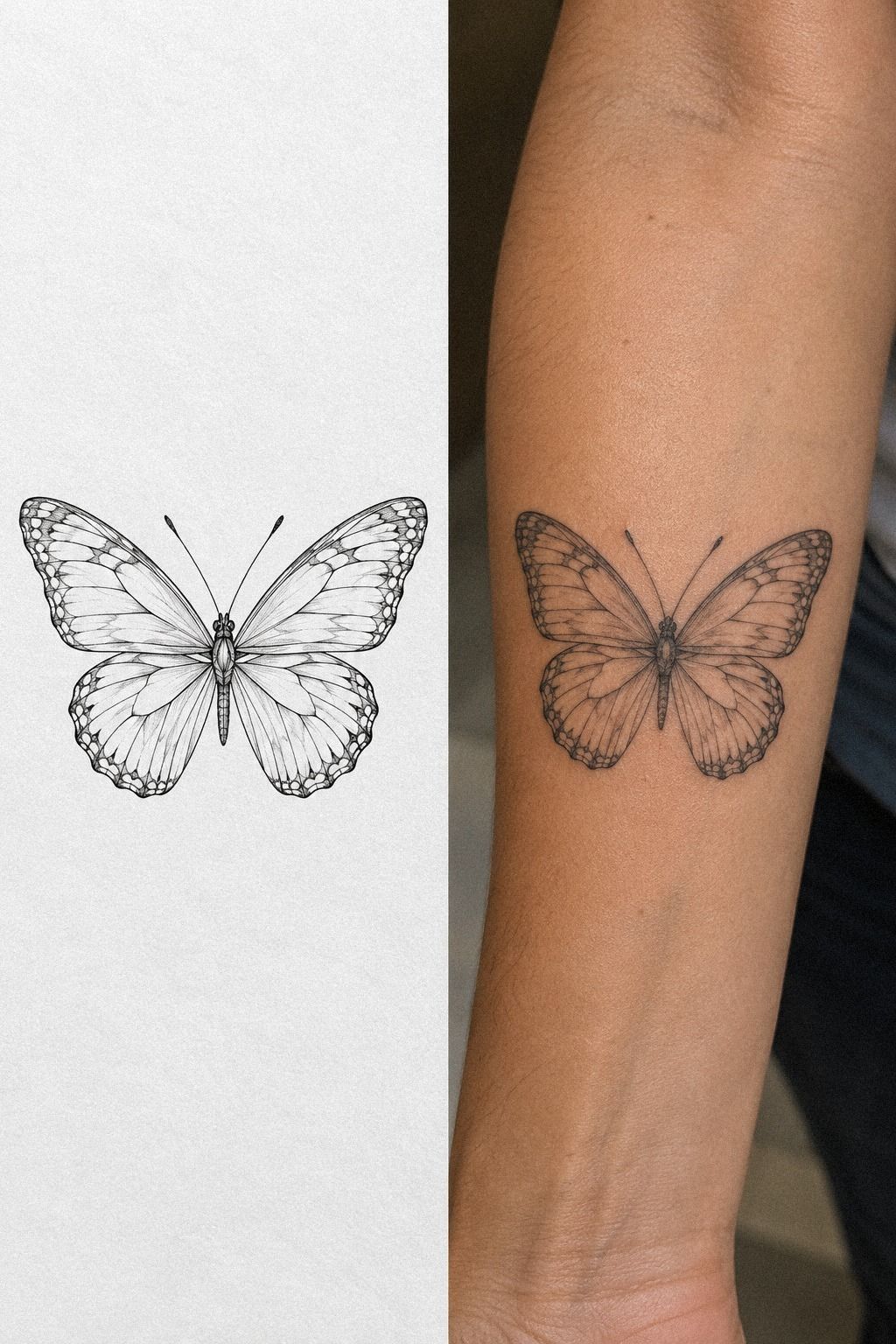
An ornate drawing can lose sharpness after healing, so plan for the skin version rather than chasing the paper version. A classic butterfly can handle more detail than a tiny one, but movement still matters.
Use a healed-line test before approving the stencil. Ask the artist to show comparable work after the surface has recovered, not just fresh examples. You’ll learn whether fine veins stay separate, whether dotwork remains crisp, and how much black softens.
Your skin stretches when you grip, bend, and rotate your arm. I’d remove one interior line now if it helps the design remain legible later. Less detail can be a daring choice.
Your artist may recommend a slightly wider gap between wing veins than the stencil suggests. Listen to that advice. The skin needs space, and the final tattoo should still read as a butterfly after surface healing takes roughly 2 to 3 weeks.
Keep the healed result in mind when you budget. A small touch-up may be discussed after the tattoo settles, but policies differ by artist and studio. Ask what’s included before you book and confirm the touch-up policy.
11Prepare Meaningful Aftercare For Striking Arm Ink

Aftercare protects the striking result you planned. Your artist’s aftercare instructions come first, because bandage type and skin response can change the routine. Don’t replace professional guidance with a random product list.
Wash with a gentle cleanser, pat dry, and use only the amount of fragrance-free moisturizer your artist recommends. You’ll want clean hands before touching the tattoo, and you shouldn’t soak it in a pool while the surface is recovering.
Save the tiny black butterfly tattoo reference beside your aftercare notes so you can compare your original scale with the finished design. Temporary dryness doesn’t mean the tattoo has failed.
The surface commonly heals in about 2 to 3 weeks, while complete healing can take roughly 2 to 3 months. Avoid direct sun during that period, then protect the tattoo from UV exposure afterward. Sun can fade black ink and make fine lines spread sooner.
If the area becomes unusually painful, hot, swollen, or wet, contact your artist or a medical professional instead of guessing. A meaningful tattoo deserves patient care.
Budget And Session Numbers To Know
Your quote will vary by artist, region, placement, and complexity. A small black butterfly may fall near common United States reference ranges, but your consultation is the only reliable estimate for your design. Use the figures below as planning markers, not a promise.
Before you book, ask whether the quote includes the consultation, stencil changes, and touch-up policy. You’ll avoid an awkward surprise if the artist explains the structure clearly. I’d rather delay a week for a transparent estimate than rush toward a number that keeps changing.
Your budget should cover the tattoo and the aftercare time, not only the appointment. You may need to avoid swimming, direct sun, and heavy rubbing while the surface heals. That’s a small planning cost, but it matters if you’re scheduling around travel or work.
You can compare small black butterfly tattoo cost references while preparing questions, but don’t treat an online range as a personal quote. Your artist’s hourly rate and the design’s intricacy will decide the final number.
That is a real budget win! Clarity before booking protects both your design and your wallet.
Why Placement Wins Over Size
I’ve designed tattoos that looked more impressive on paper than they felt on the body. The problem wasn’t the drawing. It was the placement.
A butterfly can be intricate, empowering, and expressive, but if the wings sit across a crease or twist with the arm, the meaning gets buried under bad geometry.
That’s why I’d choose a smaller forearm placement over a larger design squeezed beside the elbow. You’ll see it more clearly, your artist can protect the negative space, and the linework has space to settle.
Bigger isn’t automatically more personal. Sometimes it’s just more expensive.
Skin tone, texture, and contrast deserve an honest conversation too. A skilled artist should show healed examples on a range of skin tones and explain how black ink contrast and open skin will read.
You’re not asking for special treatment. You’re asking for a plan that respects your body.
I also went back and forth on fine-line work because people often call it fragile. The truth is more specific. Very fine lines can widen, especially with UV exposure or crowded spacing, but a sensible silhouette and good placement can age far better than a dense design with no breathing room.
Your best decision is the one you can explain without borrowing someone else’s caption. Why this butterfly?
Why this arm? Why this scale?
If your answers feel clear, the tattoo will retain its personal meaning even as the ink softens.
Black Ink, Open Skin, And Contrast
Black ink looks strongest when it has something to contrast against. That doesn’t mean filling every wing section. Open skin can make a bold design feel crisp, elegant, and balanced.
Ask your artist to explain the blackwork-to-skin ratio before the stencil is finalized. A solid body with selected filled sections may look more timeless than completely packed wings.
A vibrant accent isn’t necessary for a powerful result. The contrast between deep black and untouched skin can feel sharp, iconic, and understated at the same time.
If you’re considering brown-black or softened shading, ask how it will settle over your skin tone. Different pigments and techniques can change the final effect, so healed examples are more useful than assumptions.
You can review black butterfly tattoo arm designs to compare open wings, solid sections, and wing sections before your appointment.
Before You Book, Check The Stencil
Before you pay a deposit, check the stencil in the positions you actually use. Stand naturally, bend your elbow, rotate your wrist, and let your arm hang. A tattoo should feel intentional outside the consultation chair too.
Bring a stencil checklist with four questions: Is the size readable? Does the body follow the arm?
Are the wing tips clear of the crease? Can the personal detail survive at this scale?
Ask how many stencil changes are included. Some artists welcome several adjustments, while others charge for extensive redesign work. Knowing the policy early can keep a simple budget from turning into a stressful one.
You’ll also want to confirm the appointment length, deposit terms, and aftercare instructions. A polished consultation feels calm because the practical details are already clear.
Save your strongest black butterfly tattoo arm ideas and bring only the references that support the same direction. Three coherent examples are more useful than twenty unrelated ones.
What Should Your Reference Board Keep?
Your reference board should keep the elements you genuinely want: wing shape, body direction, line density, and personal symbolism. Delete anything that only appeals because it’s popular.
A focused reference board might contain one silhouette, one healed example, and one detail you’d like adapted. That gives your artist direction without asking for a collage of incompatible tattoos.
Look for patterns in your saved designs. Do you repeatedly choose ornate wings, a dainty body, sharp tips, or a flowing diagonal? Your repeated choices reveal your real taste better than a single favorite.
I’d also include one example from the artist you’re considering. Their healed portfolio will show you what they do naturally, and it can help you decide whether the style feels polished, raw, or too delicate for your plan.
The unique black butterfly tattoo collection may spark ideas, but originality comes from the decisions you make for your own arm.
Aftercare Timeline To Keep In Mind
During the first few days, follow the artist’s instructions for washing instructions and covering the tattoo. Don’t scratch, pick, or soak the area. The goal is simple care while the surface is vulnerable.
A healing timeline helps you plan around swimming, travel, workouts, and sun exposure. Surface healing often takes 2 to 3 weeks, while the deeper settling process can continue for 2 to 3 months.
The tattoo may look dry, darker, or slightly muted as it changes. That doesn’t automatically mean something went wrong. Give it time before judging the final softness of the lines.
After healing, sunscreen helps protect the black ink from premature fading. Ask your artist when direct sun protection is appropriate for your specific skin response.
For more symbolic direction, you can revisit these butterfly tattoo meaning references while your tattoo settles. Meaning can change as the design becomes part of your daily life.
What People Always Want to Know
How much does a black butterfly tattoo arm usually cost?
A black butterfly arm tattoo commonly costs about $100 to $300 in the United States, though artists and regions vary. A transparent quote should explain the studio minimum, hourly rate, size, placement, and complexity before you confirm the appointment.
– Studio minimum: about $50 to $100 – Hourly reference: about $100 to $250 – Final quote: artist and region dependent
Are black butterfly tattoo arm designs a good idea for a first tattoo?
Yes, they can be a good first tattoo because the forearm is often more tolerable than bony areas, and a clear silhouette is easier to plan. A personal subject matters most, so choose a butterfly you’ll still understand after the trend changes.
– Forearm placement – Crisp black outline – Meaningful scale and direction
How do I choose a tattoo artist for black butterfly tattoo arm work?
Choose an artist with clean linework, healed portfolio examples, and strong studio hygiene. Healed examples matter because fresh tattoos can hide spacing and line changes. Ask how the artist handles fine veins, dotwork, skin movement, and stencil adjustments.
– Healed blackwork examples – Fine-line specialization – Clear consultation process – Hygienic studio practices
How much do black butterfly tattoo arm designs hurt?
Pain varies, but forearm, thigh, and shoulder placements are often more tolerable than ribs, feet, hands, or the sternum. Your exact experience depends on placement, session length, skin sensitivity, and your artist’s technique, so treat pain scales as general guidance.
– More tolerable: forearm, thigh, shoulder – Often more painful: ribs, feet, hands, sternum – Personal sensitivity differences
How long does a black butterfly tattoo arm take to heal?
The surface usually heals in about 2 to 3 weeks, while complete healing takes roughly 2 to 3 months. Gentle aftercare means washing carefully, moisturizing as directed, avoiding pools, and protecting the tattoo from direct sun during recovery.
– Surface healing: 2 to 3 weeks – Complete healing: 2 to 3 months – No soaking during early healing – UV protection afterward
What’s the best placement for a black butterfly tattoo arm?
The outer or central forearm is often a practical choice because it offers visibility, manageable movement, and commonly more tolerable pain than bony zones. Placement should follow your arm shape, so test the stencil standing, bending, and rotating your wrist.
– Outer forearm: visible and easy to frame – Central forearm: balanced presentation – Above elbow: clear boundary from the crease
Where I’d Start First
If I had to pick one step, I’d start with the stencil placement. A small, open-wing butterfly above the elbow crease gives your artist space to protect the lines, and it won’t force you into a larger quote.
Save your favorite black butterfly tattoo arm ideas and test them on your arm first. Check the shape while standing, bending, and relaxing your wrist. Start there!