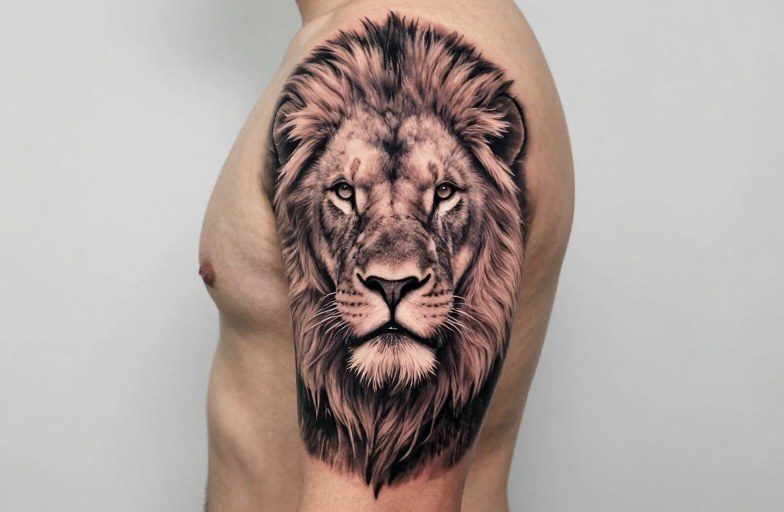
A lion neck tattoo most directly means courage, leadership, and self-possession worn openly. The neck’s visibility makes this commitment public; unlike a hidden back piece or easily covered forearm design, this placement says the symbolism matters enough to carry it forward, every day, in every room you enter. The lion itself carries cross-cultural weight as a guardian, king, and fighter, attributes that gain intensity when inked so close to the voice and the pulse.
Who Chooses This Tattoo
The Visibility Factor
Neck placement filters the wearer pool before symbolism even enters the conversation. Someone choosing a lion here accepts professional friction, family questions, and the permanent spotlight of being “the person with the neck tattoo.” That self-selection matters. The design attracts individuals who’ve already crossed a threshold of self-acceptance, or who use the tattoo as the push to get there. You’ll see this among performers, fighters, entrepreneurs, and people rebuilding identity after major life transitions. The common thread isn’t occupation; it’s a refusal to compartmentalize identity.
Gender and Cultural Notes
Men and women both wear lion neck pieces, though styling diverges. Masculine presentations often favor full-maned profiles roaring outward, jawline-aligned. Feminine and nonbinary versions increasingly use cub portraits, geometric lionesses, or floral-integrated manes. In some African and Caribbean communities, lion imagery connects to Rastafarian strength or pan-African solidarity, making the neck placement a deliberate cultural marker visible above collar lines.
Design Tips & Pairings
Working With Neck Anatomy
The neck curves, stretches, and ages distinctly. A lion face centered on the throat moves dramatically with swallowing and speech, designs here need simplified geometry to read clearly in motion. Side-neck placement (the “trap” or “jugular” zone) offers flatter canvas but shifts when the head turns. Best practice: keep the lion’s eyes at least dime-sized for longevity; tiny detail blurs within five years on this high-movement, sun-exposed skin. Mane lines should flow with natural muscle direction, not fight it.
- Throat center: Demands symmetry; best for bold, iconic silhouettes
- Side neck: Accommodates profile portraits, pairs well with extending shoulder work
- Nape: Hidden until hair moves; subtler statement, easier professional camouflage
- Under jaw: Extremely painful, high visibility; usually reserved for committed collectors
Complementary Elements
Crowns integrate naturally, though they risk cliché unless stylized, broken crowns, thorn-wrapped circlets, or geometric interpretations refresh the motif. Roses or daggers beneath the jaw create classic “old school” narratives. Script banners wrapping the mane work better on larger neck pieces; small text here ages poorly. Clock faces, often linked to mortality, pair with sleeping or elder lions for memento mori variations.
Symbolism & Core Meaning
The Lion Across Contexts
Strength dominates, but specificity matters. In heraldic tradition, the lion represents sovereign authority, reason enough for the neck’s “head” placement. Christian iconography uses the lion for Mark the Evangelist and resurrection symbolism (the “Lion of Judah”). Ancient Egyptian associations with Sekhmet and Maahes bring protective, sometimes vengeful, divine feminine energy. Astrologically, Leo’s fire-sign associations layer creativity and ego onto raw power. The neck wearer typically selects from this menu rather than accepting all meanings wholesale.
Placement as Amplifier
Symbolism intensifies with location. A lion on the bicep says “I am strong”; on the neck, “I will not hide my strength.” The throat specifically connects to voice, truth, and vulnerability, making a guardian lion here a shield for speaking up. Some wearers describe it as armor for interviews, performances, or difficult conversations. The physical reality of being unable to conceal it becomes part of the psychological commitment.
Similar & Related Symbols
Tigers occupy adjacent territory but diverge in cultural coding. Where lions signal royalty and solar energy, tigers read as solitary, nocturnal, Eastern in origin, more rebel than king. Wolves emphasize pack loyalty over individual dominance. Bears project brute resilience rather than strategic leadership. For those wanting lion-adjacent meaning with different cultural baggage, consider:
- Griffins: Merge lion body with eagle wings; guardian of treasures, more fantastical
- Foo dogs: Chinese guardian lions, traditionally paired, protective rather than personal
- Sekhmet heads: Lioness-headed Egyptian goddess, channels divine feminine wrath
- Merlion: Singaporean lion-fish hybrid, specific regional identity marker
Panthers and jaguars offer similar big-cat power with sleeker, more covert energy, better suited to wearers who want strength without the monarchical baggage.
Common Variations & Styles
Stylistic Approaches
Black-and-gray realism dominates neck lions for good reason: the style ages gracefully on high-exposure skin, and the tonal range captures mane texture without color-dependent touch-ups. Traditional American lions (bold lines, limited color, cartooned features) hold up exceptionally well here due to their inherent simplicity. Geometric and dotwork versions abstract the form into triangles and stippled gradients, striking but requiring precise aftercare to prevent patchy healing on the neck’s thin skin. Watercolor backgrounds behind solid lion portraits create contrast but fade faster on this mobile canvas.
Specific Imagery Types
Roaring lions project aggression and warning; sleeping or serene lions suggest contained power, confidence without performance. Lionesses, increasingly popular, shift meaning toward huntress energy, maternal protection, and strategic patience. Cub portraits carry lineage and legacy weight, often chosen by new parents or those honoring childhood resilience. Paired lions (rare on necks due to space) occasionally appear on front-and-side neck combinations in larger compositions.
Personal & Modern Meanings
Beyond Generic Strength
Contemporary wearers increasingly reject “king of the jungle” boilerplate. Some frame their lion as recovery symbol, surviving depression, addiction, or violence by identifying with the animal’s tenacity rather than its dominance. Others use it as accountability marker: the visible commitment to showing up courageously in relationships or work. The mane specifically gets personalized, incorporating family birth flowers, children’s initials woven into negative space, or scar tissue coverage that reclaims bodily autonomy.
Social Media and Visibility Culture
The neck’s Instagram-era visibility isn’t lost on younger wearers, though practitioners report pushback: more clients now request designs that photograph well but also satisfy personal meaning. The lion’s immediate recognizability serves both needs. Hashtag culture has flattened some nuance, “lion neck tattoo” returns thousands of similar images, but individual consultation still reveals specific intentions: a particular pride of lions visited on safari, a grandmother’s astrological sign, a sports team identity transcended into personal mythology.
Final Word
The lion neck tattoo works because the symbol and placement reinforce each other so directly. You cannot soft-pedal this choice, and that friction generates meaning. The best versions respect neck anatomy’s limitations, bold enough to read at distance, simple enough to age cleanly, personal enough to transcend stock imagery. Whether the lion represents survived struggle, claimed authority, or unapologetic self-possession, the neck makes it a daily practice rather than a private belief. That commitment, visible and irreversible, may be the truest meaning of all.
Frequently Asked Questions
How painful is a lion neck tattoo compared to other placements?
The neck ranks among the more painful spots due to thin skin, numerous nerve endings, and proximity to bone. The throat center and under-jaw areas hurt most; the side neck and nape are slightly more tolerable. Most people describe it as sharp, burning intensity rather than deep ache.
Will a lion neck tattoo affect job prospects?
Visible neck tattoos still carry stigma in conservative fields like law, finance, and medicine. Creative industries, trades, and tech vary widely by company culture. The lion’s relatively mainstream imagery helps slightly, but placement visibility matters more than subject matter for employment concerns.
How well do detailed lion manes hold up on neck skin over time?
Fine lines in manes blur and soften within 5-10 years on necks due to sun exposure and constant movement. Bold lines, strategic negative space, and simplified geometry age significantly better. Plan for touch-ups regardless, but start with a design that won’t collapse if details soften.
Can a lion neck tattoo be extended into a larger back or chest piece later?
Absolutely, and skilled artists often plan for this. Side-neck lions flow naturally into shoulder caps or chest panels. Throat-centered designs extend upward to jawline or downward toward sternum. Discuss long-term composition plans during initial consultation to avoid awkward visual dead-ends.
Leave a Reply