
Simple small butterfly tattoos can stay hidden at work when you choose a 1/2-to-1-inch design and a covered placement. I once picked a visible spot first and regretted it by Monday morning. You don’t need a loud tattoo to make a personal statement. Fine linework, careful scale, and smart placement can keep your piece striking, delicate, fierce, and meaningful.
The best designs are usually small butterfly tattoos with edited wing details, not miniature copies of large artwork. You can make the result sleek, crisp, graceful, or understated without making it difficult to conceal. Start with the workday test, then choose the design that still feels personal.
Editor’s note: Your placement matters as much as the butterfly itself. A simple stencil can look completely different on the ankle, forearm, collarbone, or thigh, so check visibility, friction, healing, and daily movement before you commit.
- Start with Fine Linework: The Single-Line Balance
- Could Behind the Ear Be Your Quiet Reveal?
- Minimal Butterfly Tattoo on the Wrist: The Clean-Arc Method
- Choose Dotwork on the Sternum: The Pointillist Map
- The Flash-Sheet Classic: Delicate or Too Busy?
- Anchor the Spine with One Outline
- Why the Collarbone Still Works for a Soft Edge
- Watercolor on the Thigh: Colorful, Not Overfilled
- Between the Fingers: Meaning Versus Visibility
- Read the Forearm Test Before You Commit
- Two People, One Shared Outline
1Start with Fine Linework: The Single-Line Balance
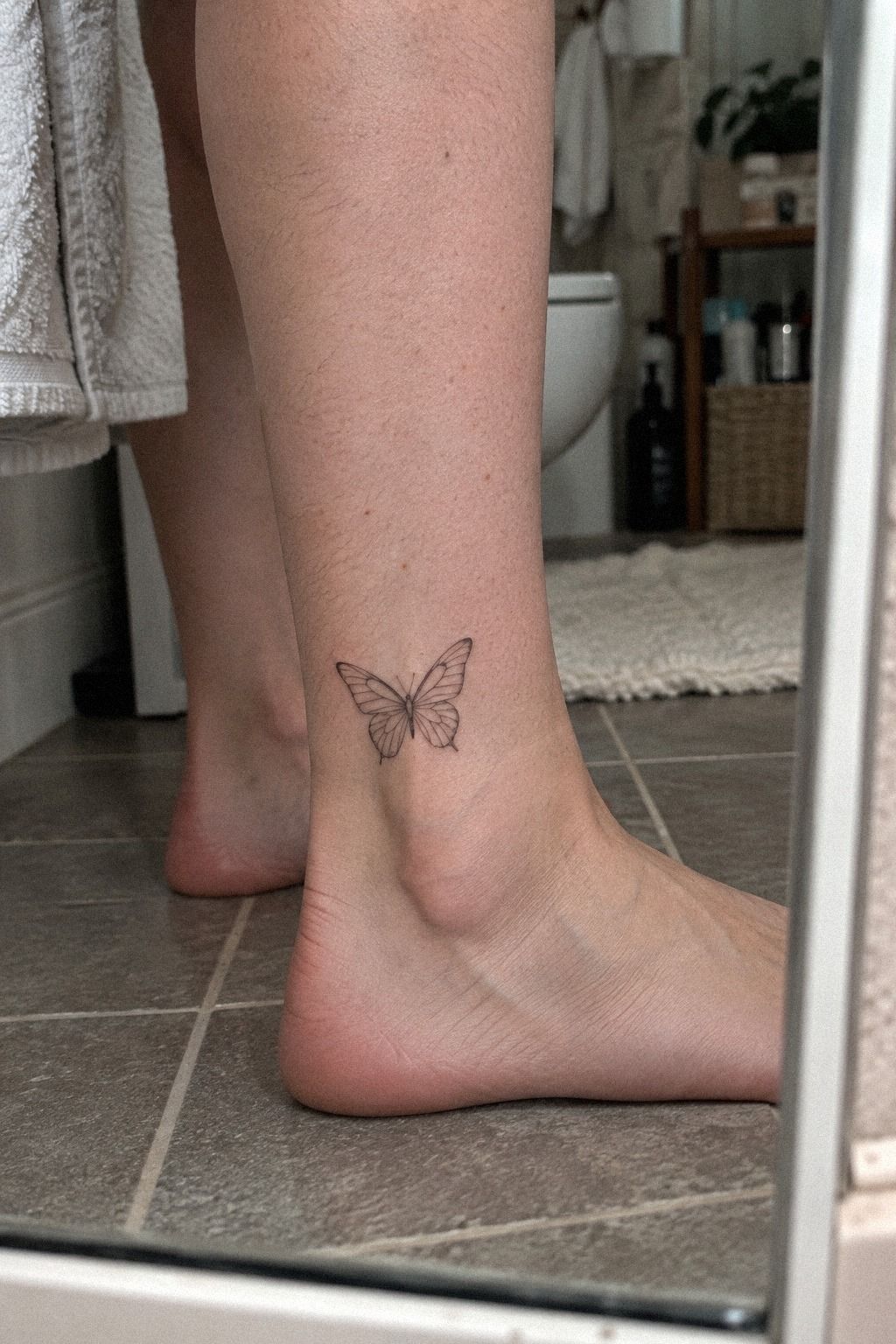
A fine-line butterfly on the ankle gives you a flowing shape that disappears under trousers or tall socks. The open wings should stay symmetrical, with thin stone-grey ink tracing the outer edges and small terracotta and olive accents through two or three interior veins. If you’re choosing your first piece, this placement lets you control visibility without losing the personal feeling.
Ask your artist to keep the butterfly body slightly narrower than the wings. That proportion makes the design look sleek instead of crowded, especially when your tattoo is under 1 inch wide. You’ll want a clean silhouette because tiny details can soften as your skin settles.
The ankle can be sharp and stylish, but it’s not the easiest place for every person. I’d skip a heavily shaded version here because solid fill can blur faster than a clean outline.
If you’re comparing options, start with these tiny small butterfly tattoo ideas and then ask whether the design is worth the cost for your preferred artist. Your best version will be personal, easy to cover, and clear from a short distance.
Check the stencil placement while standing and sitting. Your ankle changes shape as you flex your foot, and a butterfly that looks balanced while relaxed may tilt when you walk. Small, but fierce!
2Could Behind the Ear Be Your Quiet Reveal?

Behind the ear is a dainty choice when you want a butterfly that feels almost hidden until your hair moves.
3Minimal Butterfly Tattoo on the Wrist: The Clean-Arc Method
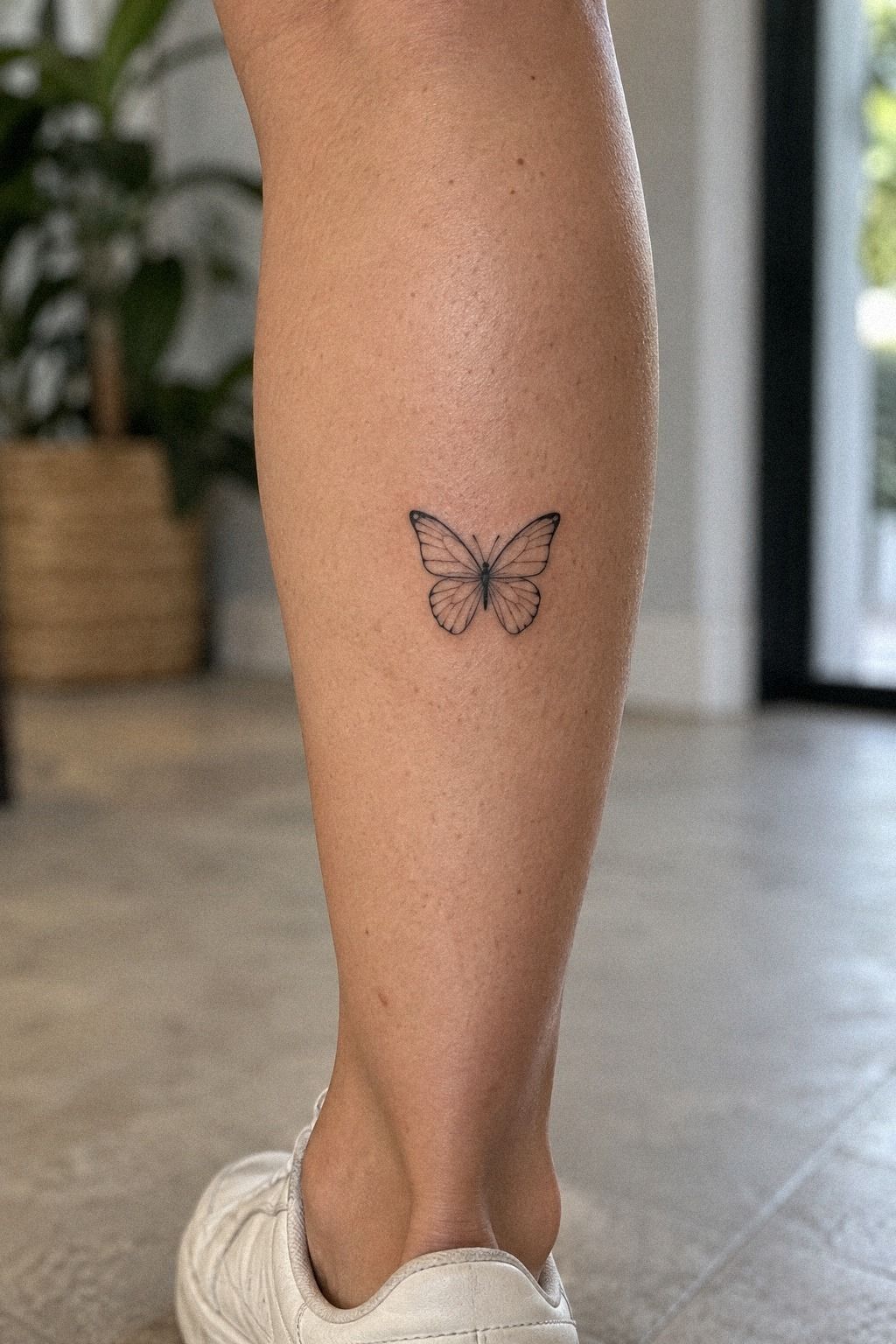
A minimal butterfly on the wrist works best when the wings follow the natural line of your arm. The plum outline should have symmetrical veins, with cool-grey and rose-gold details kept to a minimum. If you want a tattoo you can glance at often, this placement gives you a personal reminder without demanding attention.
Your artist can angle the butterfly slightly toward your hand, which makes the design feel flowing instead of stamped on. Keep the wing tips rounded and the central body crisp. You’ll want enough negative space between each vein for the pattern to remain readable after healing.
The wrist is visible, so it’s not the most discreet choice unless a watch, cuff, or sleeve covers it. I’d avoid placing the lowest wing directly in the crease because repeated bending can affect how the lines settle.
A position just above the joint is more practical and still feels polished. You’ll want to check the placement with your arm hanging naturally, because the skin can shift when your wrist is bent or turned.
If you’re drawn to restrained designs, save these minimalist small butterfly tattoo references and compare their long-term value with a covered placement. Your final sketch should look clear at full size and recognizable when reduced. That is a real win!

4Choose Dotwork on the Sternum: The Pointillist Map
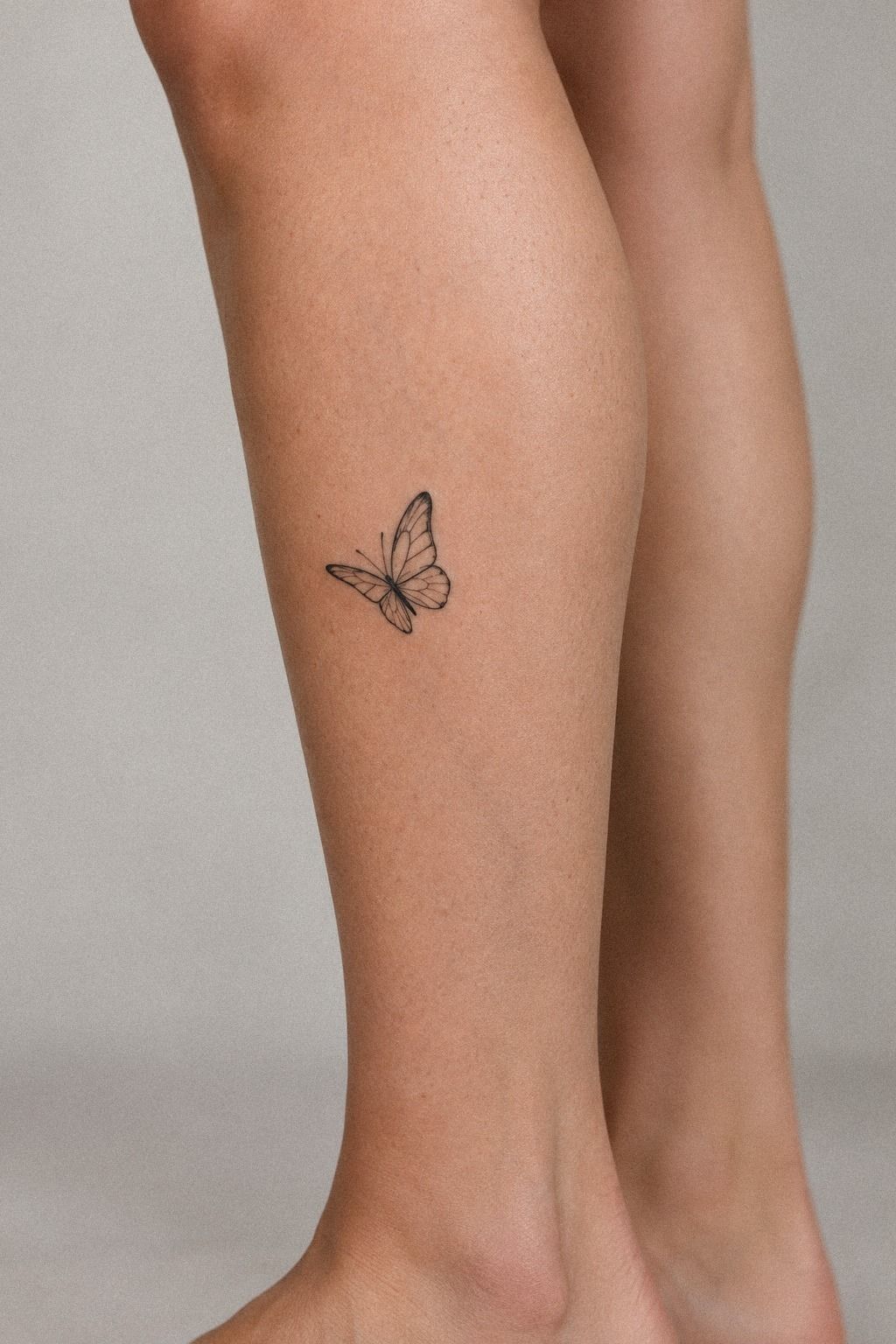
A dotwork butterfly on the sternum gives you a more intricate and symbolic direction while remaining hidden beneath a shirt.
5The Flash-Sheet Classic: Delicate or Too Busy?

A traditional flash-sheet butterfly can feel vintage, playful, and personal before it ever reaches your skin. A charcoal stencil outline with emerald and gold accents, plus cream negative space, gives your artist a clear foundation to adjust for your ankle’s curve.
Look for a butterfly with a strong outer contour and limited internal detail. You’ll want the final piece to remain delicate, not disappear into a cluster of tiny marks. A classic flash shape also gives your artist room to create a timeless result.
I’d choose restrained gold shading with emerald details over an overfilled design for an ankle placement. Shoes, socks, and sun exposure can be rough on ankle tattoos, so a clean design usually ages more predictably.
Your artist can show you how the stencil will sit when your foot is relaxed. That check matters because a butterfly may look wider or narrower once it follows the curve of your ankle.
If you’re searching for an affordable starting point, compare these small butterfly tattoo stencil ideas with more custom options. Your favorite flash design should still feel classic after the first week. Worth remembering!
6Anchor the Spine with One Outline

A single-outline butterfly on the spine is bold in concept but quiet in execution.
7Why the Collarbone Still Works for a Soft Edge
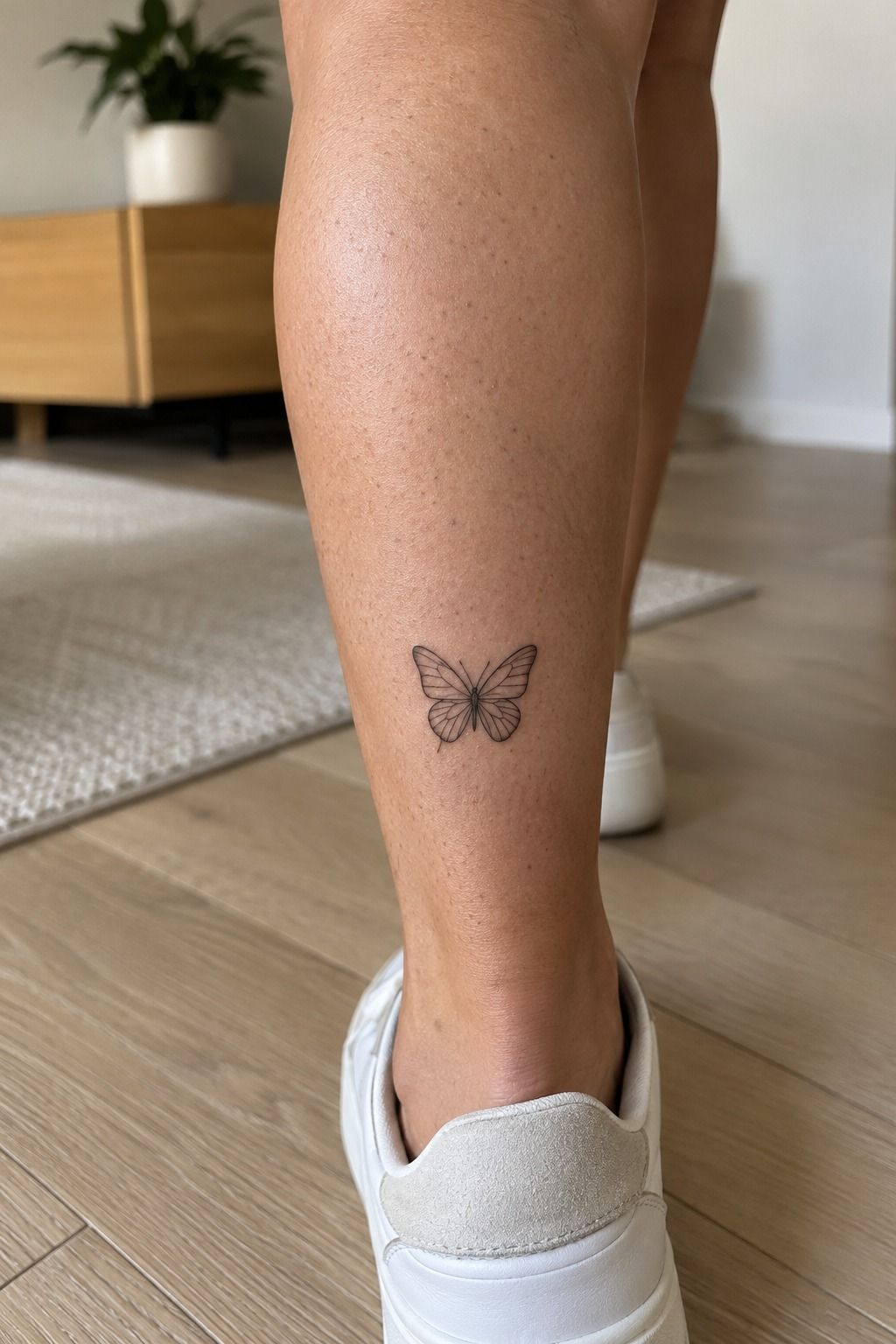
A collarbone butterfly feels feminine, graceful, and quietly romantic when its wings follow the bone instead of sitting flat across it. The charcoal linework should have clean symmetry, with dusty-rose and brass details kept around a small central body.
If you want something visible in a tank top but hidden beneath most work shirts, this placement gives you both options. Position the butterfly slightly below the collarbone rather than directly on the ridge.
That creates a little protection from friction and gives the wings room to read. You’ll want the artist to stencil it while you’re standing, because the skin shifts when your shoulder drops.
The collarbone can look delicate, but it’s still close to bone and may feel sharper than the upper arm. I’d choose an understated outline instead of a large shaded design. Your tattoo should follow your anatomy, not fight it.
If you’re comparing upper-body placements, save these small butterfly tattoo arm ideas and ask which area offers the best long-term value. A stylish placement is more useful than a complicated sketch that becomes difficult to conceal.
8Watercolor on the Thigh: Colorful, Not Overfilled
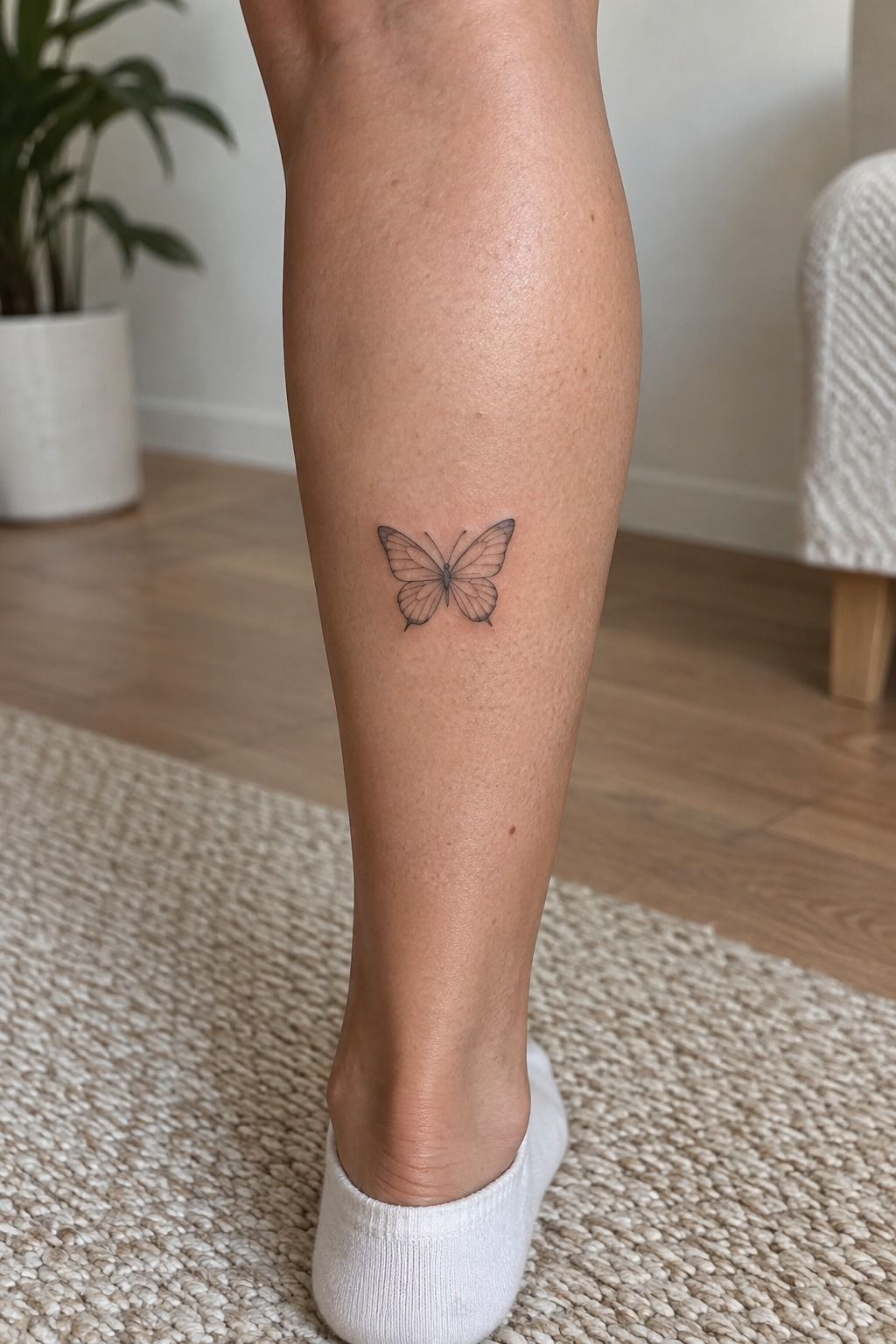
A watercolor butterfly on the thigh gives you a vibrant and expressive option that can remain completely hidden at work. Warm-white and camel pigment can create a whimsical effect around crisp black accents without making the tattoo oversized.
Ask your artist how they handle fading and saturation. Watercolor-inspired tattoos often use diluted color, but the outer outline still needs enough strength to protect the butterfly’s shape.
You’ll want the color placed inside the wings rather than bleeding far beyond them. That keeps the design readable and prevents the color from competing with the silhouette.
I’d skip a color-only butterfly with no structural outline. It may look dreamy when fresh, but a clear boundary usually gives your design more longevity. The thigh is generally more forgiving than hands or feet, and clothing can protect the area from direct UV exposure.
For a smaller black-only comparison, browse these small butterfly tattoo designs and ask whether the extra color is worth the cost. Your palette can be playful or elegant, but it should still feel personal after the novelty fades.
9Between the Fingers: Meaning Versus Visibility

A butterfly between the fingers is edgy, symbolic, and difficult to keep completely invisible.
10Read the Forearm Test Before You Commit

A forearm butterfly gives you the clearest comparison between a design stencil and healed skin. The sage-green linework should still show how much detail remains readable, with warm-cream and brown accents kept open. If you want a sharp idea that can disappear under a sleeve, this is a practical choice.
Keep the wings open and the outline moderately strong. A tiny forearm tattoo can become muddy if every vein is packed together, so you’ll want the central details edited before the appointment.
Your artist may recommend a slightly larger design than 1/2 inch for better long-term clarity. The most personal tattoo isn’t always the smallest one; it’s the one whose shape survives real skin, movement, and time.
The forearm is usually more tolerable than the sternum, feet, or hands. I’d choose it over the wrist if workplace discretion matters, because a long sleeve covers it completely.
Use this small butterfly tattoo arm guide to compare inner and outer forearm placement. Check the artist’s portfolio, ask about the budget, and make sure the design still feels empowering after scaling down.
11Two People, One Shared Outline

Matching butterflies can be meaningful without looking identical in every tiny detail. Terracotta and olive ink with stone-grey accents can create a shared visual language while allowing each person to choose a comfortable, personal placement.
Choose one anchor feature that both tattoos share, such as the same wing angle, central body, or number of vein lines. You’ll want each artist to adapt the stencil to the wearer’s anatomy rather than forcing two placements to match perfectly.
Skin tone, arm shape, and movement all affect the final result. One person may prefer a masculine placement on the outer arm, while another may want a softer location near the shoulder or inner wrist.
I’d avoid adding names or dates inside such a small butterfly. The design can feel meaningful without squeezing a message into the wings. A classic silhouette will remain more readable, while a tiny inscription may fade into a gritty blur.
If you’re planning a paired appointment, compare these small butterfly tattoo ideas and decide which details must stay consistent. Your matching tattoos should feel connected, not copied. That paired detail can be iconic!
Why I’d Choose Placement Before the Sketch
I’ve learned that the smartest butterfly tattoo decision usually happens before the drawing begins. I used to focus on the prettiest reference first, then tried to force it onto a spot that couldn’t support the detail.
That was a mistake. A tattoo can be elegant and still be wrong for the movement, friction, and visibility of your chosen area.
If you need workplace privacy, start with the clothing coverage test. Wear the sleeve, trouser, shoe, or collar you’d use on a normal workday, then mark the exposed skin with a washable pencil. You’ll see what your colleagues will see.
A collarbone butterfly may vanish under a button-up, while a wrist design can remain visible every time you reach for a keyboard. Your daily routine should guide the choice as much as the reference does.
The second test is scale. A butterfly that looks crisp at 2 inches may become cramped at 1/2 inch, while a 1-inch outline can still hold a strong silhouette. I’d rather simplify the wings than force every vein into a tiny space.
Small tattoos need editing, not miniature copies of large artwork. Use these small butterfly tattoo design references to compare open wings, closed wings, dotwork, color, and outline-only designs.
Cost varies by artist, region, studio minimum, and session length. These are useful US planning references, not promises. A lower price isn’t always better value if the artist’s healed work doesn’t match the style you want.
The part people underestimate is healing. Your tattoo may look finished before the skin has fully settled, so you’ll want gentle aftercare and no swimming or direct sun while it heals.
Keep your expectations realistic, follow your artist’s aftercare sheet, and don’t judge the final softness too early. A newly finished tattoo and a fully settled tattoo can look different.
I’d choose a crisp black outline over a complicated color effect when your priority is longevity. UV exposure can soften fine lines, and hands, feet, and fingers experience more friction than the upper arm or thigh.
Your black pigment doesn’t need to be dramatic to remain recognizable. It needs enough contrast, sensible spacing, and a placement that doesn’t constantly rub against fabric or equipment.
For another round of placement ideas, save this small butterfly tattoo stencil collection before your consultation. You’re not only choosing a picture. You’re choosing how that picture will live on your skin.
What People Always Want to Know
How much does a simple small butterfly tattoo usually cost?
I’d expect a simple small butterfly tattoo to cost about $100 to $300 in the US, depending on the artist, region, placement, and studio minimum. Some shops charge a minimum appointment fee of about $50 to $100, while others use an hourly rate.
I’d bring your reference, placement, and approximate size so you can get a useful estimate. The price may rise for custom drawing, color, or a longer session, but a clean outline is usually easier to quote.
Are simple small butterfly tattoos a good idea for a first tattoo?
I think they can be a strong first choice because you can select a manageable size and a more tolerable placement. An open-wing outline also gives you a clear design without requiring a large amount of shading.
I’d still think about visibility, healing, and long-term line spread. Start with an area such as the forearm, thigh, or upper arm if you’re nervous about discomfort. Your first tattoo should feel personal, not rushed.
How do I choose a tattoo artist for simple small butterfly tattoos?
I’d choose an artist whose portfolio shows clean linework, healed photographs, and butterflies that still read clearly at a small scale. Look for single-needle work that appears confident rather than scratchy.
I’d ask about studio hygiene, stencil placement, aftercare, and how the artist adjusts designs for different skin tones. You don’t need the cheapest appointment. You need someone whose finished work matches the style and value you want.
How much do simple small butterfly tattoos hurt?
I’d expect the sensation to depend on your skin, placement, and personal tolerance. Ribs, feet, hands, and sternum tend to feel more intense, while the forearm, thigh, and shoulder are often more tolerable. A short tattoo session can still feel sharp over bone.
I’d tell your artist if you’re worried. They can pause, adjust your position, or suggest another placement.
Don’t choose a painful area only because it photographs well. You’ll enjoy the tattoo more if the location suits your comfort level.
How long do simple small butterfly tattoos take to heal?
I’d plan for the surface to heal in about 2 to 3 weeks, while the skin can take about 2 to 3 months to fully settle. During that time, use gentle unscented soap, follow your artist’s aftercare instructions, and avoid swimming and direct sun.
I’d expect some flaking, dullness, or mild itching as the surface heals. Don’t pick at it or overload it with moisturizer. Your artist’s specific instructions should guide your routine, especially if your skin is sensitive.
What’s the best placement for simple small butterfly tattoos?
I’d start with the forearm, thigh, or shoulder when you want a more tolerable placement and clearer long-term linework. The ankle, wrist, fingers, and sternum can look striking, but they receive more friction or sit closer to bone. Covered upper-arm skin is especially discreet at work.
I’d also think about clothing, sun exposure, and how often the area bends or rubs against fabric. You’ll want the stencil placed while your body is relaxed, because posture can change the final angle.
Where I’d Start First
If I had to pick one, I’d start with the small butterfly on the inner forearm. It’s easy to cover, usually more tolerable than bone-heavy placements, and flat enough for crisp lines to stay readable. That combination gives you strong value without forcing a visible commitment.
Pin the small butterfly tattoo arm guide for later and bring one edited reference to your artist. I’d choose the design that still feels meaningful at its smallest, cleanest, most personal scale. Choose well!

