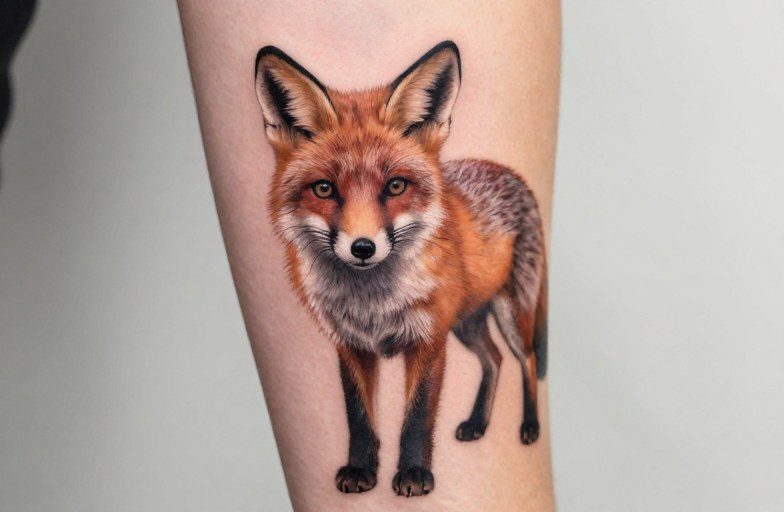
A realistic fox tattoo renders the animal with photographic accuracy, individual guard hairs visible, catchlights in the eyes, subtle gradations between russet, cream, and charcoal. Unlike stylized or geometric fox designs, this approach demands mastery of fur texture, anatomical proportion, and the way light moves across a three-dimensional form. The result can be strikingly lifelike, but the style also carries specific technical risks that simpler approaches avoid.
Origins & History
Realistic animal portraiture in tattooing grew alongside the development of coil machines capable of smooth shading and single-needle detail work. Wildlife realism became particularly prominent in the 1990s and 2000s as artists began cross-training from airbrushing, oil painting, and taxidermy reference photography. The fox occupies a complicated symbolic position across cultures, often linked to cunning in European folklore, some trace it to spiritual messengers in Japanese and Korean traditions, and in several Indigenous North American stories it appears as a trickster or fire-bringer. These associations draw people to the subject, though most modern collectors choose the fox for aesthetic reasons rather than explicit symbolism.
From Reference Photo to Skin
The best realistic fox tattoos begin with high-resolution reference images showing clear fur direction, eye detail, and natural lighting. Artists frequently composite multiple photographs, one for the face structure, another for ear positioning, a third for winter coat texture. This process differs fundamentally from flash-based tattooing; the design gets built rather than selected from existing sheets.
Best Placements
Fox anatomy determines placement more than most subjects. The elongated muzzle and large triangular ears require adequate vertical or horizontal space to read correctly. Compress those proportions onto too small a canvas, and the recognizable fox silhouette collapses into generic canine.
High-Impact Locations
- Outer thigh: Ample flat surface for full-body poses in motion; accommodates the sweeping tail that makes fox composition dynamic.
- Upper arm/shoulder cap: The curved surface suits three-quarter head turns; the deltoid’s roundness can enhance the animal’s dimensional presence.
- Side ribcage: Vertical space for sitting or standing poses, though breathing movement during sessions challenges steady line work.
- Forearm: Restricted to portrait crops or simplified compositions; the radius/ulna’s flat planes suit frontal face designs.
Placement Pitfalls
Hands and feet present particular problems for realistic fur. The rapid cell turnover and constant abrasion in these areas cause fine detail to blur within months. A fox’s delicate whisker lines become indistinct smudges. Similarly, the neck’s thin skin and frequent movement make maintaining crisp fur edges difficult long-term.
Modern Variations
Contemporary artists have pushed fox realism into several distinct sub-styles, each with different technical demands and aging characteristics.
Color Realism
True red fox coloration requires layering orange, amber, near-black, and white ink to achieve natural depth. The challenge lies in warmth balance, too much pure red reads cartoonish; too muted and the animal appears diseased or poorly lit. Skillful artists build color through successive passes of translucent washes rather than opaque saturation, allowing underlying skin tone to contribute luminosity. Expect more frequent touch-ups than black-and-grey equivalents; red pigments generally fade fastest across all tattoo color families.
Black-and-Grey with Selective Color
A popular compromise renders the fox in monochrome graphite tones while reserving a single color accent, typically amber eyes or a white chest blaze. This approach extends longevity (black ink holds substantially better than color) while preserving focal impact. The technique demands precise value mapping: the eye must read as the brightest point even when surrounded by technically lighter grey tones.
Double-Exposure and Environmental Fusion
Some designs integrate the fox silhouette with forest scenes, star fields, or mountain topography. These require exceptional planning, the internal negative space must still suggest accurate anatomy while accommodating secondary imagery. The fox’s face often serves as a “window” framing the landscape within. Compositionally, this works best when the environmental elements follow the natural fur flow rather than cutting across it arbitrarily.
Common Mistakes to Avoid
Specific errors plague fox realism more than other realistic wildlife subjects.
Anatomical Distortion
Amateur designs frequently enlarge eyes to Disney-like proportions or shorten the muzzle for “cuteness.” Real foxes possess relatively small, almond-shaped eyes set against a pronounced facial length. Exaggerating either feature pushes the image toward stylization and undermines the realism intent. Ear placement also gets botched, set too low or angled incorrectly, they suggest dog or cat rather than fox.
Fur Direction Chaos
Every species has consistent hair growth patterns. On a fox, cheek fur angles backward and slightly downward; neck ruff stands more erect; shoulder hair lays flat following body contour. Crossing these directions randomly destroys the illusion of form. Before committing, examine how your artist handles fur flow in healed portfolio examples, not fresh photos where swelling and saturation obscure precision.
Over-Reliance on White Ink
The white chest patch and eye highlights tempt heavy white ink application. On skin, white heals to a translucent, slightly yellowed tone rather than paper brightness. Strategic negative space, simply not tattooing an area, often achieves brighter “white” effects than actual white pigment, especially on lighter skin tones.
Cost & Sessions
Realistic fox work sits at the premium end of pricing due to time intensity and specialized skill requirements.
Session Breakdown
- Small portrait (3-4 inches): Typically 3-4 hours for black-and-grey, 5-6 for full color. Single session possible for dedicated sittings.
- Medium composition with shoulders/environment: 8-12 hours across two sessions, allowing heal assessment between passes.
- Large thigh or back piece with full body: 15-25 hours over three to five sessions. Fur detail cannot be rushed; hand speed drops dramatically on fine texture work.
Pricing Structures
Most specialists work at hourly rates or day rates rather than flat quotes for this complexity. Hourly rates for accomplished realism artists generally range from $200-$400 depending on region and demand. Some charge premium rates specifically for color realism due to additional material costs and slower working pace. Budget-focused collectors sometimes compromise on size rather than artist caliber, a small, impeccably rendered fox head outperforms a large, mediocre full-body piece in every meaningful metric.
Aftercare Notes
Fur-heavy tattoos present distinct healing challenges. The dense packing required for hair texture creates more total skin trauma than equivalent-area designs with open space. Expect heavier plasma weeping in days 1-3 and more pronounced scabbing.
Critical First Two Weeks
Keep the piece meticulously clean but resist over-moisturizing. Saturated skin swells fine lines, causing adjacent hair strokes to blur together during healing. Light, frequent applications of fragrance-free lotion outperform heavy slathering. Sleep position matters significantly, stomach sleepers with fresh rib or thigh fox pieces risk compression damage that mars detail permanently.
Long-Term Preservation
UV exposure degrades the subtle grey values that create dimensional fur. Untouched realistic fox tattoos show noticeable dulling within five years of regular sun exposure. Mineral sunscreen (SPF 30+) applied daily to exposed pieces dramatically extends clarity. Plan for a consolidation pass around year 7-10 regardless, fine hair detail inevitably softens as skin texture changes with age.
Final Word
A realistic fox tattoo rewards patience in artist selection and sitting endurance. The style’s technical demands mean substantial investment of time and money, but executed properly, the result carries a presence that simpler approaches cannot match. Prioritize healed portfolio quality over fresh photos, verify the artist’s comfort with your specific fur-texture goals, and commit to protective aftercare that preserves the microscopic detail this style requires. The fox’s visual complexity is exactly what makes it compelling, and exactly what separates accomplished specialists from generalists who should politely decline the project.
Frequently Asked Questions
How small can a realistic fox tattoo be before detail gets lost?
Below three inches, individual fur strokes merge during healing and the distinctive fox proportions compress into generic canine. For recognizable realism with intact eye detail, plan at least four inches on the longest dimension.
Do realistic fox tattoos work on darker skin tones?
Absolutely, but the approach shifts. Black-and-grey realism with high contrast reads more clearly than subtle color gradations. Some artists specialize in working with melanin-rich skin to preserve detail without ashy healing results, seek those portfolios specifically.
Why does my healed fox tattoo look fuzzier than when it was fresh?
Fresh tattoos sit slightly raised with ink concentrated in the upper dermis; healed work settles deeper. Additionally, the epidermis regenerates over the design, creating a subtle veil. This is normal, though poor aftercare or sun exposure accelerates blurring beyond expected settling.
Can a realistic fox tattoo be covered up if I change my mind?
Covering dense realism is difficult, the saturated darks and detailed texture leave limited options for new imagery. Laser lightening typically precedes successful cover-ups. Think of this style as more permanent than simpler designs, not less.

Leave a Reply