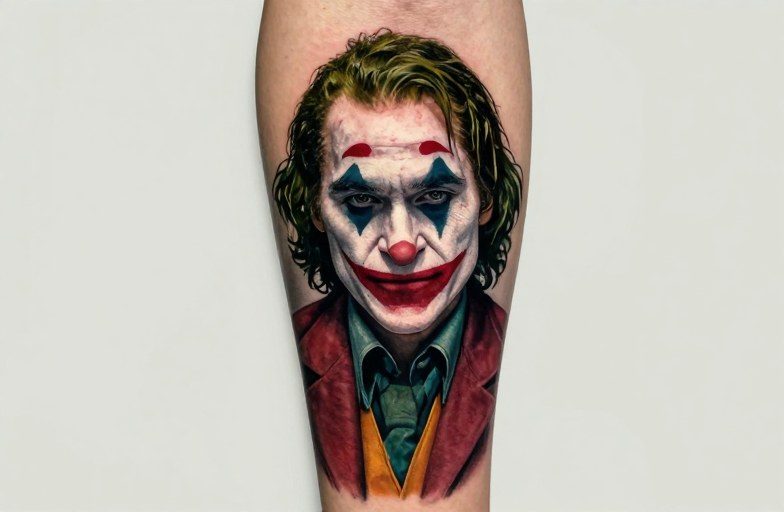
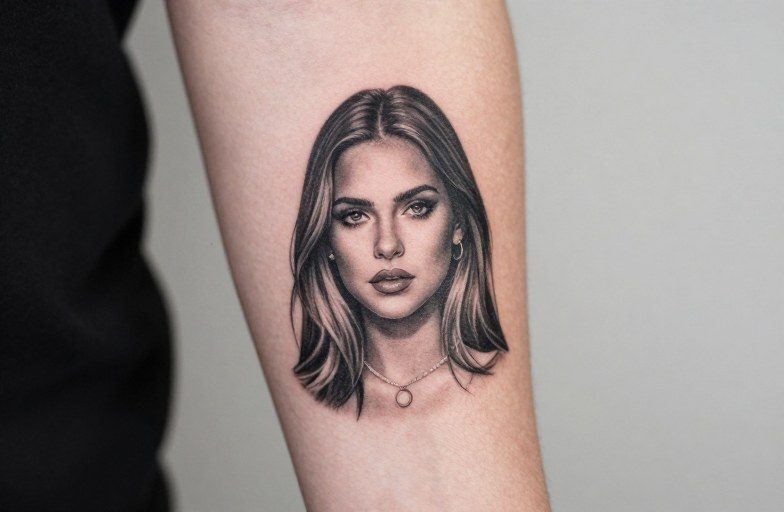
A Rebecca crow tattoo typically depicts a woman’s face, often in a vintage or Art Nouveau style, merged with or accompanied by a crow or raven. The image carries connotations of mystery, transformation, and the liminal space between life and death, drawing on the crow’s long association with omens, memory, and the unseen.
Symbolism & Core Meaning
The power of this design sits in its deliberate tension. The woman’s face grounds the image in human emotion and specific identity, while the crow introduces wildness, intelligence, and mortality. Together, they create a portrait that refuses to be purely beautiful or purely ominous.
The Crow as Psychopomp
Crows and ravens appear across cultures as carriers of souls, messengers between worlds, and watchers at thresholds. In Norse tradition, Odin’s ravens Huginn and Muninn, Thought and Memory, fly across the earth gathering intelligence. Celtic lore links the bird to the battlefield and the aftermath of conflict. The Rebecca crow tattoo borrows this freight without needing to spell it out; the bird’s presence alone signals that the wearer engages with death as concept rather than as fear.
The Feminine Face as Anchor
The “Rebecca” element, usually a woman’s portrait, sometimes with a name, sometimes not, personalizes the symbol. Rather than a generic memento mori, the design becomes a specific meditation on loss, memory, or feminine power. The face may represent a particular person, an archetype, or the wearer herself in dialogue with darker aspects of identity. This specificity distinguishes the Rebecca crow from simpler raven imagery.
Best Placements
Where this tattoo lives on the body changes how it reads. The design’s vertical potential, face above, bird below, or the two intertwined, suits certain areas better than others.
Thigh and Calf
The thigh offers uninterrupted vertical space for the full composition, allowing the face and crow to stack naturally without wrapping awkwardly around bone. Thigh placement also keeps the image relatively private, revealed selectively. The calf works similarly but introduces more visibility; the muscle’s curve can distort the face slightly when flexed, something to discuss during stencil placement.
Upper Arm and Forearm
The outer upper arm provides a flat canvas that ages well, with skin that doesn’t stretch or sun-damage as aggressively as the forearm. For those wanting daily visibility, the forearm’s inner or outer surface works, though the design may need compression, less background detail, tighter cropping of the face, to read clearly at reduced scale.
Ribcage and Back
These placements accommodate larger, more detailed versions but hurt more and heal trickier due to movement and friction. The ribcage in particular suits the design’s moody intimacy, though artists often recommend breaking the session into multiple sittings.
Design Tips & Pairings
Execution separates striking Rebecca crow tattoos from muddy ones. The subject matter carries enough weight that technical choices matter enormously.
Line Weight and Contrast
Neo-traditional styling dominates this motif: bold outer lines, selective heavy black fills, and enough negative space to keep the face legible. The crow’s feathers demand varied line work, tight parallel lines for texture, heavier strokes for wing edges. Without this contrast, the bird becomes a black blob within a decade. The face requires finer lines around eyes and mouth, but these should still be substantial enough to hold; hair-thin detailing on small tattoos often blows out or fades to nothing.
Complementary Elements
- Moths or death’s-head hawkmoths: extend the nocturnal, powerful theme without duplicating the central symbol
- Botanical elements: belladonna, hemlock, or wilted roses ground the design in Victorian mourning aesthetics
- Keys or lockets: introduce narrative specificity, suggesting secrets or remembrance
- Celestial motifs: moons, especially crescents, reinforce liminal timing, dusk, night, thresholds
Avoid overloading the composition. The face and crow are already doing substantial symbolic work; additional elements should support, not compete.
Color vs Black and Grey
This choice fundamentally alters the tattoo’s emotional temperature.
Black and Grey
The traditional approach for this subject, black and grey emphasizes mortality, vintage photography, and shadow. It ages predictably, grey washes soften but don’t shift hue unpredictably. The limitation to value rather than color forces stronger composition; the artist must make the image work through contrast alone. For collectors building cohesive black-and-grey limbs, this integrates seamlessly.
Color Applications
When color enters, it typically appears in limited, strategic doses: amber or pale green eyes, a single red rose, the blue-black iridescence of crow feathers. Full color throughout risks prettifying the image, undercutting its intended unease. One effective approach keeps the face and bird predominantly black and grey while introducing muted color in secondary elements, a burgundy moth, a tarnished gold locket. This preserves mood while adding visual interest.
Color saturation in the face itself presents particular challenges. Warm flesh tones require regular touch-ups to maintain vibrancy, and poorly applied color in portraits can heal looking inflamed or dirty. Experienced neo-traditional artists handle this better than those working primarily in other styles.
Who Chooses This Tattoo
There’s no single demographic, but patterns emerge in the consultation chair. People drawn to this design often have existing tattoos and want something with more narrative density than their earlier work. They may be processing grief, though not necessarily recent, sometimes the crow marks a loss years past, now integrated enough to wear rather than merely mourn.
Others connect to the crow’s intelligence and adaptability, the bird’s capacity to thrive in margins and ruins. The feminine portrait element attracts those exploring identity through archetype, or those honoring specific women, mothers, grandmothers, selves at earlier stages. The design rarely appeals to first-timers seeking something purely decorative; its weight demands some readiness for complexity.
Similar & Related Symbols
Collectors sometimes arrive wanting a Rebecca crow but leave with something adjacent, or build collections around related imagery.
Direct Alternatives
- Plain raven or crow without human element: simpler, more universally legible, less personally specific
- Skull and crow pairings: more overtly memento mori, less ambiguous about gender and identity
- Plague doctor imagery: shares the Victorian-gothic register but shifts toward historical narrative
Thematic Neighbors
Snake-and-woman compositions explore similar territory, transformation, danger, feminine power, but through Mediterranean and Biblical symbolism rather than Northern European. Moth portraits, particularly with death’s-head patterning, offer comparable nocturnal mortality without the corvid’s particular intelligence and trickster energy. For those wanting the crow without the portrait, standalone raven designs in Norse or Pacific Northwest Indigenous styles provide completely different aesthetic frameworks for the same animal.
What to Remember
The Rebecca crow tattoo rewards patience in artist selection. Not every neo-traditionalist handles portraiture well; not every portraitist understands how to make a crow read as specific rather than generic bird. Review healed photos, not just fresh work. The heavy black this design requires settles and softens over months, what looks crisp at session’s end will calm considerably.
Scale matters for longevity. Too small, the face becomes unrecognizable and the feather detail mud. Too large without sufficient detail hierarchy, the composition feels empty. A skilled artist adjusts the balance to your specific skin and placement.
Finally, the symbolism functions best when it remains slightly unresolved. The most successful versions don’t explain themselves completely, the woman’s expression ambiguous, the crow’s role unclear as companion, omen, or manifestation. That productive uncertainty is the design’s genuine strength, and it lasts longer than any specific narrative you might attach.
Frequently Asked Questions
Does a Rebecca crow tattoo always represent death or mourning?
Not necessarily. While the crow carries strong associations with mortality, many wearers emphasize the bird’s intelligence, adaptability, or role as messenger. The feminine portrait can signify transformation, identity exploration, or personal power rather than grief specifically.
How well does this design hold up over time?
With proper execution, quite well. The bold lines typical of neo-traditional styling resist blurring better than fine detail alone. However, the face requires careful line weight, too delicate and features fade; too heavy and expression is lost. Regular moisturizing and sun protection preserve contrast.
Can the portrait be customized to look like a specific person?
Absolutely, though this shifts the design from archetype to memorial. Be prepared that stylized portraiture in tattoo form involves interpretation; photo-realism and neo-traditional aesthetics use different techniques. Discuss explicitly with your artist how closely you want likeness versus symbolic representation.
What’s the typical cost range for a quality Rebecca crow tattoo?
Expect to pay for an experienced artist’s full day or multiple sessions. This isn’t a walk-in design; the composition requires substantial drawing time and technical skill. Prices vary enormously by region and artist reputation, but the investment reflects the complexity, budget accordingly rather than seeking discount work.