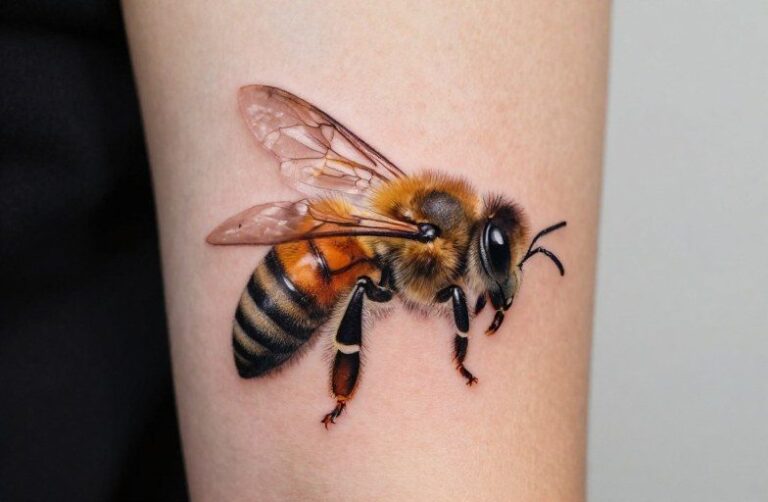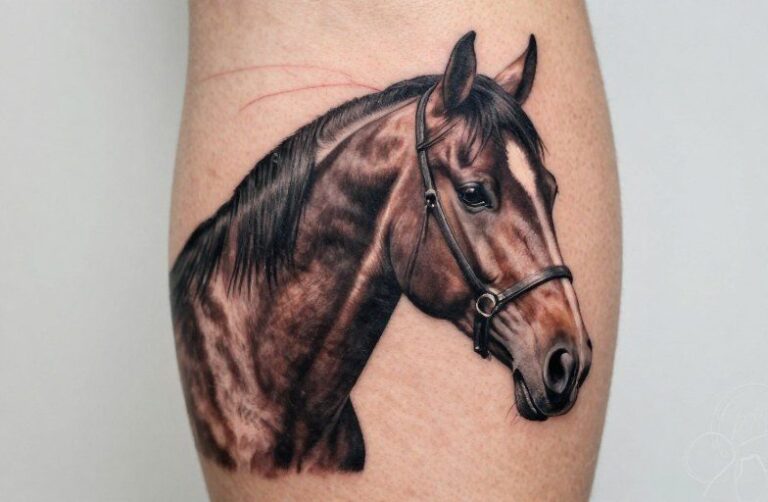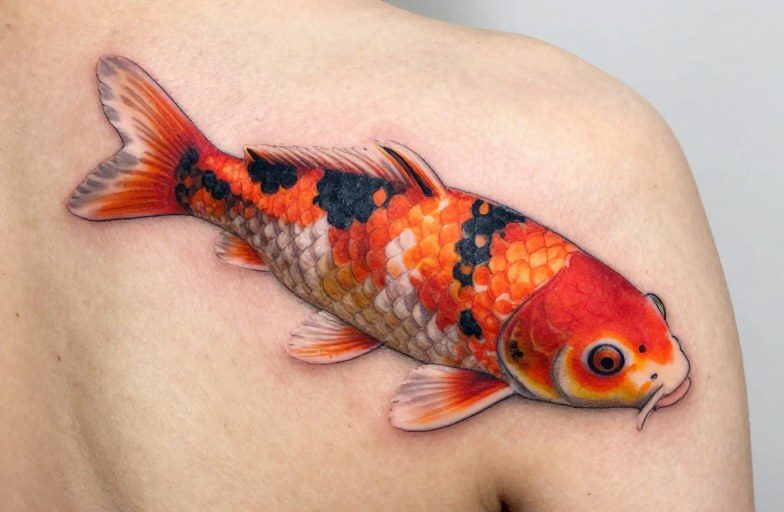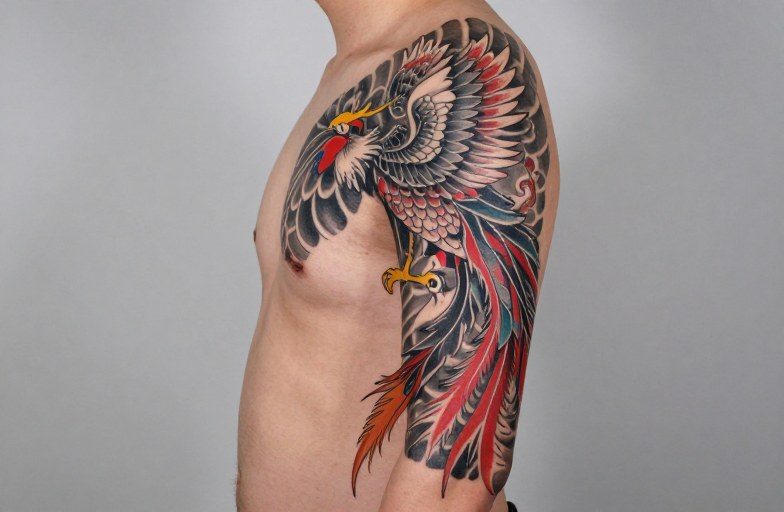
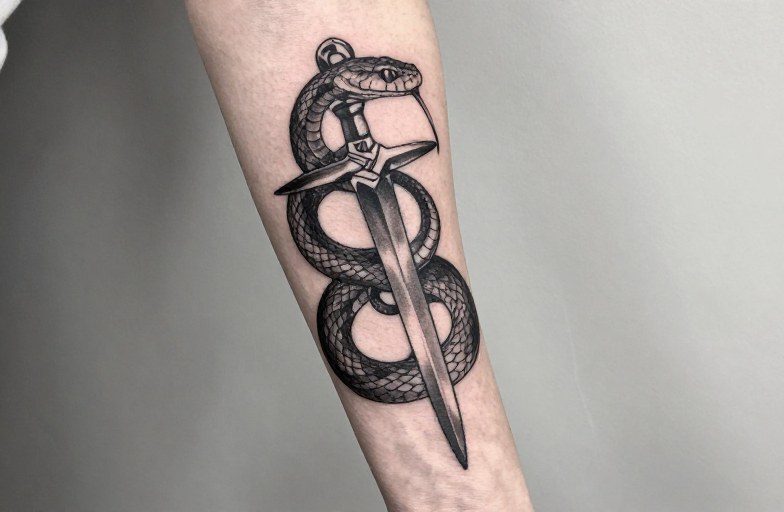
A snake wrapped around a sword typically signals guarded strength or the readiness to strike when provoked. Some read it as wisdom meeting force, cunning paired with decisive action. Others see the tension between the two: the sword cuts, the snake endures, and together they suggest survival through conflict rather than avoidance of it.
Common Variations & Styles
The way these two elements interact changes the entire read of the piece. A snake coiled loosely around the blade reads defensive, almost dormant. One reared back to strike while the point angles upward feels aggressive, preemptive. The eye goes straight to the negative space between fang and edge, that gap is where the story lives.
Traditional and Neo-Traditional Approaches
American traditional builds this with bold black outlines, limited color palettes, and the snake as a thick, almost cartoonish coil. Red and green dominate, sometimes yellow. The sword stays simple: straight crossguard, no ornamental flourishes. Neo-traditional loosens the line weight, adds ornamental hilts, jeweled eyes on the snake, background florals or flames. Both styles age well because heavy black holds up. Fine detail in the hilt may soften after five to eight years, especially on hands or forearms where sun hits hard.
Black and Grey Realism
Realist renderings focus on scale texture and metal reflection. The challenge here is contrast: snake scales need dark blacks to pop against grey-washed blade highlights. Without enough black, the two elements blur together as the tattoo settles. A common fix is to run the snake’s belly lighter, cream or pale grey, so it separates from the dark steel. Realism demands larger minimum size; anything under six inches loses the scale detail that makes it readable.
- Single-needle fine line: trending, but high risk on this subject. Thin lines in scales and crosshilt details blur within two to four years on high-movement spots.
- Japanese irezumi influence: the snake as a hebi, sword as katana, often with waves or wind bars. Much more narrative, usually part of a larger sleeve or back piece.
- Biomechanical: snake as cable or wire, sword as machined component. Appeals to engineering-minded collectors, rare but distinctive when executed well.
Similar & Related Symbols
Collectors often arrive at snake-and-sword after considering related pairings. Understanding the alternatives helps clarify why this specific combination works for them.
Snake With Dagger
Daggers carry more intimate violence than swords, close range, personal, kitchen-drawer or boot-concealed. The snake-and-dagger pairing often reads as betrayal or revenge narrative, more specific and darker than the broader warrior code of the sword. Blade shape matters too: daggers show fuller, crossguard detail, sometimes a drop point that curves like a fang.
Rod of Asclepius and Medical Crossovers
The single-snake staff has clear medical association, though that symbol uses no blade. Some collectors merge the two intentionally: a sword replacing the staff, suggesting fighting illness or trauma. This walks a line. Without clear context, it may read as confused symbolism rather than layered meaning. If that’s the intent, the snake should face the viewer directly, and the sword should be obviously ceremonial rather than battle-worn.
Best Placements
Long, vertical composition suits this imagery. The sword’s natural line invites forearm, calf, or side of torso. Wrapping the snake around the blade adds width, which opens up the outer thigh, upper arm, or ribs.
Forearm and Calf
These spots offer flat, stable skin and good visibility. The forearm lets the hilt sit near the wrist with the blade running toward the elbow, natural movement draws attention to the piece. Calves hold detail well; the muscle doesn’t distort the image much when standing or walking. One tradeoff: both spots sun easily. Without consistent SPF, black lines grey out faster here than on torso placements.
Ribs and Sides
More painful, more private. The curve of the ribs can make a straight sword look bowed unless the artist designs for the specific body contour. Snakes adapt better to this flow. The advantage is scale: a full rib piece can run twelve to sixteen inches, allowing full wraparound coils and detailed hilt ornamentation. Healing is tougher here, breathing expands the skin constantly for the first two weeks.
- Upper back/shoulder blade: excellent for horizontal compositions, snake entering from one side, hilt on the other. Less sun exposure than arms.
- Hand or finger: possible for minimal hilt-and-fang, but detail loss is guaranteed. Most artists will refuse or warn heavily.
- Thigh: underrated placement. Stable skin, easy to conceal, large canvas. The inner thigh hurts more and sees more friction from clothing.
Religious & Spiritual Angles
Christian iconography often casts the serpent as tempter or deceiver, the sword as the word of God or divine judgment. A snake impaled or trampled by a sword appears in some medieval and Renaissance imagery, representing sin overcome by faith. That specific arrangement, snake underfoot, blade through or above, carries very different energy from the coiled, living snake.
In some Hindu and Buddhist contexts, the naga is powerful, not evil. A sword there might represent discriminating wisdom cutting through illusion. The snake isn’t the enemy; it’s the energy being directed. This distinction matters if the collector has spiritual practice. A tattoo that reads as “conquering the serpent” to a Christian viewer may read as “wisdom harnessing primal force” to someone else.
Alchemical and hermetic traditions often link the sword to the element of air, intellect, and division; the snake to earth, the body, transformation through shedding. Their union suggests the integrated person, mind and body, thought and instinct, not at war but in necessary collaboration.
Who Chooses This Tattoo
Military and law enforcement collectors gravitate here for obvious reasons: the sword as service, the snake as vigilance or the dangers survived. The combination avoids the direct patriotic imagery of eagles and flags while still signaling readiness.
Gender and Approach Differences
Men often default to heavier, more aggressive compositions, snake mid-strike, blood detail, notched blade suggesting battle wear. Women in shops increasingly request the same subject with different framing: the snake as guardian, the sword as boundary, the overall tone more stillness than action. Neither is more authentic. The symbol supports both reads depending on arrangement, color temperature (cool versus warm), and the snake’s eye contact with the viewer.
Age patterns exist but aren’t absolute. Younger collectors (roughly 18-25) often want the piece larger, more visible, more dramatic. Collectors over thirty frequently scale down, place more conservatively, and focus on the symbolic balance rather than the confrontation.
Personal & Modern Meanings
Contemporary collectors layer individual narrative onto traditional symbolism. The snake as recovery, shedding an old self, the addiction or relationship or identity left behind. The sword as the difficult choice that enabled the shedding, the cut that had to happen. This interpretation has grown more common in the last decade, often without any religious framework.
Professional and Identity Markers
Some wear this as a field marker: cybersecurity professionals, penetration testers, people whose work involves guarding systems while understanding how attackers think. The snake as the threat model, the sword as the defense. This is newer symbology, not traditional, but it functions because the underlying tension, knowing danger intimately in order to oppose it, resolves clearly.
Others use the pairing to mark a specific confrontation: lawsuit survived, diagnosis managed, competitor outlasted. The sword becomes the specific fight; the snake, the ongoing vigilance afterward. These personal meanings don’t require viewer recognition to function. The tattoo works privately, and the traditional symbolism provides cover, most people see warrior imagery, not the specific hardship referenced.
Final Word
Snake and sword succeeds because it refuses to resolve cleanly. The snake is not dead; the sword is not safe in its scabbard. They exist in tension, which mirrors how most people actually experience strength, not as a settled state but as an active, sometimes uncomfortable balance. The best versions of this tattoo preserve that unease. Too clean, too heroic, and it becomes poster art. The ones that last in memory keep the threat alive in both elements.
Choose your variation based on how you relate to that tension: guardian or fighter, survivor or aggressor, mind or body. Then let the specific interaction, coil tightness, blade angle, eye contact, carry the meaning without needing words.
Frequently Asked Questions
Does a snake and sword tattoo always mean something violent or aggressive?
Not necessarily. The snake can read as wisdom, healing, or transformation, while the sword represents protection or decisive boundaries. The overall tone depends heavily on the snake’s posture, coiled and watchful reads very differently from striking.
How well does this design age compared to simpler tattoos?
It ages moderately well if done with bold outlines and sufficient black contrast. Fine scale detail and ornamental hilt work will soften over five to eight years, especially on sun-exposed skin. Traditional and neo-traditional styles hold up longest.
Can a snake and sword tattoo work small, like on a wrist or ankle?
Below four inches, the design loses readability. The two elements compete for space, and detail merges into indistinct grey. Wrist placement specifically distorts the straight sword line with every hand movement.
Is there a difference between a straight sword and a curved blade in this design?
Yes. Straight swords, European longswords, arming swords, read as formal, historical, or knightly. Curved blades like katanas or scimitars bring Eastern associations, speed, and different warrior traditions. The snake’s species and style should harmonize with this choice.