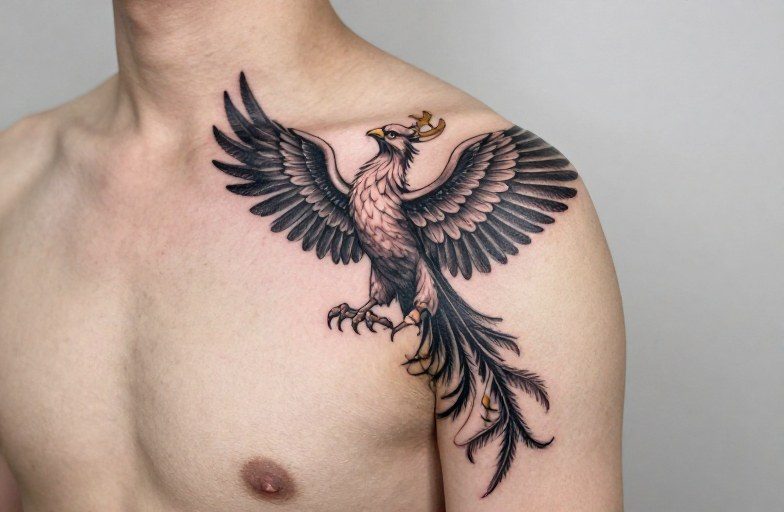
A phoenix shoulder tattoo carries the core meaning of rebirth, resilience, and transformation through destruction. The shoulder placement specifically amplifies this symbolism, it’s where wings would spread, where strength originates, where the body visibly rises. Unlike smaller, hidden designs, this location makes the phoenix an active part of your silhouette and movement.
Symbolism & Core Meaning
The phoenix myth centers on a single cycle: burning and returning. That makes it fundamentally different from symbols of pure strength or luck. You’re choosing an image about surviving your own undoing.
The Fire and What Follows
Traditional depictions show the bird engulfed in flames, sometimes skeletal mid-transformation, sometimes fully renewed. The fire isn’t decorative, it’s the event. The meaning lives in that tension between destruction and emergence. People drawn to this image usually aren’t celebrating an easy win; they’re marking something they survived that should have finished them.
Shoulder as Rising Point
The shoulder blade and deltoid create natural upward lines. When you raise your arm, the tattoo moves. This kinetic quality matters for a symbol about ascent and flight. Chest or back placements can feel static; the shoulder makes the phoenix participate in your actual gestures of lifting, reaching, opening up.
Similar & Related Symbols
Understanding what separates the phoenix from adjacent imagery helps you decide if it’s the right choice or if you’re actually after something slightly different.
Ouroboros, Lotus, and Koi
The ouroboros (snake consuming itself) also deals in cycles, but emphasizes repetition and eternity rather than dramatic comeback. The lotus rises from mud, gentler emergence, no destruction required. Koi swimming upstream represent perseverance through obstacle, not resurrection after actual failure or loss. The phoenix is the only one that requires death of self as prerequisite.
Dragons and Thunderbirds
Dragons carry power and protection; thunderbirds, spiritual force and storm connection. Neither carries the specific narrative of self-immolation and return. If your experience involves addiction recovery, profound loss, identity collapse, or starting over after public failure, the phoenix speaks that language more precisely than these alternatives.
Personal & Modern Meanings
Contemporary wearers rarely reference the Egyptian Bennu or Greek origins directly. The symbol has detached from its classical anchors and become shorthand for several specific life experiences.
Recovery and Reinvention
Substance recovery, leaving abusive situations, gender transition, career abandonment after decades, modern phoenix wearers often point to total identity reconstruction. The tattoo functions as both private marker and public declaration: something happened, something ended, something else began. The shoulder placement makes this visible in tank tops, sports gear, summer living; it’s not a secret you’re keeping.
Commemoration Without Portraiture
Some choose phoenix imagery to mark loss without literal memorial elements like dates, names, or portrait realism. The fire becomes the event; the rising, the continuation. This abstraction suits people who find name-and-date tattoos too direct, too fixed in grief rather than movement forward.
Design Tips & Pairings
Phoenixes fail most often from overdesign, too many elements competing, too much color without structural support, wings that don’t account for shoulder anatomy.
Flowing With Anatomy
Successful shoulder phoenixes follow the deltoid curve or sweep across the blade toward the spine. Wings extending down the upper arm work if the bird’s body anchors near the acromion (that bony point where arm meets shoulder). Avoid centering the entire bird on the ball of the shoulder, it’ll distort with muscle flex and look like a different creature when you move.
- Single wing spreading across the back (unidirectional, dramatic)
- Full body in profile, rising from stylized flames wrapping the deltoid
- Abstracted feathers trailing from shoulder onto upper chest
- Circular composition: bird consuming itself in fire, adapted to the shoulder cap
Complementary Elements
Flames are obvious companions but risk clutter. Consider smoke wisps, ash particles becoming feathers, or bare branches the phoenix leaves behind. Geometric framing (circles, mandala fragments) can contain the energy without fighting it. Text rarely helps, quotations about rising again usually state what the image already accomplishes, diluting both.
Color vs Black and Grey
This choice fundamentally changes what the tattoo communicates and how it endures.
Color: Orange, Crimson, Gold
Color phoenixes deliver immediate recognition. The eye reads fire instantly. Saturated oranges and reds against cool skin create natural contrast. The tradeoff: these warm tones fade fastest. Yellows and light oranges often shift to pale peach or skin-tone within five to eight years. Plan for touch-ups, or accept the softening as part of the aging metaphor, some do, deliberately.
Black and Grey: Texture and Time
Without color, the artist must build fire through value contrast, deep blacks, white highlights, dense grey-wash textures. This demands more technical skill but rewards with longevity. Black and grey ages gracefully on shoulders, which see moderate sun exposure but less direct abrasion than hands or feet. The healed result often looks more integrated with skin tone, less like a sticker applied on top.
Red ink specifically carries higher allergy risk than black; discuss this with your artist if you’re considering heavy crimson saturation.
How It Ages on Skin
Shoulder skin behaves predictably, which matters for a design with fine detail.
The Good News
The deltoid and blade area doesn’t stretch dramatically with weight fluctuation compared to stomach or thigh. Muscle development changes the shape slightly but rarely destroys the composition. Shoulder tattoos typically heal with minimal complication because the area breathes, isn’t constantly flexing like a joint, and avoids the friction of waistbands or shoe contact.
The Realities
Lines soften. Feather details that read crisply at six months may blur by year ten. Small flame tips merge. This happens faster with color, especially if you tan without protection. The shoulder gets sun, swimming, sports, daily life. SPF 30 minimum, reapplication every two hours of exposure, or accept accelerated aging.
Plan your initial design with future softening in mind: bolder outlines around critical shapes, not everything dependent on hairline detail. Your artist should build in structural redundancy so the image holds even when specifics soften.
The Takeaway
A phoenix shoulder tattoo commits to visibility and to a specific narrative: not just survival, but transformation through destruction. The placement makes it part of your physical presence, rising when you raise your arm, visible in ordinary clothes. Choose it when the classical meaning genuinely matches your experience, not when you want a generic symbol of strength. The fire is the point. The burning is the point. The return is earned, not given.
Frequently Asked Questions
How painful is a phoenix shoulder tattoo compared to other placements?
The outer deltoid rates moderate, muscle padding helps. The shoulder blade and collarbone area near the joint hurt significantly more due to bone proximity. Expect a two-session piece for detailed work; numbing options exist but discuss with your artist beforehand.
Can a phoenix shoulder tattoo work with existing tattoos on my arm or back?
Absolutely, but direction matters. An artist can extend wing feathers to flow into existing sleeve work, or position the phoenix to emerge from existing background elements. Bring photos of current tattoos to your consultation; integration requires planning, not improvisation.
How long does a detailed color phoenix take to complete?
Most shoulder phoenixes need 6-12 hours across two or three sessions, depending on size, color complexity, and your skin’s tolerance. Rushing into a single marathon session compromises line quality and your ability to sit still for shading.
What direction should the phoenix face on a shoulder?
Forward-facing creates symmetrical intensity but demands perfect centering. Profile or three-quarter view follows natural shoulder flow better and allows wing extension toward the back or arm. Consider which direction your arm movement will animate, rising wings work beautifully with overhead motion.


Leave a Reply