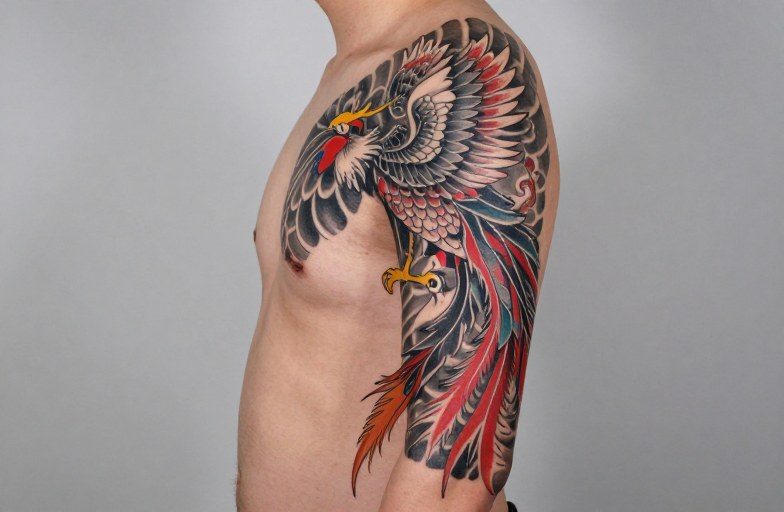
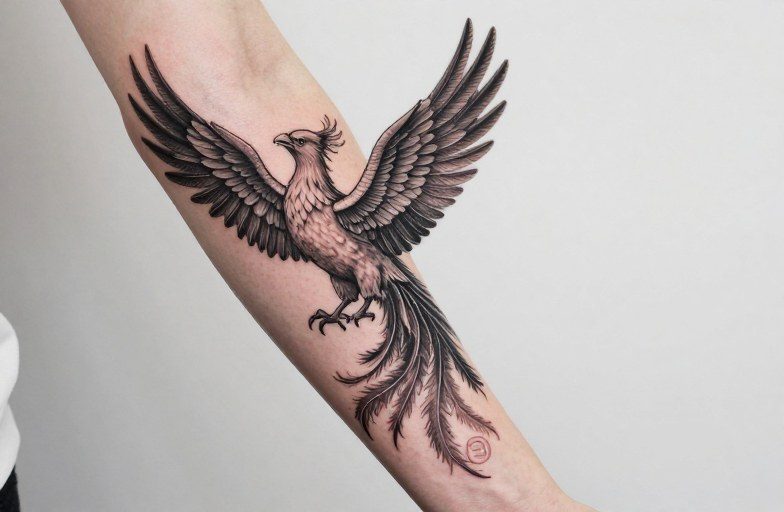
A phoenix bird sleeve tattoo carries the weight of rising from destruction, burning, falling, and returning stronger. On a full sleeve, that narrative unfolds across the entire arm, turning the body into a canvas for endurance and second chances. The meaning stays rooted in rebirth, but how that rebirth reads depends heavily on what surrounds the bird, where the flames sit, and whether the phoenix is ascending or already mid-flight.
Design Tips & Pairings
Building a phoenix sleeve demands more than dropping a bird on skin. The wrap-around format means the design must work from every angle, not just the front-facing Instagram shot.
Complementary Elements
- Flames and smoke: Background fire fills gaps between major elements and keeps the eye moving. Soft gray wash smoke behind a saturated phoenix creates depth without competing.
- Cherry blossoms or lotus: Eastern phoenix pairings; the lotus especially reinforces the death-to-life cycle with its own mud-to-bloom symbolism.
- Clocks, hourglasses, or celestial bodies: Time passing, time renewed. These ground the phoenix in a specific narrative rather than generic rebirth.
- Geometric frames: Clean lines around traditional phoenix imagery can modernize the piece without diluting the meaning.
Line Work vs. Shading Strategy
Phoenix sleeves live or die on contrast. Thick Japanese outlines (irezumi-style) hold up for decades; soft realism without enough black backing will muddy within five years. For color work, the red-orange-yellow flame gradient needs solid black underneath or it ages to a single peach blur. Black-and-grey phoenixes rely on whip shading and smooth gradients in the feathers to suggest the heat without literal color.
Religious & Spiritual Angles
The phoenix carries no single religious ownership, which makes it adaptable but also easily diluted. Understanding the actual threads helps anchor the design in something genuine.
Christian Parallels
Early Christian writers, including Clement of Rome, adopted the phoenix as a symbol of resurrection and Christ’s return from death. A phoenix ascending with a cross or ichthys hidden in the tail feathers can carry that specific meaning without preaching. The key is intentionality, slapping a cross nearby reads as decorative, not devotional.
Eastern Traditions
The Chinese fenghuang and Japanese hou-ou are distinct from the Western fire-bird, often linked to imperial virtue and cosmic harmony rather than individual rebirth. Sleeve designs mixing the Western burning-and-rising narrative with Eastern plumage patterns create a blended spirituality that works for people with mixed heritage or eclectic practice. The fenghuang typically pairs with the dragon; alone, it reads as feminine virtue and grace.
History & Cultural Roots
The phoenix myth spans ancient Egypt, Greece, Rome, and East Asia, though the connections between these traditions are often overstated.
The Greek phoenix, described by Herodotus and later Ovid, was said to live 500 years, build a nest of spices, and ignite, rising from the ashes as a new bird. Egyptian tradition features the benu, often linked to the sun god Ra and the cyclical renewal of day. Whether the Greek phoenix derives from the benu remains debated; some trace it to Egyptian influence, others see independent development. The Roman adoption emphasized immortality and imperial continuity.
East Asian fenghuang lore dates to the Shanhaijing (Classic of Mountains and Seas), though the modern five-colored plumage association solidified later. During the Ming and Qing dynasties, the fenghuang became strictly associated with the empress, creating gendered symbolism that persists in tattoo culture today.
Best Placements
A sleeve offers unique storytelling real estate. The phoenix’s journey maps naturally onto the arm’s verticality.
Flow and Direction
- Shoulder to wrist, ascending: The classic narrative, flames and debris at the wrist, the bird breaking through cloud or smoke toward the shoulder. This reads as overcoming, moving forward.
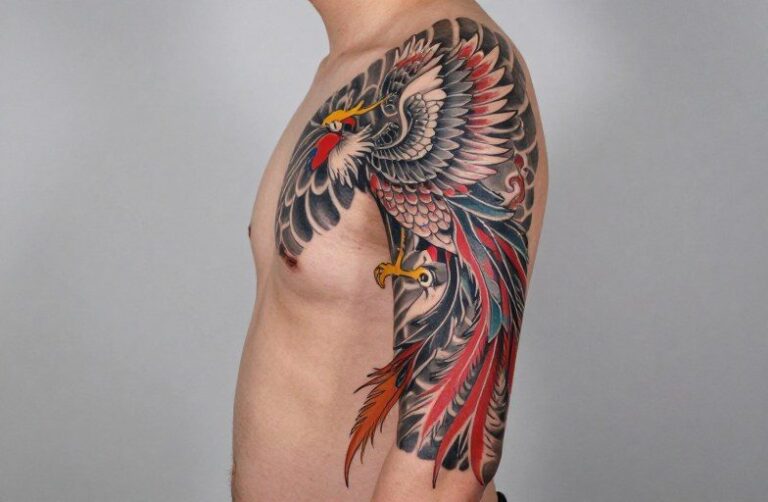
- Shoulder focus with wrap: The phoenix emerging from the deltoid, wings extending across chest and back. This requires a skilled artist; the shoulder’s roundness distorts flat wings.
- Reverse descent: Bird at top, flames consuming toward the wrist. Darker, more tragic reading, acknowledging the destruction that precedes rebirth rather than celebrating the rise alone.
Skin Tone Considerations
Yellow and orange inks struggle on deeper skin tones without a white base or heavy saturation; red and crimson hold better. Black-and-grey phoenixes with selective warm accents often age more predictably across all skin types. The inner arm, with its thinner skin and different healing pattern, needs simpler feather detail than the outer bicep or forearm.
Personal & Modern Meanings
Contemporary wearers rarely reference imperial virtue or early Christian resurrection theology. The modern phoenix sleeve typically marks specific lived experience.
Recovery and Survival
Addiction recovery, cancer remission, divorce, prison release, the phoenix sleeve functions as a permanent marker of a before and after. The full sleeve format matters here: the commitment of time, money, and pain mirrors the commitment of the recovery itself. Some add dates in small script within the flames; others let the imagery stand alone.
Reinvention Without Trauma
Not every phoenix rises from catastrophe. Career pivots, gender transitions, religious conversions, or simply leaving a hometown can all fuel the design. The meaning stays valid without requiring a dramatic backstory. The sleeve’s visibility becomes part of the statement, this transformation is not hidden.
Common Variations & Styles
The phoenix adapts across tattoo traditions, each carrying distinct connotations.
- Japanese (irezumi): Flowing, asymmetrical composition with wind bars, peonies, or maple leaves. The hou-ou here emphasizes nobility and protection. Requires a specialist; poor irezumi-style work looks like a parody.
- American traditional: Bold lines, limited color palette, simplified form. Reads as classic, timeless, slightly stoic. The meaning compresses to resilience without elaboration.
- Realism: Photographic detail, often referencing golden eagle or red-tailed hawk anatomy for believable structure. Demands exceptional technical skill; bad realism ages poorly as skin shifts.
- Neo-traditional: The sweet spot for many, traditional structure with expanded color and detail. Allows narrative elements (broken chains, open eyes, specific flora) without the clutter of full realism.
- Geometric/dotwork: The phoenix built from mandala patterns, sacred geometry, or pointillism. Abstracts the rebirth into pattern and repetition, suited to spiritual but non-religious wearers.
Before You Decide
A phoenix sleeve is a major commitment, twenty to forty hours under the needle, multiple sessions, significant cost. The meaning you carry in should survive the process intact.
Research artists specifically, not just shops. A portfolio full of phoenixes in your preferred style matters more than proximity or price. Ask to see healed photos, not just fresh work. Red and orange fade fastest; if your design depends on flame vibrancy, budget for touch-ups.
Consider the long arc. That triumphant rising bird at twenty-five might read differently at fifty-five, or after setbacks that don’t fit the clean narrative. The phoenix myth allows for multiple burnings, some designs incorporate ash and ember explicitly to hold space for future cycles. The most honest sleeves leave room for the fire to return.
Frequently Asked Questions
How much does a phoenix sleeve tattoo typically cost?
Full sleeves run from $2,000 to $6,000+ depending on the artist’s rate, your location, and the complexity. Color work with heavy saturation takes more sessions and costs more than black-and-grey.
Will a phoenix sleeve work if I need to cover it for work?
Long sleeves cover it completely. The design itself doesn’t affect concealability, placement does. Avoid hand, wrist, or neck extensions if professional coverage matters.
How do I keep the red and orange flames from fading to pink?
Start with saturated, high-quality ink and a black base beneath warm colors. After healing, moisturize and use SPF. Expect touch-ups every few years regardless.
Can a phoenix sleeve be added to existing tattoos?
Yes, but it requires planning. An experienced artist can work around or incorporate older pieces, though cover-up areas may limit your color options in those spots.