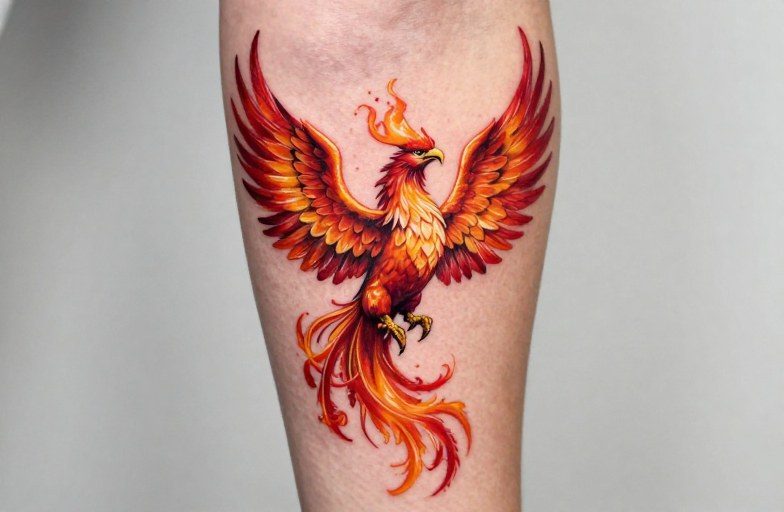
A phoenix color tattoo carries one of the most immediately readable symbols in tattoo culture: rising again after destruction. The bird that burns and returns speaks to anyone who has rebuilt themselves after loss, addiction, divorce, illness, or collapse. Color choices in these designs are not decorative afterthoughts. They shape whether the piece reads as triumphant, mournful, spiritual, or defiant.
What the Colors Actually Mean
The core symbolism is straightforward: fire as both destroyer and purifier, death as prerequisite for renewal. The color decisions you make determine which facet of that symbolism dominates. A phoenix in traditional flame reads differently than one in cool blues or deliberate rainbow sequencing. Understanding these mappings helps you avoid a design that contradicts your intention.
Fire Palette: Orange, Red, and Gold
Traditional fire tones emphasize the active, burning moment of transformation. These pieces read as energetic, almost aggressive in their optimism. Deep crimson backgrounds with orange-gold bird forms create maximum contrast and immediate visual impact. Over time, warmer pigments, especially oranges and lighter reds, tend to soften and brown slightly as they age. This paradoxically can make a healed piece look more ash-like and thus reinforce the theme. Yellow highlights are often the first to fade, so skilled artists pack them denser or shift toward gold tones that hold longer in skin.
Related reading: Japanese phoenix tattoo design | phoenix bird arm tattoo | trad phoenix tattoo meaning | phoenix with cross tattoo
Fire palettes also carry practical advantages. Red and orange pigments have longer track records in tattooing. Their behavior across different skin tones is more predictable than newer or more exotic colors. If you have deeper melanin, saturated warm tones generally remain visible and true longer than pale or pastel alternatives.
Cool and Unconventional Colors
Blue phoenixes, purple flames, or green-tinged birds subvert expectations and typically signal personal rather than mythological meaning. A blue phoenix might reference a cool recovery period after a hot crisis, or connect to specific causes. Colorectal cancer awareness uses blue, for instance, and some recovery communities have adopted teal. Purple often carries spiritual or royal associations, though these shift with cultural context.
These palettes require more maintenance. Cool pigments like teal and violet are notorious for uneven fading and can muddy faster than warm counterparts. Artists working in these palettes often use more black line integration to preserve readable form as color drifts. If you choose an unconventional palette, budget for touch-ups and select an artist with demonstrated healed results in those specific pigments, not just fresh photos.
Black and Grey with Selective Color
The bird rendered in greyscale with only the flames or crest in color creates a specific emotional register. This reads as memory in flames or a specific moment of burning isolated from the rest of the narrative. The limited color pops dramatically but requires precise placement. Too much color looks accidental; too little reads as unfinished. This approach ages well because the greyscale structure holds even if the color softens.
Where the Image Comes From
The phoenix myth spans multiple cultures, though details vary significantly. Greek sources often linked it to the sun god Apollo, with the bird living 500 years before self-immolation. Egyptian tradition featured the bennu bird, often linked to solar cycles and creation, though the direct connection to the Greek phoenix remains debated among historians. Chinese fenghuang imagery sometimes merges with phoenix interpretation in tattooing, though the fenghuang traditionally represents virtue and grace rather than cyclical rebirth.
In tattoo imagery, these distinctions blur. Most clients are not seeking scholarly accuracy. They are drawn to the composite Western phoenix that emerged from medieval bestiaries: eagle-sized, flame-colored, self-combusting. This version dominates tattoo reference material. The specific visual vocabulary of modern tattoo phoenixes is often linked to 1980s and 1990s Japanese-influenced American work, where the ho-o bird’s flowing tail feathers merged with Western fire imagery.
Religious Frameworks
Early Christian writers adopted the phoenix as a resurrection symbol, and that association persists in religious tattoo contexts. A phoenix rising before a cross or integrated with ichthys imagery explicitly claims Christian rebirth narrative. The color palette shifts accordingly: less aggressive flame, more gold and white suggesting divine light rather than destructive fire. These pieces require careful theological calibration. Too much fire and the piece reads as punitive; too much gold and it loses the necessary tension of death preceding renewal.
Non-Christian Spiritual Frameworks
Outside Christianity, the phoenix often maps onto chakra systems, kundalini imagery, or general spiritual awakening language. Here you see more rainbow gradients, iridescent color choices, or deliberate chakra-color sequencing in the tail feathers. These designs risk looking dated faster than traditional fire palettes because New Age color symbolism shifts with cultural trends. The underlying meaning, transcendence through suffering, remains stable, but the visual language ages. If you choose this approach, anchor it in personal significance rather than trend alignment.
Style and How It Affects Color
Style selection dramatically affects how color functions in these tattoos. Not all approaches handle fire colors equally well.
- Japanese (Irezumi): Typically uses limited color against dominant black background. The phoenix emerges from negative space and wind bars. Color is strategic: red crest, gold accents, rather than saturated throughout. These age exceptionally well because black holds structure as color softens.
- American Traditional: Bold black outlines, limited palette of red, yellow, green, blue. The phoenix reads immediately even from distance. Color is flat, not shaded. Healing is predictable because the skin is not overworked with gradient.
- Neo-Traditional: Expanded color range, more dimensional shading, often jewel tones or unusual combinations. Requires larger size to prevent muddiness as fine color transitions heal and settle.
- Realism/Photorealism: Attempts actual flame texture and feather detail. Color work is extensive, often incorporating white ink for hottest flame points. These demand large scale and expert application. Mediocre realism phoenixes heal into indistinguishable orange blobs.
- Watercolor and Abstract: Abandons linework for color washes suggesting form rather than defining it. These look striking fresh but present real aging concerns. Without black anchors, blue and purple washes can diffuse into surrounding skin, creating not a phoenix but a bruise-like stain. Artists committed to this approach often use watercolor as accent around a more traditionally structured bird, or place them where skin stays relatively stable rather than high-movement zones.
Size and Saturation Limits
Color phoenix tattoos require space. The tail feathers, wing structure, and flame halo all need room to breathe. Attempting full color in a small piece results in a indistinct mass within five years. As a rough guideline, plan for at least the size of your open hand for a single bird without surrounding elements. Sleeve or back-piece scale allows the color complexity that makes these pieces successful.
Placement and Practical Concerns
Placement affects both color behavior and symbolic reading. Different locations age differently, and the meaning shifts with visibility.
- Full back: The classic canvas for phoenix work. Allows full wingspan, complete tail fan, surrounding flame context. Color can be complex and saturated because there is room. Aging is relatively favorable; back skin sees less sun and movement than limbs.
- Chest/sternum: Rising from heart area reinforces personal transformation narrative. Color here heals unpredictably; sternum skin is thin, sits over bone, and moves with breathing. Reds and oranges often settle denser than expected. Plan for touch-ups.
- Thigh: Excellent for large color work with manageable pain. Thigh skin accepts saturation well and ages better than calf or forearm. Easy to conceal or display.
- Upper arm/shoulder cap: Traditional placement that frames the bird’s head and crest. Color stays relatively true here, though outer arm sees sun exposure. Sleeve integration is common: phoenix emerging from black background or other imagery.
- Forearm: High visibility means the rebirth narrative is public. Color fades faster here due to sun and movement. Requires commitment to sun protection or acceptance of periodic refresh.
- Ribcage: Painful, but the vertical space suits the rising motion. Color work is challenging because skin stretches dramatically; artists must design for the body at rest and in motion.
Skin Tone Considerations
Fire colors behave differently across melanin levels. On deeper skin, orange can read as brown, yellow as muted gold. Artists experienced with diverse skin tones often shift toward crimson and magenta rather than true orange to preserve the fire reading. Pale skin accepts yellow and white highlights more readily but shows blowouts and scarring more visibly. Discuss healed examples on skin similar to yours, not just fresh portfolio work.
Choosing an Artist and Planning Sessions
Color phoenix work is not generalist tattooing. You need an artist with specific experience in large color pieces, ideally with healed results to show. Ask to see photos at one year, not just fresh. The best artists for this work often specialize in Japanese, neo-traditional, or color realism, not black and grey.
Large color phoenixes typically require multiple sessions. A full back piece might take six to ten sessions depending on complexity. Skin needs healing time between passes, and color saturation is built in layers. Rushing this process produces muddy results. Budget for the full timeline, not just the first session.
Aftercare for color work emphasizes moisture balance and sun protection. Colors fade proportionally to UV exposure. A phoenix on your forearm without consistent SPF application will dull significantly within three years. Plan for this maintenance from the start, or choose placement that clothing naturally protects.
What to Remember
A phoenix color tattoo succeeds when the palette matches the specific transformation being marked, not just the generic idea of rebirth. Fire tones claim active, energetic renewal. Cool or unusual colors signal personal, non-standard recovery paths. Limited color isolates a specific moment of change. Each choice carries consequences for how the piece ages and how it reads to others.
The symbol is ancient and widely understood, which is both strength and risk. Strength because the meaning communicates immediately. Risk because cliché is easy. The color decisions you make, the style you choose, and the artist you select determine whether your phoenix feels lived or merely borrowed. Take time with these decisions. The bird deserves to rise from something real.
Frequently Asked Questions
What colors last longest in a phoenix tattoo?
Reds and darker oranges generally hold best over time. Yellow and white fade fastest. Cool pigments like teal and violet are prone to uneven fading and muddying. Black line structure preserves readable form as color softens.
Can a phoenix tattoo work on dark skin?
Yes, but color choice matters. Saturated crimsons and magentas often read better than true orange, which can brown significantly. Yellow highlights may need shifting toward gold. Work with artists who have healed portfolio examples on skin tones similar to yours.
How big should a color phoenix tattoo be?
Plan for at least open-hand size for a single bird without surrounding elements. Full color requires space for tail feathers, wing structure, and flame context to remain distinct as the tattoo ages. Smaller pieces tend to blur into indistinct color masses within years.
Do watercolor phoenix tattoos age well?
Generally no. Without black linework anchors, color washes diffuse and can resemble bruising as they age. Some artists compromise with watercolor accents around a traditionally structured bird. Placement on low-movement skin also helps.
How many sessions does a large color phoenix take?
A full back piece typically requires six to ten sessions. Color saturation builds in layers with healing time between passes. Rushing produces muddy results. Budget for the full timeline and aftercare commitment.

Leave a Reply