Neo traditional black butterfly tattoo ideas work best when bold contours meet delicate interior detail, with placement doing as much as the symbol. I once chose a design that was too fine for its location, and the healed result lost its crisp rhythm. These examples keep the butterfly silhouette, striking, personal, and readable for years.
Editor’s note: The strongest design isn’t always the most intricate one. Start with your placement, decide what must remain visible, then let the black structure carry the meaning.
- Start Small with a Neo Traditional Black Butterfly Wrist Tattoo
- Can Red Accents Hold Their Own Against Black?
- The Ornate Back Butterfly as a Black Emblem
- Protect Fine-Line Detail at the Ankle
- The Dagger Pairing: Butterfly, Blade, and Meaning
- Let a Bold Chest Butterfly Carry the Wings
- Frame the Butterfly with Botanical Linework
- Keep a Minimal Neo Traditional Black Butterfly on the Finger
- When a Black Butterfly Meets a Skull
- A Graceful Shoulder Butterfly with Clear Balance
- Make a Unique Neck Butterfly Read Clearly
1Start Small with a Neo Traditional Black Butterfly Wrist Tattoo
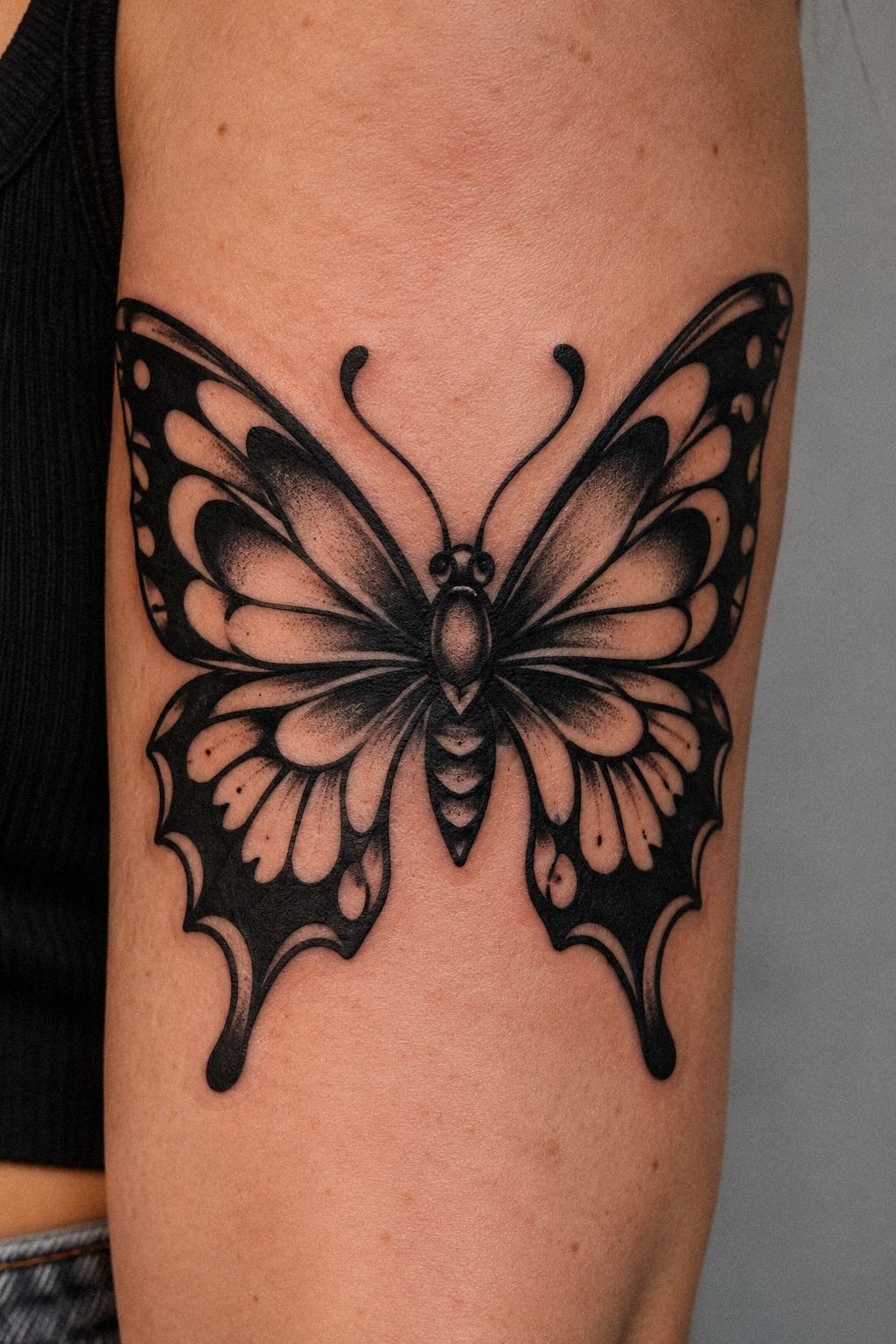
A small wrist butterfly can feel delicate without looking timid. Keep your wings open, the silhouette symmetrical, and the outer contour slightly heavier than the interior marks. On fair cool-pink skin, solid black wing panels create clear contrast, while two or three open sections keep the design from becoming a dark dot.
Let the wrist butterfly stay clear.
Your wrist moves constantly, so I’d skip an overly intricate swarm of tiny accents. A compact design with bold blackwork and one negative-space notch will age more cleanly than a crowded miniature. If you’re comparing scale, a 2-inch concept can offer good value because your artist still has enough room to show the wing structure.
The placement is visible, personal, and a little daring. That’s why it suits you if you want a tattoo you’ll see while typing, lifting a cup, or checking your watch.
I’ve seen minimalist butterflies lose their impact when every line uses the same weight. Think about your wrist placement before approving the stencil.
A short vertical stem, tiny star, or pointed lower wing can finish your idea. Keep additions restrained. A sleek black shadow inside the lower wings may look polished, but too much fill will erase the airy center.
Compare your options with these small black butterfly tattoo references before your consultation. Give the negative space room to breathe.
2Can Red Accents Hold Their Own Against Black?
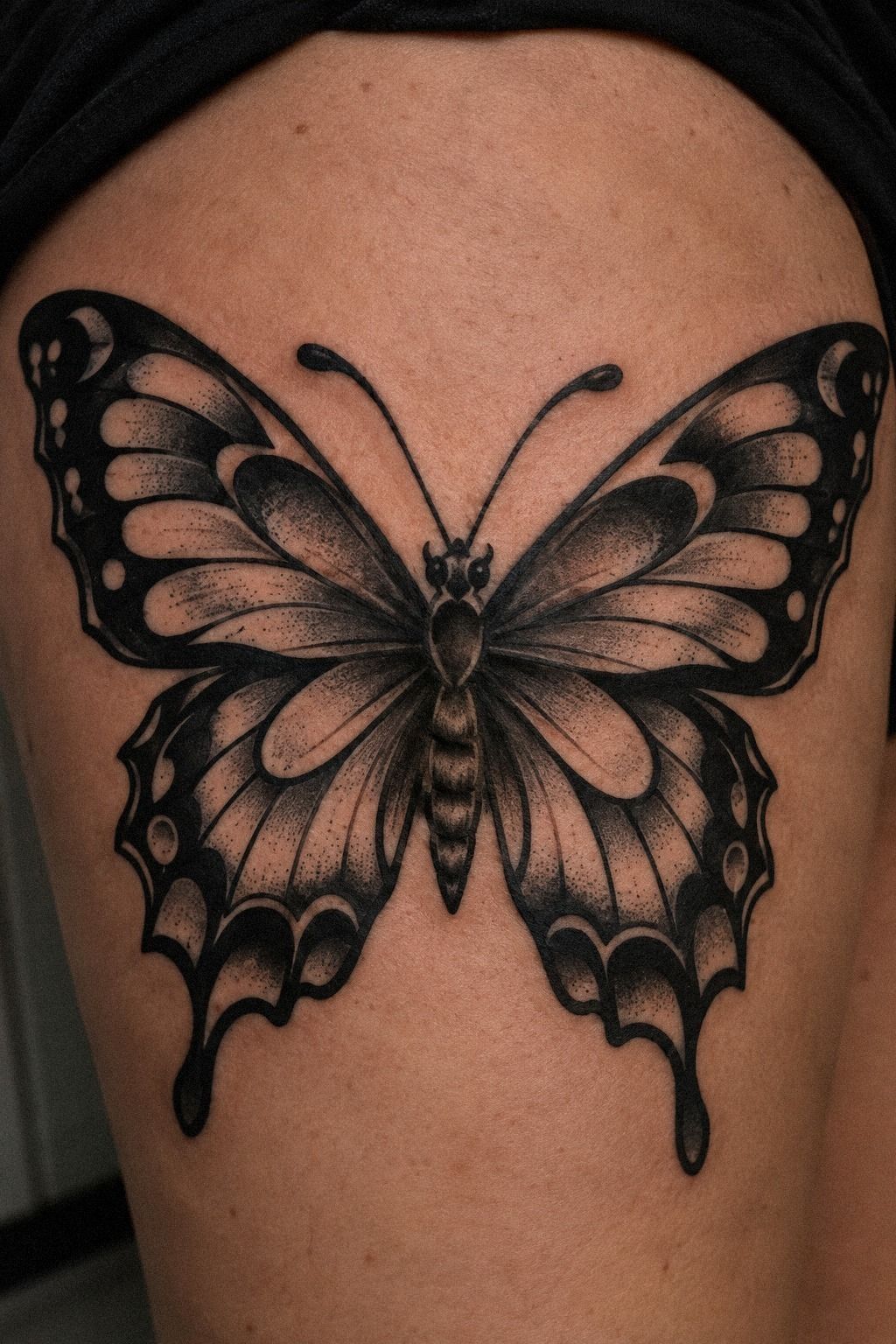
Red accents change the entire temperature of a black butterfly. Use red accents sparingly if you want the black wings to remain the dominant feature.
3The Ornate Back Butterfly as a Black Emblem
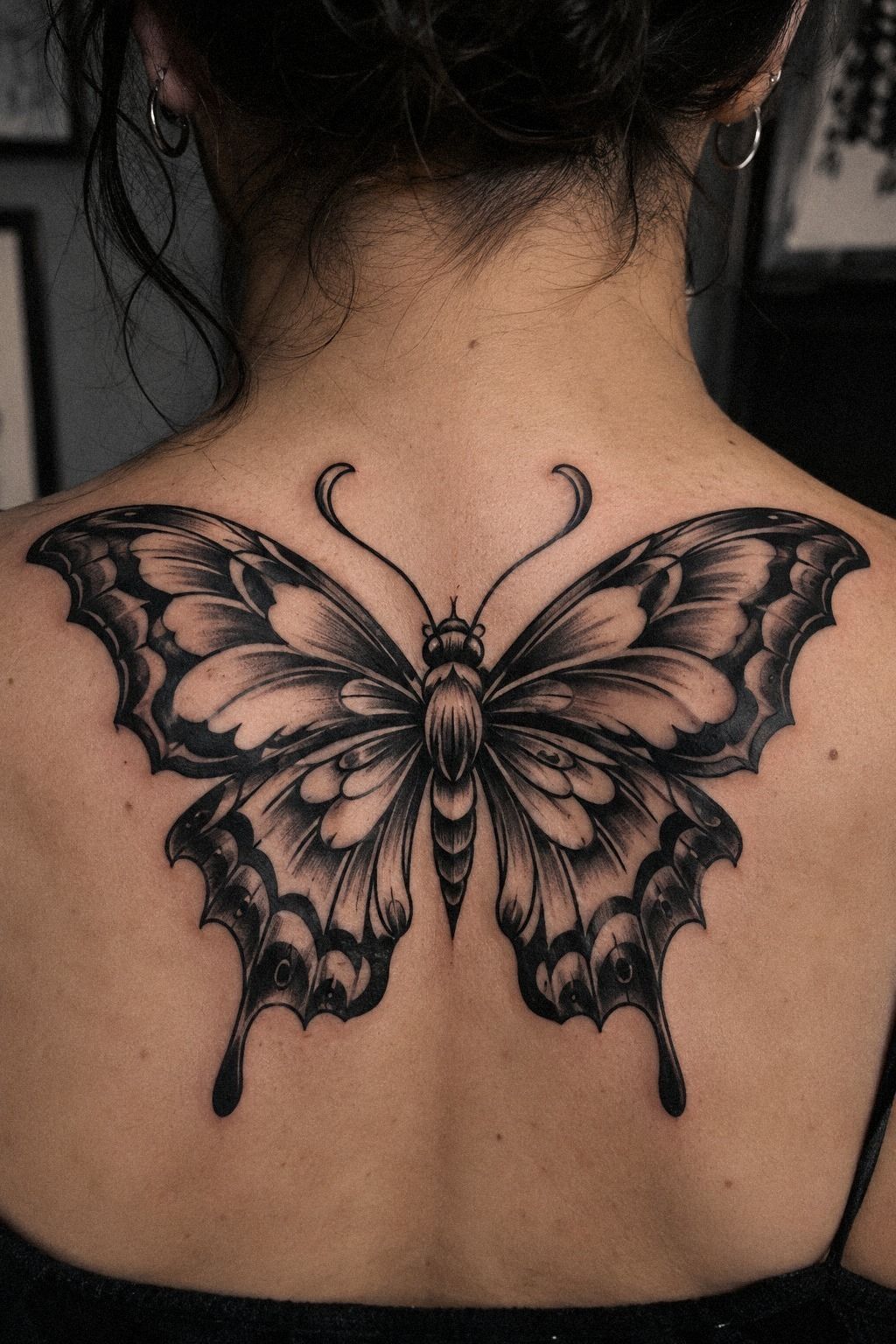
An upper-back butterfly gives you enough space for an ornate emblem with layered wing panels, scalloped edges, and decorative curls. Deep black contour lines can anchor the composition without making the silhouette feel flat. The upper-back butterfly can carry more detail than a wrist piece.
Your artist can build the design from the center outward. Start with the body, set your wing width, then add decorative details.
I’d avoid filling every gap with dots or leaves. The most graceful version usually leaves a quiet border of skin around the wings.
Protect that wing width during revisions.
A large back piece can include ornamental filigree beneath the lower wings, but the flourish should support the butterfly instead of competing with it. That’s where many ornate designs go wrong. The butterfly disappears beneath pretty marks.
Ask to see healed examples, not only fresh versions. Your back experiences sun exposure, friction, and changes in skin tension, so a strong outline matters.
If you’re comparing a custom drawing, a larger tattoo may offer better value than forcing the same detail into a smaller shape. These traditional small butterfly tattoo ideas show the opposite scale for comparison.
4Protect Fine-Line Detail at the Ankle
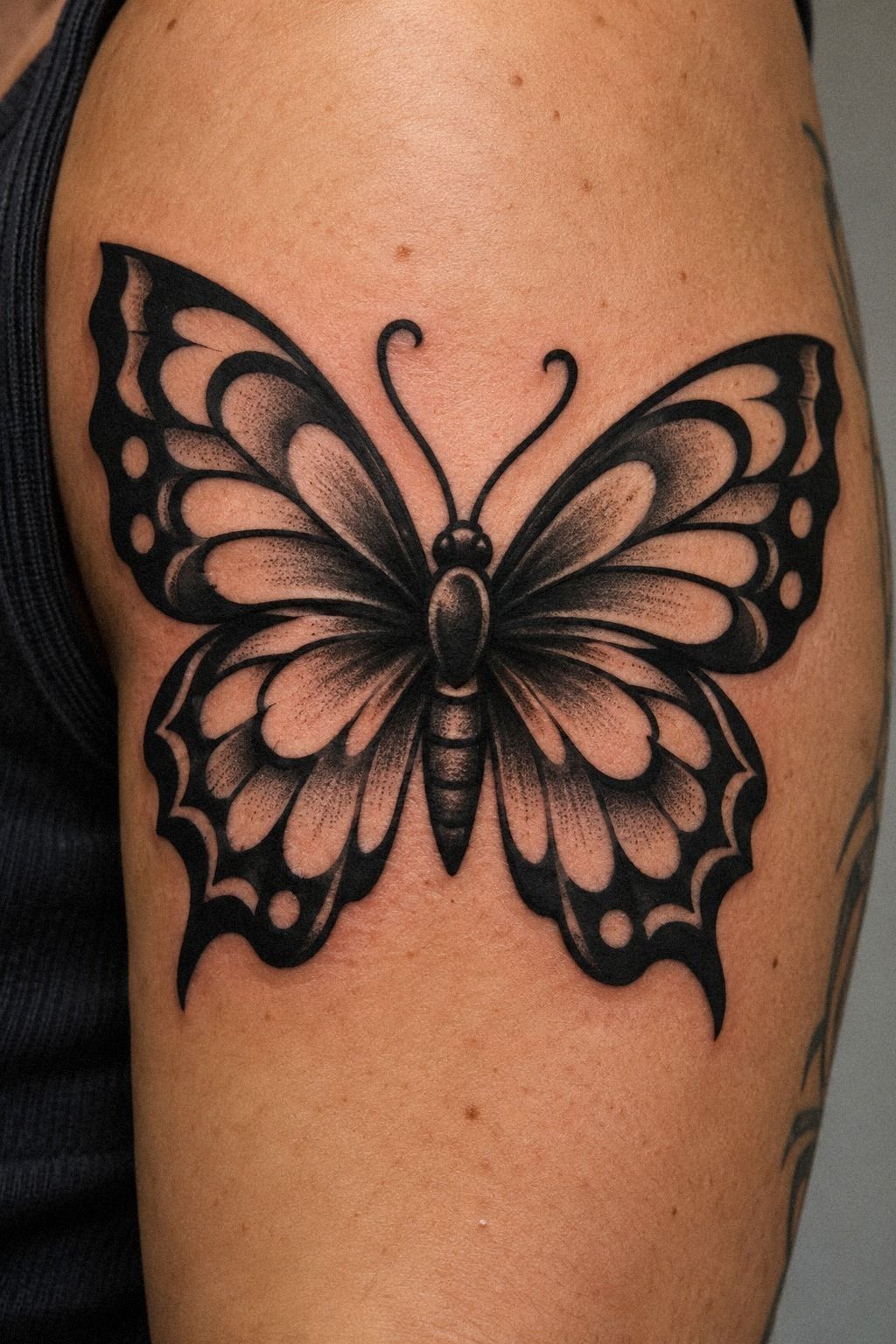
Fine line and neo traditional structure can coexist when your artist knows which marks deserve strength. On golden tan skin, crisp fine-line detailing can look graceful around the ankle, especially when the wing edges remain darker than the inner veins.
Your ankle is a compact, bony placement with frequent movement and friction from socks or shoes. I’d avoid a design that depends on dozens of hair-thin lines.
Choose three or four interior divisions, then let negative space do the delicate work. Keep the ankle placement simple.
The strongest version uses soft gray wash sparingly beneath the wings. A light gradient can create depth, while solid black at the body gives your butterfly a sharp center. Too much gray can weaken the neo traditional character.
If you’re considering a matching pair, don’t make both butterflies perfectly identical. A slightly lifted wing on one side can look more personal than a mirrored stamp.
Surface healing usually takes about 2 to 3 weeks, while the tattoo can continue settling for roughly 2 to 3 months. For more comparisons, browse these fine line black butterfly tattoo ideas before choosing your final budget and scale.
Respect the healing window.
5The Dagger Pairing: Butterfly, Blade, and Meaning
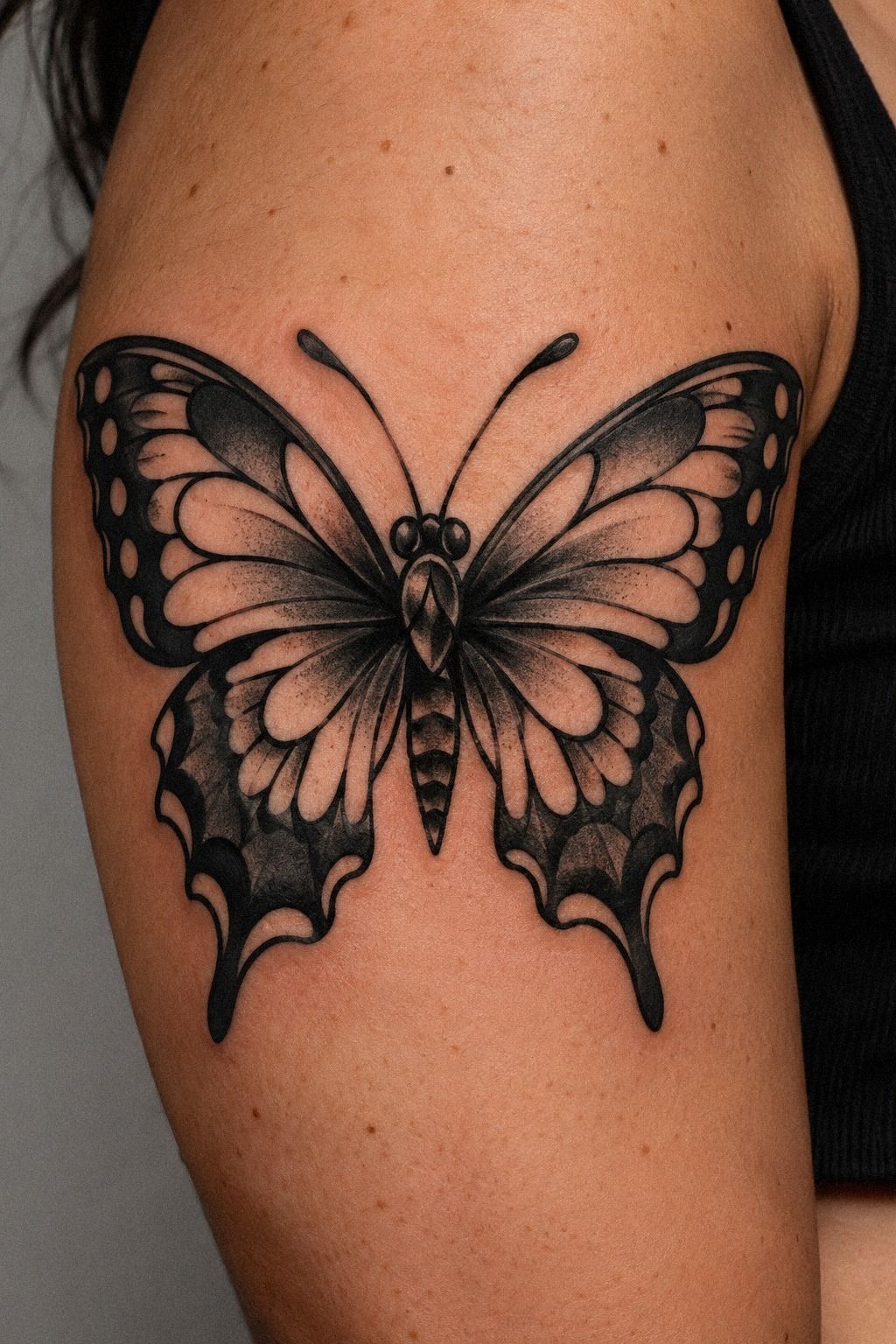
A butterfly paired with a dagger creates an edgy contrast between transformation and danger. The dagger carries long, crisp geometry, while the butterfly carries curves, dots, and ornamental tips.
That difference gives each symbol a clear role. The dagger pairing should feel intentional.
Your artist can angle the dagger vertically through the butterfly’s center or place it behind the wings as a sharp visual anchor. I’d choose the second option for a more balanced composition. The butterfly stays legible, while the polished blade adds a fierce line through the softer wing shape.
A flash-style design doesn’t have to be tiny. You can ask for a compact piece with a heavy outline, or enlarge it so the handle, guard, and wing veins have space to breathe.
Paying for enough scale is often worth it because cramped detail offers poor value. Give the flash design enough room.
A small red gem may make your piece feel romantic, but black alone can feel more symbolic and timeless. If you like the old-school structure, compare these tiny black butterfly tattoo ideas with your dagger sketches.
The best version should read clearly from a distance! Let the red gem remain optional.
6Let a Bold Chest Butterfly Carry the Wings
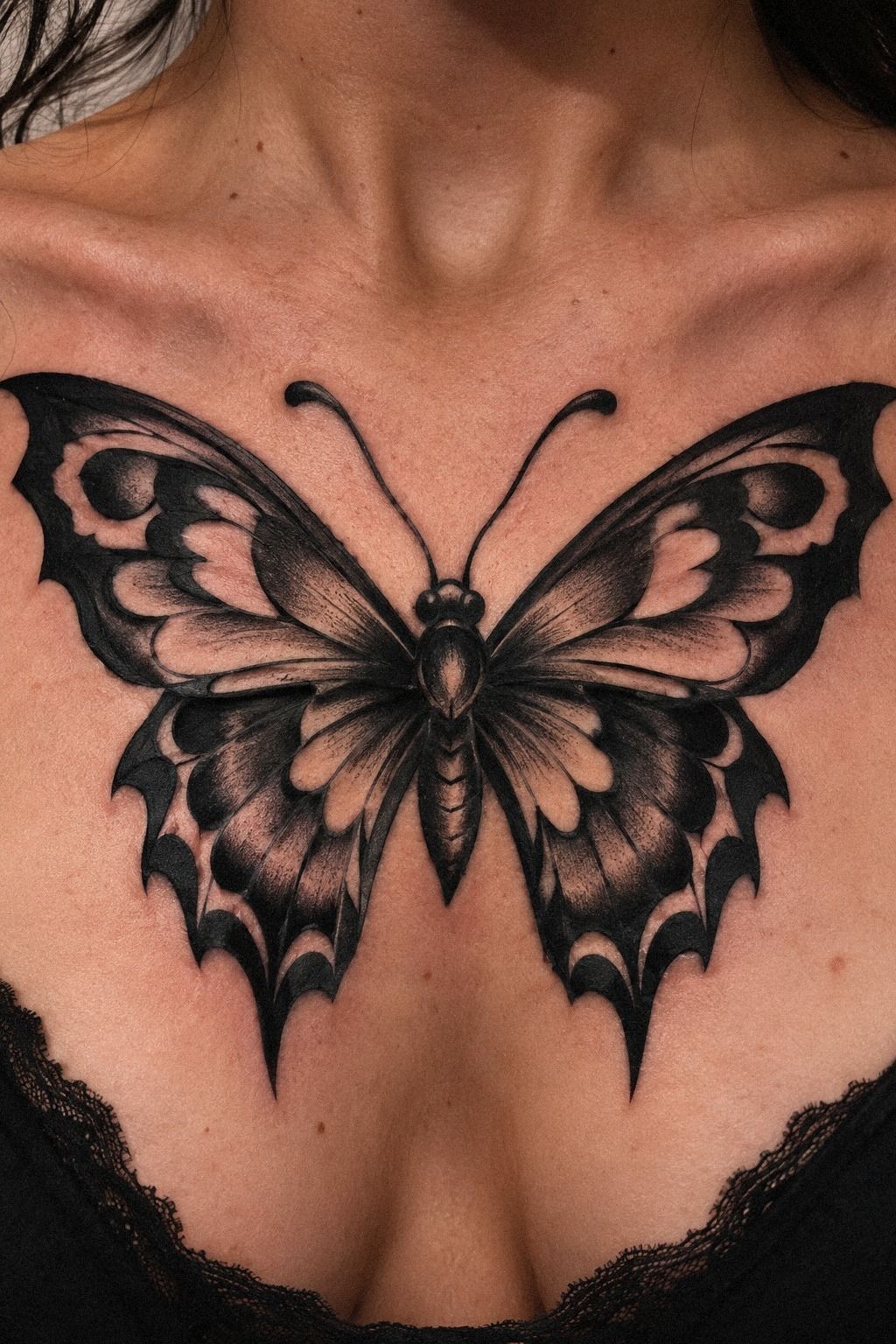
A chest butterfly has natural symmetry, but it doesn’t have to sit like a rigid emblem. On deep ebony skin, high-contrast blackwork can define the outer wings while carefully placed open skin keeps the center readable.
Your upper chest gives you space for a broad silhouette, long antennae, and decorative lower wings. I’d avoid shrinking a design meant for a back or thigh.
A chest piece needs enough scale for the wing edges to remain clean. Measure the upper chest carefully.
Your collarbones can guide the wing angle. A slightly upward sweep may feel empowering and elegant, while a flatter design can look iconic and symmetrical.
Ask for a stencil and move your shoulders before you decide. Test the collarbone sweep in motion.
The chest can be more sensitive than your upper arm or thigh, particularly near the sternum and collarbone. That doesn’t mean you shouldn’t choose it. It means your session plan should be sensible, with breaks if you need them.
These minimalist black butterfly tattoo ideas may help you compare a reduced silhouette with a larger investment. Build a realistic session plan.
7Frame the Butterfly with Botanical Linework
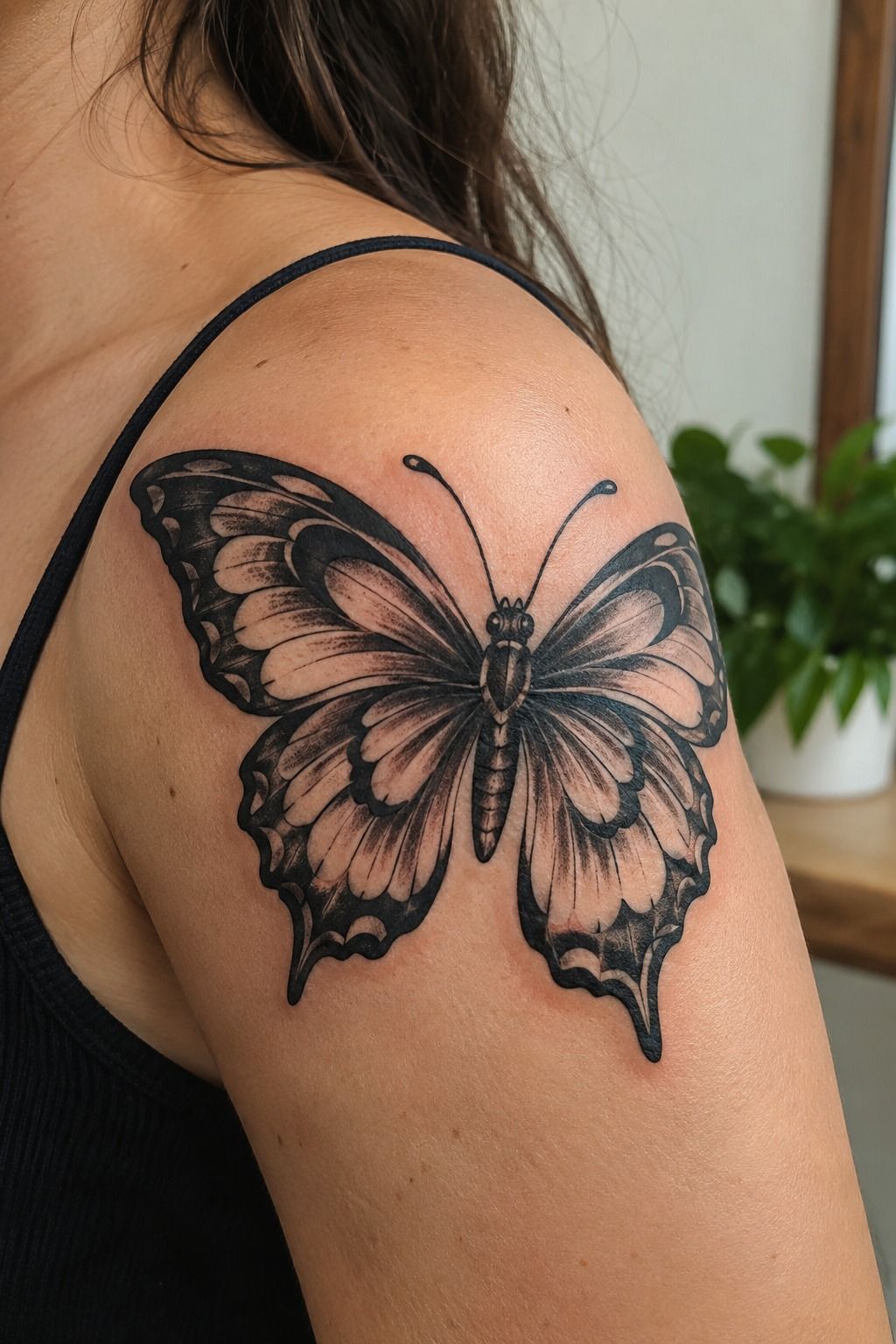
Botanical details make a butterfly feel more organic, but your leaves should frame the subject instead of swallowing it. Keep the botanical details secondary.
8Keep a Minimal Neo Traditional Black Butterfly on the Finger
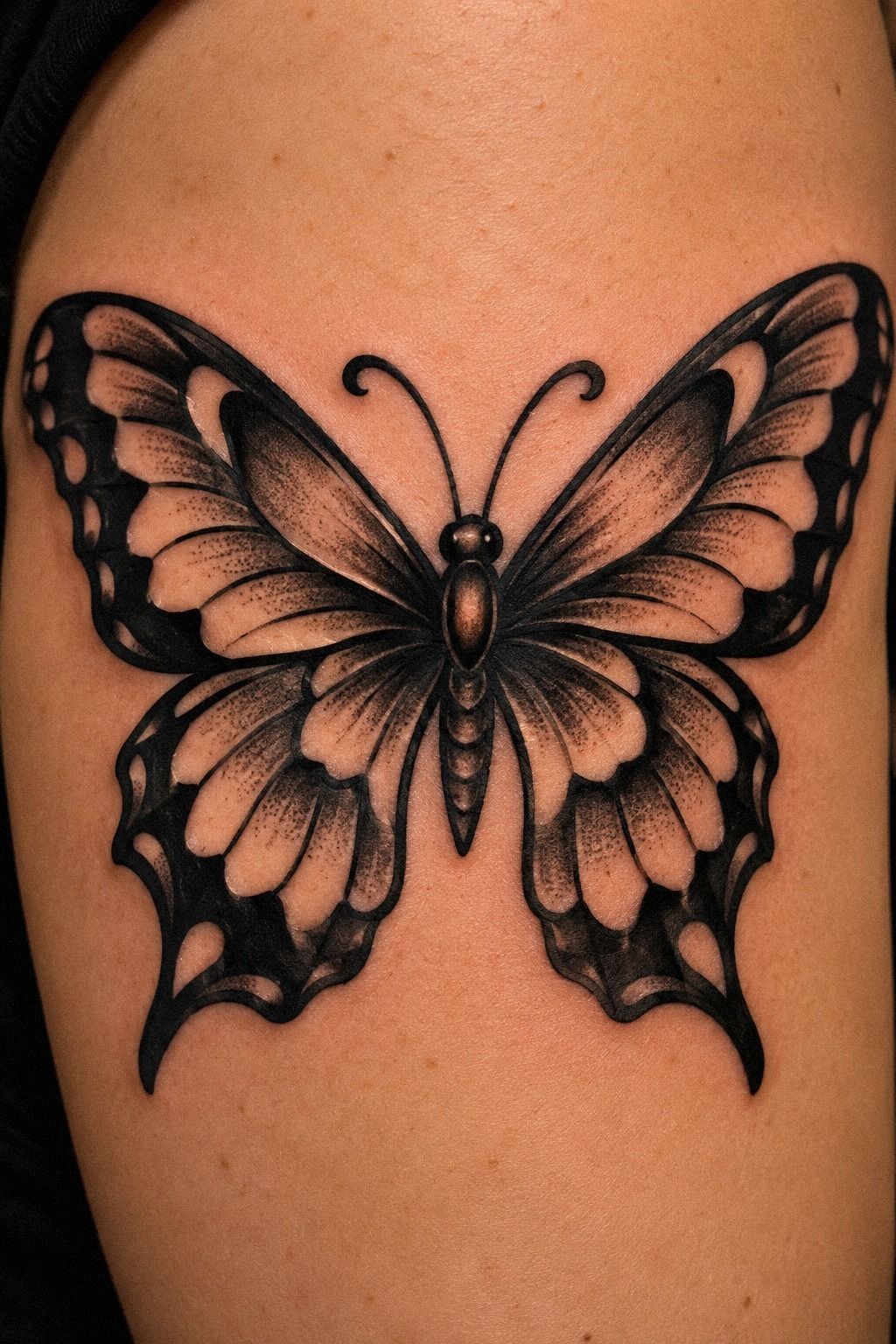
A finger butterfly has to stay minimal because the placement gives you very little room. On medium warm ivory skin, compact black linework can show the open wings, but your design needs a strong silhouette more than a long list of details. Let the finger butterfly stay readable.
I’d skip tiny gray gradients on your finger. Friction, handwashing, and daily movement can make subtle shading disappear faster than a sturdy outline.
A crisp body, two open wings, and one small interior accent will feel understated and sharp. Keep the finger linework restrained.
Finger tattoos require realistic expectations. Your artist may explain that touch-ups are sometimes needed, and that the design may soften differently from a piece on your thigh or shoulder.
That isn’t a failure. It’s part of choosing a high-contact location, and your initial cost may not include every future touch-up.
Ask about touch-ups before booking.
The placement feels personal because you’ll see it constantly. It can mark a change, a relationship, or simply your love of butterflies. Solid black finger ink gives your design a clean visual center, while a small open notch keeps it from becoming a blob.
Compare it with these black butterfly tattoo references before approving the stencil.
9When a Black Butterfly Meets a Skull
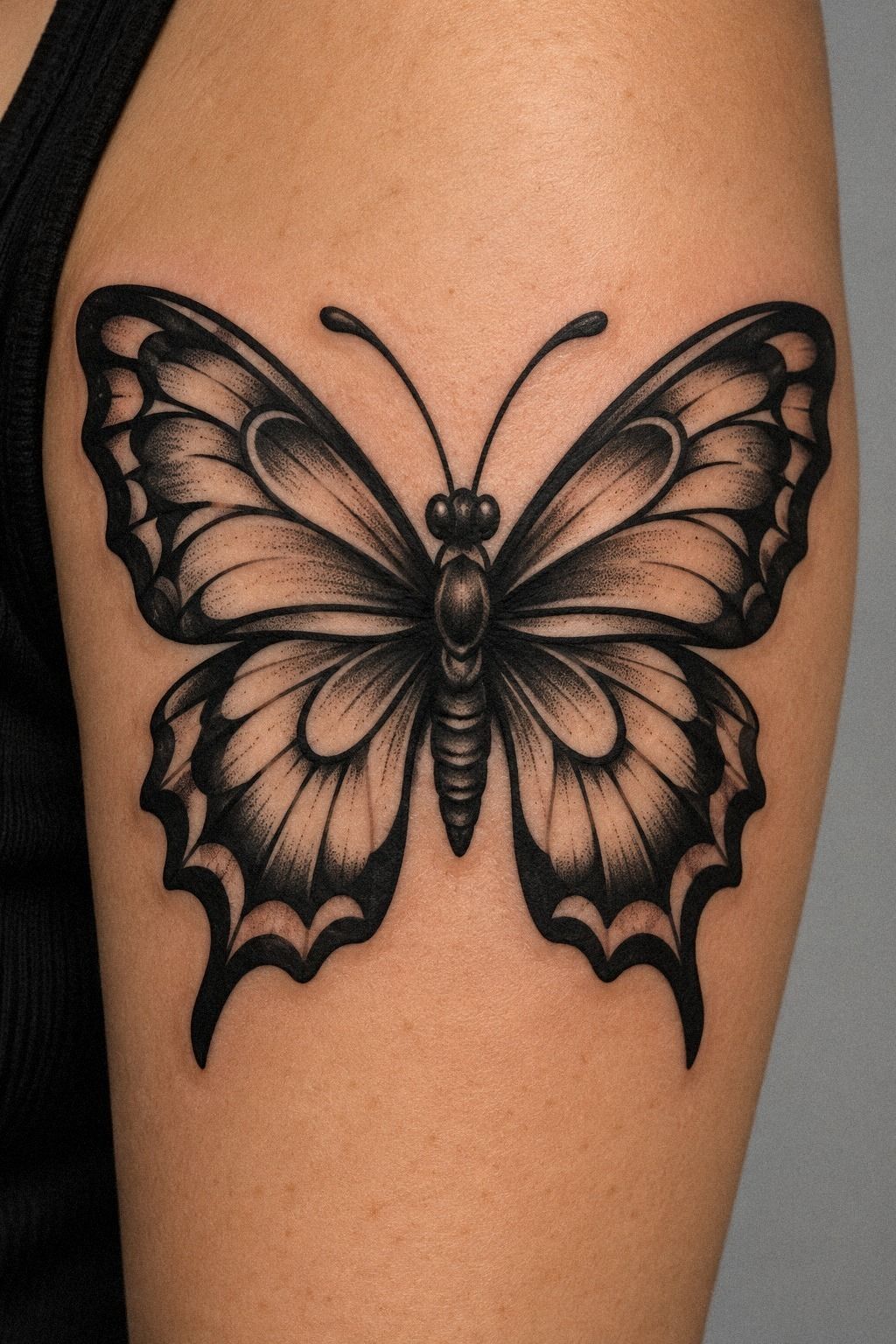
A skull beneath or inside a butterfly gives the image a haunting edge with meaningful contrast. Defined skull lines can sit beneath open wings, creating a tension between fragile movement and mortality. Let the skull motif support the butterfly.
I’d use a strong black contour around your butterfly and leave the skull lighter inside. That hierarchy makes the main subject readable from a distance. Soft charcoal shading around the eye sockets can add depth without filling every cavity.
Your upper arm is a practical location for this idea. It offers more flexibility than your hand, and you can keep the tattoo visible in short sleeves or cover it when you prefer privacy. That versatility may be worth the price before you choose a more exposed placement.
Consider the upper-arm placement first.
Your skull motif can be ornate, raw, or almost playful depending on the face and wing shape. A tiny crown may feel whimsical, while a plain skull gives your design a gritty, classic mood. If you want a simpler alternative, these small black butterfly tattoo ideas show how much meaning a reduced silhouette can carry.
10A Graceful Shoulder Butterfly with Clear Balance
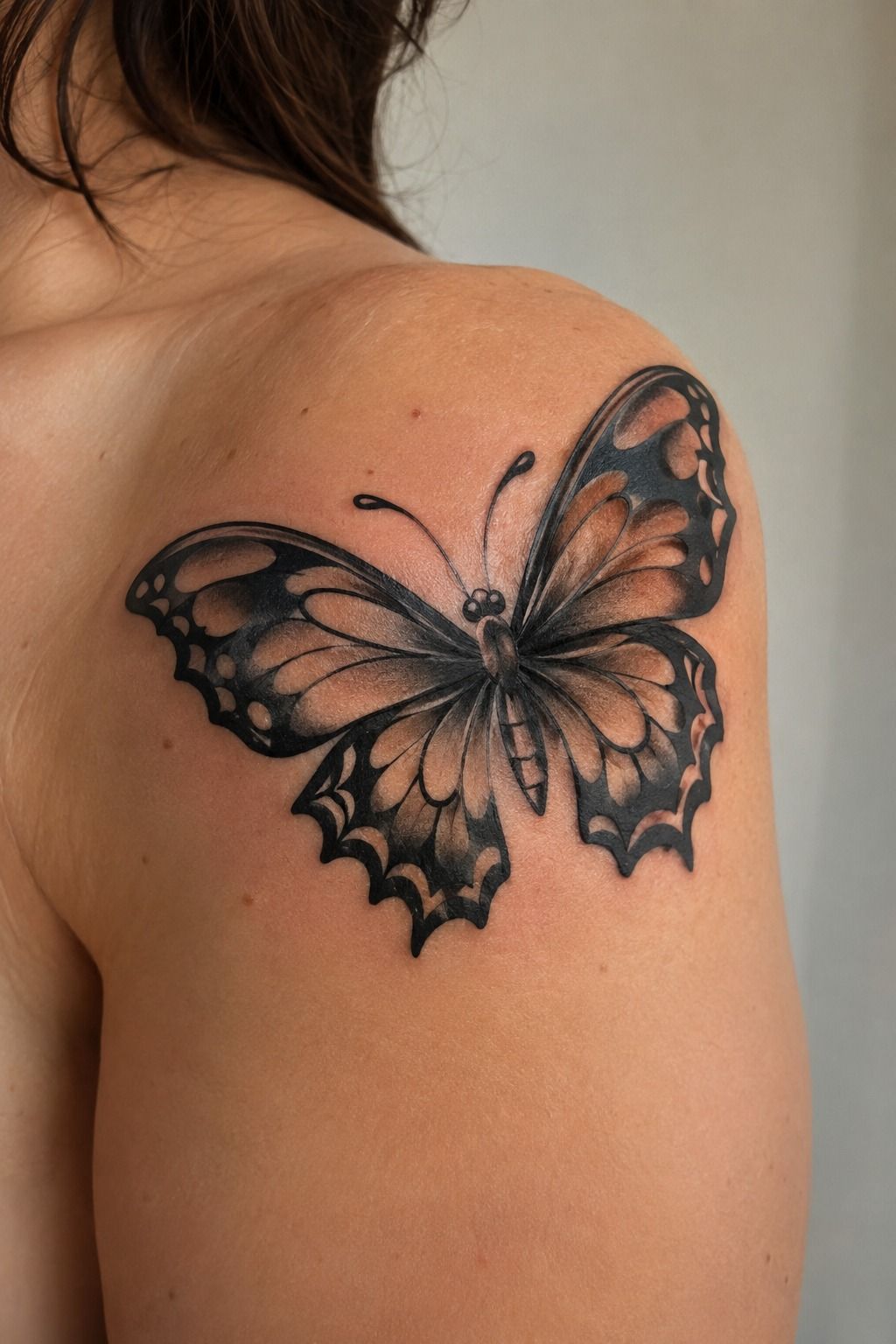
A shoulder butterfly can feel graceful without becoming overly symmetrical. Keep the shoulder butterfly balanced, not rigid.
11Make a Unique Neck Butterfly Read Clearly
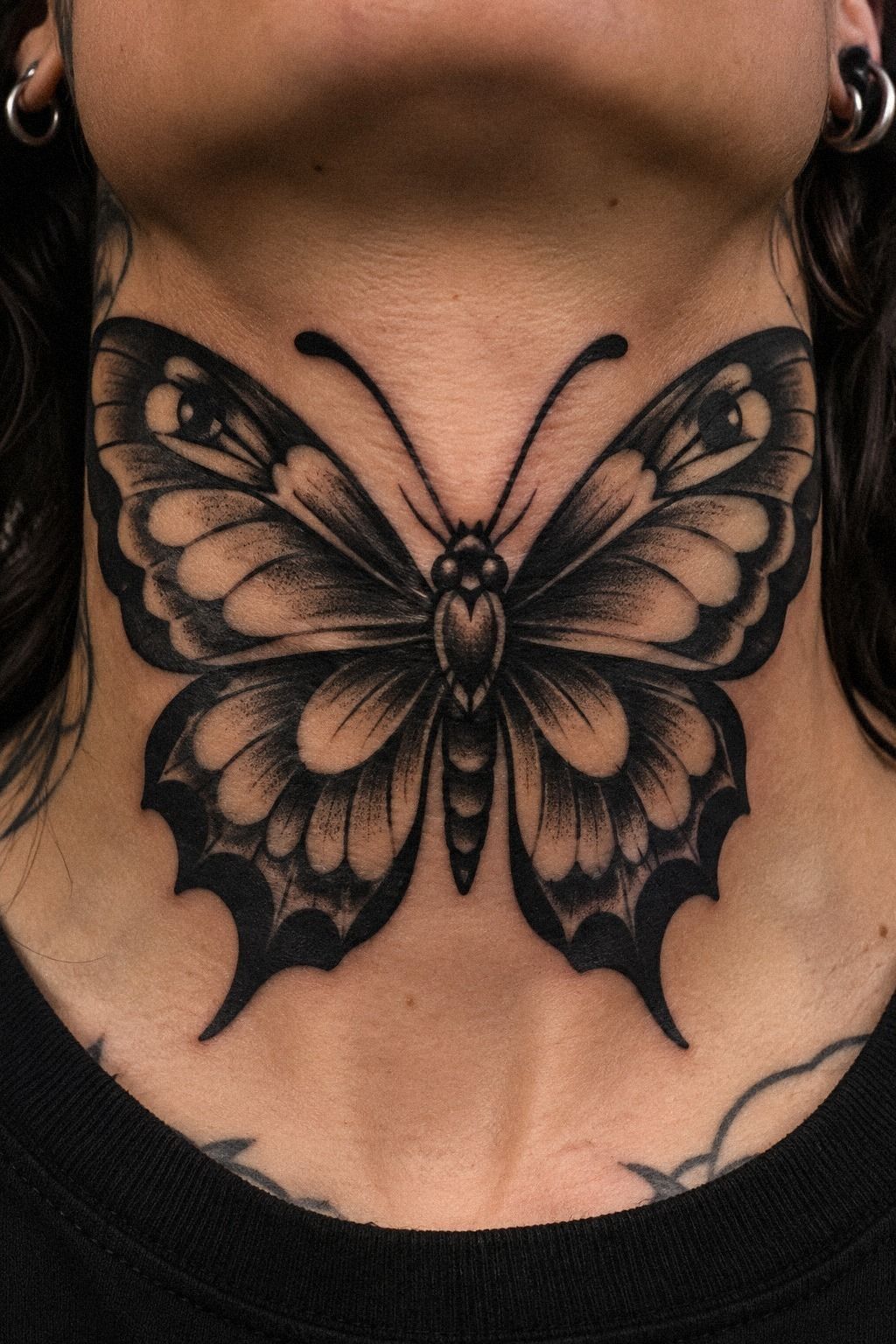
A neck butterfly is a daring choice because the placement is visible, expressive, and difficult to ignore. On deep brown skin with a warm undertone, rich black saturation can create a sharp silhouette against your natural skin tone. Give the neck butterfly a clear center.
I’d choose a design with open wings, a clear center, and limited interior detail. Your neck moves constantly, and a crowded pattern may lose its crisp structure over time. Sharp wing geometry gives your piece a sleek identity, while a few rounded tips keep it from feeling mechanical.
Your artist should discuss size, visibility, and workplace considerations before you book. A tiny butterfly may look dainty in a sketch but become difficult to read on your body. A slightly larger design can preserve the wing shape, though it also makes your tattoo more prominent.
Discuss workplace considerations honestly.
Your neck can be more sensitive than your shoulder or thigh, and the session may feel intense even if the design is compact. Plan your day with enough time to rest afterward.
If you’re comparing exposed placements, these fine line black butterfly tattoo ideas can help you decide whether the investment matches your lifestyle. Prepare your neck aftercare in advance.
Black Over Color: Why This Motif Keeps Its Edge
Black butterfly tattoos keep returning because the symbol can carry softness, danger, grief, freedom, or change without needing a caption. I’ve always preferred black as the foundation because it gives your wings a clear voice.
Color can be romantic and vibrant, but black makes the silhouette do the emotional work. That is why black butterfly tattoos remain expressive.
The style also rewards restraint. A solid black outline can hold your shape while open skin creates the light. That balance matters when you’re choosing between a tiny wrist piece and a larger back or chest design.
Black does not mean flat!
I made the mistake of treating fine line as a complete style rather than a tool. Fine lines can be delicate and elegant, but they still need space.
On fingers, ankles, and necks, the wrong level of detail can soften faster than you expect. I’d rather see three crisp marks than twenty cramped ones.
Respect what fine lines can do.
Your best reference should include healed examples, skin tones close to yours, and examples from the same placement. Ask how your artist protects negative space, builds black saturation, and handles healing.
Those questions aren’t fussy. They’re practical.
Collect healed references before your consultation.
A tattoo surface usually settles in about 2 to 3 weeks, but full healing can take around 2 to 3 months. During that window, gentle washing, directed moisturizing, and avoiding pools and strong sun matter more than dramatic aftercare. Fragrance-free aftercare and patience will serve you better than constant touching.
Typical Planning Ranges
The table gives you planning ranges, not a promise. Your quote may differ because an established artist, a complex custom drawing, or a difficult placement changes the work involved.
If you’re comparing artists, look for clean healed linework and consistent hygiene before you compare rates. That difference matters!
Use these planning ranges as a starting point.
Build a Reference Set That Actually Helps
A useful reference set should show your wing shape, preferred level of black, placement, and any symbol you want included. Mixing ten unrelated styles can confuse your consultation, while three focused references give your artist a clearer direction. Build a focused reference set.
Include at least one healed example when possible. Healed linework reveals whether your design still has separation between the veins, body, and outer contour. Freshly completed tattoos can look sharper than the settled result.
You can also compare these minimalist black butterfly tattoo ideas with more ornate examples. Save references for structure, not exact copying. Your artist should create a personal composition from the useful parts.
Choose focused butterfly references.
Set a Tattoo Budget Before You Book
Start with your total budget, not only the advertised hourly rate. Ask about the shop minimum, consultation fee if any, drawing deposit, touch-up policy, and whether placement changes the quote. A clear tattoo cost estimate makes your decision easier.
A simple wrist or finger butterfly may take less time than a custom back piece with botanical details and a dagger. That doesn’t mean your smaller tattoo always has better value.
The right price is the one that supports clean execution, safe practice, and an artist whose healed work you trust. Price the custom back piece realistically.
If you’re choosing between two artists, compare healed results before comparing price. Paying slightly more for a skilled tattoo artist may be worth it when your design depends on bold saturation and controlled negative space. These small black butterfly tattoo ideas can help you judge how much detail your budget can support.
Do not skip this step!
Read the Artist’s Portfolio Like a Buyer
Look for repeated evidence, not one impressive example. A strong portfolio should show consistent neo traditional blackwork, readable silhouettes, healed examples, and tattoos on skin tones similar to yours.
Study the edges. Are the contours confident? Do the open areas remain open?
Does your artist use black, gray, and skin breaks intentionally? Those details tell you more about long-term value than a dramatic fresh tattoo.
Check the negative space carefully.
Ask direct questions during your consultation. You can say what you love, what feels too heavy, and what you’re willing to change. An artist who explains scale, placement, and healing clearly is offering useful service before your appointment begins.
Browse these black butterfly tattoo designs when you want another comparison point. Make the artist consultation useful.
Plan for Healing Before the Appointment
Arrange your clothing, work demands, exercise, and sun exposure around the placement. A neck, ankle, wrist, or finger may need different practical planning from a shoulder or upper arm. Simple aftercare instructions are easier to follow when your schedule supports them.
Do not judge your finished tattoo during the first few days. Redness, swelling, peeling, and temporary dullness can change how the black looks. Follow your artist’s instructions, keep the area clean, and avoid picking at your skin.
Trust the healing process.
Once healed, protect your tattoo from strong ultraviolet exposure when you can. The goal isn’t to freeze the design in time.
It’s to help your crisp black silhouette keep its character for as long as possible. You can compare aftercare expectations with these minimalist black butterfly tattoo ideas before you book.
The Questions Worth Answering First
How much does a neo traditional black butterfly tattoo usually cost?
A neo traditional black butterfly tattoo usually costs about $100 to $300 in the US, depending on your size, placement, artist, and region. Some studios have a minimum around $50 to $100, while hourly rates may run about $100 to $250. Ask for a written quote before booking.
Are neo traditional black butterfly tattoos a good idea for a first tattoo?
Yes, they can be a meaningful first tattoo when your design matches your placement and tolerance. A forearm, thigh, or shoulder is often more manageable than a foot, hand, ribs, or sternum. Clear black contours also make your subject easy to read as it heals.
How do I choose a tattoo artist for this style?
Choose an artist with a portfolio showing clean healed linework, strong black saturation, and neo traditional examples close to your preferred placement. Look for consistent studio hygiene, clear consultation answers, and work that remains readable after healing rather than only fresh tattoos.
How much do neo traditional black butterfly tattoos hurt?
Pain varies, but ribs, feet, hands, and sternum are often more sensitive than your forearm, thigh, or shoulder. Your session length, skin sensitivity, and the artist’s technique matter too.
A smaller design may be quicker, but sensitivity depends more on placement than symbolism. Consider sensitive placements carefully.
How long does a neo traditional black butterfly tattoo take to heal?
The surface usually heals in about 2 to 3 weeks, while complete healing can take roughly 2 to 3 months. Wash gently, moisturize as directed, avoid pools while your skin is open, and protect the finished tattoo from strong UV exposure. Follow the healing timeline.
What’s the best placement for a neo traditional black butterfly tattoo?
The best placement depends on your visibility, comfort, and the detail level you want. A shoulder or thigh gives your artist more space, while a wrist or neck feels more visible and personal. Negative-space breathing room matters wherever you place it.
Where I’d Start First
If I had to pick one, I’d start with the shoulder butterfly. It gives your wings enough space to stay crisp, feels personal without dominating your whole look, and handles bold black structure better than a finger or ankle.
Pin the shoulder reference for later and take it to an artist with healed work. That’s a smart buy!