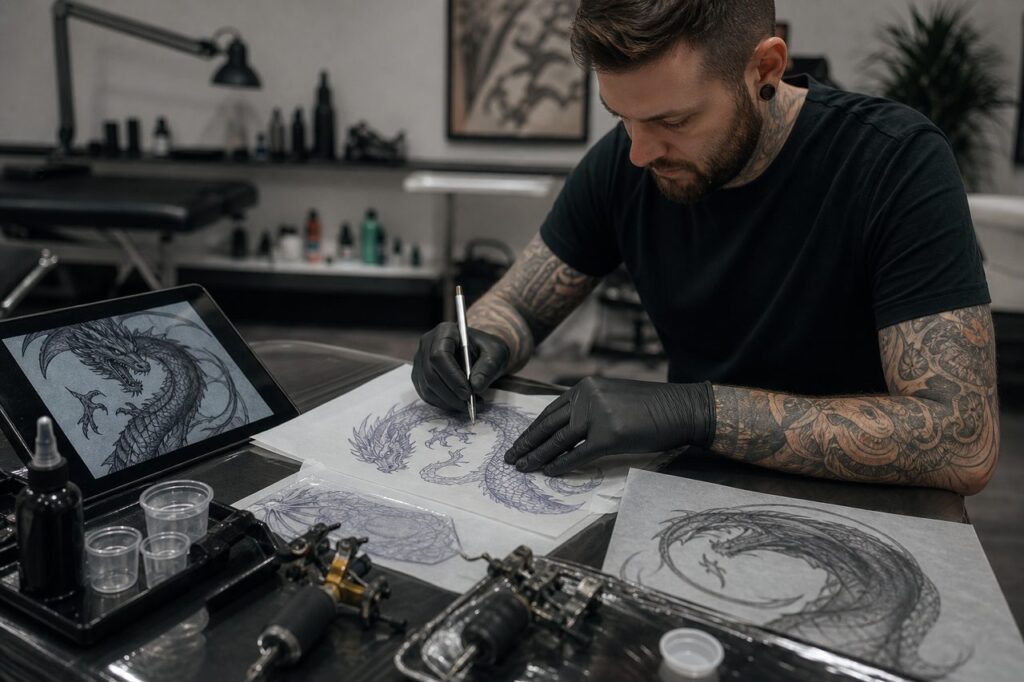
A How to Train Your Dragon tattoo works best when you match the style to your pain tolerance, budget, and how much detail you actually need. Toothless silhouettes read clearly at small sizes; full-color scenes with Hiccup and rider demand serious real estate and a bigger investment. Before you book, know which approach fits your arm, your wallet, and your patience for sitting still.
Realistic Expectations
Size vs. Detail
Dragon scales, expressive eyes, and Night Fury wing membranes need room. A Toothless face the size of a silver dollar turns into a muddy blob inside five years. For clean line work, plan on at least palm-sized minimum. Full portraits with background, Berk island, clouds, the Hidden World, want a full upper arm or thigh to breathe. Smaller isn’t impossible, but it forces the artist into simplified shapes: a black silhouette, a single glowing tail fin, the dragon logo from the closing credits.
Color or Black and Gray
Toothless is black. That sounds simple until you’re choosing between solid black fill, textured gray-wash scales, or mixing in the red prosthetic tail fin. Color pieces with green eyes and flame effects pop fresh but need touch-ups. Black and gray ages softer, hides blowouts better, and costs less per session. If you want the bioluminescent Hidden World look, expect your artist to use white ink sparingly, white yellows and fades fast on most skin tones, so plan for strategic placement where it catches light rather than covering large areas.
When to See a Professional
Style Specialization
Not every artist who crushes American traditional eagles can render a dragon’s reptilian texture. Look for portfolios with animal portraits, creature work, or animated character adaptations. A Toothless tattoo demands someone comfortable with fur texture (yes, Night Furies have short fur), reflective eyes, and dynamic poses. If their Instagram shows only script and fine-line florals, keep looking. The wrong artist gives you a cute black cat with wings.
Copyright Considerations
Major studios own these designs. Most reputable shops won’t trace movie stills directly, they’ll adapt, stylize, or create original compositions inspired by the source. If an artist promises a photorealistic screenshot reproduction, that’s a red flag for both legal exposure and artistic laziness. The best pieces reinterpret: Toothless in a neo-traditional frame, a geometric breakdown of his silhouette, a moody blackwork scene with the character as atmosphere rather than subject.
Tips From the Chair
Placement for Longevity
Dragon wings stretch across shoulder blades beautifully but distort when you move. Inner biceps hide easily for work but see friction from arm movement. The outer thigh takes large compositions well and ages relatively slowly, less sun, less abrasion. Avoid the side of the hand, fingers, and feet for detailed character work; these spots shed ink fast and blur fine lines within months. If you need concealment, the ribcage works but hurts more and makes the artist fight your breathing.
- Best for detail: Upper arm, outer thigh, calf, back panel
- Avoid for complexity: Fingers, sides of hands, feet, inner lip
- Compromise zones: Forearm (shows, ages moderately, tolerable pain)
Session Planning
Large pieces rarely finish in one sitting. A full-color sleeve with dragon and rider might take fifteen to twenty hours across multiple sessions. Your skin stops accepting ink well after about three to four hours anyway, swelling sets in, the area gets overworked, and the artist’s precision drops. Budget for two to three sessions minimum for anything ambitious. Bring snacks, charge your phone, wear comfortable clothes that expose the area without requiring you to strip.
Healing Timeline
The First Two Weeks
Days one through three: redness, plasma weeping, the tattoo feels like a sunburn. Days four through seven: flaking begins, itching intensifies, the black areas look dusty gray as dead skin sits on top. Days eight through fourteen: deeper layers still repairing, the surface looks mostly settled but remains vulnerable. Color work often scabs heavier than black and gray; resist picking or you’ll pull ink out with the scab.
Month Two and Beyond
By week six, the surface looks healed but the dermis underneath is still settling. The tattoo may appear slightly dull or cloudy, this is normal, not a sign of poor work. Full color clarity returns around the two-month mark. White highlights and light blues sometimes need a touch-up after this settling period; they’re the first to drop out and the last to fully stabilize.
What to Expect Step by Step
Before the Appointment
Moisturize the area lightly for two days prior, don’t show up with cracked winter skin. Eat a solid meal, avoid alcohol for twenty-four hours (it thins blood and makes you bleed more), and bring reference images that show mood, not just exact poses. Trust your artist to compose something that fits your body. Shave the area yourself if you’re particular, but most artists prefer to do it themselves to avoid irritation.
During the Session
Stenciling comes first; you’ll approve placement before any needles touch skin. Outline work feels like scratching or hot rubber bands. Shading and color packing vibrate deeper. Breathing helps, hold tension and you bleed more, which pushes ink out and slows the process. Ask for breaks when you need them, not when you’re about to tap out. The artist needs you still, not heroic.
- Outline phase: Sharpest pain, shortest duration
- Shading phase: Duller, deeper sensation, longer passes
- Color packing: Repetitive, grinding, often the longest stretch
- White highlights: Usually saved for last, stings on already-tender skin
Aftercare Essentials
The First 48 Hours
Leave the bandage on per your artist’s instructions, usually two to six hours, sometimes overnight with a second-skin product. Wash gently with unscented soap, pat dry, apply a thin layer of recommended ointment. Don’t soak it, don’t let it dry out completely, and don’t let clothing stick to it. Plasma and ink will seep; this is normal, not an infection.
Ongoing Care
Switch from ointment to unscented lotion around day four or five, when flaking starts. Keep it out of direct sun for three weeks minimum; UV fades fresh ink fastest. No swimming pools, hot tubs, or ocean submersion until fully healed, two weeks minimum, four weeks safer. After healing, sunscreen becomes your tattoo’s best preservation tool. A dragon with a sun-faded red tail fin looks unintentionally sad.
What to Remember
Your How to Train Your Dragon tattoo succeeds when the design matches your commitment level, small and simple for a first piece or subtle reference, large and detailed if you’re ready for the time and money. The character’s appeal is emotional; the ink’s success is technical. Choose an artist who understands both. Heal it patiently, protect it from sun, and it’ll read clearly for years. The bond between dragon and rider was built over time. Your tattoo deserves the same patience.
Frequently Asked Questions
How much does a How to Train Your Dragon tattoo typically cost?
Small simple designs run $150-300. Detailed portraits or full scenes start around $800 and can reach $2,000+ for large color work. Most artists charge hourly, so session count drives total cost more than design complexity alone.
Will a Toothless tattoo look good in ten years?
Bold black shapes age best. Fine detail, heavy white ink, and subtle color gradients soften and blur over time. Plan for a touch-up around year five to refresh edges and lost highlights.
Is the ribcage too painful for a first dragon tattoo?
Ribs hurt significantly more than arms or legs. If you’re tattoo-naive, start with a more forgiving placement to learn your pain response. You can always expand toward the ribs later in a larger composition.
Can I get an exact movie screenshot tattooed?
Most ethical artists won’t reproduce copyrighted images verbatim. They’ll adapt the character into a stylized original piece that captures the spirit without legal risk. This usually produces a better tattoo anyway.

Leave a Reply