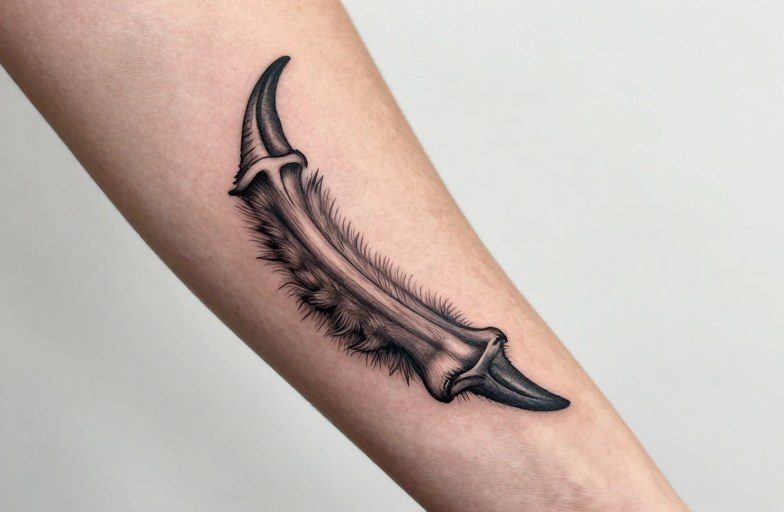
A bear claw tattoo speaks to raw physical power, quiet resilience, and the protective instinct of something that doesn’t need to prove itself. Most people drawn to this symbol aren’t looking for aggression, they want the grounded confidence of an animal that moves deliberately and defends what’s theirs. The claw specifically carries that edge of capability: the bear doesn’t hunt with weapons, it simply is the weapon when necessary.
Symbolism & Core Meaning
The bear claw distills the animal’s essence into a single sharp gesture. Unlike a full bear portrait, the claw keeps things abstract and personal, you’re not declaring yourself ursine, you’re borrowing a specific quality.
Strength Without Performance
Bears don’t posture. They forage, they sleep, they raise young, and when threatened they end conflicts fast. The claw captures that economy of force. For people who’ve rebuilt after hardship, survived depression, or simply prefer to let actions outpace words, this resonates. It’s strength that doesn’t need an audience.
Protection and Boundaries
Mother bears are famously defensive, but male bears also guard territory and food sources. The claw as protective symbol works for parents, partners, or anyone who’s had to draw hard lines. Some wear it after leaving toxic situations, marking the moment they learned to say “no further” and mean it.
Connection to Nature and the Wild Self
Bear claws often appeal to people with outdoor roots: hunters, hikers, those who grew up in logging or rural communities. The symbol can mark a return to something essential after time in cities or corporate environments. It’s less about literal wilderness and more about refusing to be fully domesticated.
Color vs Black and Grey
Black and Grey: Texture and Time
Most bear claw tattoos stay black and grey for good reason. The subject is organic, textured, and benefits from contrast between deep blacks and skin-tone negative space. A skilled artist can render the claw’s keratin ridges, the weathered base where it meets the pad, and the slight curve that shows wear from use. Black and grey ages cleaner on hands and forearms where sun exposure is constant, color fades asymmetrically there and requires more frequent touch-ups.
Color When It Works
Color makes sense in specific contexts. Native American-inspired designs sometimes incorporate red ochre tones, turquoise, or earth pigments that reference traditional ledger art or beadwork. Celtic or Nordic interpretations might use muted greens or blues. If you’re adding a background scene, forest, mountain, salmon, color can separate elements. But a standalone claw rarely needs it. The form itself carries the weight.
- Black and grey: better for fine detail, longer readability, lower maintenance
- Color: justified when tied to specific cultural palette or complex background scene
- Accent color only: a single red drop or earth tone can add focus without overwhelming
Similar & Related Symbols
The bear claw sits in a family of marks that signal similar territory. Understanding the differences helps you choose precisely.
Wolf Paw and Lion Paw
Wolf paws emphasize pack loyalty and communication, more social, more movement-oriented. Lion paws carry regal or Christian associations, plus the sun/leadership symbolism of that tradition. Bear claw is more solitary, more self-sufficient. If you want community, wolf fits better. If you want divine right or solar energy, lion works. Bear is the one that walks alone and doesn’t explain.
Thunderbird Claw and Raven
In Pacific Northwest Indigenous art, the bear claw often appears alongside or within larger formline designs. The thunderbird carries storm power and spiritual authority; raven is trickster and transformer. Bear claw grounds these, it’s the earth element balancing sky and spirit. Some people combine bear claw with raven to show the tension between brute survival and clever adaptation.
Arrowheads and Daggers
Human-made weapons alongside the claw create interesting friction. An arrowhead is crafted, learned, passed down. The claw is grown, inherited, undeniable. Pairing them can symbolize the balance of culture and instinct, or the tools you’ve had to develop because you weren’t born with claws of your own.
Design Tips & Pairings
The claw works as a standalone icon, but placement and companions change its impact significantly.
Standalone Claw
A single claw, rendered at actual size or slightly larger, reads as personal talisman. Detail matters here: the natural curve, the slight wear at the tip, the texture difference between claw and pad. Simplified too far and it becomes generic; too realistic and it can read as hunting trophy. The sweet spot is illustrative, recognizable, but with artistic interpretation.
Common Pairings
- Geometric frame: triangle or circle behind the claw gives it badge-like weight, good for chest or upper back
- Floral elements: wild roses, blueberries, or pine branches soften the aggression and add seasonal or regional specificity
- Script: names, coordinates, or short phrases below or wrapping around, keep it minimal, the claw should dominate
- Scar cover-up: the claw’s natural shape and heavy black fill can incorporate and transform older tattoos or marks
Scale realistically. A bear claw on a finger should be small and bold, not detailed. On a thigh or ribs, you have room for texture and context. Match the complexity to the canvas size.
Best Placements
Where you wear this changes how it’s read and how it holds up.
Forearm and Calf
These cylindrical surfaces show the claw’s curve naturally. Outer forearm is visible, conversational, people will ask. Inner forearm is more private, revealed on your terms. Calf gives space for larger designs and heals relatively easily compared to joints. Both areas take black well and don’t blur as fast as hands or feet.
Chest and Shoulder
Over the heart or pectoral, the claw reads as protective, guarding something vital. The shoulder cap allows for claw marks that appear to rake across the muscle, creating movement and depth. These placements suit larger, more detailed work and pair well with chest pieces that develop over time.
Hands, Fingers, and Neck
Hand and finger claws are bold statements. They also fade faster, blur sooner, and hurt more. The skin there regenerates constantly and takes abuse. If you go this route, keep it simple: bold outline, minimal shading, expect touch-ups. Neck placement is similarly high-commitment and high-visibility, appropriate for those whose identity genuinely centers on this symbolism, not for first tattoos or casual choices.
Personal & Modern Meanings
Traditional associations still hold, but people now wear bear claws for reasons that didn’t exist in earlier decades.
Recovery and Reclamation
I’ve noticed more clients requesting bear claws after significant health battles, cancer, addiction, mental health crises. The symbolism fits: hibernation and return, the body rebuilding itself, the refusal to be defeated. It’s not the meaning the symbol was born with, but it grafts cleanly onto the existing structure of resilience and return.
Gender and the Bear Claw
Historically coded masculine in tattoo culture, the bear claw is increasingly claimed by women and non-binary people who reject the idea that protective strength belongs to one gender. The mother bear is arguably the more dangerous animal. Modern wearers often emphasize this, pairing the claw with nursing imagery, floral elements, or simply wearing it without softening modifications.
Regional and Cultural Specificity
Black bear claw, grizzly, polar bear, each carries different weight. Grizzly dominates North American symbolism, associated with the American West and specific conservation battles. Black bear is more eastern, more common, less mythologized. Polar bear brings climate grief and Arctic specificity. Being precise about species grounds the tattoo in actual ecology rather than generic “wilderness” posturing.
The Takeaway
The bear claw tattoo works because it doesn’t try to do too much. One curved piece of keratin, rendered with attention to texture and placement, communicates capability without threat, protection without aggression. Whether you come to it through family tradition, outdoor life, recovery, or simply aesthetic pull, the symbol holds up under scrutiny. Choose your species, commit to your placement, let the artist handle the detail, and give it the aftercare it needs to settle into your skin for the long haul. The best bear claw tattoos look like they’ve always been there, like they grew in, not like they were applied.
Frequently Asked Questions
Does a bear claw tattoo have to be large to look good?
Not at all. Small claws on fingers or behind the ear work if they’re bold and simple. The key is matching detail level to size, don’t cram fine lines into a space that can’t hold them.
Is it disrespectful to get a bear claw if I’m not Indigenous?
The bear claw itself isn’t exclusive to any single culture, but specific styles, like Pacific Northwest formline or particular tribal arrangements, are. If you’re borrowing from a specific tradition, research and consult respectfully. A generic naturalistic claw doesn’t carry the same concerns.
How well do bear claw tattoos age over time?
Black and grey claws on the forearm or calf age gracefully for ten to fifteen years before needing refresh. Hand and finger placements may need touch-ups in three to five years due to sun exposure and skin turnover. Bold lines and solid black areas hold up better than fine detail.
Can a bear claw work as a cover-up tattoo?
Yes, often very well. The claw’s curved shape and heavy black fill can incorporate old lines or small tattoos. A skilled artist can use the natural form to swallow existing ink while creating something that reads as intentional from day one.

Leave a Reply