A butterfly tattoo on a woman most commonly signals transformation, moving through difficulty and emerging changed. The image carries weight because the metamorphosis is literal in nature, not abstract. For many women, it marks a specific pivot: leaving a relationship, surviving illness, getting sober, or simply stepping into a version of themselves they had postponed. The meaning isn’t fixed, but the through-line is always some form of becoming.
Best Placements
Where this tattoo sits changes how it reads and how it holds up. Small butterflies work best on areas with relatively stable skin, think shoulder blade, ribcage, or ankle. These spots don’t distort much with weight fluctuation, so the wing shape stays recognizable for years.
High-Movement Areas to Consider Carefully
Wrists, inner biceps, and the side of the neck see constant motion. A butterfly here needs simpler linework; intricate detail blurs faster. The wrist specifically, popular for its visibility, also takes sun exposure and friction from sleeves and desks. If you want fine antennae or delicate wing patterns, plan for touch-ups.
Scaling for the Space
- Behind the ear: 1-2 inches, silhouette or single-line style, minimal detail
- Upper back/shoulder: 3-5 inches, room for dotwork or gradient shading
- Hip or thigh: larger pieces, can incorporate flowers, moons, or script without crowding
- Sternum: symmetrical butterfly designs center well here; expect more healing tenderness
Who Chooses This Tattoo
There’s no single demographic. Women in their early twenties often get first butterflies as spontaneous markers of independence. Women in their thirties and forties sometimes return to the image after major life restructuring, divorce, career change, relocation. The choice crosses cultural and economic lines; what unites them is the desire to externalize an internal shift.
Commemorative vs. Aspirational
Some butterflies memorialize, representing a person who died, a younger self left behind, a hardship survived. Others look forward: the woman she intends to become. The same visual language carries both directions. Artists often notice the difference in consultation energy; commemorative pieces tend toward darker palettes or broken wings, aspirational ones toward open posture and brighter saturation.
Mythology & Folklore
Butterflies carry symbolic weight across cultures, though specifics vary significantly. In Japanese tradition, the butterfly is often linked to the soul, one butterfly representing a living person, two together symbolizing marital happiness. Mexican folk traditions, particularly around Día de los Muertos, use butterflies (specifically monarchs) as messengers between living and dead, a connection strengthened by the monarch’s annual migration timing with the holiday.
European and Indigenous Threads
Irish folklore sometimes traced butterflies to souls unable to rest, neither fully benign nor threatening. Some Indigenous North American traditions associate butterflies with change and joy, with specific tribes, like the Blackfoot, incorporating them into origin stories about sleep and dreams. Greek myth offers Psyche, whose name literally means “soul” and who is frequently depicted with butterfly wings, though the direct visual connection to modern tattoo imagery is more Renaissance revival than ancient practice.
Symbolism & Core Meaning
At its base, the butterfly is about process. The caterpillar doesn’t become a better caterpillar; it becomes something else entirely. That resonates differently than phoenix imagery, which emphasizes destruction and rebirth from ash. The butterfly’s transformation is slower, more vulnerable, less dramatic, there’s a chrysalis stage where nothing visible happens, where the work is internal.
Feminine Coding and Its Complications
The butterfly is culturally coded feminine in Western contexts, delicate, pretty, decorative. Some women lean into this; others choose the image specifically to reclaim it, pairing it with harder elements (dagger, barbed wire, text in aggressive fonts) to refuse the dismissal that sometimes accompanies “girly” tattoos. The meaning isn’t just the butterfly; it’s the context a woman builds around it.
Color as Modifier
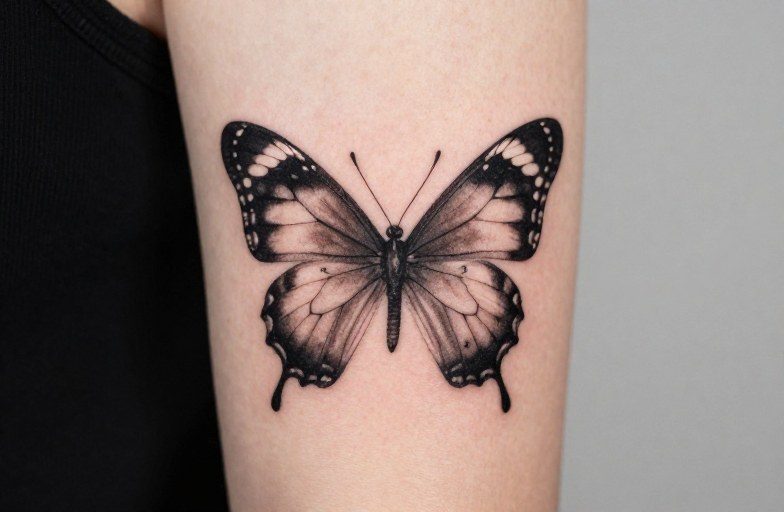
- Black and grey: grief, seriousness, timelessness; also practical for longevity
- Blue morpho reference: rarity, specific personal connection to Costa Rica or similar regions
- Monarch orange: Mexican heritage, migration as metaphor for movement and return
- Pastel or watercolor: softer transitions, often marking gentler changes
- Single color with black outline: traditional tattoo readability, holds contrast longest
History & Cultural Roots
Butterfly tattoos gained recognizable popularity in Western tattooing during the 1960s and 70s, often linked to the counterculture’s interest in Eastern spirituality and nature symbolism. Before that, butterflies appeared occasionally in Japanese irezumi, where they carried the soul associations mentioned earlier. The Sailor Jerry era didn’t emphasize them, too soft for that masculine-coded aesthetic, but they flourished in the private studios of the 1970s when women began entering tattoo spaces in greater numbers.
From Subculture to Mainstream
By the 1990s, the butterfly had become a standard flash sheet offering, sometimes criticized as generic. That criticism missed the point: standardization made the image accessible, and accessibility meant more women could enter shops without needing fully custom designs they couldn’t afford. The butterfly’s ubiquity is partly its history, democratizing tattoo culture for women who might otherwise have stayed outside.
How It Ages on Skin
Butterflies age based on three factors: line weight, color saturation, and placement. Fine lines on wings blur into each other; what read as delicate veining at age 25 becomes muddy texture at 50. Shading without strong black outline tends to soften and flatten. The most legible aged butterflies are those built on bold structure with detail as secondary layer.
Technical Recommendations for Longevity
Ask your artist about “sculpted” shading, using black and grey wash to create dimension rather than relying on color gradients alone. For color, stick to high-contrast combinations: black outline, solid color blocks, limited blending. A butterfly that looks slightly “graphic” or “illustrated” fresh will age better than one chasing photorealism. Antennae are particularly vulnerable; consider whether thin lines are worth the eventual blur, or whether a slightly thicker, stylized approach sacrifices minimal realism for decades of readability.
Touch-ups are normal and expected, especially for pieces with sentimental weight. Plan for one at 5-10 years, sooner if the placement gets sun exposure. Sunscreen is the single most effective preservation tool.
The Takeaway
A butterfly tattoo on a woman means she has marked a threshold. The specific threshold varies, survival, departure, arrival, remembrance, hope, but the form always carries that arc. The image works because it’s legible to others without requiring explanation, yet holds private specificity for the wearer. Choose placement based on how your body moves and ages. Choose style based on what you want visible in twenty years, not just twenty days. The butterfly doesn’t need to be unique to be yours; it needs to be intentional.
Frequently Asked Questions
Does a butterfly tattoo always mean someone went through trauma?
No. While many women choose it after hardship, others mark joyful transitions, graduation, motherhood, relocation, or simply love the aesthetic. The meaning depends on the individual context, not the image itself.
What’s the best style for a butterfly tattoo that won’t look dated?
Traditional or neo-traditional approaches with bold outlines and limited color palette age most gracefully. Avoid trendy techniques like excessive fine-line detail or watercolor effects that lack structural blackwork underneath.
Can a butterfly tattoo be masculine or gender-neutral?
Absolutely. Placement, scale, and surrounding elements shift the gender coding. Larger butterflies with geometric framing, dark backgrounds, or integrated daggers read differently than small, colorful, isolated pieces.
How much should a quality butterfly tattoo cost?
Expect $150-400 for a small-to-medium piece from an experienced artist, more for custom work or extensive color. Flash designs typically run lower. Prioritize artist skill over bargain pricing; this is permanent ink on visible skin.