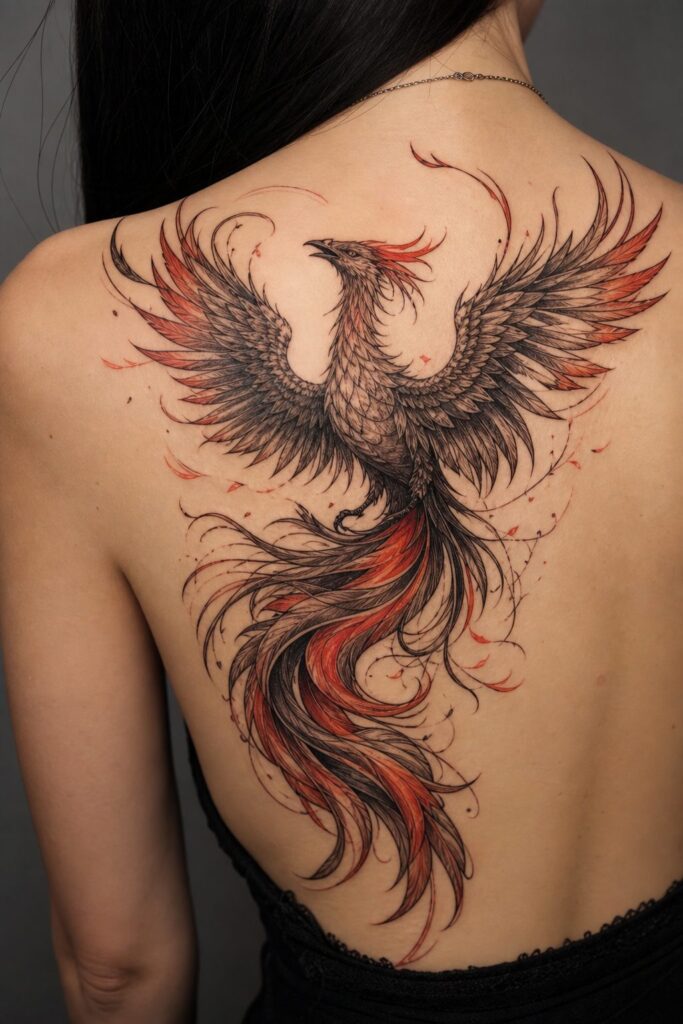
A phoenix tattoo drawing represents rebirth, resilience, and the cycle of destruction followed by renewal. The mythical bird that combusts and rises from its own ashes translates to skin as a declaration of survival, transformation, or refusal to stay down. Most people who choose this image have lived through something concrete: addiction, loss, divorce, illness, or a complete identity overhaul.
How It Ages on Skin
Phoenix designs are detail-heavy, which means they age in specific ways you should plan for from the drawing stage.
Line Weight and Feather Detail
Thin, delicate feather lines blur faster than you’d expect. After five to eight years, individual plume strands can merge into muddy texture unless the artist built contrast with varied line weights. Smart drawings use bold outer contours with finer interior detail, giving the eye something to read even as the micro-lines soften. Ask your artist to show you healed work from two-plus years back, not just fresh photos.
Shading and Contrast Over Time
- Heavy black backgrounds make the bird pop initially but can overwhelm the design as they spread slightly
- Soft grey-wash flames create dimension but may need touch-ups to maintain their glow effect
- White ink highlights in fire or feathers often fade to skin-tone within a few years
- Open negative space in the wings keeps the drawing readable at distance even as it ages
The best aging phoenix tattoos rely on strong silhouette value. If you squint at the drawing and the bird shape still reads clearly, it’ll hold up.
Best Placements
Where you put a phoenix changes how the drawing functions and how much detail survives.
Large Canvas Options
Full back pieces allow the wingspan to stretch across shoulder blades, using the spine as a natural center axis for the body and tail flames. Thighs offer similar real estate with less bone proximity, meaning more consistent healing and less pain during the session. Ribs work for elongated rising poses but limit wing spread; the curved canvas distorts symmetrical drawings unless the artist accounts for body shape.
Smaller and Strategic Spots
- Forearm: horizontal flight poses read well here, visible without being ostentatious
- Upper arm/shoulder cap: the rounded surface suits a coiled or ascending bird
- Calf: vertical compositions with trailing fire work naturally with muscle direction
- Behind the ear or wrist: only for extreme minimalism; most phoenix drawings need more room
Avoid cramming a detailed phoenix into spots where it’ll be constantly rubbing against clothing or bending with joint movement. The drawing deserves space to breathe.
Similar & Related Symbols
The phoenix shares territory with several other rebirth and resilience motifs. Understanding the differences helps you choose or combine symbols with intention.
The ouroboros, a snake eating its own tail, also speaks to cyclical renewal but carries darker, more self-consuming undertones. The lotus flower rising from mud offers a quieter, more meditative version of emergence without the violence of fire. Koi swimming upstream share the perseverance angle but lack the explicit death-and-return narrative. The thunderbird in some Indigenous traditions carries power and renewal associations, though appropriation concerns make it a charged choice for non-Native wearers.
Some drawings combine phoenix with clock faces, hourglasses, or compasses to emphasize the passage of time and directional change. Others pair it with script or dates marking specific turning points. These additions can clarify personal meaning but risk cluttering the composition if the drawing wasn’t designed for them.
Personal & Modern Meanings
Contemporary phoenix tattoos rarely reference the classical myth directly. Instead, they function as private markers of specific lived experience.
Common Contemporary Associations
- Sobriety anniversaries and recovery from addiction
- Surviving abusive relationships and rebuilding identity afterward
- Career destruction and reinvention, especially after layoffs or failed businesses
- Gender transition and emergence into authentic self
- Medical trauma and physical rehabilitation
The fire element matters here. Unlike gentler rebirth symbols, the phoenix acknowledges that transformation burns. Something was destroyed. The drawing honors that destruction as necessary rather than purely tragic.
Gender and Design Evolution
Historically marketed as feminine with flowing, decorative lines, phoenix drawings have shifted toward more aggressive, angular interpretations. Both approaches remain valid. The bird’s anatomy allows for adaptation: sleek and raptor-like, or ornate with trailing tail plumage that merges into flame shapes. Your artist should tailor the drawing to your body and preference, not default to a Pinterest template.
History & Cultural Roots
The phoenix myth spans multiple ancient cultures, though specifics vary considerably.
Greek sources, often linked to Herodotus and later Ovid, describe the bird living 500 years before building a nest of aromatic wood and igniting it. The young phoenix rises from the ashes. Egyptian tradition, often associated with the bennu bird, sometimes connected solar cycles and rebirth with the sun god Ra. Chinese fenghuang is frequently translated as phoenix but originally represented a paired masculine-feminine bird of virtue and prosperity, distinct from the Western solo firebird.
These threads tangled through medieval European bestiaries and Renaissance alchemy, where the phoenix became a symbol of resurrection and spiritual purification. Tattoo adoption followed broader Western tattooing trends, gaining popularity in the 1990s and 2000s alongside tribal and Celtic designs, then persisting as those trends faded. The image proved durable because its core concept, survival through destruction, resonates across circumstances.
Color vs Black and Grey
This choice fundamentally changes the drawing’s impact and longevity.
Color Approaches
Traditional orange, red, and yellow flames create immediate visual heat. Jewel-toned phoenixes in emerald, sapphire, and violet offer a less literal but striking alternative. Color demands more skin real estate to avoid a cluttered look; small color phoenixes often read as indistinct blobs within a decade. Saturated pigments also fade faster than black on some skin tones, particularly paler complexions where UV exposure matters more.
Black and Grey Strengths
- Heals more consistently across different skin types
- Ages with more predictable, less muddy results
- Allows focus on form and movement rather than color symbolism
- Often costs less and requires fewer sessions
- Permits easier future additions or cover-up options
Some artists execute phoenixes entirely in black ink with strategic skin breaks suggesting flame, a technique called “black flame” that ages exceptionally well. Others use limited color accents, perhaps red eyes or a single orange plume, against greyscale bodies for compromise.
The Takeaway
A phoenix tattoo drawing carries weight because it admits difficulty. The image doesn’t pretend transformation is painless or that the past disappears. It shows something burned that refused to stay ash. Whether you choose color or black and grey, large back piece or compact forearm design, the effectiveness depends on honest drawing quality and placement that respects how the image will live on your specific body. Work with an artist who builds the composition around your movement and aging patterns, not just the stencil. The meaning is serious; the execution should be too.
Frequently Asked Questions
Does a phoenix tattoo have to be large to look good?
No, but most detailed phoenix drawings need at least palm-sized space to maintain readable feather and flame elements. Extremely small designs often lose detail to aging and blur. Minimalist line versions can work smaller but sacrifice the dramatic impact that draws many people to this image.
Can a phoenix tattoo be covered up later if I change my mind?
Yes, but plan for it. Heavy black in the original design limits cover-up options. If you anticipate possible future changes, avoid dense black backgrounds and leave some open skin in the initial drawing. A skilled cover-up artist can work with almost anything, but lighter originals offer more flexibility.
How long does a detailed phoenix tattoo take to complete?
A full back piece with color typically requires 15-30 hours across multiple sessions. A forearm design in black and grey might finish in 4-8 hours. Session length depends on your pain tolerance, the artist’s pace, and how much detail the drawing includes. Rushing produces worse healing and worse art.
Is the phoenix culturally appropriative to tattoo?
The Greek firebird and Egyptian bennu are generally considered open cultural symbols in Western tattooing. The Chinese fenghuang and Indigenous thunderbird carry more specific cultural contexts that warrant research and respect. If your design draws from a specific tradition outside your own, consult meaningfully rather than borrowing superficially.

Leave a Reply