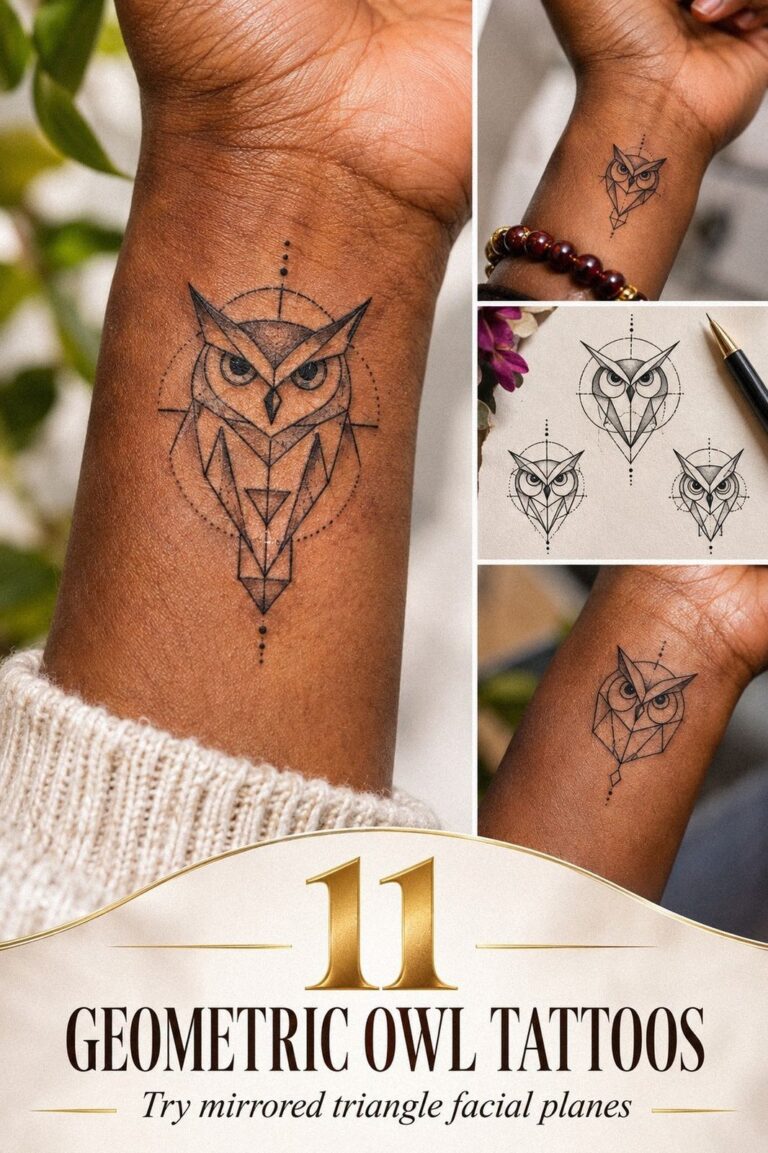
Black owl tattoos can stay crisp for years when you control size, spacing, placement, and shadow before the needle touches skin. I’ve seen small designs fail because every feather was packed together. This guide gives you a clear order, from choosing the owl’s silhouette to planning healing. Start with structure, not extra ink!
Editor’s note: The strongest owl tattoos usually make one clear promise. Yours might feel symbolic, fierce, or quietly watchful, but it shouldn’t try to communicate everything at once.
Before You Start: What Will Make This Owl Read Clearly?
Decide what your owl must communicate from a distance. Is it meaningful, minimal, or intensely expressive? You’ll want one dominant idea, because an owl with ten competing details won’t stay readable when the lines soften.
Gather three references: one owl for anatomy, one for mood, and one for line quality. I’d skip copying a flash image exactly. Use it to study the eyes, wing angle, claws, and spacing, then let your artist redraw the piece for your body.
A small flash sheet can help you compare fine-line references, but don’t judge only by fresh tattoos. Ask to see healed work, too. Fresh black ink looks sharp and saturated.
Healed ink can look gentler, wider, and less dramatic.
Your budget should include the artist’s minimum, the design consultation, and a possible touch-up. In the United States, a shop minimum is often about $50 to $100, while hourly rates commonly sit around $100 to $250. That cost can be worth it when the artist’s healed work proves consistent.
Save tiny owl tattoos and small owl tattoos before your appointment. You’ll notice which silhouettes still read when they’re reduced, and that’s more useful than collecting fifty random screenshots.
- Let a Small Owl Breathe
- Build Intricate Detail Around the Face
- Let Placement Follow Your Anatomy
- Protect Clarity With Deliberate Linework
- Give the Symbol One Meaning
- Make Fierceness Come From the Gaze
- Use Shadow as a Supporting Note
- Follow the Body’s Natural Flow
- Match the Design to Your Existing Ink
- Plan for Pain, Aftercare, and Healing
- Add Bold Details Only at the End
1Let a Small Owl Breathe

Small black owl tattoos work best when you reduce the design to one clear silhouette and a few deliberate marks. The final piece should feel dainty without becoming fragile or anonymous.
Ask your artist to keep the owl’s head, body, and wing edges open. A hair-thin line can suggest feathers, but it shouldn’t draw every feather individually. I’ve watched a delicate owl turn muddy because the artist filled the chest with short strokes that had nowhere to breathe.
Use stars as supporting marks, not as a border that competes with the bird. One larger star and two smaller ones can create a whimsical rhythm around the calf without making the composition look busy.
Your artist might use a single-needle grouping for the lightest details, but you’ll need enough contrast for the design to survive normal aging. I’d choose a compact owl with a strong eye shape over an elaborate miniature portrait.
Keep the final reference close to the size you discussed. The minimalist owl tattoos collection can help you compare simplified bodies, open wings, and clean silhouettes before you commit.
2Build Intricate Detail Around the Face
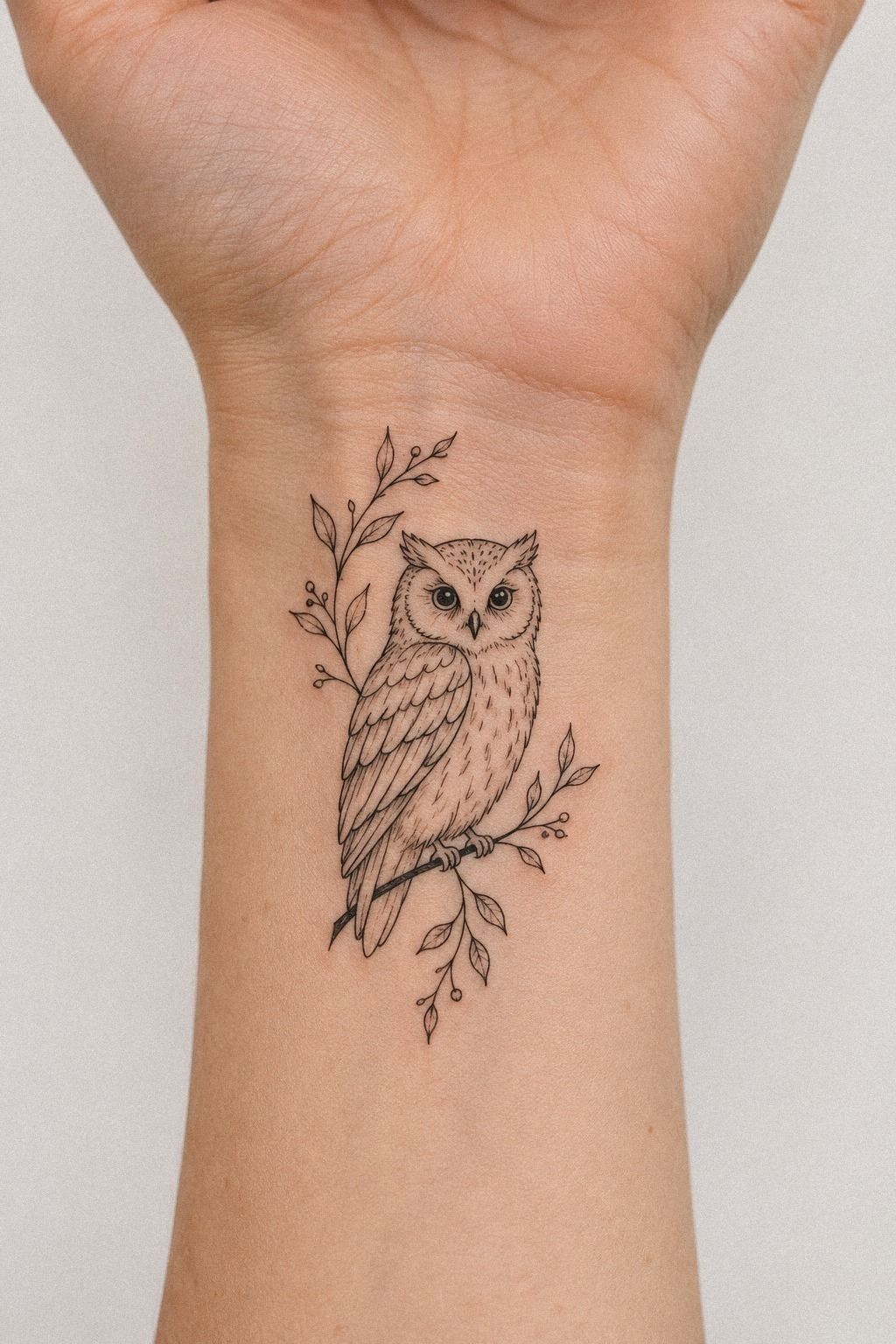
Intricate owl designs can work on an ankle when the details are selective. The result should feel intricate without turning every inch into texture.
Start with the face. The eyes, brow line, and beak carry more recognition than dozens of feather marks. You’ll want the artist to leave a small gap around the eyes, because closed spacing may soften as the tattoo settles.
Then choose one feather language. Long curved lines can make the wings feel flowing, while short scalloped marks create a more classic bird shape.
Don’t mix five styles in one ankle tattoo. Your skin needs a visual grammar it can hold.
I’d ask for a healed portfolio from the same artist, especially work on ankles and feet. Those areas move, rub against shoes, and receive more sun than people expect. Fresh ink won’t tell you how those hair-thin lines behave later.
Browse fine line owl tattoos and mark the examples where the owl still reads without heavy black filling. You’re looking for restraint, not the most detailed design on the page.
3Let Placement Follow Your Anatomy
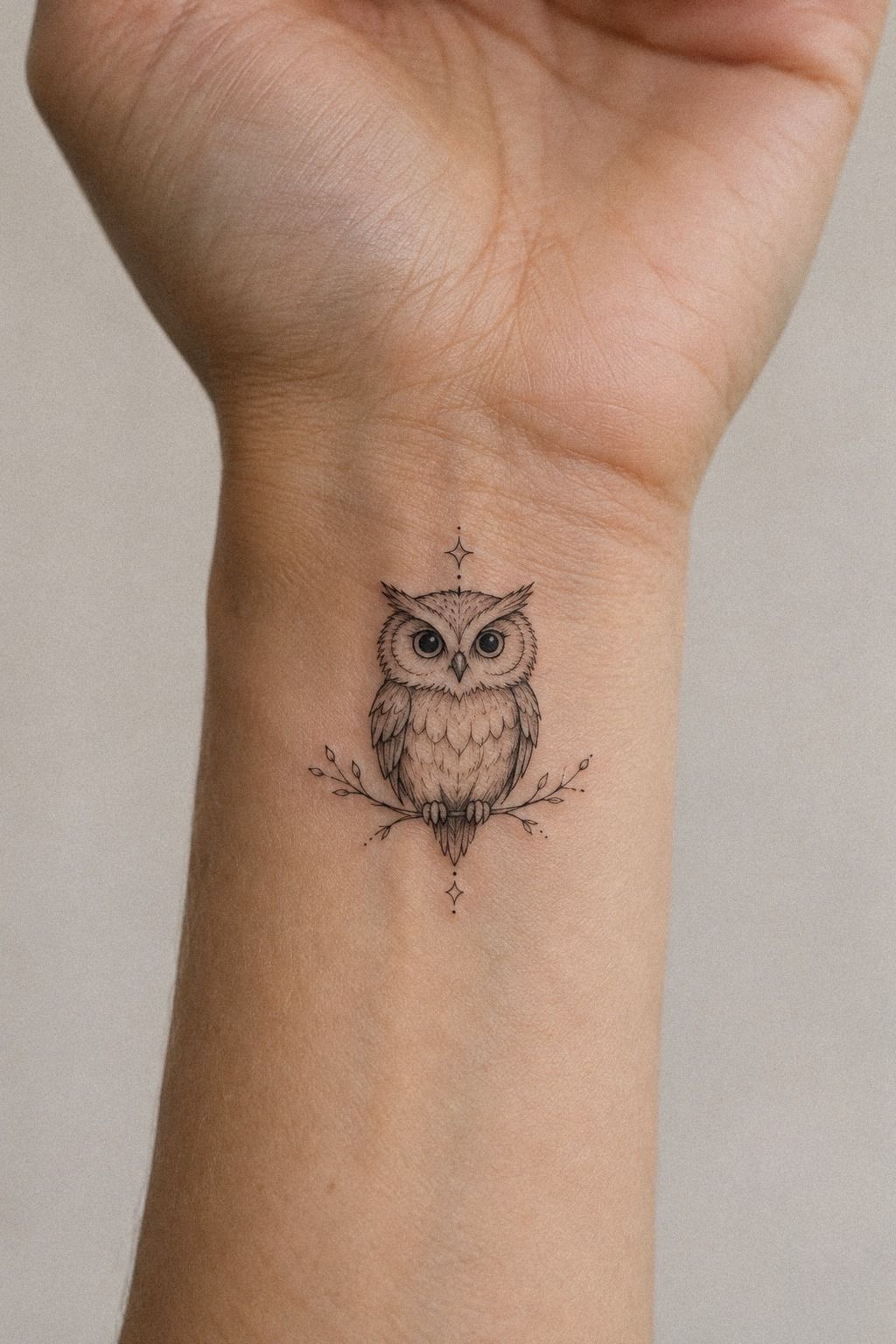
Unique owl tattoos become more personal when placement supports the story. On an ankle, the narrow area naturally encourages a vertical owl rather than a wide-winged one.
Measure the available skin from the ankle bone upward before you settle on the pose. Your owl can face inward for a private detail or outward for a more visible statement. I’d choose the direction based on how you’ll see it while walking, not on how it looks in a flat reference.
Avoid placing the darkest section directly over a sharp crease. Movement can make a sleek silhouette look interrupted, especially when the ankle bends. A slightly higher placement may give the artist more stable skin and cleaner spacing.
Think about how the body changes from one position to another. A graceful owl can follow the calf’s length, while a compact design may sit better above the ankle or near the shoulder.
If you’re choosing between the ankle and calf, compare examples in the delicate owl tattoos guide. The best placement choice gives the silhouette enough space to remain recognizable.
Your artist should explain how placement affects sun exposure, rubbing, and discomfort. Feet, hands, ribs, and sternum tend to be more painful, while the forearm, thigh, and shoulder are often more tolerable.
4Protect Clarity With Deliberate Linework

Clean linework is what keeps black owl tattoos from becoming a dark blob. The design needs crisp contours with controlled interior marks.
Start with the outer silhouette. The head, wing tips, and tail should remain recognizable even if every small feather disappears over time. I’d rather see three confident feather lines than fifteen hesitant ones sitting too close together.
Use line weight as a map. A slightly stronger outline can anchor the body, while finer interior lines can suggest feather direction. Your artist shouldn’t make every line equally dark, because equal weight erases hierarchy.
Fine line doesn’t mean fragile by definition. Good placement, sensible spacing, and protection from UV exposure can help the tattoo age more gracefully. You’ll still need realistic expectations, because very thin lines may widen or soften.
Compare healed examples in the realistic owl tattoos guide, then ask which details survived. That question matters more than whether a fresh tattoo looks sharp.
5Give the Symbol One Meaning
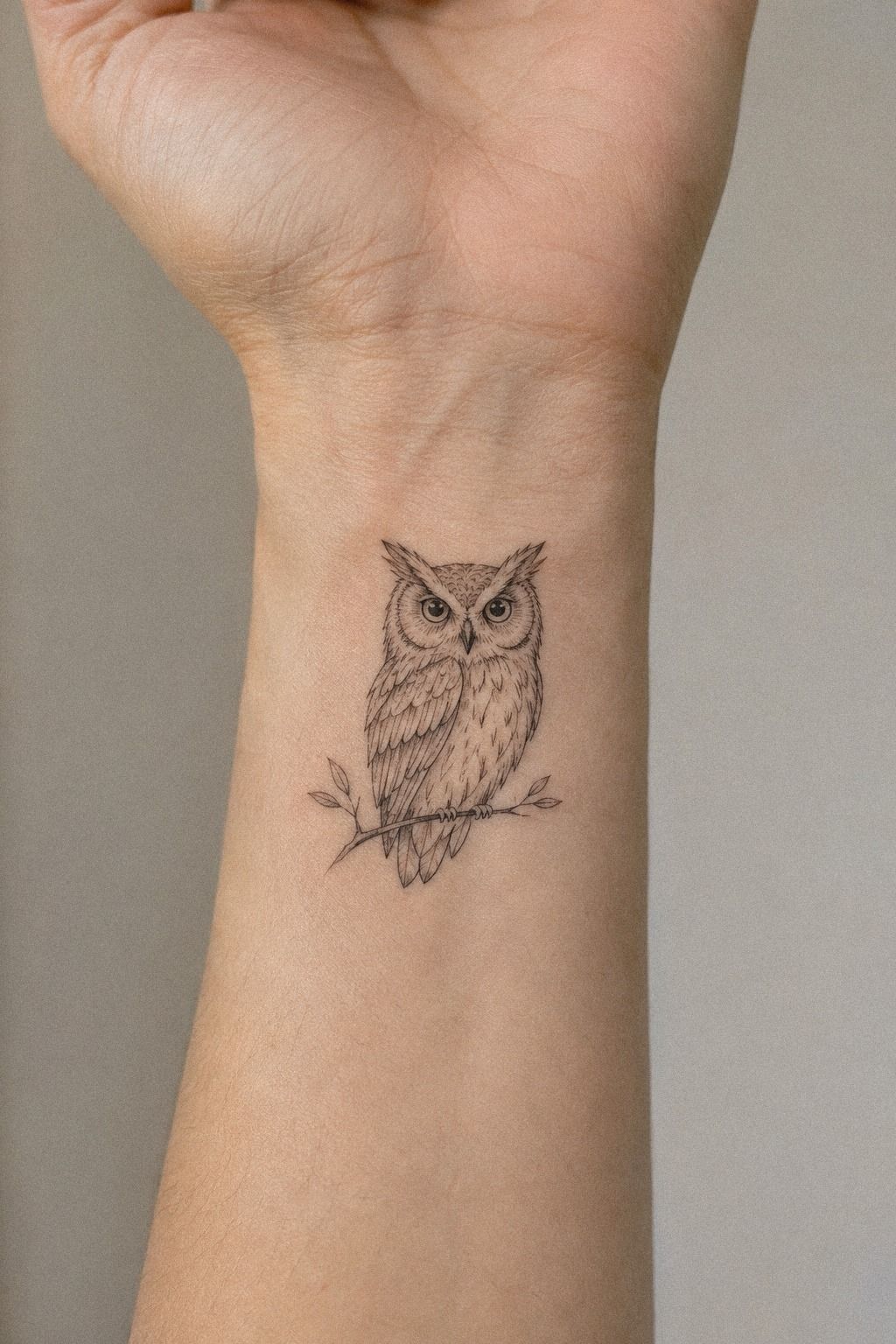
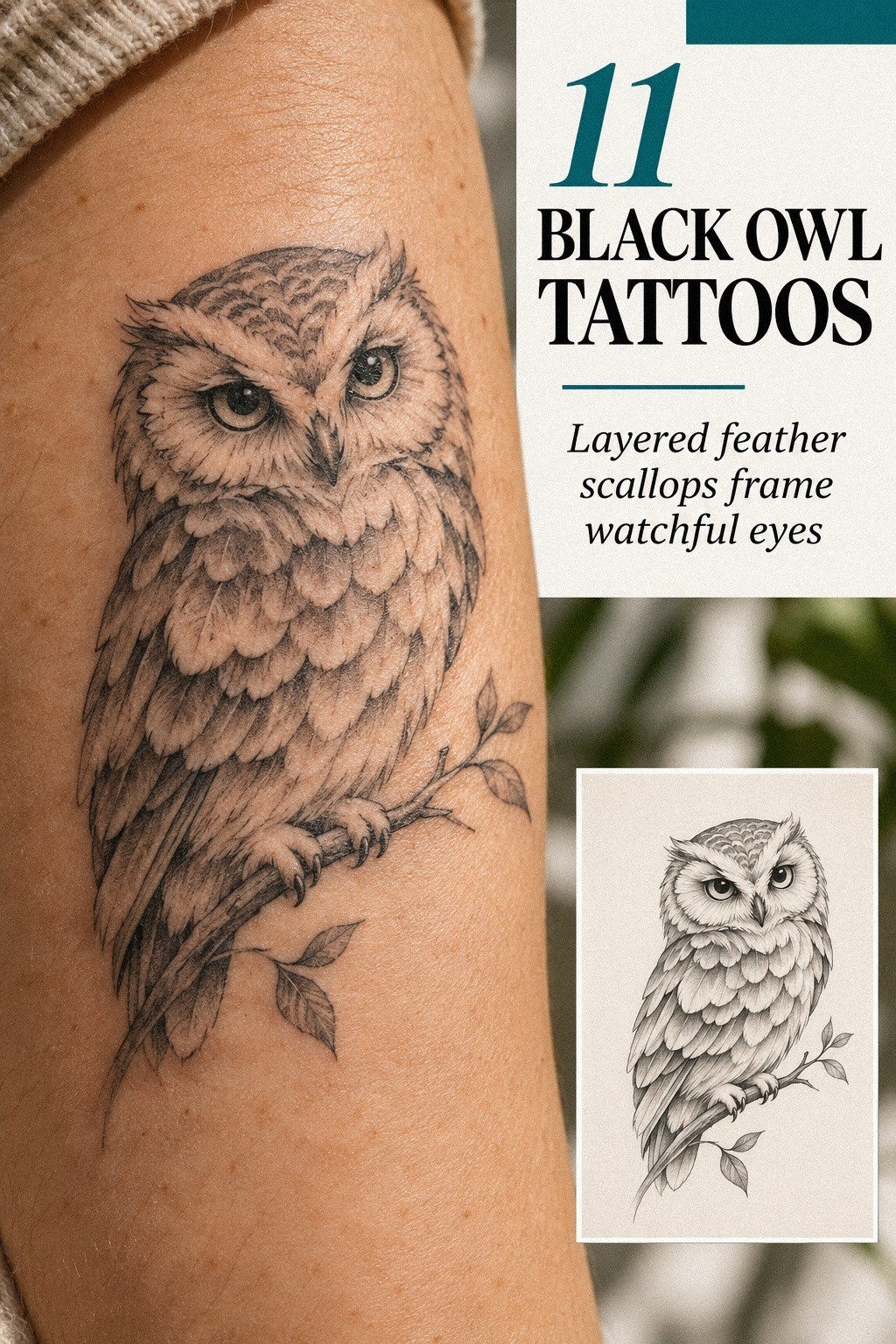
Symbolic black owl tattoos need a meaning you can explain in one sentence. Use watchfulness, wisdom, night vision, memory, protection, or a personal turning point as a starting point.
Choose the symbol before you choose the surrounding marks. A crescent moon can suggest night, an open eye can suggest awareness, and a branch can create a grounded perch. Your final composition should feel sacred, not like a pile of unrelated symbols.
Look at the emotional quality of old flash designs without trying to reproduce their surface literally. A handmade influence can become vintage through uneven line rhythm, restrained shading, and an intentional silhouette.
I’ve changed my mind on owl symbolism after realizing that “wise” felt too general for the story I wanted. You might prefer a more personal detail, such as a constellation, a date, or a feather shape connected to someone you love.
For more context, read the owl tattoo meaning guide before your consultation. You’ll arrive with a clear reason, and that gives your artist something useful to design around.
6Make Fierceness Come From the Gaze

Fierce owl tattoos don’t need solid-black wings or an exaggerated glare. The strongest contrast should come from the silhouette, spacing, and facial features.
Ask your artist how the design will be adjusted for your skin tone and undertone. A bold outline may be necessary in selected areas, while open skin can preserve the feather pattern. Your goal is a readable owl, not the darkest possible tattoo.
The eyes create most of the emotional force. A forward-facing gaze feels powerful and confrontational, while a turned head can feel more watchful and mysterious. I’d skip an overworked angry expression unless it fits your personal style.
A haunting expression can still be elegant. A narrow wing, a lifted brow, or one clean claw may create more tension than a large field of black ink. That tradeoff matters!
If you want the owl to feel daring, let the posture do the work. A lifted head or partially opened wing can suggest motion without burying the body under black ink.
7Use Shadow as a Supporting Note

Delicate black owl tattoos need shadow in small, intentional doses. The open skin around the body is doing as much work as the ink.
Ask for shadow beneath the brow, inside the wing fold, or under the body. Those areas can create depth without filling the entire owl. Your artist might use stippling, short hatching, or a soft grey wash, depending on the design and your skin.
A dark anchor still matters. If every line is whisper-thin, the owl may lose its face first. I’d keep the eyes, beak, and one wing edge slightly stronger, then let the smaller feather lines fade into the composition.
And don’t confuse delicate with unfinished. Delicate work can be understated and carefully engineered, especially when the spacing is consistent. You’ll notice the quality in the gaps, not just in the ink.
Save delicate owl tattoos and compare examples at different sizes. Ask yourself which one you’d still recognize from across a room, because that’s the test your design has to pass.
8Follow the Body’s Natural Flow

Flowing black owl tattoos should follow the body instead of fighting it. Before the stencil is placed, study how the skin stretches, folds, and changes direction when you stand, bend, and walk.
A perched owl may suit the vertical line of a calf or forearm. An open-winged owl can follow the broader curve of a shoulder or upper thigh. The pose should feel graceful in motion, not only when your limb is held flat.
Ask your artist to view the stencil from several angles. On a calf, the owl may look balanced from the side but compressed from behind. On an ankle, the wing can disappear when the foot points downward, so the main contour needs enough separation from the crease.
Avoid placing the face directly over a joint fold when recognition depends on the eyes. A small shift upward or outward can preserve the brow, beak, and eye spacing while reducing friction from movement.
Ribs and sternum placements require extra attention because breathing changes the skin constantly. A vertical owl can work there, but the artist should account for the body’s expansion rather than treating the area like a flat page.
I’d choose the pose only after testing the stencil while standing naturally. A stencil placement that survives movement will usually feel more convincing than one designed around a single still position.
9Match the Design to Your Existing Ink

Your owl should match your clothing, existing tattoos, and tolerance for attention. The design can feel personal without becoming visually loud.
Start by naming your preferred mood: edgy, classic, romantic, raw, or minimal. Those words help your artist choose line weight and posture. A perched owl with clean geometry will read differently from a wild owl with open wings and rough shading.
Look at your existing tattoos from several feet away. You’ll want the new piece to share one element with them, such as black density, line softness, or repeated botanical shapes. It doesn’t need to match everything, but it shouldn’t feel disconnected from the rest of your collection.
I’ve seen cohesive collections weakened by one oversized detail that had no visual neighbor. Your owl can be iconic without dominating every nearby tattoo. A shoulder placement gives it space to breathe, especially if you’re building a larger collection later.
Use small owl tattoos and minimalist owl tattoos to compare quiet designs with more expressive ones. You’ll know the right direction when the reference feels personal, not merely impressive.
10Plan for Pain, Aftercare, and Healing
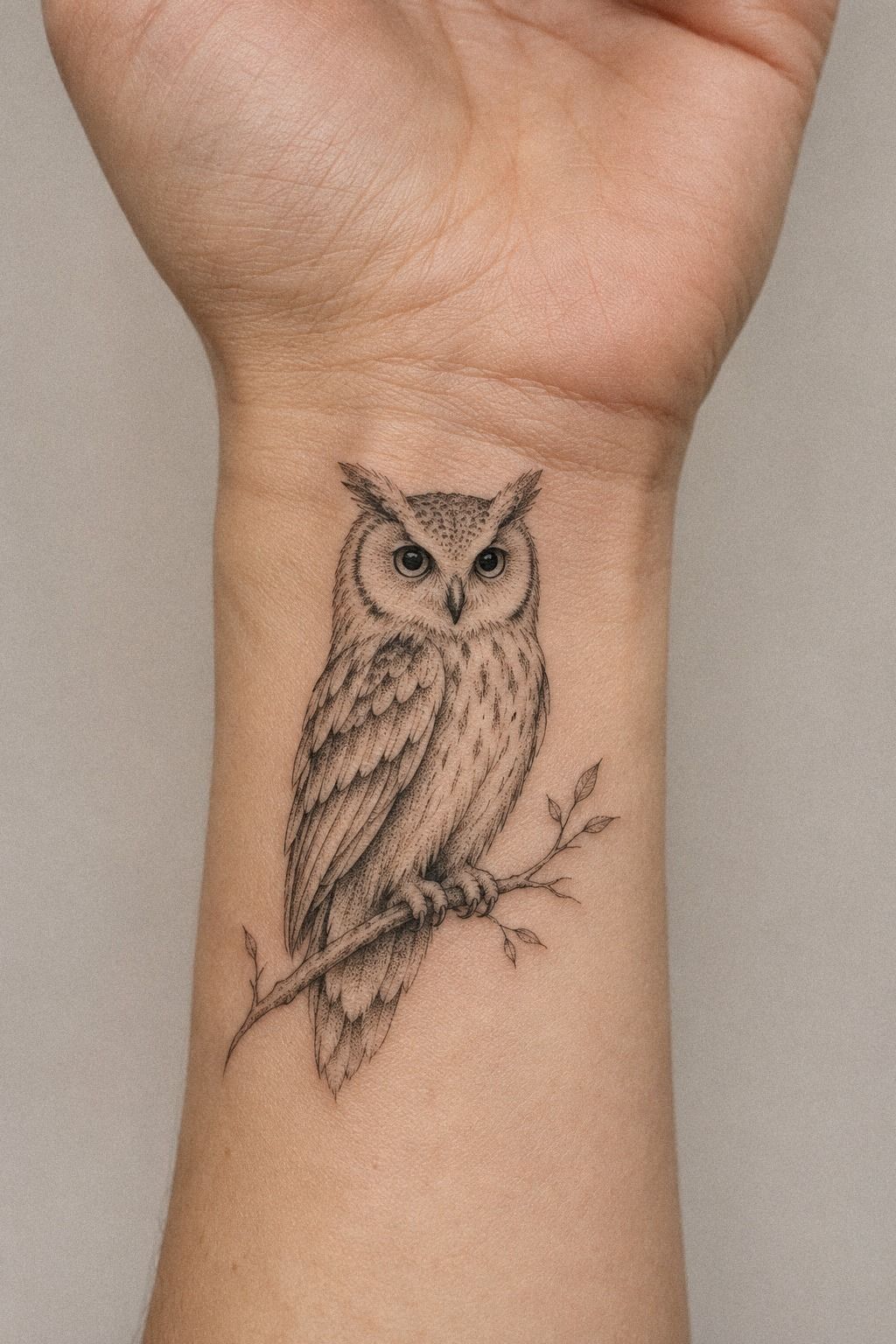
Prepare for pain and healing before you book black owl tattoos, because placement changes the experience. The same design can feel manageable on the outer forearm and much sharper over ribs, ankles, feet, hands, or the sternum.
I’d rate the likely pain level with your artist before committing to a location. Ask how long the session may last, whether the design can be divided into shorter appointments, and which parts require repeated passes.
Bony areas often feel more intense because there’s less cushioning and more vibration. Areas with movement or friction may also be difficult, especially if clothing or footwear repeatedly touches the fresh tattoo.
Plan your appointment around a full meal and good hydration, plus clothing that won’t rub the area. You don’t need to prove anything by sitting through an unnecessarily long session.
Afterward, follow the artist’s instructions for washing, moisturizing, and covering the tattoo. The surface usually heals in about two to three weeks, but the deeper layers can continue settling for two to three months.
During surface healing, mild redness, flaking, and tightness can occur. Don’t pick at peeling skin, scratch the area, or apply products your artist hasn’t approved. Your goal is to protect the healing linework while the skin repairs itself.
Avoid swimming, soaking, heavy friction, and strong sun during early healing. Loose clothing helps when the tattoo sits near a waistband, shoe edge, or other area that receives constant contact.
Once the skin has closed, use sensible sun protection whenever the tattoo is exposed. UV exposure won’t erase the owl overnight, but repeated exposure can soften contrast and make delicate spacing harder to read.
11Add Bold Details Only at the End
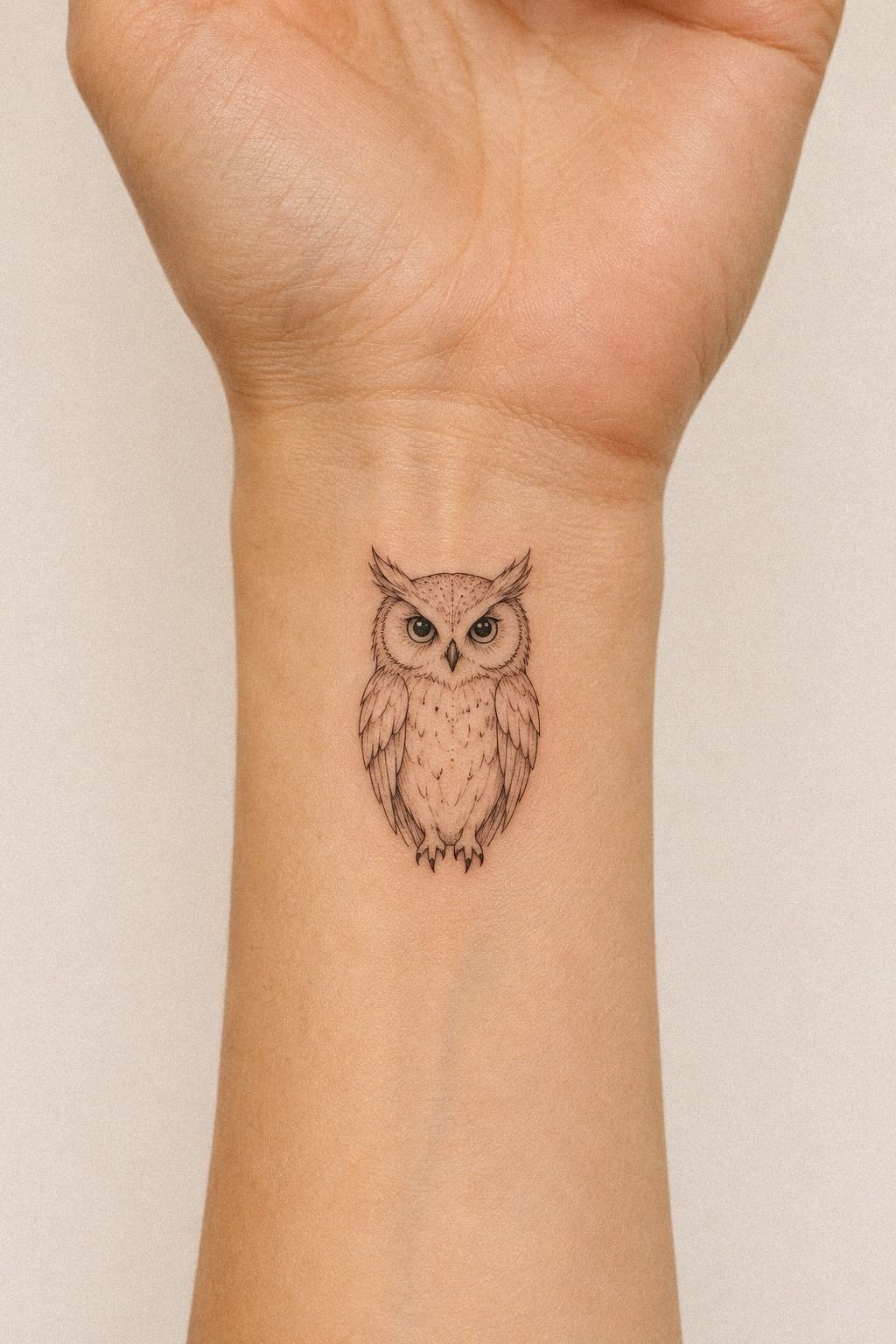
Bold details should be the final layer, not the starting point. A few stronger marks can define the face without covering the design in solid black.
Refine the eyes, beak, wing fold, and claws first. Those features create recognition. A striking focal point doesn’t need every feather outlined, and you’ll get better longevity when the darkest marks have a clear purpose.
Ask your artist to show the stencil from a normal viewing distance. Up close, tiny details can seem important.
From several feet away, the overall shape matters more. I’d remove any line that only looks useful under harsh direct light.
A small black accent can make the design feel polished, while too much fill can erase the spacing you planned earlier. Your artist should be comfortable saying no to extra details when they weaken the silhouette.
Before you approve the final stencil, compare it with owl tattoo meaning and tiny owl tattoos. You’re checking that the finished piece still carries the original idea at its intended size.
Why I’d Protect Negative Space Before Adding More Ink
I’ve learned to distrust the urge to solve every design problem with more black. When an owl looks weak on paper, the first instinct is often to add feathers, darker wings, another symbol, or a larger eye. That can create drama at first, but it may cost the tattoo its clarity later.
The better question is what your eye needs first. If the face disappears, strengthen the face.
If the silhouette feels flat, adjust the wing angle. If the meaning feels vague, remove decorative marks and rebuild the symbol around one personal idea.
I prefer raw structure over temporary visual noise. A clean owl with a deliberate moon, branch, or star can remain expressive while your tastes shift. An overcrowded design may feel ornate now and confusing later, especially when fine lines soften.
Negative space is not unused skin. It is what separates the eye from the brow, the wing from the body, and each claw from the branch. Preserve those gaps before you ask for more texture.
A Practical Cost Check Before You Book
Ask for a clear quote that covers the expected session length, design work, and possible touch-up. The lowest price isn’t always the best value when the artist’s portfolio doesn’t show healed results.
A more expensive artist may be worth it when they understand spacing, skin movement, and the scale your owl needs. You’re paying for professional judgment as much as needle time.
Look for healed portfolio work that resembles your proposed size and placement. A large back piece won’t necessarily prove that an artist can keep a tiny ankle owl readable.
If your budget is tight, simplify the design before shrinking it. Removing ten feathers can protect the tattoo’s readability better than forcing a detailed concept into a smaller price bracket.
What I’d Ask During the Consultation
I’d ask to see healed tattoos with similar line weight, placement, and size. A feminine owl and a masculine one can use different posture and detail, but both should remain legible after healing.
Then I’d ask which detail the artist would remove first. Their answer reveals whether they understand the difference between a striking focal point and visual clutter.
I’d also ask how they plan to adjust the stencil for your anatomy. A masculine silhouette doesn’t need to be heavy, and a feminine one doesn’t need to be tiny. The useful question is whether the design suits the body carrying it.
How Your Owl Should Age
Your tattoo won’t stay frozen at its first-day sharpness. Fine lines may soften, black areas may spread slightly, and sun exposure can change contrast. A timeless silhouette gives those changes somewhere safe to go.
The best long-term design has breathing space from the beginning. You may need a touch-up eventually, but thoughtful spacing can delay that decision and preserve the owl’s personality.
A vibrant idea can still work in black ink when the contrast is intentional. Use the eye, wing angle, and open skin to create energy rather than relying on more saturation.
If your taste changes, the tattoo should still feel personal. That’s why I’d prioritize anatomy, spacing, and a clear symbol over whichever ornate detail happens to look impressive this month.
My Editorial Take: Structure Beats Drama
I’ve seen people bring in a gorgeous reference and ask for every detail at half the size. That’s where good owl tattoos often go wrong. The design is technically beautiful, but the skin has no room to separate the eyes, feathers, claws, and shadows.
My strong opinion is simple: protect the face first. The eyes and beak create recognition, while most feather marks are supporting actors. If I had to remove half the interior detail to preserve the gaze, I’d do it without hesitation.
I also think placement deserves more respect than it gets. A daring ankle tattoo may sound exciting, but a slightly larger calf design can give the same idea better spacing, less friction, and a clearer silhouette. The body is part of the design, not an obstacle to overcome.
Healing is where the honest answer appears. Fresh black ink can look crisp, sharp, and dramatic, but the settled tattoo tells you whether the artist understood scale. That’s why I’d rather see three healed examples than twenty fresh ones.
My one recommendation is to choose the clearest owl you can live with, then let the artist remove anything that competes with it. The strongest result may feel understated on appointment day. Months later, that restraint is what keeps it meaningful, readable, and quietly powerful.
The Questions I Get Asked Most
How much does a black owl tattoo usually cost?
I’d expect about $50 to $100 for a shop minimum or $100 to $250 per hour in the United States. My final price would depend on the artist, region, size, placement, and detail level. I’d value a healed-work portfolio more than the lowest quote.
Are black owl tattoos a good idea for a first tattoo?
I think black owl tattoos can suit a first tattoo when the placement and size are sensible. I’d usually consider the forearm, thigh, or shoulder more tolerable than ribs, feet, hands, or sternum. Clear linework also makes the healing process easier for me to understand.
How do I choose a tattoo artist for an owl design?
I’d choose an artist with clean linework, healed examples, strong hygiene practices, and experience with the size and placement I want. I’d ask how they adapt details to my skin. Their healed portfolio would matter more to me than an unhealed studio image.
How much do black owl tattoos hurt?
I’d expect pain to vary by person and placement. Ribs, feet, hands, and sternum would likely feel sharper to me, while the forearm, thigh, and shoulder may be more tolerable. I’d eat, hydrate, and ask whether the appointment can be shortened if needed.
How long does a black owl tattoo take to heal?
I’d expect the surface to heal in about two to three weeks, while complete healing may take two to three months. I’d wash gently, moisturize as directed, and avoid swimming and strong sun during early healing. Good aftercare protects the linework I paid for.
Where I’d Start First
If I had to pick one step, I’d start with the outer silhouette. A clear shape keeps the owl readable after fine lines soften, while extra feathers can’t rescue a crowded design.
My single recommendation is to build the tattoo around one strong outline and one personal meaning, then use the owl tattoo meaning guide to refine the symbol without overloading it. The quieter choice may be the more empowering one. Trust the structure before you add more ink!