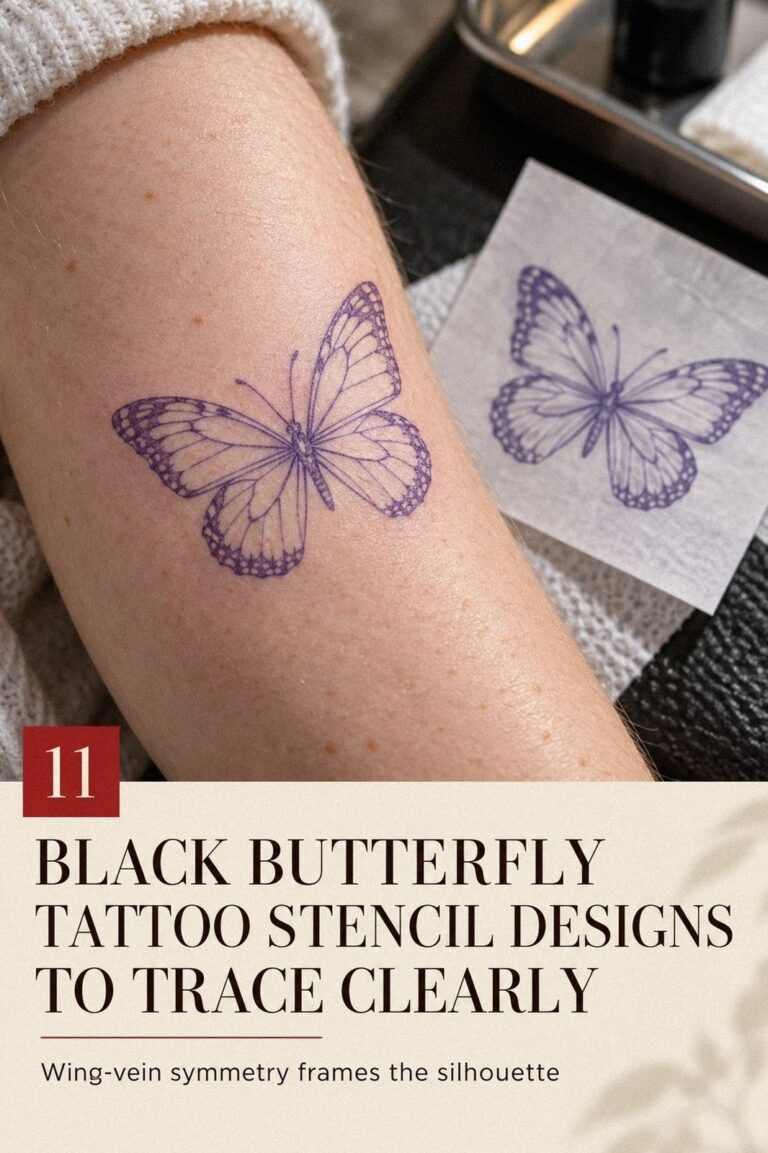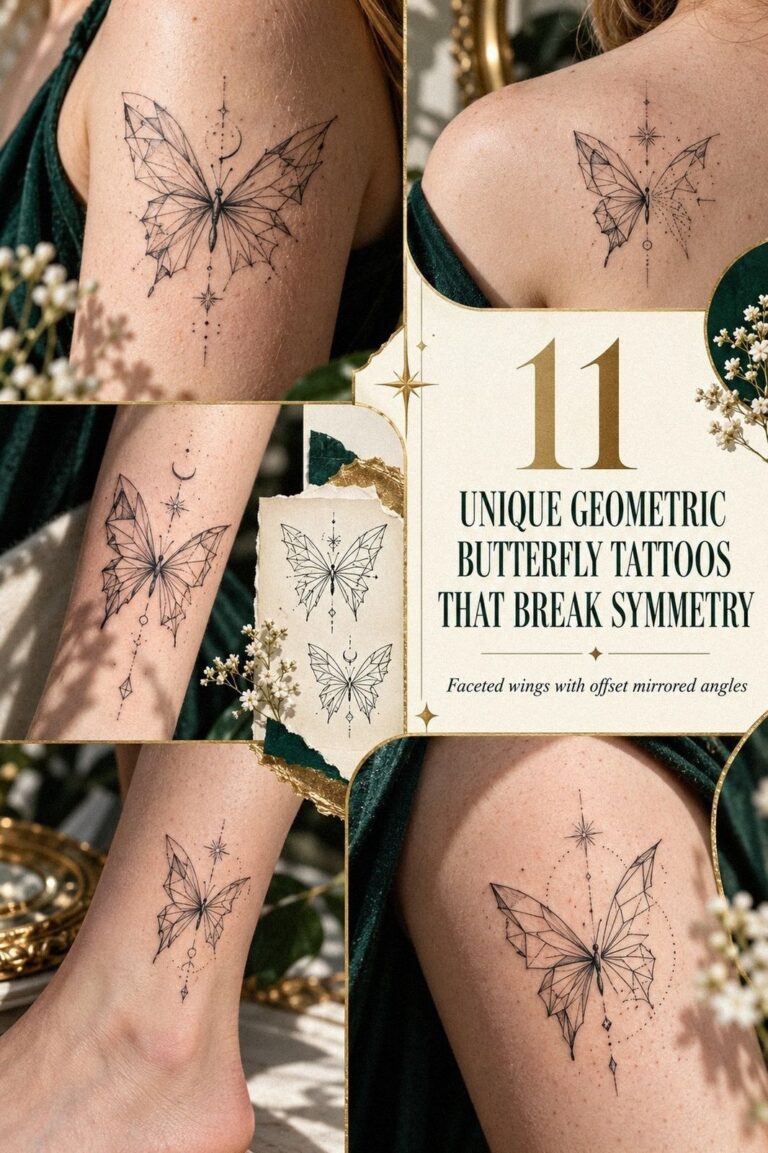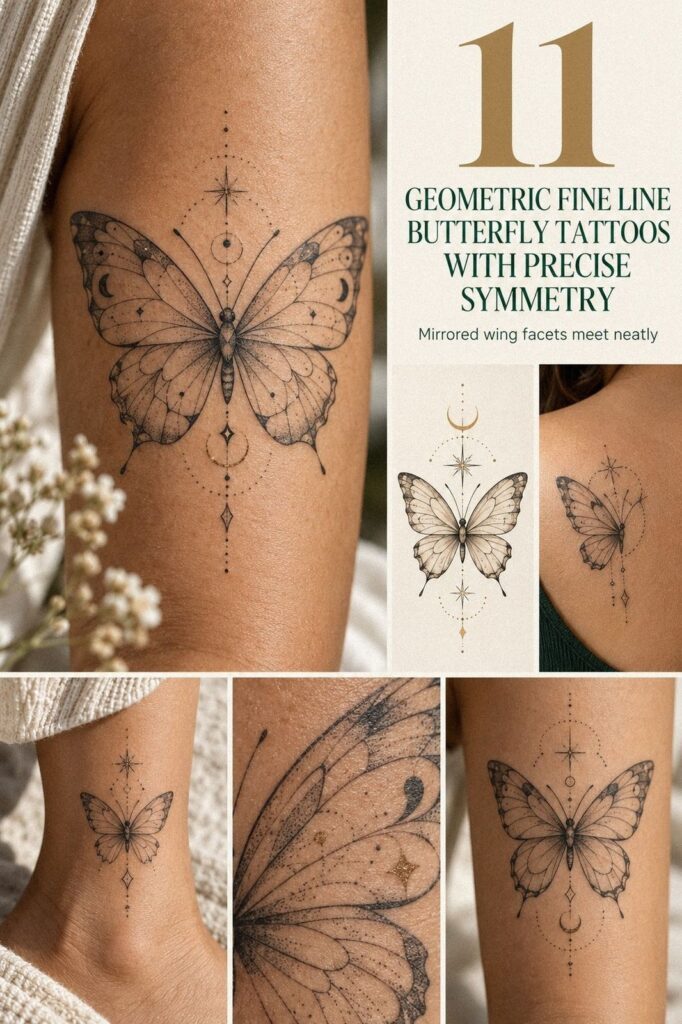
A geometric fine line butterfly tattoo can cost about $100 to $300 in the US, depending on size, artist, and placement. I wanted mine to look striking without becoming busy, so I tested angles, negative space, and tattoo placement before committing. The result is personal, delicate, and easier to live with than I expected.
I learned that the best choice isn’t always the most intricate one. It has to fit your skin, your budget, and the way you actually want to see it every day.
Here’s what it looked like before:
Before the appointment, I had a patch of blank skin I’d been saving for the right idea. It wasn’t damaged or marked. It was simply open, and I didn’t want to fill it with a random symbol because the first concept looked good on a screen.
I kept returning to a blank skin area and asking whether the butterfly would still feel meaningful after the novelty faded. You can admire a reference for weeks and still discover that its shape doesn’t belong on your body. I wanted a timeless outline with enough structure to feel iconic, but not so much detail that the design would blur into a dark spot.
My first draft was sleek but too generic. I liked it, but I didn’t love it. That difference mattered!
J’ai choisi un papillon géométrique fine line
I chose a geometric butterfly design for my calf after seeing how angular wings held their shape against fair cool-pink skin. I wanted something sleek, understated, and expressive, not a literal insect copied from a field guide.
The first drawing was too ornate. It had extra dots, tiny loops, and several interior lines that looked charming on paper but crowded the skin.
I removed them one by one. If you’re planning a small geometric fine line butterfly tattoo, you should ask whether every mark earns its place. My answer became the negative-space rule: if a line doesn’t clarify the wing, it doesn’t stay.
I also considered a heavier solid fill butterfly style, but I rejected it for this placement. Solid fill can age well when it’s applied carefully, yet it would’ve made the calf piece feel more forceful than I wanted. A crisp outline gave me a graceful silhouette, and I could still explore a bolder version through this fine line black butterfly tattoo guide.
J’ai comparé plusieurs idées de papillon minimal
I compared several references on a wrist with medium warm ivory skin before choosing the final shape. One option was minimal, almost logo-like. Another was ornate, with mirrored geometry and pointed wing tips.
The third had a symbolic center line that made the butterfly feel more like a personal emblem than a decorative copy.
You can tell a lot from the smallest reference. On the wrist, the wrist placement makes every angle visible when you turn your hand, so a crooked center line would bother me every day.
I printed the designs at different sizes and held them against my own wrist. The smallest version looked dainty, but the inner triangles lost their identity.
The middle version won because it gave the wings enough breathing space. I didn’t want a busy piece that needed explaining.
If you’re comparing geometric fine line butterfly tattoo ideas, save references with healed examples, not only fresh work. A fresh tattoo often looks vibrant and sharp, while healed ink gives you a more honest read.
My minimalist fine line butterfly tattoo references helped me narrow the shape without copying another person’s piece.
J’ai dessiné des ailes aux angles nets
I drew the wings with sharp intersections and repeated angles on an olive-toned wrist. I wanted the design to feel bold through geometry, not through heavy saturation.
My artist and I used what I now call the mirror-line rule. Each side had to echo the other, but it didn’t need to be mathematically identical.
Perfect symmetry can look stiff on real skin, especially around a wrist that bends and rotates. A slightly human adjustment made the butterfly more graceful.
I rejected rounded wings because they softened the idea too much. You may prefer a flowing silhouette, and that can be elegant, but my design needed a harder edge. The cleanest result came from fewer lines, consistent spacing, and a black ink tone that stayed readable against the skin.
If you’re working through line options, compare this fine line butterfly tattoo stencil with a more open version before your appointment.
J’ai retenu une composition petite et délicate
I kept the spine design small and centered on golden tan skin. The small butterfly tattoo uses fine black geometry, open wing sections, and a vertical arrangement that follows the body instead of sitting sideways across it. It looks delicate, but the shape still has enough contrast to remain visible.
The size decision took longer than the drawing. I wanted the tattoo to be understated from a distance, yet detailed enough for you to notice the wing structure nearby.
My artist showed me how a miniature design can lose its inner spaces if the lines are placed too close together. That was the moment I stopped chasing the tiniest possible version.
I also tested the design as a stencil on paper. The paper stencil made the center line look darker than it would on skin, so I asked for more breathing space around the body. If you’re considering a unique geometric fine line butterfly tattoo, don’t confuse small with simple.
For a similar scale, I’d compare the proportions in this tiny fine line butterfly tattoo collection with slightly larger examples. The tiny options are dainty, but they demand more discipline from the artist.
What I Checked Before Paying the Deposit?
Before paying a deposit, I checked the artist’s healed work, communication style, minimum charge, and experience with fine line tattoos. The artist portfolio mattered more than a single impressive reference.
I also asked how the artist would adjust the design for my skin and placement. A tattoo can look perfect in a saved reference and still need changes once it meets a real body. That conversation helped me decide whether the appointment would be worth it.
My budget wasn’t unlimited, so I wanted clear pricing before committing. The cheapest quote wasn’t automatically the best value, but I also didn’t want surprise costs for a small design.
J’ai placé le tatouage sur mon avant-bras
I placed the idea on my forearm after reviewing several hand-drawn butterfly designs. One looked playful on paper, while another felt more personal against the skin. I preferred the second because it had a stronger center and less visual noise.
The forearm placement appealed to me because it gives you visibility without forcing the tattoo to dominate every outfit. I could turn my arm and see the whole butterfly, which made the choice feel more empowering than hidden. I skipped the hand because hand tattoos receive more friction and sun exposure, and I wasn’t ready to make that trade.
My favorite design had an angular upper wing and a narrower lower wing. It was edgy, but not aggressive. I asked my artist to redraw it rather than copy it exactly, because a flash design isn’t automatically the right shape for your anatomy.
If you’re deciding between areas, this fine line butterfly tattoo arm placement guide gives you useful comparisons.
The forearm also made aftercare easier. I could watch the skin without twisting around to inspect it, and I could keep fabric from rubbing the fresh tattoo too much. That practical detail mattered more than I expected.
J’ai ajusté les lignes autour de l’os
I considered an upper-back placement with hair-thin black lines and generous open space around each wing. I paid close attention to how the body sat near the shoulder blade because bone changes the way a straight line appears. A line that looks level on paper may curve once it meets the body.
My artist used what I called the bone-following rule. The center stayed visually straight, while the outer wings adjusted subtly to the natural surface.
I didn’t want the tattoo to look warped when I moved. You should check the stencil while standing, sitting, and turning your shoulder.
I also asked about contrast. On deeper skin, a fine line tattoo needs a thoughtful balance between line weight and open areas.
The goal wasn’t to make the piece harsh. It was to keep the crisp geometry readable while preserving a powerful silhouette.
I almost chose a more complicated wing pattern, but I skipped it. Too many interior wing intersections would have made the design harder to read over time. If you’re comparing healed examples, look at this small fine line butterfly tattoo page and notice how spacing affects the final impression.
Open Wings or Heavy Fill?
I went back and forth between open wings and a darker blackwork version. Heavy fill has a bold visual presence, and it can age well when the application is solid. Still, I knew I would notice a dense shape more often than I wanted.
The open line design gave me a lighter visual rhythm and left room for the skin to remain part of the composition. It also matched my budget better because the session stayed relatively short.
If you want maximum contrast, heavy fill may offer better value for readability. If you want a delicate, open mark with visible skin between the lines, open geometry may be worth the upkeep.
Bauhaus Geometry and My Center Line
I borrowed a little from Bauhaus geometry because I liked its crisp shapes and purposeful repetition. I didn’t want a historical copy, though. I wanted a modern butterfly that still felt personal.
The center line became the anchor. Every triangle and wing angle had to support it. Once the middle felt stable, the outer wings could be slightly asymmetrical without looking accidental.
That balance kept the butterfly silhouette expressive rather than mechanical. It was minimal in structure but still meaningful to me.
J’ai ajouté un symbole personnel dans le corps
For the spine design on fair cool-pink skin, I placed a tiny personal symbol inside the butterfly’s body. It wasn’t a name, date, or obvious initial. It was a simple mark connected to a private memory, so the tattoo could remain meaningful without becoming visually literal.
That choice changed the whole piece. The wings were intricate, but the center became calmer and more direct. I wanted the symbol to reward a closer look, not announce itself to every person who saw my back.
I tested three center marks first. The first was too ornate, the second was too sharp, and the third had the right balance of sacred and understated. I chose the third because it didn’t compete with the butterfly.
The personal symbol gave me an emotional reason to keep looking at the tattoo after the appointment. You can make a tattoo personal without adding endless detail.
If you’re building your own design, ask what the central symbol means when the surrounding detail is removed. A butterfly can represent change, freedom, grief, or growth, but your version doesn’t need to explain itself.
My watercolor fine line butterfly tattoo examples also showed me how color can carry meaning, although I stayed with black ink for this piece.
The Stencil Test Changed Everything
The first stencil looked too narrow when I stood naturally. The stencil placement was centered while I was still, but the wings shifted when I relaxed my shoulder.
I checked it while standing, sitting, walking, and turning. Good! That quick stencil test exposed a problem I wouldn’t have noticed from one position.
My artist widened one wing slightly and moved the body a few millimeters. Those changes were small, but they made the final result feel more balanced and personal. The wing adjustment was worth the extra minute.
J’ai vérifié le rendu sous différents éclairages
I checked the stencil under several types of light before approving it. Under bright light, the lines looked crisp. Under soft light, the open spaces became more noticeable.
This test saved me from choosing an overly faint center. A fine line tattoo can look ethereal nearby and disappear when the lighting changes. I wanted the design to remain visible without becoming dark.
You should view your stencil near a window, under strong ceiling light, and in a mirror because each setting reveals a different issue. I also checked how the sternum moved while breathing.
The sternum placement is intimate, but it isn’t static. When you inhale, the skin shifts slightly, and the butterfly must still look balanced. I rejected a wide-wing version because its outer tips moved too much with my body.
The final version had a narrow profile and stronger central alignment. It looked polished without losing its handmade character. If you prefer a more visible placement, compare sternum references with this fine line butterfly tattoo page before deciding.
J’ai supporté une douleur brève et précise
The wrist version reminded me that pain depends more on placement than on the word “fine line.” The design was small, but the artist still worked across a sensitive area with limited padding. The needle sensation felt raw, brief, and precise rather than overwhelming.
I had expected the short session to feel easy, and that assumption was wrong. You can tolerate a small tattoo well and still notice every pass when the needle reaches a thin or bony area. My forearm felt more manageable than the wrist placement, while the sternum and feet would be choices I’d approach with more caution.
A useful personal scale looked like this:
I wouldn’t choose a placement only because it looks daring in a reference. If you’re nervous, ask your artist how the location usually feels and whether the session can pause. Pause breaks can make the experience easier when you know what to expect.
A fine line black butterfly tattoo reference can help you compare visual weight, but it can’t predict your personal pain response.
J’ai suivi une cicatrisation fine sans grattage
The healed tattoo looked slightly softer after the initial irritation settled, but the geometric structure remained clear. That change is normal, and it helped me judge the design more honestly.
For most tattoos, the surface settles in about 2 to 3 weeks, while complete healing can take roughly 2 to 3 months. I treated the skin gently, washed it with mild soap, kept it lightly moisturized, and avoided swimming and direct sun during the early stage.
The hardest part was leaving the tattoo alone. It became gritty and itchy as it healed, and I wanted to touch it constantly.
I didn’t scratch. I also avoided tight fabric that could catch the area.
Those choices protected the healed linework while the surface recovered. Fine lines can spread or soften with time, especially when sun exposure and placement work against them.
Black ink with sensible spacing usually ages better than an overloaded design. If you’re comparing fresh and healed work, use the fine line butterfly tattoo stencil archive alongside healed references so you can see what changed.
Is Fine Line Worth the Upkeep?
For me, yes, it was worth it. I wanted a delicate, understated tattoo, and I accepted that the fine line style may soften or need a future touch-up.
The aftercare routine was simple, but the long-term value came from choosing the right scale. I didn’t force tiny details into a space that couldn’t support them.
If your budget allows it, spend more time on artist selection than adding extra details. A cheaper appointment may not be a better value if the spacing, placement, or healed result disappoints you.
J’ai obtenu un papillon unique et intemporel
The finished butterfly sits on deep brown skin with a warm undertone, placed across the shoulder in a balanced geometric shape. The wings are flowing at the outer edges but still angular inside. The result feels feminine to me, although the same structure could read masculine, vintage, or completely neutral depending on scale and placement.
What makes it unique isn’t an unusual insect shape. It is the combination of the center symbol, the spacing, and the way the wings follow my body. You can borrow a visual language without borrowing someone else’s tattoo.
My artist changed the custom proportions, softened one corner, and adjusted the body so the piece felt like mine. That custom work was worth the extra planning.
I expected to keep studying the tattoo for a few days and then move on. I didn’t.
The design still catches my attention when I turn my shoulder, especially in side light. That lingering response is why I consider it romantic, expressive, and timeless rather than merely fashionable.
I would skip extra decoration if the core silhouette already works. A butterfly doesn’t need stars, moons, initials, and a quote to carry emotion. Sometimes the most elegant version is the one that leaves enough skin untouched.
For more placement ideas, I’d look through the unique geometric fine line butterfly tattoo examples before adding another detail.
How much it cost
In the US, a geometric fine line butterfly tattoo commonly falls around $100 to $300, although the artist, city, placement, size, and minimum charge can change the total. Many studios have a minimum around $50 to $100, while hourly rates often sit near $100 to $250. My design stayed within the typical range because it was small and completed in one appointment.
I wouldn’t choose an artist by the lowest quote. Fine line work depends on clean application, thoughtful spacing, and a healed tattoo portfolio, so a cheaper appointment may not be the better value. Ask for a portfolio with healed tattoos and confirm whether the quoted price includes the design time.
Your final cost may be higher if you request a large sternum piece, several revisions, color, or a second session. My priorities were good hygiene, readable linework, and an artist who would tell me when an idea was too small to age well. Those choices mattered more than saving the last few dollars.
What I Learned About Fine Line Over Heavy Fill
I went back and forth between an open geometric butterfly and a darker blackwork version. Heavy fill has a strong visual presence, and it can age well when the application is solid. Still, I knew I would notice a dense shape more often than I wanted.
The tradeoff is real. Fine line tattoos may spread, fade, or lose small details with years of sun exposure and normal skin changes.
I don’t think that makes the style fragile. It means you need to choose the right scale, spacing, and placement.
A black center can improve readability, while too many hair-thin intersections can turn muddy. My biggest mistake was trying to make the first draft more impressive by adding detail.
It looked intricate, but the emotional center disappeared. I removed half the interior marks, and the butterfly became more powerful because the silhouette could speak clearly. You may have to disappoint yourself during the design stage to get a better tattoo.
I also learned that the artist’s portfolio matters more than the reference. Look for consistent line weight, healed examples, and designs on different skin tones. My fine line butterfly tattoo arm ideas helped me compare placement, but the final decision came from the artist’s own healed work.
A tattoo should still make sense when the trend moves on. That is why I kept the classic butterfly shape, the center personal, and the detail restrained. I wanted an image I could recognize in ten years, not a design that depended on a particular Pinterest moment.
The Questions Worth Answering First
How much does a geometric fine line butterfly tattoo usually cost?
A geometric fine line butterfly tattoo usually costs about $100 to $300 in the US. A studio minimum may be around $50 to $100, while hourly rates often range from $100 to $250. Artist experience, region, size, and placement can shift the quote.
– Small design – One appointment – Local studio minimum – Artist portfolio review
Are geometric fine line butterfly tattoos a good idea for a first tattoo?
Yes, they can be a good first tattoo because the design is often small, the session can be brief, and many placements are tolerable. A clear outline and personal meaning also make the choice easier to live with. Your artist should still discuss size and aging before starting.
– Forearm placement – Upper arm placement – Simple geometric structure – Healed-example review
How do I choose a tattoo artist for a geometric fine line butterfly tattoo?
Choose an artist with consistent fine line work, healed examples, clean studio practices, and experience with your preferred placement. A healed portfolio matters more than a dramatic fresh tattoo. Ask how the artist adjusts line weight and spacing for your skin and anatomy.
– Clean linework – Healed examples – Skin-tone variety – Studio hygiene
How much does a geometric fine line butterfly tattoo hurt?
Pain varies by placement, but forearm, thigh, and shoulder tattoos are often more tolerable than ribs, feet, hands, or sternum work. Bony and thin-skinned areas can feel sharper even when the design is small. Tell your artist if you need a pause.
– Forearm, more tolerable – Thigh, more tolerable – Wrist, sharper – Sternum, more sensitive
How long does a geometric fine line butterfly tattoo take to heal?
The surface usually heals in about 2 to 3 weeks, while complete healing can take around 2 to 3 months. Gentle washing and light moisturizing support the early stage. Avoid scratching, swimming, and direct sun until your artist says the skin is ready.
– Mild soap – Light moisturizer – No scratching – No early swimming
What’s the best placement for a geometric fine line butterfly tattoo?
Forearm, shoulder, and thigh placements are practical choices because they are often more tolerable and easier to protect from friction. Your best placement depends on visibility, pain, and sun exposure. Ask your artist to check the stencil while you move naturally.
– Forearm visibility – Shoulder flexibility – Thigh padding – Sternum sensitivity
Where I’d Start First
If I had to pick one, I’d start with the forearm placement. You can see the geometry, protect it during healing, and give fine lines enough space to stay readable.
I’d confirm the artist’s healed work, ask for a clear quote, and let the stencil sit for a few days. That extra pause was worth it!
Pin the fine line butterfly tattoo arm guide for later, and commit only when the shape still feels personal after the excitement fades.