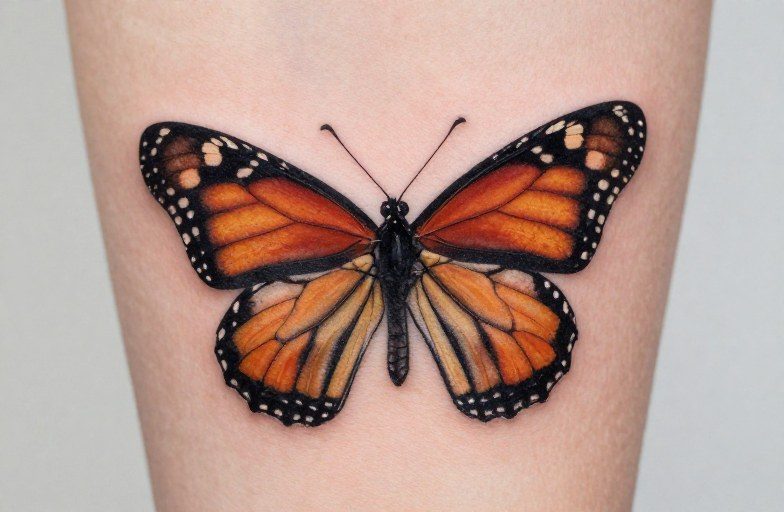
A monarch butterfly tattoo most directly signals transformation and endurance. The insect’s metamorphosis from caterpillar to winged adult gives it near-universal association with personal change, while its multi-generational migration, no single butterfly completes the full round trip, adds layers of inherited perseverance and collective memory. In tattoo culture, it’s also become a quiet symbol for grief and remembrance, particularly for infant and child loss, through the monarch connection to memory and return.
Symbolism & Core Meaning
The monarch packs more specific symbolic weight than generic butterfly designs. Its actual biology feeds directly into what people ask for.
Transformation That Takes Time
Unlike the swallowtail or painted lady, the monarch’s metamorphosis spans weeks in chrysalis, visible, slow, vulnerable. That timeline matters in tattoo meaning. People don’t typically request monarchs for sudden change; they choose them for processes that tested them. The chrysalis stage, often depicted in split-design tattoos (half caterpillar, half butterfly), represents the invisible work of becoming.
Migration and Return
The monarch’s migration spans 3,000 miles across multiple generations. One butterfly starts; its great-grandchildren finish. This biological fact makes the monarch a symbol for:
- Family lineage and inherited strength
- Long-term goals outliving the individual
- Immigration and diaspora experiences
- Returning to origins transformed
The migration also grounds the design in North American geography specifically, this isn’t a tropical or abstract symbol, but one tied to actual flyways and overwintering groves in Mexico and California.
Common Variations & Styles
How the monarch gets rendered changes what it communicates.
Realistic vs Stylized
Photorealistic monarchs with accurate wing venation and orange-to-black gradient read as scientific appreciation or memorial documentation. Stylized versions, geometric breakdowns, watercolor splashes, traditional bold-line interpretations, shift emphasis toward the symbolic rather than the specific creature. Neo-traditional and Japanese-influenced designs often enlarge the wings beyond natural proportion, creating more surface for pattern and movement.
Single vs Multiple Butterflies
A solitary monarch emphasizes individual transformation. Multiple butterflies in flight formation reference the migration narrative, collective movement, family groups, or the passage of time with one butterfly representing each year or generation. Cluster designs around a specific flower (milkweed, the monarch’s only host plant) add ecological specificity that botanically-minded collectors seek.
Integrative Elements
Common additions and their effects:
- Skull or clock: Memento mori, time’s passage, transformation through loss
- Coordinates or dates: Memorial function, grounding migration in specific place
- Semicolon: Mental health survival narrative (distinct from Project Semicolon’s general use)
- Milkweed: Necessary sustenance, environmental awareness, specificity of survival
Best Placements
Monarch wing shape dictates natural placement flow. The elongated forewings and rounded hindwings create diagonal movement that artists use or fight against.
Where the Wings Work
Shoulder blades and upper back allow full wingspan with natural wing curve following scapula movement. This placement lets the tattoo “breathe” when the person moves, shoulders rolling forward brings wings together; back straight spreads them. Ribs and side torso accommodate the diagonal axis well but require the person to commit to a longer session and significant aftercare restriction during healing (breathing, sleeping, arm movement all stress the area).
Forearms work for smaller designs but compress the wing proportion; the monarch’s distinctive black veining needs minimum size to read clearly. Wrists and ankles rarely suit full monarchs, the detail density blurs within a few years. These spots better serve minimalist outlines or single-wing fragments.
Memorial Placement Patterns
Monarchs chosen for infant loss memorials cluster heavily on left-side ribs (near heart), upper chest collarbones, and behind the ear. The behind-the-ear placement specifically references whispered communication, secrets, voices carried, metaphorical rather than biological, but consistently requested in this context.
Mythology & Folklore
Monarch-specific folklore is geographically concentrated, which matters for authenticity in symbolic claims.
Indigenous Mexican Traditions
The monarch’s arrival in Michoacán around Día de los Muertos (late October to early November) has long linked it to returning souls. The Purépecha and Mazahua communities historically described the butterflies as ancestors arriving for the feast. This association predates colonial contact and remains active, contemporary Day of the Dead imagery frequently incorporates monarchs. For tattoo wearers without Mexican heritage, this specific symbolism requires careful handling; the biological fact of migration timing doesn’t automatically transfer personal ancestral meaning.
North American Ecological Symbolism
Before European contact, various Plains and Eastern Woodlands nations noted the monarch’s unpalatability to predators (milkweed toxins make it poisonous), often linked to protection or inedibility in spiritual terms. The butterfly’s bold warning coloration, orange and black as advertisement, not camouflage, translates symbolically to visible survival, not hiding.
Contemporary environmental movements have adopted the monarch as flagship species for pollinator decline, adding conservation-layer meaning for ecologically motivated collectors. This is recent, not traditional, but genuinely held.
How It Ages on Skin
Monarch tattoos face specific aging challenges due to their color dependency and fine detail.
Orange Fades Fastest
The monarch’s signature orange, typically achieved with cadmium or organic orange pigments, fades faster than black carbon-based ink. On sun-exposed skin (forearms, hands, calves), noticeable dulling occurs within 3-5 years. The black veining and white spots (often negative space or white ink) remain longer, creating a “ghost monarch” effect: still readable, but drained of species-specific color. White ink yellows or disappears entirely on most skin tones within 2-4 years, so designs relying on white spots for accuracy lose that detail quickly.
Line Weight Matters
Thin black wing veins blur and spread. Artists experienced with monarchs typically use slightly heavier lining than photographic accuracy would suggest, or build vein structure with soft shading rather than hard lines. The border between orange and black areas, if too finely detailed, becomes muddy. Best practice: bold enough black separation to maintain structure even as color bleeds slightly.
Touch-ups are common and expected, particularly for color saturation. Black and grey monarchs avoid the fading problem but sacrifice species recognition, without orange, it’s a generic butterfly to most viewers.
Color vs Black and Grey
This choice determines whether the tattoo functions as species portrait or symbolic emblem.
Color: The Specific Creature
Full color commits to the monarch as identifiable species. The orange-black-white palette carries immediate recognition and all associated meaning, migration, transformation, warning coloration. It also commits to maintenance. Color monarchs look best with consistent moisturization and sun protection; they’re a poor choice for people who won’t modify behavior for tattoo preservation.
Black and Grey: The Abstracted Idea
Removing color shifts emphasis to form and shadow. Black and grey monarchs can read as more somber, memorial, or timeless, less biological specimen, more eternal symbol. The wing pattern still identifies as monarch to knowledgeable viewers, but loses instant public recognition. This suits private symbolism, or collectors whose overall aesthetic is monochrome.
Some artists split the difference: black and grey body with selective orange accent on upper wings. This preserves species identity while limiting high-maintenance color area.
The Bottom Line
The monarch butterfly tattoo carries genuine symbolic density because its source material, actual monarch biology and ecology, is already layered with meaning. It works best when the specific qualities matter to you: not just transformation, but slow transformation; not just journey, but multi-generational journey; not just memory, but cyclical return. Choose color if species accuracy matters, black and grey if the symbol abstracts beyond the individual insect. Place it where the wing shape moves naturally with your body, and budget for touch-ups if you want that orange to stay vivid. The meaning holds because the biology is real; the tattoo succeeds when the art respects that foundation.
Frequently Asked Questions
Does a monarch butterfly tattoo always mean a baby or child loss?
No. While it’s become a recognized symbol in bereavement communities, many people choose monarchs for transformation, immigration experiences, or pure aesthetic appreciation. Context and accompanying elements usually signal memorial intent.
How big does a monarch butterfly tattoo need to be to keep detail?
For recognizable wing venation and the characteristic white spots, plan for at least 3-4 inches in wingspan. Smaller than that, and the black lines blur together within a few years, especially on high-movement areas.
Why do artists sometimes refuse to do monarchs with white ink spots?
White ink is notoriously unreliable, it yellows, fades, or disappears entirely on most skin tones within 2-4 years. Experienced artists often use negative space (skin showing through) for the white spots instead, which lasts but requires careful planning around surrounding color.
Can a monarch tattoo work with other butterfly species in the same design?
Mixing species rarely reads well unless there’s narrative purpose. Monarchs have distinctive proportions and patterning; pairing them with swallowtails or morphos creates visual confusion rather than variety. Better to vary monarch presentation (flying, perched, chrysalis stage) if you want multiple elements.
Leave a Reply