
A tiny black butterfly tattoo can fit one short sitting, especially when you choose a manageable placement. I learned that after rushing a wrist design that blurred at the edges. These 11 ideas keep the silhouette crisp, the meaning personal, and the healing plan simple. You’ll want to save a few before you book!
- Choose a Tiny Black Butterfly Tattoo on the Wrist
- Ask Why Behind-the-Ear Placement Works
- Build Fine Linework That Lasts
- Can a Finger Butterfly Stay Readable?
- Use Dotwork Details With Restraint
- Let the Ankle Curve Lead
- Do Open Wings Need a Deeper Meaning?
- Follow the Collarbone’s Natural Line
My quick take: softer tissue usually hurts less than bone-heavy areas, and clear shapes age better than crowded details. Start with these tiny small butterfly tattoo ideas before you compare artists.
- Choose a Tiny Black Butterfly Tattoo on the Wrist
- Ask Why Behind-the-Ear Placement Works
- Build Fine Linework That Lasts
- Can a Finger Butterfly Stay Readable?
- Use Dotwork Details With Restraint
- Let the Ankle Curve Lead
- Do Open Wings Need a Deeper Meaning?
- Follow the Collarbone’s Natural Line
- Choose the Minimal Silhouette
- Is the Rib Worth the Extra Pain?
- Add One Wildflower, Then Stop
1Choose a Tiny Black Butterfly Tattoo on the Wrist
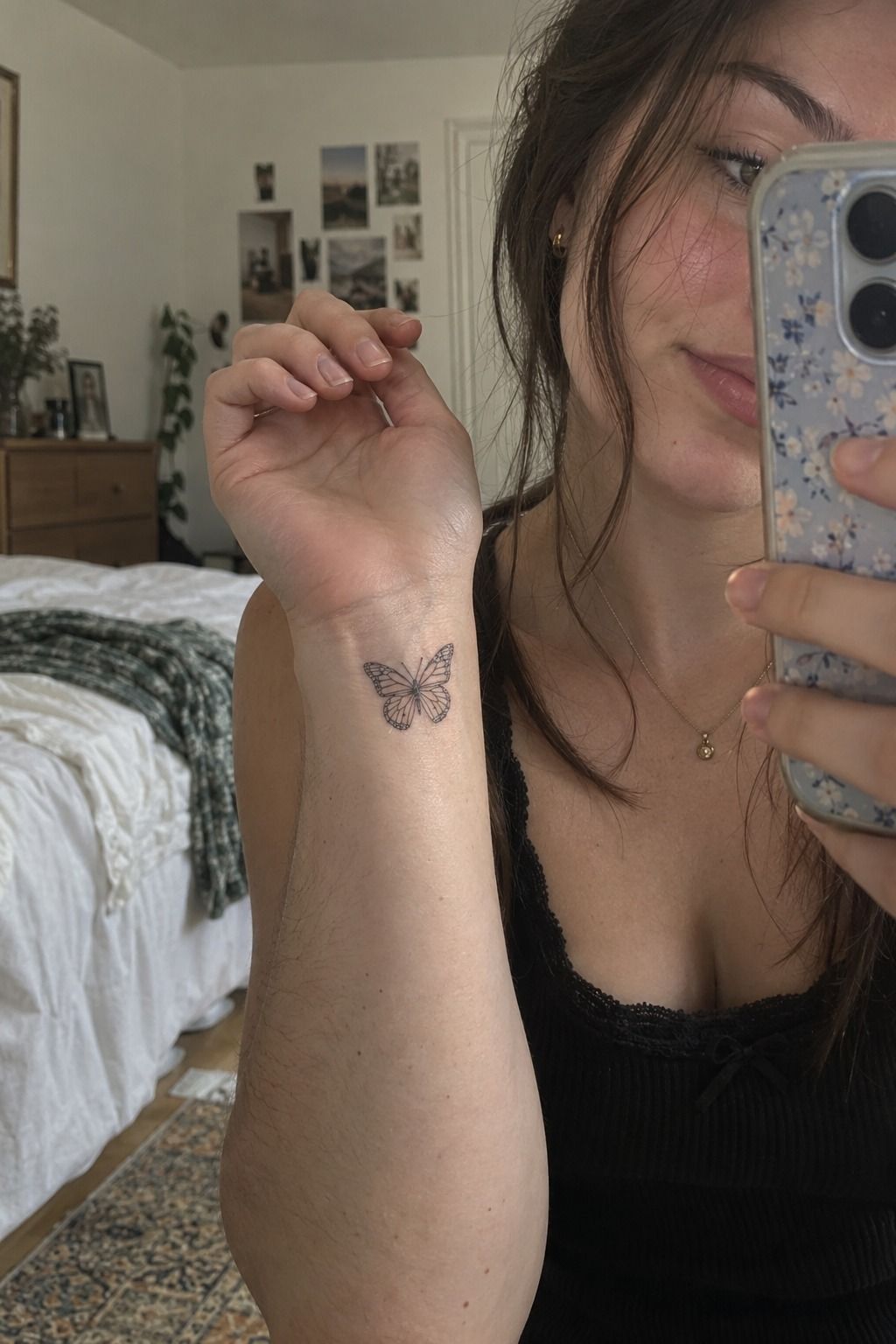
A wrist butterfly looks striking when the open-wing silhouette moves with your hand. I’d choose a delicate, symmetrical outline with a small black center. The result feels sleek from a few feet away, especially when your artist leaves clean negative space between the wings.
Ask for single-needle linework with a slightly reinforced outer contour. That small change matters. Fine lines can spread as they age, while a crisp perimeter keeps the butterfly readable.
Your artist should check the design while your wrist bends. A wrist stencil that looks balanced when your hand lies flat may shift during normal movement. You’ll want to see it from both angles!
For fair cool-pink skin, black tattoo ink can look sharp during the first days. Use gentle washing and light hydration. Don’t pick at the skin while it settles.
I’d skip a crowded cluster here. One open-wing butterfly has more visual strength than three tiny shapes competing for attention. A minimal mark can still feel expressive, personal, and polished.
If your budget is tight, the wrist may offer strong value because the design can stay simple. You’re paying for clean placement and careful linework, not unnecessary detail. Compare healed examples before you decide whether the cost feels worth it.
2Ask Why Behind-the-Ear Placement Works

Behind the ear gives you an understated placement with a little edge. A butterfly there feels intimate, symbolic, and quietly feminine without becoming invisible. I’d place the wings just below the curve of the ear.
The skin sits close to bone contact, so you may feel more vibration than expected. That doesn’t mean the session will be unbearable. You’ll want an artist with a steady hand and a light touch.
A fine-line stencil should show the full wing structure before anyone starts. Check the size while your hair is up and down. The tattoo should remain readable without pushing into the hairline.
Ask to see a healed portfolio from similar skin tones. Fresh ink can look bold and crisp, while healed work usually softens. The most useful proof is a photograph taken weeks or months later.
I’d avoid a complicated floral border in this location. The butterfly already feels charming and personal behind the ear. Extra detail can turn into visual noise.
If the symbolism matters most, read this black butterfly tattoo meaning guide before your appointment. Choose one private symbolism that feels meaningful to you, rather than collecting several symbols.
This placement can be worth it when you want privacy. The price may still include a studio minimum, even if the tattoo takes only a short time. Ask for the total appointment quote before booking.
3Build Fine Linework That Lasts
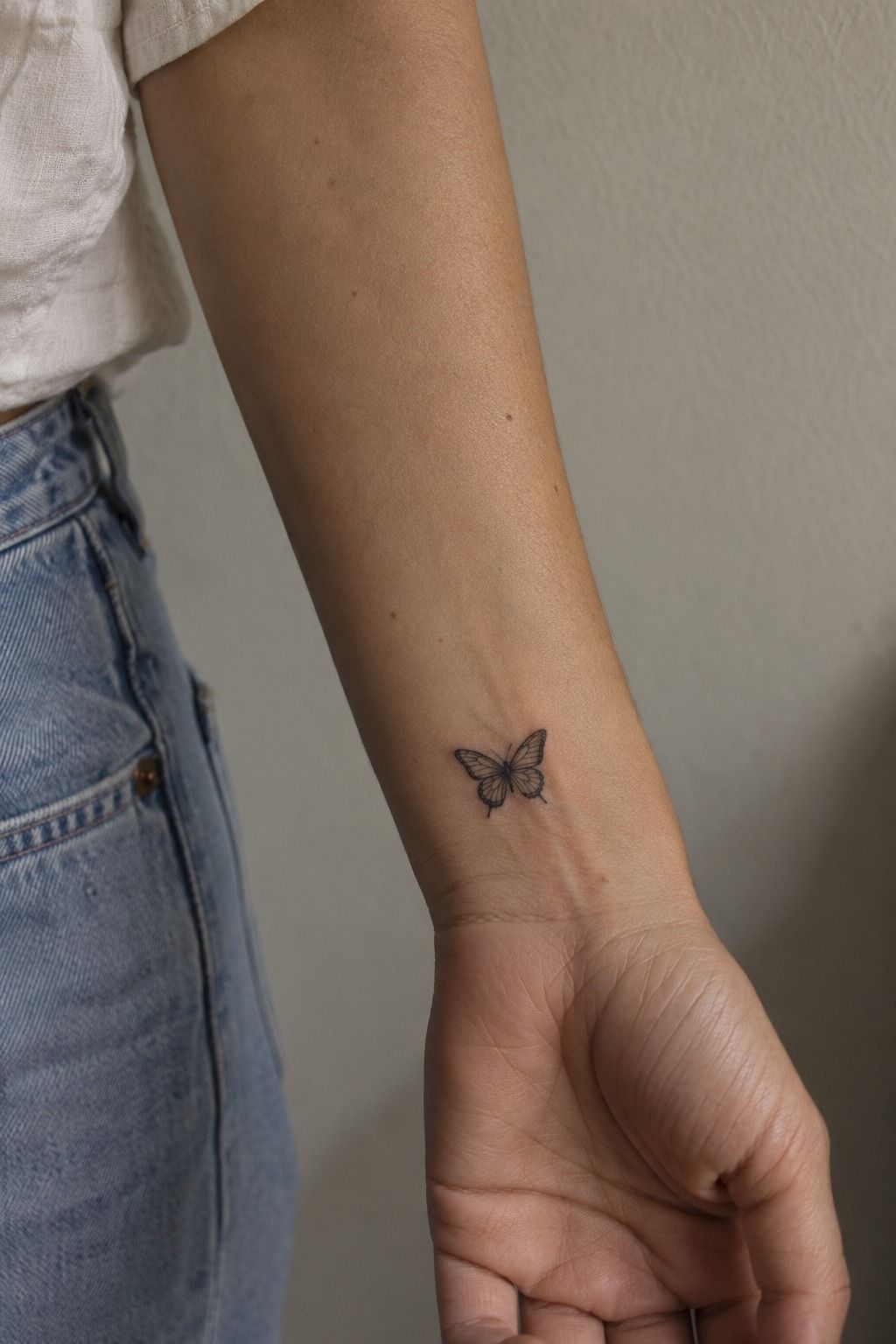
Fine linework gives this idea a graceful appearance, but the tattoo still needs enough structure to survive normal skin changes. I’d rather see fewer confident lines than an intricate pattern that loses its shape.
Start with a clear wing anatomy reference. The upper wings can stay open, while the lower wings use two or three controlled marks. This creates a crisp silhouette without forcing every vein into the design.
Your artist should explain how the lines may heal. Fine work can soften, especially on fingers, feet, and areas that receive sun or friction. A healed photograph tells you more than a fresh image.
The best value comes from restraint. You don’t need the most detailed design to get a powerful result. A simpler tattoo may also cost less because it takes less time.
If you want to compare line density, browse these small black butterfly tattoo designs before your consultation. Save two design references with different levels of detail. That gives your artist a useful range.
4Can a Finger Butterfly Stay Readable?

A finger butterfly is bold because the placement is hard to ignore. The shape can look iconic when the wings remain open and the central body stays unmistakable.
The challenge is the finger butterfly itself. Fingers bend, wash constantly, and experience friction from ordinary movement. Tiny details may soften faster here than on the upper arm or shoulder.
Ask whether the artist recommends slightly thicker lines or a touch more spacing. Finger skin can make a delicate design look sharper at first than it will after healing.
Keep the design direct. A black outline, a small filled body, and two controlled wing shapes may be enough. The placement already feels edgy, so you don’t need extra symbols to make it noticeable.
Before booking, compare healed small butterfly tattoo references and ask to see work on hands. A skilled blackwork artist should explain realistic maintenance without promising that the tattoo will never need a refresh.
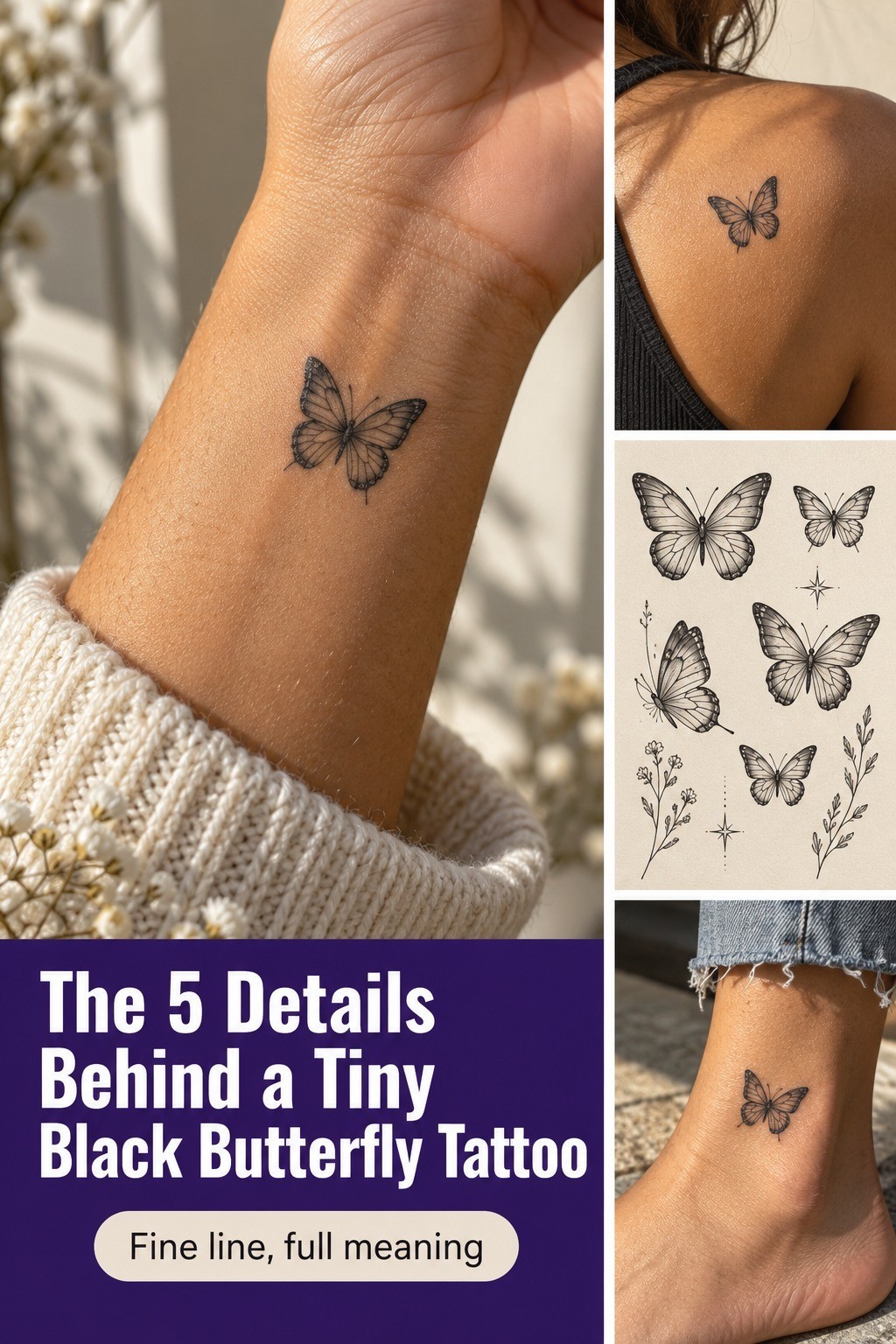
5Use Dotwork Details With Restraint
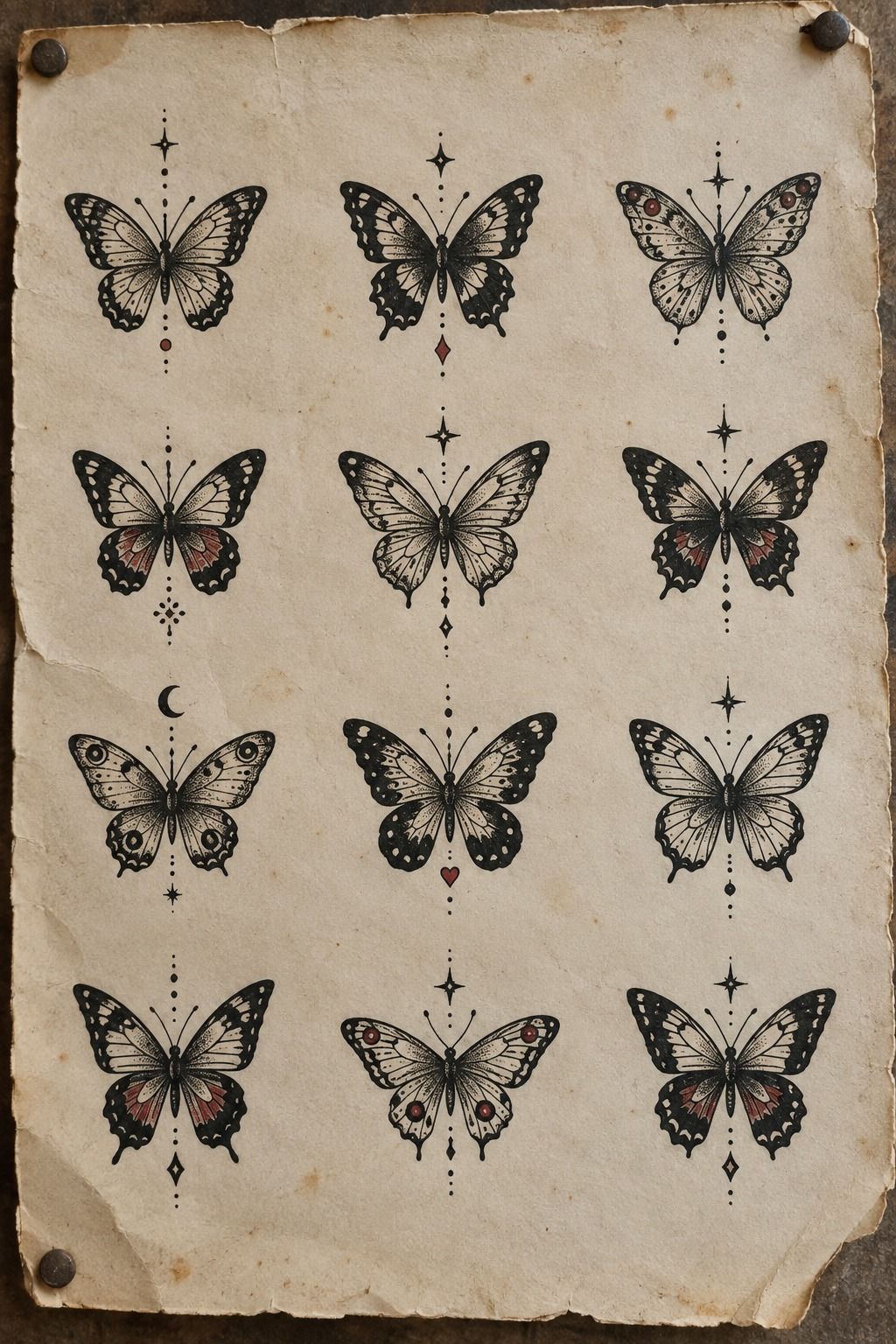
Dotwork turns a simple butterfly into something more ornate without relying on heavy shading. It can feel sacred, symbolic, and expressive when the dots support the wing shape.
Ask for dotwork shading near the body and lower wings. The dots should fade before the outline becomes crowded. That keeps the design crisp as the ink settles.
A controlled dotwork pattern can make a tiny tattoo look more detailed than it is. Still, more detail doesn’t always mean better value. If the dots blur together, you’ve paid for texture that no longer reads clearly.
I’d choose one dotwork area, not every wing. A concentrated detail point gives the eye somewhere to land. It also keeps the tattoo feeling sleek and understated.
Your skin tone and artist’s technique both matter. Request healed photographs with a similar skin-tone match. Fresh dots often look darker and sharper than the final result.
If you like the look but want a darker direction, compare these tiny moth tattoo ideas. A moth can feel haunting and raw, while the butterfly usually reads more romantic and hopeful.
6Let the Ankle Curve Lead

An ankle butterfly has a graceful placement that moves when you walk. On deep ebony skin, a clean black design can look powerful and elegant when the artist uses confident shapes.
You’ll want an ankle curve that follows the joint without wrapping too far around the bone. Ask to see the stencil while standing, not only while seated.
A placement stencil should follow the ankle’s movement without making the wings look compressed. Walk a few steps before you approve the position.
This area can feel more uncomfortable because it sits close to bone. Socks and shoes may also create healing friction during recovery. Schedule the appointment when you won’t need tight footwear right afterward.
A healed black outline is the reference that matters. Ask for examples beyond the fresh appointment photograph. The tattoo’s long-term value depends on how well the silhouette stays readable.
The strongest ankle designs leave breathing room around the wings. You don’t need a border, date, or star trail. One central form can feel more iconic than a crowded cluster.
Surface healing may take about 2 to 3 weeks. Complete healing can take about 2 to 3 months. Follow your studio’s aftercare instructions, avoid picking, and protect the area from unnecessary sun and swimming.
If you’re weighing cost against comfort, the ankle may require more care than the upper arm. That doesn’t make it a bad choice. It means you should understand the comfort tradeoff before you pay.
7Do Open Wings Need a Deeper Meaning?
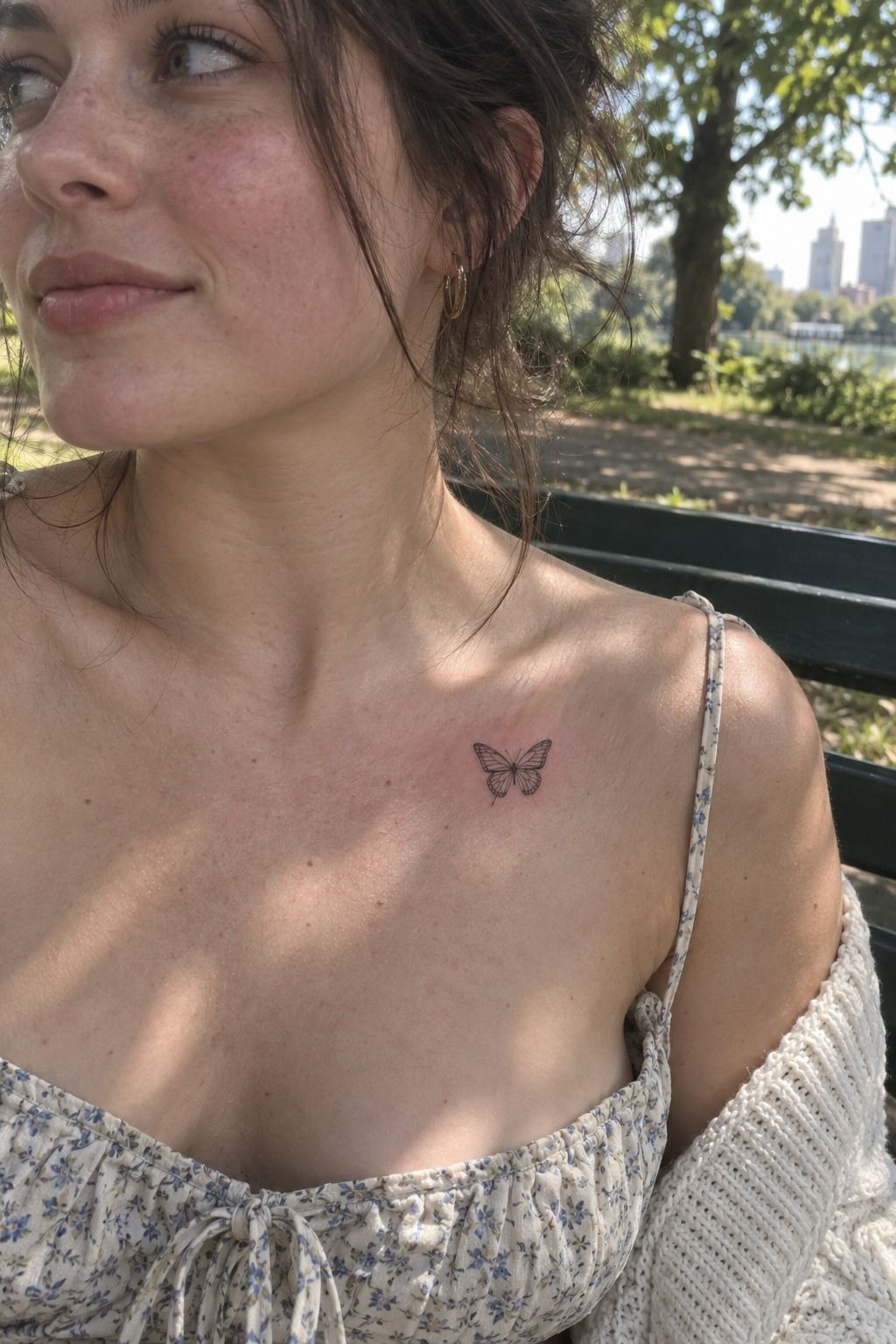
Open wings make the butterfly feel expressive, flowing, and instantly recognizable.
8Follow the Collarbone’s Natural Line
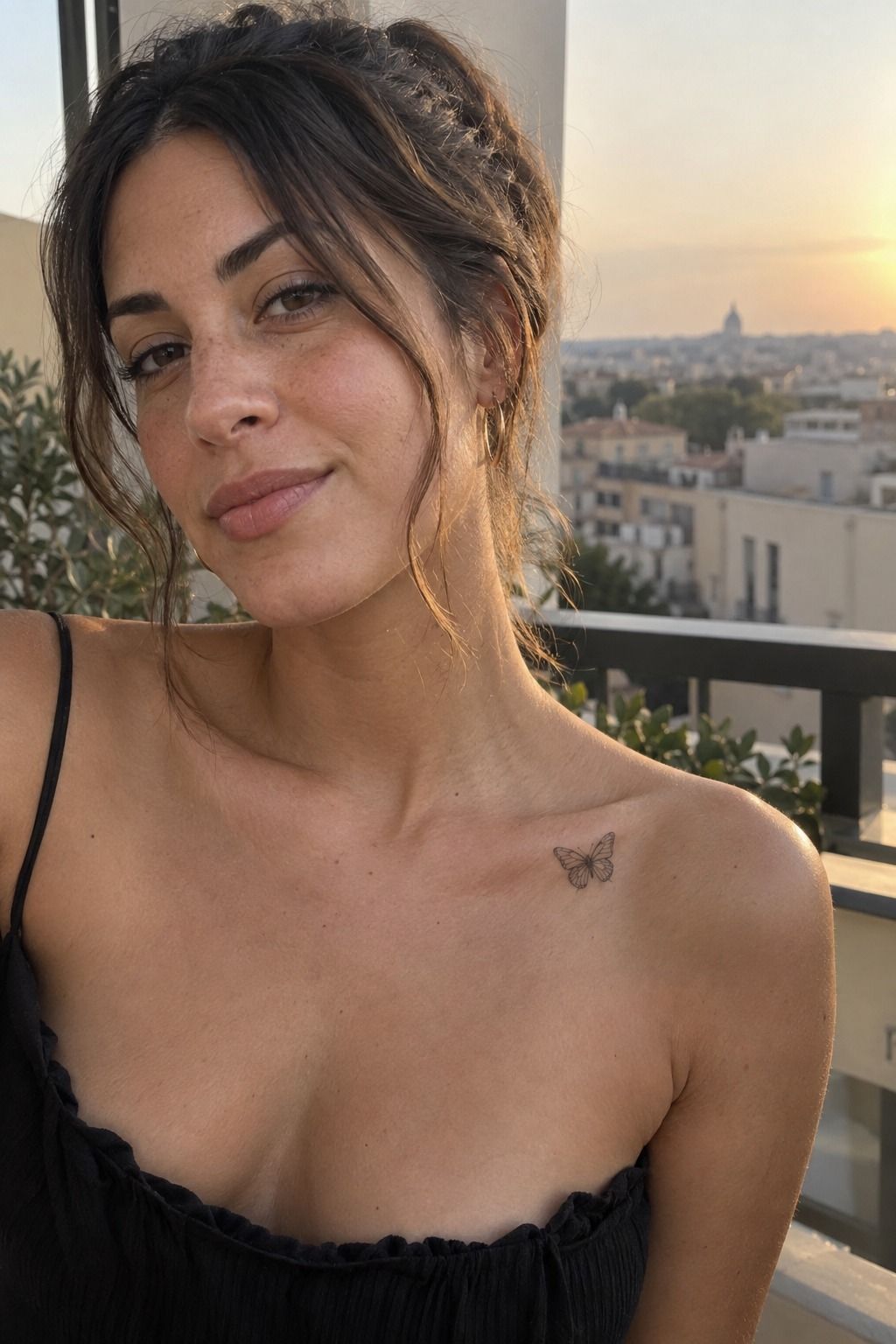
A collarbone butterfly follows a natural horizontal line, so the placement can feel elegant and polished without extra decoration. Medium warm ivory skin gives a black outline a clear presence.
I’d place the butterfly just below the bone rather than directly on its sharpest ridge. You’ll likely find that more comfortable, and your artist gets a smoother surface for the collarbone stencil.
Ask to see the stencil while standing, sitting, and relaxing your shoulders. Your posture changes the angle. You don’t want to approve a placement that only works in one position.
The collarbone placement is visible in some clothing and hidden in others. That makes it flexible. You can keep it understated for work or let it become a striking part of an open neckline.
I’d skip a long flight trail here. It pulls the eye away from the butterfly and may make the tattoo harder to read as it heals. A compact design often gives better long-term value.
Your design can be symbolic without explaining itself to everyone. A meaningful black butterfly might mark change, remembrance, or a private beginning.
For a contrasting idea, read this snake and butterfly meaning guide. Decide whether you want softness and contrast, or a single bold symbol.
9Choose the Minimal Silhouette

A minimal silhouette is the strongest choice when you want fast visual recognition and very little interior detail.
10Is the Rib Worth the Extra Pain?
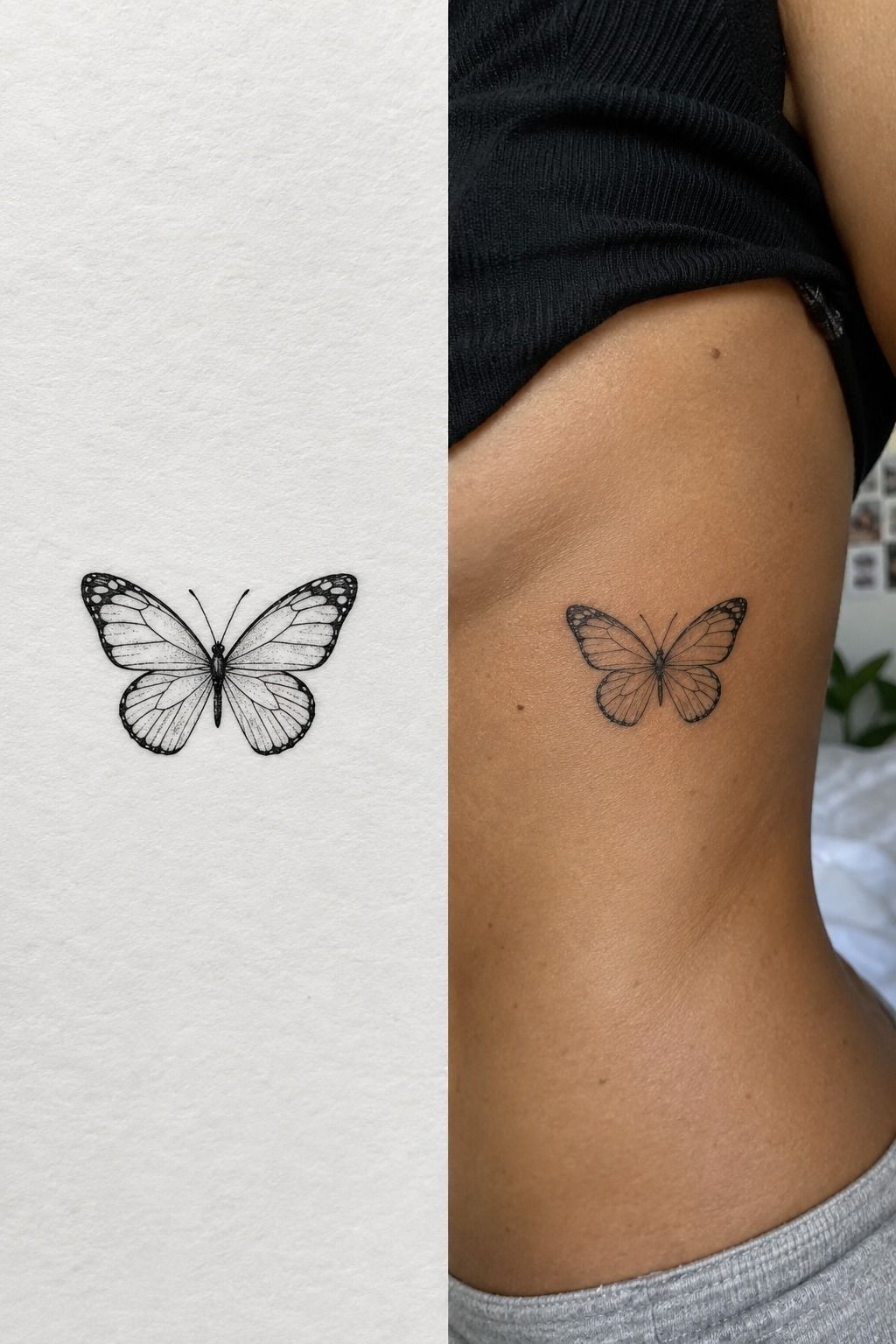
A rib butterfly can feel fierce, intimate, and a little daring. It’s a private placement with a sharper reputation, so the decision deserves honest preparation.
Rib placement gives the wings a long surface to follow, but the area moves with every breath. Ask your artist whether the design should sit higher, lower, or slightly toward the side.
The rib sensitivity can feel intense because the skin is thin and close to bone. You don’t need to prove that you can sit through anything. Tell the artist when you need a pause.
Wear loose clothing and plan for gentle movement afterward. Your artist may recommend specific rib aftercare because clothing friction can irritate fresh ink.
Ask to see healed rib work before choosing a detailed design. A tiny tattoo can lose readability if the artist packs too many veins, dots, or decorative marks into the wings.
The appointment may take longer if the design includes shading. Confirm the expected appointment length, the quote, and the touch-up policy before you reserve the time.
11Add One Wildflower, Then Stop

A butterfly with one small wildflower feels romantic, whimsical, and personal without losing the main subject. On deep brown skin with a warm undertone, black linework can look especially crisp.
Ask for fine-line stems with one or two leaves. Keep the butterfly slightly darker. That contrast gives the piece a clear focal point.
A dainty flower can soften the design. A sharper petal shape can make the whole tattoo feel edgy and expressive. Choose the floral style that supports your meaning.
This is where many people add too much. I’d skip a bouquet, a long vine, and several tiny buds in one small area. More marks don’t always create a more meaningful tattoo.
Your artist can make the idea more intricate by varying line-weight variation. They don’t need to pack every open area with ink. Restraint usually gives the tattoo a more polished finish.
Choose a flower connected to a memory, season, or person you’d recognize without an explanation. That keeps the design personal rather than generic.
For color direction, explore these watercolor butterfly tattoo ideas. Then decide whether you truly want color or prefer the classic restraint of black ink.
A floral accent can change the price because it adds linework. Ask whether the quote includes the flower, touch-up policy, and aftercare review. That keeps the final cost clear.
Why Tiny Black Butterflies Still Feel Personal
I’ve changed my mind about tiny tattoos. I used to think a larger piece carried more emotional weight. Then I watched a small butterfly become part of someone’s daily gestures.
It was visible while she reached for coffee or tucked her hair behind her ear. That quiet repetition can make a tattoo feel more intimate than a larger piece. You’re not choosing less meaning because the design is small.
The best tiny black butterfly tattoo has a clear reason behind every line. Open wings might represent release. A closed silhouette might mark protection.
A flower might belong to someone you miss. I’m more interested in that private logic than in copying the most popular reference from a feed. A striking tattoo doesn’t need to explain itself loudly.
Placement matters, too. Your wrist, finger, ribs, ankle, and collarbone won’t heal or age in the same way. Bone, friction, sunlight, and movement all affect the result.
Fine lines can soften. Black ink usually remains the stronger anchor when the design stays readable. You’ll make a better choice if you ask how the tattoo may look after the novelty wears off.
My own mistake was treating the consultation like a quick purchase. I brought three screenshots, changed the placement twice, and nearly chose the most intricate version because it looked impressive on paper.
I’m glad I slowed down. The crisp, understated option had more personality. It didn’t need another layer of decoration to feel finished.
What Your Budget Really Buys
A tattoo price covers more than ink. You’re also paying for the artist’s time, setup, hygiene, design judgment, and experience with small work.
Use this table as a planning guide, not a promise. Studio minimums and artist rates vary by city.
The cheapest quote may not offer the best value. Look for clean healed work, clear communication, and an artist’s small-scale experience that matches your idea.
A higher price can be worth it when the artist has strong results. Still, don’t assume an expensive appointment is automatically better. Review proof before you book.
Ask whether the quote includes the consultation, stencil changes, aftercare instructions, and a written quote. That one conversation can prevent an unpleasant surprise.
Compare Pain, Healing, And Visibility
The upper arm, shoulder, and thigh are often more tolerable. The ribs, feet, hands, and sternum can feel sharper. Your own sensitivity still matters more than a universal pain map.
Visibility also changes the decision. A wrist or collarbone tattoo is easy to see. An upper-arm or behind-the-ear tattoo can stay more private.
Friction is another factor. Fingers, feet, and ankles meet daily movement, socks, shoes, or hand washing. Those friction points may affect how the design heals and whether it needs maintenance.
A healed tattoo portfolio gives you the clearest comparison. Look for work photographed after several weeks or months. Fresh ink can hide how lines settle.
You don’t need to choose the least painful spot if another placement feels more meaningful. You do need to understand the tradeoff before you pay.
The Healed-Work Check
Before booking, ask for three healed tattoo examples. Look for crisp edges, even black areas, and readable wings.
Check examples on skin tones close to yours. A design that looks sharp in one portfolio photo may need a different line weight on your skin.
Ask how the artist handles touch-up terms. Some placements may need one later. That doesn’t mean the first tattoo failed.
Pay attention to the artist’s explanations. You want clear answers about pain, healing, sun exposure, friction, and aftercare. A polished portfolio matters, but honest guidance matters more.
A Personal Meaning Test
Write one sentence about why you want the butterfly. Keep it simple. “This marks a new beginning” is enough.
Then remove one design element. If the tattoo still feels right, that element may not be necessary. This test helps you avoid paying for details that don’t carry meaning.
Think about whether you want a symbolic tattoo, a sacred mark, or a purely visual tattoo. Any answer is valid. The important part is choosing deliberately.
A personal tattoo doesn’t need a public explanation. The most empowering design may be the one only you fully understand.
Before You Book, Ask These Questions
Can I see healed work from this artist? What will the final cost be?
Does the studio minimum apply? How long should the appointment take?
Ask whether the placement changes the recommended size. A tiny tattoo may need slightly broader lines to stay readable. Your artist should explain why.
Ask what happens if you need a touch-up. Get the touch-up terms in writing if possible. Clear details protect both sides.
Finally, ask what aftercare products and habits the studio recommends. Don’t pick, soak, or expose the tattoo to unnecessary sun while it heals. Follow the instructions you’re given.
What People Always Want to Know
How much does a tiny black butterfly tattoo usually cost?
A tiny black butterfly tattoo often costs about $100 to $300 in the United States. A studio minimum may run around $50 to $100, while hourly rates often fall near $100 to $250. Your artist, region, placement, and detail level can change the quote.
– Typical tattoo range: $100 to $300 – Studio minimum: about $50 to $100 – Hourly reference: about $100 to $250
Are tiny black butterfly tattoos a good idea for a first tattoo?
Yes, they can be a strong first tattoo because you can choose a manageable placement and a clear design. An open black silhouette is easy to understand, while a personal symbol gives you meaning beyond appearance. Your artist should still review pain, healing, and placement honestly.
– Good starter areas: upper arm, thigh, shoulder – More sensitive areas: ribs, feet, hands, sternum – Useful portfolio check: healed linework
How do I choose a tattoo artist for a tiny black butterfly tattoo?
Choose an artist with clean linework, healed photographs, and a hygienic studio. You’ll want someone who regularly works at a small scale, not someone whose portfolio contains one tiny butterfly. Ask about needle choices, stencil adjustments, aftercare, and experience with your skin tone.
– Portfolio proof: healed tattoos – Style match: fine line or blackwork – Studio standard: visible hygiene practices
How much do tiny black butterfly tattoos hurt?
Pain varies by placement, but ribs, feet, hands, and the sternum are often more sensitive than the forearm, thigh, or shoulder. Your session may feel sharper over bone and softer over fuller tissue.
Tell your artist if you need a pause. You don’t have to prove anything!
– More sensitive: ribs, feet, hands, sternum – Often more tolerable: forearm, thigh, shoulder – Comfort plan: breaks, water, honest communication
How long does a tiny black butterfly tattoo take to heal?
The surface usually heals in about 2 to 3 weeks, while complete healing can take about 2 to 3 months. Wash gently, moisturize as directed, avoid picking, and protect the area from sun and swimming while your skin recovers.
– Surface healing: about 2 to 3 weeks – Complete healing: about 2 to 3 months – Aftercare basics: gentle washing, light hydration, sun avoidance
What’s the best placement for a tiny black butterfly tattoo?
The upper arm, shoulder, and thigh are practical choices if you want a more tolerable session and less friction. Your wrist or collarbone gives higher visibility, while ribs, feet, and fingers may need more care because of sensitivity and daily movement.
– Lower-friction choices: upper arm, shoulder, thigh – Visible choices: wrist, collarbone – Higher-maintenance choices: fingers, feet, ribs
Where should I book a tiny black butterfly tattoo?
Book with a licensed, reputable studio after reviewing healed work from the artist you want. You don’t need to buy a kit or follow a discount link. A consultation, clean setup, and clear aftercare plan matter more than a low advertised price.
– Booking proof: artist portfolio – Studio proof: clean workspace – Consultation topics: placement, size, healing
Where I’d Start First
If I had to pick one, I’d start with the minimal upper-arm silhouette. It’s easier to tolerate than bone-heavy placements, and the solid shape has a better chance of staying readable as fine edges soften.
Pin that reference for later, then compare it with this small black butterfly tattoo stencil guide before you book. My final test is simple: choose the design you’ll still respect after the first excitement fades.

