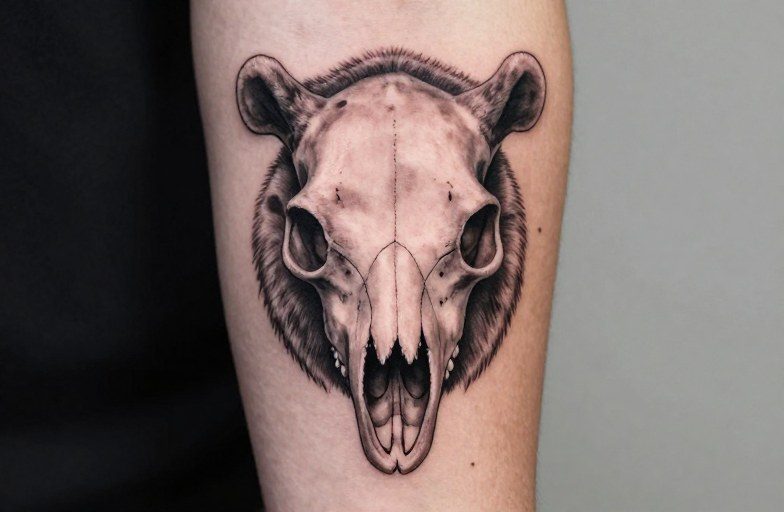
A bear skull tattoo typically signals respect for nature’s brute force, an acceptance of mortality, and a connection to cycles of death and renewal. Unlike a living bear, which can read as aggressive or protective, the skull strips away the soft tissue to expose something more permanent and contemplative. It’s a design that draws people who want to mark resilience without the cartoonish ferocity of a roaring grizzly.
Religious & Spiritual Angles
Christian iconography sometimes pairs skulls with memento mori tradition, though bear skulls specifically rarely appear in mainstream religious art. Some trace the symbol to early monastic practices where animal bones served as meditation objects on impermanence. The bear itself carries weight in Christian hagiography, Saint Gall and others are often linked to bear encounters that symbolize taming wildness through faith.
Animist and Pagan Frameworks
In Norse-influenced Heathenry, the bear stands among the most sacred animals, associated with berserkers and Odin’s warrior cults. A skull rather than a full bear shifts the focus from battle frenzy to ancestral connection. Some modern practitioners use bear skull imagery in devotional work, though this varies widely by kindred and individual practice. The skull becomes a vessel for what remains after the spirit passes, not a trophy of conquest.
Shamanic and Totemic Readings
Various Indigenous traditions of the Pacific Northwest and Siberia hold the bear as a relative or teacher figure. The skull specifically can mark a completed relationship with that medicine, someone who has moved through a phase of bear-energy and integrated it. This differs significantly from wearing a living bear as a power symbol; the skull acknowledges that power transformed, not possessed.
Personal & Modern Meanings
Contemporary wearers often gravitate toward bear skulls for reasons that have little to do with established spiritual paths. The image carries a rugged individualism that reads differently than a deer skull (too delicate) or a wolf skull (too pack-oriented). For people who have survived physical trauma or major life upheaval, the bear skull can mark a self-identified before and after, something fierce that endured stripping down to essentials.
Gender and Presentation
The design sees fairly even uptake across genders, though styling differs. Women getting bear skulls often incorporate botanical elements, roots threading through eye sockets, mushrooms on the cranium, while masculine-presenting versions tend toward cleaner bone structure with geometric framing. Neither approach is inherent to the symbol; it’s a matter of what the individual wants to juxtapose against the raw animal form.
Best Placements
The bear skull demands space for the snout and zygomatic arches to read correctly. A too-small bear skull loses the distinctive broadness that separates it from canine or feline skulls. Minimum effective size sits around four inches in the longest dimension.
- Thigh or calf: Ideal for the full profile with mandible attached. Muscle movement here is minimal enough that line work stays crisp over time.
- Upper arm/shoulder cap: The natural curve of the deltoid complements the skull’s dome. Front-facing compositions work well here, using the roundness of the shoulder.
- Forearm: Better for side profiles or three-quarter views. The flat plane suits detailed bone texture but limits how much of the jaw you can include.
- Back: Large-scale pieces can incorporate the full vertebral column and scapulae, creating a more complete skeletal narrative. This placement ages well with proper aftercare.
- Ribcage: Painful and prone to distortion with breathing, but the bear skull’s vertical orientation fits the body’s natural lines. Not recommended for first large pieces.
Hand and foot placement generally fails with this subject. The bones compress too much detail, and the skull’s identifying features, the flared cheekbones, the pronounced sagittal crest, blur beyond recognition within a few years.
Similar & Related Symbols
The bear skull occupies a specific niche between several related images. Understanding where it diverges helps clarify what you’re actually asking for in consultation.
Living Bear vs. Bear Skull
A bear in flesh reads as active guardianship, maternal or paternal ferocity, or untamed wilderness. The skull removes temporality, it’s not protecting anything in the moment. Some wearers choose the skull specifically to reject the “protector” narrative they feel pressured to perform. Others want the bear’s reputation without the sentimentality of a furry portrait.
Other Animal Skulls
Deer and elk skulls dominate the animal skull category, largely through Western hunting culture and the European decorative tradition of the hunting trophy. Bear skulls carry more weight and less elegance, the bone itself is thicker, the proportions more squat. A ram skull suggests determination and head-on confrontation; the bear skull suggests something that has already happened, a residue of force rather than its current exercise.
Color vs Black and Grey
Black and grey remains the standard for bear skull tattoos, and for sound technical reasons. The natural color of bone, cream, yellowed, weathered, translates beautifully through greywash. Solid blacks in the nasal cavity and eye sockets create the contrast that makes the bone read as three-dimensional.
Color approaches work when they’re committed, not hesitant. A bear skull with moss growing from the foramen magnum, or with autumn leaves caught in the zygomatic arches, can be striking. Watercolor-style splashes behind the skull tend to fight the subject rather than complement it; the bear skull’s heaviness needs structural support, not atmospheric dissolve. Single-color accents, oxidized copper green, dried blood red, often succeed where full spectrum color feels forced.
One practical consideration: color in the bone texture itself (attempting to show marrow, fresh fracture, or recent death) usually ages poorly. The subtle gradations that sell that illusion blur together, leaving a muddled mess where crisp bone once read clearly.
History & Cultural Roots
The bear skull as tattoo motif is largely a modern development, though its components have deep precedents. Bear ceremonialism, using the actual skull and remains, appears across northern Eurasia and North America, often linked to bear-hunting peoples who treated the animal as a honored guest rather than mere prey. The tattoo specifically consolidates these practices into portable, permanent form.
European heraldic tradition rarely used bear skulls; the living bear appeared frequently as a charge, but skulls in crests typically belonged to defeated enemies or memento mori generics. The specific conjunction of bear + skull + tattoo seems to emerge from late-20th-century American and European tattooing, where animal skulls gained popularity alongside the broader boom in nature-themed blackwork.
Some trace the aesthetic to 1990s California tattooing, where hunting and fishing culture intersected with fine-art illustration approaches. Others note parallels with Scandinavian black metal visual culture, where animal skulls and bones became shorthand for anti-civilization sentiment. Neither origin story fully accounts for the design’s current breadth, the bear skull has outgrown any single subculture.
The Takeaway
The bear skull tattoo works because it refuses easy categorization. It’s not purely aggressive like a living predator, not purely melancholic like a human memento mori, not purely decorative like a floral arrangement. The weight of the bear persists even in bone form, that distinctive broadness, that suggestion of power that doesn’t need muscle to register.
If you’re considering this design, be specific about what draws you. The skull aspect? The bear specifically? The combination? Your answer shapes whether you want a clean anatomical study, a weathered archaeological find, or something more stylized and symbolic. Bring reference images of actual bear skulls, not just other tattoos. The real bone structure has details, sutures, foramina, the texture of the palate, that separate a convincing piece from a generic animal skull with bear-like proportions.
Most importantly, respect that this image carries weight in multiple cultural contexts. Wear it with awareness of what you’re stepping into, not just what you’re stepping away from.
Frequently Asked Questions
Does a bear skull tattoo mean I’m claiming Indigenous spiritual practices?
Not inherently, but context matters. The bear skull as a tattoo motif developed largely outside specific Indigenous traditions. However, if you’re incorporating Northwest Coast formline design, specific ceremonial arrangements, or claiming ‘shamanic’ status, you’re treading on appropriation territory. A straightforward anatomical or illustrative bear skull doesn’t carry the same weight.
How much should I expect to pay for a detailed bear skull tattoo?
For a properly sized piece with full bone texture, minimum four inches, expect to invest in multiple sessions if you want real detail. A solid black and grey bear skull with clean line work and greywash shading might run 3-5 hours at a reputable shop. Rushing this subject to fit a budget yields a blurry mess that loses the bear’s distinctive proportions within a few years.
Will a bear skull tattoo stretch badly if I gain muscle?
The upper arm and thigh handle moderate muscle growth reasonably well. The skull’s rounded forms disguise slight distortion better than geometric designs. However, dramatic size changes, significant weight gain, pregnancy, or bodybuilding, will affect any large tattoo. The forearm and calf are most stable long-term; the stomach and upper chest are most vulnerable.
Can a bear skull work as a matching tattoo with a partner?
It’s an unusual choice for matching work, which tends toward more overtly connective imagery. If you and a partner both want bear skulls, consider variations rather than identical copies, one with botanical elements, one with geological; facing each other or complementary angles. Identical bear skulls on two people can read as branding rather than bonding.
Leave a Reply